
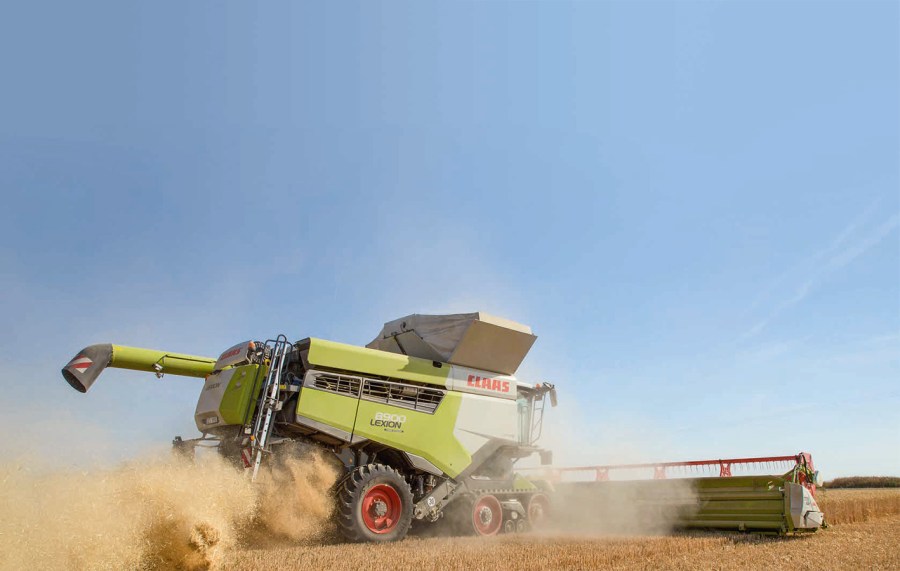
DRIVING IMPRESSION: Claas says this is the biggest Lexion revolution since the hybrid combine range debuted in 1995. Although we touched on some of the changes in the news section of the September issue, we can now study the details that bit closer
Over the years Claas has added more power and more automation to the original Lexion threshing design, making the most of the 600mm main drum APS system and twin rotors to gain extra capacity. But the original drum dimensions had reached their limit, so the time had come for a mechanical rethink.
For the UK and Irish market the focus for the 2020 season is all about the new 7000 and 8000 series hybrid models, as the bosses in Saxham have decided to stick with the current walker design for next harvest. However, for other parts of Europe there are new 5000 and 6000 series models, which have also had a hardware upgrade — see ‘What’s the story with the walkers’ for more details.
The focus here then is on the 7000 and 8000 — yes, Claas has introduced some numbering logic to the Lexion family, making it easier to identify the narrow and wide body machines.
We start off our tour at the business end, the feeder house. The standard unit has increased in capacity thanks to the bottom floor being 15mm lower. Panels have been added to the corners of the opening to aid crop flow, and the side plates used on previous models have been done away with. New anti-wrap guards prevent crop from gathering on the outside bearings of the impeller drum.
For more up-to-date farming news click here and subscribe now to profi and save