
During the busy season, time is precious, but machines still need to be cleaned. Sonax has introduced a sealant that is designed to prevent dirt from stubbornly sticking to surfaces.
KEEPING IT BRIEF
- Once the machine has been washed, the sealant is applied and brushed in.
- Even after four weeks, the sealant was still making a visible difference compared with the untreated bodywork.
- The sealant can be completely removed by using a detergent.
The miss-timed flick of a forager’s chute, and your tractor and trailer can soon be plastered in grass or maize, with the likes of wholecrop silage being particularly sticky due to its high starch and protein contents. And that’s before we even consider the sticking ability of cow/pig slurry, which can ‘glue’ itself to painted bodywork and glass like snot to a toddler’s face. If you know, you know.

To make machine washing easier and faster, Sonax has recently introduced its new Agrar Dirt Protection product, a sealant specifically developed for farm machines and which is applied post washing. We had the chance to try it out on a John Deere 6520, to see if it is worth the money.
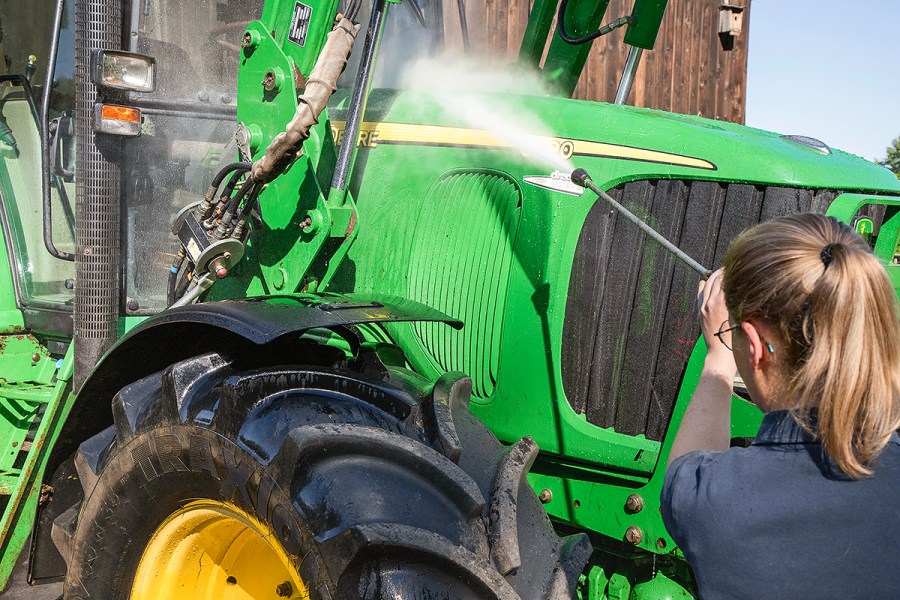
After a thorough clean, half of the tractor was treated with sealant, and we then set to work incorporating slurry. Four weeks later we returned to the farm’s wash bay and cleaned the tractor without any detergent and noticed a significant difference between the treated and untreated bodywork.

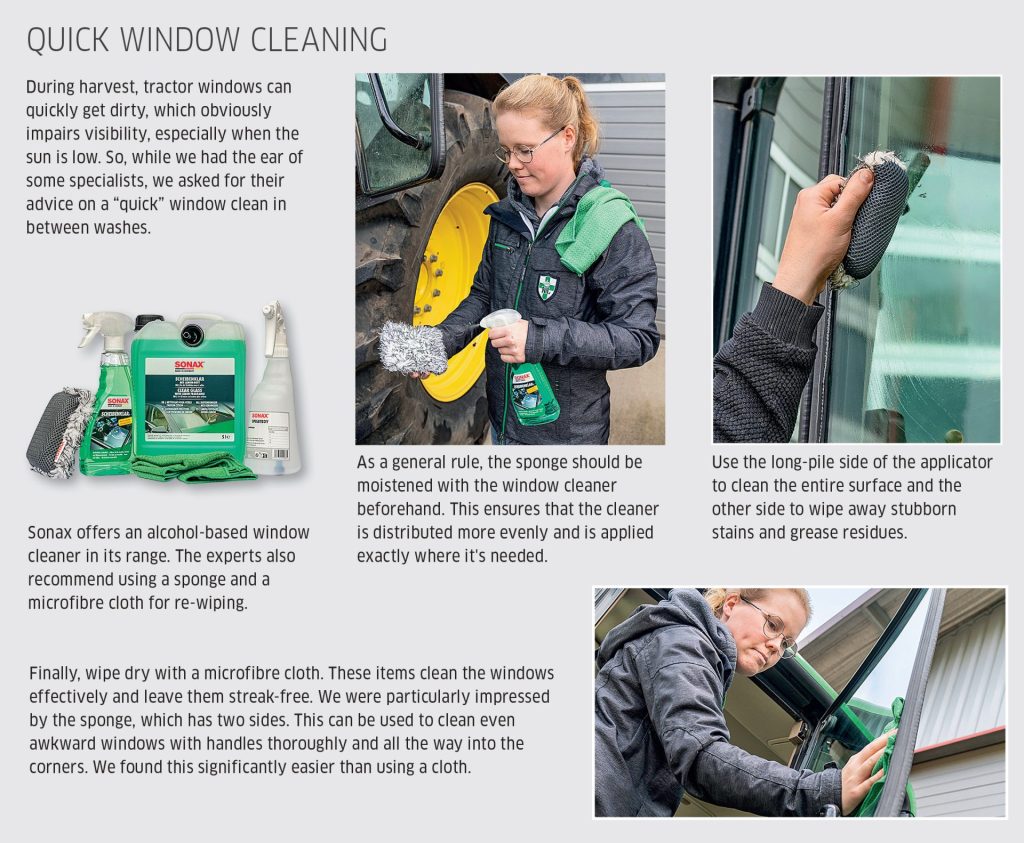
But this is not just about easy-to-wash paint work. On the following pages, we also give you a few tips for a quick windscreen clean in between washes.
Second skin
The new sealant is based on carbon-silicon polymers. Similar products are used in automatic washers for commercial vehicles and cars. Immediately after application, they form a kind of molecular network on the treated surface. This produces a very smooth surface that makes it much harder for dirt to adhere to and causes water to bead and quickly roll away.
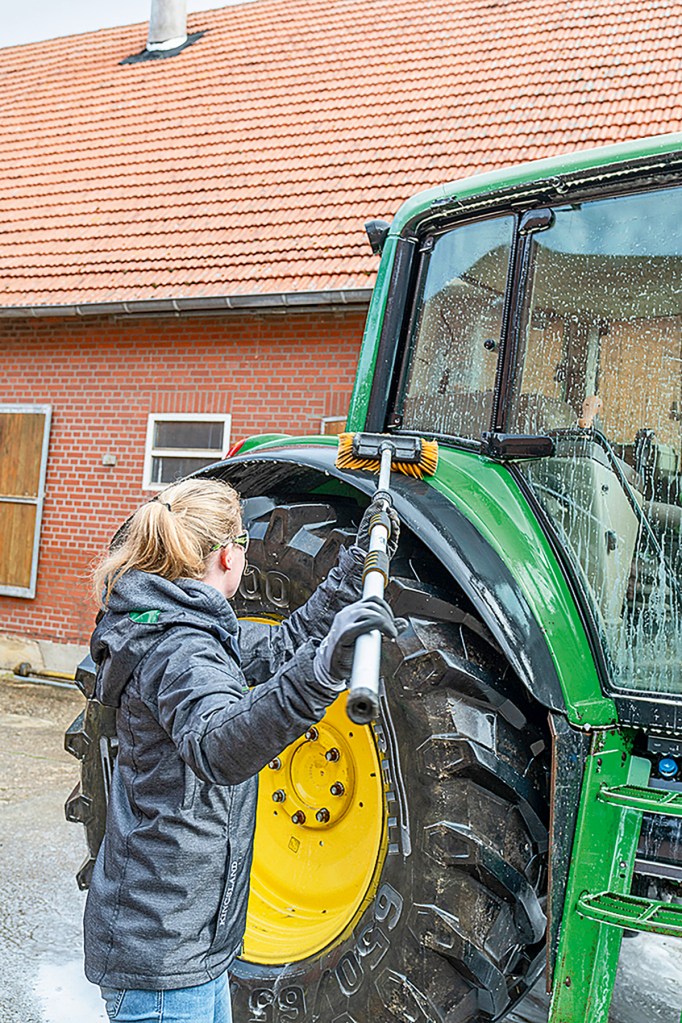
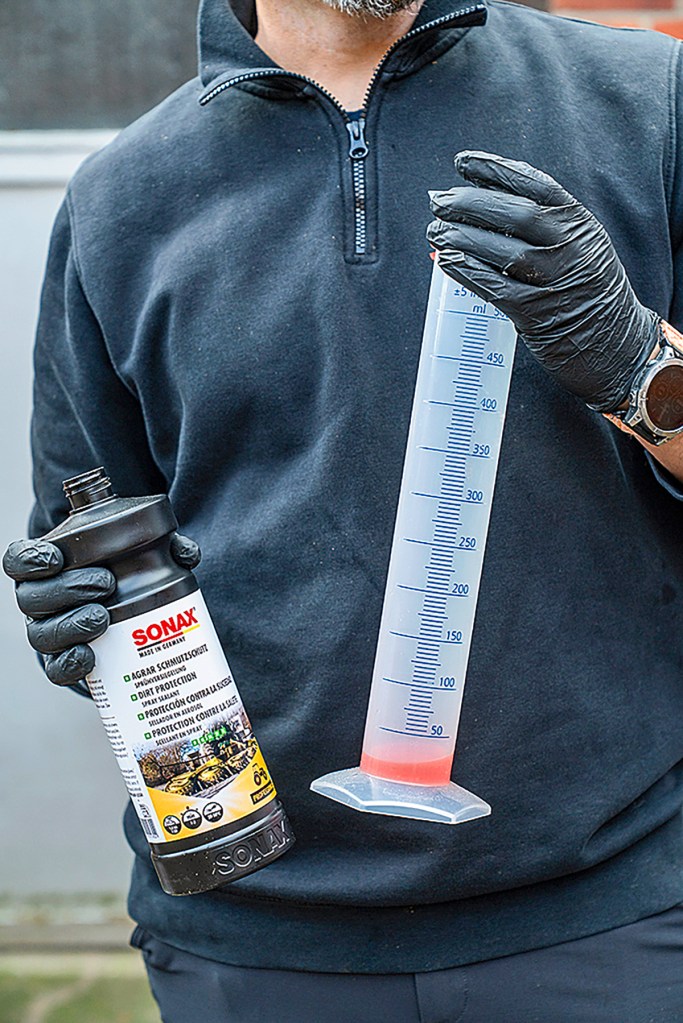
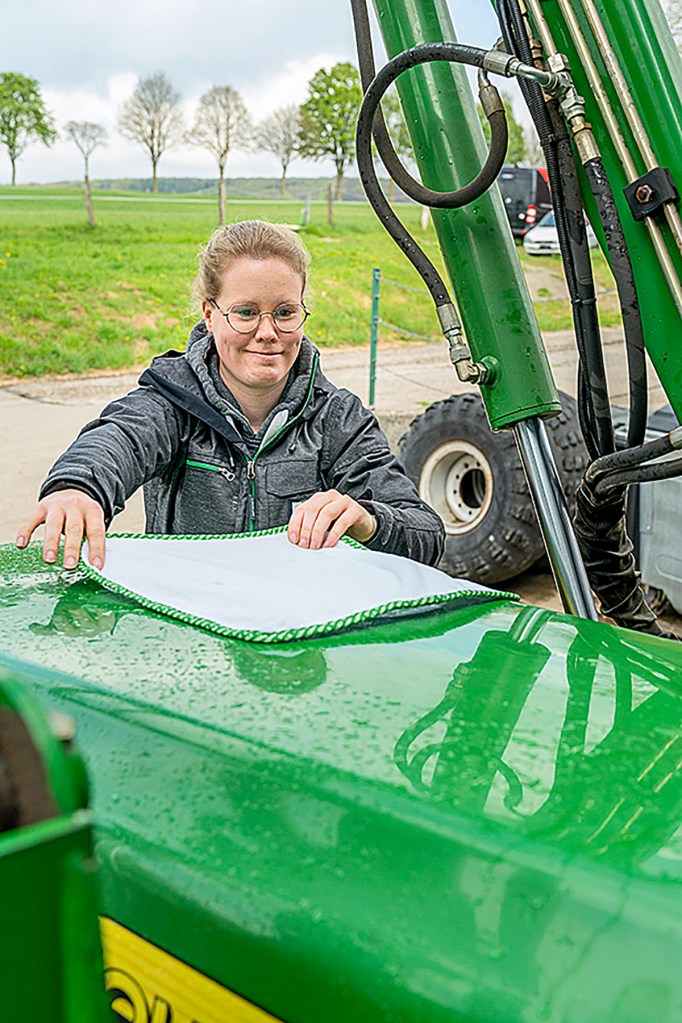
Ideally, the sealant should be lightly foamed onto a still-wet vehicle using a low-pressure handheld or back-pack sprayer and then evenly distributed with a brush. If you don’t have a suitable sprayer, you can also apply the sealant directly with a wash brush.
It took us around 10 minutes to apply the sealant, including the time it took to brush it in. We describe the step-by-step process on the next two pages.
Durability and residues
According to Sonax, the sealant remains on the surface until it is washed off with a detergent. During harvest you are probably best to apply a new layer of sealant to the machine in question after every wash.
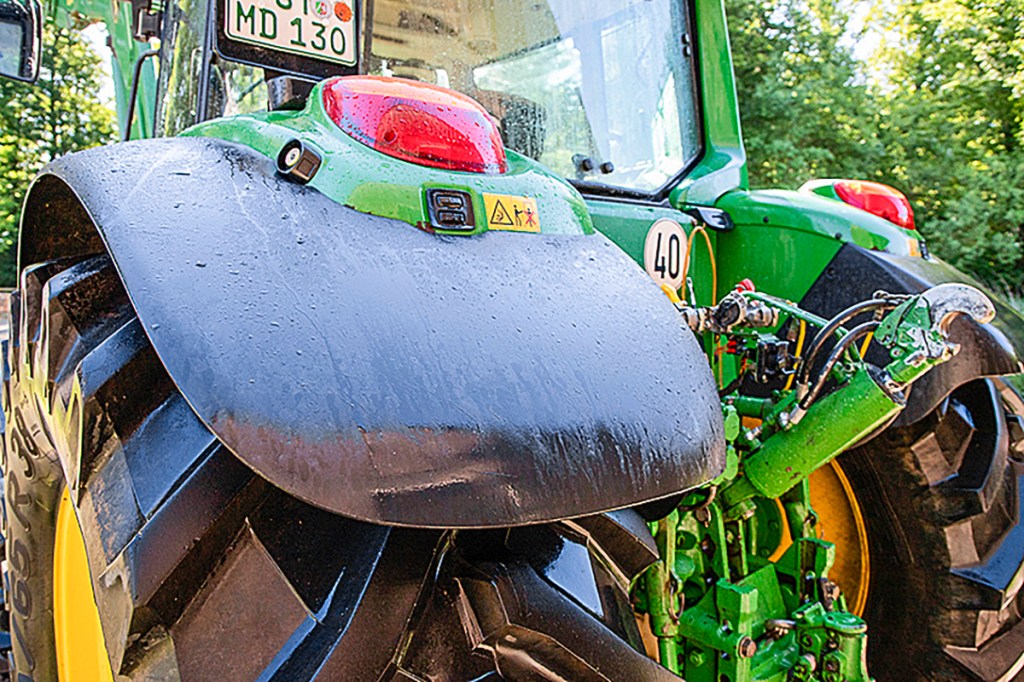
In our experience, the sealing effect was still present four weeks after treatment when just giving the tractor a quick wash with a pressure washer. We also noticed that particularly stubborn dirt was far easier to remove, especially from smooth, painted panels and the windows. We also noticed a positive effect on unpainted plastic parts such as the rear mudguards. We didn’t have to spray them as long as usual until stubborn stains were removed.
We did wonder whether the dirt protection product contains harmful substances such as nasty microplastic residues or persistent chemicals such as PFAS (perfluorinated and polyfluorinated alkyl compounds), which degrade very slowly and are also believed to be carcinogenic. Sonax says this is not the case. According to the company, they are systematically testing the ingredients, even those used in established products in their range to rule out them containing any such residues.

Prices and summary
Sonax offers the agricultural dirt protection sealant in a 1.0-litre bottle for about £28 (including VAT). Going with a recommended dilution rate of 1:200, and each washing using around 1.0 to 2.0 litres of diluted mix, in theory the operator should be able to treat a tractor up to 200 times.
Wrapping up, the sealant can save time for users who carry out quick machine washes when things are busy or frequently deal with heavily soiled machines such as from crop residues or cow/pig slurry. We were able to identify the positive effects of using the product.
Alexander Bertling
SEALING THE MACHINE
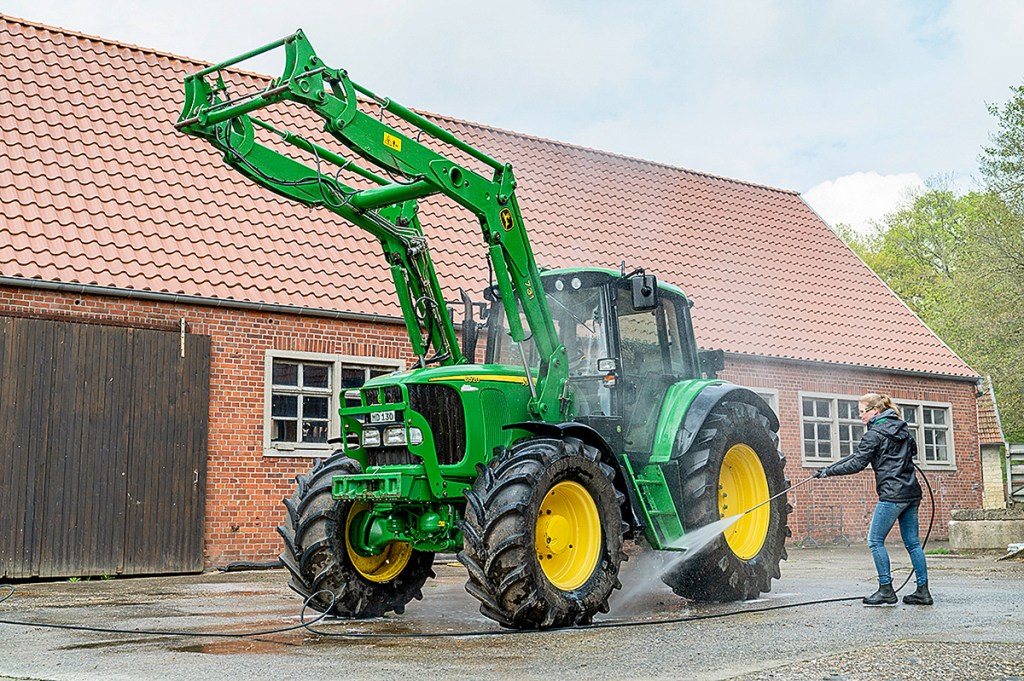
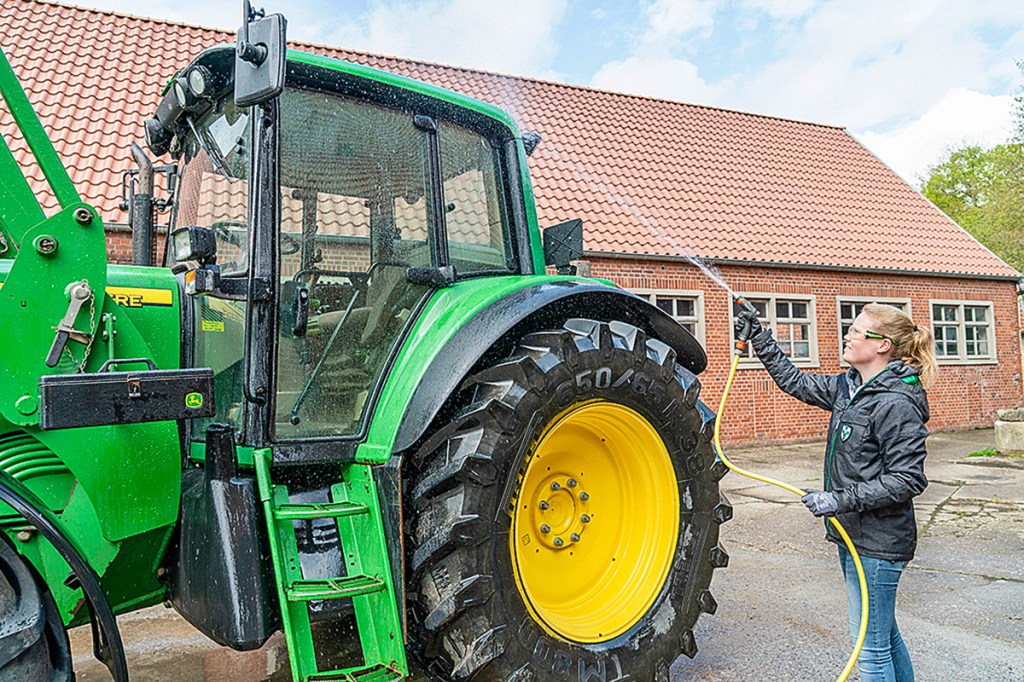
1 WASH OFF THE DIRT
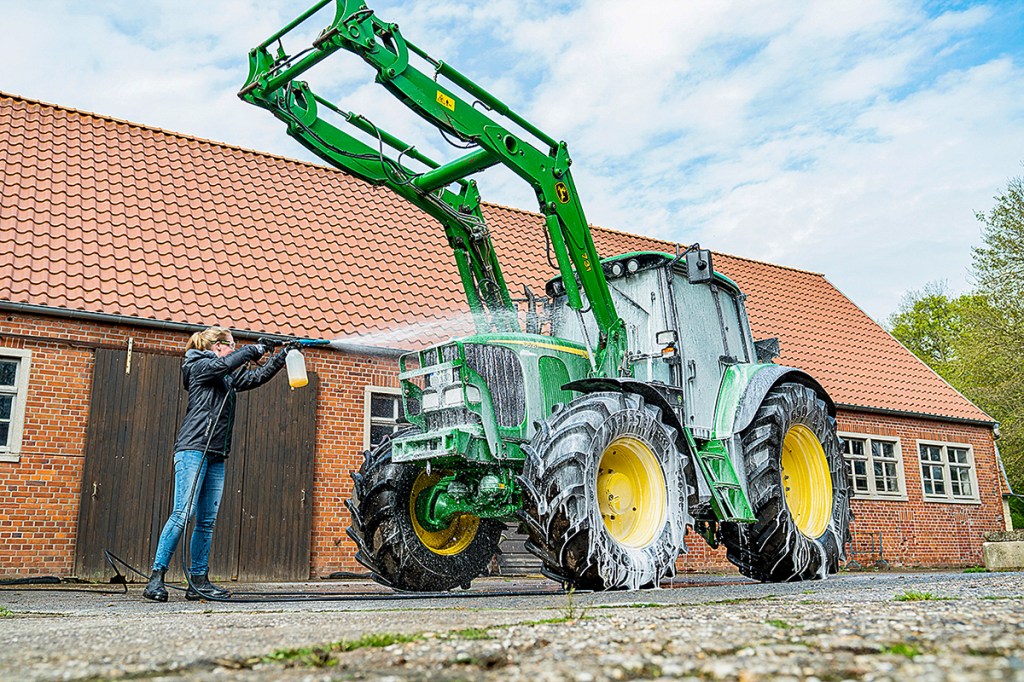
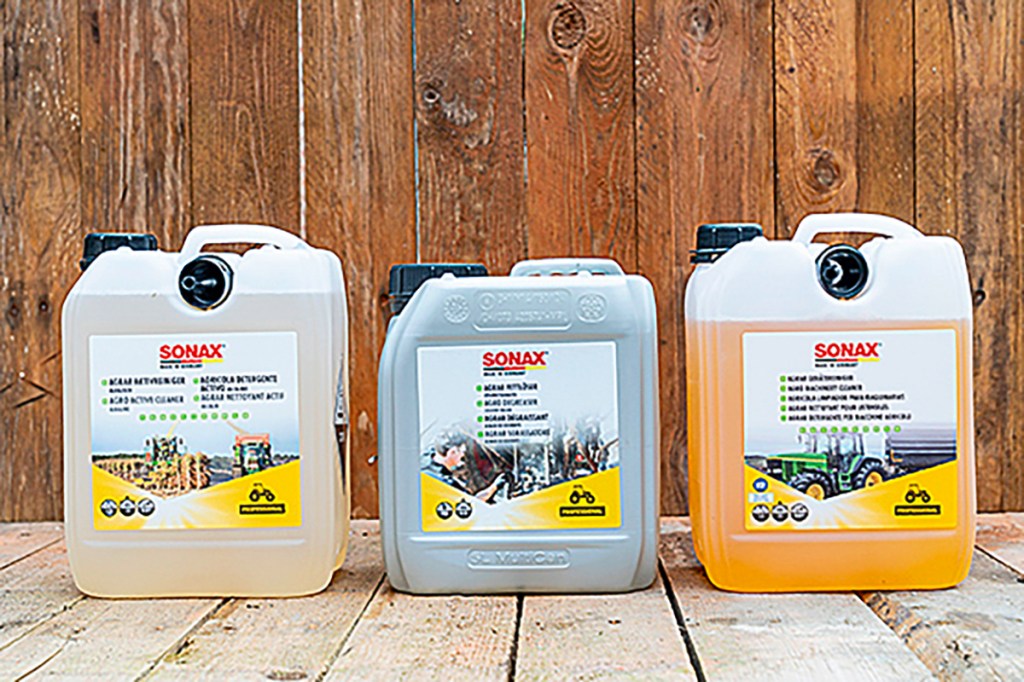
2 APPLYING THE CLEANER
3 APPLYING THE SEALANT
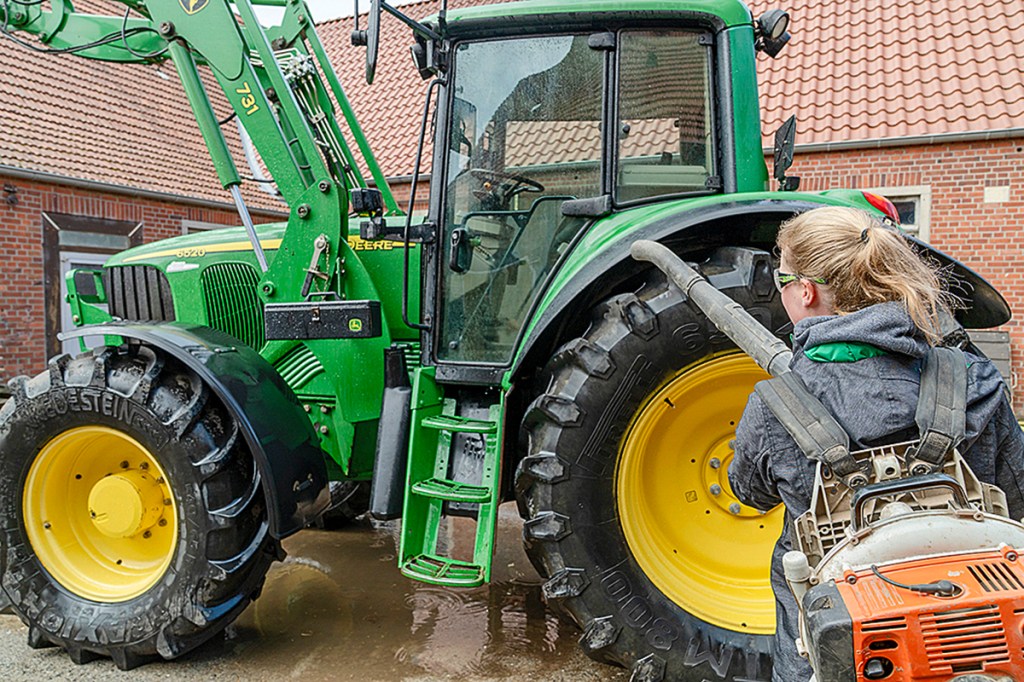
4 DRYING
For more up-to-date farming news click here and subscribe now to profi and save.