
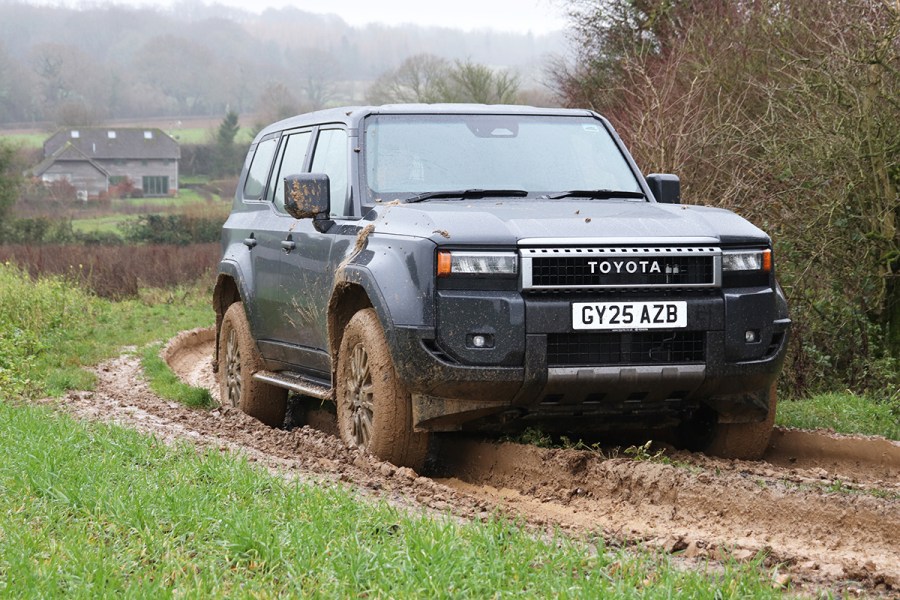
… the Toyota Landcruiser Commercial really does get going, revelling in the rough stuff but then, ironically, becoming less settled on smoother surfaces.
KEEPING IT BRIEF
- Plus points are rugged build, off-road performance, price and the option of a 10-year warranty.
- Negative points include the engine, on-road ride and no lumbar support.
- Fuel consumption during our test 26.5mpg.
What is it that you want from your farm transport? A hardy vehicle capable of handling the rigours of daily farm life, good off-road capability, reasonable comfort on road, VAT reclaimable, and the reassurance of rock-solid residuals and dependability? Plus a warranty that can be extended up to 10 years/100,000 miles? Well, if you only need seating for two — clearly, a major ‘if’ — then this £50,000+ Landcruiser Commercial could be just the ticket. Enjoy the tour.
From the outside
First, the look. Square of jaw and deep in the flank, the Landcruiser’s boxy exterior profile sets it apart from its largely bulbous rivals, with clear lineage back to the heavy-duty J70 series so typically associated with Outback farming and UN tours of troubled hotspots. We love it.
Launched last year, the model we feature here, the two-seater Commercial version, is converted from the standard Landcruiser at Toyota’s Burnaston factory in Derbyshire. The rear windows are covered by screwed-in metal inserts, the rears seats are replaced with a flat full-length rubber mat and there’s a full-height mesh bulkhead … and that’s about it. Van conversion complete.
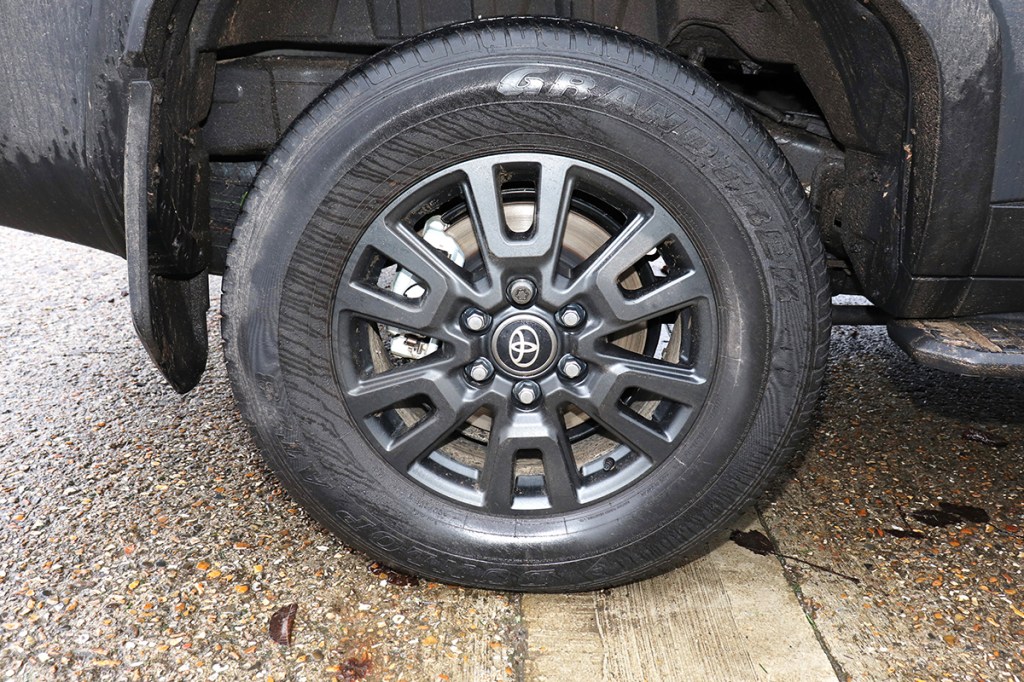
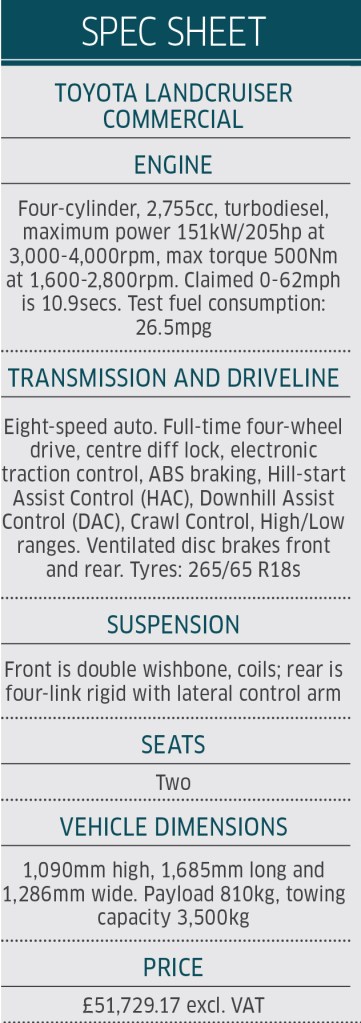
Similar in stature, footprint and most other dimensions to a Land Rover Defender 110 Hard Top — the Commercial’s closest rival — the farming appeal is obvious from the outset. At around £52,000 excluding VAT, this Toyota works out at about £30,000 less than its non-VAT reclaimable, passenger-carrying Landcruiser sibling, and, due to the van’s commercial status, there are significant benefit in kind and capital allowance pluses, too. Not only that, but it’s priced at about £8,000-£12,000 less than the equivalent Defender, depending on exact spec.
Clearly, the other alternative from the Toyota stable is a Hilux doublecab pick-up, in which you gain another three seats. Then again, a top-spec Hilux Invincible X with a hardtop now also nudges £50,000, and the doublecab’s loss of commercial status means most of its tax advantages go as well.
So, back to the Landcruiser Commercial. What do you get for your £50,000+?
In the cab
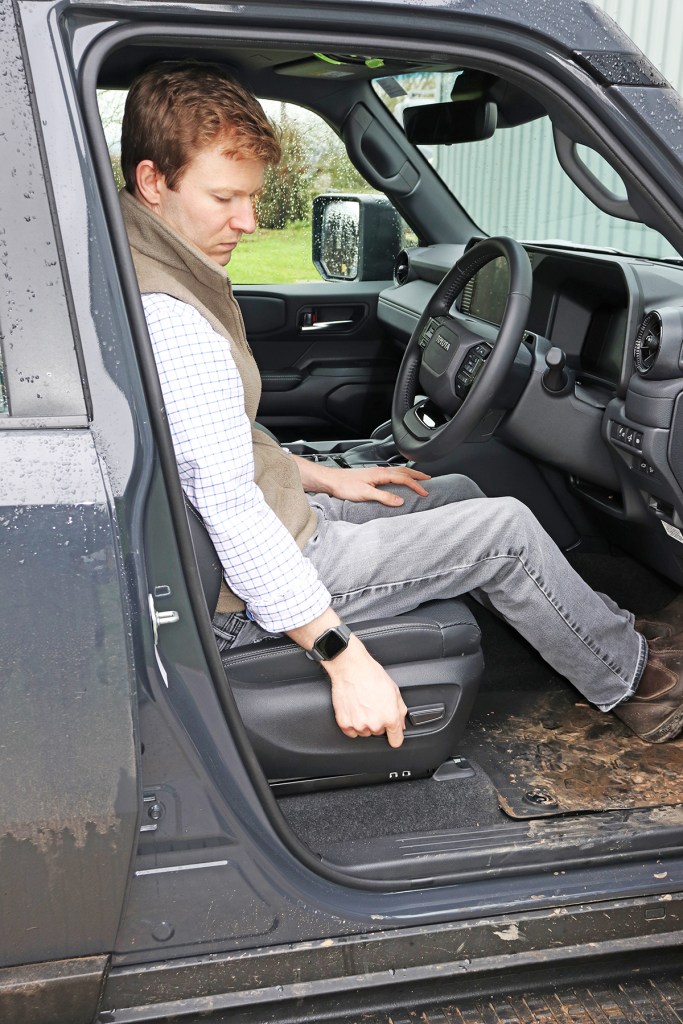
After stepping on the standard running boards and settling down into the comfy, electrically adjusted driver’s seat, you’re greeted by an intriguing mix of modern touch screen and old-style switchgear. If you’re no fan of excessive touching and swiping, you’ll love the chunky climate control/seat heating switches lined up beneath the main 7in touchscreen display, which, though smaller than the passenger vehicle’s, is still plenty big enough.
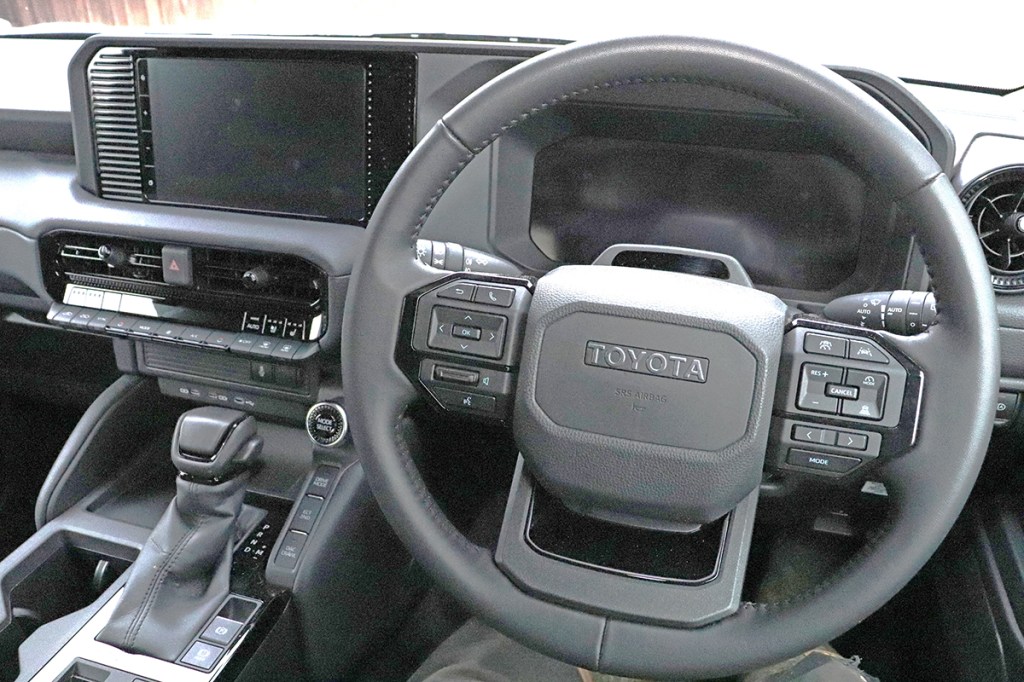
Trickier to navigate are the fiddly rockers and buttons scattered within the leather-clad steering wheel. Here, once fathomed, you gain access to the stereo controls, along with an assortment of driver aids, settings and safety features. We’re talking about the likes of Pre-Collision System, Adaptive Cruise Control, Road Sign Assist, Lane Departure Alert, Blind Spot Monitoring … the list goes on.
Down to the driver’s left, Toyota reverts to more conventional and reassuringly solid switches, dials and levers for the eight-speed transmission, High/Low box and hill descent/crawl. All good stuff.
As for the driving position itself, you sit high and enjoy a commanding view out through the flat(ish) front screen. Taller occupants may be tempted to ditch the top section of the bulkhead, because, with the chair in its rearmost setting, the load bay grid does restrict the degree of backrest angle.
Overall, though, the driver should have no trouble in getting comfortable.
Storage for oddments is OK, but both the glovebox and door bins are only modest in size. Countering this, there’s a much more accommodating lidded bin located centrally between the two seats.
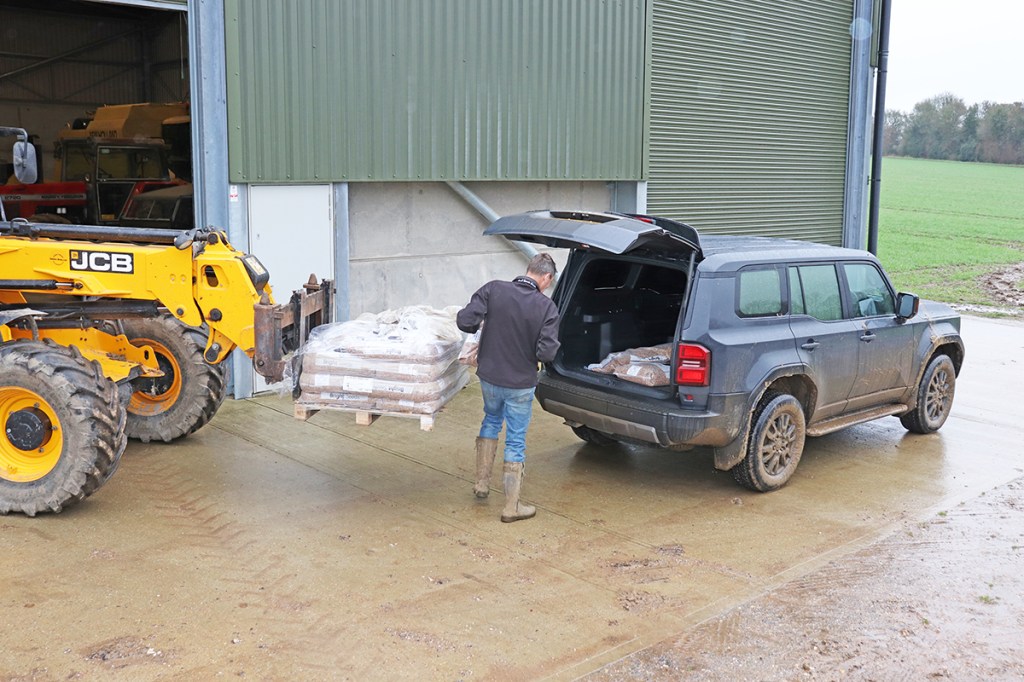
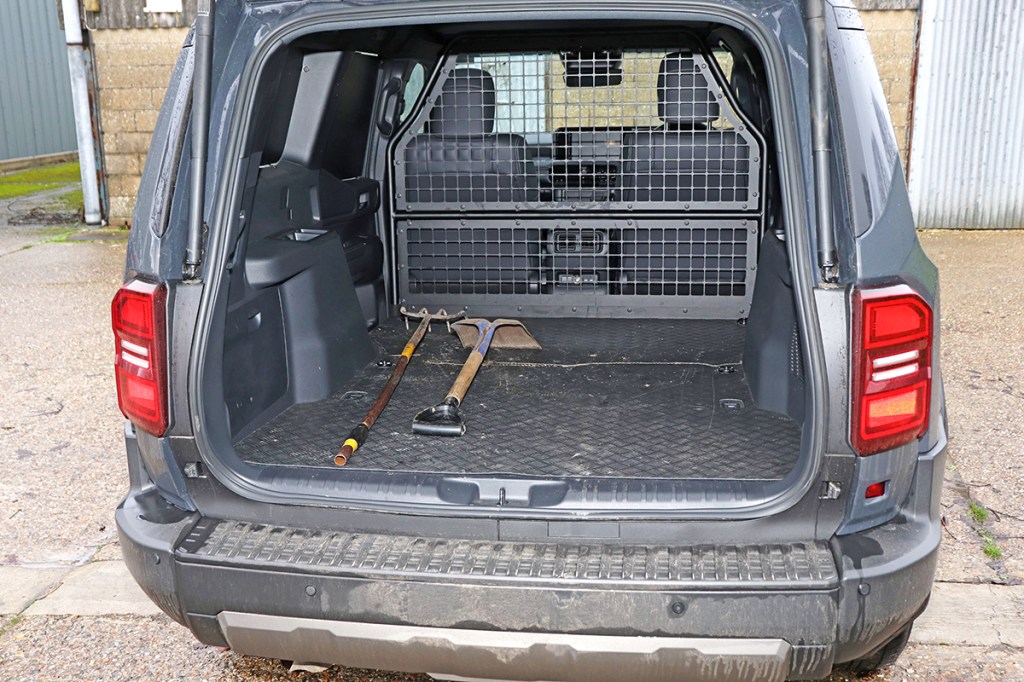
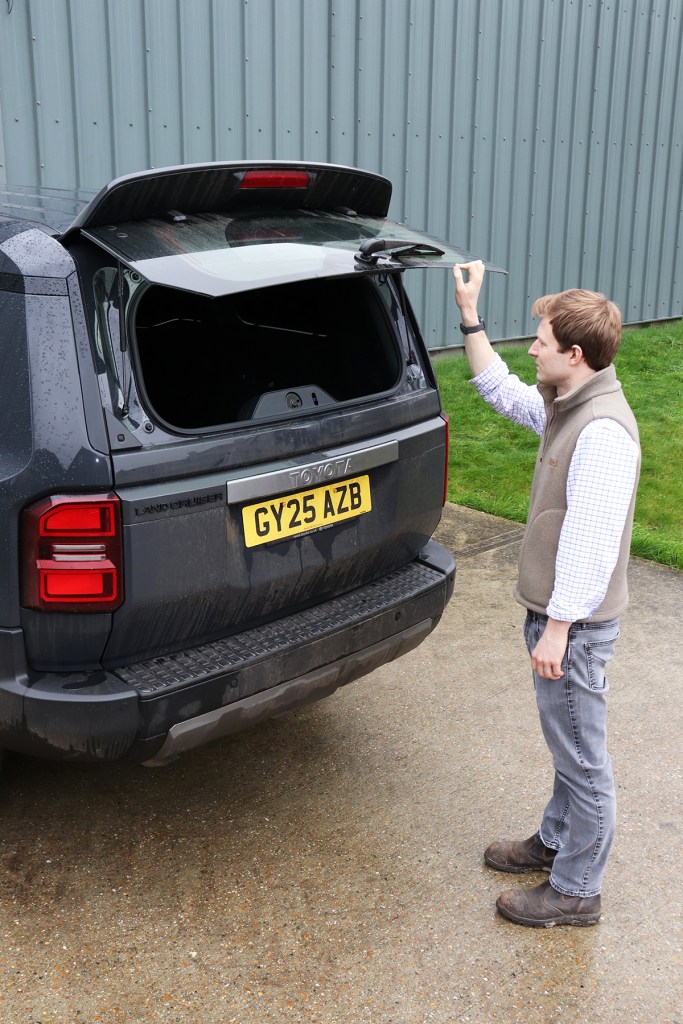
Around at the vehicle’s rear, an electrically operated, top-hinged tailgate lifts to reveal a generous, seat-free hole. The opening measures 905mm high x 1,160mm wide, whereas the bed itself tallies 1,801mm long by 1,100mm wide at its narrowest point, between the wheel arches. Those are van-like proportions and capable of swallowing all manner of farming stuff. Substantial tie-down points for securing any loads tot up to eight.
On the road
Fire up the Landcruiser and you’re greeted with a familiar diesel grumble. Toyota’s choice of motor for the Commercial is a low-risk, conservative one — it’s the proven 2.8-litre, four-cylinder turbodiesel, which it shares with the Hilux pick-up. Main difference is that the Landcruiser pairs the engine with an eight-speed auto rather than the HiLux’s six-ratio set-up.
Packing just a smidge over 200hp but with a handy 500Nm of torque, a heavy right boot prompts an intrusive bark, which is required to extract anything like a lively performance. Once up to speed, however, calm is restored, and the Landcruiser makes for a relatively relaxed motorway companion. At 70mph, the four-pot engine bumbles along at 1,600-1,700rpm, and noise intrusion into the cab is pleasantly muted. Heavy test fuel use averaged 26.5mpg, but in more ‘normal’ driving we’d expect nearer to 30.
Whether the motor’s modest 200hp output is sufficient to tow a 3.5t load with similar ease must be in doubt. We were unable to try this on our towbar-less test vehicle and were simply left wondering how much better life would have been with a silkier V6. Sadly, though, Toyota has no plans to upgrade the existing drivetrain, other than to incorporate its mild hybrid 48V system.
The body-on-frame chassis, beam axle and all-round coil suspension result in a smooth enough ride on faster highways, but, as these roads narrow, its former composure is soon challenged. Hustling along country lanes, there is a pitter-patter from the back end, which, over time, starts to grate.
Handling again is fine, as long as you don’t push the 2.0-2.5t vehicle into sweeping bends too hard. Indeed, this could be said of the entire on-road experience — ‘fine’ if you don’t push on too hard. It’s perfectly adequate, yet there’s little to excite. The electric power steering is nicely weighted, the brakes positive without being overly aggressive.
In the field
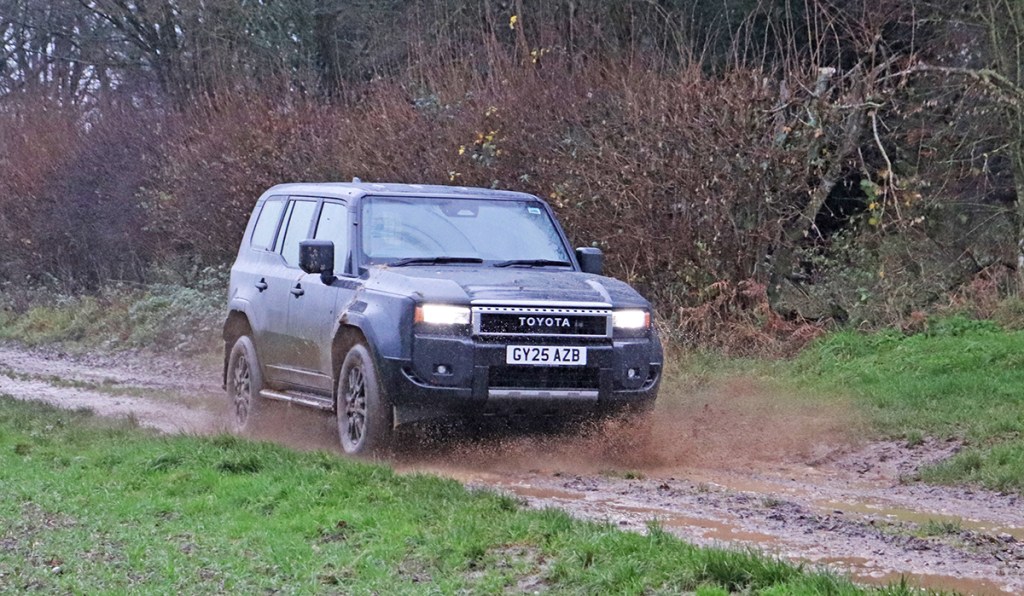
Off the tarmac and into the field, now we’re in the Landcruiser’s natural habitat. Whereas its underpinnings are unnerved by mildly rippled rural tarmac, they’re far more adept at dealing with deeper hollows when belting along farm tracks.
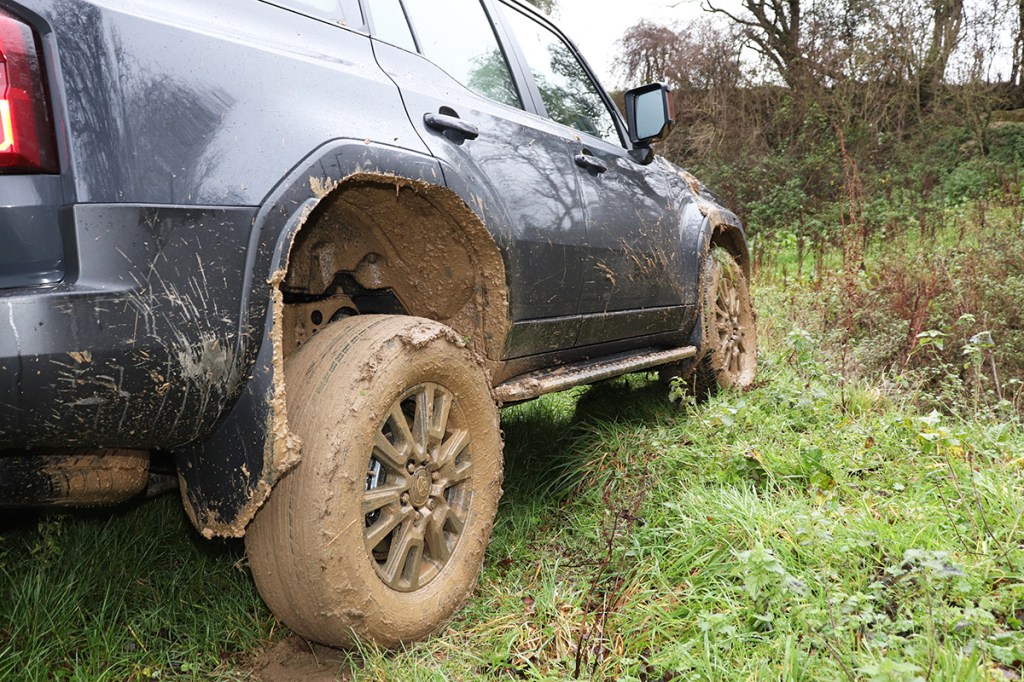
Wet and muddy? No problem, either. The Commercial may not have the passenger vehicle’s Multi-Terrain Select (MTS) modes — mud, sand, dirt etc — or anti-roll bar disconnect, but for most farm work the base combination of permanent four-wheel drive, High/Low box, centre diff lock and Downhill Assist Control (DAC)/Crawl will be more than adequate. The Crawl function is particularly impressive; when Crawl is selected, you can dial down to a constant speed that’s barely snail’s pace.
Summary
Excellent off-road, adequate on-road, there will be bits about the Commercial you like and bits you don’t. To give one further example, there are some intriguing feature choices on the van variant, which, to be fair, is almost inevitable, as Toyota only offers the one spec; the main options are paint colour, a towbar … and that’s about it. Trivial, perhaps, but back-suffering farmers are bound to question the wisdom of retaining cooled seats while ditching the lumbar support.
Arguably this vehicle’s greatest appeal, however, is the overriding feeling that it won’t go wrong, won’t let you down.
Unlike for some of its rivals, there’s none of that ‘can I risk not extending the warranty?’ at the end of the standard three-year period, generally at exorbitant cost. For starters, you don’t have to extend, because Toyota does it for you — for up to 10 years/100,000 miles, provided the vehicle is serviced at an authorized workshop. And, secondly, the likelihood is that the Commercial won’t let you down anyway. This is a Landcruiser, after all. Of the Toyota’s assorted traits, it’s this dependability factor that is its most endearing.
Andrew Faulkner
For more up-to-date farming news click here and subscribe now to profi and save.