
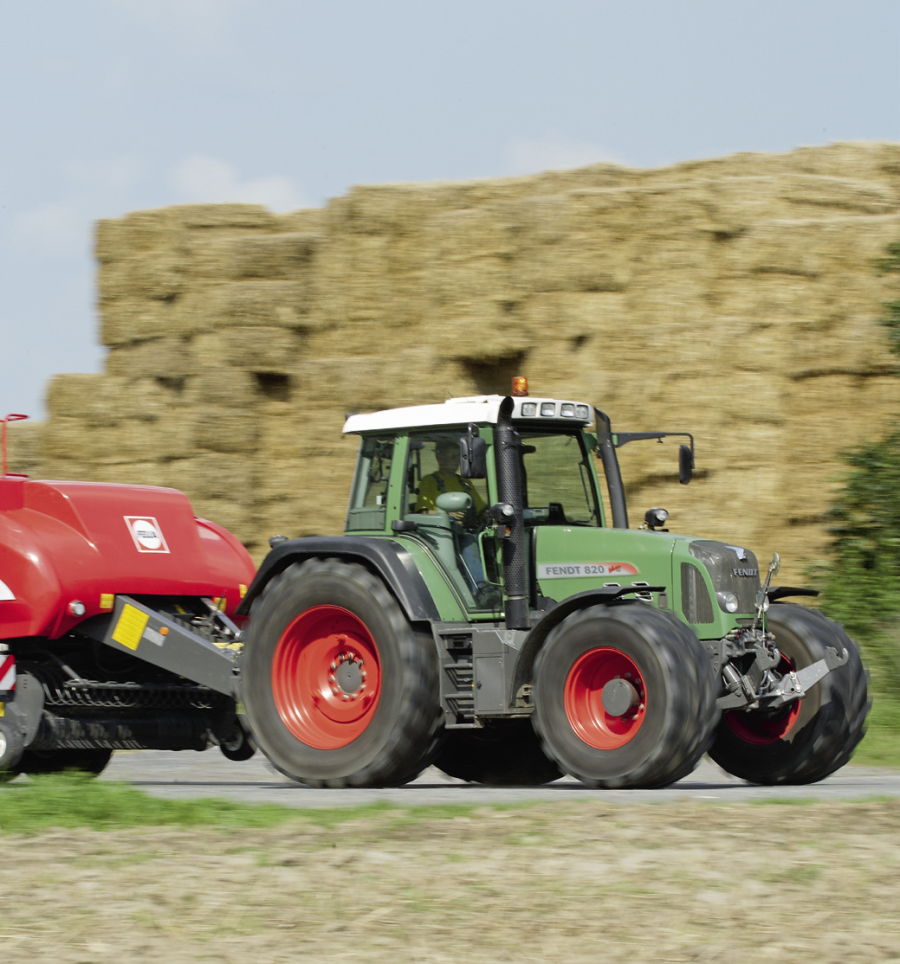
Tractor test: Fendt 820 Vario TMS A tractor’s propensity for fuel has become a hot topic over the past 12 months. And with red diesel currently running up at the 50p/litre mark, when not so many years ago it was priced down at 20p, this keen interest in tractor guzzle rates is entirely understandable. On top of that, of course, there is the constant industry talk of relentlessly tightening emissions regulations doing their bit to increase an engine’s craving for the pink stuff. We test the 140kW/190hp (ECE R24) Fendt 820 Vario TMS.
It’s a rather bleak picture. High diesel prices combine with cleaner but thirstier engines to give significantly increased tractor running costs. That’s the current and somewhat depressing theory. Popular thinking is that implementation of the current Tier III emission standard requires the use of new technologies to reduce the production of nitrogen oxides and particles, and that this development inevitably leads to an increase rather than a decrease in fuel consumption.
But could it be that we’re jumping to all the wrong conclusions and being unnecessarily pessimistic? Our experience, in many cases, is more upbeat than the one outlined above, to the extent that we’ve found a number of Tier III type engines to be, in fact, no thirstier than their ‘dirtier’ predecessors, and the tractor model featured here, the Fendt 820, is a case in point. Our test results prove this model to be just as economical as the tractors it replaced. But then we’re getting ahead of ourselves. First, a little background.
The Fendt 820 Vario TMS has been on the market since autumn 2006, when it was one of two new Fendt models to replace the previous three 110kW/150hp-132kW/180hp 815, 817 and 818 tractors in the German firm’s line-up. The result is that in this 170-200hp sector of the market, Fendt now limits itself to listing a choice of two: The 125kW/170hp 818 Vario TMS and our 140kW/190hp 820 Vario TMS unit (rated output to ECE R24).
For more up-to-date farming news click here and subscribe now to profi and save.