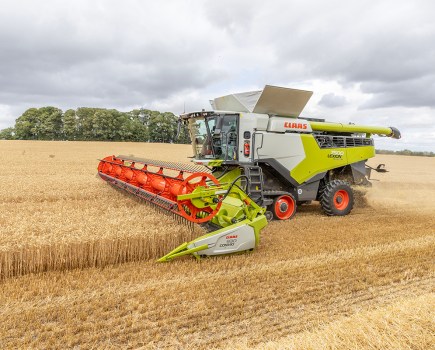

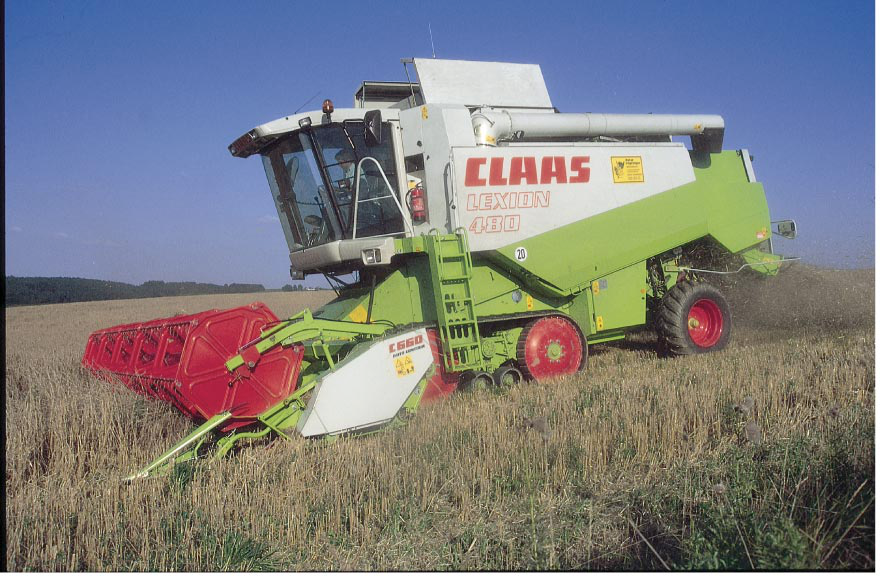
Practical test: Depending on the model specification all the operating settings on the new Claas straw walker combines are done from the cab – except for loss control, which still involves the driver getting off the machine. Apart from a few minor quibbles, we found the new Lexion range performed well in the 1996 harvest
After the introduction of the Lexion 480, which uses a rotary threshing system (see profi international 8/96), it was only a matter of time before Claas added smaller models to the range. These came in the form of straw walker machines, because the high cost of the rotary system prohibits its use in lower capacity combines. But these machines are built around the same modular concept.
The first module on the machines is the header. The basic header width is 4.5m and to achieve other cutting widths, from 5.4m to 9m, extensions are simply bolted on to the main section. The most obvious strengthener to be seen is a 120mm x 200mm rectangular steel beam that runs along the top.
In the field we quickly noticed that working in laid crops the new header can achieve a much shorter stubble height than former models. This is because the trough behind the cutterbar is flatter and the reel can be set below the level of the cutting height and move further forward. These settings allow it to pick up more crop and provide a smoother material flow to the APS (Accelerated Pre-separation System). The overall operation has also been improved thanks to the AutoContour header system, which now has programmable settings. The lower setting on the multifunction lever is used in badly laid crops and the top setting is used in all other conditions.
For more up-to-date farming news click here and subscribe now to profi and save