
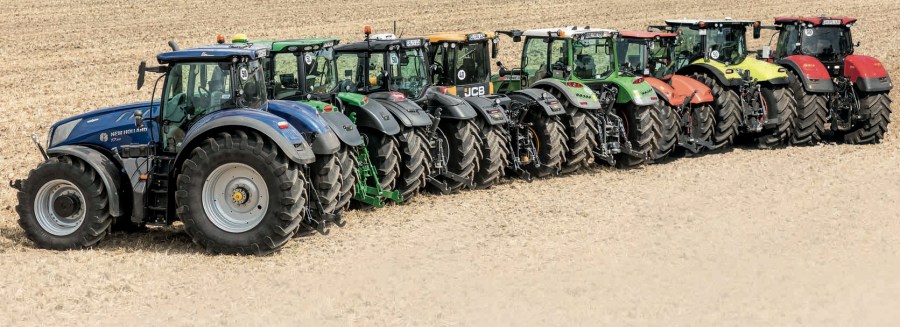
Electronic linkage control (ELC) systems have been around for decades and are now pretty much the norm on tractors over 100hp. Way back in 2003 we compared the tractors of the day, so it must be worth seeing if, and how, this back-end technology has moved on
Many moons ago, Harry Ferguson invented the draft control system, allowing a tractor to pull a plough through varying soil types, raising it when the going gets tough and the tractor is at risk of losing traction or stalling. By raising the implement slightly, the draft system shifts more weight on to the tractor wheels thereby improving traction. At the same time the tractor doesn’t have to pull as hard, as the plough is working shallower. And because the plough is now easier to pull, the control system lowers the linkage a little — closing the loop.
Today, given that ever more powerful tractors benefit from four-wheel drive and other traction-boosting aids, you could be forgiven for thinking that linkage control is no longer necessary. The plough can be operated using the position control because the extra draft requirement isn’t such a problem for today’s modern tractors; take semi-mounted ploughs as an example. However, there are many agronomic reasons for ploughing heavy and varying soil types with little topsoil at a lower depth — a typical scenario where ELC comes into its own.
Eight manufacturers supplied a tractor for our test comparison, and they were:
● Case IH Optum 300
● New Holland T7.315
● Claas Axion 870
● Fendt 724 Vario
● JCB Fastrac 4220
● John Deere 6250R
● Kubota M7152
● Valtra T174
For more up-to-date farming news click here and subscribe now to profi and save