
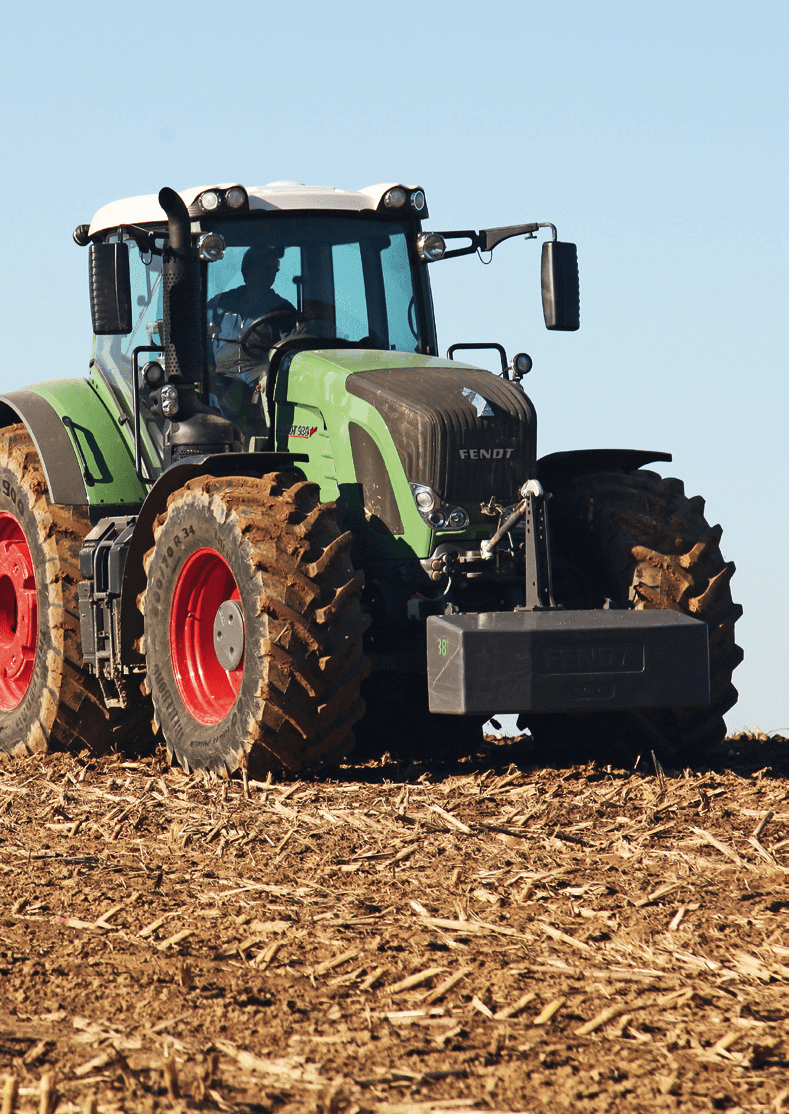
Doesn’t time fly? It’s already been eight years since Fendt first showed its ‘new look’ 900 series tractors back in 2005. Then five years later these models enjoyed a range-tweaking revamp, accompanied by the introduction of the flagship 390hp 939 model and SCR/AdBlue technology. Here we test the muscular, yet surprisingly frugal, 939 Vario.
IOne of farming’s many facts of life is that, no matter how much horsepower a tractor line-up has to offer, most farmers will demand more. And that’s precisely what Fendt provided when it added the 939 Vario to its flagship 900 family. Tucked under that bulbous bonnet are 390 ponies, although, as we see later, some of those horses are reined in for certain jobs, giving the transmission at least some form of protection.
Along with the move to Stage IIIB in 2010, the six-cylinder Deutz motor was bored out to 7.8 litres and its exhaust gas recirculation system ditched in favour of an SCR catalyst to control exhaust emissions — all developments that we discussed way back in our January 2011 magazine. But how does this technology work specifically in the 939? To find out, we packed the tractor off to the DLG test station. First stop, the dyno, where the Fendt delivered more than 247kW/336hp to the pto. This compares pretty favourably with the tractor’s claimed rated output of 265kW/360hp, measured to the ECE R24 standard.
And better still was its maximum output — a whopping 276kW/375hp at the shaft with the engine positively purring at 1,900rpm. That’s 30kW/40hp of extra power. To sum up, then, a power curve showing a big 41% increase in torque as engine speed drops by32%, and a constant power range of 29%, are the key reasons why the Deutz engine is awarded a clean sweep of grade ‘A’s in the technical data table on page 15.
For more up-to-date farming news click here and subscribe now to profi and save.