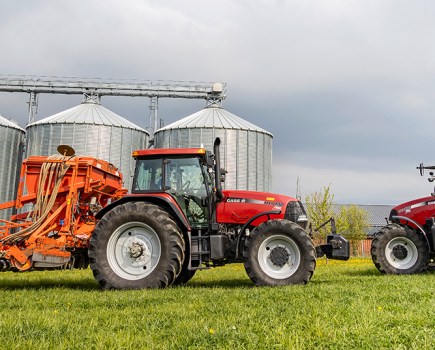

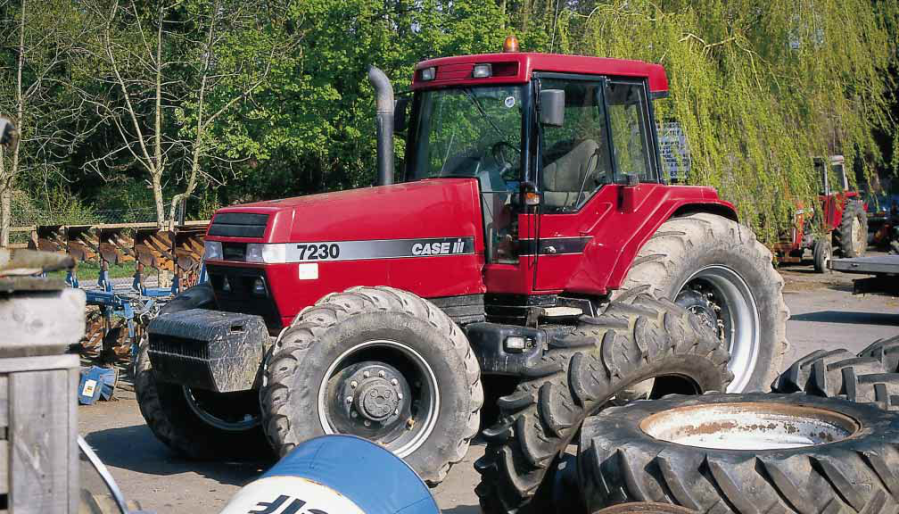
USED MACHINERY If a farmer is looking to buy a second-hand, high hp prime mover without shelling out bucketfuls of cash, then he could do worse than scan the classifieds for a Case Magnum. profi investigates why these models are so competitively priced; in other words, is there a catch?
What is big, red and simple? A Case Magnum. Before Case owners get hot under the collar ‘simple’ in this instance stands for heavy-duty, robust and straightforward – qualities that have earned these tractors an enviable reputation among large-scale farmers over the past nine years or so.
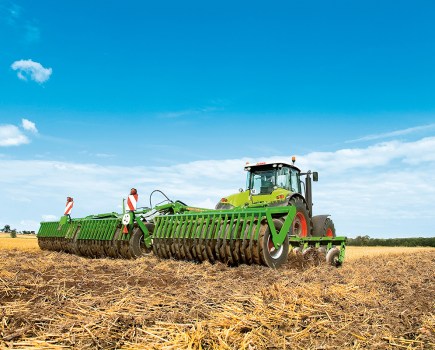
But there is a caveat. To get the best from a Magnum, it needs to be operated in an environment that suits it – a ‘large’ farm with big fields. The Magnum is a tractor designed for semi-mounted ploughs, trailed cultivators and drill combinations that can be turned in a single loop at the headland. If slick shuttling is called for, forget it because the words ‘manoeuvre’ and ‘Magnum’ are mutually exclusive. And it has nothing to do with any lack of steering lock. It’s all down to the transmission.
Case fitted the Magnum with a full powershift transmission from day one. On paper, it’s a well-specified transmission, with 24 forward and six reverse speeds. The trouble is that accessing those reverse speeds is hardly straightforward. For those not familiar with one of these tractors, here’s a review of the steps needed when switching from forward to reverse:
Step 1: Move the lever all the way back in the left-hand gate, which houses the forward speeds.
Step 2: When the lever is at thebottom of the gate, shunt it across into the right-hand gate.
Step 3: Move the lever forward about half way.
Step 4: Then push it to the right through a short gate.
Step 5: Depending on the desired speed, either move the lever forwards or backwards until, at last, the transmission arrives in one of the six available reverse speeds
For more up-to-date farming news click here and subscribe now to profi and save