
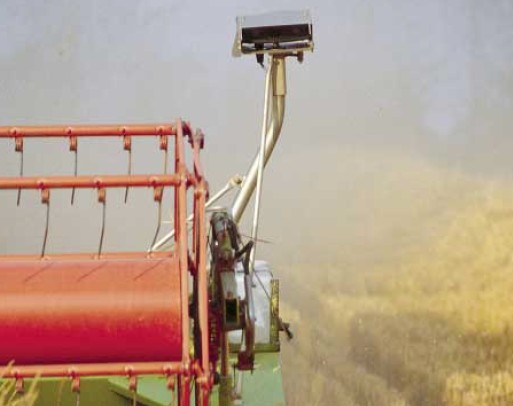
Automatic combine steering in cereals is a vision that has finally become a reality in the form of the Claas Laser Pilot. This unique system scans the line of a standing crop in front of the header, and promises ‘hands-free’ combine harvesting. We tried the system out in wheat
Operators have come almost to take for granted the benefits of automatic row following in maize, beet and potato harvesting. These systems give the operator the freedom to concentrate on operating and managing the harvester which, in turn, improves overall performance.
The mechanical sensor technology used in these systems, however, would never work in cereals. For a start, cereal rows are closely spaced and the crop itself comprises plants that are too small to be easily recognised by a sensor arm. Then there is the complication of scanning a lodged crop and the simple fact that cereals are not necessarily combined in the same direction as they are drilled. It is no surprise that the ‘self-steering’ concept has taken so long to cross over to cereals from other crop harvesting systems.
Despite the difficulties, there has been a considerable amount of effort put into developing a combine header guidance system. Former East German combine manufacturer Fortschritt came up with a scanner system, but despite its early promise the technology proved too expensive and the system itself was also difficult to operate.
For more up-to-date farming news click here and subscribe now to profi and save