

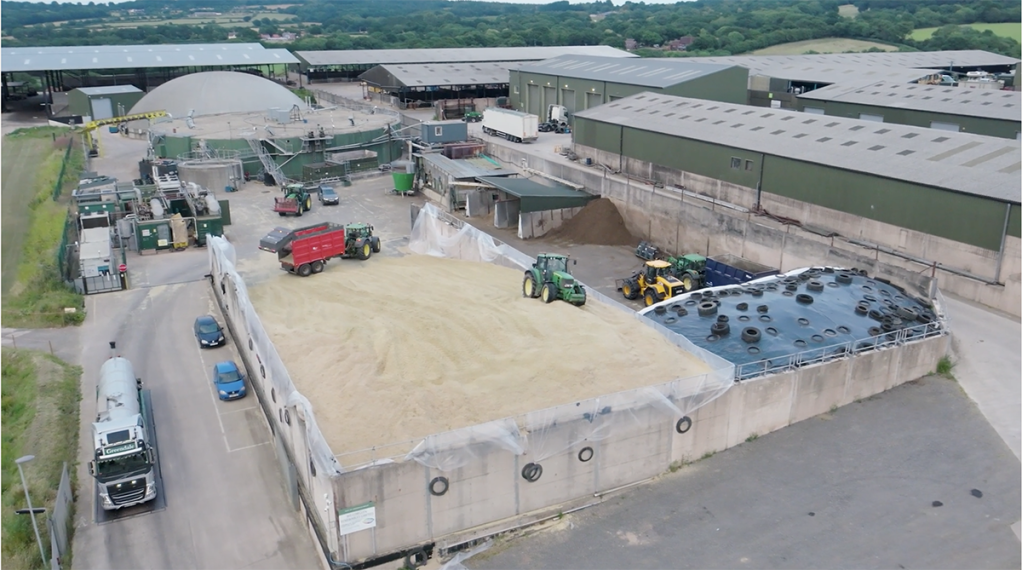
Taking energy production in-house at Greendale Farming has seen the introduction of slurry as a feedstock for the digester, located next door to the beef unit that produces it.
KEEPING IT BRIEF
- Diversified farming enterprise generates renewable energy for its own business park
- Large beef finishing operation produces slurry to power an anaerobic digester
- A new self-propelled Keenan wagon has helped streamline feeding up to 1500 cattle.
Greendale Farming, part of the Greendale Group, was established by the Carter family, originally tenant farmers from Ladram Bay on the east Devon coast. The current site on the outskirts of Exeter was purchased in the late 1970s as a farming operation, explains farm manager, Tom Chanter.
“An early enterprise was grain storage and at one point, Greendale was one of the largest grain futures stores in the country,” he explains. “The family also took on Exmouth Dock, providing a link between the ships coming in and bringing the grain to the farm for storage and processing, while haulage was another natural business expansion.”
After the millennium a business park was developed, now encompassing 48 hectares of industrial site. But farming is still very much the core of the business, Tom points out. “One of Greendale Group’s successes has been, and more so now than ever that it includes the anaerobic digester, is that we’ve created our own circular economy, so each area of the business feeds off another area of the business. So, for example, the farm supplies cattle manure and crop to the AD plant and the AD plant uses those ingredients to make electricity. We sell electricity to the business park, which then sells it to the tenants.”
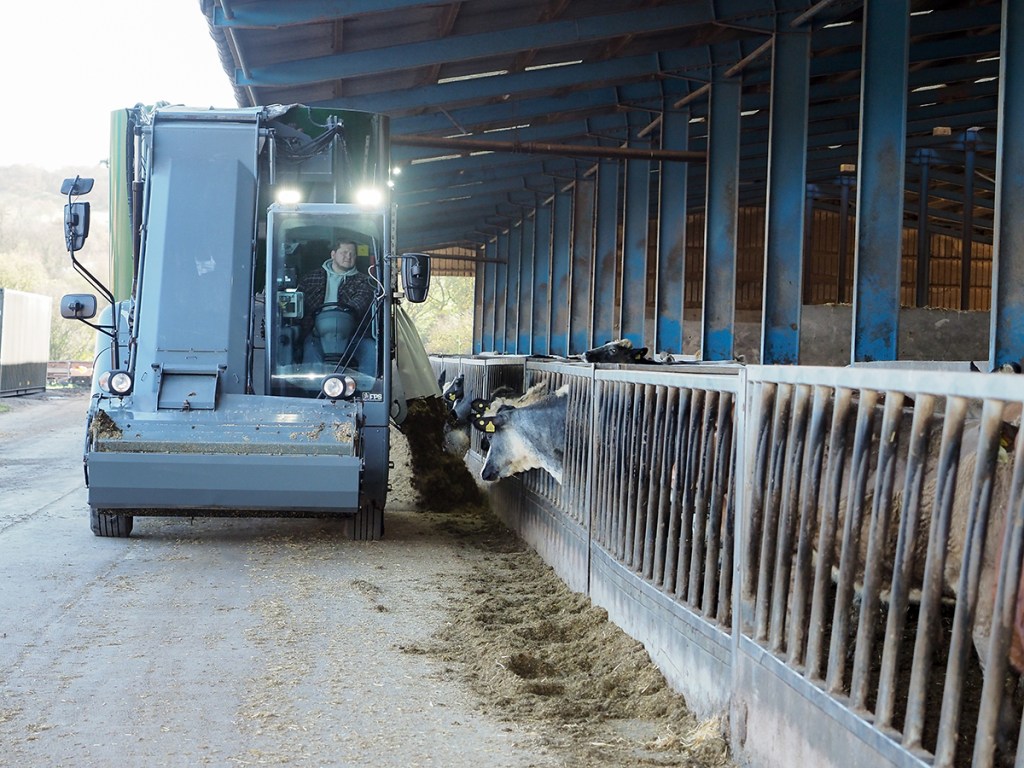
The main farming operations are finishing beef cattle, with around 5,000 cattle a year produced, and 1,300 to 1,500 cattle housed at any one time, plus an arable enterprise which supplies crops for the digester and the cattle.
There has been a major reorganisation recently, he explains, after Greendale Group purchased Willowglen Renewables (the digester business) from the previous operator in 2023.
“The feedstock for the digester used to be 90% crops, which was unviable due to the cost of growing crops for energy production. Plus, it wasn’t really part of our ethos- we didn’t want to be growing hundreds of acres of crop to pour into our digester to make electricity,” he explains. “We’d been supplying the crop and buying the electricity for eight or nine years before the digester business came up for sale. It was a very obvious fit into our portfolio and it guaranteed the power supply for the business park. This is important as there is insufficient grid capacity in this part of Devon to run the park without the digester topping up the kilowatts.”
The 1.3MW digester primarily supplies the business park now, exporting any excess to the national grid.
“Businesses are increasingly interested in using renewable energy, particularly some of the big names that are here – Royal Mail, DHL, AO. Plus, they are all starting to look at using EVs. Biffa, which has a unit on site, is trialling electric dustbin carts – a loaded dustbin cart is 26 tonnes so you need a good supply of electricity to be able to charge it.”
A USP is that the business park is using energy from a 100% renewable source, he states, which will include electric vehicle chargers in the future.
After the acquisition, attention turned to exploring better ways of generating electricity than using crops.
“We looked at businesses in Europe and had a ‘light bulb moment’ in France, where operators are only permitted to feed 10% grown crop into their digesters, so 90% of the digester’s diet has to come from agricultural waste.”
It became obvious that that with 1,500 cattle producing manure, supply was not a problem, he adds.
“We had the issue that we had all this cattle manure and rising soil indices, so we couldn’t keep spreading it on our own land and needed to find an outlet for it,” recalls Tom. “So then we went about finding a system that would allow us to feed manure into the AD plant that would produce a high gas yield.”
Feeding developments
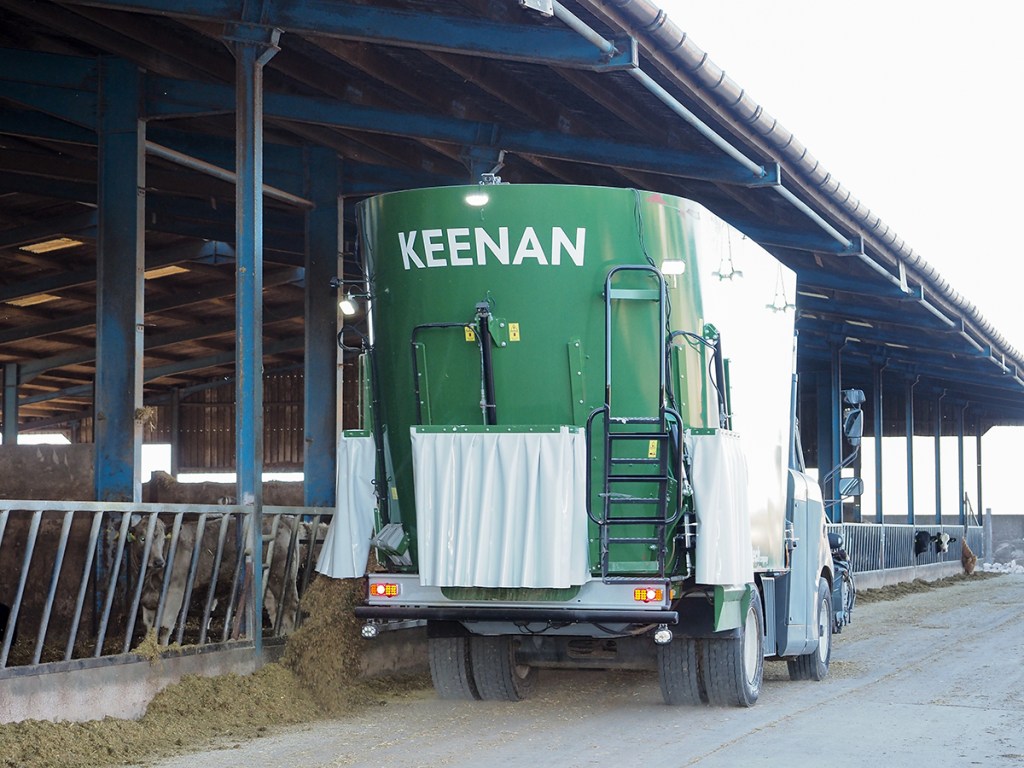
Changes were also afoot in the beef unit. Tom is a livestock nutritionist by background; he confirms that feeding cattle has always been of great interest to him, and the process has had an overhaul in 2025 Looking to increase efficiency, Greendale Farming has recently added a 33m3 capacity Keenan SP-VA self-propelled vertical auger feeder to its machinery fleet.
“It replaced a Keenan trailed paddle mixer, which had worked well. It was very simple and rugged, but we worked it very hard over three years,” says the farm manager. “I felt that while the paddle mixer does a great job and makes the best mix, for the amount of cattle we need to feed, a vertical mixer is a better design. You can actually lose the benefit of a paddle mixer when it’s being worked that hard.”
He also wanted to move away from trailed machines.
“It had got to the stage where we were putting 1,000 hours a year on a tractor just mixing feed and we were putting another 600-700 hours a year on a telehandler to load it. Telehandlers are £100,000 and tractors are £150,000 so our machinery costs for feeding alone were becoming madness.”
One issue is that the barley and protein blend stores are one side of the farm and the silage clamps on the other, with the cattle in the middle, so loading can be extremely time consuming.
“When looking at self-propelled feeder wagons, the Keenan was the only one that had the capacity to feed the number of head that we have in as few loads as possible.”
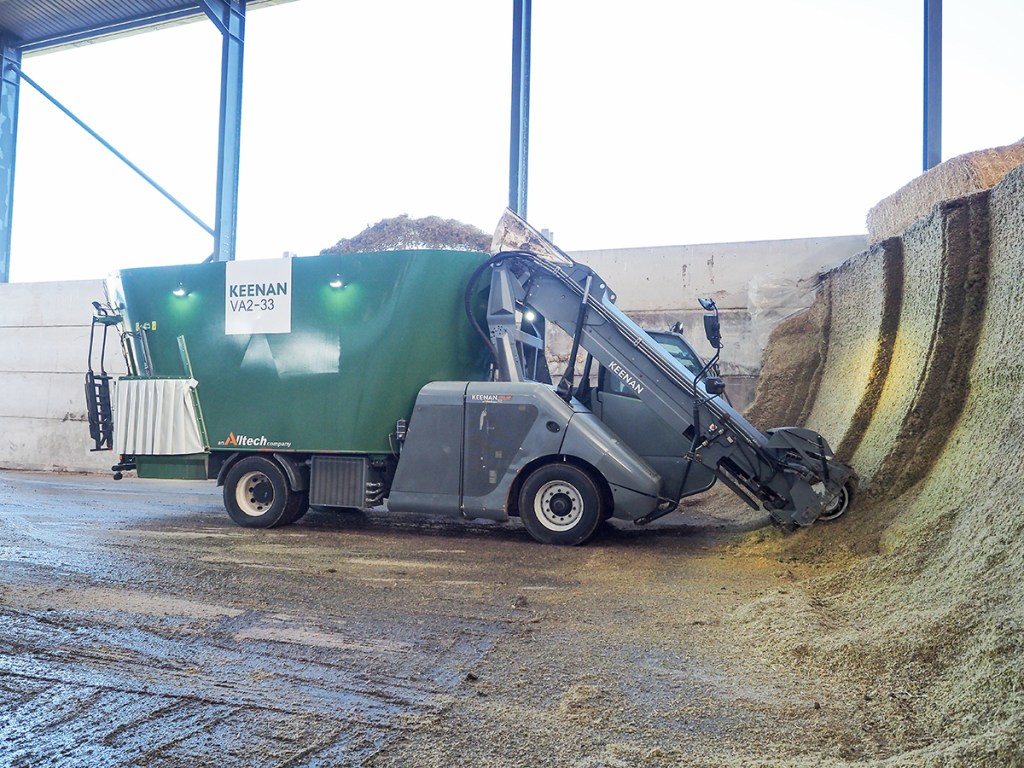
Reducing the loading time is a major benefit, he says. “We used to cut out blocks of silage and drop them in a heap on the floor, and then go along and load them into the wagon. You also get a cleaner clamp face with a milling head.”
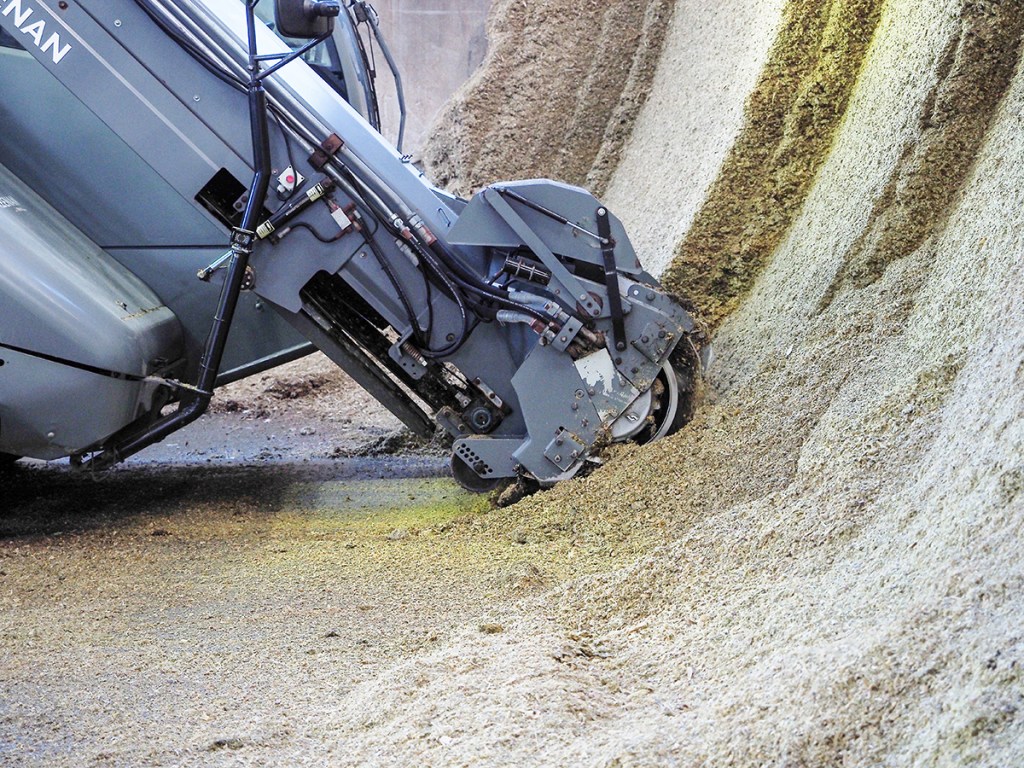
It’s complemented by a high feed-out speed; 1,500 cattle can be fed in 45 minutes, using wide rear doors to either side and feeding on the floor.
A shift in feeding regime has been put in place, feeding three loads a day rather than five with two different mixes depending on the production stage of the groups of cattle.
“There’s no dead time because as the wagon is moving around, it’s mixing. I know self-propelled machines are still rare over here compared to Europe, but it’s so efficient – you’ve just got one man doing all that feeding. It’s also fuel efficient because the engine is never working that hard.”
He reckons to have cut diesel use from 160 litres per day between the tractor and telehandler to 62 litres a day for the SP-VA.
Tom points out that a skilled operator is essential. “Gints Rheinfelds had never driven a tractor when he came here, but he’s very switched on and quickly got to know the trailed wagon. Once you’ve got confidence in an operator it’s easier to spend the money on a machine like a self-propelled feeder.”

“Maintenance is key, of course and we’re lucky that JB Engineering, who also look after our John Deere tractors, are Keenan service engineers.”


Ration management comes via the Keenan In Touch beef package, working with the weigh box and controller on the machine. “We have all the data coming in on feeding accuracy and how much has been fed every day, which is invaluable to the wellness of the herd,” he says. “We get regular visits from a Keenan nutritionist and we also use Matt Holmes from Crediton Milling Company, which supplies the blends as well as doing all the forage analysis and diet planning.”
He adds that he is often asked why he doesn’t do the diet planning himself. “It’s because ‘a watched pot never boils’ as the saying goes. I couldn’t do it, seeing the cattle every day. But the nutritionist comes in once a month and can more easily see the changes in the herd.”
Managing herd performance
Daily liveweight gain is between 1.8 and 2.0 kilos, he points out, with the production emphasis on high welfare, high performance.
“Interestingly, that also actually creates extremely consistent manure – effectively what goes in is what comes out. So now, we’ve got this amazing manure product, which is very prolific in CH4 (methane).”
The business sells between 80 and 120 cattle a week, and thus needs to buy in the same quantity, which are on farm for an average of 100 days.
“The ideal animal comes in at 550 kilos; it does a minimum of a kilo and a half a day liveweight gain, and then it goes out the door at just over 700 kilos. We EID tag everything, we weigh everything and the whole process is monitored and analysed.”
A human eye is of equal importance, he stresses: “You need a really good farm team, which we have in Brett, Rob, Gints, Sam and Toby, who all muck in together, as well as having their own individual roles. Although we have invested heavily in technology, stockmanship is still a huge part of what we do.”

Despite the impressive 10.4m length of the Keenan, manoeuvrability is not an issue in the expansive cattle buildings which have been progressively purpose-built on the greenfield site since 2014. Welfare was also a major part of the shed design, he comments: “The buildings are very open to give plenty of ventilation, we’ve put in dawn to dusk lighting which has made a real difference. We also scrape and bed them up every day including Christmas Day, and we’ve got cow brushes in every pen.”
The move to manure as an AD feedstock also means that business is much less reliant on crop and has been able to streamline the arable operation.
“The Greendale Growers’ Group has been established where the business works with farmers who use the digestate as a fertiliser, then we buy the resulting crops back in. It’s another nice cyclical enterprise that’s working really well, because it means that we’re guaranteed a certain amount of crop.”

Feed and feedstock sourcing
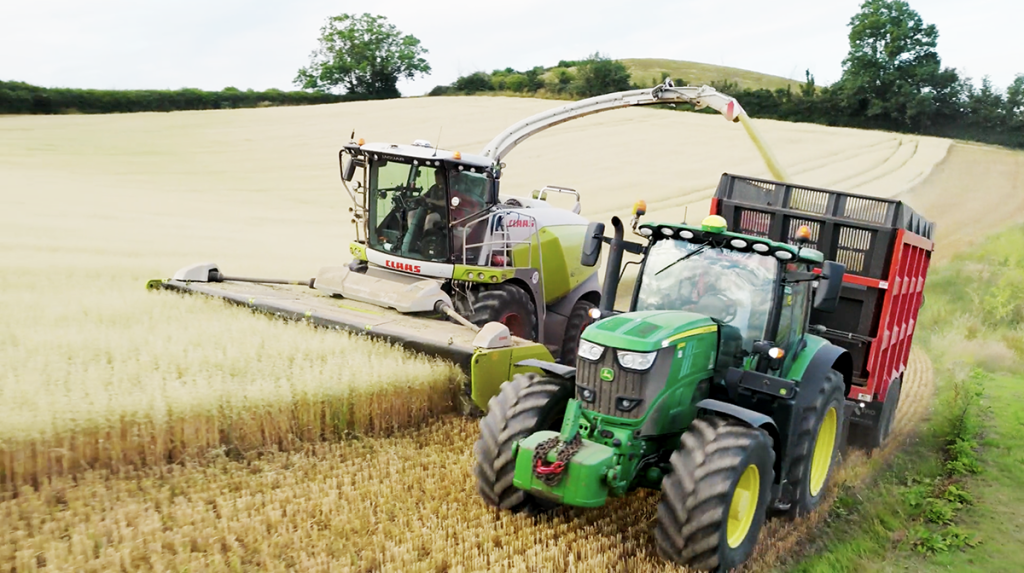
Greendale Farming grows its own grass and maize for the cattle, alongside wholecrop cereals to feed the AD.
“Barley and protein blends are all bought in on a very long forward bought book – I have already bought barley from harvest 2027,” says Tom. “It’s all about costing. Saving £5/tonne on barley is more or less immaterial, but knowing our costs for the next two years, is very important, because then we can budget accordingly. At the moment, we’re buying feed in for under our own cost of production. We know that wheat needs to be £200/tonne before we grow it ourselves, and at the moment it’s a long way off that.”
Tom explains: “We’ve put more grass in to feed the cattle and more wholecrop for the AD plant. By growing what you feed it, you know exactly what tonnage you’ve got; wholecrop is also very difficult to buy in.”
“The crops are still important – if you only fed it on muck, it would be like running yourself on Jacob’s Cream Crackers. You need balance.”
Fieldwork its split between the in-house team and a local contractor.
“We do most cultivations and spraying, but he takes care of drilling, forage harvesting and combining. It’s all about communication – at peak times we’re talking three or four times a day. If we’re getting a bit behind, his team come in and help us catch up, and if they’re getting a bit behind with their operations, we go and help them.”
A major appetite
Conveniently, the farm buildings are immediately adjacent to the digester, so tractors and loading shovels are used to move muck to feed the system at rates of 45 to 50 tonnes per day.
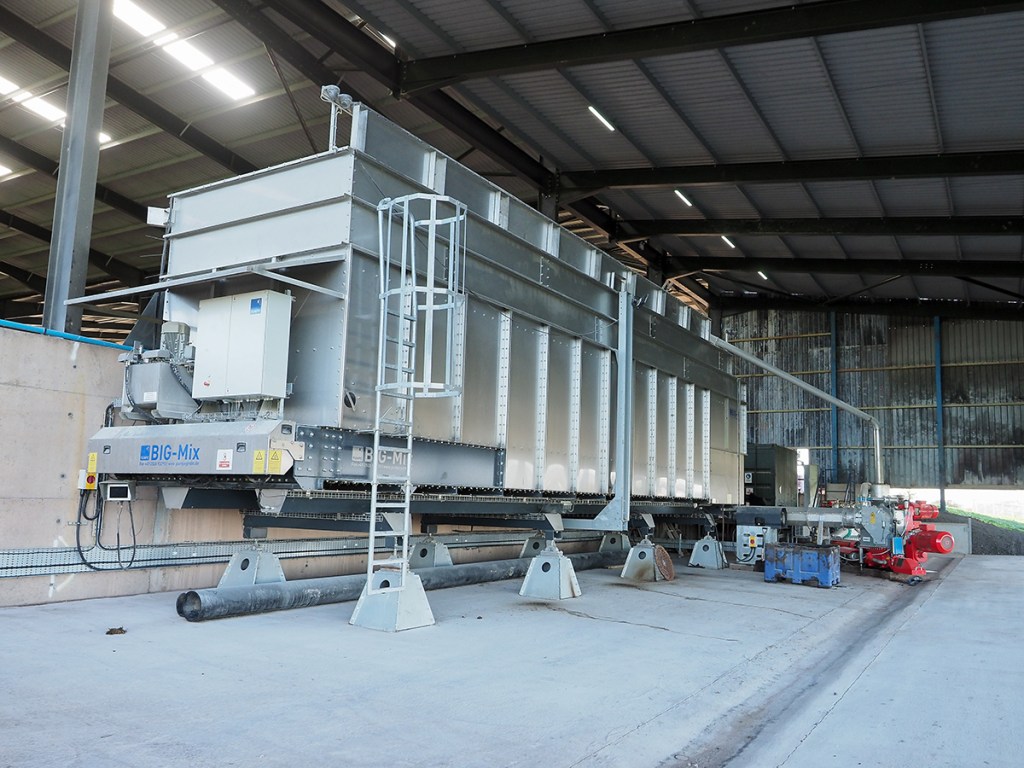
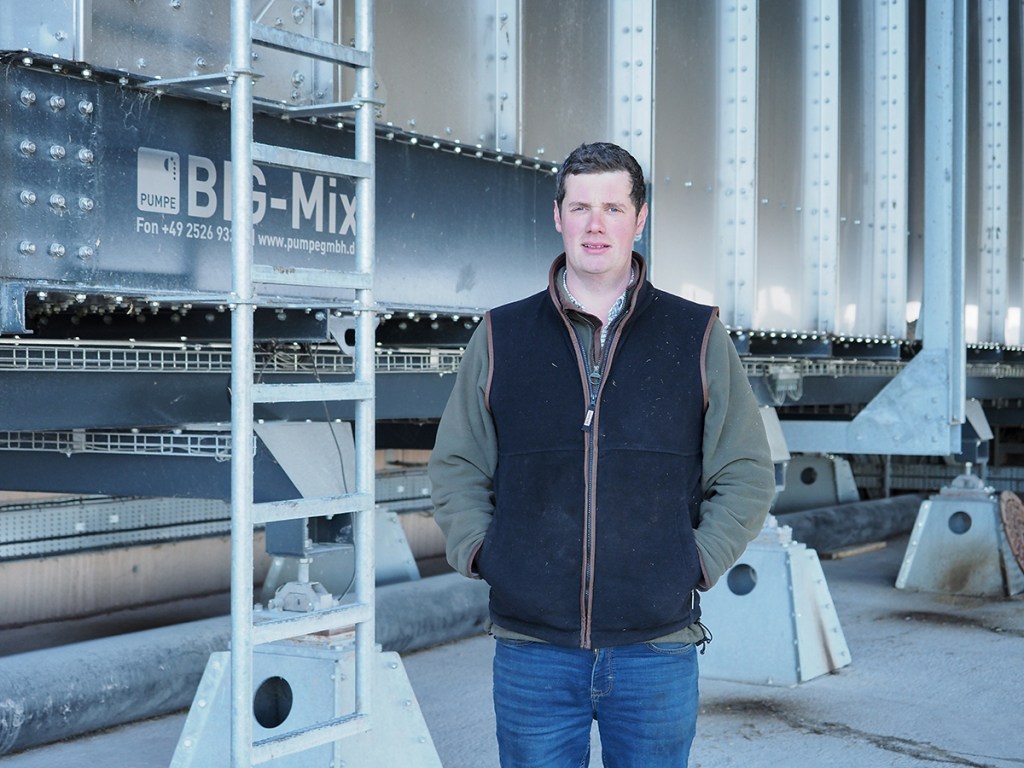
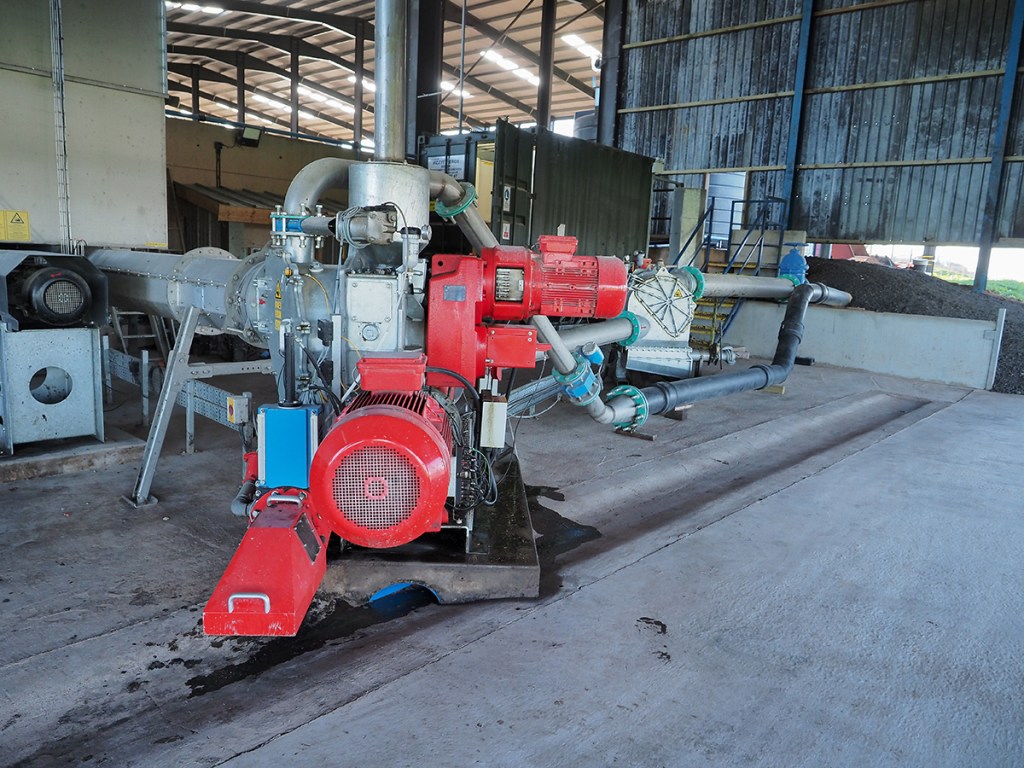
Tom points out that the key to anaerobic digestion is that the feedstock has always got to be moving and stirring, so it must be liquidised. It goes into a recently-commissioned Vogelsang Big Mix, described as a ‘giant food blender’. Manure and crop feedstock are placed in the 120 tonne hopper and transported via a push floor to an adjacent processing chamber to be chopped via vertical mixing screws and mixed with warm liquid digestate fed back from the plant.

This material is piped to another macerator for further chopping and then pumped while still hot into the digester.
”At 50°C its effectively like soup so when it’s put into an anaerobic state it starts to decompose straight away. This means you get a very fast gassing reaction, and we are also finding now, a very clean gas. It takes very little filtering before it can be burnt through the engines, which is a big step forward for the plant.”
The liquid format also increases the surface area for bacteria to act on.
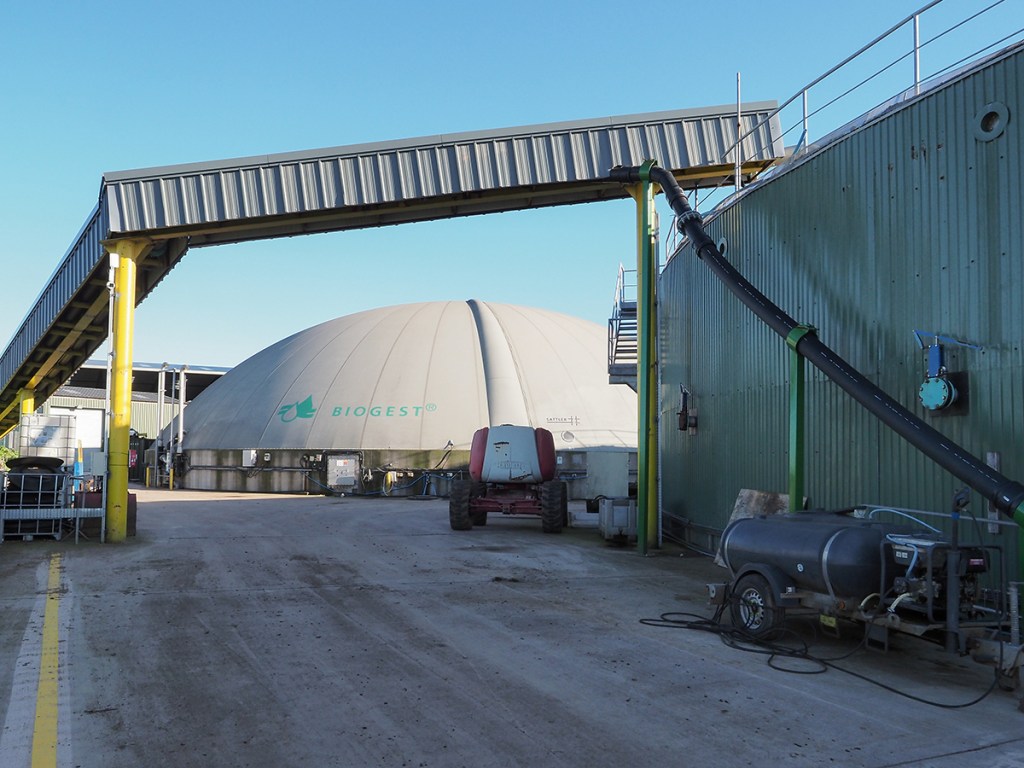
“The AD is being fed every two hours with the processed feedstock, but this means that the retention time – the period that the liquid is kept in the tank to extract all the gas from it – is shortened and we’re running the plant more efficiently. It’s brought our retention time down from 100 to 80 days, increasing our capacity by almost a quarter and keeping the engines running flat out.”
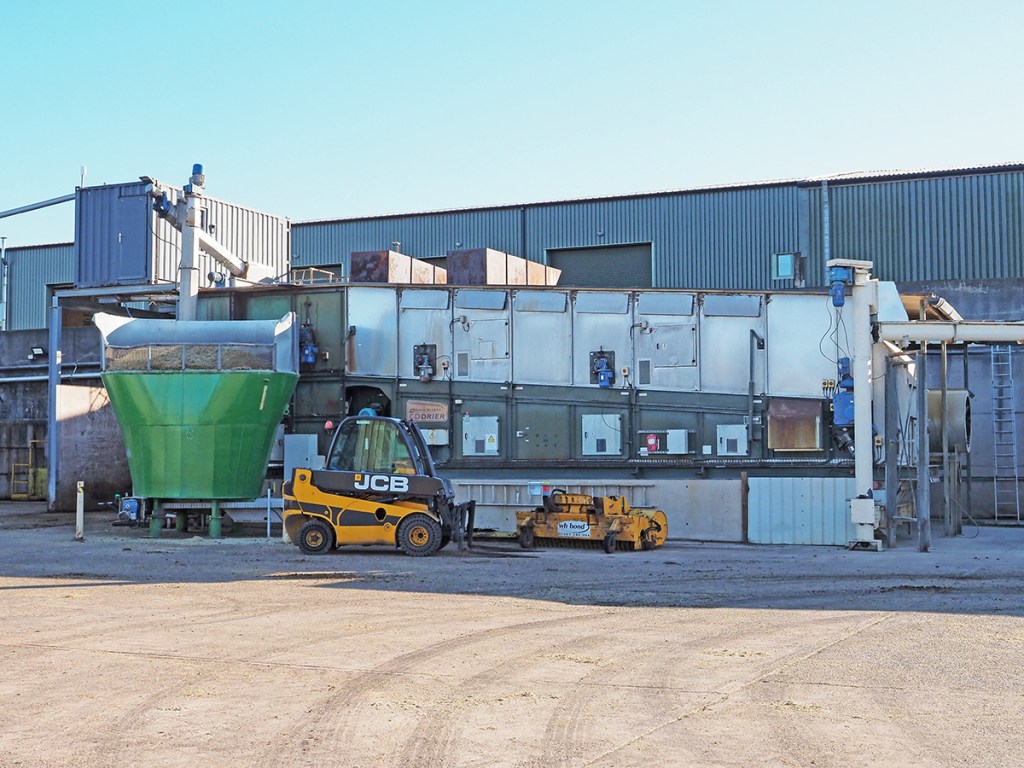
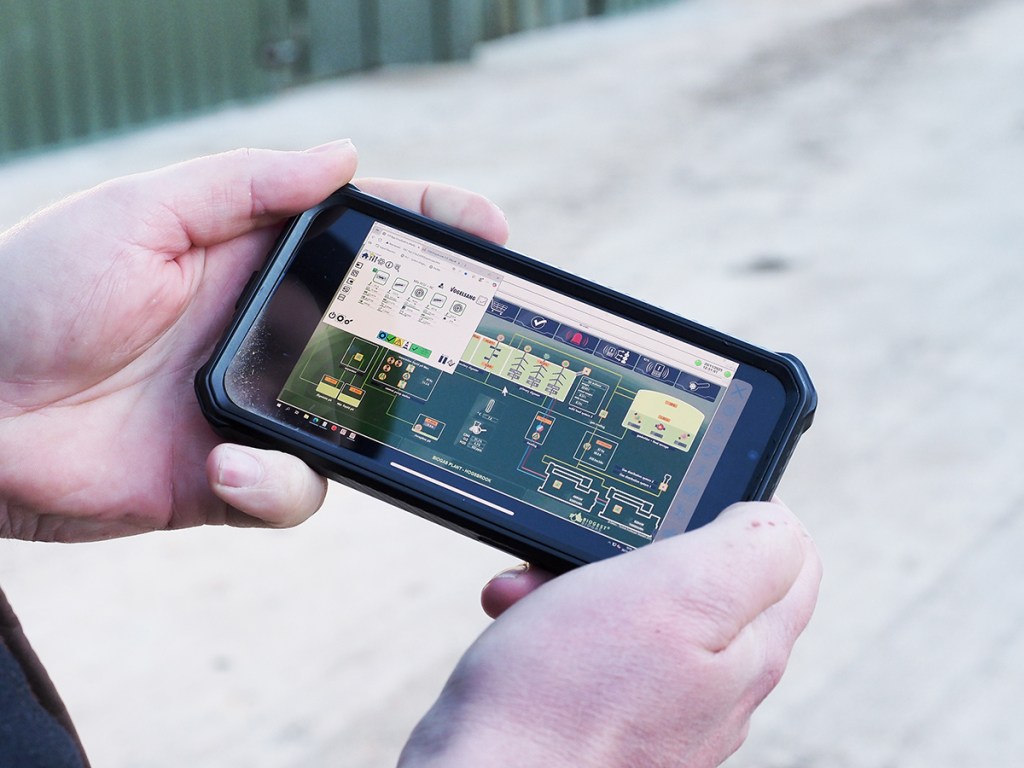
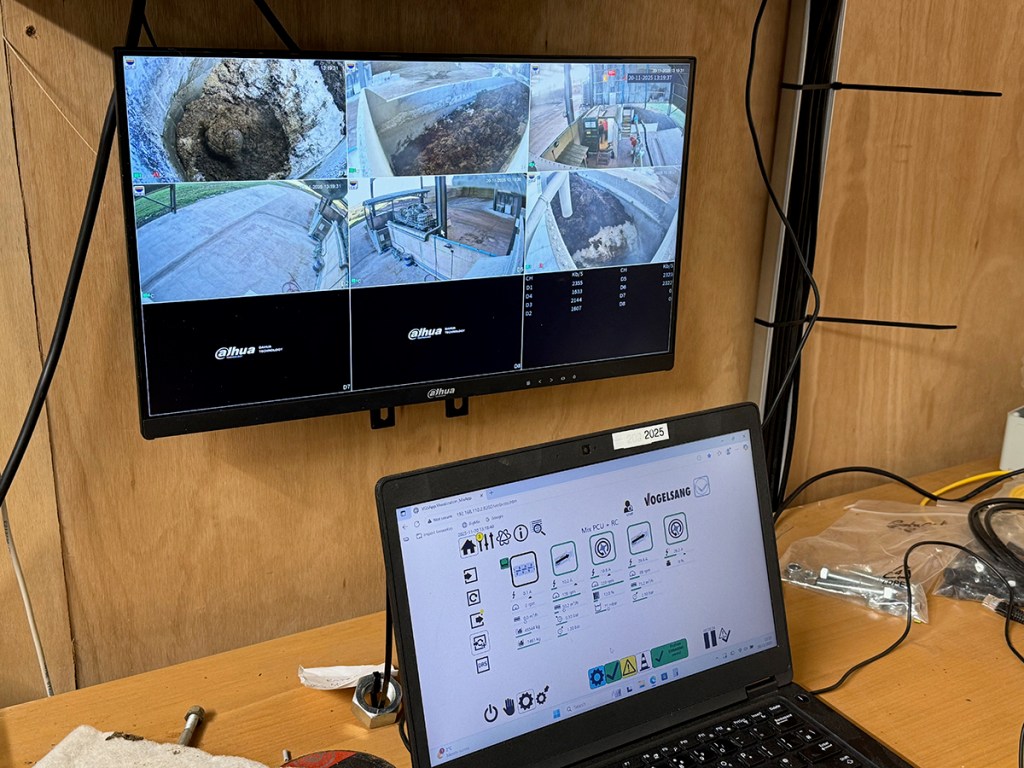
Tom, along with Martin Davey, Phil Sharland, and Del Melville, manages the feed system and the digester via a phone app, although some processes have to be carried out in the control rooms.
With the system up and running, Greendale Group and Willowglen have a good story to tell to a wide audience beyond the tenants in the business park and the customers in the impressive farm shop on site. A public engagement launch is planned for 2026 to further spread the word about the proposition and share the business’s achievements with the community.
Jane Carley
For more up-to-date farming news click here and subscribe now to profi and save.