
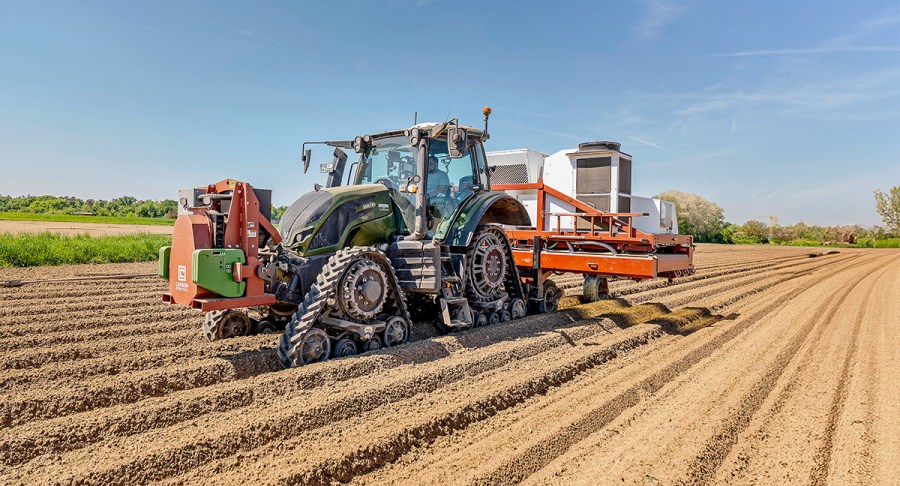
Covering over 1,000 hectares, Grosshans specialises in vegetable farming,
using tracks, AI, laser weeders and precision to achieve a better quality product.
KEEPING IT BRIEF
- Carrots are the main crop grown by Grosshans.
- Weeds are controlled using lasers when they reach the cotyledon stage.
- RTK-GNSS is employed for planting every row.
- A sideshifting headstock guides the ridger, hoe and the drip hose laying machine precisely between the rows.
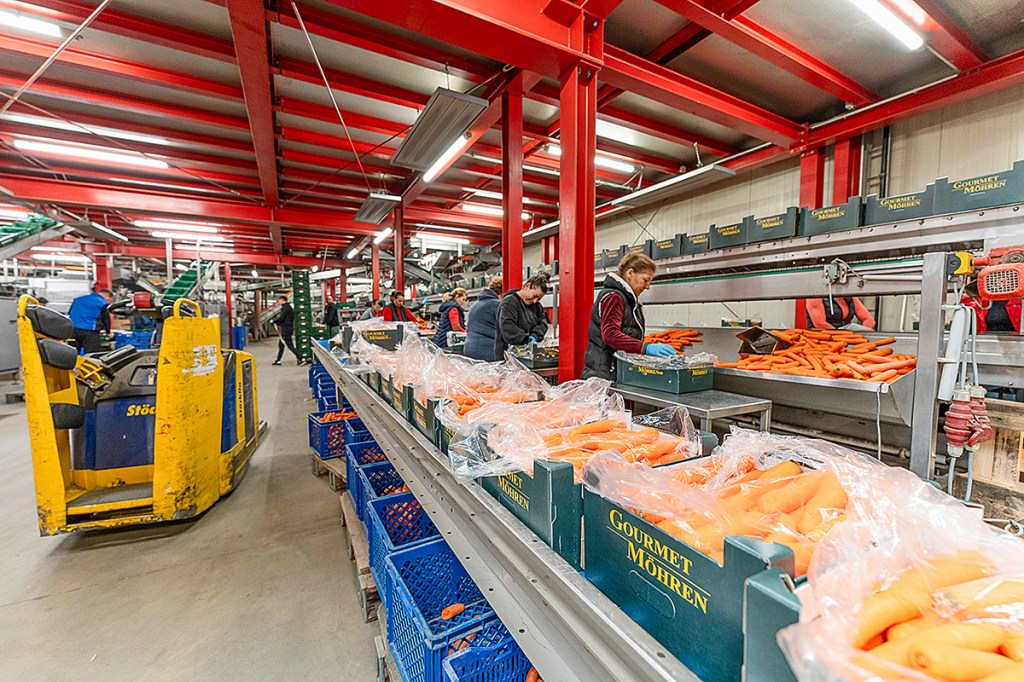
Around 250 tonnes of carrots leave Grosshans vegetable farm every day. But first the crop is washed, graded, portioned and packaged for food retailers.
Karsten Grosshans started off growing vegetables in south west Germany 30 years ago. What started out as a 30ha farm has now grown to 1,000 hectares, most of which are leased. In addition, there is an affiliated organic farm with 250ha which is farmed to the ‘Naturland’ organic guidelines and relies on its own machinery.
Farming in Reilingen, which is situated near the river Rhine, certainly has its challenges. Some of the soils are very sandy, with parts only scoring 20 points in the soil index; and there is little rainfall.
Irrigation is a must
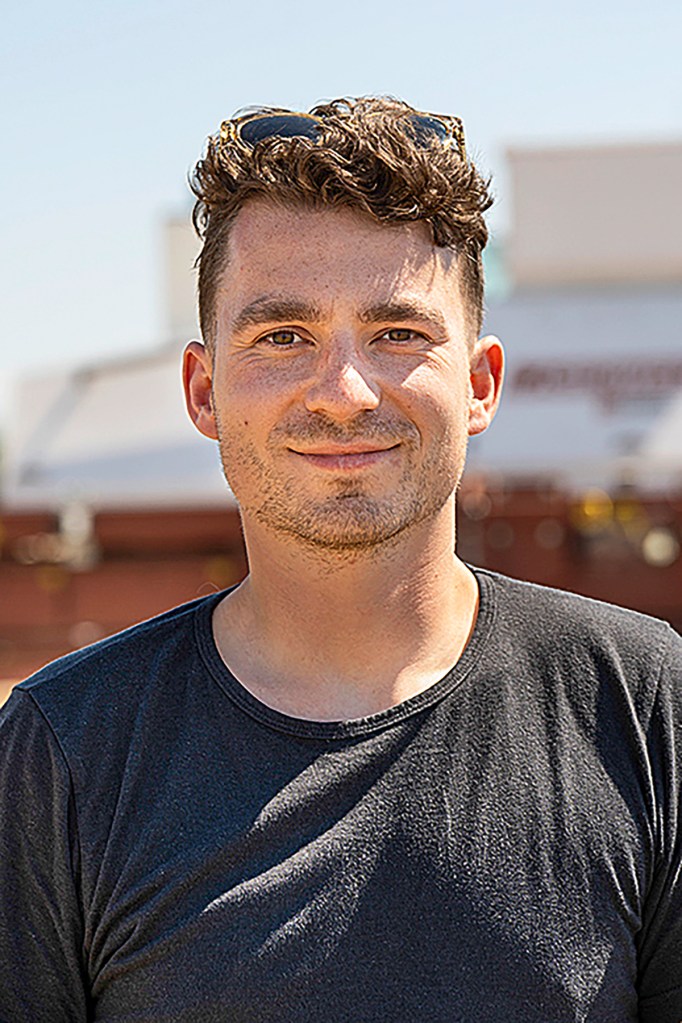
“That’s why we irrigate all our fields — either with sprinklers, rain guns or drip hoses,” says operations manager, Dennis Grosshans, who has been the co-managing director for three years. The IT-Direkt Raindancer (profi 12/2019) controls the rain gun sections when irrigating to help in optimising water distribution.
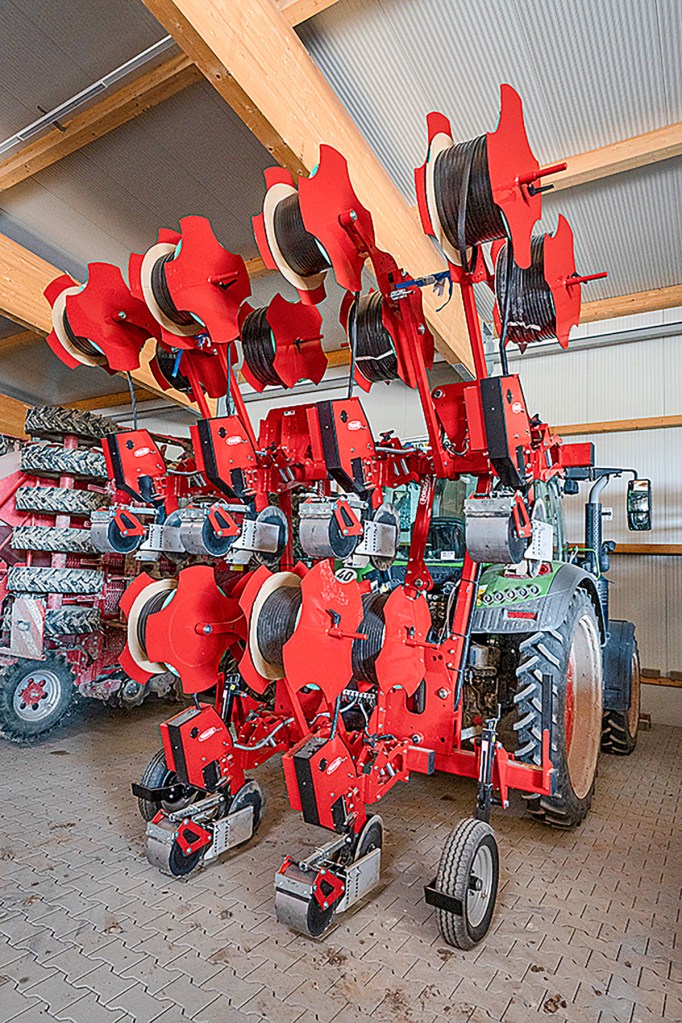
For laying the drip hose, Grosshans uses a machine from Italian firm Forigo, which cuts a slot in the soil, places the hose, seals, and rolls the slot shut before then automatically cutting the hose as needed. This is currently a one-off custom-built machine that Forigo has made for Grosshans.
As you can imagine, the farm’s machinery fleet is extensive: there are over 50 tractors, of all shapes and sizes, from the small Fendt 211 to a 942, with Fendt and Valtra being the main brands.
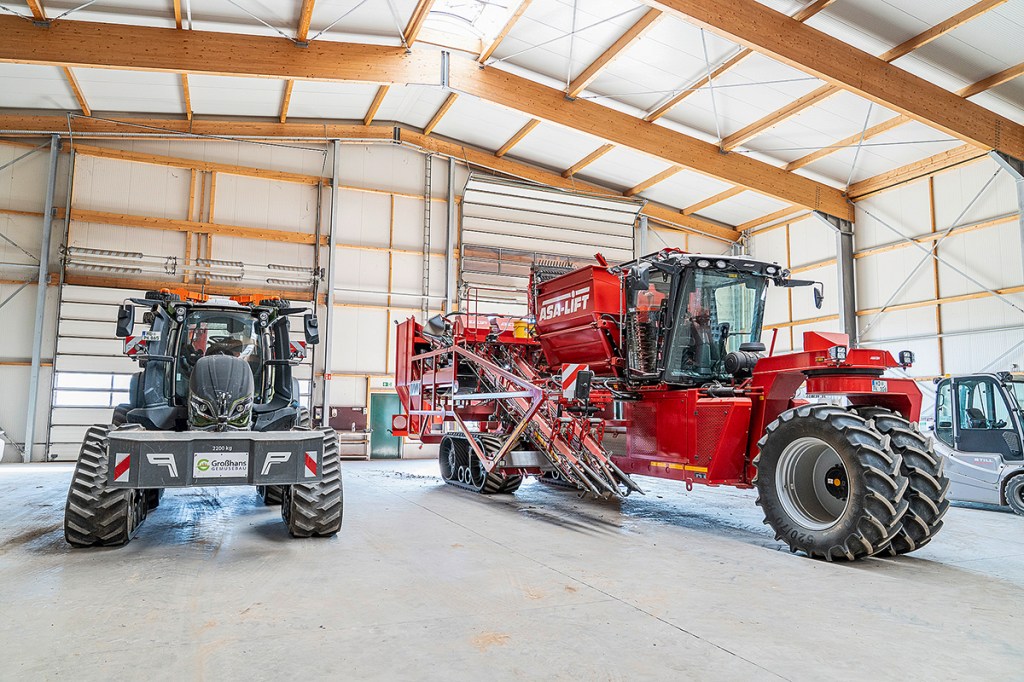
Soil protection is a top priority
All of the tractors used for fieldwork are booted with row crops, and four of the high-horsepower tractors have tracks.
“Soil protection is particularly important during seedbed preparation,” says Dennis. But all of the harvesters are also equipped with tracks. And to protect the soil as much as possible, the tractors and trailers don’t enter the field.
There are three Asa-Lift clamp harvesters for lifting carrots, and for potatoes there’s a Grimme Evo 290, an Evo 280 and a Varitron 470 Terra Trac. “We mainly use the Varitron for harvesting carrots in winter,” explains Dennis. The carrot harvest continues all the way into March.
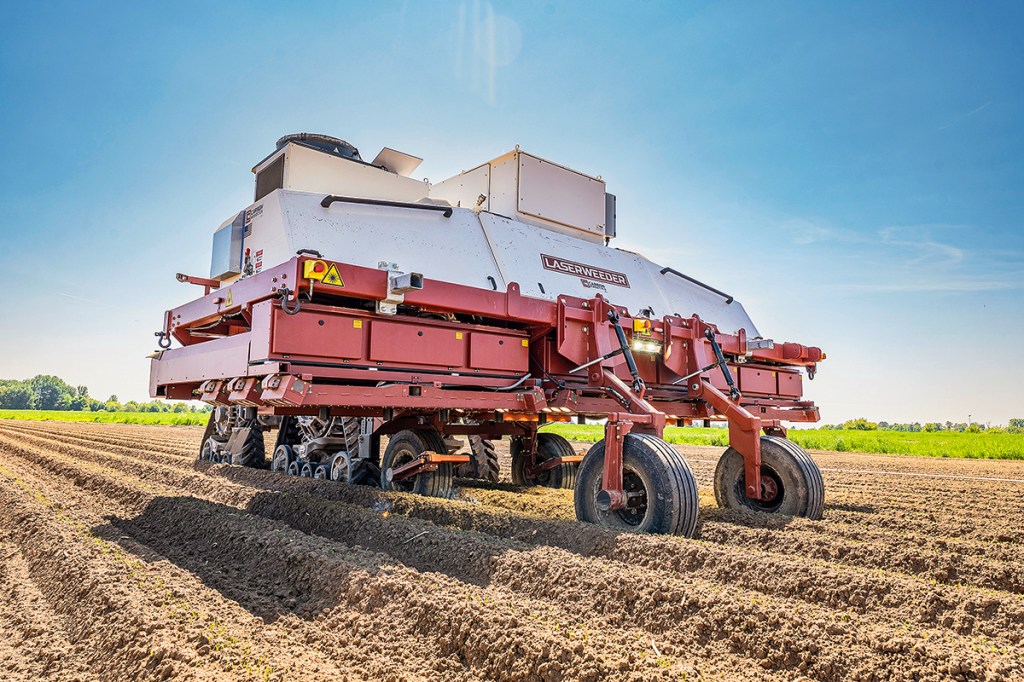
Lasers for weed control
Before the carrots are ready for harvest, they need a lot of attention. Weed control is a particular challenge in organic farming, which is why the business purchased two LaserWeeders from Carbon Robotics — a €1.5 million investment per machine.
“However, the purchase pays for itself quite quickly for us,” says Dennis. “Before we had the laser weeder, we had 50 to 70 people weeding around the clock. Now we only need half the people.
“Another advantage is that a laser can weed at the cotyledon stage, which isn’t possible when doing the job manually; there’s just too much of a risk of the carrots being plucked out at the same time as the weeds.”
The LaserWeeder is able to work with great precision, or at least that was our takeaway when we saw it in action.
The 6.0m wide machines are equipped with high-resolution cameras and CO2 lasers (the newer Gen2 models now use diode lasers). Twelve cameras look ahead, feeding images to individual plant recognition software.
Another 30 cameras are each assigned to one laser. The lasers have a light output of up to 150W. Two mirrors direct the lasers onto their target, and the weeds are virtually ‘shot down’ as the high energy of the laser burns the plant’s growing point.
Small servo motors realign the mirrors every five milliseconds. Nine LED light strips illuminate the area, including the soil, weeds and crop. A generator on the tractor’s front produces up to 90kW of electricity for the laser weeder.
Precision at creeping speed
According to the company Carbon Robotics, the LaserWeeder can take out up to 5,000 weeds per minute. But it is a steady job: depending on the weed burden, the machine only covers 0.2 to 0.6ha/hr.
The farm manager can fine-tune the laser weeder’s aggressiveness from his iPad. AI-based image processing technology detects weeds and crops at the cotyledon stage.
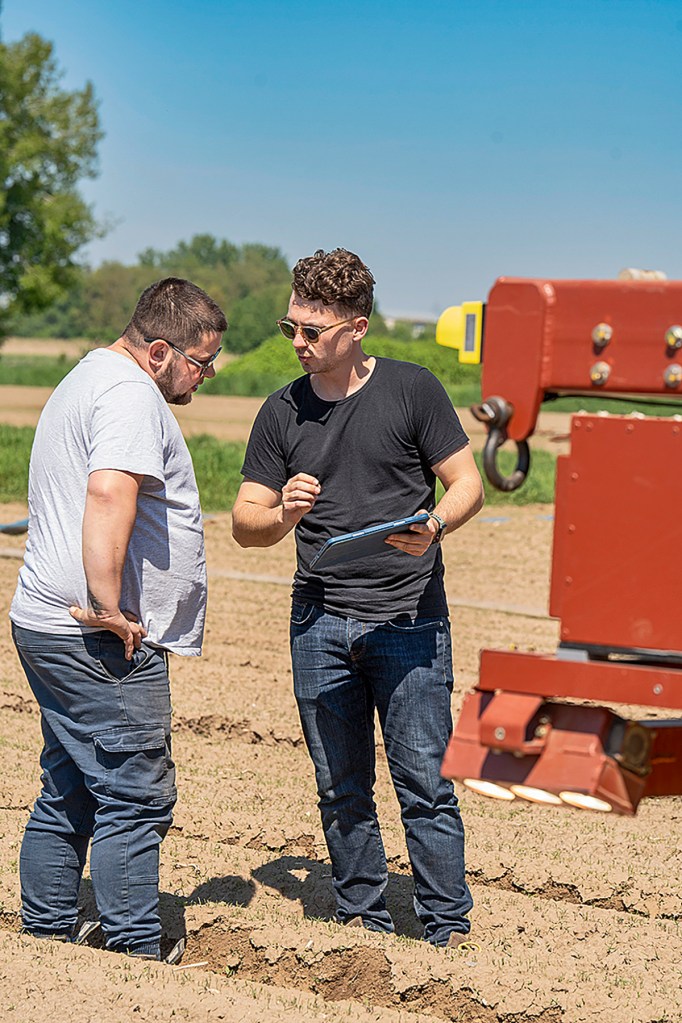
We were impressed, because the system even differentiated between carrots and knotweed, a plant that also has distinctive narrow cotyledons. The more aggressive the machine settings, the more often the system categorises carrots as weeds and kills them with a laser beam. And, conversely, the less aggressively the system works, the more weeds are left standing
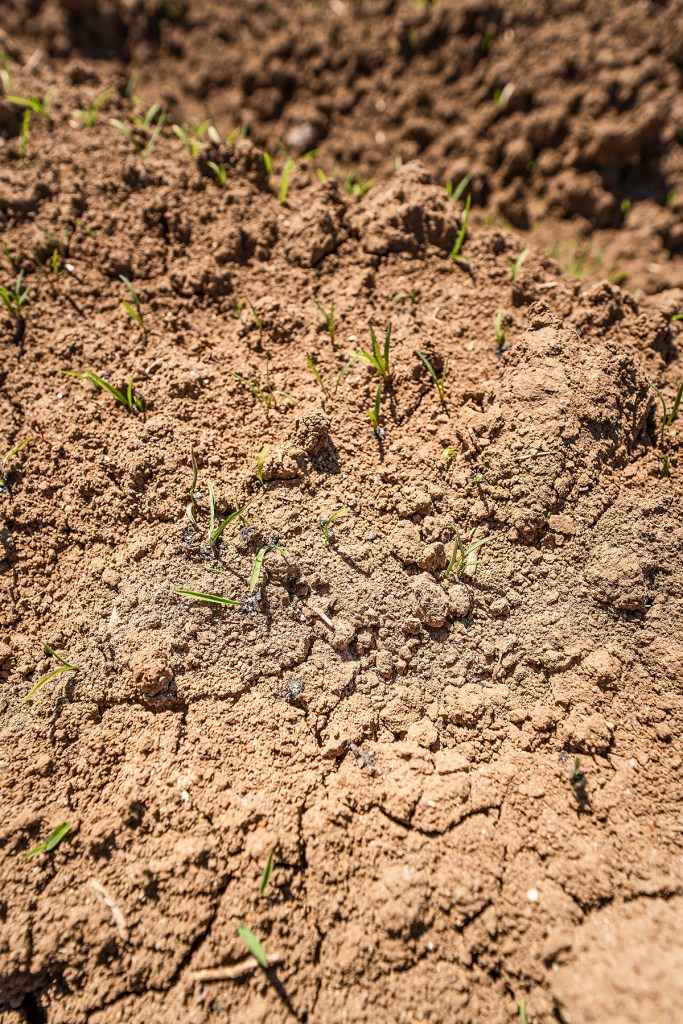
“We employ the LaserWeeder as early as possible — ideally at the cotyledon stage and then again around 10 days later,” explains Dennis. “In the first pass, the laser kills about 90% of all weeds on the carrot ridges.”
On our visit to the field, the Valtra N175 was travelling at just 0.2km/hr. “You can drive at speeds of up to 1.5km/hr when there are not many weeds,” says Dennis. If the driver goes too fast, the LaserWeeder doesn’t have enough time to kill every single weed. When that happens, the system beeps to warn the driver to slow down.
Automation in mind
“With our Fendt 516 or 724, which have Tractor Implement Management (TIM), it is possible to adjust travel speed automatically to the level of weed infestation,” comments Dennis. The LaserWeeder is still pulled by a ‘normal’ tractor with cab and driver, but they have already thought about automating the laser pass.
“We’ve already considered the possibility of automation; we’ve looked at the AgXeed AgBot,” points out the manager. “But apart from the fact that the autonomous tractor doesn’t have enough ground clearance for this job, there’s another problem for us, in that we’d still need a pilot to monitor and operate the autonomous machine. Logistics would also be a challenge given our field layout.
“Automation of agricultural processes is coming,” notes the vegetable grower.
Accurate guidance
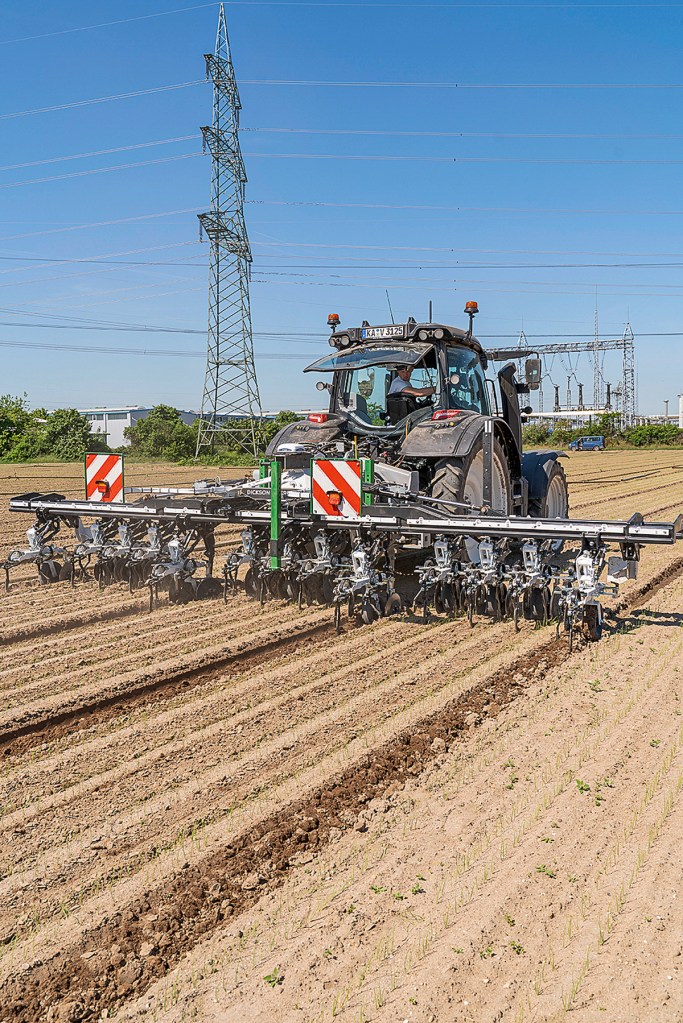
All implements used in the vegetable fields are designed for a working width of 6.0 metres — from seedbed preparation, forming ridges or beds and sowing to row work with hoes and ridgers. Precision is key in all these operations. The business achieves this by recording the seed and crop rows with an implement-mounted RTK-corrected GNSS receiver and a side-shifting frame for all subsequent fieldwork.
“A slight slope and our different soils cause the potato planter, for example, to drift. In the subsequent ridging pass, it is important that the potatoes lie exactly in the middle of the ridge and do not come out on one side,” explains Dennis.
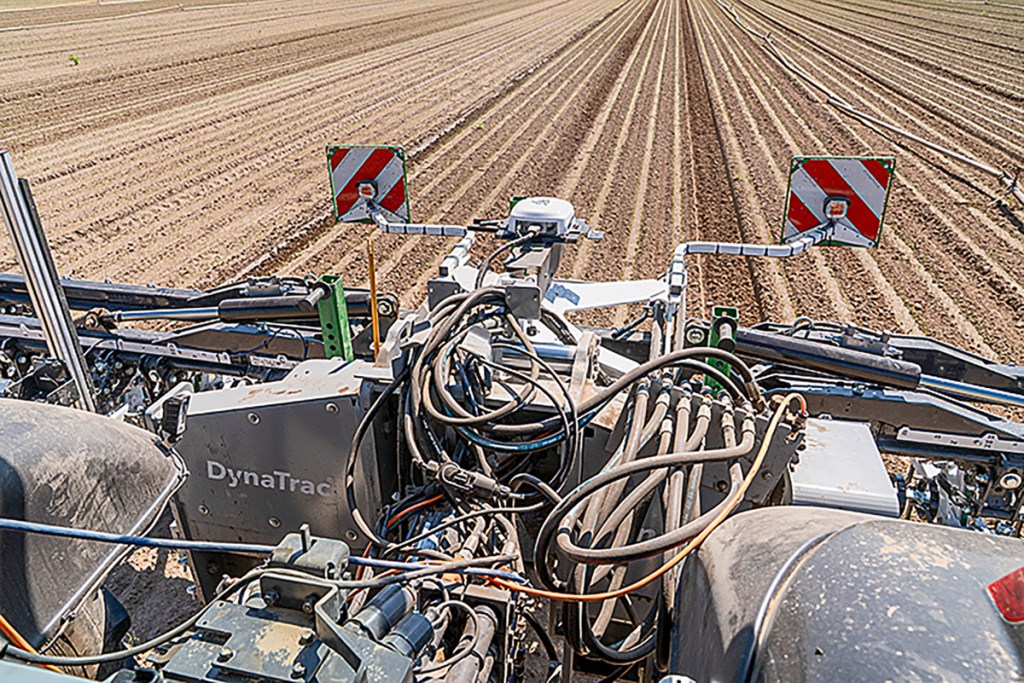
For this reason, and also to be able to guide the mechanical weeders and the drip hose laying unit accurately along the rows, they purchased a LaForge DynaTrac Premium+ side-shifting frame that sits between the tractor and implement. This can be controlled by camera and GNSS signal. In addition, the frame has a pto shaft for bed tilling.
Steering with camera or GPS
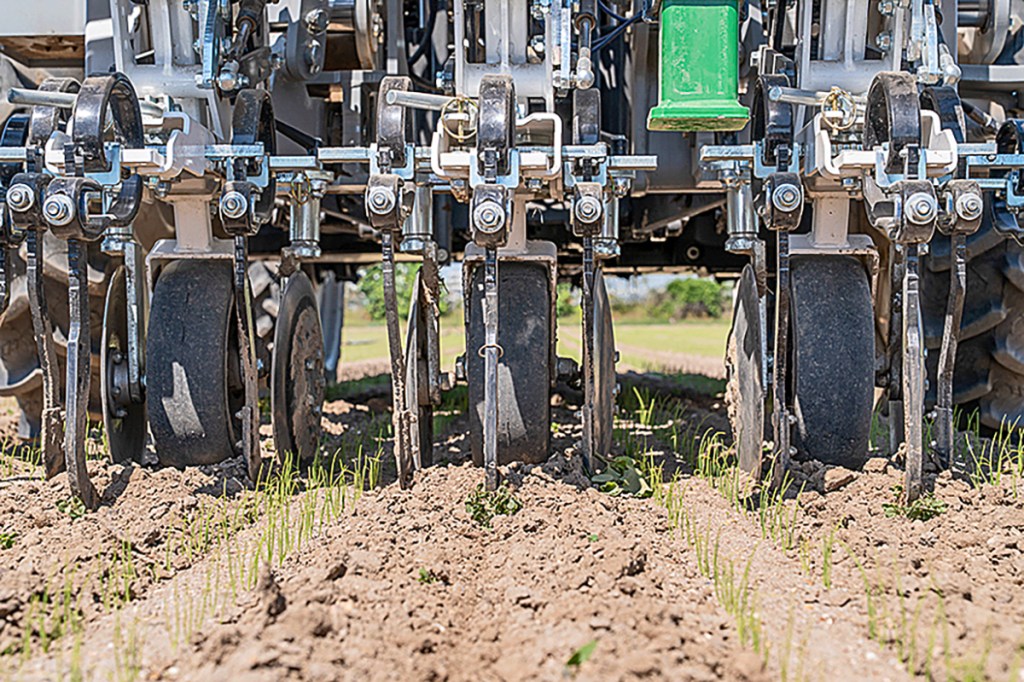
Operators can use either a camera- or GPS-based guidance system. The camera guidance system guides the machine along the crop rows, using image processing technology to distinguish between green and brown. For example, the onions in our case were still too small for using camera guidance, so the operator selected RTK-GNSS-guidance. The RTK correction signal is provided by the farm-owned reference station.
A Trimble Nav-900 GNSS receiver is mounted on the hoe’s frame for precise hoeing with GPS guidance. The seed rows were recorded when the crop was planted using a Trimble receiver on the planter. “This allows us to hoe at a distance of only 2cm from the rows of onions,” explains the operator. Of course, this is only possible if the hoe is free of any play in the mechanism.
Just-in-time packaging
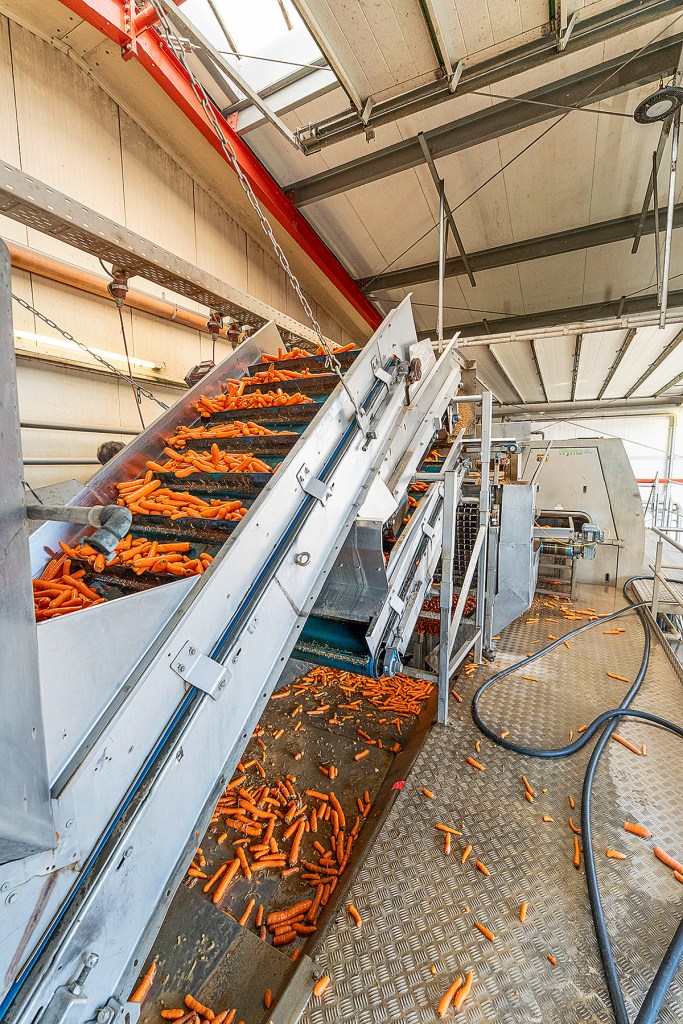
Back to the carrots. The freshly harvested carrots are always graded and packaged just-in-time. The first step is washing. The washing water is then recycled.
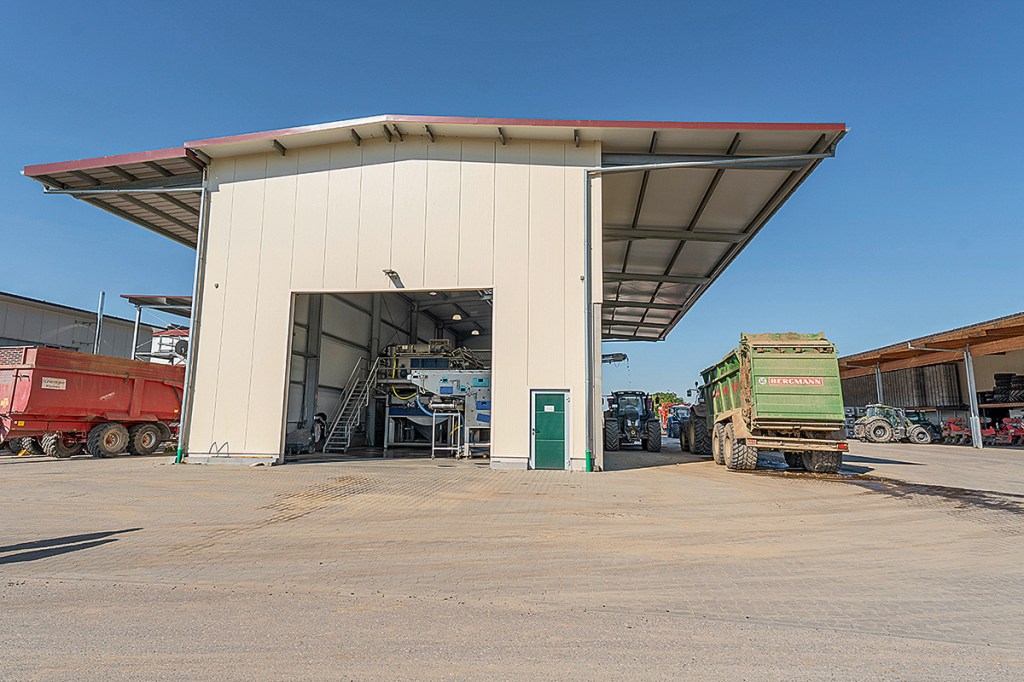
The next step is grading. The carrots are graded entirely automatically. The grading system takes a photo of each carrot. The system’s AI-based image processor detects the colour, shape, length and thickness of the carrots and ‘decides’ using this criteria whether the quality of the carrot meets the set standards or not. Those that don’t meet the grade are removed by a quick burst of compressed air. The whole process takes only a fraction of a second — impressive.

“Around 10 to 20 per cent of our harvested carrots do not meet the quality standards set by the food retailers. These carrots are shipped in bulk to wholesalers who market them to the juice making industry or as animal feed,” says Dennis. All other carrots and vegetables are delivered out to food retailers throughout Germany.
Summary
The Grosshans vegetable farm shows that with the right ideas, entrepreneurial spirit and a willingness to take on risks, you can create something big. The farm’s motto, “Do good to achieve the best”, seems to be the path to success. Dennis Grosshans and his family grow carrot crops, onions, radishes, courgettes and early potatoes on more than 1,000 hectares of land.
The machine fleet also comprises two laser weeders from Carbon Robotics, which will kill weeds in carrot and onion fields at the cotyledon stage.
In addition, a LaForge sliding frame ensures precision when hoeing, ridging and laying drip hoses.
Anja Böhrnsen
For more up-to-date farming news click here and subscribe now to profi and save.