
Compliant with the European T-category that enables it to be easily registered for road use, the Kawasaki Brute Force KVF 450 T-cat will tick a must have box for many ATV users. But there is far more to this 443cc model than its road ready spec.
KEEPING IT BRIEF
- Can be road registered.
- Uses the same styling and some of the features of the bigger 750.
- Price of the tested Brute Force 450 is £5,328.
Let us start by comparing the Brute Force KVF 450 to other well-established models at the more affordable end of the nominal 450cc ATV class; the Kymco MXU 465 and CFMoto CForce 450. The CFMoto weighs in at an ex-VAT £5,500, albeit for the full fat variant equipped with winch, alloy wheels and power steering. You can shave £1,000 from that if you opt for the CFMoto Base: this entry-level equivalent doing without those extra features that is nearer the spec to both the Kymco and Kawasaki. These two retail for a shade under £5,400 (all figures excluding VAT).
The Kawasaki and Kymco are powered by the same 443cc petrol engine rated at nominal 17hp at 6,000rpm for the Kawasaki. The same power unit in both? Well yes, as under its stylish skin, the Brute Force 450 is much the same as the Kymco MXU 465 which in part explains why the Kawasaki is so competitively priced. Sharing development and production helps keep costs down.
Interestingly, Kymco lists the power output of the MXU 465 as 33hp.
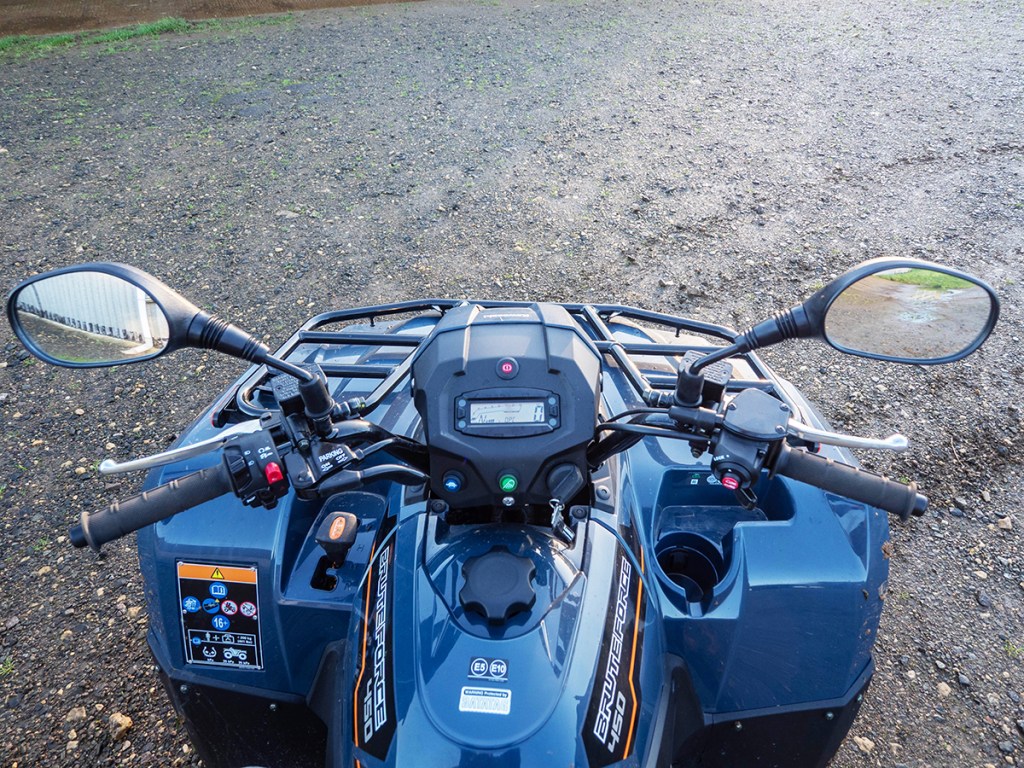
For those that value appearance, this baby Brute shares the latest look of its big brother, the V-Twin Brute Force 750 (See profi 1/2025). This includes a handlebar mounted headlight that is switched on and off separately from the LED headlights, the latter switching on via the ignition key. Switch the headlights on and the bar-mounted light is switched off to meet compliance with road regulations. In our time with the 450, we found the body mounted headlights offered as much light as you could ever wish for. As to the bar mounted headlamp on its own, it seemed dim in comparison, such is the power of the excellent body mounted headlights.
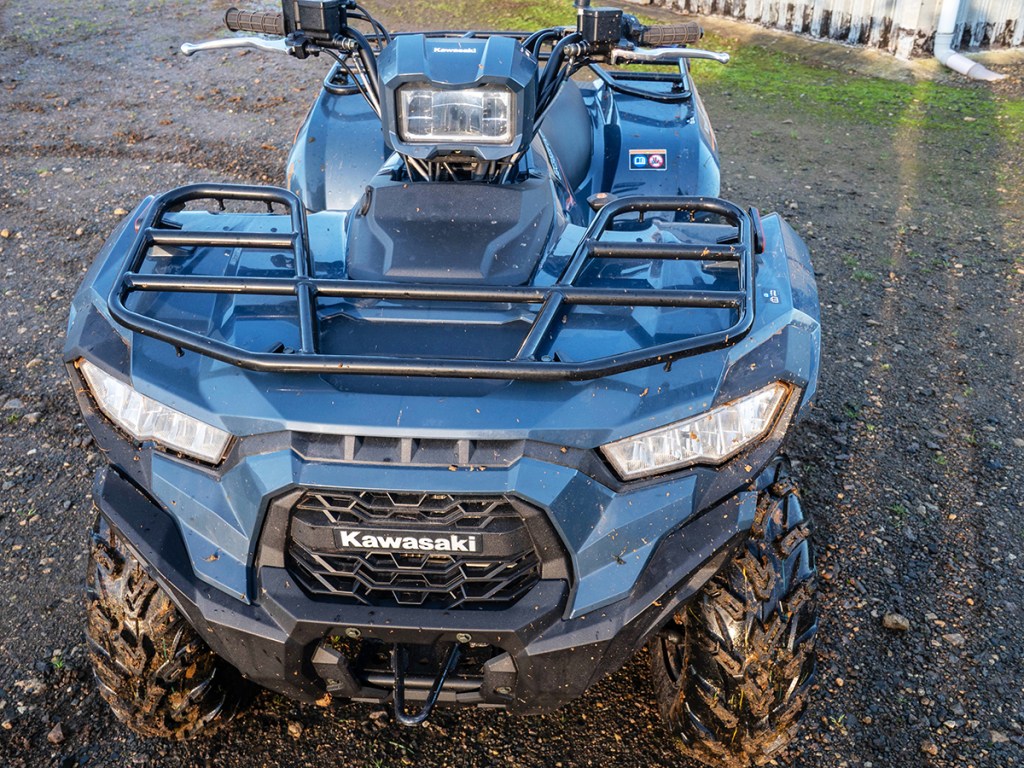
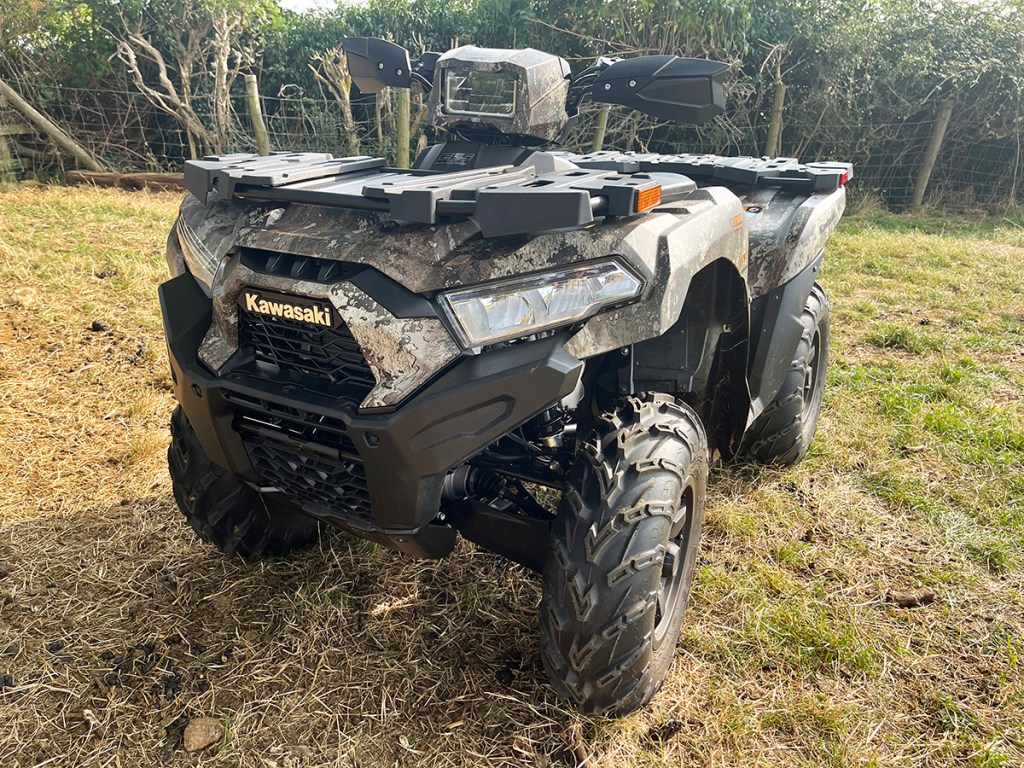
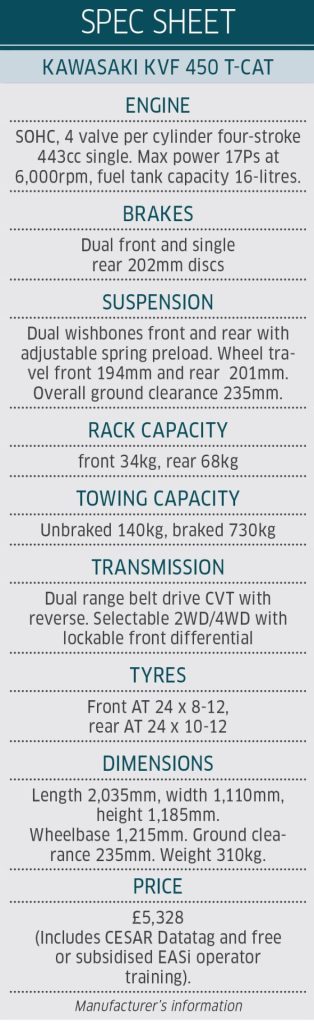
Unlike the larger Brute Force 750, that now has flat plastic covered racks front and rear, those on the 450 are simple open tube designs, with 34kg front and 68kg rear capacities. Although down on the respective capacities of 40kg and 80kg of Kawasaki’s 750, these match the smaller size of the 450 and the capacities are pretty much what you would expect.
No power steering or active downhill engine braking?
Kawasaki does not offer the smaller Brute Force with power steering or active transmission braking, the latter enabling a belt-drive CVT auto ATV such as this to trickle down a steep incline without needing to use the brakes. We anticipated that this, plus a lack of power steering, would be something we would really notice on our very mixed routine work run that includes more than a few steep inclines.
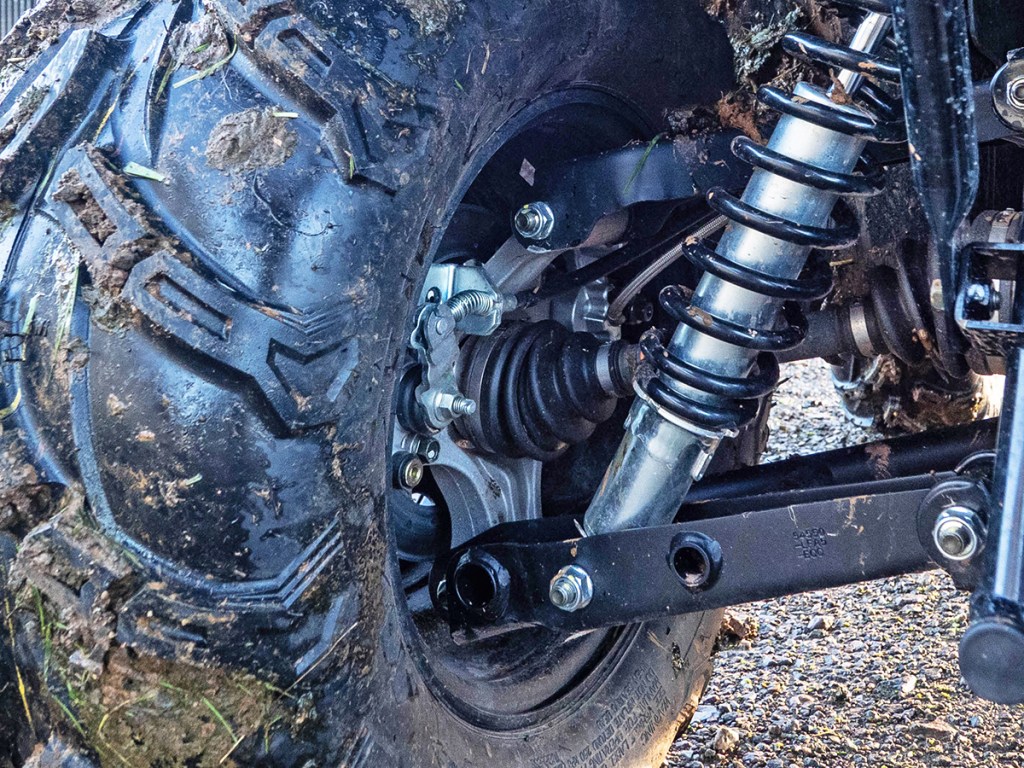
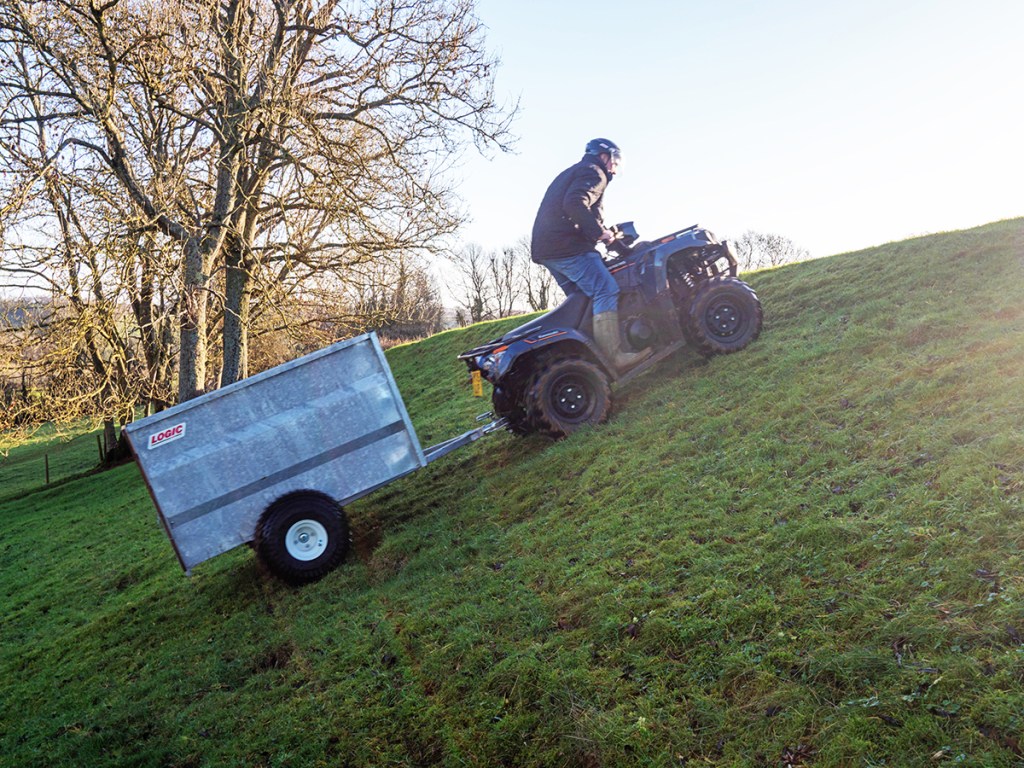
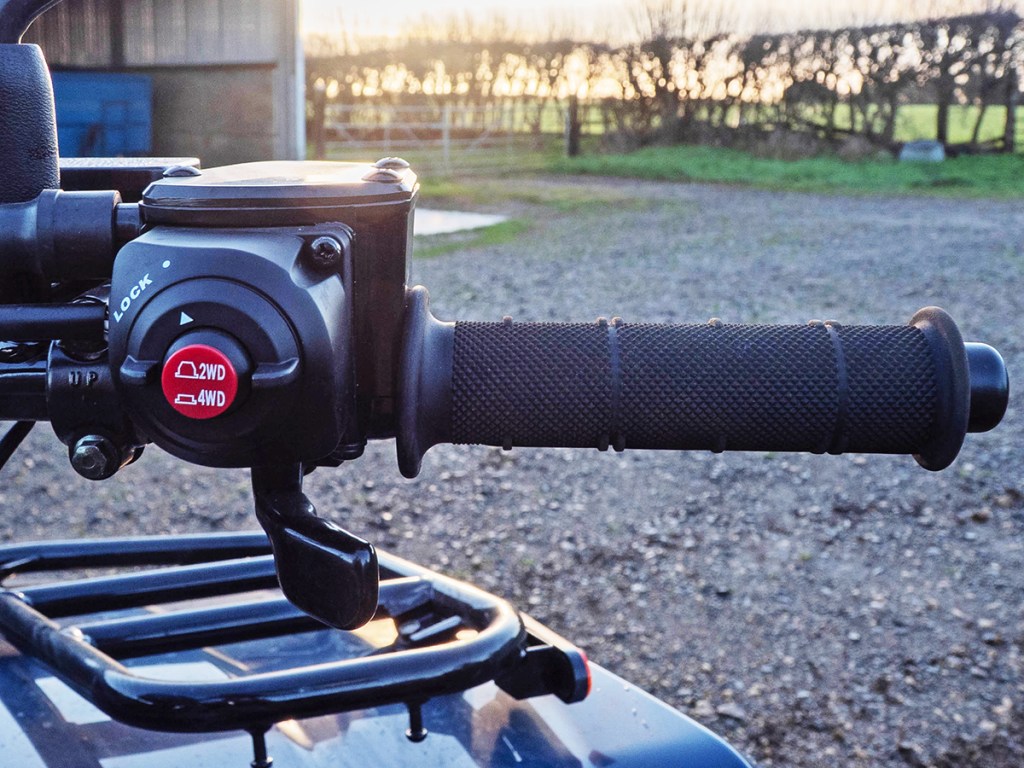
The latter includes a particularly steep test slope that needs to be tackled by starting the descent in low ratio and with the front axle engaged to help add traction. We expected the belt of the CVT ‘box on the 450 to ‘let go’ as we got halfway down the slope and for us to need to use the handlebar mounted front and rear brakes (in 4WD, braking is applied to all four-wheels if just the front or rear brake is applied).
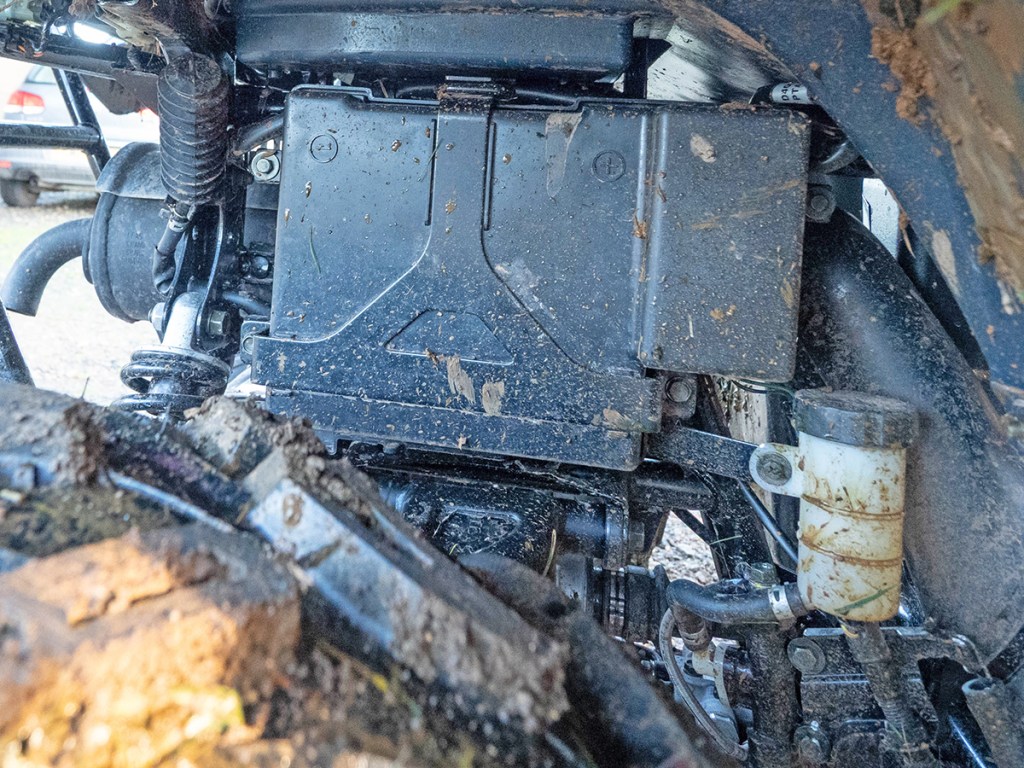
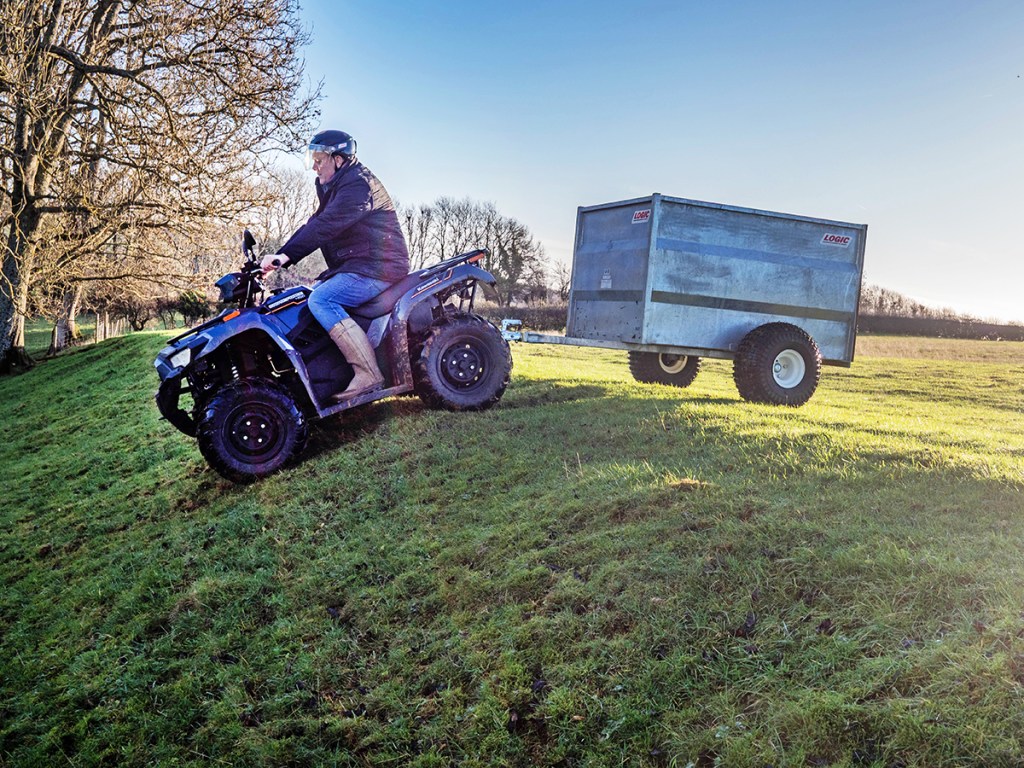
As it turned out, the 450, even with a laden trailer, could be trickled down our steep test slope without having to heavily lean on the anchors, the drive remaining engaged enough to retain an impressive degree of engine braking. The little Brute Force proved better than expected scaling up our slippery steep test incline too, without little wheel slip or need for full throttle. We did adhere, as near as we could estimate, to the rated towing capacity of just 140kg.
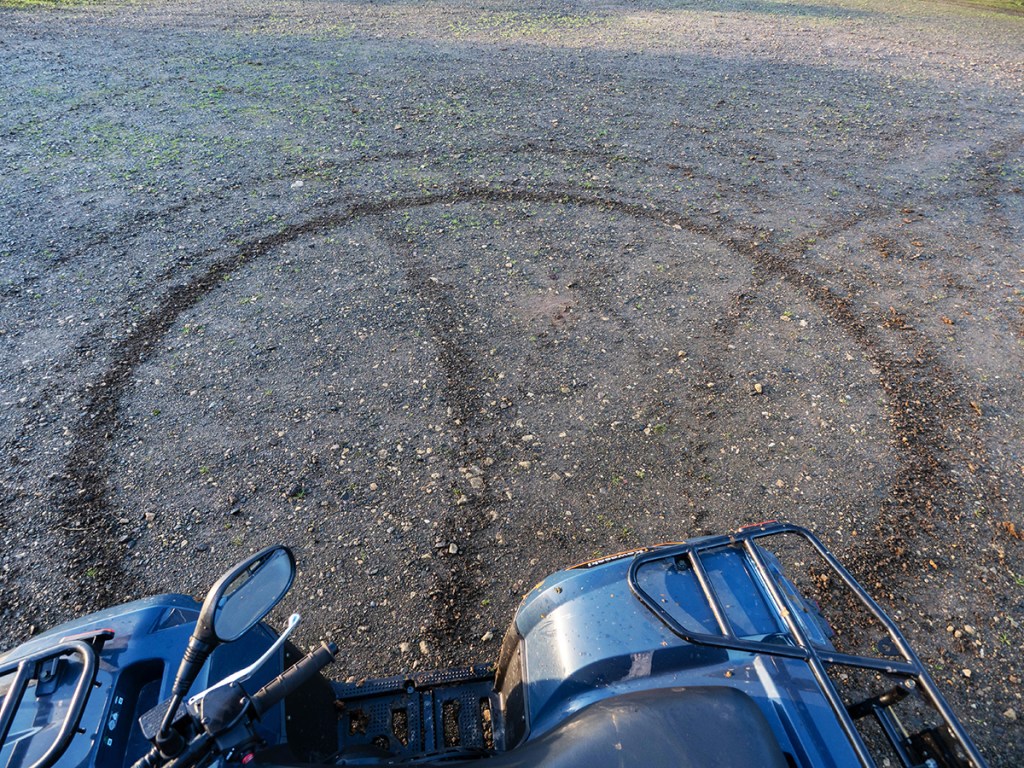
As to the steering, we only missed EPS electronic power steering assistance in 4WD with the front differential locked. At all other times, even in 4WD and manoeuvring in a tight spot at low speeds, we never really noted a lack of EPS. That said, hitting a lump at speed without the protection offered by EPS did lead to a bit of kick-back at the bars and getting out of deep ruts did take more effort but for the most part a lack of EPS proved no problem at all.
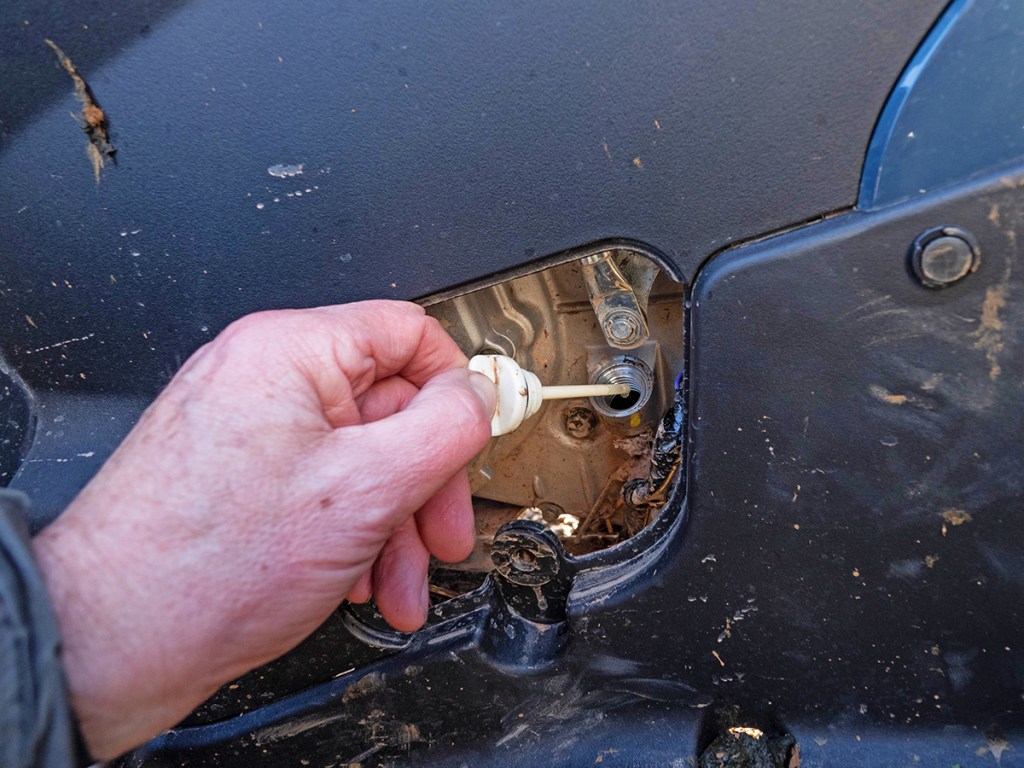
Everyday use and fuel consumption
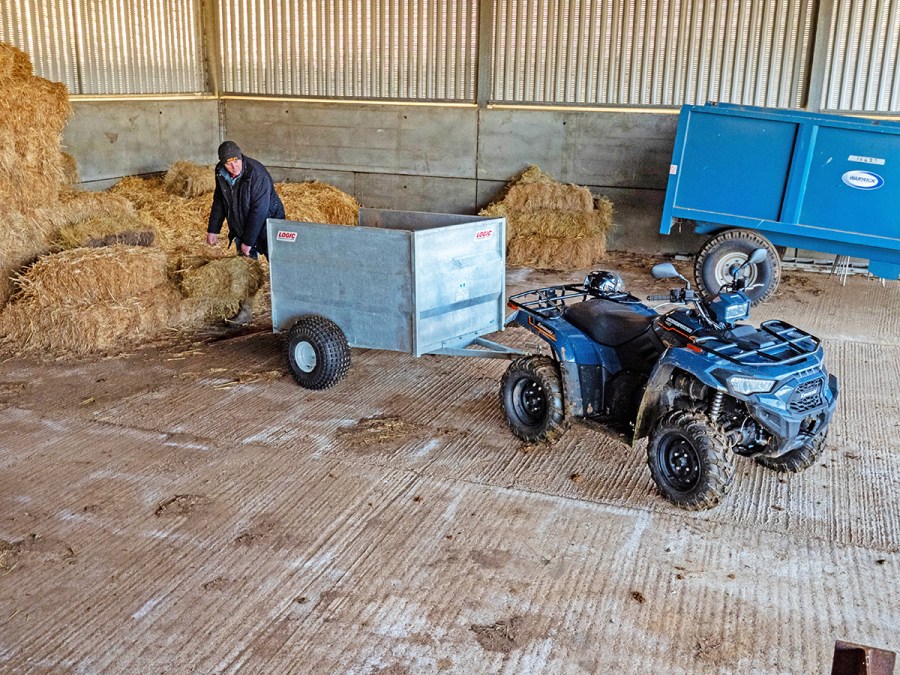
If you are fortunate enough to have a choice, you will no doubt favour a basic UTV with roof and screen for stock checks in filthy weather. But an ATV retains its appeal as a motorised pair of legs, a light footprint and speedy agility proving well-suited to general livestock duties. Add a trailer, and the utility of an ATV increases hugely, the more so with a livestock trailer with a tailgate for easy loading. During its time with us, the 450 proved a nippy runabout, the Logic stock trailer we borrowed for the test adding easy load utility. This pairing made a useful combination.
As to fuel consumption, the fuel injected Brute Force 450 did not ring any alarm bells. Although we no longer measure fuel use over a fixed test route, we do try and gauge how much petrol we put in against the ground covered. In this instance, Kawasaki supplied the little Brute with around a half of a tank of fuel showing on the digital display. During its time with us we used it mostly solo but also with the Logic trailer loaded with bales for our tow tests over steep terrain. The ATV left us still with a bar showing on the digital fuel gauge.

As to the ride, the engine did feel a little bit frantic and buzzy if pressed hard but at a more measured pace it was fine. As to comfort and stability over rough ground we had no complaints either at sensible speeds. Talking of speed, there is a selectable rev limiter fitted that will restrict the engine to a maximum 4,000 rpm. This is activated via a blue button marked with a tortoise but we found pressing it just made the ATV feel less peppy. The system also felt a bit crude in how it kept the revs down, the engine becoming less inclined to rev and a bit lumpy. We preferred to use the throttle to tame the revs.
As to annoyances, the OPC (Operator Prescence Control) system buzzer sets off every 10 seconds or so if you do not pull on the brakes when at a standstill, even if you are sitting on the seat. Although it is easy to stop the buzzer by pulling on the brakes, the buzzer is annoying as it goes off when you stop to open gates. It does nothing to improve operator safety!
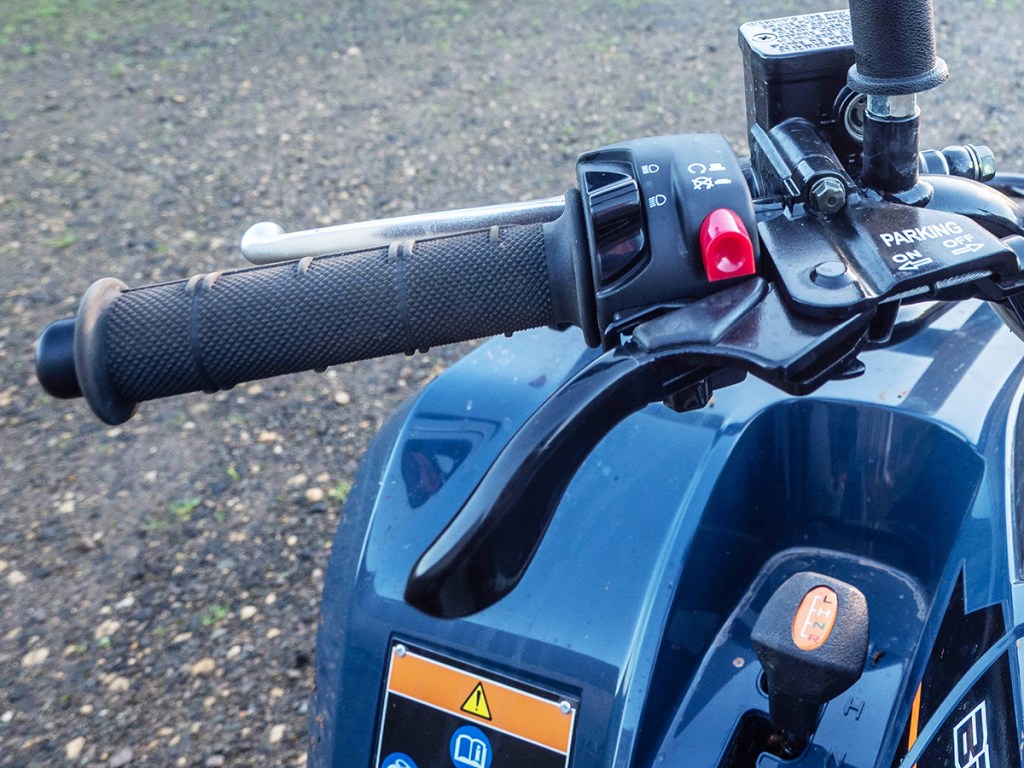
The long parking brake lever, on the other hand, folds across the left bar grip when engaged. This stops the rider trying to set off with the brake engaged and proved easy to use. Mechanical simplicity scores a win over electronics.
T-CATEGORY COMPLIANCE?
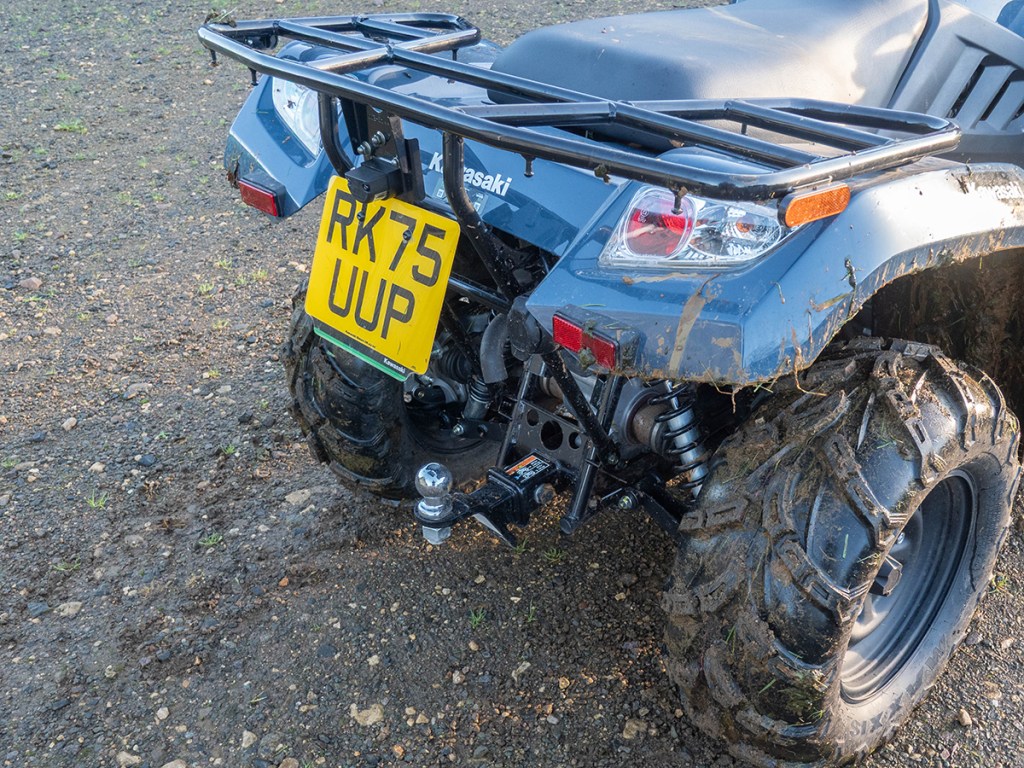
To meet compliance with EU regulations for use on road, the Brute force 450 has features to include a tow hook inside the front bumper, mirrors, horn, hazard lights, licence plate bracket and lamp plus a brake warning lamp above the instrument panel.
A Speed Limiter Mode is also standard. This is activated via a button that lights up when speed limiting is on. We left the ATV in ‘power mode’ for the duration of the test. As to top speed, the speedo recorded a maximum of just over 30mph. On-road compliance does mean the engine power is restricted to 17hp.
Summary
The Kawasaki Brute Force 450 surprised us by its easy-going performance and towing ability. It is more wallet friendly than we expected too, the more so when compared to models from Polaris, Honda, Suzuki and Yamaha. The latter may offer more power and features, but as an entry-level ATV, this little Brute is well worth a look.
James de Havilland
For more up-to-date farming news click here and subscribe now to profi and save.