
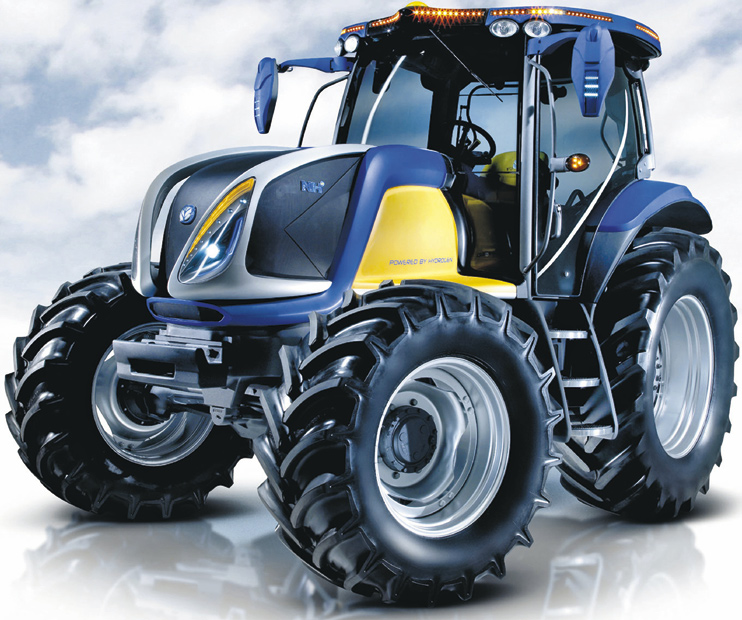
Driving impression: New Holland NH2 New Holland recently revealed a hydrogen tractor in Turin. While the NH2 is not a first — Allis-Chalmers made a fuel cell tractor in the late 1950s — it’s intended for production, and the technology it uses will probably be a part of all our futures.
Fuel cells have been around since the 1800s. Recent oil supply concerns have seen a strong revival in the technology, boosted by modern know how/materials. Its principle is simple and its promise enormous, even though realising either in practice is less than straightforward.
While there are different types of fuel cell, each with its own internal chemistry, their basis is the same. The cell is a mini-reactor where hydrogen (H2) and oxygen (O2) meet on a catalyst. The result is electricity and steam. Nothing else; no soot, carbon dioxide, NOx or all the other stuff that dogs conventional engines and puts environmentalists’ knickers into such a twist. The reality behind fuel cells is demanding: Each is a complex system of sophisticated catalysts and membranes, all of which goes some way to explaining the £18,500 tag on the prototype cells in New Holland’s tractor.
For more up-to-date farming news click here and subscribe now to profi and save.