
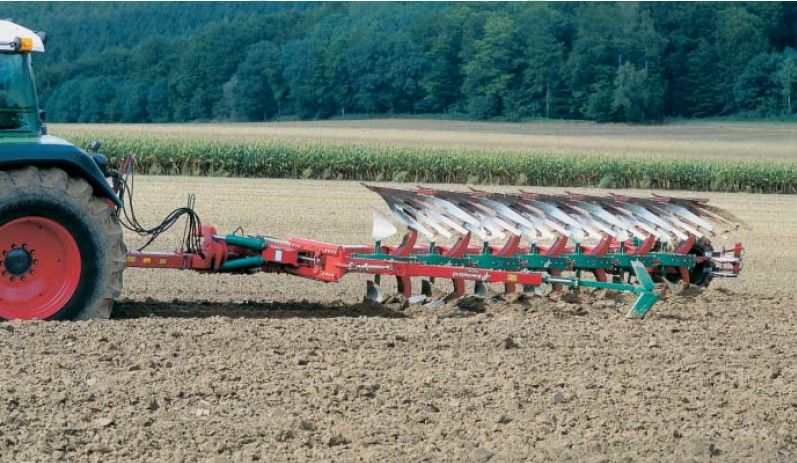
PRACTICAL TEST: Last autumn we put Kverneland’s seven-furrow PB Variomat 100 semi-mounted plough through a detailed practical test – to find out how KV’s slatted mouldboards perform. Overall we were largely impressed, as becomes self-evident on reading through the test report set out below
Slats versus solid – the plough board dilemma? Clearly there is no definitive answer, with the benefits of each design coming to the fore depending on soil type, condition – and, to a certain extent, fashion. From the slatted corner comes the traditional argument of versatility, better board cleaning in sticky soils, and a lower overall weight and draft requirement. With this in mind we were keen to try out the KV slatted argument in the shape of the no. 30 bodies, a design that the company introduced back in 1999. As for the rest of our test PB plough, we took maize skimmers as well as a set of serrated disc coulters for fixing on to the rear furrow.
More on skimmers later, but let’s start at the beginning and look at how easy the plough is to hitch up. The short answer is ‘very simple’. A spring-loaded plate eliminates the need for an additional parking leg to support/hold the free swinging headstock, while a sensible coding helps to identify which of the six hydraulic hoses goes where (2da pipes to the turnover mechanism and levelling control, 2sa pipes to the rear wheel and the packer arm). Only grumble is that the existing park leg could do with being longer and, ideally, height adjustable on the 75cm underbeam plough (UK standard is 70cm underbeam). As it is, the PB operator still has to hunt around for a suitably sized block when dropping off the plough.
For more up-to-date farming news click here and subscribe now to profi and save