
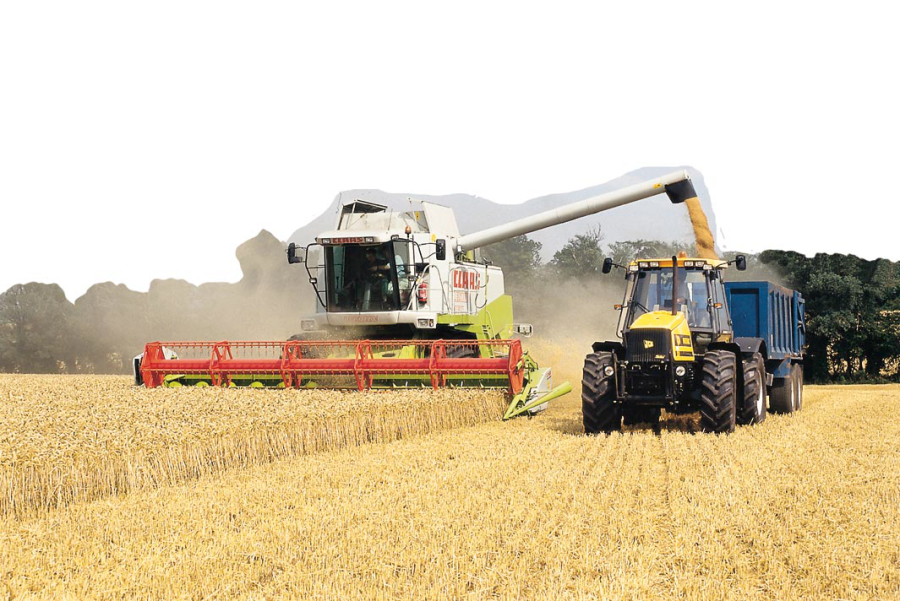
Driving impression: The Claas Lexion 480 introduced last year, was the first machine from the company to use a rotary threshing system. So do the smaller Lexions use the same technology? They don’t use rotors but some other parts are identical, reports Mick Roberts
The name of the new Claas combines is the same as the flagship Lexion. But inside the six new machines revert back to using straw walkers.
The new combines, which replace the Mega series, include some existing Claas components, such as the Accelerated Pre-Separation system and Auto Contour header, but they are combined with more recent developments such as the CEBIS and IMO computer monitors and controls first seen on the big Lexion last year. All the models are hydrostatically driven, built from common modular components and their engines are mid-mounted behind the grain tank.
The two biggest combines, the 460 and 450, have an internal width of 1.7m (same as the 480) and six walkers. The 430, 420, 410 and 405 models are 1.42m wide inside and have five walkers. These dimensions are wider than the previous Megas. All use a 600mm diameter drum at the same width as the respective models’ internal dimensions. All the machines use common parts across the range and are built from “modules” such as cutterbar, cab, threshing system and separation system. This has brought to an end the sight of a combine chassis with parts being bolted to it as trundles down a track at the factory
For more up-to-date farming news click here and subscribe now to profi and save