
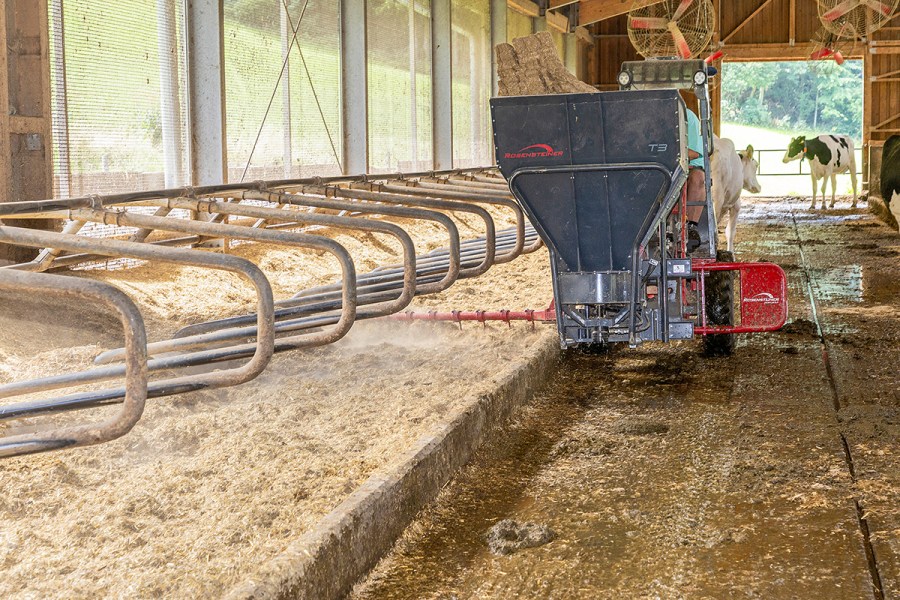
Rosensteiner launched its new Libox T3 machine for levelling and bedding deep-litter cubicles in early 2025. profi had the chance to put the newcomer through its paces in a cow barn.
KEEPING IT BRIEF
- Rosensteiner introduced the Libox attachment early last year.
- It levels the bedding material in the first pass and then adds fresh material on the second pass.
- On Friedrich Grojer’s dairy farm, he can freshen up 120 cubicles in just 15 minutes.
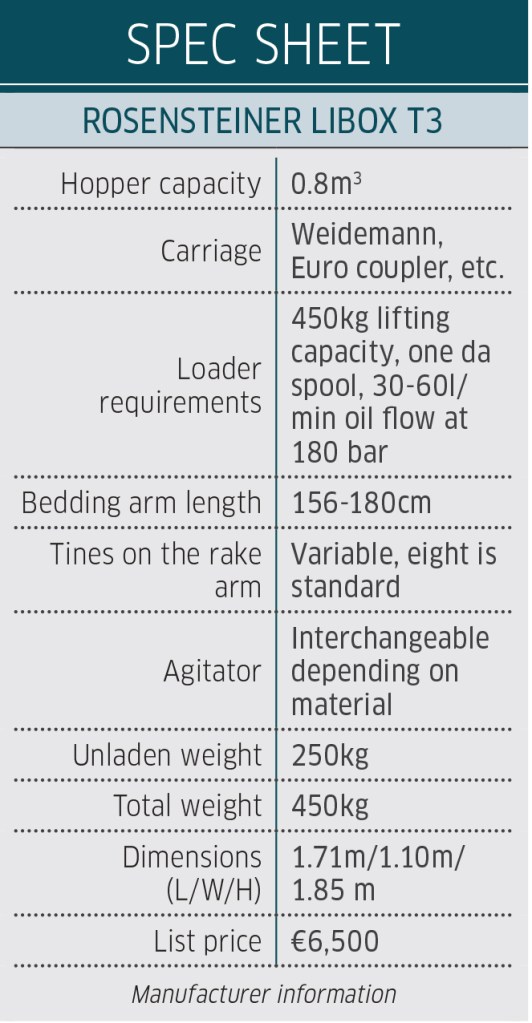
The key positive of deep-litter cubicles is cow comfort, but that comes at the cost of extra work. Looking to help remedy this at a reasonable price is Austrian firm Rosensteiner, which has come up with the Libox T3 loader attachment.
As a two jobs-in-one machine, it takes care of levelling the cubicles and applies fresh litter — which suggests significant savings in time and labour.
The main feature of the Libox T3 is a metal arm (which comes in various lengths). It is fitted with spring steel tines that level the deep-litter cubicles as the telehandler, yard loader or skidsteer travels up and down the alleyways. The Libox does have a simple depth control system to prevent the raking arm from being overworked. There’s also a collision guard that kicks in if the arm hits a cubicle or other obstacle.
Once the beds have been levelled off, the machine can then apply the bedding material including straw and straw-lime mixtures, spreading short and long cuts as well as chopped, milled and pelleted straw. Other material, such as separated slurry solids, are currently being trialled.
The technology
Rosensteiner designed the Libox to be quick and easy to hitch on, with all of the common carriages available and adjusted to each particular loader. This is an important point because in work, there is usually just a gap of 5cm or so between the loader tyre and the heelstone.
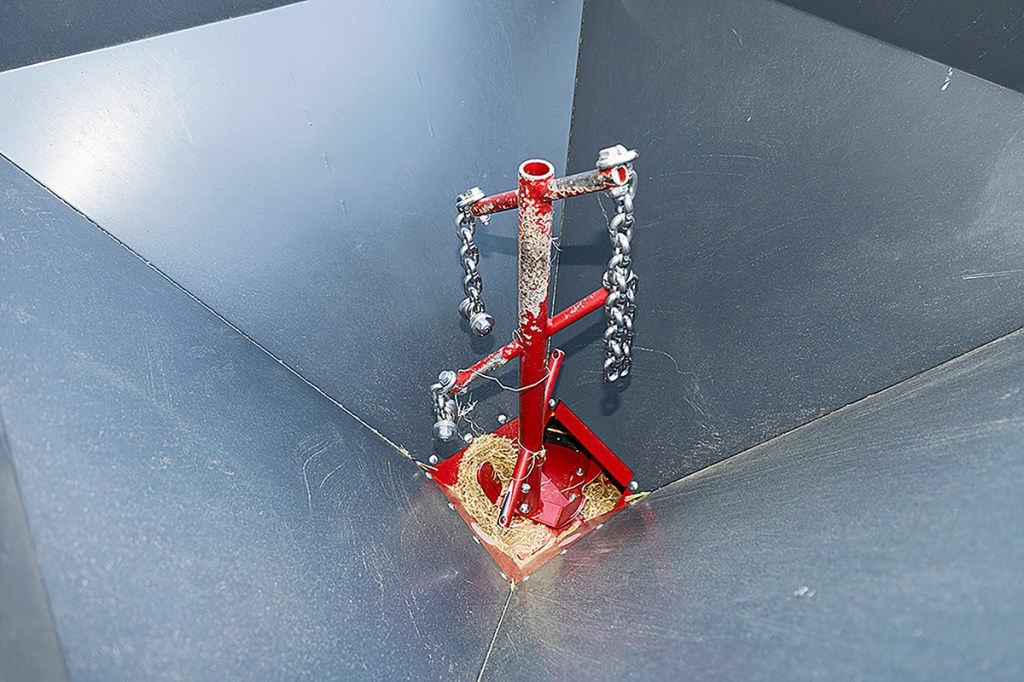
You need one double-acting supply line with a flow rate of 30 to 60l/min at 180 bar plus a lift capacity of at least 450kg. The Libox weighs 250kg on its own and it can carry 200kg of bedding material. A significant amount of that 250kg is in the sturdy frame that supports the 800-litre hopper complete with agitator.
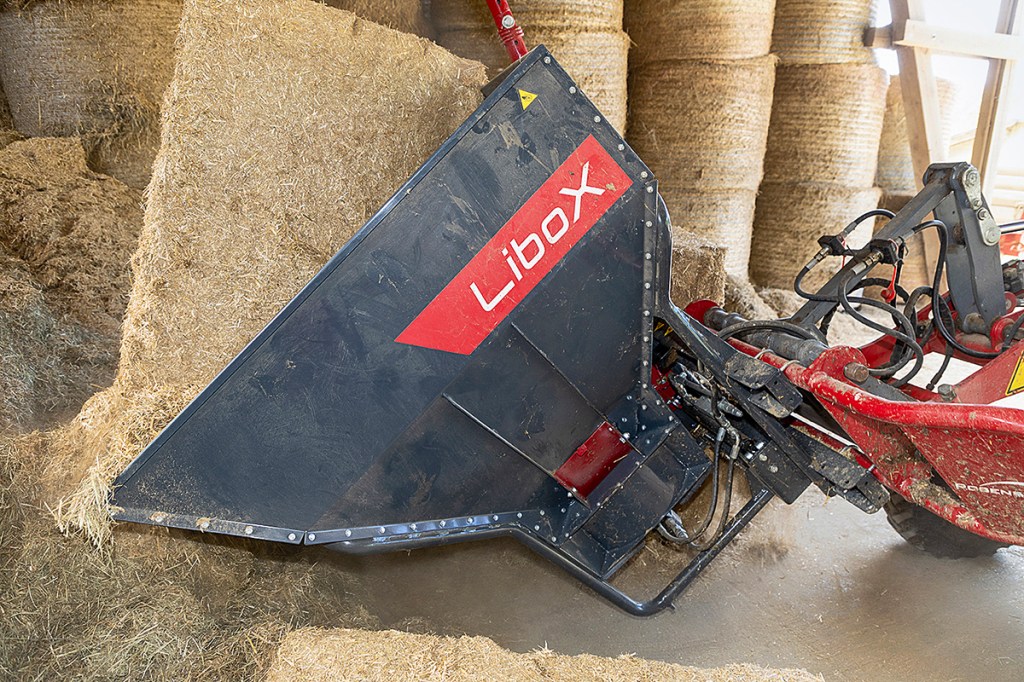
In the T3 version, the hopper size is chosen so that with daily top-ups of 1kg of straw per cubicle, one load of straw is enough for bedding about 120 cubicles.
The base frame also carries the hydraulic arm that levels the cubicles. The standard length is 156cm, but a shorter or longer arm (up to 180cm) is available. The 15cm long special spring tines are normally positioned 17.5cm apart, meaning a total of roughly six tines per metre.
The base frame also includes an integrated height-adjustable metal plate on which the machine rests during the levelling passes. In this way, the machine is able to maintain the exact working height regardless of the forward speed — normally. A sympathetic operator will achieve the best results.
Our experience
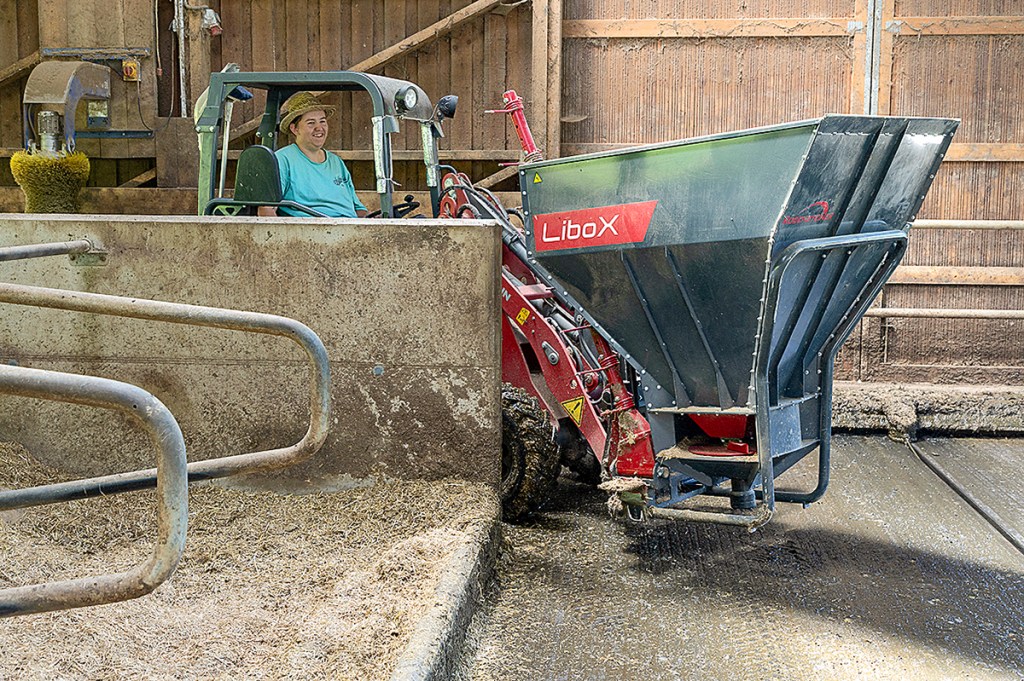
We had the opportunity to try out the Libox on Friedrich Grojer’s dairy farm in Wieting, Austria. The farm uses milking robots for the 120 cows, which produce an average yield of 12,000 litres, and has been running a Libox T3 since early 2025. Bedding takes place every morning and, if possible, this coincides with feeding time, as that’s when most of the cubicles are not occupied despite the milking robot. Friedrich says that the animals have got used to the routine, and now they get up on their own when the Weidemann appears with the Libox attached.
The dairy farm’s bedding material consists of short chopped straw. At the time of our visit, however, they were spreading milled straw from Italy which generated a lot of dust. Friedrich said that their own straw produced far less dust. The hopper is filled by tipping the Libox and driving into the straw bale.
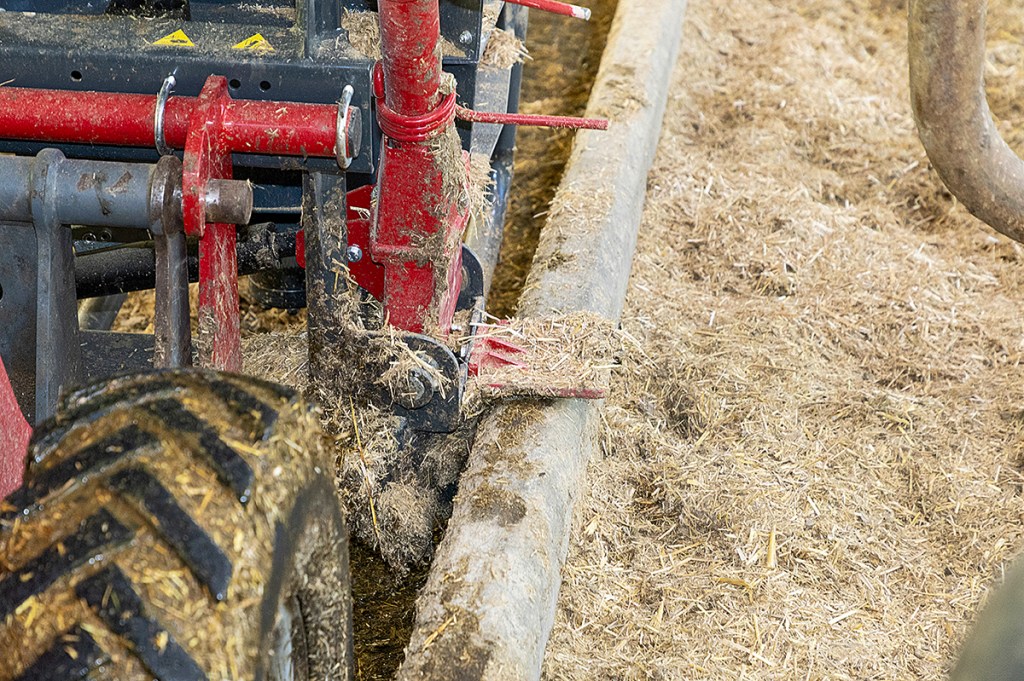
Once in the shed, the driver lowers the Libox until the height control plate rests on the kerb edge of the cubicle bed. At the same time, he lowers the arm. The next step is setting the working depth of the tines by tilting the Libox forwards or backwards —depending on the desired finish. Then he can start levelling the beds.
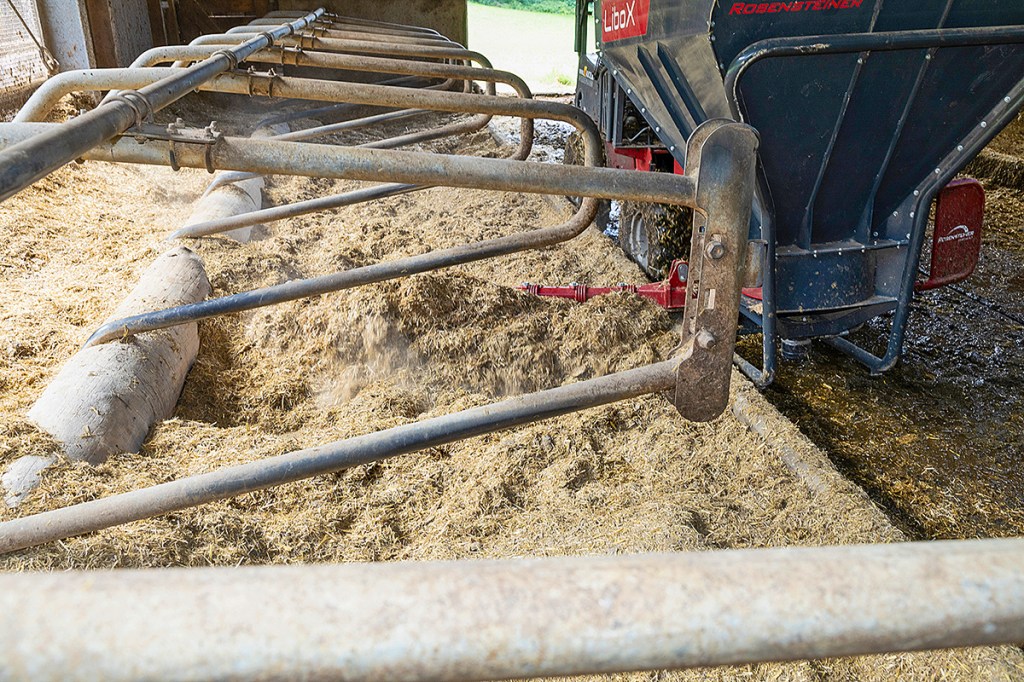
For our test, the first pass was carried out at walking pace, but the tines hadn’t done enough to level off the deep hollows, which were still visible. That soon changed when the operator on the Weidemann accelerated to a brisk 10km/hr in the next pass. Now the tines were working far more aggressively. And after the yard loader had made several high-speed passes up and down the cubicles in forward and reverse, even heavily rutted bedding was smooth and level — fantastic, just what you want to see.
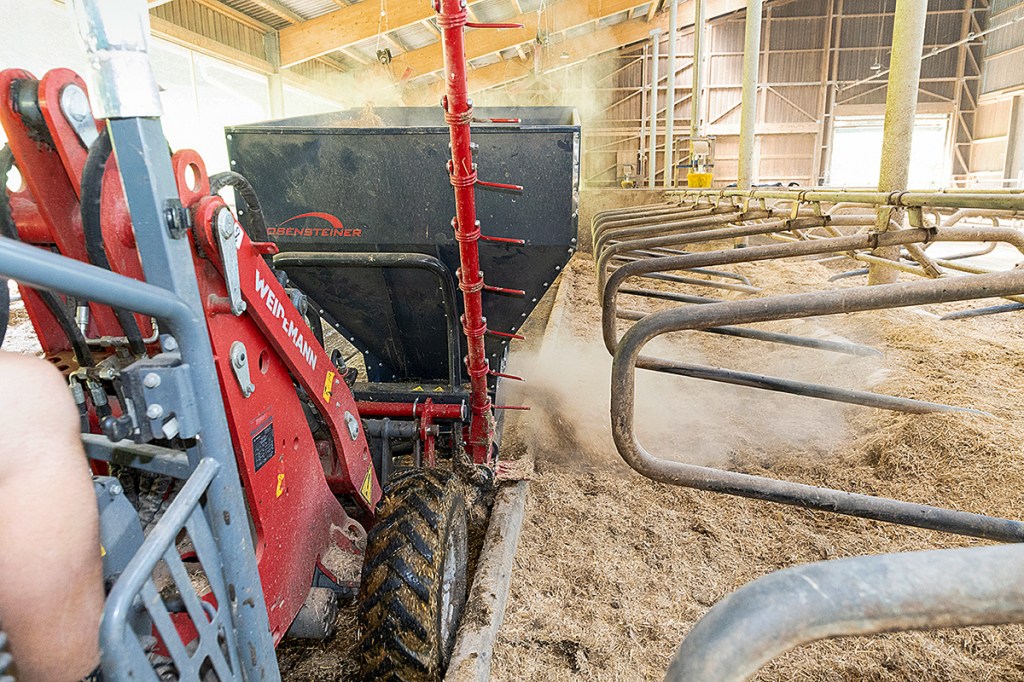
The fact that the experienced driver could work so quickly has to do with the machine’s auto height control. After all, the adjustable working height prevents the bedding arm from colliding with the cubicle dividers.
It’s worth mentioning that even a fairly hard collision wouldn’t normally be a disaster, because the breakback pins on the lower pivot arm normally shear off upon serious impact.
Targeted bedding
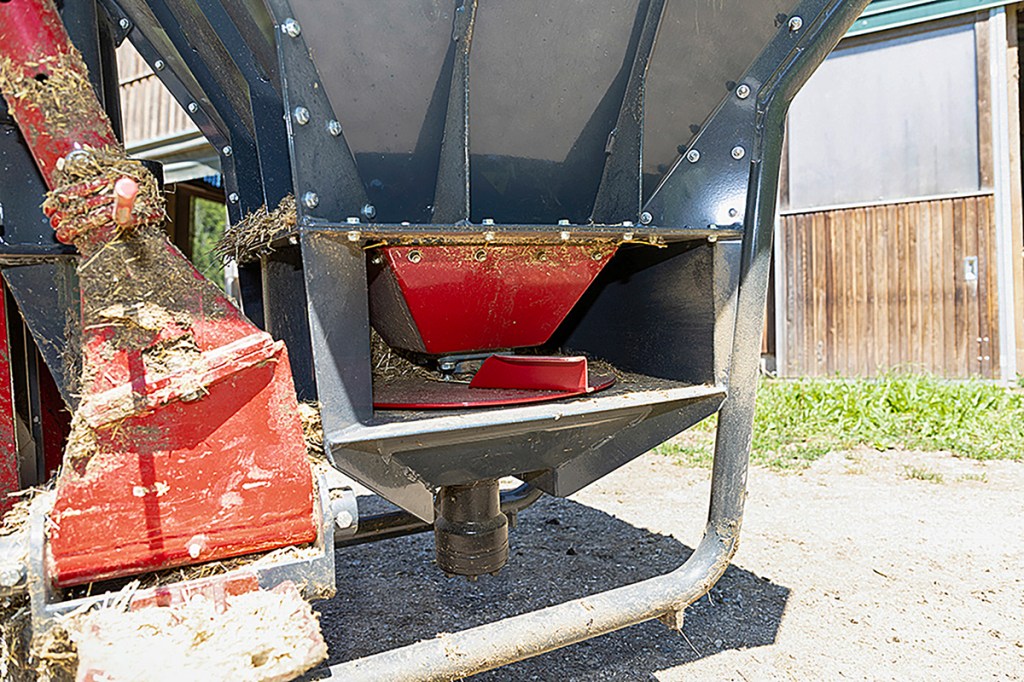
Once the beds have been levelled off, the machine applies fresh bedding. For this, the arm is raised hydraulically, which switches a valve, directing the oil flow to the straw spreader. This immediately starts spinning.
The spreader’s throw reaches up to 2.50m, depending on the setting of the vanes, the loader’s hydraulic output and the working height of the bedder. The application rate itself can be altered by adjusting a slider on the outlet after undoing two bolts on each slider.
Using milled straw and applying it at walking pace, the Libox spread 1kg of straw per cubicle on the one pass. When asked about bedding material, Friedrich tells us that thanks to the integrated agitator, bedding with long straw works just as well as with milled straw.
After levelling and bedding the first row of cubicles, rows two and three followed next. After about 15 minutes and with the hopper empty, the cubicle work was soon done for the day.
Pricing
Rosensteiner is currently offering the Libox T3 through dealers for €6,500 or around £5,650 plus the cost of shipping. When delivered, the bedding machine is largely pre-assembled; just the frame still needs to be fitted by the farmer and adjusted to the width of the yard loader or handler, which Rosensteiner says normally takes less than half an hour.
Summary
Rosensteiner, best known for hoof-trimming stalls and its three-point linkage mounted boxes, has also been offering a machine for maintaining deep-litter cubicles since early 2025. Unlike most machines on the market, this one also levels off the cubicles before bedding.
Although levelling required several passes in our test to achieve the desired result, using the Libox saves a huge amount of time and even more manual labour. On the farm we visited, that was nearly two hours every day. Multiplied by the €13 minimum wage, at a purchase price of just under €7,000 it takes only 270 days for the Rosensteiner Libox to pay for itself.
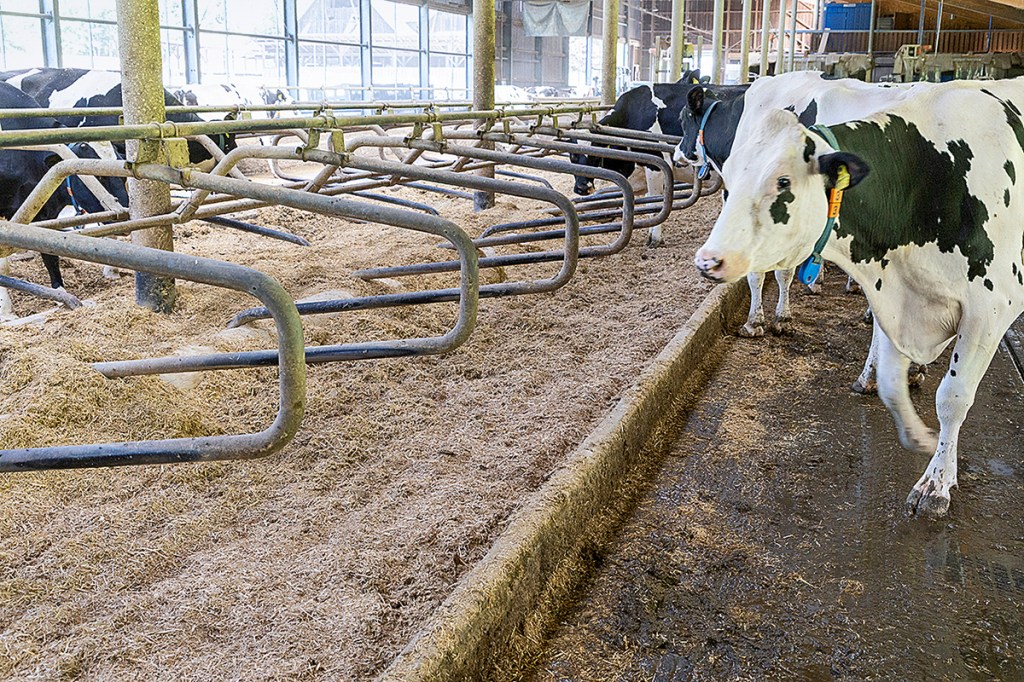
And then of course there’s that other major benefit … the machine frees you from the physically demanding, monotonous manual chore of daily cubicle maintenance.
Martin Zäh
For more up-to-date farming news click here and subscribe now to profi and save.