
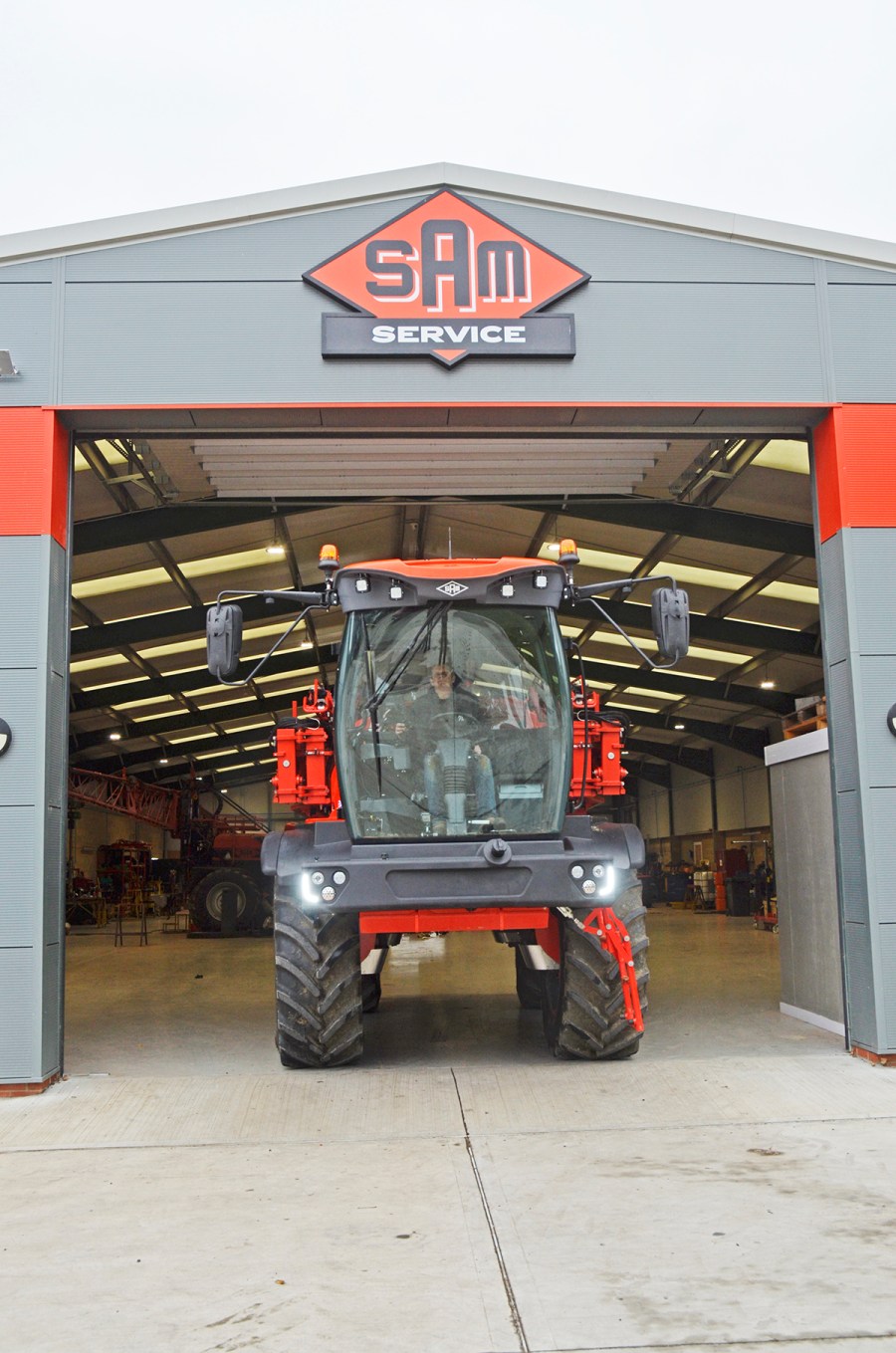
The Norfolk-based self-propelled sprayer specialist has invested heavily in a new factory. Opened early 2025, it is helping the company to increase efficiency and quality.
KEEPING IT BRIEF
- Neal Sands built the first self-propelled sprayer in 1973. This was based on an 87hp David Brown 1390 with 2,000l tank and 24m boom
- The commercial introduction was at the Royal Norfolk show in 1975
- Many of the 900+ David Brown-based machines sold are still running today, and Sands continues to stock parts for them.
- The focus is on the UK, Scotland and Ireland, but Sands has delivered new sprayers to Sweden, Hungary, France, and New Zealand.
- The current range comprises models from 3,000-6,000 litres capacity with steel boom widths from 24-40m
- A handful of dealers provide support, but Sands sells directly with service engineers covering the UK and Ireland
- Sands has delivered approx. 4,000 sprayers in just over 50 years
- New machines are good for 11,500 hours and some others are still running after 22 years and 14,000 hours
While best known for the current Horizon 3000, 3500 and 4000 and Infinity 5000 and 6000 self-propelled sprayers, Sands has made many different models during 50 years at the former Brumstead site.
With business expanding in recent years, the company outgrew the old factory so the three directors of Neal Sands, his wife Amanda and son Thomas searched for a new one. They found this just six miles away at Catfield and set to work to design their dream sprayer factory.
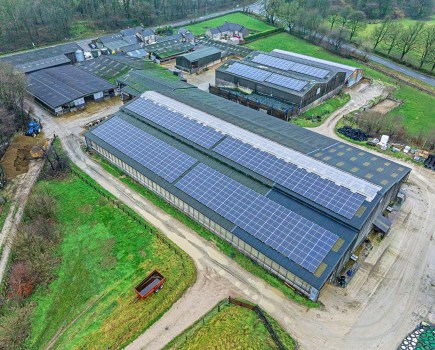
Costing an estimated £4 million, a third of the impressive 3.6ha site is covered and the layout in the assembly building allows them to work on six machines at once. Plus, there is a new test hall, service building, parts department, offices, and meeting and operator training room.
They had hoped to move in within 18 months and have everything finished in time for the company’s 50th anniversary in 2023. In the end, planning permission and Covid delayed this and it eventually took three and a half years.

Finally ready
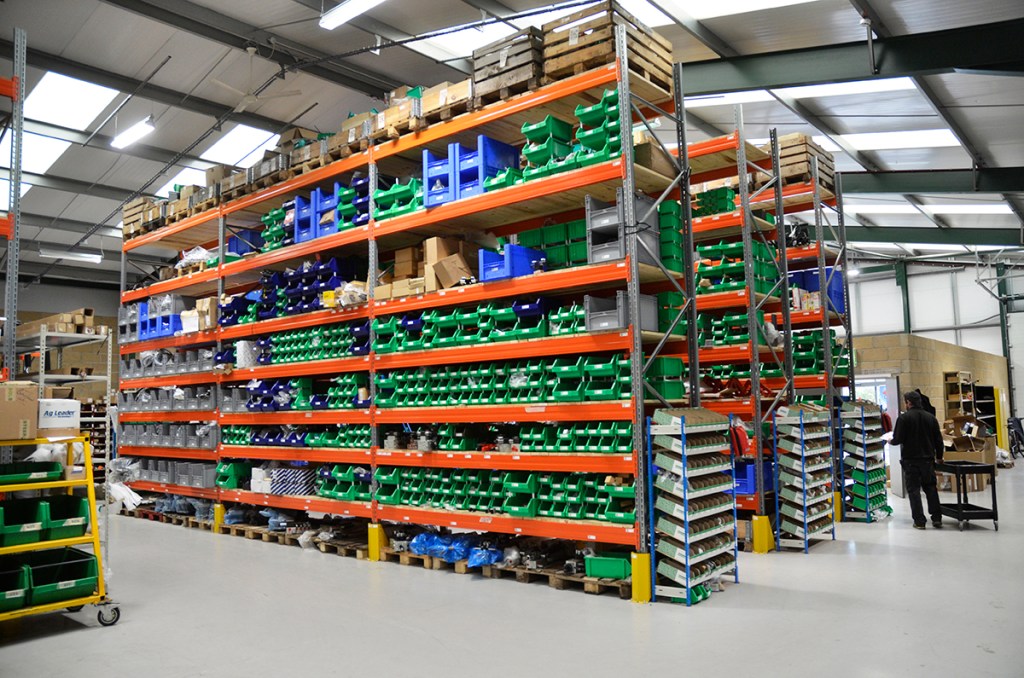
It was not until November-December 2024 that staff, furniture, stock and parts transferred to their new home. “It was a big job,” recalls Neal. “Some boxes had not seen daylight in 50 years.” All told, some £2.6m of stock comprising 26,000 lines was moved from the former premises.
Nothing was thrown away including boom sections for old machines, and steel used to make 25–30-year-old sprayers. “We can still make a chassis for an old David Brown sprayer.”
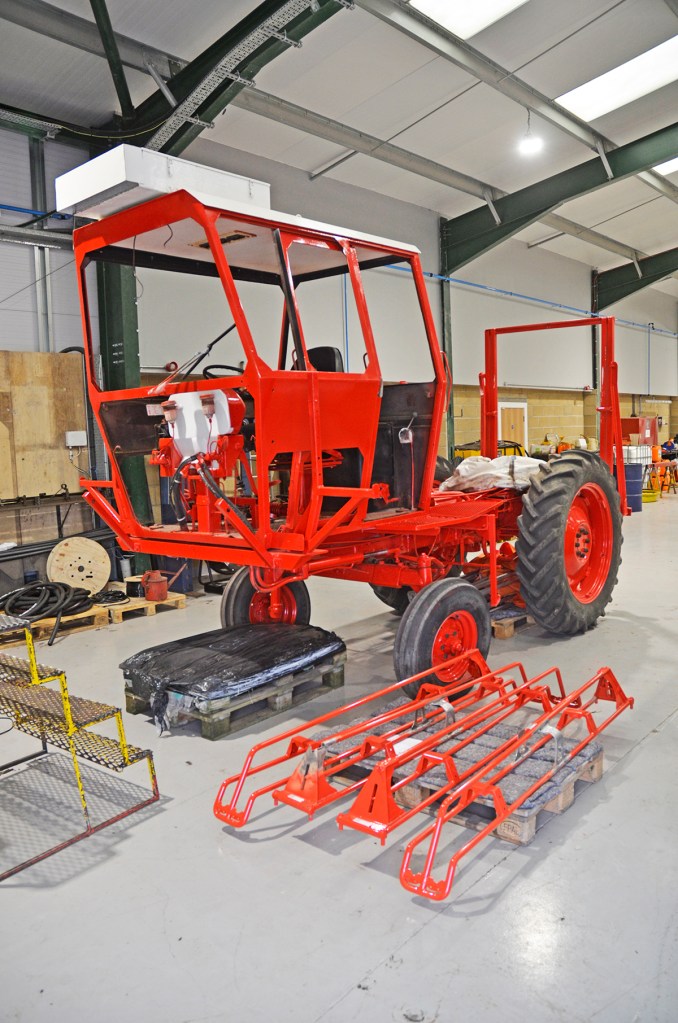
Around 450 visitors attended the official open day last May. Ever since, it is business as usual, and staff have now settled into their new home. There is no better person to join us for a private tour of the new site than Neal himself, who has been at the helm of the company from day one. He describes the UK market as difficult because sprayers have to be perfect. Well, at least they have the perfect factory to make them.
None of the ageing plasma cutters were transferred to the new site. Bought from the David Brown factory when this closed, the overhead gantry cranes were also no longer up to handling increasingly heavier parts. These were kicked into touch for six new overhead cranes: four of which can each lift 5.0t.
First stop
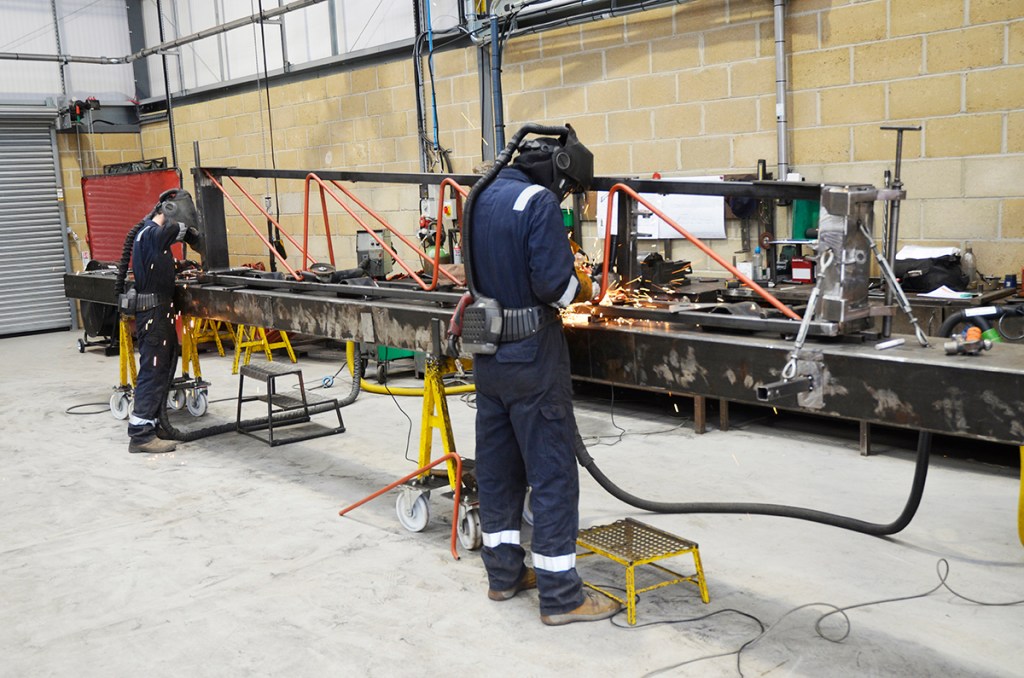
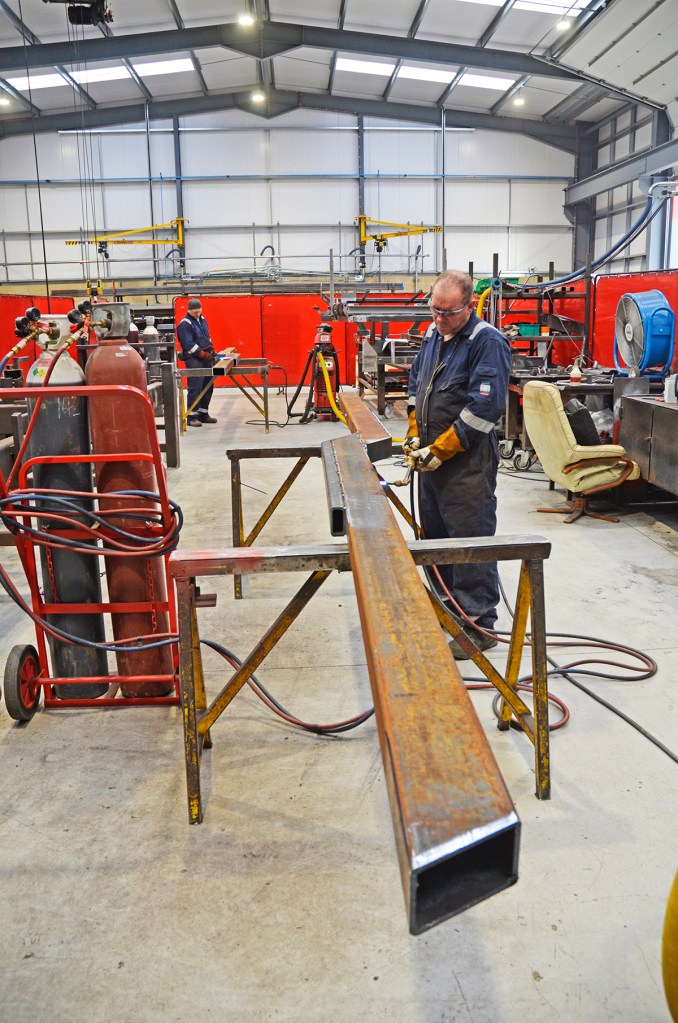
Our tour started in the fabrications building. Previously, the company cut and bent steel to size and shape. Not anymore as it was deemed too expensive to replace all the old machine tools. The preference is to buy steel cut to size and shape. However, all of the welding is still done in-house. Chassis are welded manually on one of two jigs – one for the Horizon and one for the Infinity. “Robots are useful if you have 100,000 items that are all the same,” says Neal, “but we do not.”

All parts eventually end up in the new shot blasting and paint shop building, the combined cost of which reportedly left them with no change from £750,000. The paint shop at the old factory was just about large enough but was always the bottleneck. Operational from 7.30am to 4.30pm, having two paint booths at the new site has streamlined the operation.
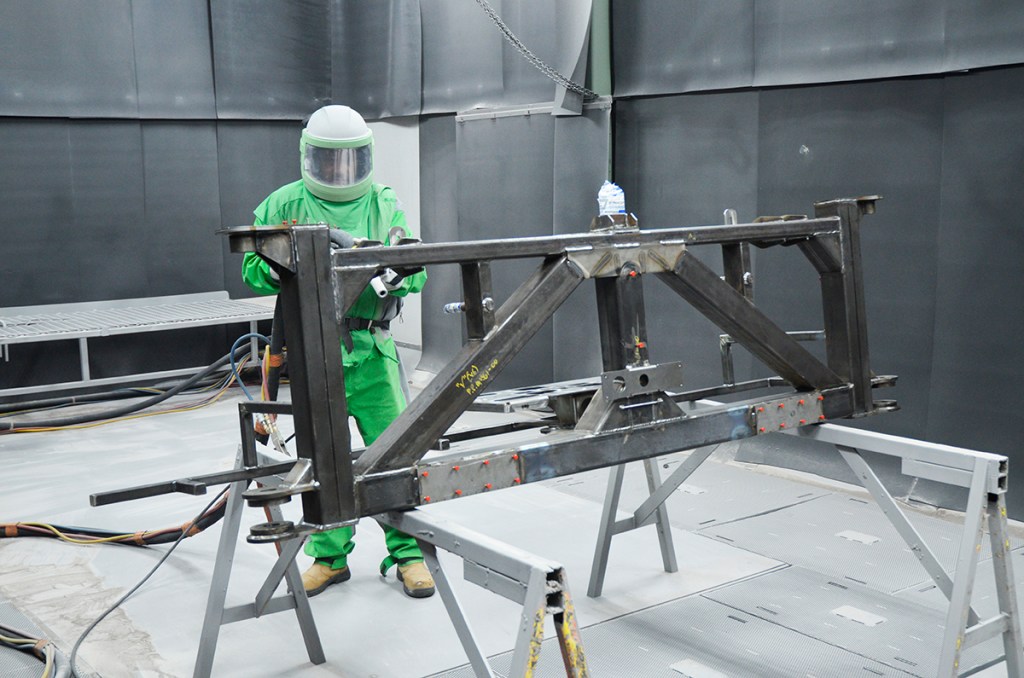
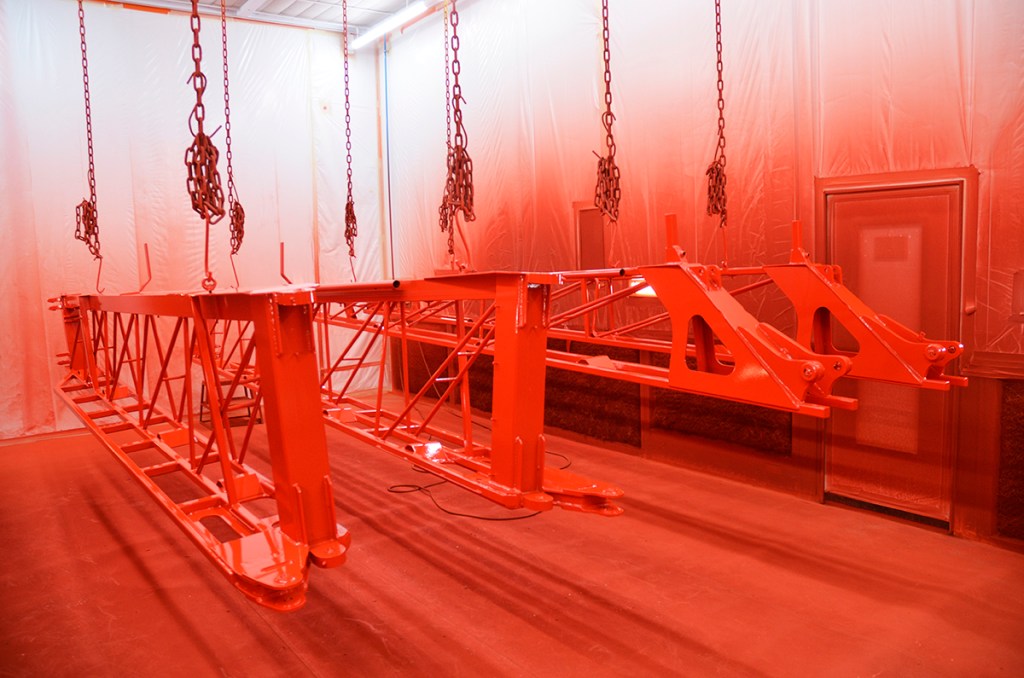
After shot blasting, the next stage is the epoxy primer. Left for 45 minutes to tack off, the topcoat is a two-part polyurethane mixed by a new electronic 2K system.
Neal is impressed with the end result. “The finish is of a much higher quality than the old plant. We can turn everything around quickly and can make a steel part in the morning, blast it in the afternoon and spray it the same day. It also gives us the ability to strip back, shotblast and respray used machines.”

Assembly process
Two had just gone through at the time of our visit, but there is plenty of space to work on three Infinity chassis at the same time in the assembly building, each one flanked by sub-assemblies of the engine and axles.
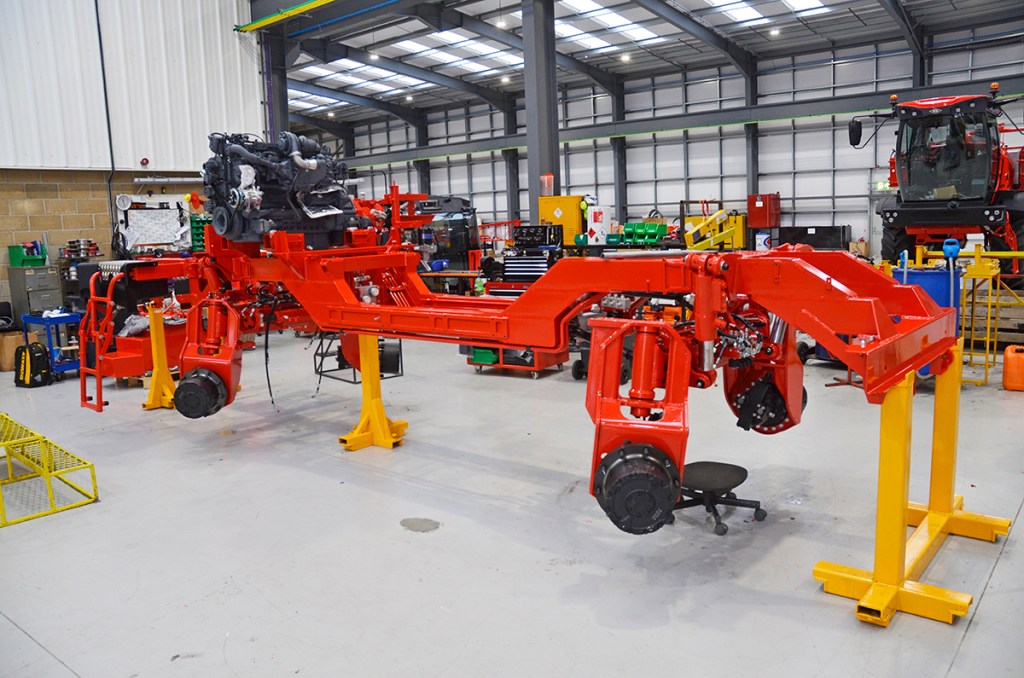
The hydraulic system is flushed and filtered once the engine is started. With the wheels on and cab fitted the machine is driven to the next assembly bay where the spray pack and boom are added. The hydraulic plumbing is then flushed for a second time and the system filled with oil.
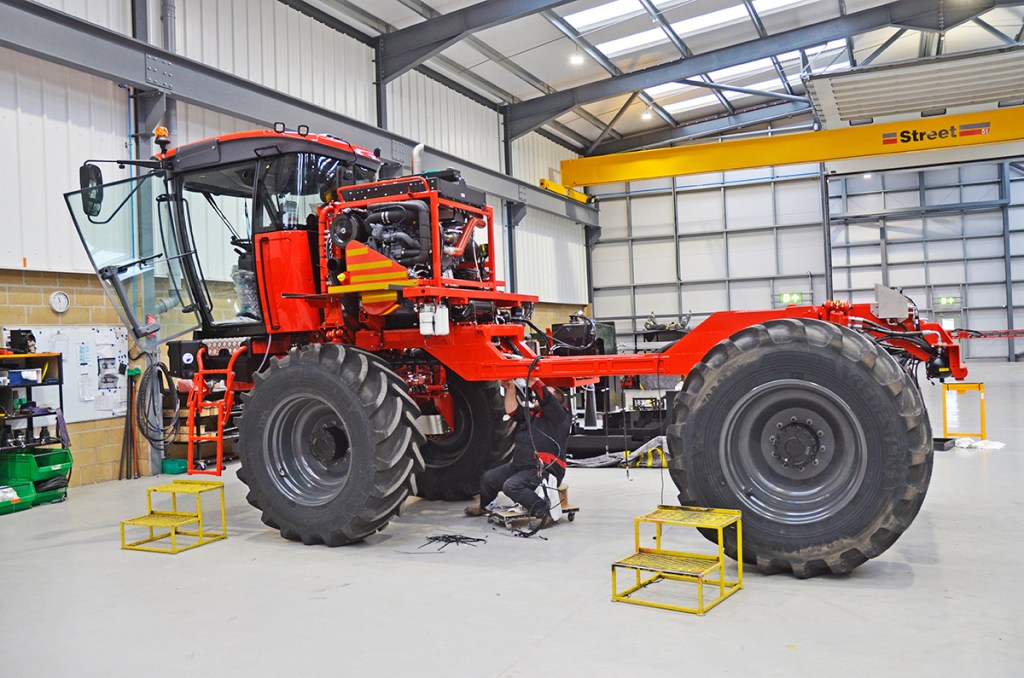
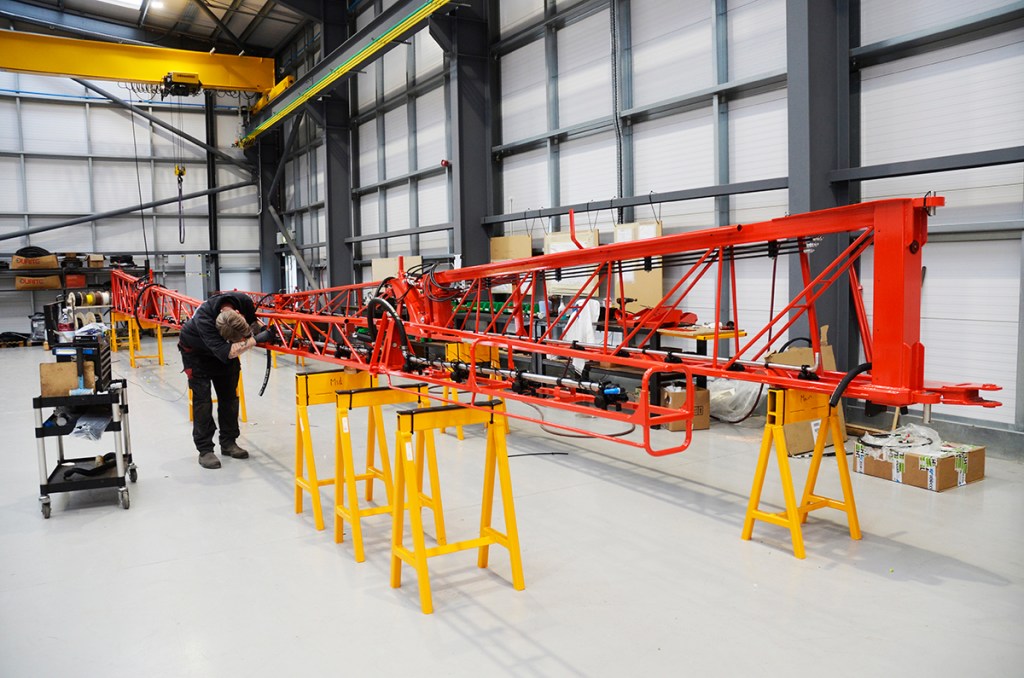
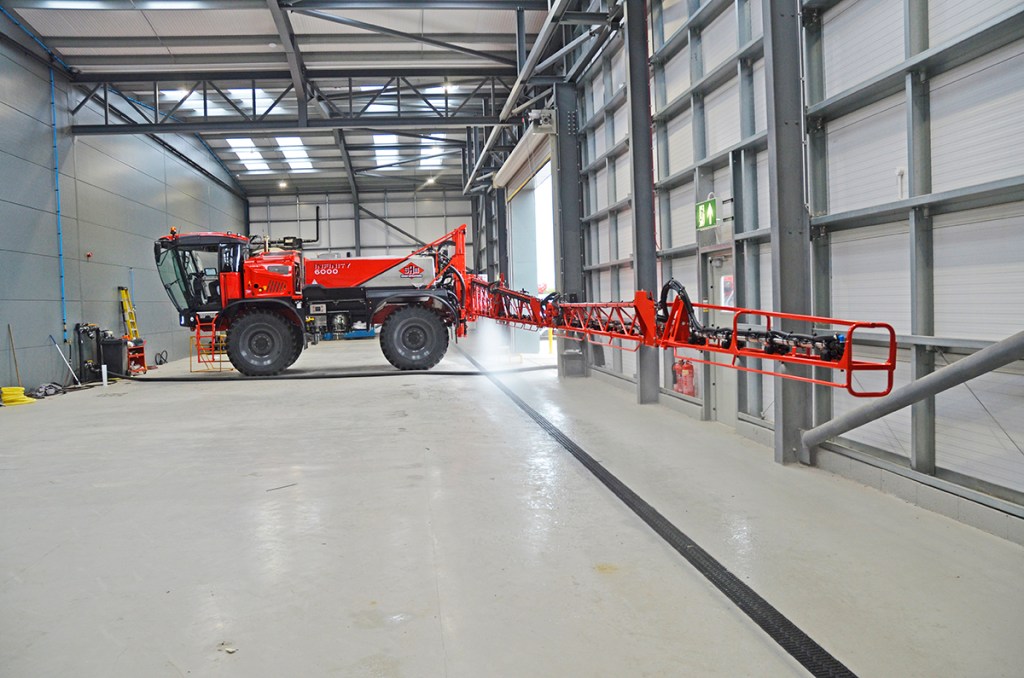
New sprayers are then driven to the test hall. The limiting factor with the old site is that as sprayer booms have got wider, they could not fold them in and out. The only way they could test them was outside, not a popular job in the winter. This work is now done indoors in a building that is wide enough to accommodate a fully opened 40m boom.

The future
It depends on the year, but 220 to 240 new self-propelled sprayers are generally sold in the UK each year. “This number depends on grain prices and the weather and can drop to 210 or increase to 250.”
New machines are all hand-built and no two machines are the same. “Some go out with £50,000 worth of extras or none at all. We are now a lot more flexible and can adapt to the market.”
The old factory had the capacity to make a maximum of 45 new machines a year. The plan is to do the same number at the new site where there is enough space to make up to 60 sprayers a year.
“Farming is currently going through a tough time so we can keep an eye on our efficiencies, but if we need to build more machines then the capacity is there.”
Steven Vale
For more up-to-date farming news click here and subscribe now to profi and save.