
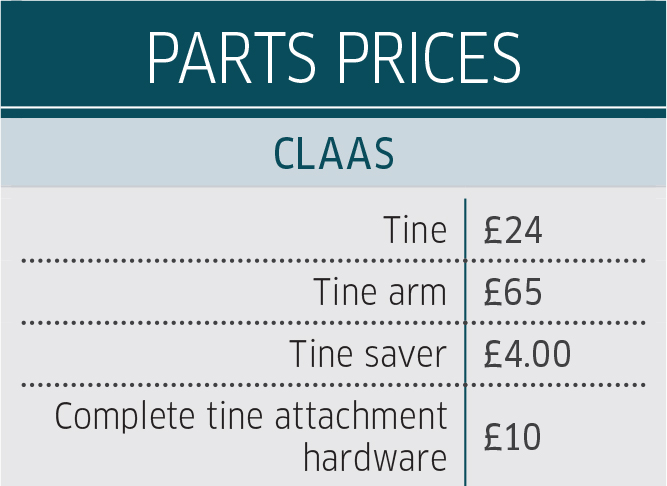
The business end of a tedder comes under the spotlight here as we look at the rotor design — from how the tines are mounted on the arms to making those critical adjustments. And then there is the cost of the replacement parts to consider.
KEEPING IT BRIEF
- Most of the manufacturers offer broken tine retainers.
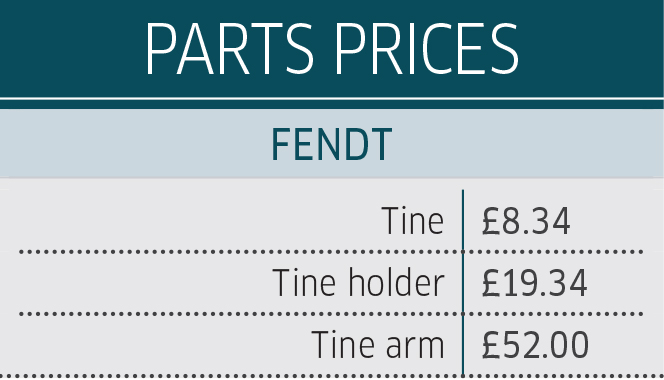
- Replacement tines costs between £8.22 and £24
- New tine arms are in the region of £18.00 to £73.93
Rather than compare all the different working widths and specific models, for this tedder round-up we focus on the rotor design.
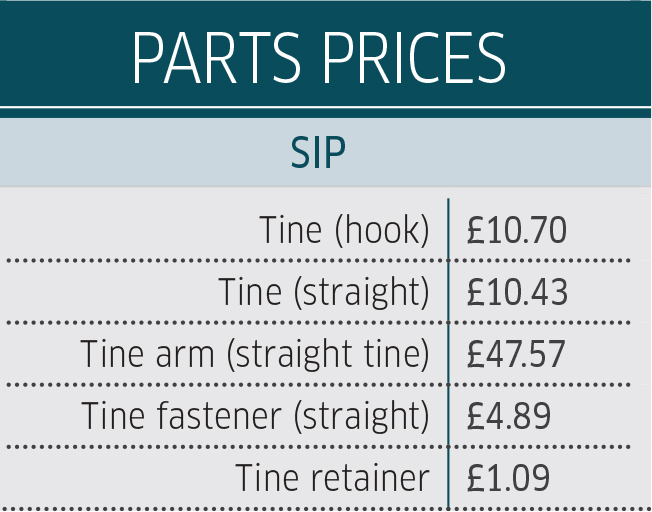
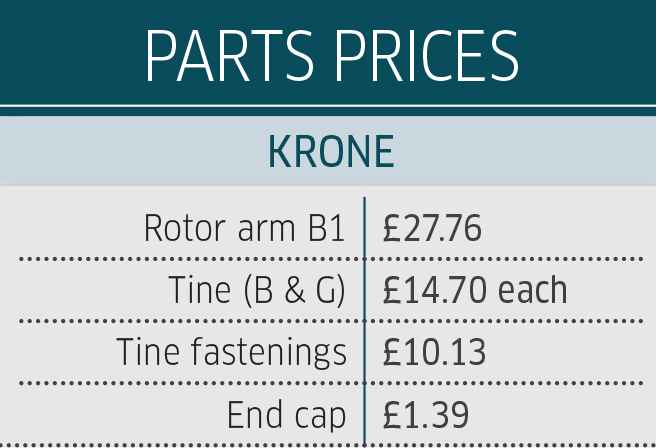
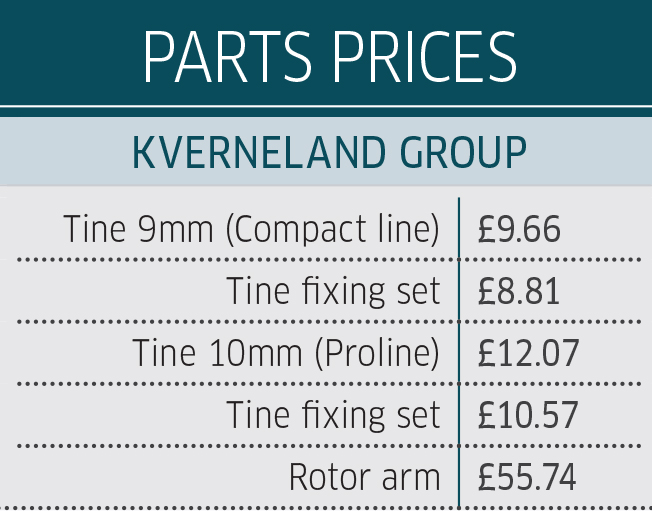
As well as getting details of the rotor arms, tines and ways of making adjustments, we asked all the manufacturers that are active on the UK market to provide recommended retail prices for their respective arms and tines plus for any fasteners that are likely to need replacing.
Most tedder makers will have a number of rotor diameter sizes, and there are a couple of manufacturers also offering a choice of both straight or hook tines (Fendt, Rozmital, Sip, and Massey Ferguson). We’ve included these details within the individual sections listed on the following pages.
Reasoning for the choice of small, mid and large rotor diameters, with similar working widths, is to provide users with the choice dependent on the crop volumes and the end goal, be it silage, haylage or hay. Like so many things, rotor diameter is one of those aspects that farmers will have to decide what suits.
Mervyn Bailey
For more up-to-date farming news click here and subscribe now to profi and save.
CLAAS
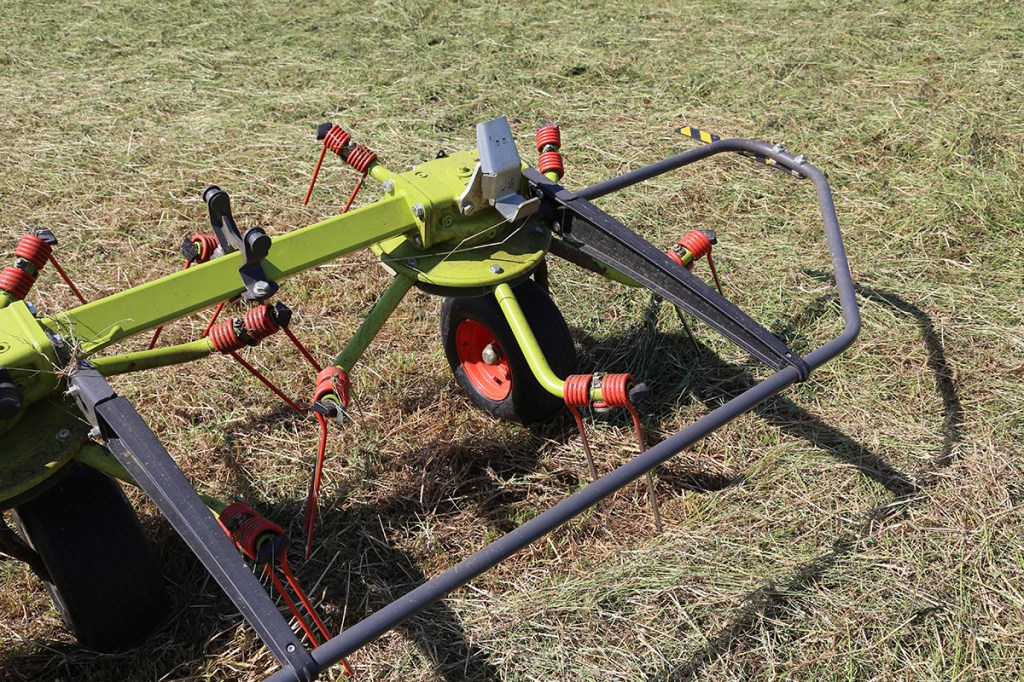
Claas introduced its Max Spread rotor design in 2018 and it’s now used on all Volto models from the smallest to the biggest. A key aspect of the Max Spread is the trailing tine arms, which are angled 29.3˚ to the rear. This is said to increase raking performance and a wider and more even distribution of crop.
There are two rotor sizes for the Volto range: 1.50m with six arms and 1.70m with seven. The round tube arms are bolted to the top rotor plate and further secured with the stabilising ring to ensure a robust connection is maintained.
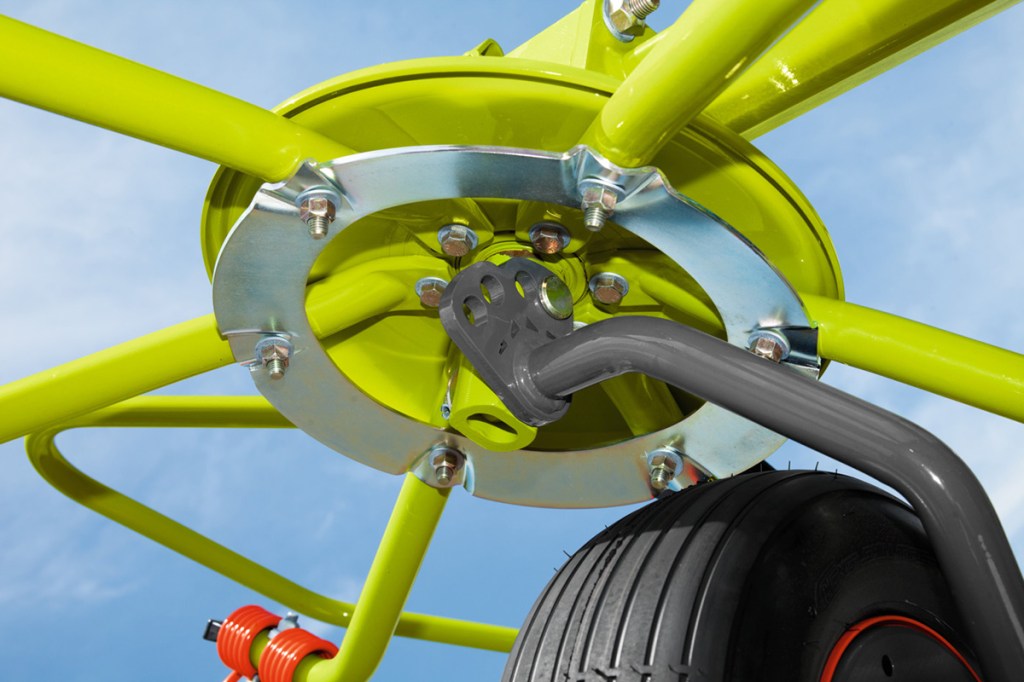
For its 10.5mm thick tines, Claas uses five windings for the two coils, and the prongs are equal length. The arm is positioned through the coil. The tine fastener also allows the tine to be adjusted forwards or backwards by 7˚ so you can fine-tune your desired spreading pattern. The plastic trapezoid tine lost prevention system stops any tines flying off and causing damage as well as reducing the crop wrapping effect.
Depending on the model, the spreading angle can be adjusted between 12 and 18˚ by altering the gauge wheels to one of four positions. The steeper angle is good for first time tedding or in wet conditions to ensure the grass layer is adequately separated, while the flatter angle is suited to wider spreading in hay. Claas uses a simple pin secured with a lynch pin for this adjustment.
There is a Driving Impression on the Volto 1300 TS in profi 11/2024.
FENDT
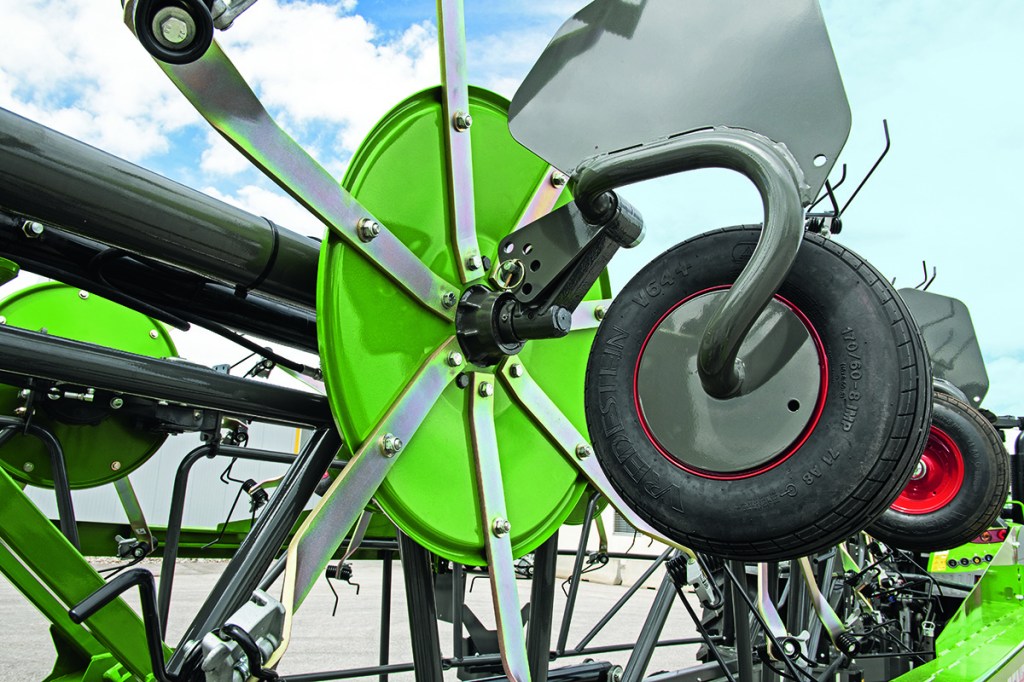
Fendt’s Lotus tedder series consists of three models: one mounted (7.7m) and two trailed (10.2m and 12.5m). The 770 uses a 1.72m diameter rotor with six tine arms, while the 1020T and 1250T also have a 1.72m rotor but with seven arms.
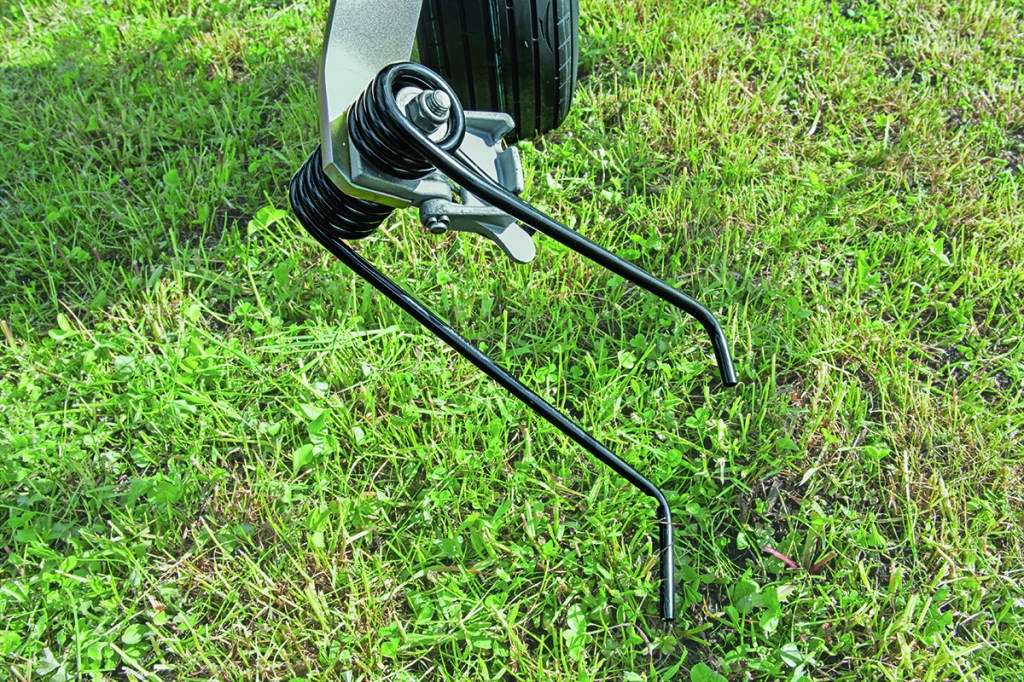
These use the hook tine design, AGCO having bought the Lely grassland business in 2017; a Fendt liveried version of the Lotus was unveiled in 2019. The arms are fabricated from flat bar. The tines are secured to a special holder, which on the outer rotors allows you to swap between an in-field and headland position. Pressing the spring-loaded thumb plate allows you to make the alteration to each tine without any tools.
The rotor gauge wheels have five pitch settings ranging from 10 to 17˚. This is done by refitting the pin (which is secured with a lynchpin) to one of the five holes.
Fendt also has the Twister range of tedders in its line-up.
KRONE
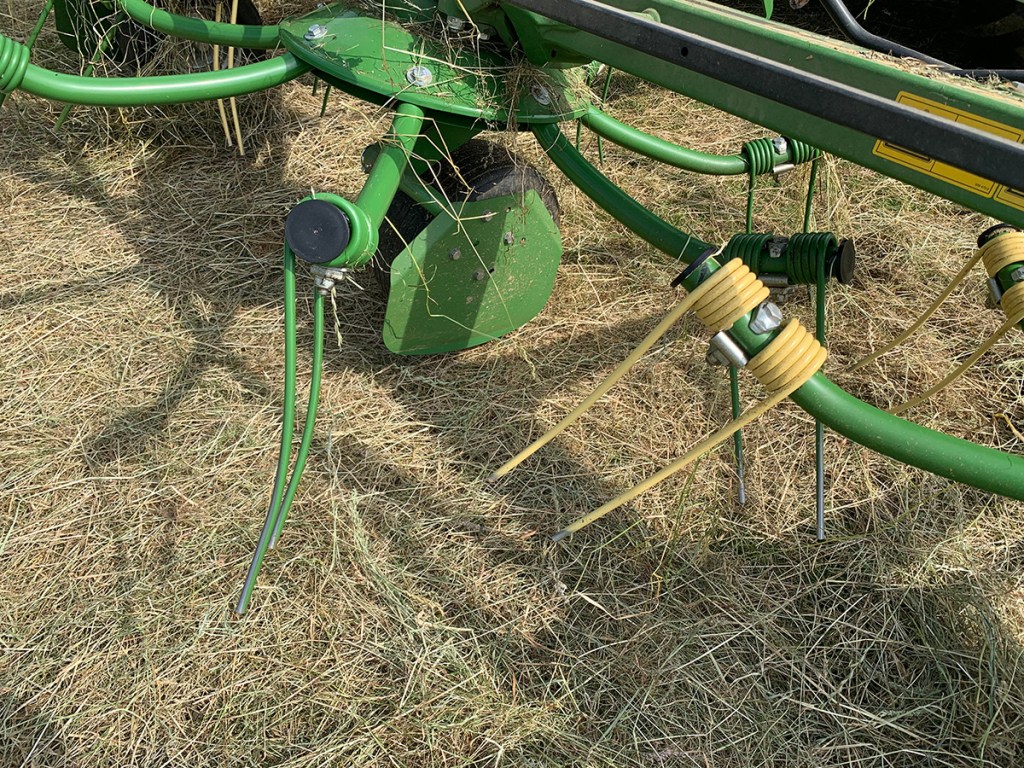
Krone went back to the drawing board when it introduced the Vendro, initially with the mounted (4.70 to 11.20m) models in 2020 and a few years later with the larger (11.20 to 13.40m) trailed versions. These OptiTurn rotors come as 1.37m (five arms), 1.50m (six), 1.70m and 1.82m (both seven).
For the tine arms it relies on shaped 38mm diameter, 4mm thick round tube. There is a lower supporting ring, sandwiching the arms to the main rotor dish. Krone goes with a shorter inner, longer outer tine arrangement to ensure that the working height of both tines is the same when they engage the crop. When optimally set, the tines are arranged 90° to the ground. The five coil double tines also have a slight curve in their prongs to aid forage pick up and spreading.
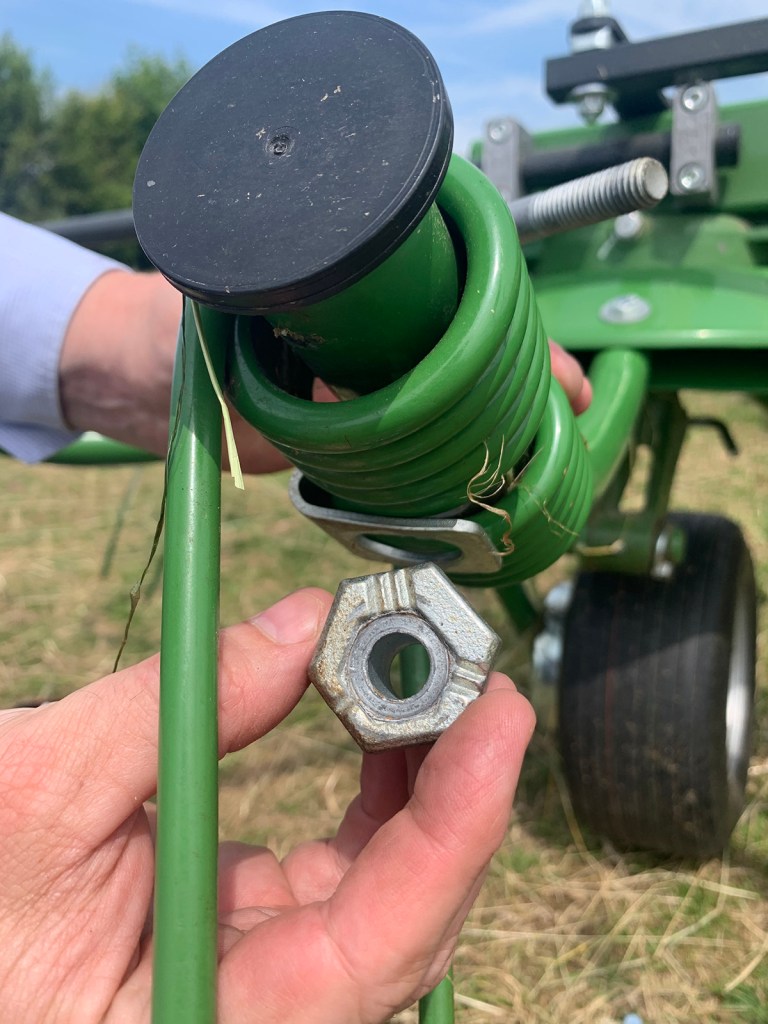
The tine fastener includes a hexagonal spacer that enables you to change the tine angle to one of three settings. Plastic end stoppers retain any broken tines. The stopper is also secured with the bolt holding the tine in place.
The gauge wheels include anti-wrap guards. A spring-loaded pin allows you to change the gauge wheel in four steps ranging from 13 to 19˚.
There is a Driving Impression with the Vendro 1120 in profi 10/2022 and the 560 in profi 09/2021. We have also looked at the KWT, which Krone still offers for its widest tedding widths of up to 19.60m.
KUHN
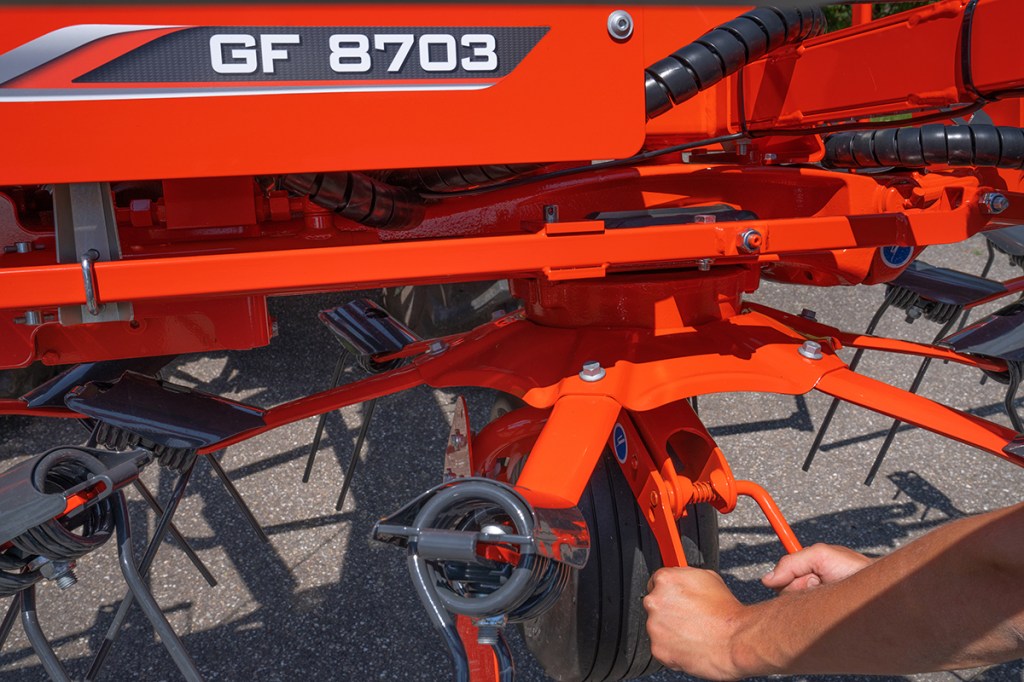
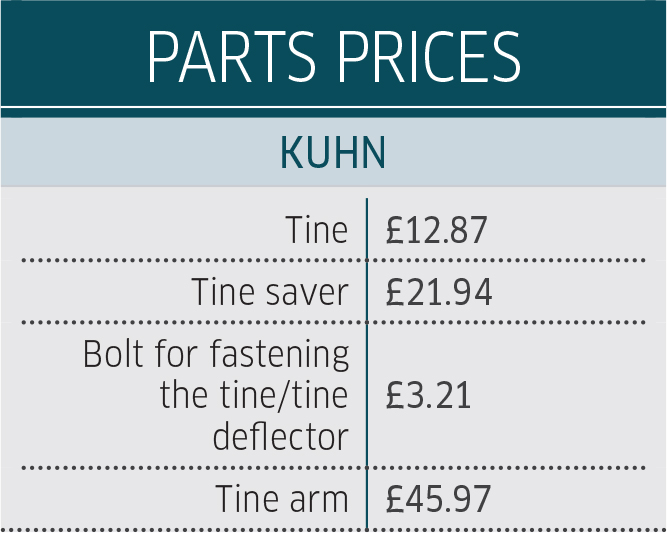
With the exception of its smaller GF102 series tedders, Kuhn employs its OptiTedd rotors on all of the other GF models, which go all the way up to a working width of 13.0m fully mounted and 17.2m trailed. OptiTedd comes in three rotor diameters; 1.30m (five arms), 1.50m (six) and 1.80m (seven).
The dishes have a pressed profile that the arms then sit into for additional support before being bolted in two places. The arm itself also has profiling to create a U shape rather than being completely flat to give improved stability and reduce vibration. The tine coil slides over the end of the arm and is fastened in place. Kuhn also fits an anti-wrapping deflector that is positioned over the coil to reduce forage build-up on the coils and reduce the risk of tine loss.
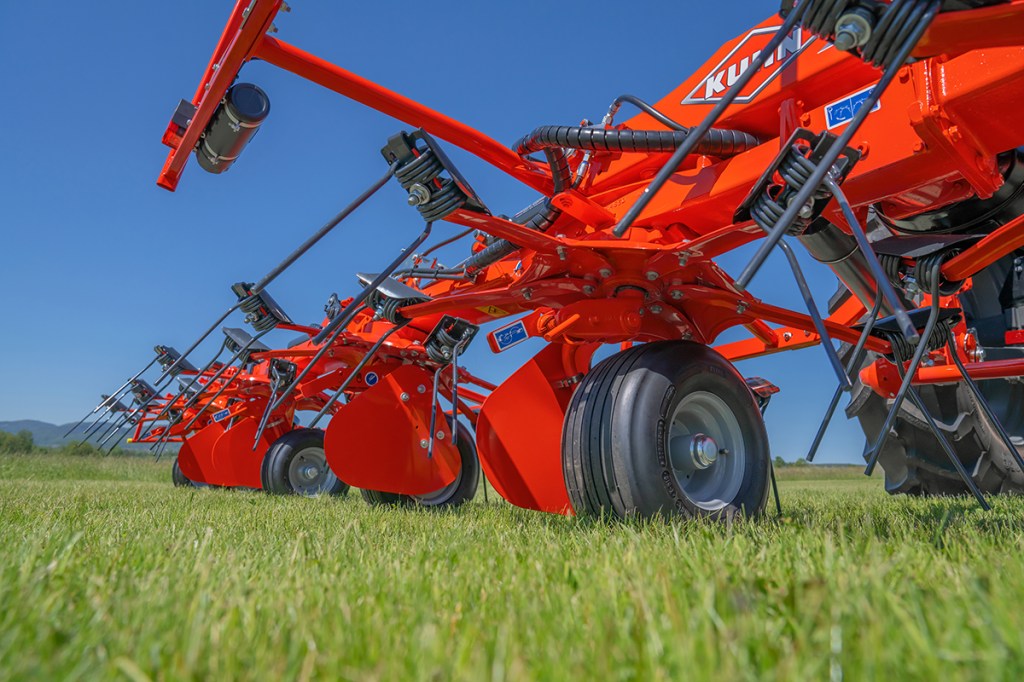
Regarding tine design, the 03 models feature 80mm diameter four coil and 10mm thick tines. They are asymmetrical, meaning they have a longer outer prong. Benefits are said to be the outer tine engaging the crop sooner and ensuring forage pick up.
The rotor wheel is easy to adjust, as the retaining pin is spring-loaded, and there is also a handle to make moving the wheel assembly simpler. There are just two positions: 16˚ and 19˚. Deflector plates prevent grass clinging to the wheel column.
There is a Practical Test with the GF13003 in profi 4/2024
MALONE
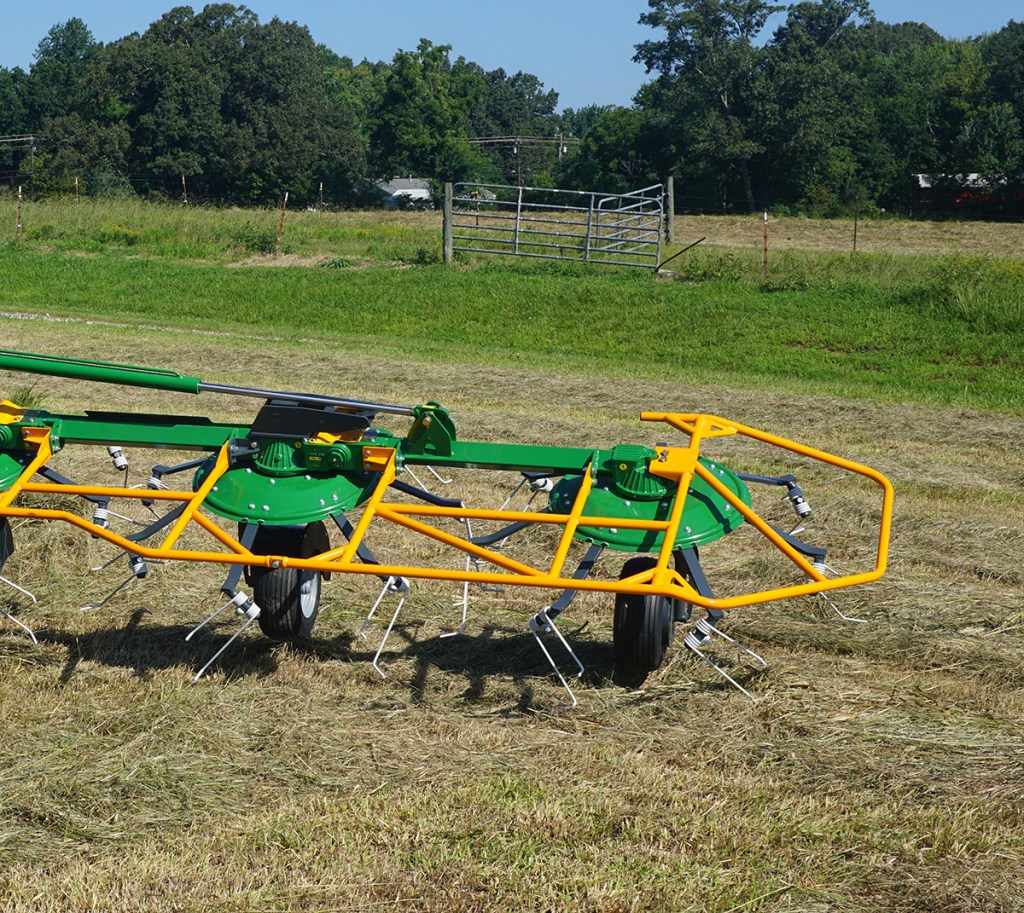
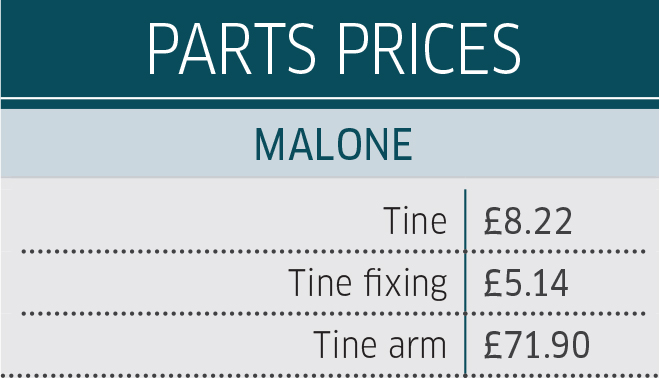
All four Tedd-Air models from Malone use the 1.60m diameter rotor with seven arms and hook tines. The dish is fabricated from 3mm steel with a diameter of 720mm.
As well as being bolted to the dish in two places, the flat steel tine arms have an additional fastener for extra strength. Welded onto the end of the arm is a round tine holder. This does mean that the tines have a set operating angle. The headland position is achieved by steering the gauge wheels on the 5.74m and 8.40m mounted models and with an end curtain on the 8.40m and 11.20m trailed models.
Refitting a pin to one of three holes allows you to alter the gauge wheel to 11, 13 or 15˚.There is a Practical Test with the Tedd-Air 840 in profi 6/2021.
KVERNELAND GROUP
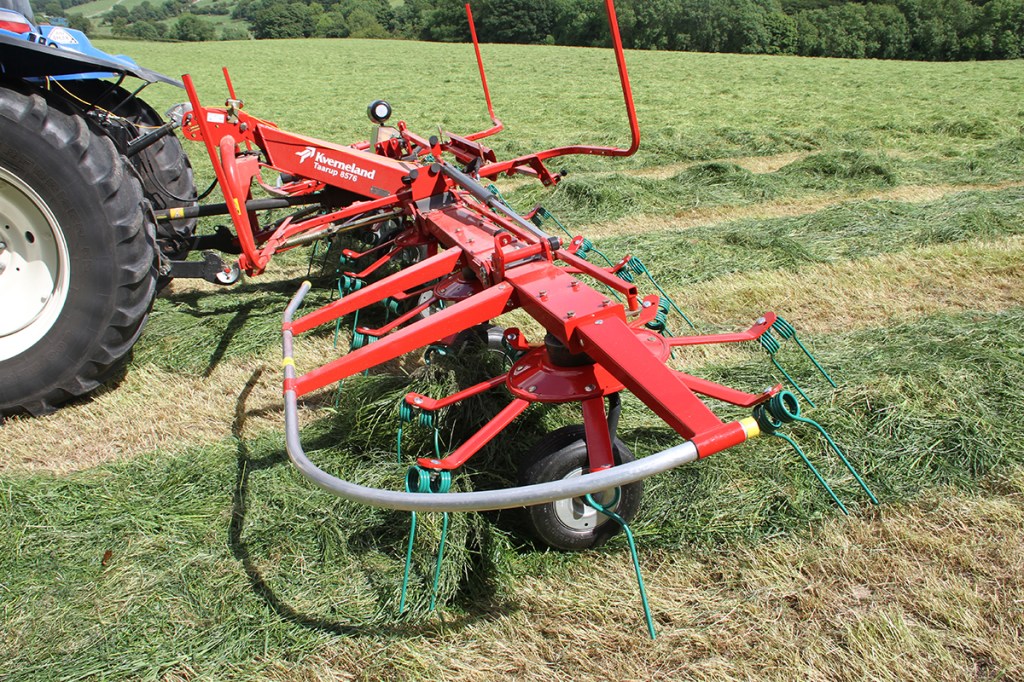
The Kverneland umbrella also covers the Kubota and Vicon brands. There are two slightly different rotor designs: the entry Compact Line (5.20m, 6.05m and 8.05m) and heavier-duty ProLine (5.50m to 15.60m).
On the Compact Line there are five or six tine arms per rotor depending on model, while the ProLine has six to seven. Both variations share the exact same tine arm, which is a flat steel design with two bolts fixing to the 500mm diameter dish. Square holes in the arm prevent the cup head bolts from turning, making fitting easier.
They also share the wedge washer to alter the incline of the tine to one of three positions. From factory the washer is not fitted, and the tine sits at 0˚. Installing the washer against the direction of rotation, you achieve a softer angle of -4˚, while turning it gives a more aggressive angle of +4˚ primarily to aid conditioning on a first tedding pass after mowing. The tine is fastened below the rotor arm.
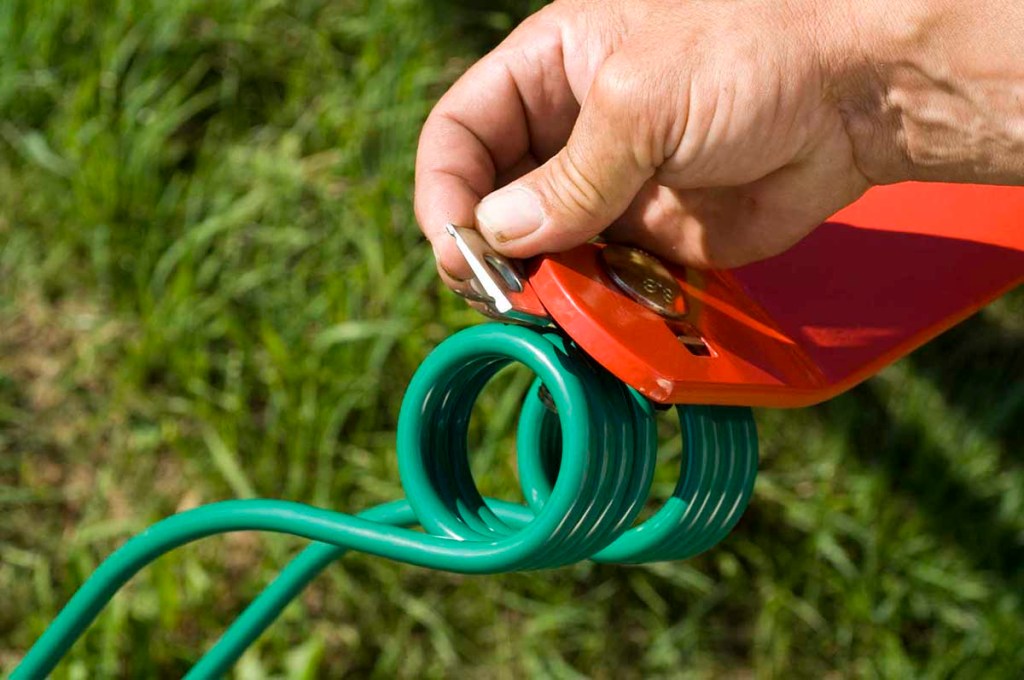
The tine legs are equal lengths and they are not handed – there are no left- or right-hand versions. Rotor head angle means the outer tine leg takes the top layer of crop, and the inner leg, which is closer to the floor, sweeps up the rest.
The C-Quality Tine on the CL is 9mm thick and has a coil diameter of 68mm. The ProLine has the Super-C tine, which Kverneland claims is the largest on the market with a diameter of 10mm and a coil measurement of 80mm. ProLine tedders have the option of tine safety clips, a strip of plastic that slips around the tine legs and is fastened in place.
Moving on to the rotor wheels, both tedder variants have three hole settings, reset by refitting a pin that is secured with a lynchpin. Anti-wrap cones for the wheel rim area are standard on all models, while cover plates to prevent sticky grass clinging to the rotor axle are optional.
There is a Driving Impression with the Vicon Fanex 1564C in profi 11/2022.
MCHALE
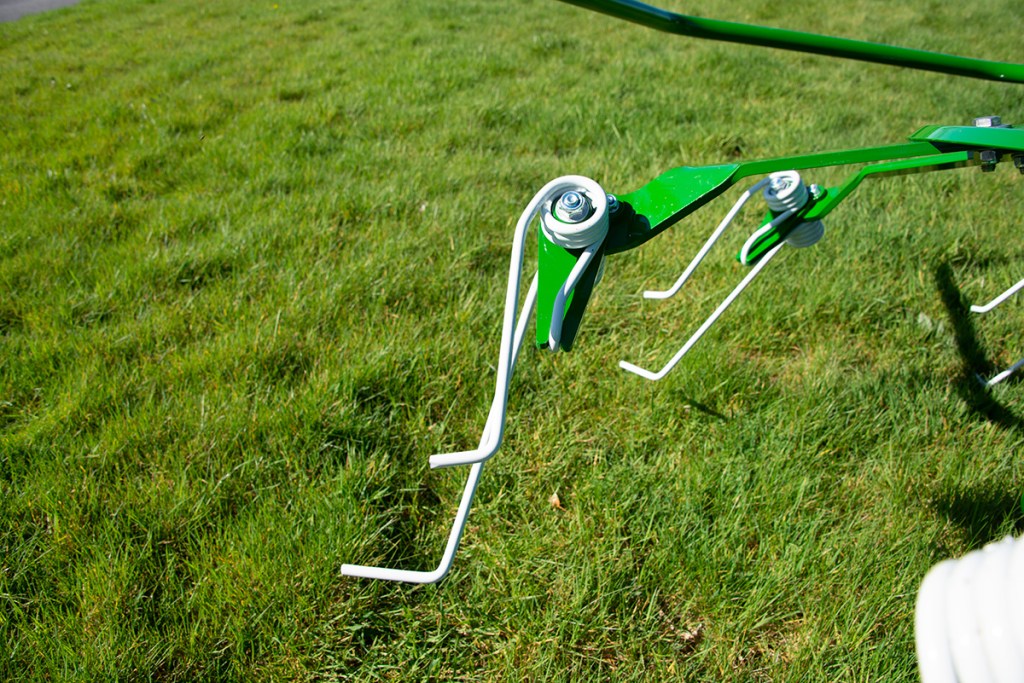
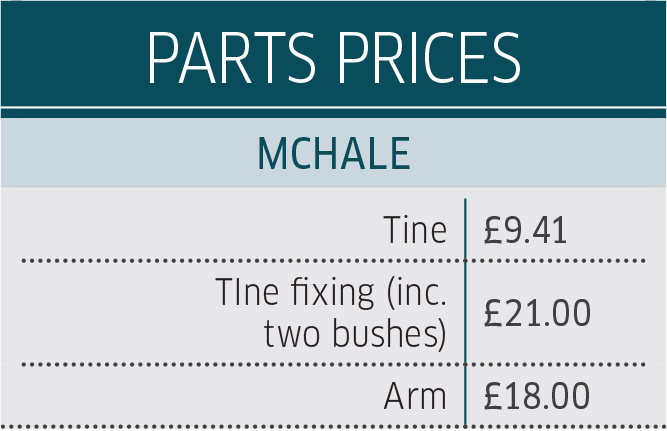
McHale’s Propel range of tedders features the same rotor across all three models — a 7.70m mounted and the 10.20 and 12.60m trailed. There are seven tine arms on each 1.58m diameter rotor. The arms themselves are fabricated from 50 x 10mm flat steel with a crank to provide the desired tine angle. The arms are fastened to the 720mm diameter dish in two places.
All are equipped with a double hook tine said to ensure the crop is cleanly lifted and provide a large, even spread. The length of the double tines measures 240mm (to the fixing centre) for the short prong and 325mm for the longer tine. The tines are 9mm thick with a coil diameter of 55mm and incorporating four and three coils on the long and short tines respectively.
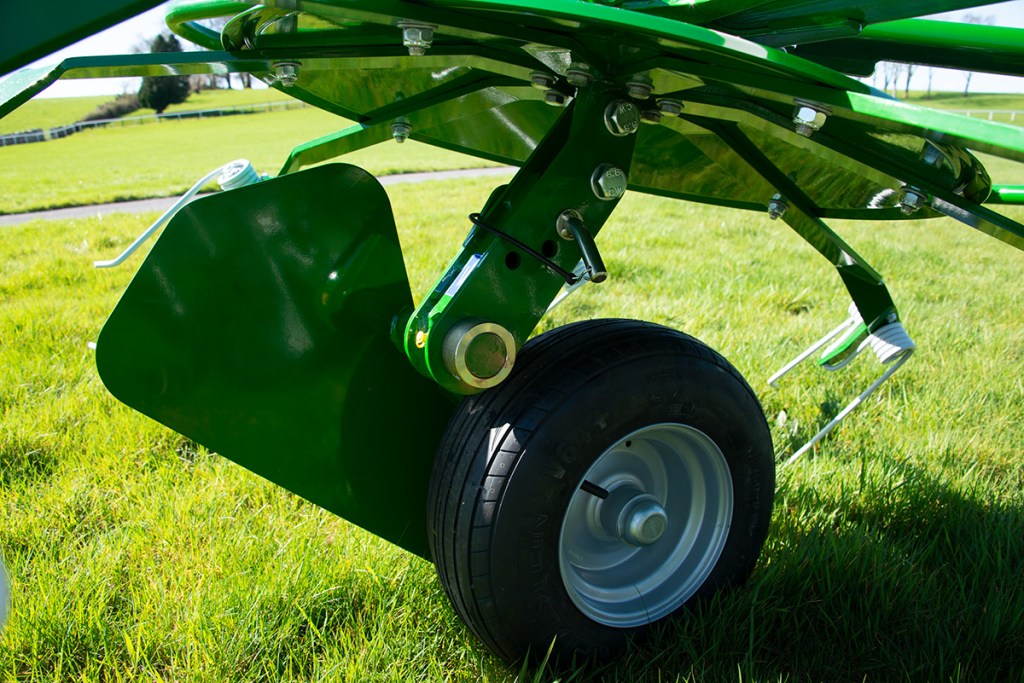
Rotor angle adjustment is carried out through five steps, which range from 10° to 17°, and there is also a transport position to reduce the width of the machine when folded. The wheel position is set by refitting a pin, which is secured with a lynchpin. All rotor wheels are fitted with crop deflection plates to stop the crop from becoming entangled, diverting the forage to the rear of the machine.
There is a Driving Impression with the Propel M6-770 in profi 11/2023.
PÖTTINGER
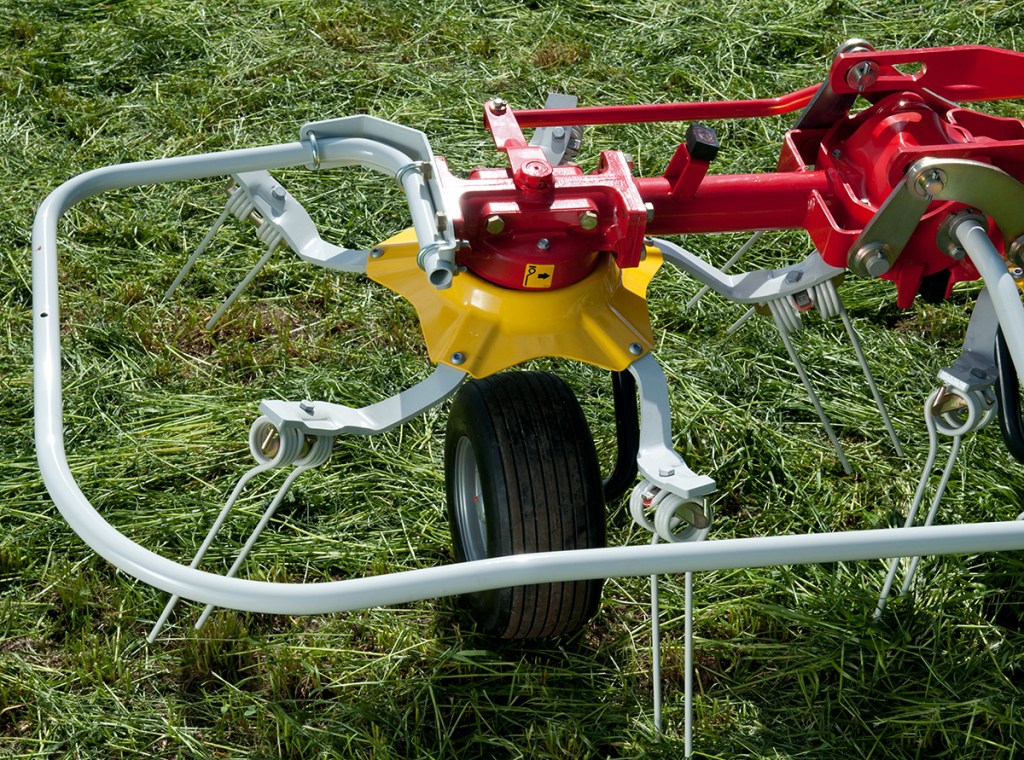
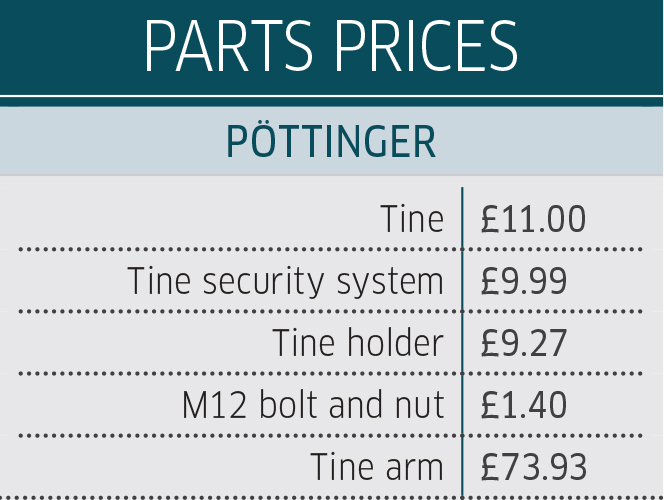
Pöttinger goes with three different sizes of Dynatech rotor across the HIT range, which has working widths of up to 10.7m when fully mounted and 17.0m for trailed models. There are five arms on the 1.30m, while the 1.42m and 1.67m rotors both have six and share the same size dish. Otherwise, variation in diameter is achieved by incorporating longer or shorter arms.
The rotor dishes are pressed to create a pocket for the arm to fit into, which is then secured using two bolts. As well as the dish, the inner fastener is also secured to the rotor hub. The arms are cut and shaped to suit with press-fit holes for the fasteners.
Tines are made from a 10mm thick, carbon-depleted spring steel. The tines sit below the tine arm and are secured using a special carrier with a curved mating face that sits inside the coil, which is then bolted to the arm.
Horns on either side of the carrier sit against the arm, doubling up as tine retainers in the event of breakage. Rotating part of this holder 180˚ also lets you alter the angle to a slightly more aggressive setting for heavier crops.
The two prongs are different lengths, with the outer tine being slightly longer so that the crop is picked up evenly and stays closer to the ground for longer. This is said to improve the overlap between the adjacent rotors. Incidentally, models with a 1.42m diameter rotor are the most popular in the UK.
The rotor wheels have five position settings, allowing you to vary between 12˚ and 20˚. The retaining pin is secured with a lynchpin.
There is a Driving Impression with the HIT 16.18T in profi 2/2021.
ROZMITAL
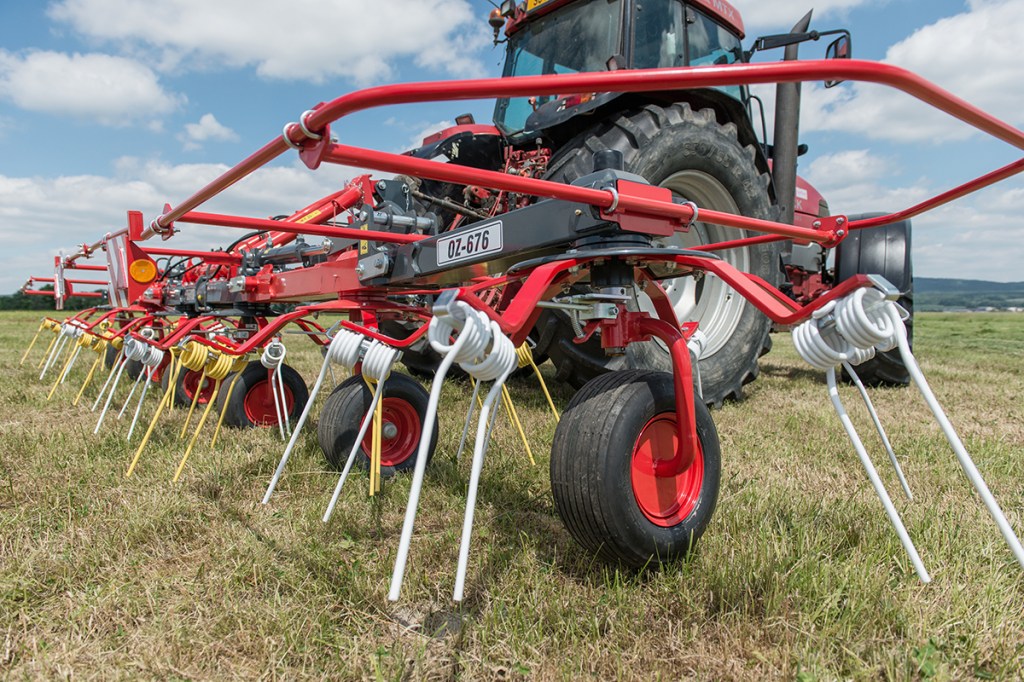
For its range of OZ tedders, Rozmital uses a 1.60m diameter rotor with six tine arms or a 1.72m which has seven. Rotor size depends on the model. Working widths range from 2.72m on the entry two-rotor machine to 11.10m on the ten-rotor semi-mounted OZ-1110.
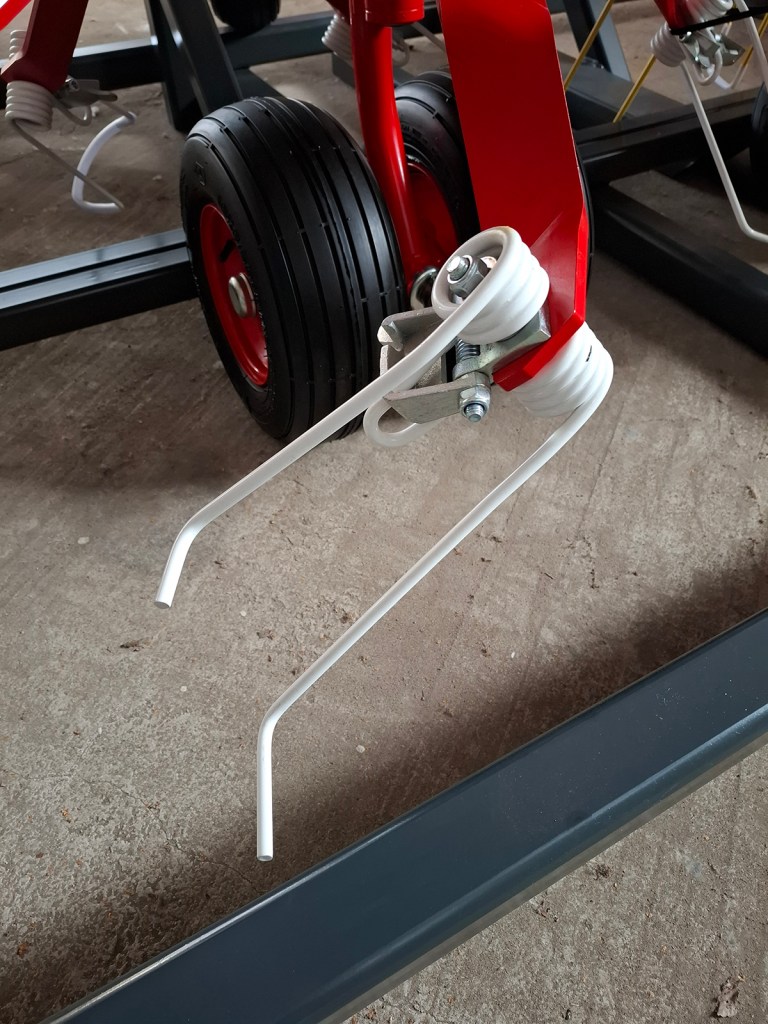
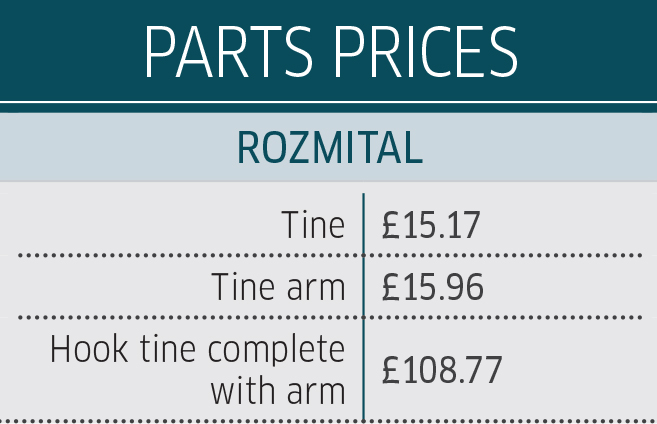
The tine arms are fabricated from flat steel and secured to the round dish with two bolts. The 10mm thick tines have a longer outer prong. Alternatively, on four of its models, which use the 1.36m rotor, Rozmital has the option of fitting 9mm thick hook tines. These machines also have a different arm design, while the tine holder has two positions to alter the spread pattern.
The gauge wheels offer five settings by refitting a bolt to the selected hole. On the OZ-454 to OZ-776S, the wheels can be manually angled to either side, so the tedder is offset for working along the field perimeter. The OZ-676H has hydraulic wheel angling. Meanwhile, on the wider OZ-908 and OZ-1110 there is a folding curtain to keep the crop in the field.
SAMASZ
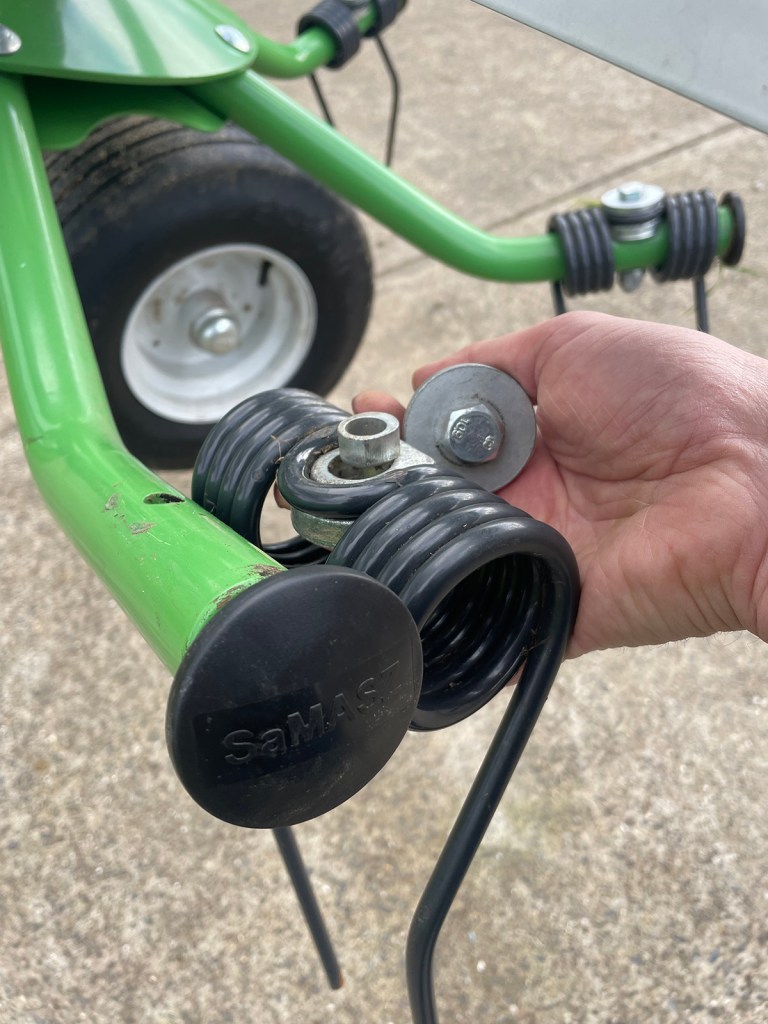
There are six tines arms on the Samasz rotors, which vary in size — 1.36m, 1.53m, 1.60m and 1.72m —depending on the working width, which is a maximum of 13.30m on the biggest trailed, or 8.90m on its widest fully mounted model.
The cranked tubular arms are fastened to the dish with two bolts, with the inner fastener also attaching to the rotor hub. There is a lower securing ring for additional stability.
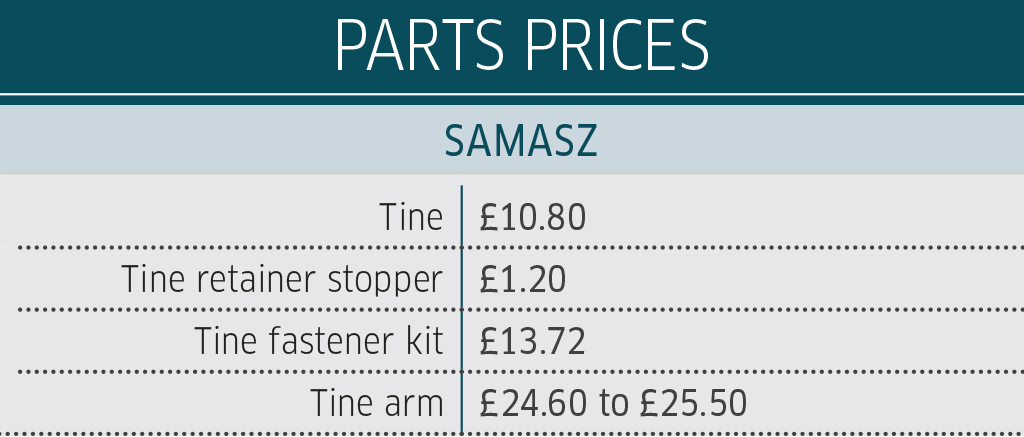
The four coil double tines slide over the arm, but spacers keep the actual coil away from the arm so it can still flex and avoid stress- related breaks. These spacers also contain a wedge-shaped bush that allows you to change the tine angle to one of two positions. The tine fastener also holds the plastic end stopper in place, and this stopper works as the tine retainer if there is a breakage.
Underneath, the gauge wheel has three operating positions ranging from 15 to 19˚. The spring-loaded pin makes altering this setting that bit easier. Crop guards are also part of the specification.
There is a Practical Test with the P10-1100T in profi 12/2023.
SIP
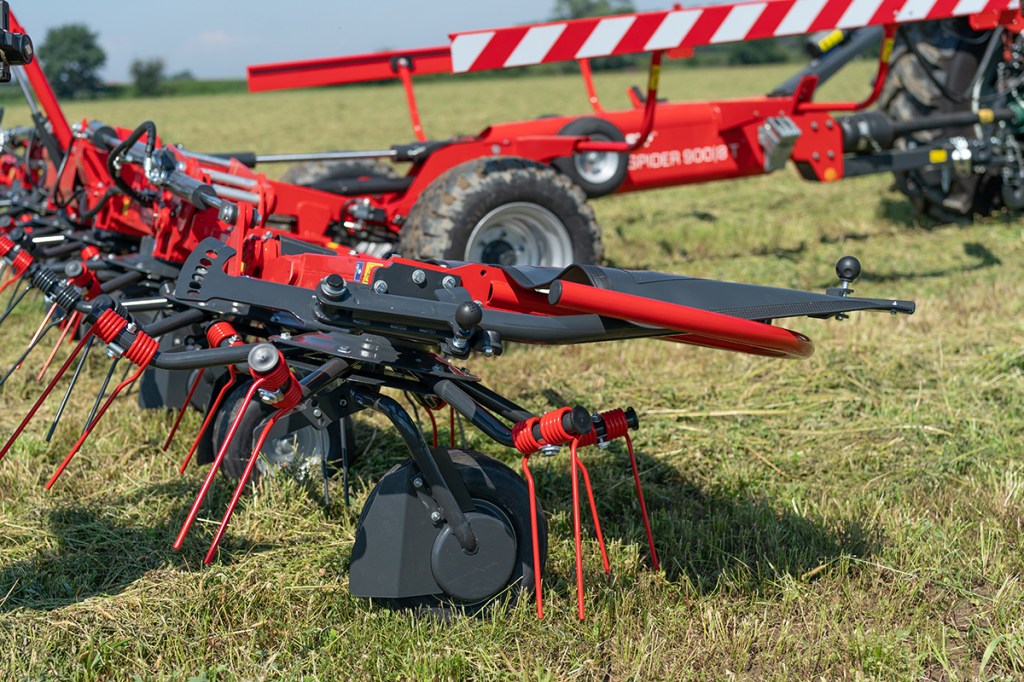
For its Spider range of 3.50m to 17.20m tedders, SIP offers four different rotor diameters: 1.30m (five arms), 1.45m (six), 1.50m (five), 1.60m (six) and 1.70m (also six arms). There are three main variants of tedder — Agile, Robust and HD-Line.
The Robust and HD-Line share the same 4mm thick central dish and then use different arm lengths to achieve the overall diameter. The arms are round tube and shaped to gain the correct angle. The inner fastener also connects to the rotor hub, and there is a 2.5mm thick lower dish to add extra strength.
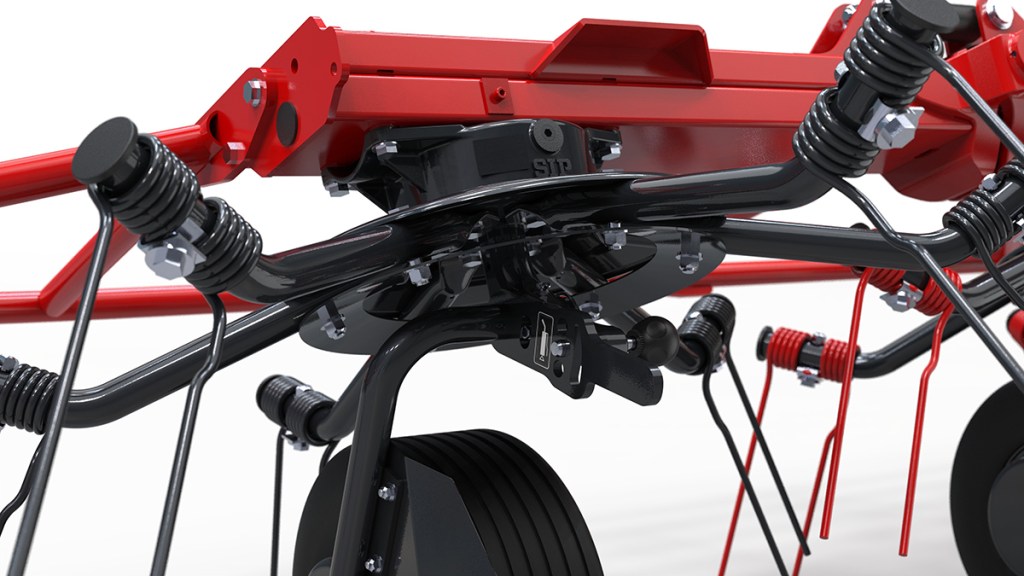
SIP has two tine options, straight and hook ends. On the former, the tine coil slides over the rotor arm, with a plastic end stopper acting as the tine retainer in the event of a breakage. The tines are 9.5mm in diameter, with the outer prong being longer so they sweep the crop together. The tines boast a five-coil design that is 68mm in diameter.
The hook tines still use a tubular arm but with an added holder for the tine. This allows the operator to swap between two positions.
Depending on the model, the gauge wheel has either three or four position settings between 14˚ and 21˚. A spring-loaded pin makes altering the setting a quick pull out and shift operation.
There is a Practical Test with the Spider 1100/10T in profi 5/2017.