
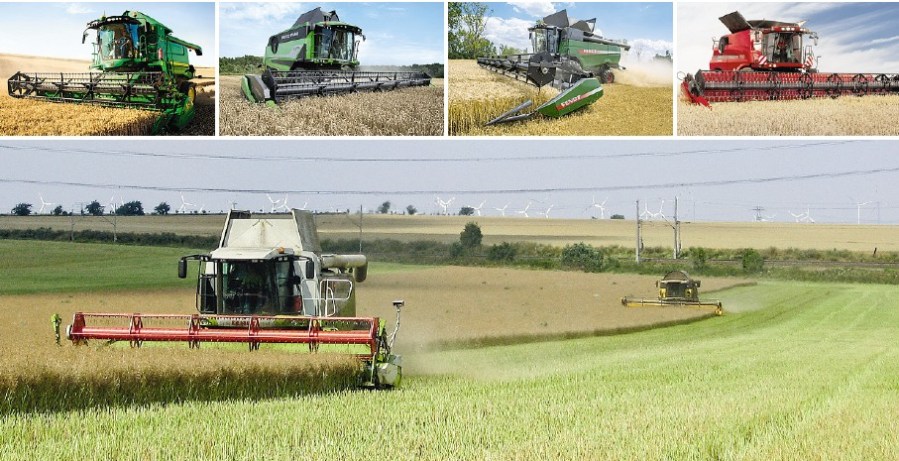
Many different things decide combine output and losses. On straw walker machines the walkers are key, while on rotaries it’s usually engine power. How come? We show why this is and look at how to manage these two alternative harvesting systems
There isn’t enough power. Not something any owner wants to hear from his combine driver, but may well do — especially when the combine in question is a rotary model. In rotaries, power demand is particularly high when the harvester is pushed hard in crops with a lot of straw. So much material goes through the machine that the engine speed drops, as it would on a forager in similar circumstances. If the user perceives this as a lack of power, the owner and then the dealer get it in the neck.
The curve linking output to loss is flatter for a rotary than a walker machine, partly because of the different way grain is threshed and partly because the mat of straw is thinner and flows faster through a rotary. So a rotary can be set up to deliver maximum straw throughput without fretting about a big increase in grain loss. In these machines, the point of maximum output usually coincides with maximum engine power.
For more up-to-date farming news click here and subscribe now to profi and save