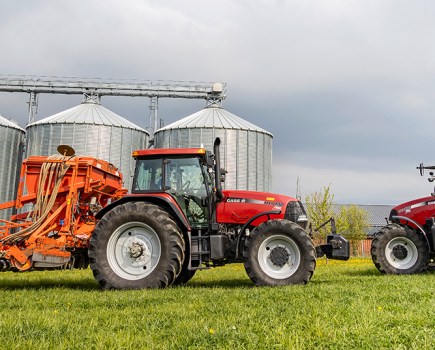

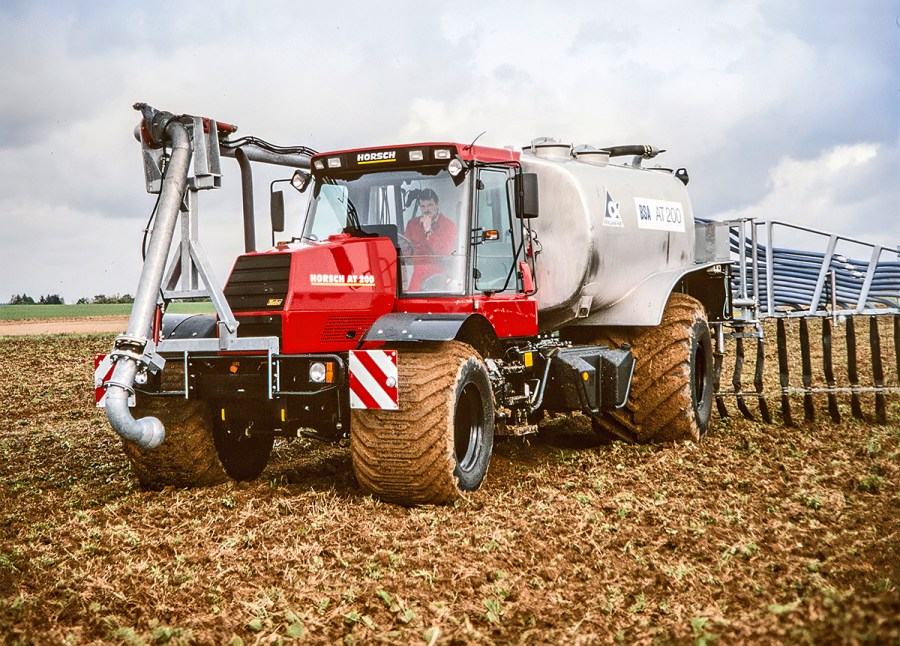
Thirty years ago, Horsch launched the AT200, which was intended to open up a wider customer base for its self-propelled business. In the heyday of multifunctional tool carriers, Horsch was competing with other manufacturers in what was becoming a rather small market.
When Horsch launched the AT200 four-wheel-drive tractor way back in 1996, it had already accumulated several years of vehicle manufacturing experience with the three-wheeler Terra-Trac and the articulated K735. It didn’t surprise anyone that Horsch wanted to continue developing its vehicle range.
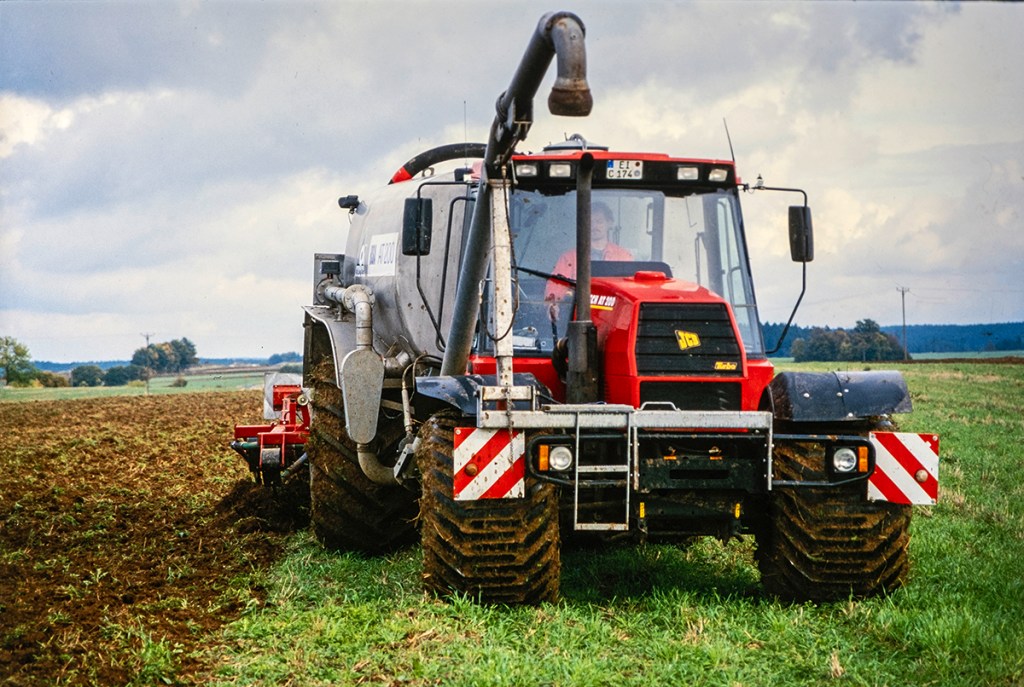
In the 1990s, not many people were able to predict where the agricultural sector was heading with ever bigger farms. It seems remarkable now that the western tractor manufacturers were not able to meet the demand for high-power tractors for the large-scale farming businesses in the former East Germany and farther afield.
Powerful and versatile
This was the time for the medium-sized manufacturers to shine. They weren’t aiming to become one of the major global tractor manufacturers but serve a niche market with powerful, multifunctional tool carriers. There was a demand for more horsepower to work the massive fields of the former cooperative farms, which now needed to be cultivated, fertilised and harvested. But why did this new-concept vehicle also have to be multifunctional?
Ultimately, the multifunctionality of the carrier vehicle was more of a marketing argument in the 1990s. The forerunners of today’s carrier vehicles were the implement carriers from the 1950s, which were then marketed by several manufacturers such as Eicher, Fendt or Schmotzer. At that time, multifunctionality really made sense; a seed drill, a cultivator or a load platform could be mounted or removed in 10 minutes. And even a small farm could make use of its functionality.
In the 1990s, the multifunction argument was still valid, so Trac tractors and tool carrier vehicles continued to find buyers. However, it was also clear that conventional tractors were becoming more and more powerful while sales of higher horsepower carrier vehicles remained stagnant.
Horsch continues developing
Horsch’s core business has always been tillage and sowing. Of course, the company has always also had a soft spot for vehicle manufacturing.
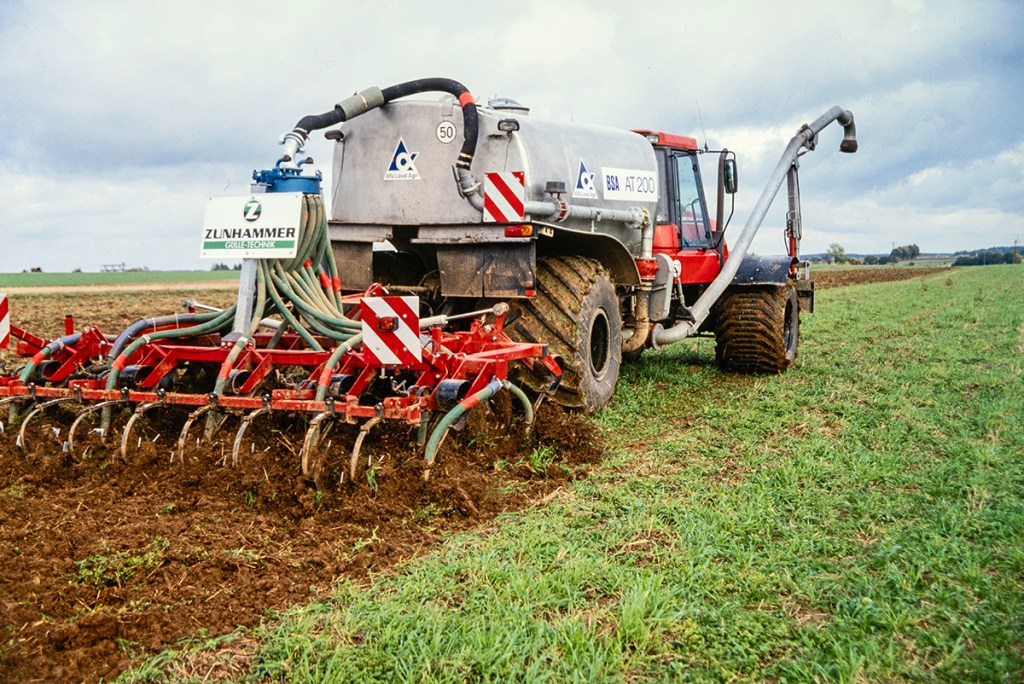
After developing the specialised Terra-Trac and the artic K731 (for which, incidentally, mounted slurry tanks were available), Horsch continued to focus on the development of self-propelled vehicles. This is probably due to the fact that large farmers and contractors were the targeted customers. The AT200 platform was a consequence of this strategic thinking.
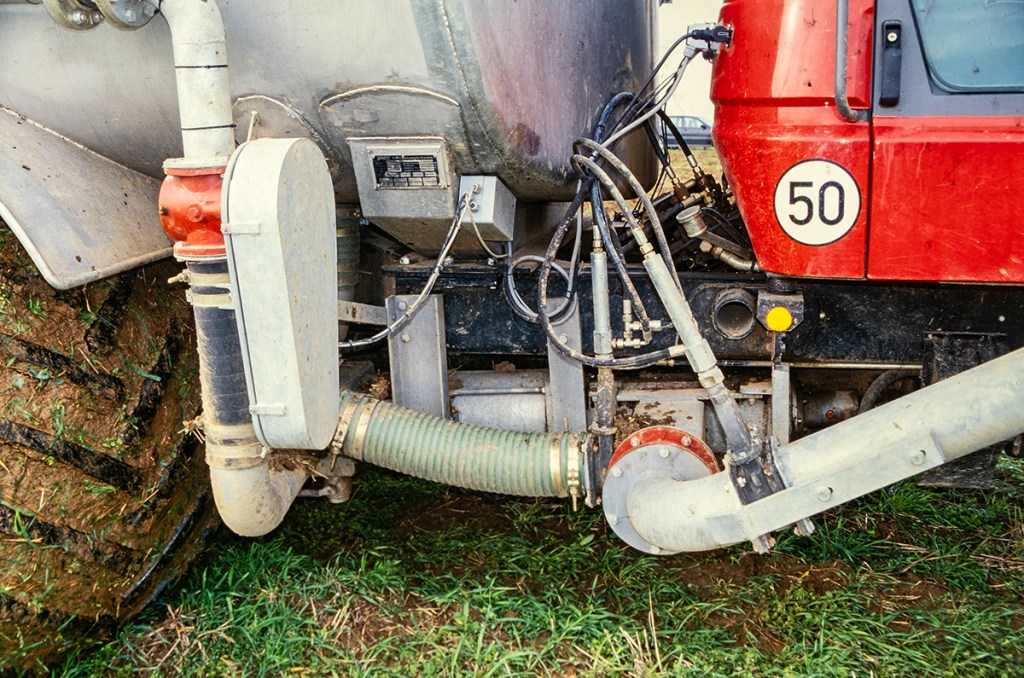
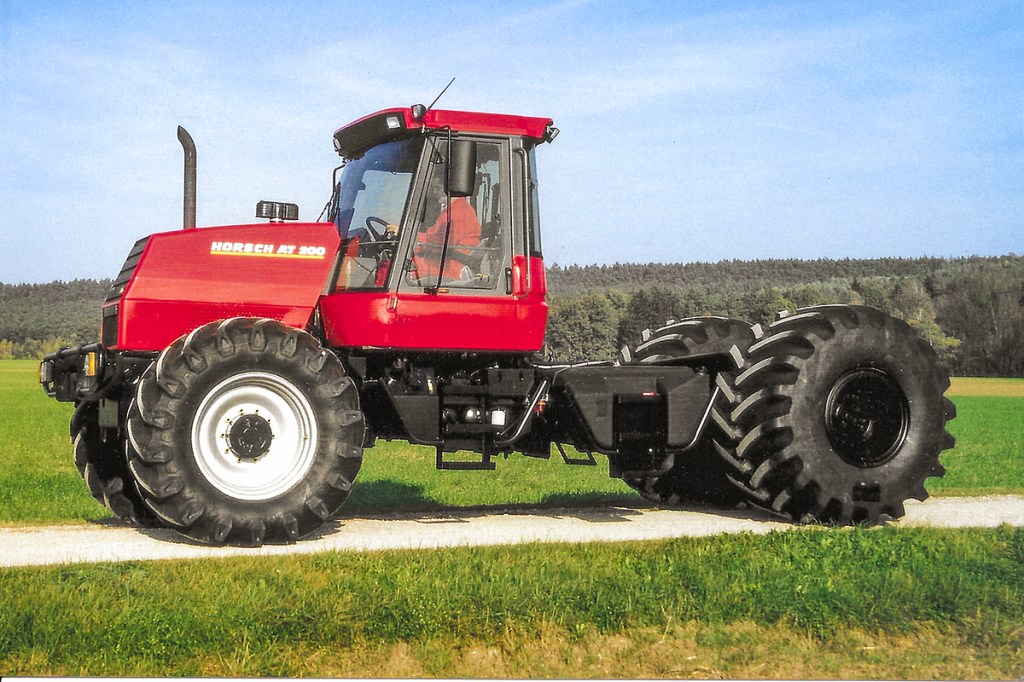
The AT200 designers made good use of JCB components. The cab, engine (a six-cylinder Cummins with 188hp), transmission, front axle and hydraulics system all came from the British manufacturer. However, Horsch constructed its own chassis. The co-operation between the two firms stipulated that Horsch would supply the frame to JCB, where the AT200 was ultimately assembled. Only the rear axle and tyres were finally fitted to the AT200 by Horsch.
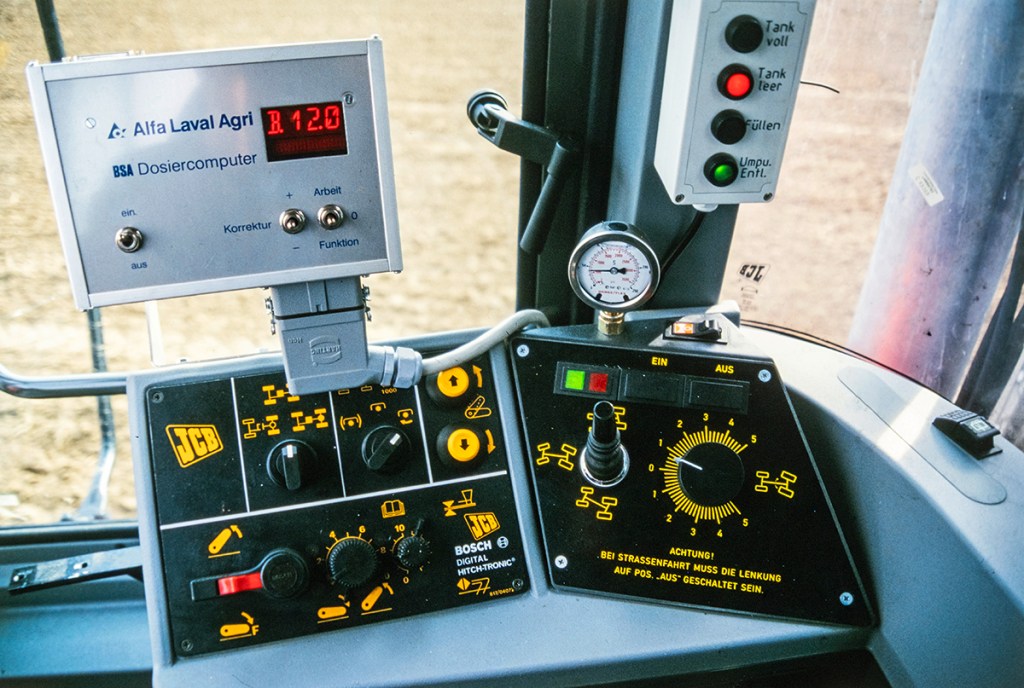
Every Fastrac driver instantly felt at home inside the AT200. The fully synchronised transmission with three forward and one reverse range met the expectations at the time. Each range had five gears and two powershift steps.

Wide but agile
The wide terra tyres fitted to the AT200 made it a big lump on the road. With an overall width of 3.0m, it didn’t exactly have the ideal dimensions for long road journeys; so, using ferry tanks helped to boost output. Nevertheless, road work was comfortable thanks to the front axle suspension.
The AT200 was available either with a rigid or a steered rear axle (known as the AT200 L), which allowed for soil- and plant-friendly all-wheel steer and crab steer. First-hand experience showed that switching steering modes at the headland took some practice — before starting the turn, you first had to switch from crab- to all-wheel steer, but with a little more practice, you could make this almost look seamless.
When spreading slurry with a cultivator or dribble bar, for example, a wheel angle of 12⁰ was used. This angle was automatically restored whenever crab steer was selected.
When our German kit-testing colleagues drove the AT200 back in 1998, they praised the manoeuvrability (14m turning circle), the comfy cab and soil-friendly characteristics thanks to the four-wheel and crab steering modes. Visibility was limited, though.
Various levels of specification
From today’s perspective, the AT200 is a rather small self-propelled for slurry work. In 1998, for example, Horsch was offering an 8,000-litre (Zunhammer) or 8,300-litre tank (BSA). There was also a sprayer from Inuma (4,000 or 5,000 litres) with a 36m boom.
Also in the price list was a twin-disc fertiliser spreader from Norti or Reißl for fertiliser or wet lime and a chaser bin from RKM for handling grain, seed or fertiliser.
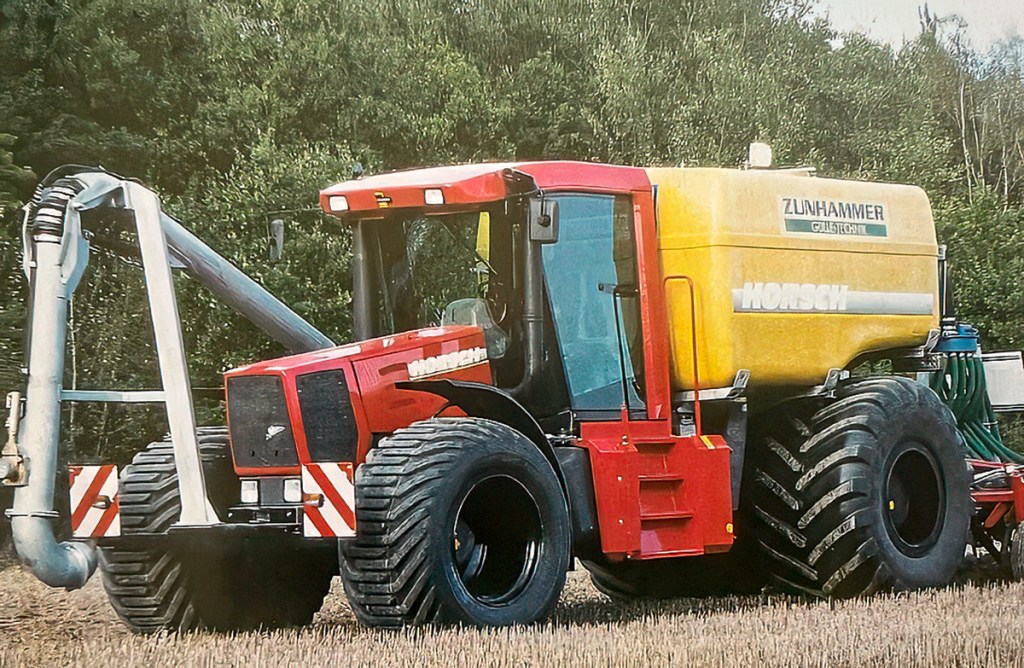
Horsch made the AT200 for eight years before launching the more powerful AT300 — with a 260hp engine, transmission, front axle and electrics from the Fendt Vario 926 and the cab from a Claas Lexion. However, only a limited number were ever built, and in 2004 Horsch closed the order book and stepped away from the self-propelled tanker business.
Gerd Theißen
For more up-to-date farming news click here and subscribe now to profi and save.