
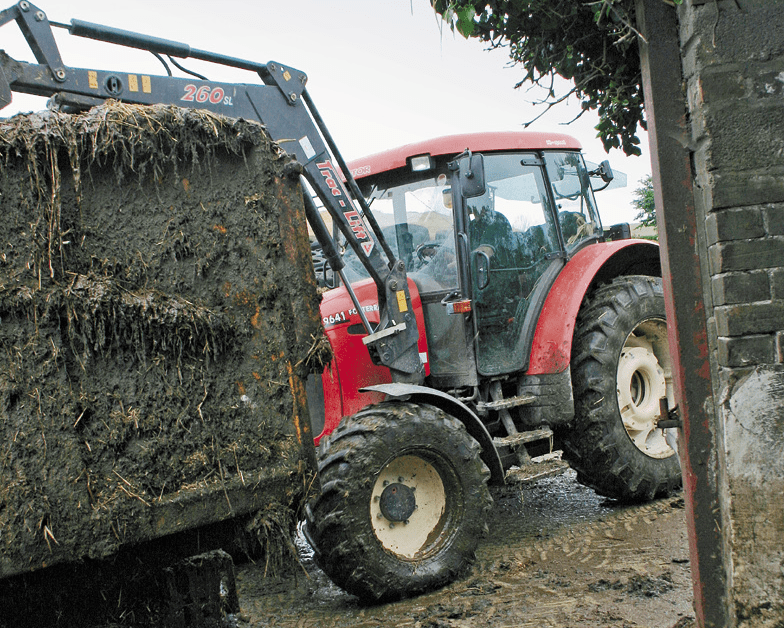
Long-term tractor test: Zetor Forterra 9641 When there are cattle to be fed, yards bedded and muck shifted before the next milking, a tractor that ‘does exactly what it says on the tin’ is essential, and ‘mechanical’ and ‘conventional’ take spec priority over ‘electronic’ and ‘automatic’. Martin Rickatson details how our Zetor Forterra 9641 long-termer has fared in meeting yard/field requirements on our host Dorset dairy unit.
This month we turn our long-term test attention over to a marque that hasn’t yet featured in this element of profi’s tractor test section. There’s no single reason for this ‘error’, but with Zetor, its distribution, its back-up and, most notably, its product line all having undergone considerable revamp over recent years, it’s time to put the omission right.
Not only that, but with next winter not far round the corner, it seems appropriate to include in this issue a detailed look at a brand whose tractors tend to work their hardest over the darker months. With the traditional Zetor home being the livestock farm, many of the maker’s machines find themselves with workloads doubled when stock come in for winter, with associated requirements to move muck and straw, plus silage and other feeds.
But this not to say Zetors are only found in livestock farming environments and only expected to perform the dirtier, more routine of ag tasks. Indeed, our long-term test Forterra 9641, as well as doing dairy duty, is required to pull its full weight on a range of arable jobs on its mixed farm home, a unit that comprises some 400ha, of which half is arable and forage ground and half under grazing grass, supporting 250 milkers plus followers.
For more up-to-date farming news click here and subscribe now to profi and save 47%.