
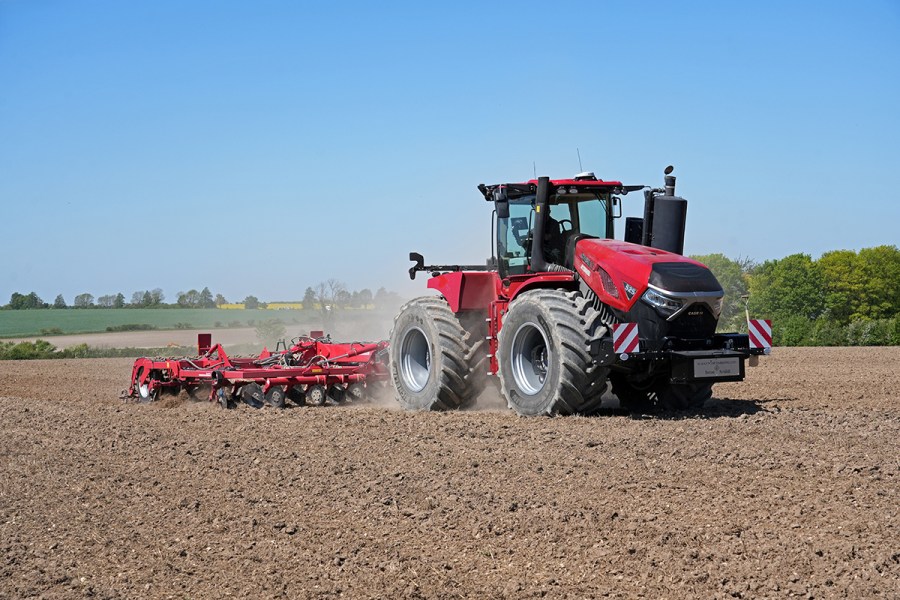
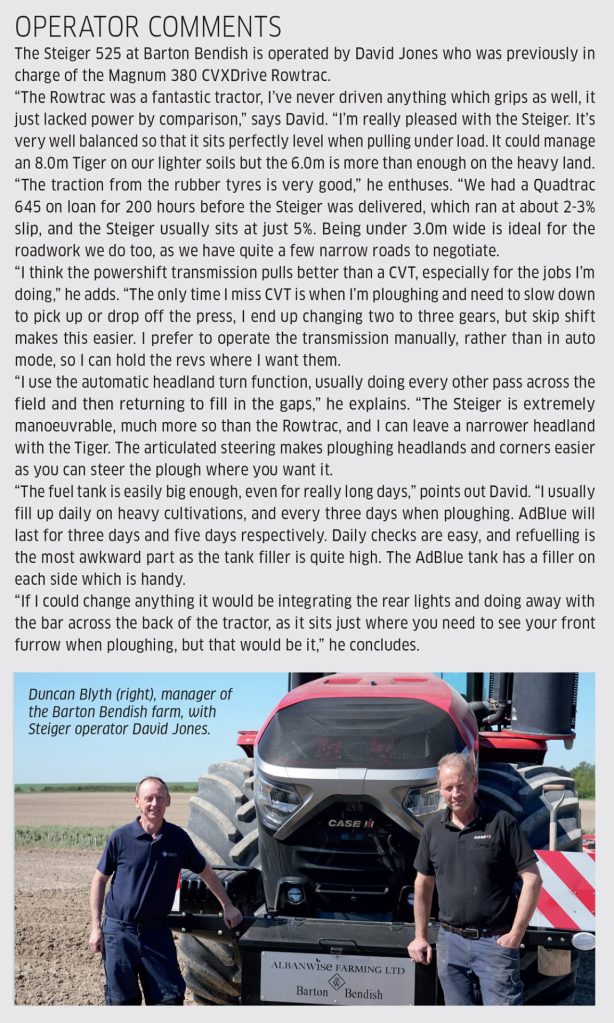
Last year Albanwise Farming’s Barton Bendish operation purchased the first and so far only wheeled articulated Case IH Steiger 525 in the UK. We look at why this artic powerhouse was selected, where it fits into the farming system and how it has performed during its first 1000 hours.
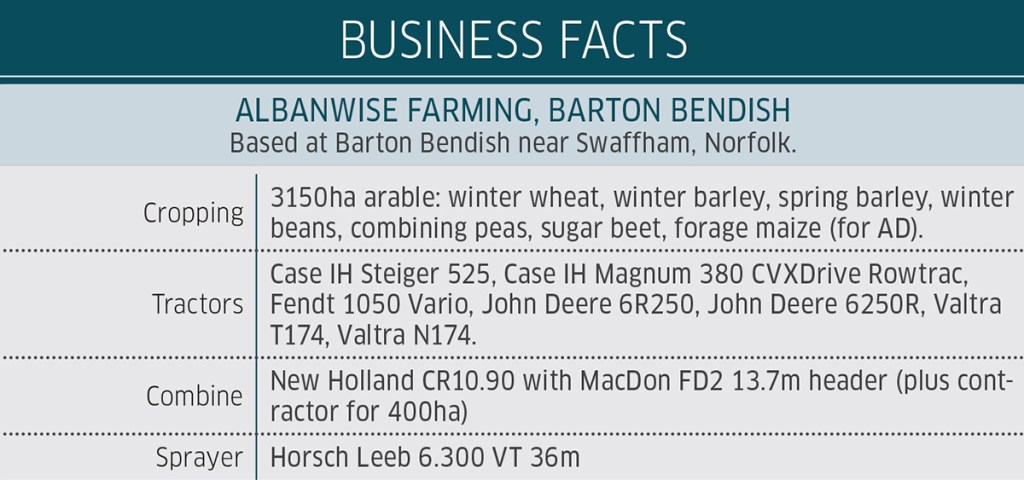
The Barton Bendish estate is one of three large-scale units operated by Albanwise Farming in Norfolk and Yorkshire. Based at Hill Farm, Barton Bendish, in West Norfolk, the farm manages 3,150ha of extremely mixed soil types, ranging from sandy Breckland through a large area of easily worked loams over chalk to some tough Beccles series clays. There are also some more silty soils on the edge of the fens. As a consequence, machinery has to perform well in all conditions.
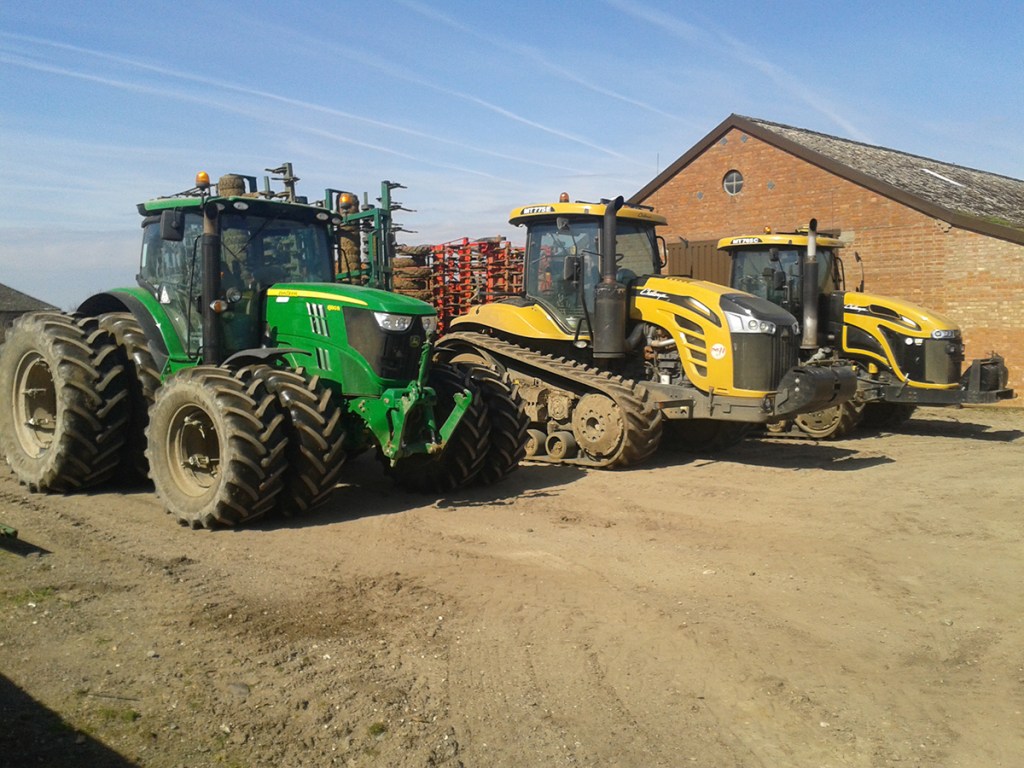
The choice of prime mover has changed dramatically over the last decade. Rubber tracks were adopted early, with a Caterpillar Challenger 65B operated during the early 1990s, and by the mid-2010s a pair of Challengers (an MT765C and MT775E) were providing the grunt alongside a wheeled John Deere 8310R.
There was a dramatic change in 2017 when both crawlers were ousted by two Fendt 1050 Vario wheeled tractors, purchased by the previous farm manager, which took over the cultivations and cereal drilling.
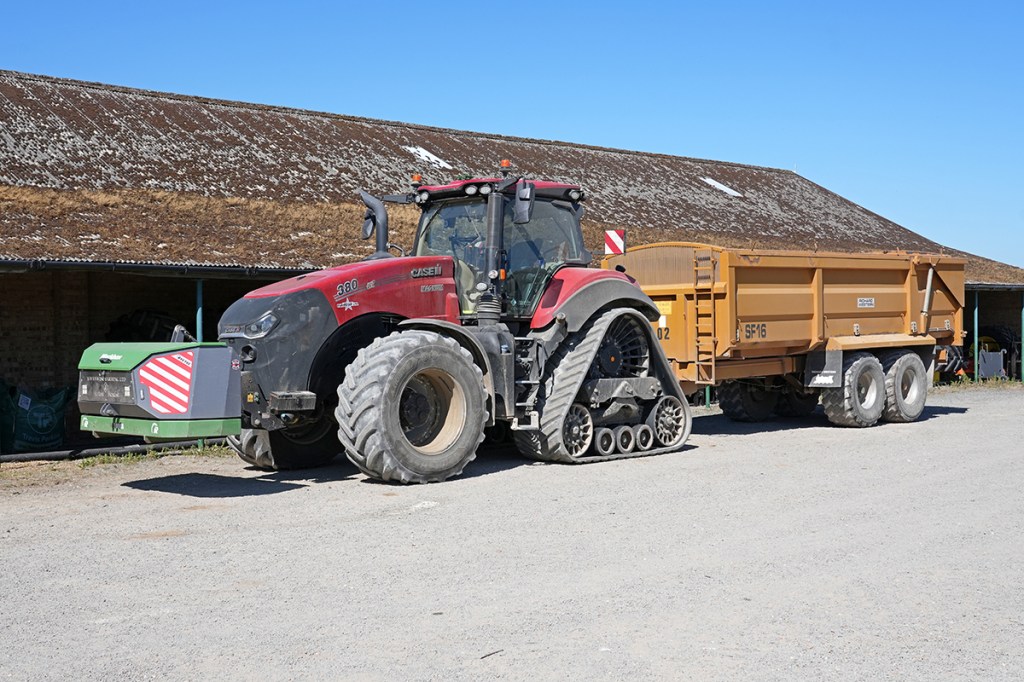
“The operators liked the 1050s,” notes Duncan Blyth, who has managed the Barton Bendish farm since 2021. “They had plenty of power, but it was a struggle to transmit this power down to the ground. During an internal machinery exchange one of the 1050s went to our North Norfolk unit, and we ended up with a Case IH Magnum 380 Rowtrac from Yorkshire. Despite having considerably less power, the Rowtrac pulls incredibly well and will work the same implement at a similar speed to a 1050.”
Considering options
When the time came to look for a new heavy cultivations tractor, other options were considered before ultimately settling on the Steiger. The argument that a large rigid-chassis tractor offers flexibility, after all, it can cart grain too if required, was immediately disregarded.
“It’s important to stay legal, and for a 17-tonne 1050 to remain within the maximum permissible 31-tonne gross train weight doesn’t leave much for payload,” points out Duncan. “It would also mean putting extra hours on a costly asset and wearing out expensive tyres. We tend to move our grain with lorries, with a chaser bin running in the field, which I think is a better solution.”
Despite the farm’s previous twin-track crawler history, this concept was also deemed unsuitable.
“I ran a Challenger MT765C and 865C in a previous role, and whilst they were great machines, I can’t see a reason to return to twin-tracks,” says Duncan. “They perform well in good conditions, but when it gets damp and greasy, such as when ploughing after sugar beet, they can struggle.”
This narrowed the field to pivot steer tractors, and reintroduced the tracks versus tyres debate.
“We had a Quadtrac 580 on demo which was very impressive and had masses of power,” recalls Duncan. “If we were going over 600hp then I think tracks would be justified, but the 550hp we were considering works perfectly well on wheels. The purchase price of a tracked version would be significantly higher, as would the running costs, and whilst tyres still need replacing the cost of mid-wheels and idlers is not insignificant. Plus, tyres are more forgiving and can give the tractor’s transmission a slightly easier life.”
Choosing the Steiger
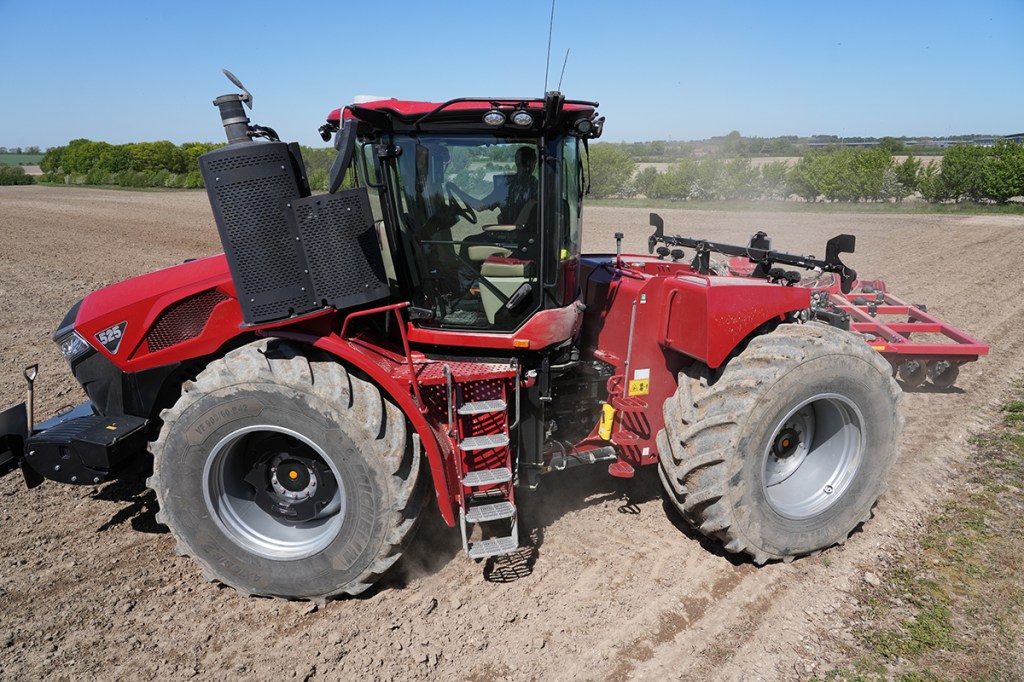
Duncan has extensive experience with articulated tractors, and Steigers in particular, having run a Ford FW-60 during the 1990s. Interestingly a wheeled John Deere 9R540 was also considered, but the final decision resulted in a brand-new Case IH Steiger 525 being delivered by Ernest Doe.
“I think John Deere makes an excellent product and there wasn’t anything against the 9R540,” explains Duncan. “We split a lot of our business between Ben Burgess at St Germans, and Ernest Doe at Littleport, and both are very good, so I was also confident of the backup for either product.”
“But the Steiger’s purchase price offered a worthwhile saving,” he explains. “Plus, it’s a very good product, which has been well developed over nearly 70 years and was made on the same production line at Fargo as hundreds of earlier Steigers.”
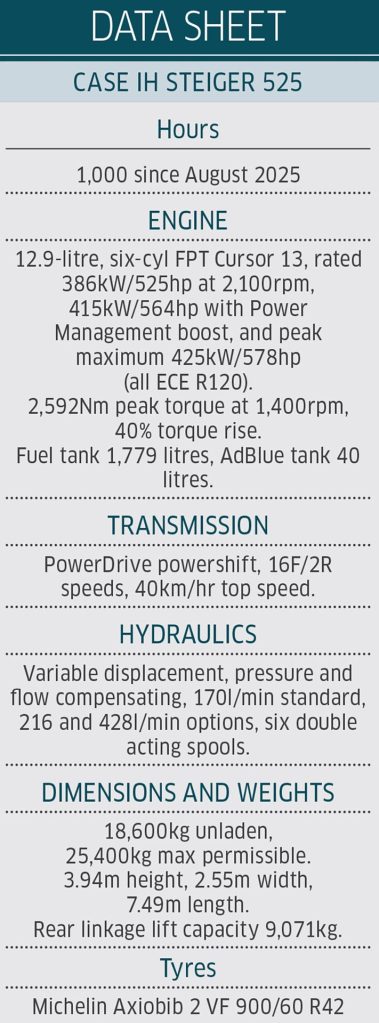
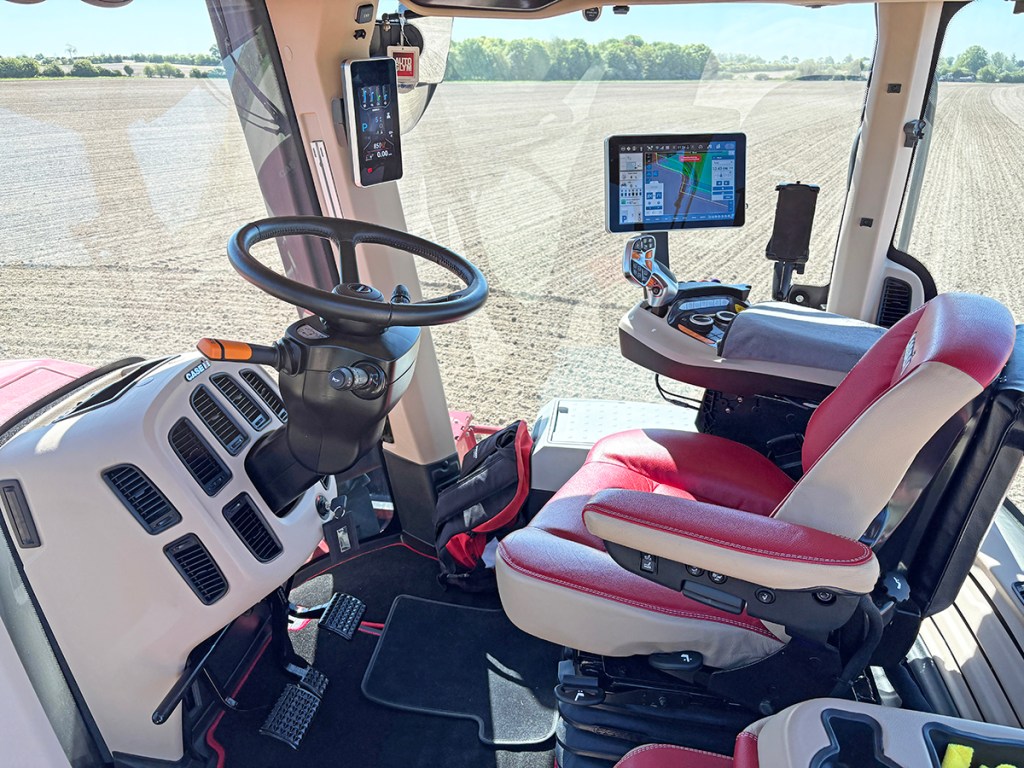
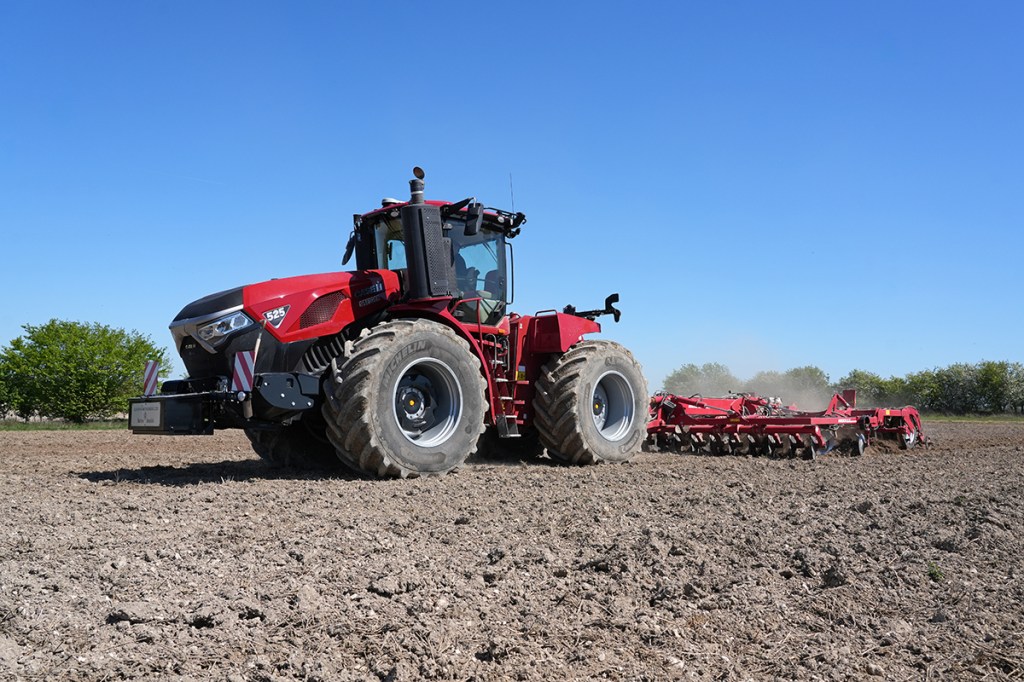
Rated at 525hp and with a maximum of 578hp available from its FPT Cursor 13 engine, the Steiger 525 is the most powerful wheeled tractor currently offered by Case IH in the UK. The PowerDrive powershift transmission was chosen rather than CVXDrive.
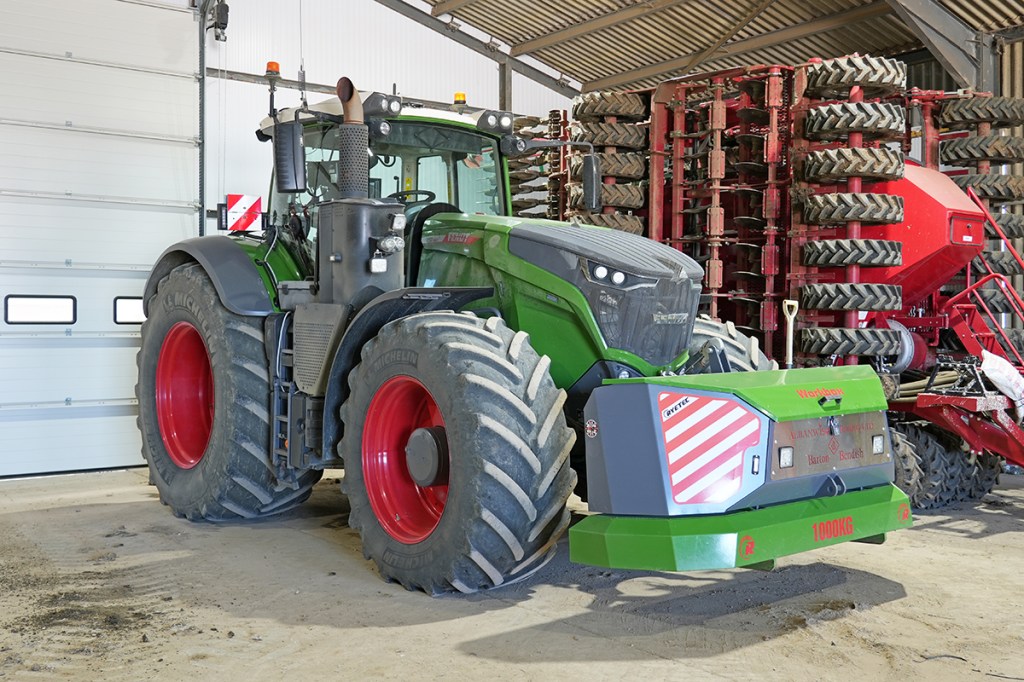
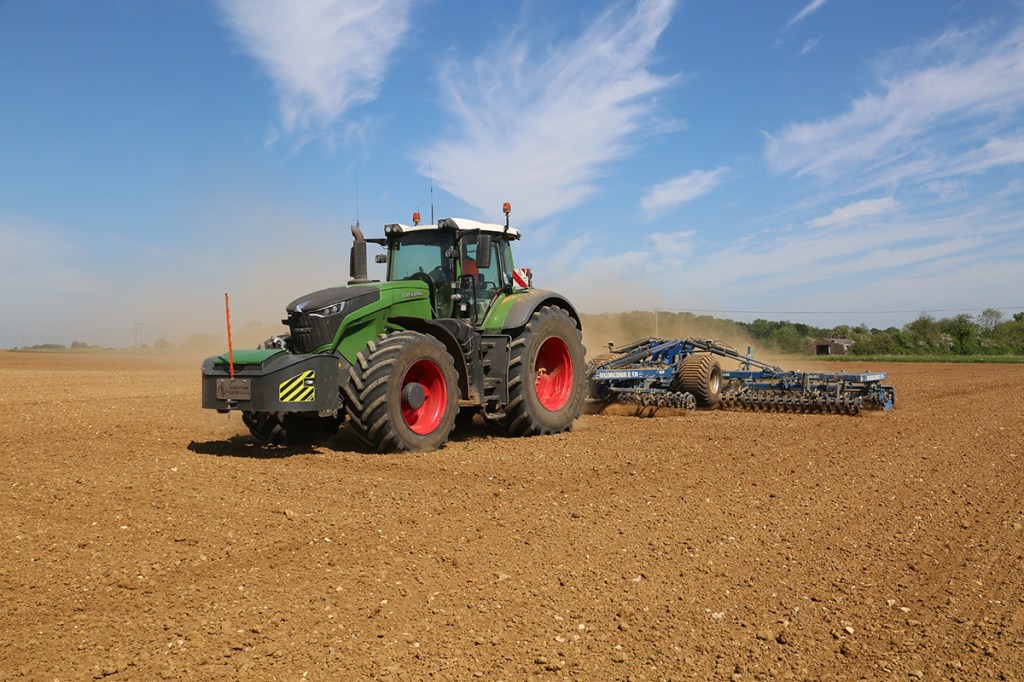
“We opted for sub 600hp to match the implements we already have,” explains Duncan. “The 525 has enough power for what it’s doing. It’s used with a nine-furrow Kverneland plough and furrow press, a nine-leg TWB trailed subsoiler, 6.0m Horsch Tiger cultivator and a 10.5m Farmet Fantom cultivator with seeder. All of these implements can also be pulled by the Fendt 1050 or Rowtrac, albeit slower, and having that interchangeability and flexibility is important.”
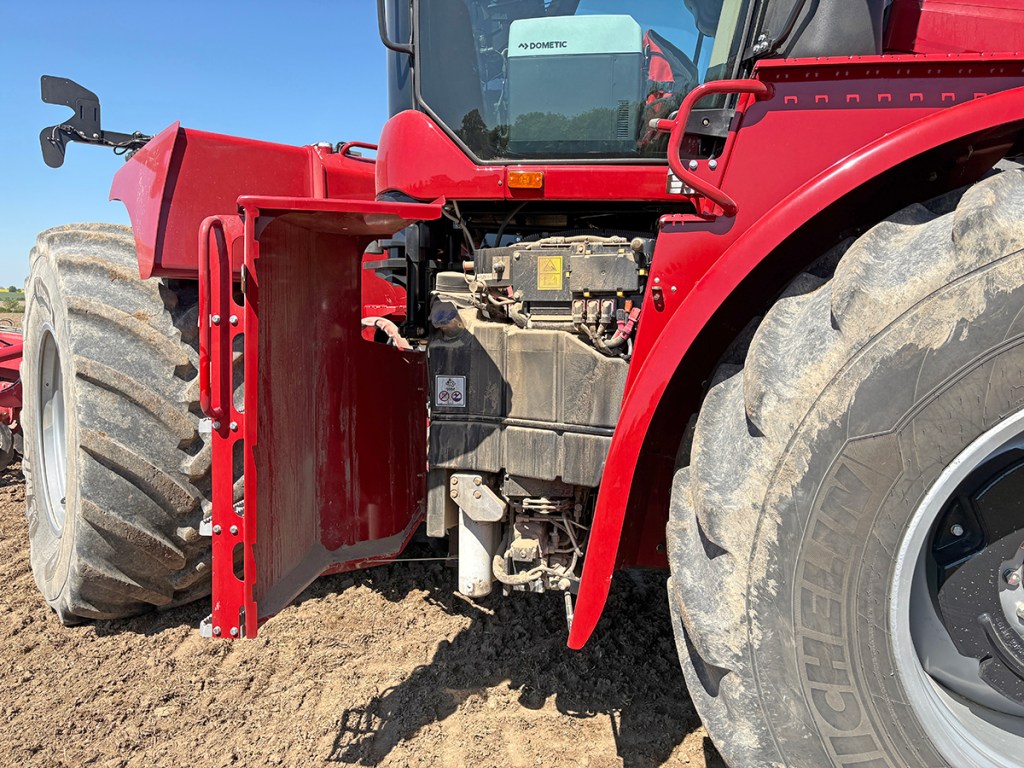
The Steiger is shod on wide Michelin Axiobib 2 VF 900/60 R42 tyres which have proven able to get a bite even in sticky conditions.
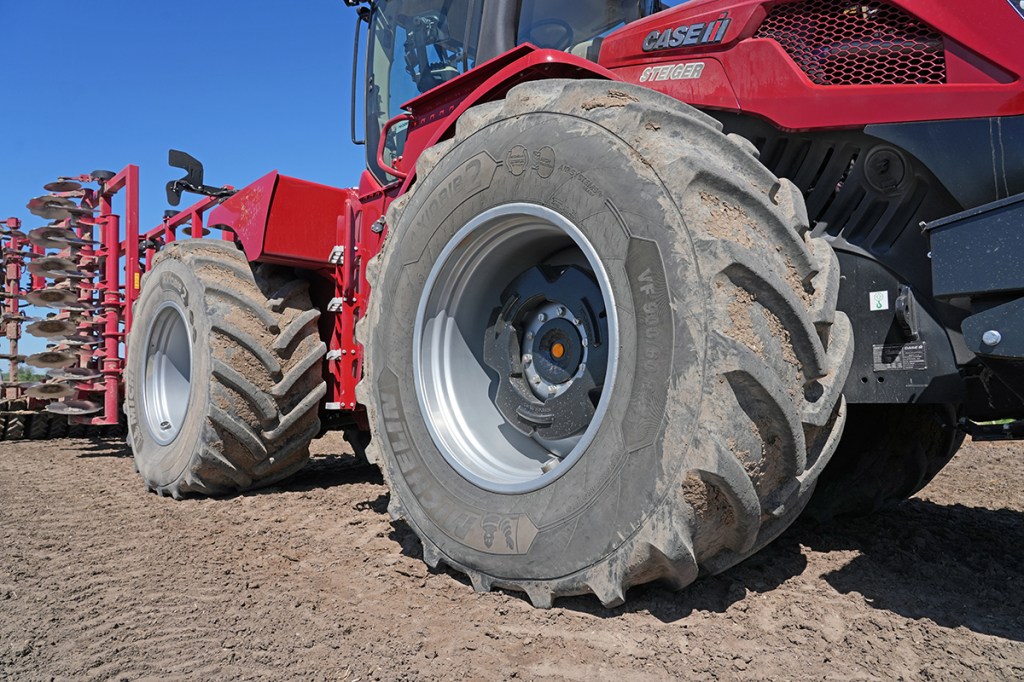
“It’s only struggled for traction ploughing after beet when it’s wet, but it’s far better than a twin track crawler and we’re still able to plough on-land,” clarifies Duncan. “It’s a narrow-chassis tractor, so even on the 900s it’s well within a 3.0m transport width so we don’t have to escort it anywhere.
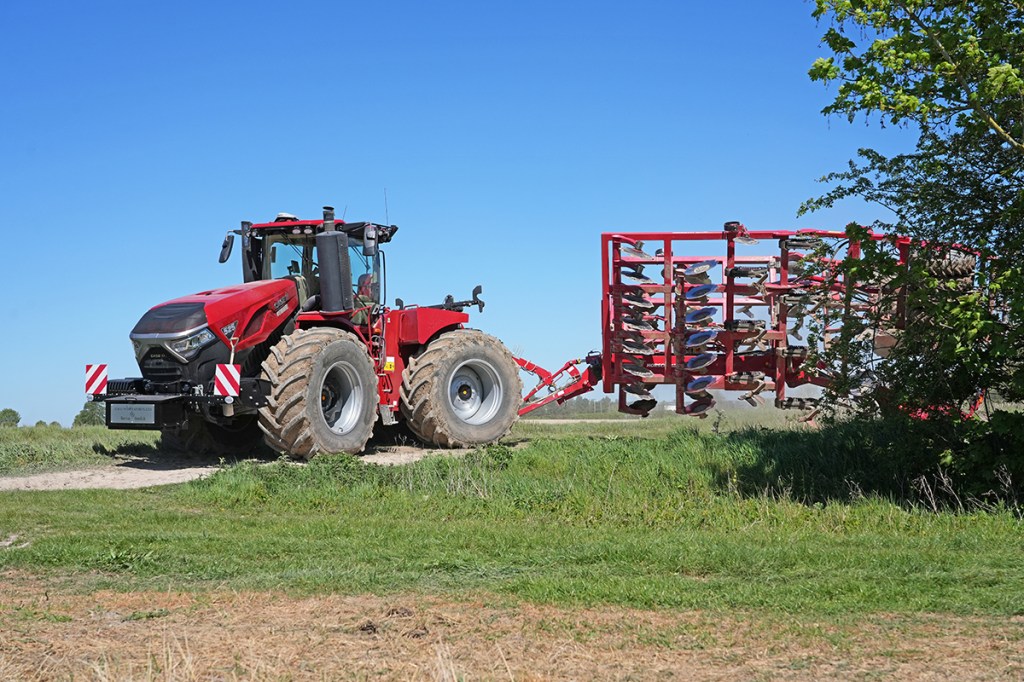
“The Michelins aren’t the cheapest tyres, but they wear well and can be run at reduced pressures,” he continues. “We have central tyre inflation (CTI) on our drilling tractor but for what the Steiger is doing it’s not needed. We usually run the tyres at 15psi, and working with trailed implements means there’s no need to change pressures for the road.”
When it comes to technology, the Steiger is equipped with a factory-fitted AccuGuide guidance system and AccuTurn for automated headland turns. This system is compatible with the business’s Omnia farm management software.
“We’ve recently switched to Omnia for data management,” says Duncan. “It works well with other systems such as the John Deere Operations Centre we use for maps, and means we can export field boundaries to our John Deere and Case guidance systems remotely.”
The 525 in action
The cultivations system at Barton Bendish is mostly centred around the Horsch Tiger 6 MT one-pass cultivator, and therefore the Steiger, keeping it busy for a considerable part of the year.
“We will plough after sugar beet for spring barley, and for a clean start if we’re following wheat with winter barley,” adds Duncan. “We establish cover crops ahead of all of our spring cropping, usually with the Farmet Fantom and seeder which is quick and does a good job.”
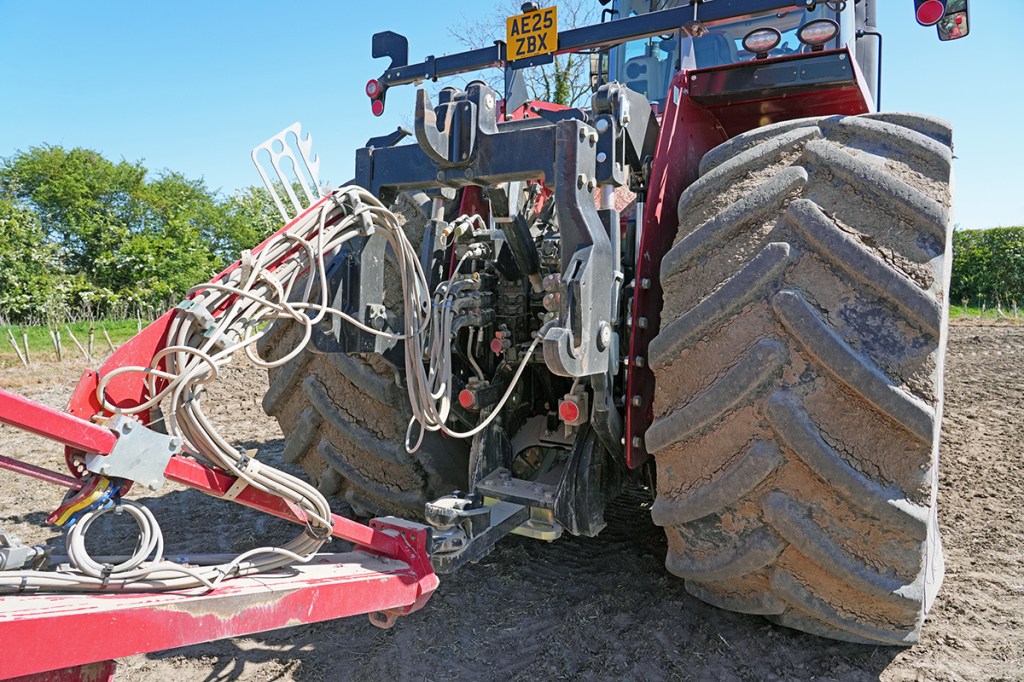
When profi visited, the Steiger was preparing land for maize with the 6.0m Tiger working to a depth of 30cm. Wide wings on the TerraGrip tines move soil across the entire working width. The typical work rate is 6ha per hour, with an average of 40ha covered in a normal day.
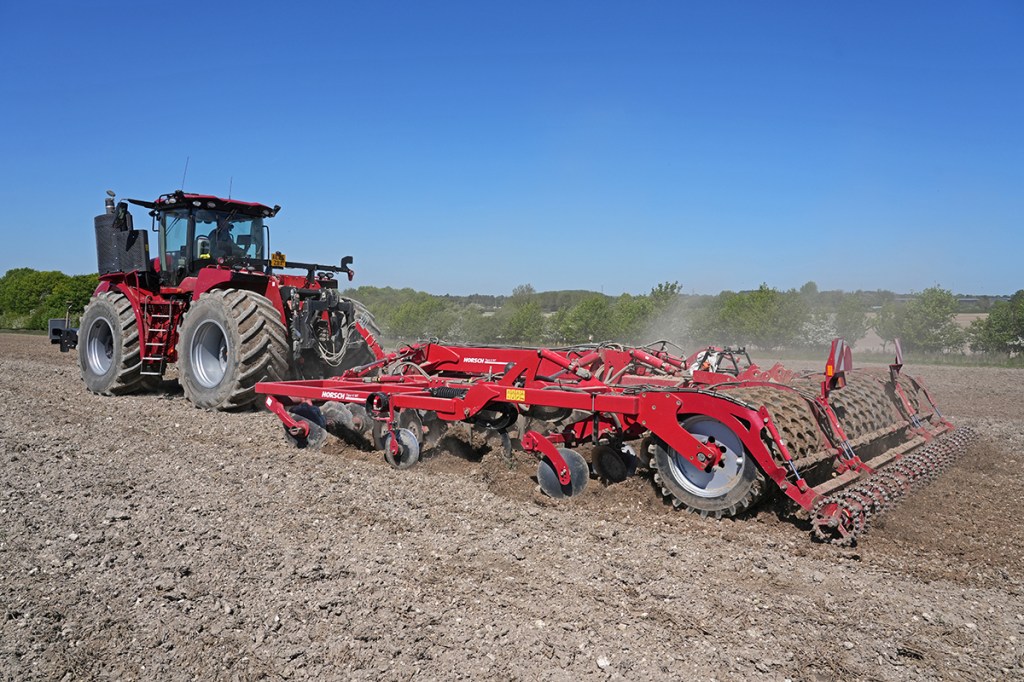
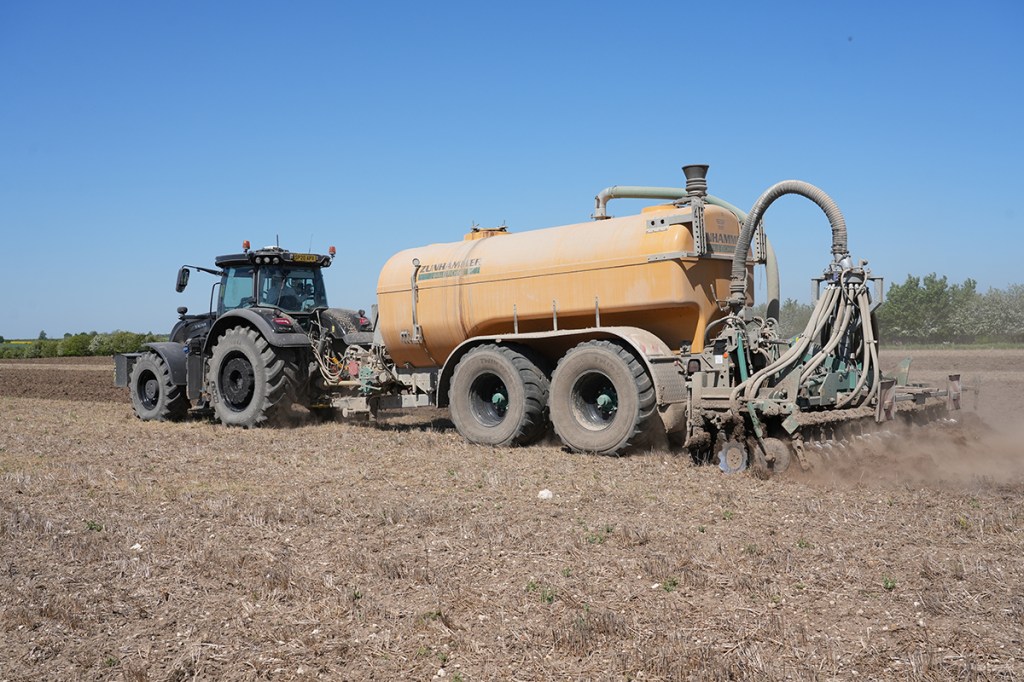
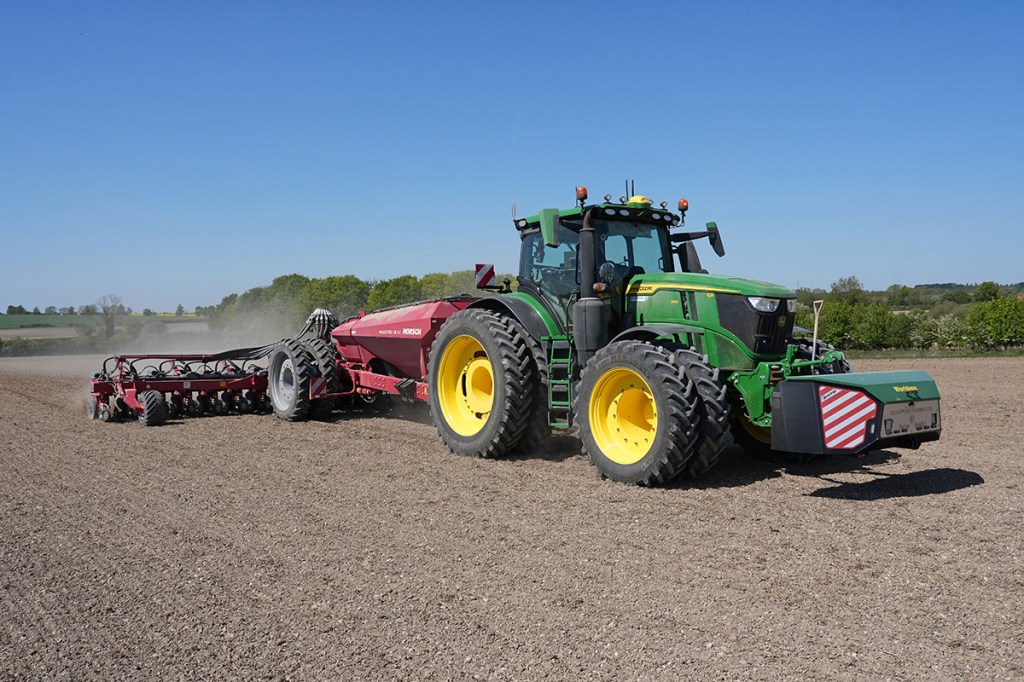
The overwinter cover crop had died down following desiccation and digestate had been applied with a disc cultivator injector. The Tiger left an extremely level finish, and no secondary cultivation was needed, only a pass with the rolls to consolidate and retain moisture. The maize was then drilled with a 9.0m wide 18-row Horsch Maestro CV, which replaced a 12-row version last year, working behind a John Deere 6R250 fitted with spaced dual rowcrop wheels to run between the 50cm rows.
Reliability record
The Steiger arrived in mid-August 2025, and by the end of April 2026 had already clocked up nearly 1,000 hours.
“We did nothing except bolt a toolbox on the front before the Steiger went to work,” explains Duncan. “I think it’s equal to Horsch equipment in that it just turns up, you put it in the field and it does its job. The only problem we’ve had was an issue with the front diff-lock, which we only noticed when ploughing after beet, but the backup from Ernest Doe has been excellent.
“I would usually expect to put around 1,000 hours a year on a large tractor,” he continues. “But the Steiger will probably do 1,200, as it’s really only stopped during December and January. It has a five-year warranty, but I’m hoping to run it for 10 years.”
Although the Steiger has been a resounding success, the fleet’s current dynamic is set to be maintained when the time comes to replace another high-horsepower tractor.
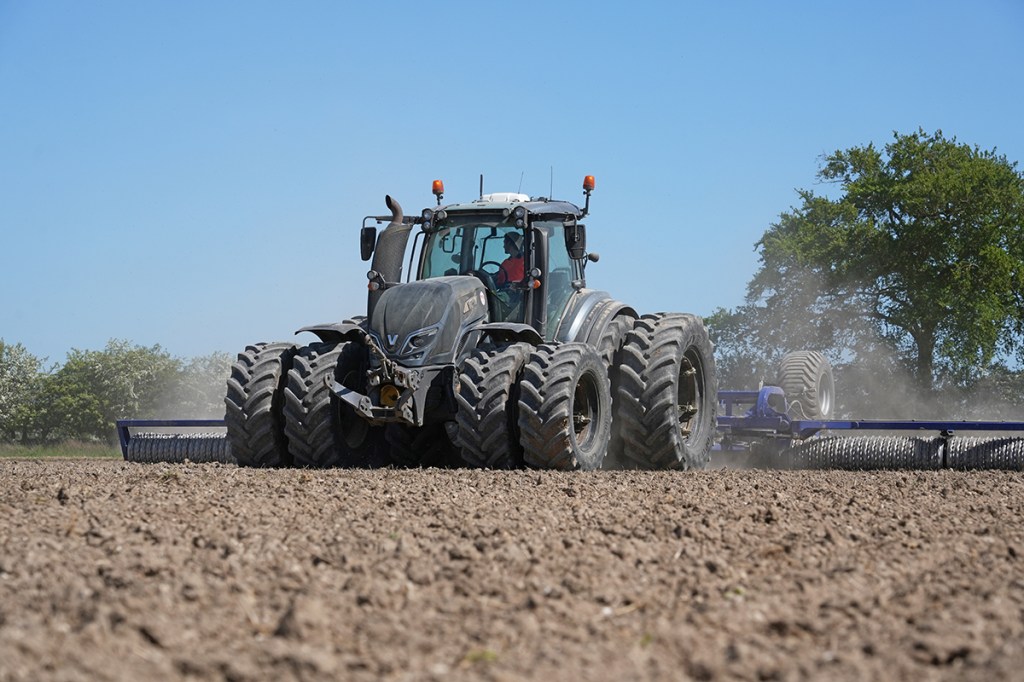
“Each tractor has its place, for example the Rowtrac is ideal for topwork and a good match for our 9.0m Dal-Bo Rollomaximum,” illustrates Duncan. “The 1050 was new in 2020 and has been very reliable for 6,800 hours, although its predecessor was plagued with issues. The Rowtrac has only had one or two little issues such as some broken manifold bolts. It’s done 4,000 hours but is covered under an eight-year 8,000-hour warranty. So, when the 1050 is up for replacement in 2028 we will be looking at four possible replacements: the John Deere 8R, Fendt 1052 Vario, Claas Xerion and hopefully a more powerful Rowtrac if such a thing is developed.”
Chris Lockwood
For more up-to-date farming news click here and subscribe now to profi and save.