
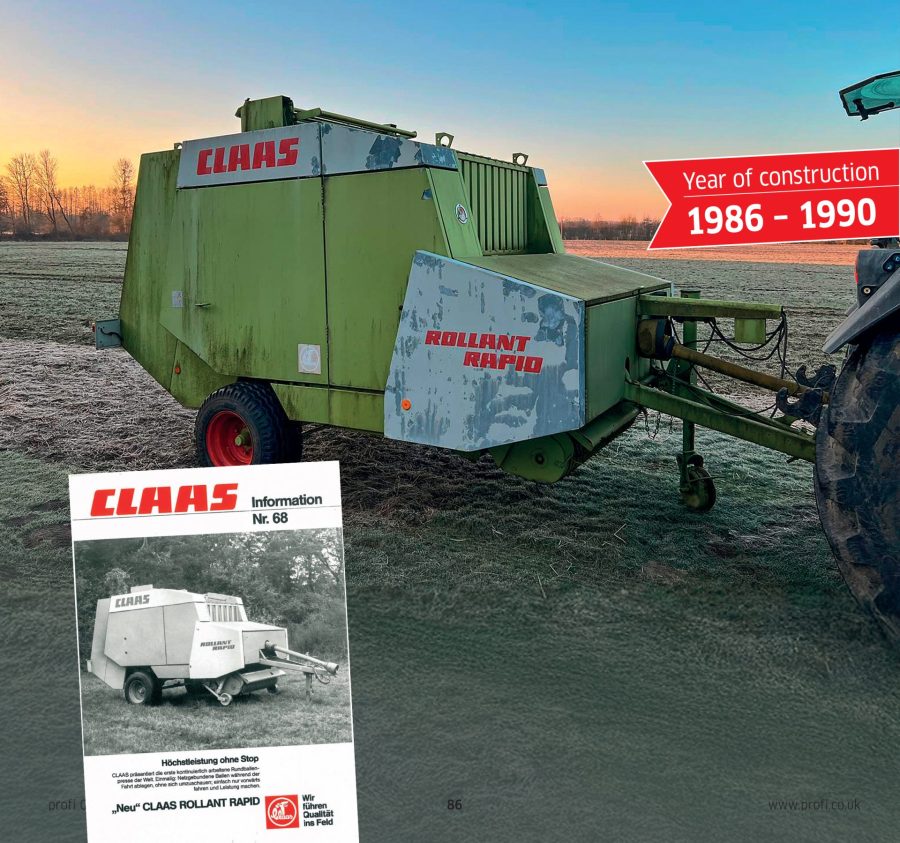
Several manufacturers have had a go at making a nonstop round baler, but the Claas Rapid was a forerunner. Unfortunately, only a handful of machines were ever produced.
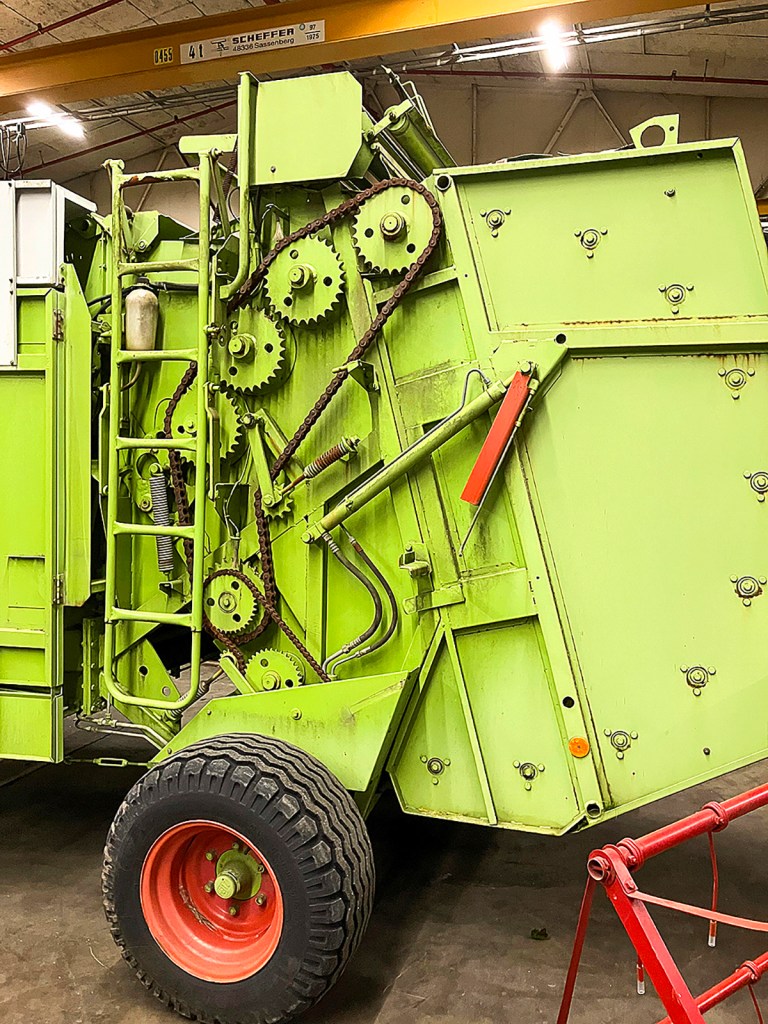
In 1978, Claas launched the Rollant 85 fixed-chamber baler. Instead of using slats and chains or belts, the bale chamber was formed by 21 driven, full-width steel rollers. On this initial version, the baler churned out 1.80m diameter, 1.50m wide bales which were held together by sisal twine.
Further models followed, with bale diameters starting at 90cm on the Rollant 34, 1.20m on the Rollant 44 and up to 1.60m on the Rollant 62. On these machines the chamber width was trimmed back to today’s norm of 1.20m.
In 1983, the German manufacturer presented its next milestone – the Rollatex net wrapping system. Up to then, a bale needed to be wrapped 20 times with twine, while the Rollatex brochure claimed one and a half to two layers of net would suffice, halving the time needed for tying. The bales also kept their shape better, making them easier to handle and stack.
Pick-up from the forage wagon
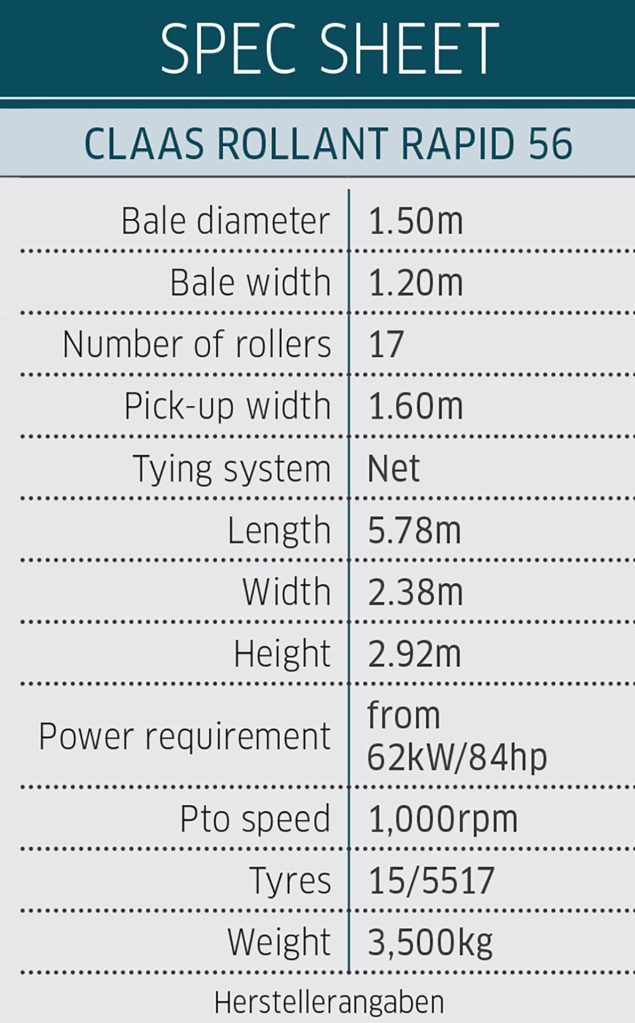
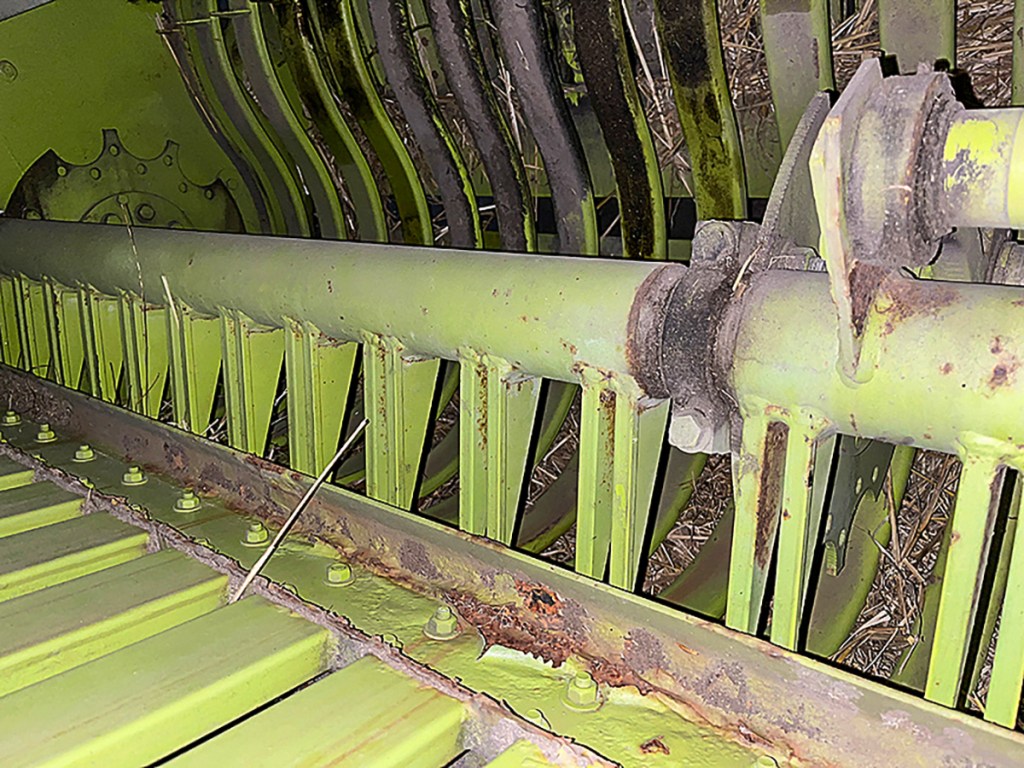
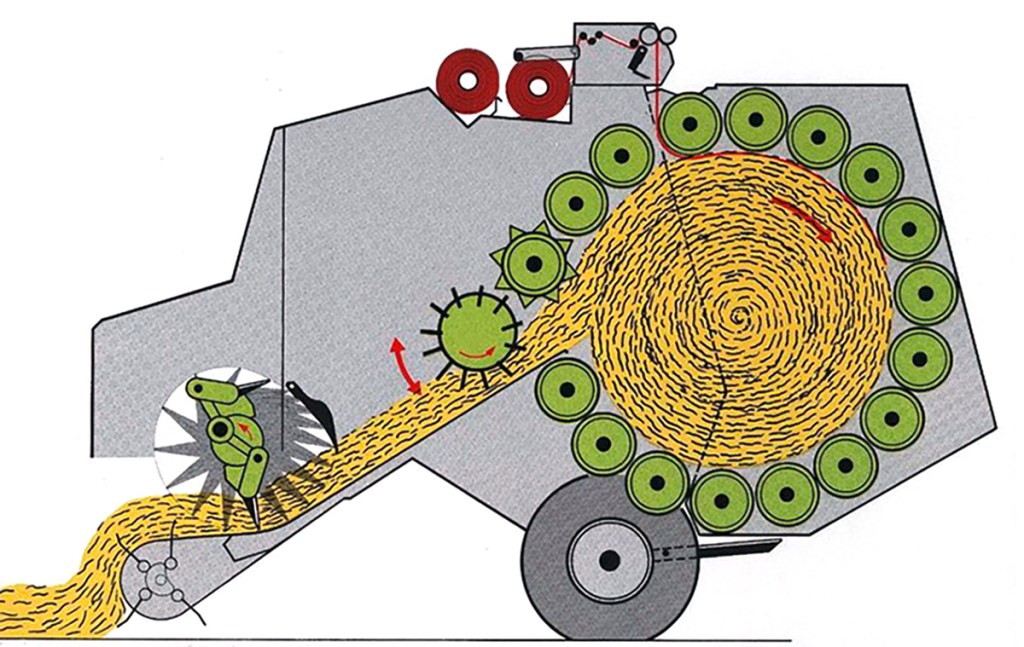
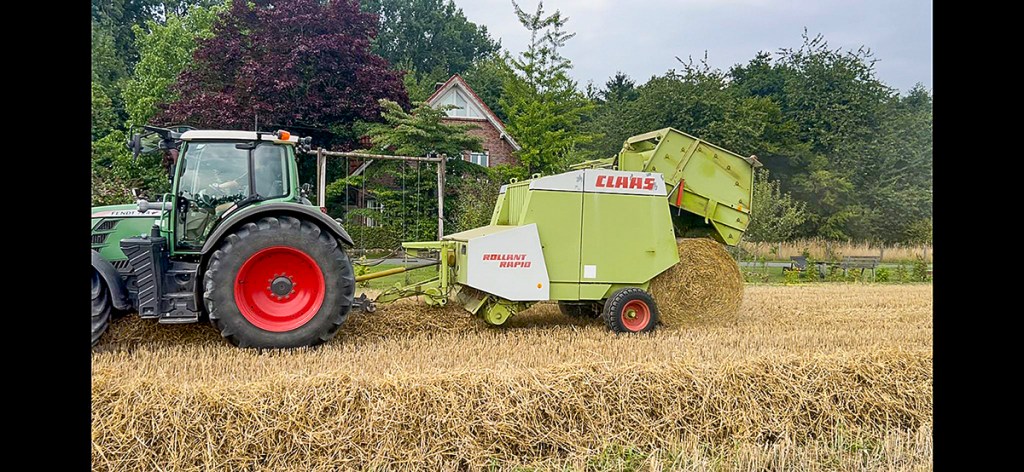
In 1985, Claas sprang another surprise at Agritechnica, unveiling the Rollant Rapid 56, a nonstop round baler based on the Rollant with a pre-chamber. With its 17 rollers the Rapid formed 1.50m bales without the operator having to stop the tractor for the tying cycle. The really clever bits were the crop feed and the control system. First, a 1.60m wide, cam-controlled pick-up with four rows of tines lifted the crop before passing it to the Sprint rotor with two cam-controlled forks. Both of these components were plucked the Claas forage wagons, so were already well proven.
Prechamber innovation
The Sprint rotor fed the material into the prechamber, which was clearly inspired by the front end of the Claas forage wagons. On the chamber floor and opposite the rotor, there was a feed roller which continuously transferred the material into the bale chamber as the bale was being formed. The roller was equipped with eccentrically controlled feeder tines which basically did the same job as the mid-mounted auger tines on a combine header.
Once the required bale density was reached, the binding was triggered and an electric clutch on the drive sprocket switched off the feed roller. The net was applied, the bale was ejected, the rear door closed and the feed roller re-engaged. During the entire process, the combination could continue slowly moving forward, collecting material and feeding it into the prechamber.
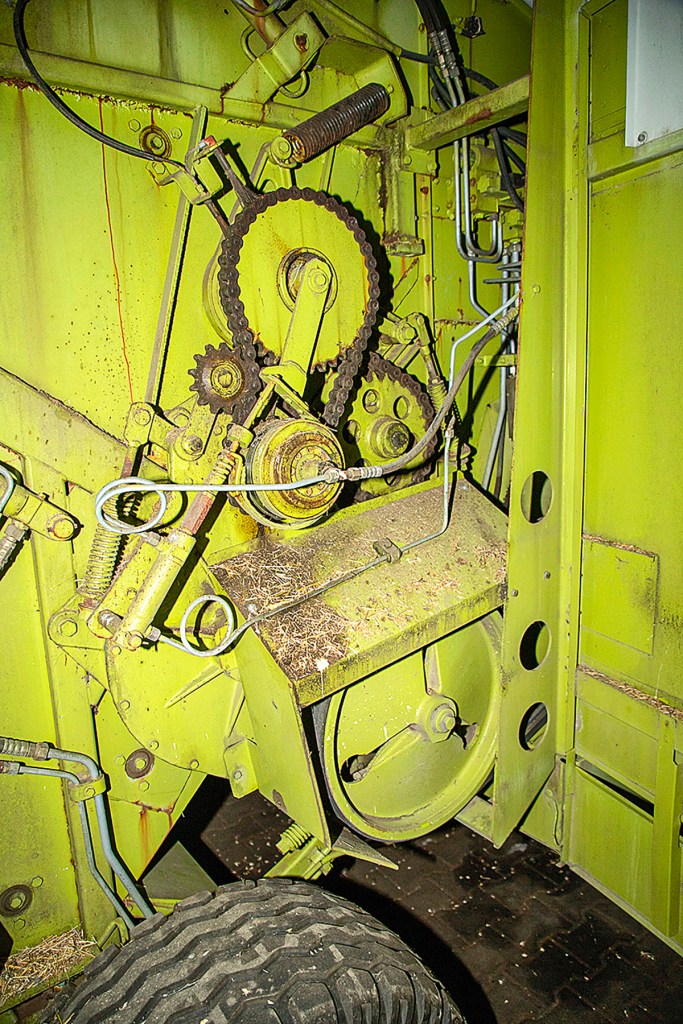
To avoid blockages, the feed roller was mounted on a pre-tensioned pendulum. This allowed it to adjust the height of the crop channel to the amount of forage while compressing the incoming swath.
Electronics moving in
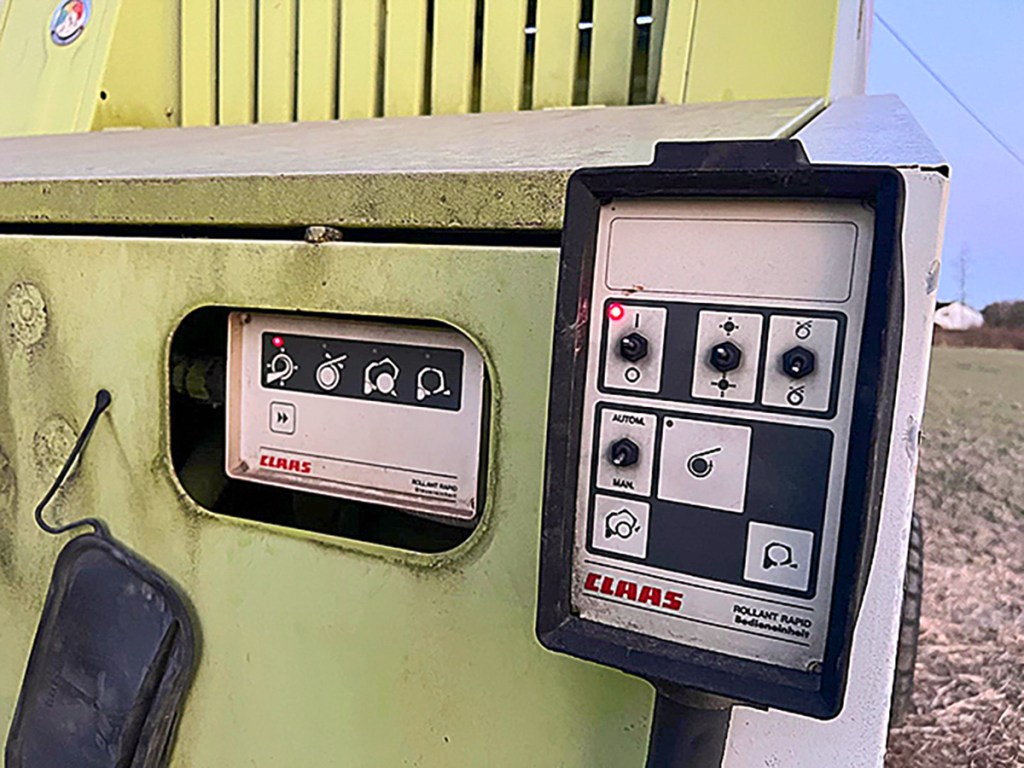
To juggle all these functions and take some of the strain off the operator, Claas used an on-board hydraulic system with electronic controls for the first time on a baler. Marketed under the slogan “The operator steers, the baler thinks”, the electro-hydraulic control was essential to keep pace with the individual processes so that the prechamber could be emptied fast enough. In total around ten consecutive functions had to be completed in about ten seconds before the bale chamber closed again and the crop feed restarted.
The operator could choose between automatic and manual modes. In auto mode, the entire sequence was carried out without any operator interference. Depending on swath size, the forward speed had to be reduced during the binding sequence to avoid overfilling the prechamber. In manual mode, an audible alarm and a warning light indicated to the operator when the bale was ready. Netting was then started at the touch of a button and crop feed stopped. Opening and closing the tailgate was also automatic.
Lightweight bales
Like the other Rollant round balers, the Rapid was built at the Claas factory in Metz, France. In the end a little over 40 machines rolled off the line before production stopped. Claas says a few of them found their way to large US farms. But the launch of the more powerful Quadrant 1200 big square baler in 1988 was one of the reasons for a lack of sales. The Quadrant was able to produce a 50% higher density bale in dry crops, that also weighed more and were easier to stack.
Technically the Rollant Rapid was well ahead of its time, but it struggled to gain traction against the simpler standard Rollant, and the sometimes lighter bales from the larger diameter fixed chamber machine.
Claas has stuck with the fixed chamber steel roller concept right up to today. However, bale diameters are now capped at about 1.30m to ensure a consistent density is maintained. For bigger bales, variablechamber designs with rubber belts or chainandslat systems have become the norm.
Alexander Bertling
For more up-to-date farming news click here and subscribe now to profi and save.