
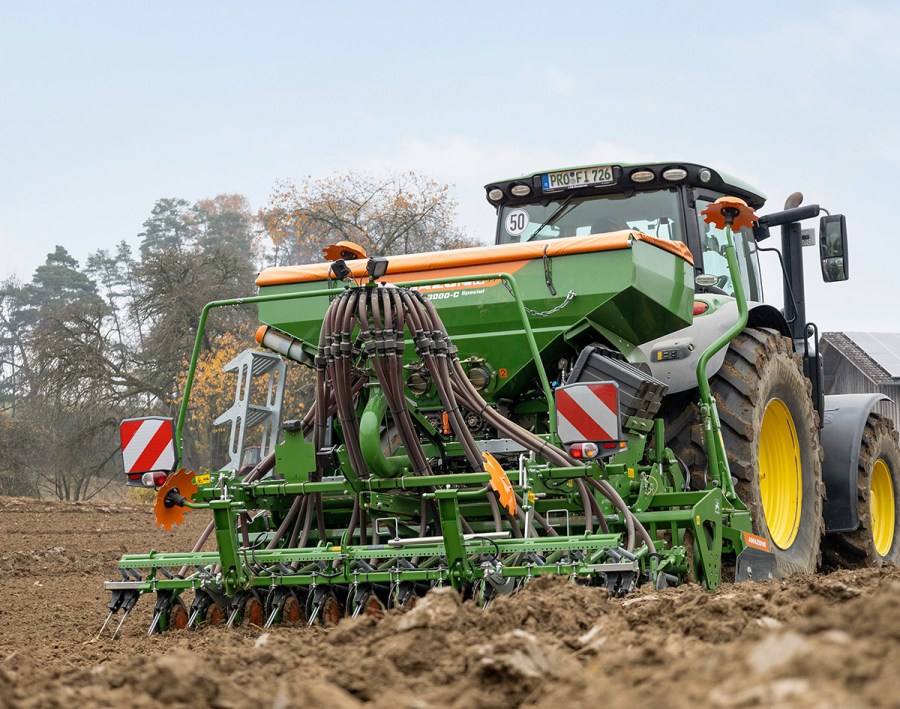
Amazone has adapted its Centaya Special pneumatic drill with a split hopper and dual metering unit that can handle different types of seed or both grain and fert. We put the 3.0m combi drill through its paces to find out what else it has to offer.
KEEPING IT BRIEF
- The Centaya C Special is Amazone’s new entry-level drill with a split hopper.
- Metering accuracy and seed placement are very good.
- Our 3.0m test drill combi has a list price of £73,460
Traditionally, split hopper drills have been used for grain and fertiliser, particularly in certain regions like Scotland and Scandinavia for spring barley. But in recent years this type of drill has seen a real resurgence for sowing multi-species companion and cover crops.
To meet this increasing market demand, Amazone launched the Centaya C Super in 2023, featuring a split hopper and a pair of metering units. And then in 2025 the simpler Centaya Special also gained this option of a partitioned hopper along with the ‘C’ suffix in its name.
Last summer and autumn we used the new combi drill to sow oilseed rape, green rye and oats with white clover as a companion crop. We also drilled several hectares of wheat without a companion crop.
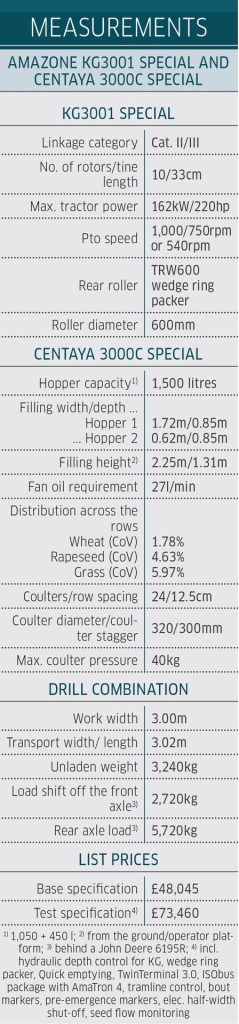
Unlike the standard Centaya Special, the ‘C’ version always comes with a rather bigger 1,500-litre seed hopper as standard. This is split 70:30, with each section having its own metering unit. This extra metal adds extra weight, around 120kg more before you take the slightly different drill coulter set-up into account.
Our drilling rig consisted of a KG3001 Special power harrow fitted with the heavy-duty 600mm TW trapezoidal roller. When put on the weighbridge, the well-equipped combination had an unladen weight of 3,240kg. To put that into perspective, we also weighed the empty combi drill on our host farm’s John Deere 6195R and found 5.7t on the rear axle and 2.7t on the front. If you have hills to contend with, then we reckon that a 200hp tractor is the minimum size of workhorse.
We also needed four spool valves to make the most of various features on our test machine; adjusting the working depth of the power harrow, powering the fan, setting the seed coulter pressure and one for the bout markers or pre-emergence markers. We actually didn’t use the latter, because our tractor was kitted out with auto-steer.
Power harrow gets a grip
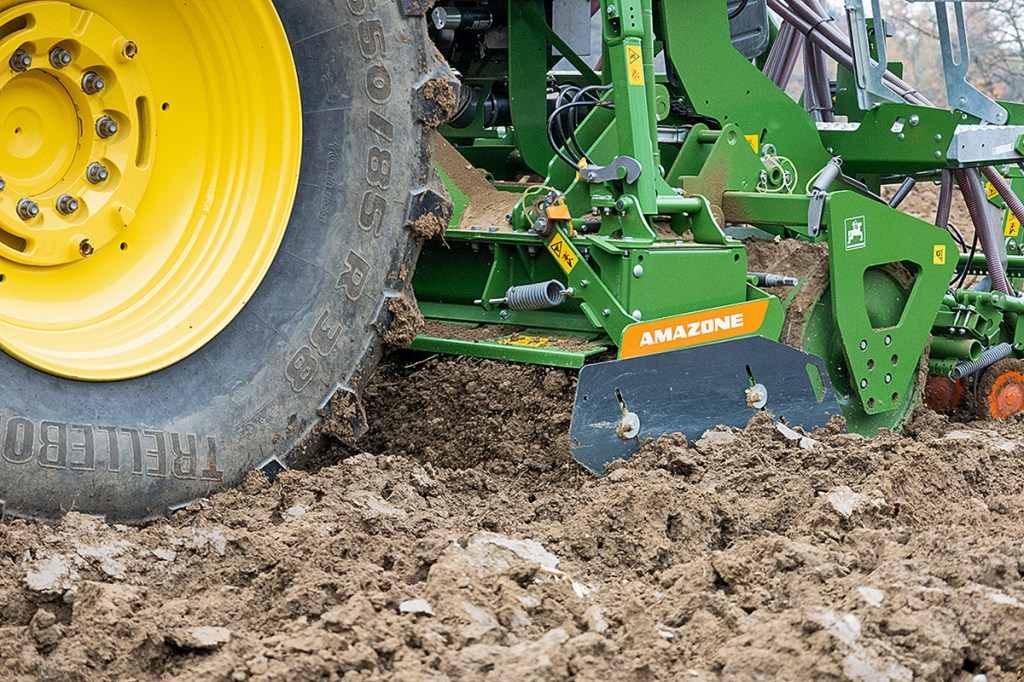
The KG3001 Special power harrow has been around for a good few years now; in fact it was also under the Centaya Super that we tested back seven years ago (profi 11/2019). Despite having the tines set in their forward, penetrating angle position, the power harrow pulled surprisingly easily, even in heavy soils. We found the slightly coarser finish, (compared with the farm’s usual power harrow with its swept tines), to be actually beneficial. Hydraulic depth control (£1,645) made tweaking the outfit’s depth particularly convenient.
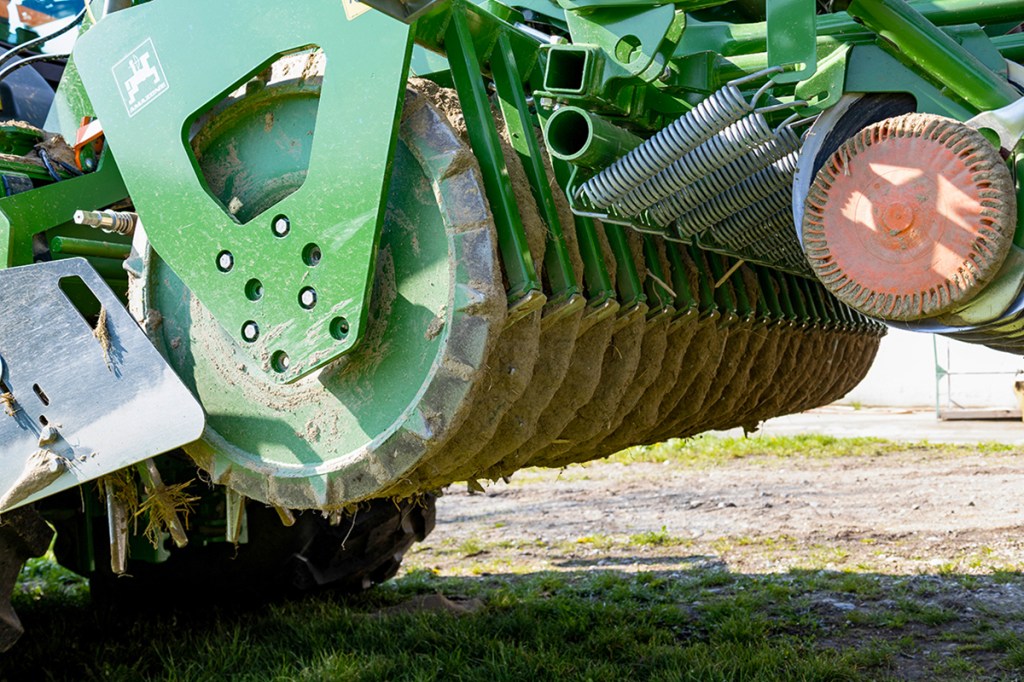
The 600mm diameter, 665kg trapezoidal ring roller impressed us with its excellent carrying capacity. Even on light, sandy soils the combi never threatened to sink in.
Fill with bags or big bags
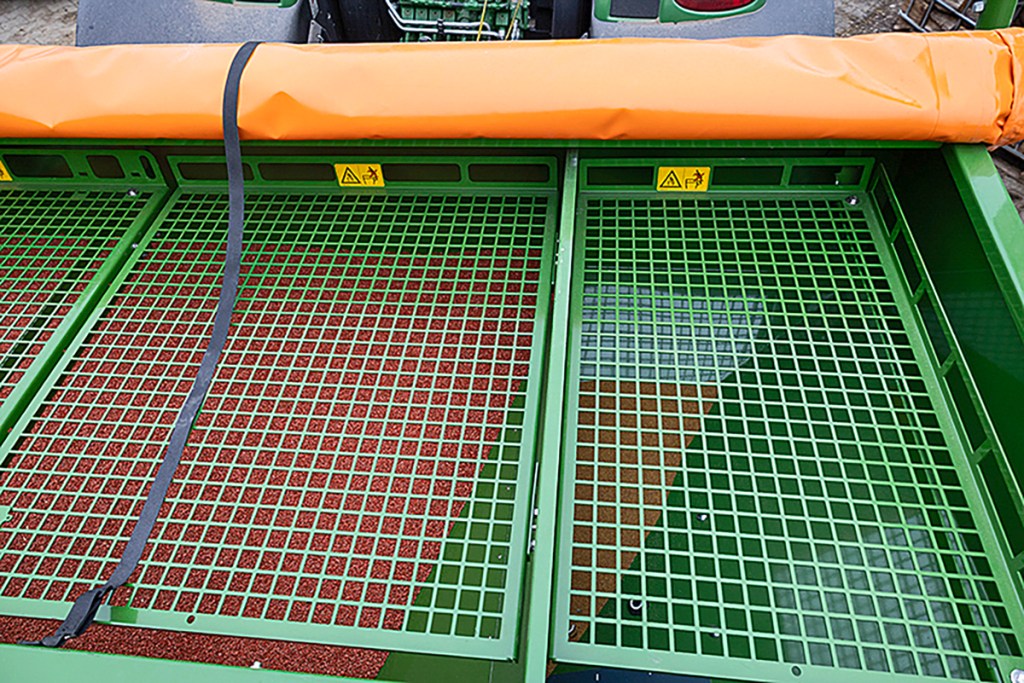
The seed hopper and metering units are positioned directly above the roller. With the 70:30 split, the large portion holds about 1,050 litres and smaller one 450 litres.
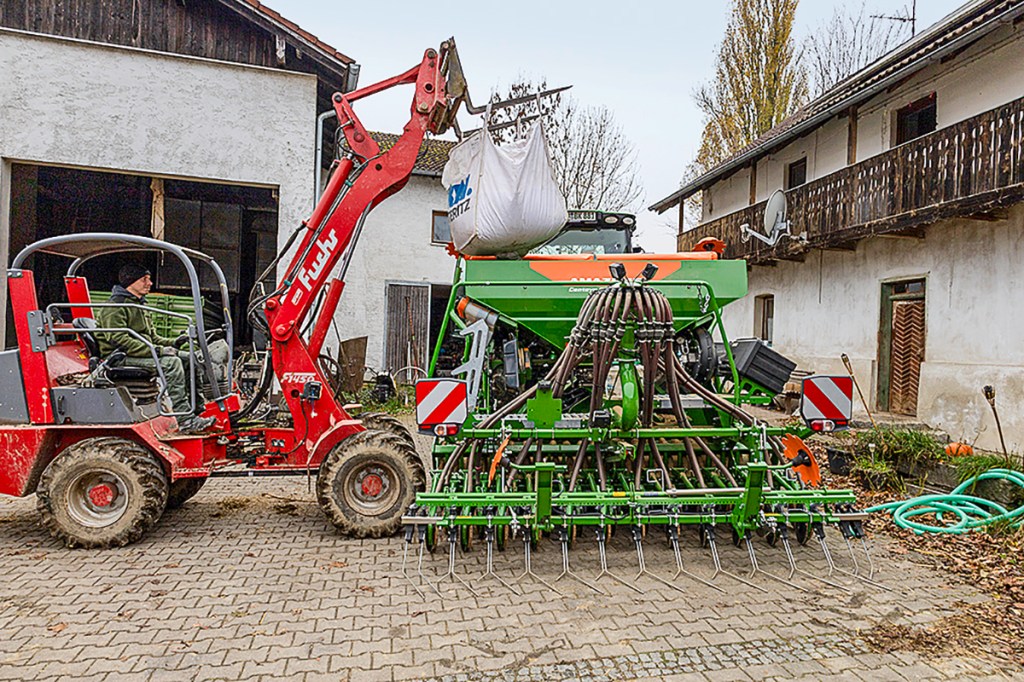
The tank opening is 0.85m deep, while the respective openings are 1.72m and 0.62m wide. Filling bulk seed with a front loader bucket is a challenge when adding different species to the two hoppers so we switched to bagged seed. The loading height is 2.25m and 1.31m (left) and 1.15m (right) above the loading platform. Even taller operators will find handballing small bags into the hopper hard work.
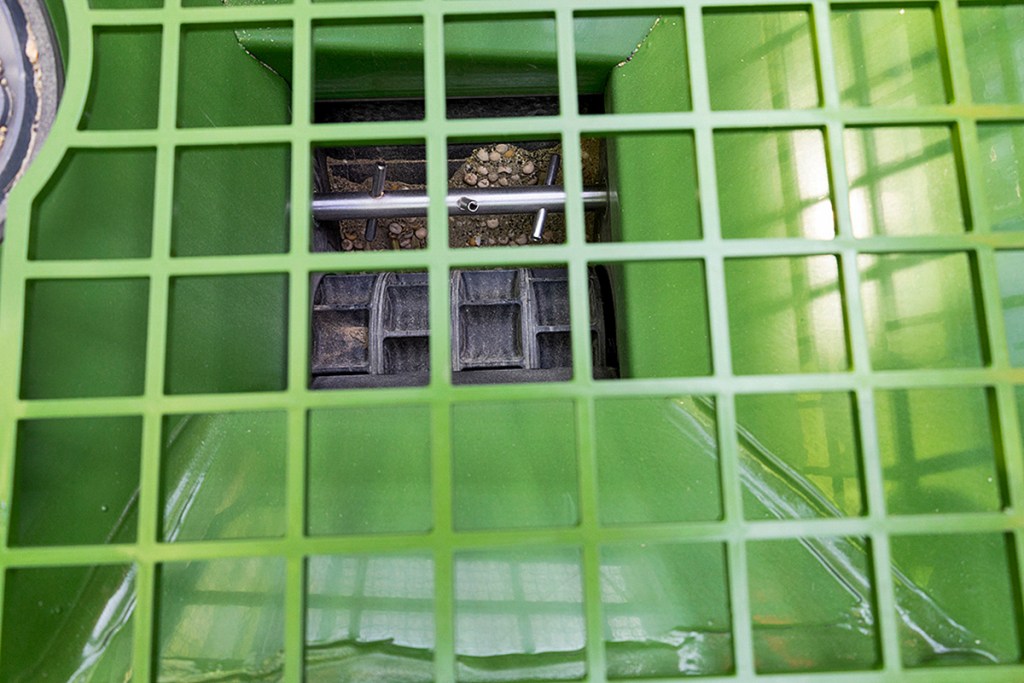
We particularly liked the standard screens, which completely cover the openings and can also be used for some very useful extra storage for unopened bags.
Each side of the hopper has three positions for a level sensor. Empty-hopper sensors are an option at just over £335 per side. The hopper walls are steep enough to ensure that the seeds flowed continuously towards the metering units with most seeds.
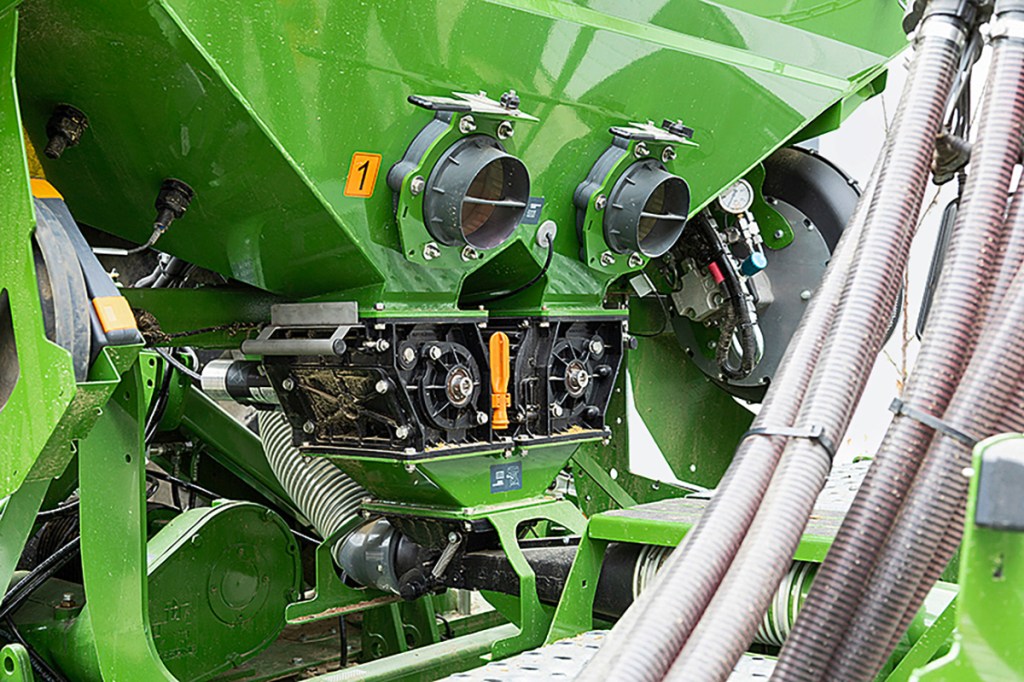
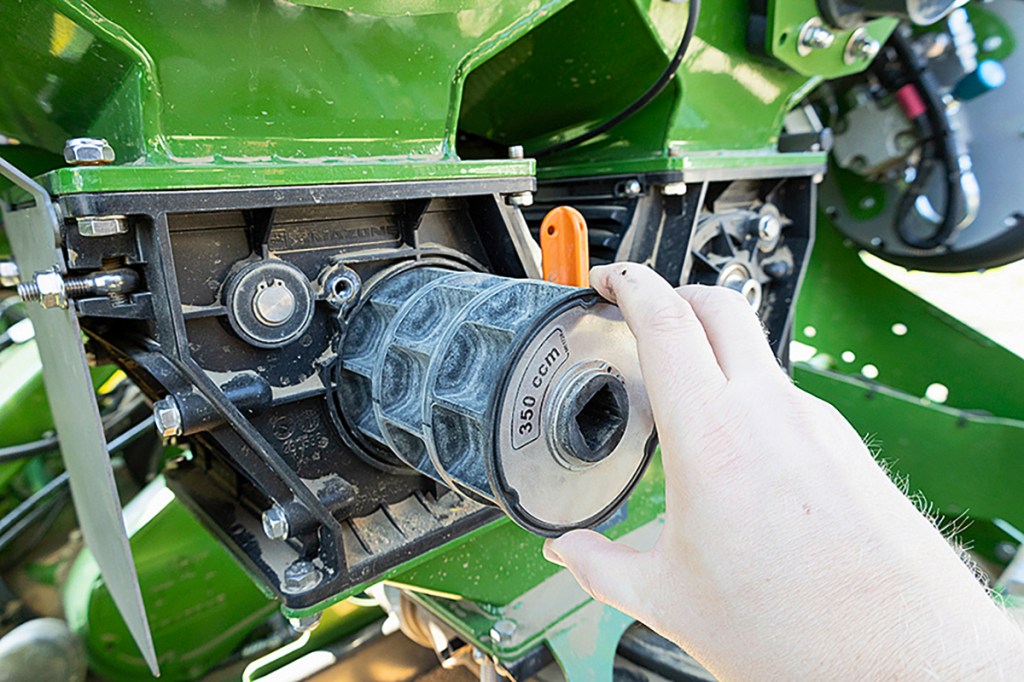
To empty leftover seeds quickly, our test machine had a slide-operated outlet beneath each metering unit (£80 each). Emptying into a bucket worked well, although about 10 litres of seed were still left in the hopper. These have to be removed through the metering system, either by removing the cell wheel for rapid emptying or by running the metering unit using the electric drive.
Precise metering
The metering units are tried-and-tested components and found on all of the firm’s pneumatic drills. To match different seed rates, Amazone offers 13 cell wheels with capacities ranging from 3.75cm³ to 880cm³ (about £75 each). Swapping the rollers only takes a few moments, although removing and refitting them can occasionally be a little fiddly. We liked the holder on the left-hand side, so you can swap rollers in the field if necessary.
One interesting detail is the fact that seeds enter the cell wheels not only from above but also from the side from a sump, which means the metering unit requires fewer revolutions to shift the same quantity of seed.
At the beginning of the test, a manufacturing defect caused problems with the metering system: we repeatedly found broken seeds and excessive dust. The main culprit was the rough plastic edges on one of the cell wheels, which were crushing the seeds. Amazone replaced the faulty roller and the problem was solved.
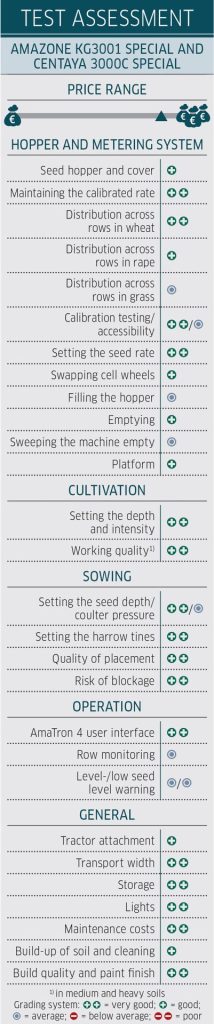
As for seed metering accuracy, the Centaya C Special gave us no cause for complaint. The differences between the calibration results and the actual application rates were minimal. Based on our previous Centaya test, we expected nothing less
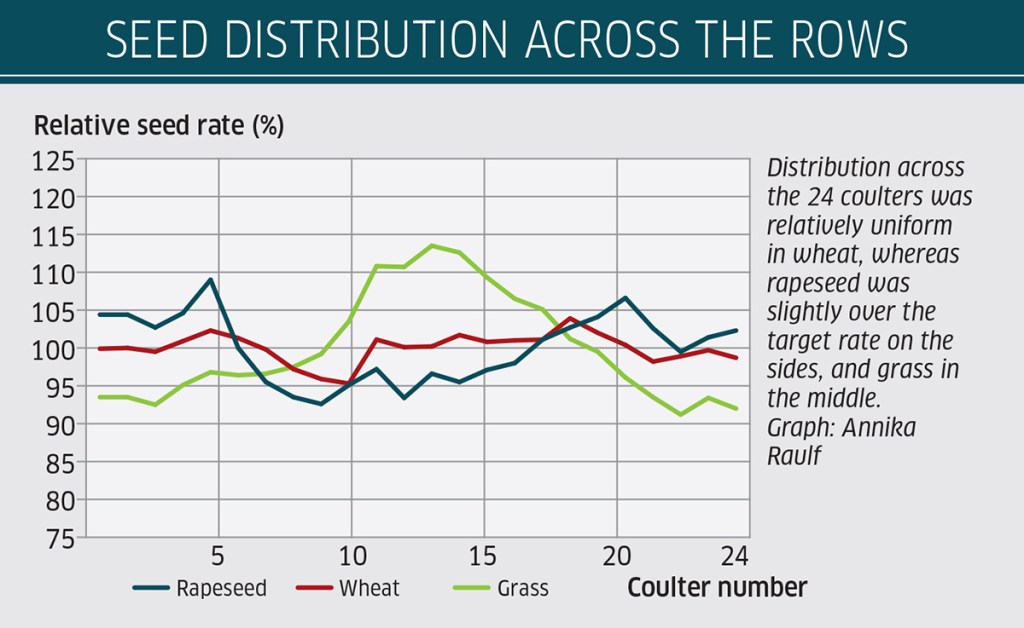
Even distribution
The seeds from both metering units are fed through the same delivery tube to the distribution head above the coulters. This a so-called ‘2-1 Single Shoot’ system that lets you place two different products at identical depths — either two different types of seeds or seeds and fertiliser. Downside is that the fan speed and seed depth settings must suit both components equally well.
Our test machine had electric half-width shut-off (a £1,570 cost option). An optional tramlining system (£960) allows up to six seed rows per side to be switched off as required. We didn’t operate the tramlining function on our organic test farm, although we did try the optional seed delivery tube monitoring system — £5,530 for our 24- coulter drill. Or rather, we tried to, because sadly the monitoring system produced (far) too many blockage warnings when there weren’t any. It turned out that moisture had found its way into the seed pipes and, together with the dust from the seed, had formed a stubborn coating that interfered with the sensors. A thorough clean with a round brush solved the problem, after which the system worked reliably.
When it comes to distribution across rows, the Centaya Super had already set the drill benchmark in 2019, recording coefficients of variation of 3.1% in wheat, 4.3% in oilseed rape and 3.8% in grass. As expected, the Centaya C Special variant produced similarly impressive figures: 1.78% in wheat, 4.63% in oilseed rape and 5.97% in grass. Using the DLG’s scoring system, these test results are respectively rated as ‘very good’, ‘good’ and ‘satisfactory’.
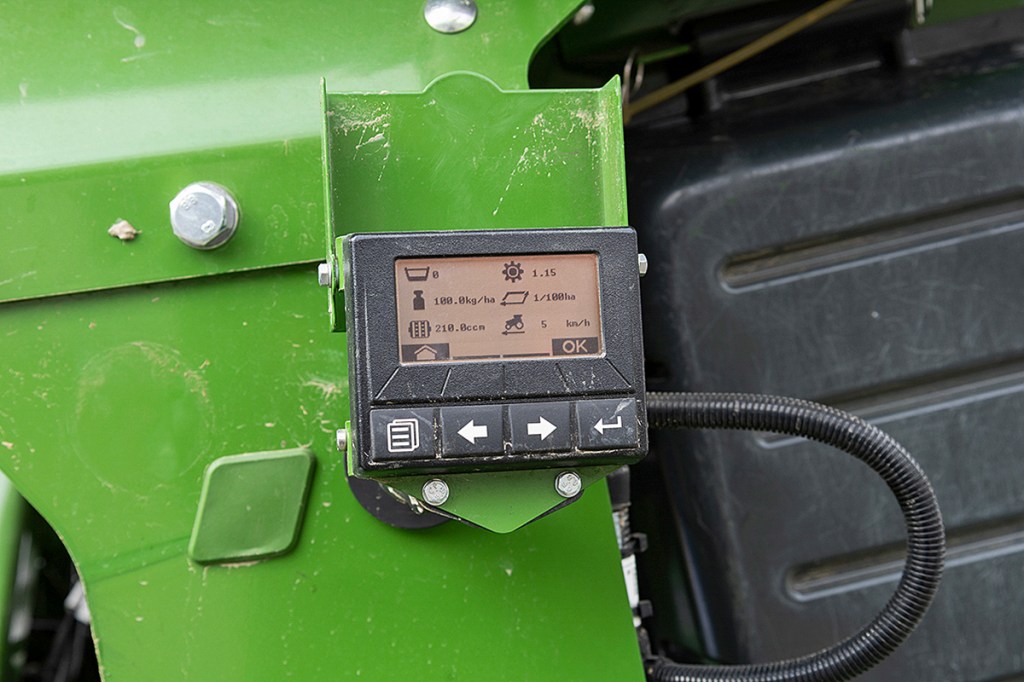
Operator-friendly
The TwinTerminal 3.0 (£785 extra) is a real help in calibration testing, as all settings can be entered directly into the machine without having to climb back into the tractor cab. Better still, the large buttons make it easy to operate them while wearing gloves.
Praise also goes to the storage space on the left-hand side for the calibration tray, the foldable bucket and scales. Less impressive, though, is the position of the calibration tray under the metering units, which makes it difficult to not spill the seed.
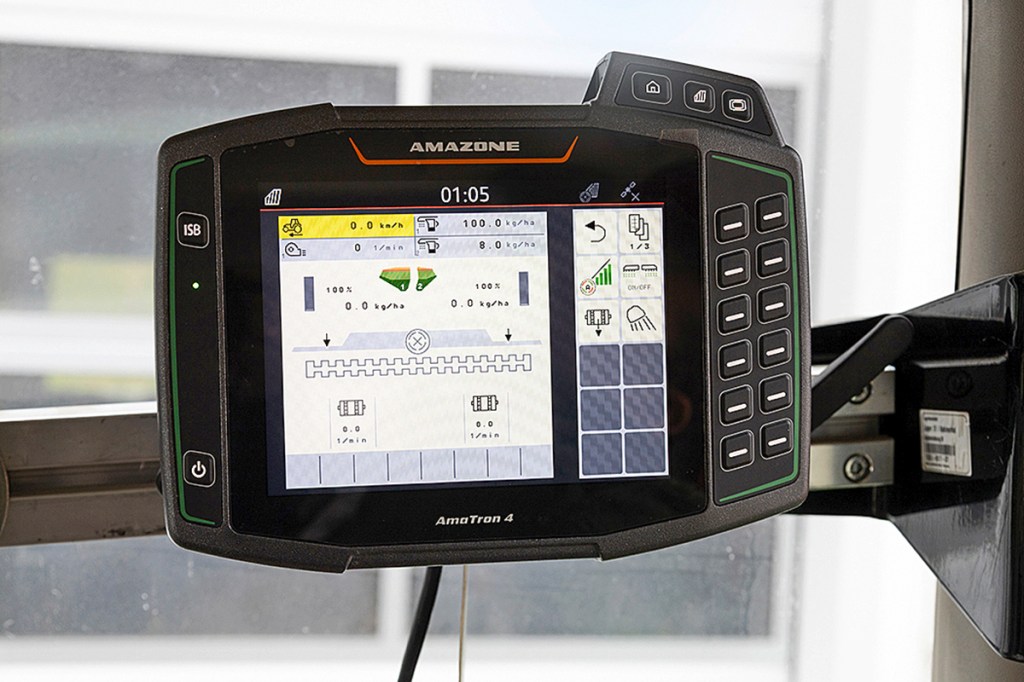
Apart from that, the machine scores highly on drill operator comfort, both mechanically using the crank and the AmaTron 4 terminal. We actually preferred operating the latter instead of the tractor’s in-cab terminal, because of its well-thought-out main menu structure, clear display and stable operating system.
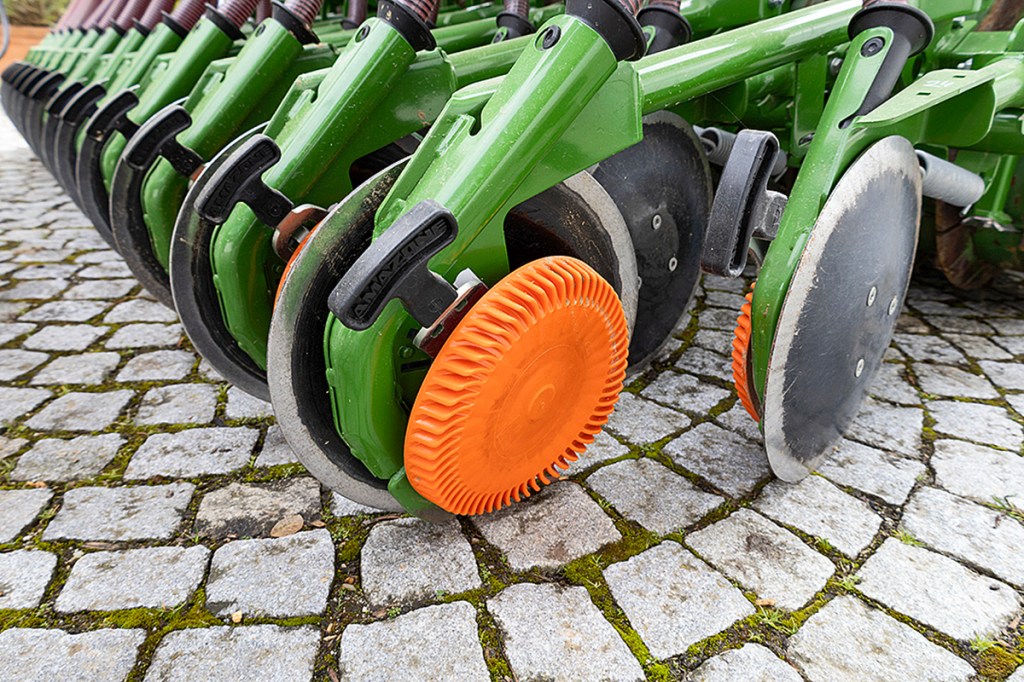
Disc and roller
The RoTec single-disc coulters proved an excellent match in our location’s varying yet predominantly heavy soils. The 2.5cm wide Control25 depth control wheel consistently did a good job. It can be adjusted in three positions, which we found to be adequate for setting the drilling depth.
Amazone quotes a maximum drill coulter pressure of 35kg, even though we actually measured as much as 40kg. On our test machine, the coulter pressure was adjusted hydraulically (a £520 option). Unfortunately, the only scale for showing the pressure is mounted at the rear of the machine, where it can’t be seen from the cab. We’d therefore recommend spending the additional £115 for an electronic option that displays the depth on the screen.
The coulters are arranged alternately on short and long arms, with a row-to-row spacing of 30cm. Even when drilling into min-tilled ground, we didn’t suffer from any blockages.
Overall, the RoTec coulter demonstrated that single-disc coulters still have a place and are a good alternative to double discs. All seed types were placed at the intended depth, resulting in even crop establishment.
Summary
The Amazone drill combination we tested — comprising a KG3001 Special power harrow with the 600mm TW trapezoidal ring roller and the Centaya C Special pneumatic seeder in almost full specification — is a heavyweight in every sense of the word, both on the weighbridge and in the price list. For the level of specification tested here, Amazone quotes a list price of just over £73,000.
Those who own a suitably sized tractor and have a healthy machinery budget will be rewarded not only with a very robust, well-equipped combi drill, but also with greater flexibility in their cropping system. It gives even farms that don’t operate large-scale crop seeding equipment the opportunity to enhance their rotation and establishment strategy. And with the optional microgranule applicator (£3,900), a third component can also be applied through the same airflow — making the machine, in effect, a 3-1 Single Shoot system.
Andreas Holzhammer
For more up-to-date farming news click here and subscribe now to profi and save.