
BouMatic’s Gemini Up Max milking robots lend themselves to farms preferring to stick with batch milking. The Hansen family has installed a 12-box system in the area previously occupied by the milking parlour.
KEEPING IT BRIEF
- The Gemini Up Max system allows farms to use existing milking parlour layout.
- Double-box arrangement saves space and reduces the cost of the robots.
- Existing side-by-side parlour made training the cows easier.
Batch milking groups of cows with a fleet of robots at fixed times of day could be seen as the utopia for larger dairy operations trying to cope with labour shortages. And in an ideal world, the robots would fit in the footprint of the current parlour to help avoid having to invest in additional construction work.
New solution
After a two-year trial run, BouMatic is now offering the Gemini Up Max, a robot setup that allows farms to carry on using their existing parlour building.
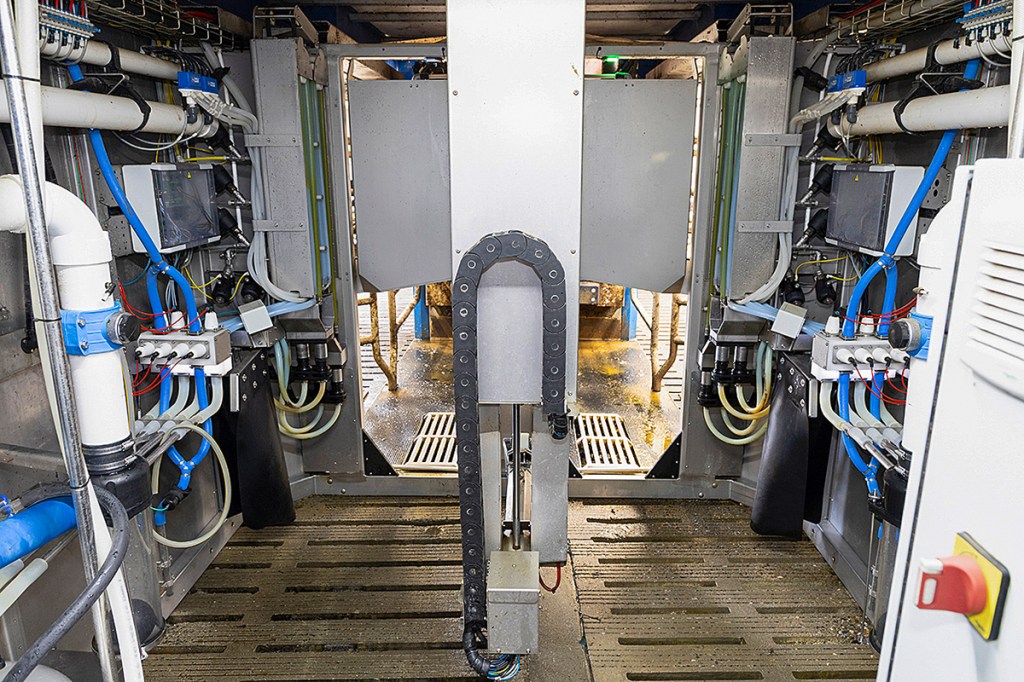
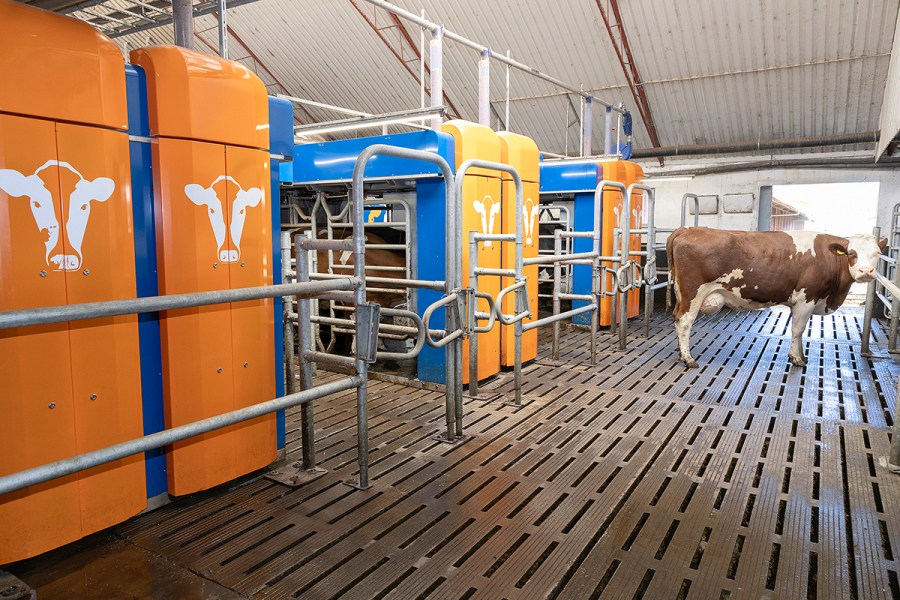
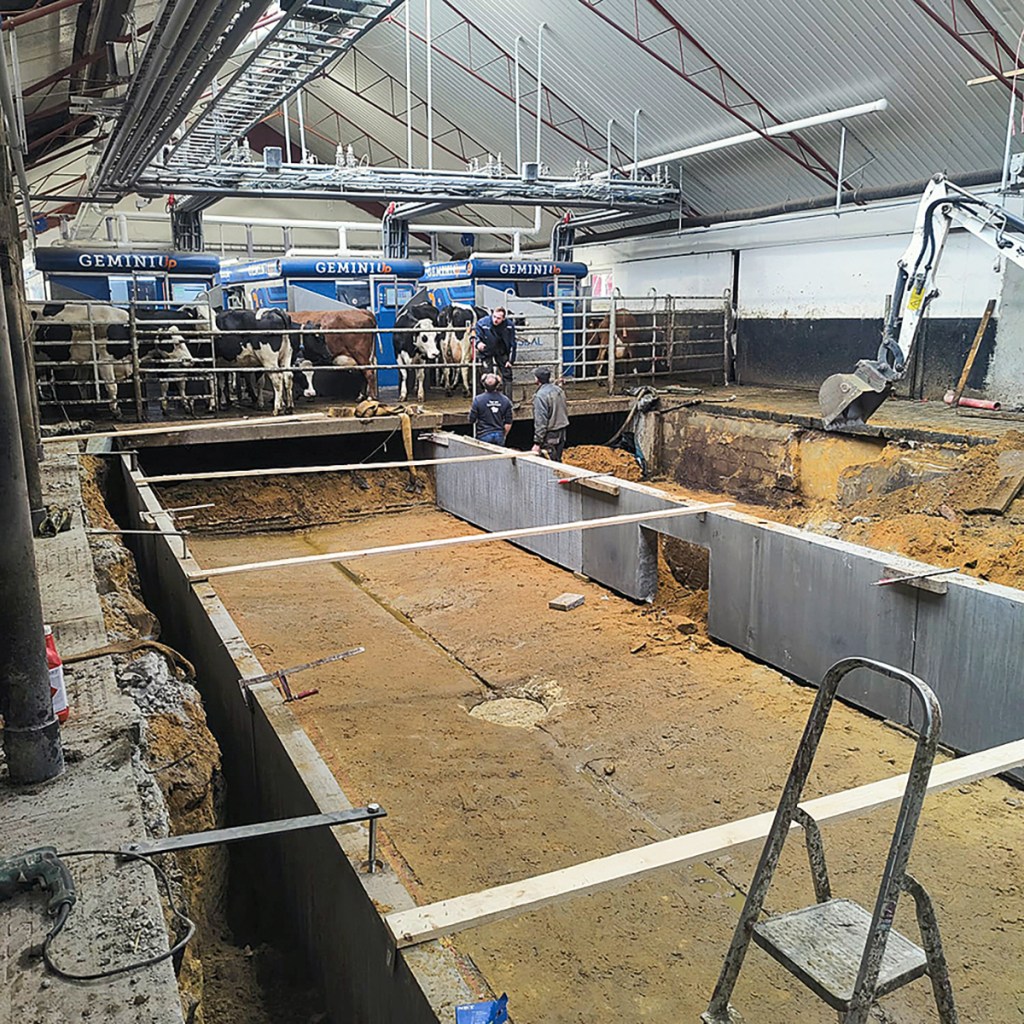
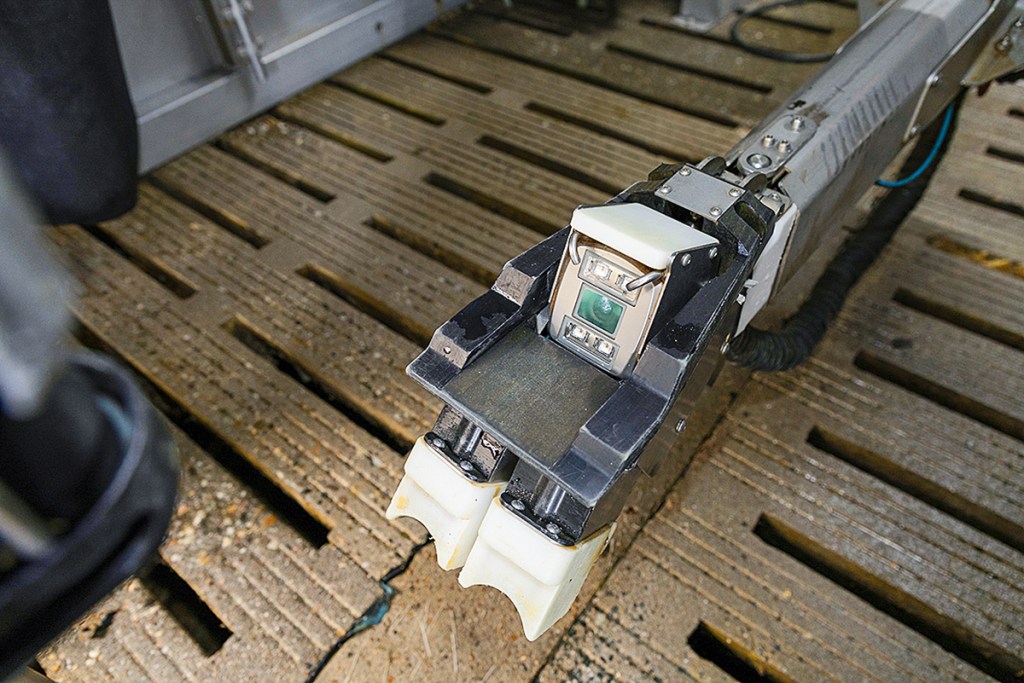
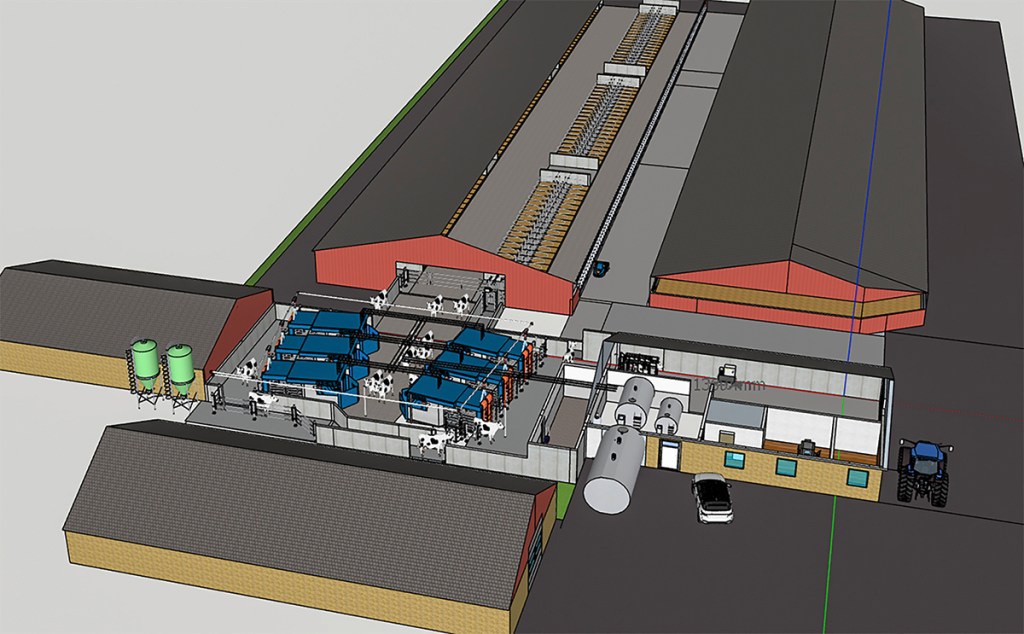
We visited one of the first farms with the new multi-box batch milking unit which was installed in the 12.46m long, 25.50m wide area previously occupied by the 2 x 20 side-by-side conventional parlour. The so-called Max system utilises the space-saving BouMatic Gemini UP double boxes. Just like a side-by-side milking parlour, the robot attaches the cups from behind. But unlike other makes, BouMatic uses just one arm for two milking boxes — that saves on space and reduces the price tag compared to two separate single boxes.
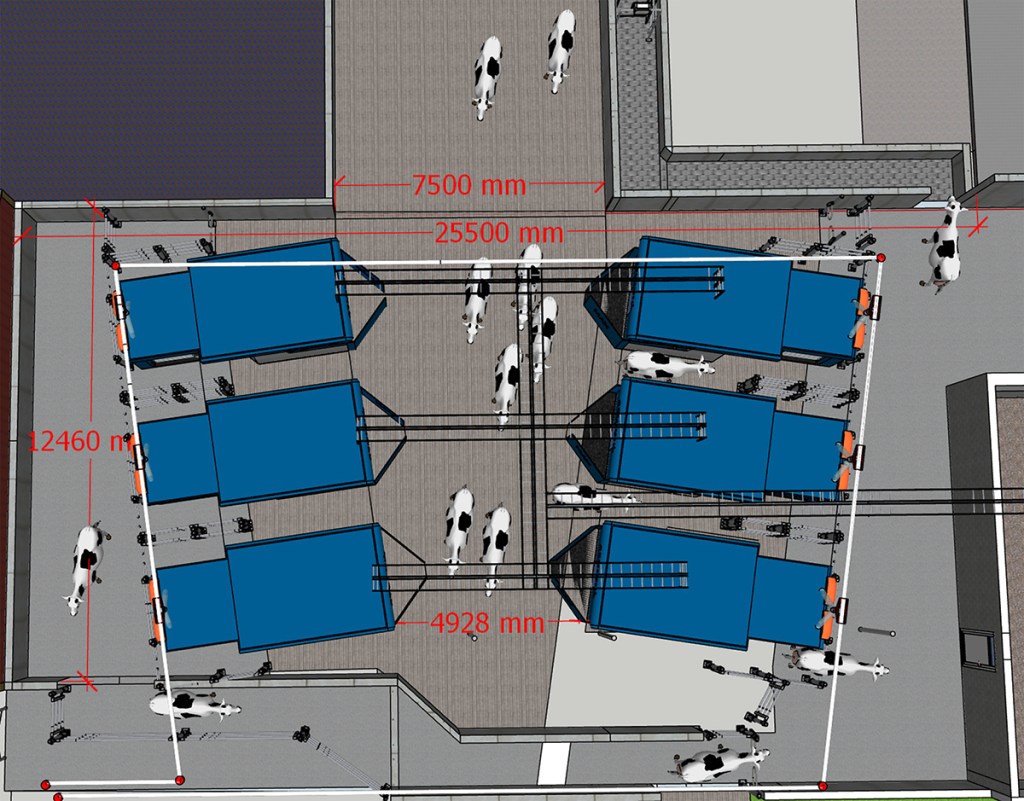
The Max system has been developed for large herds of 400 plus cows. The animals are brought to the collecting yard from where they are directed in groups to the milking boxes. After milking, a sorting gate guides them back into their respective groups. In fact the herd management does not really change. Another plus is that the robots can use the existing bulk tank and feed silos; even the plant room and dairy don’t need to be altered, clearly giving a big installation cost saving.
Target exceeded
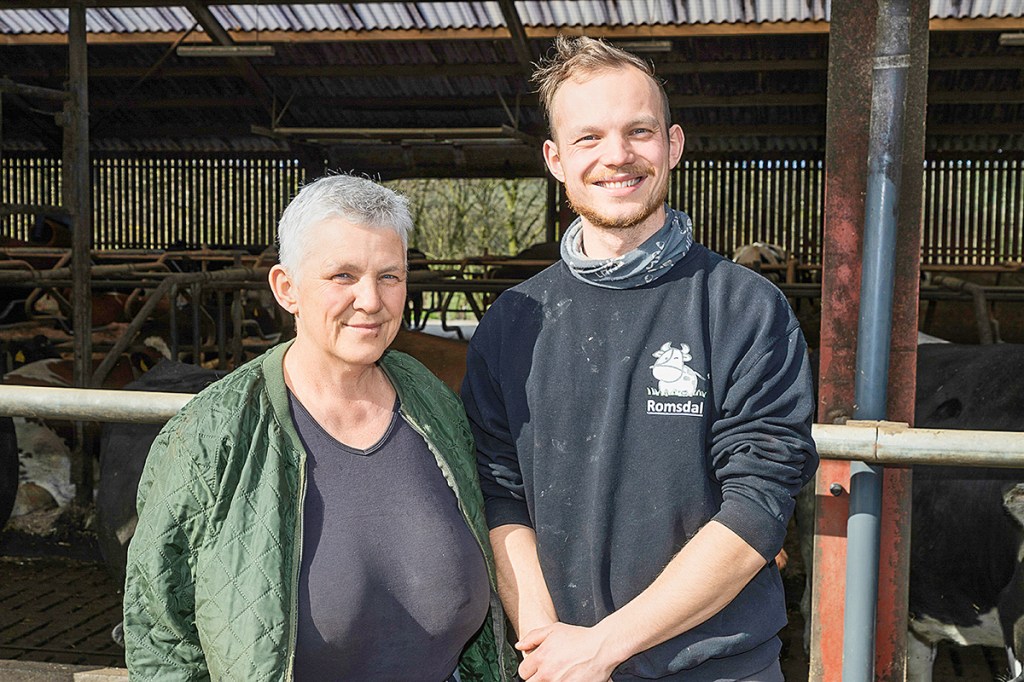
On Mogens Skivdal Hansen’s organic farm in Give, Denmark, where the cows graze during the summer months, it all started with a simple calculation. The family wanted to reduce their workload by 500 hours a year, with the reduced labour bill duly helping to financially justify the investment in 12 robot units.
Today, the Hansens reckon they’re saving around 3,600 labour hours a year. Rather than employing 3.5 staff per milking, they employ only 1.5 per shift. On Sundays and public holidays, the farm often gets by with just one person to milk the 270 dairy cows as well as sorting the cubicles and caring for the calves.
Another reason for switching to automatic milking was the workload facing the next generation: son Jakob Hansen was already feeling the strain on his shoulders when milking in the old parlour. If he still wanted to be able to milk when he was 50, 60 or 70, it was clear to him that automatic milking was the way to go.
Fitting individual robot boxes into the barn was not seen as an option as the cows spend most of the grass-growing season out on grass rather than being confined to the shed. So why not build new? As mother and son explain, building projects in Denmark are expensive and involve a lot of red tape. To make matters worse, the dairy farm borders a protected habitat. The family reckoned the new parlour building alone would cost 8 million Danish Kroner, about £920,000.
Converting the old parlour building was made possible by fitting six BouMatic Gemini double boxes allowing up to 12 cows to be milked at once. The cubicles in the adjoining shed, the cow tracks and the waiting area were all kept exactly as they were. The fact that the robot attaches the cups from behind and milks two cows at once was just what the Hansen family had always valued about their old side-by-side parlour.
Getting started with Max
Looking back, Anne Grethe Hansen describes the actual switch from conventional to robot milking as surprisingly painless, even though the job of getting there was anything but straightforward. About four months passed between planning and full commissioning, during which the building work was done, cables laid and the system set up. In the meantime, milking carried on — first in the old parlour, then for several weeks with just six of the boxes.
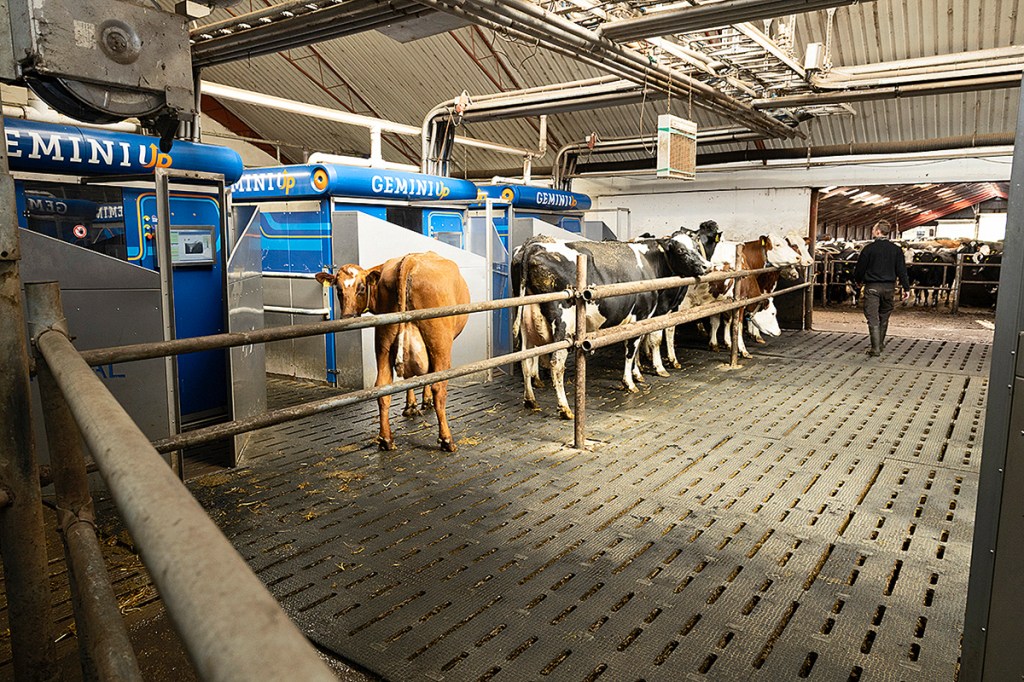
Training the cows happened in three stages. For the first milking, every cow had to be coerced into the robots, since they didn’t know the new routine.
By the second round, about half the cows were already walking into the boxes on their own.
By the third milking, it was working so well that the family only had to lend a hand here and there.
To avoid crowding, about 20 cows are now let into the area between the robots and kept apart from the others by swing gates, so they don’t push their way into the boxes.
After only a week, everything was running as smooth as ever, reckon the Hansens. The switch itself, they say, turned out to be a lot easier than expected. In Anne Grethe’s view, it was a big help to have cows standing in pairs.
Frictions in operation
Asked about night-time issues, the answer is short: “We really don’t get any out-of-the-ordinary breakdowns or problems — because we’re here when we’re milking.”
Someone is always nearby during milking. Once the bedding’s been done and the calves seen to, their shift is over. Problems do crop up, but according to Anne Grethe, they’re minor and are usually sorted out within a few minutes.
The time needed has shifted dramatically: instead of spending a total of 20 hours a day on milking and herd management, as they used to, the farm now gets by on 10 hours.
When all of the staff are out in the fields, for example at harvest time, Anne Grethe can sometimes manage the barn work on her own. The cows are milked twice a day, with the cows going out to graze between milkings. The farthest paddock is up to 2km away.
A clear path to growth
Taking the decision to buy a BouMatic Max system was a long process for the Hansens. Even so, during the building phase there was plenty of discussion about whether it was the right call. Today, there’s no doubt about it. So much so that the Hansen family is now planning the next step in growth: a new building is set to take them up to 400 milkers in the near future.
Summary
Batch milking could be the answer for many large-scale operations who are battling the growing shortage of skilled labour, because herd management doesn’t need to change. BouMatic’s Gemini Up Max shows the switch to a robotic system doesn’t have to entail a vast investment in construction and building work, perhaps making it more affordable.
Martin Zäh
For more up-to-date farming news click here and subscribe now to profi and save.