
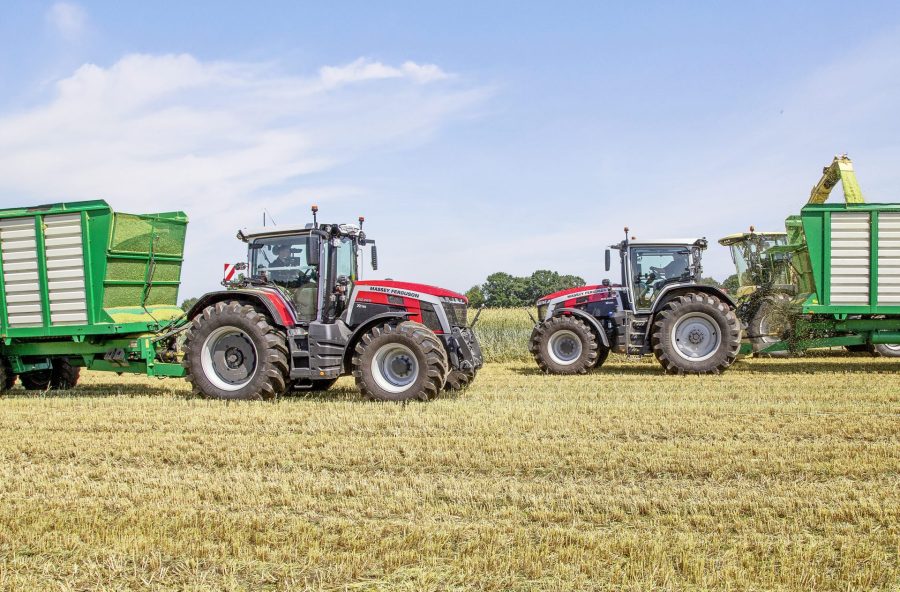
With the 8S.225, 8S.245 and 8S.265, Massey Ferguson gives buyers the choice of a dual clutch powershift or a stepless transmission. So, which of these AGCO transmissions makes the 8S a better tractor?
KEEPING IT BRIEF
- With the 8S.205 now dropped, three of the five 8S Xtra models have the choice of a 28-speed powershift or CVT.
- The Dyna-E Power wins on fuel consumption, the Dyna-VT on operator comfort.
- Spec for spec, the powershift is £7,750 cheaper.
This month we are shaking things up a bit with a profi tractor double test and a look at the 8S.265 Xtra — one with a dual clutch powershift, the other model with a CVT, comparing the two powertrains from the engine through to the axles and pto. Besides the cogs within the transmission box, 8S Xtra buyers can also pick between Efficient and Exclusive levels of spec.
Similarities
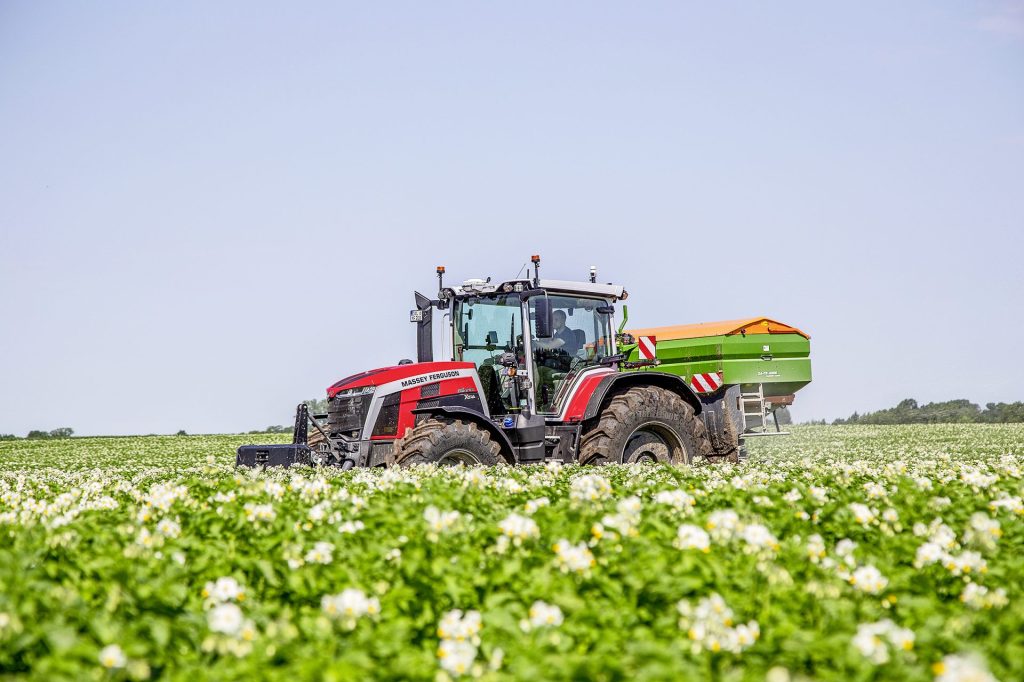
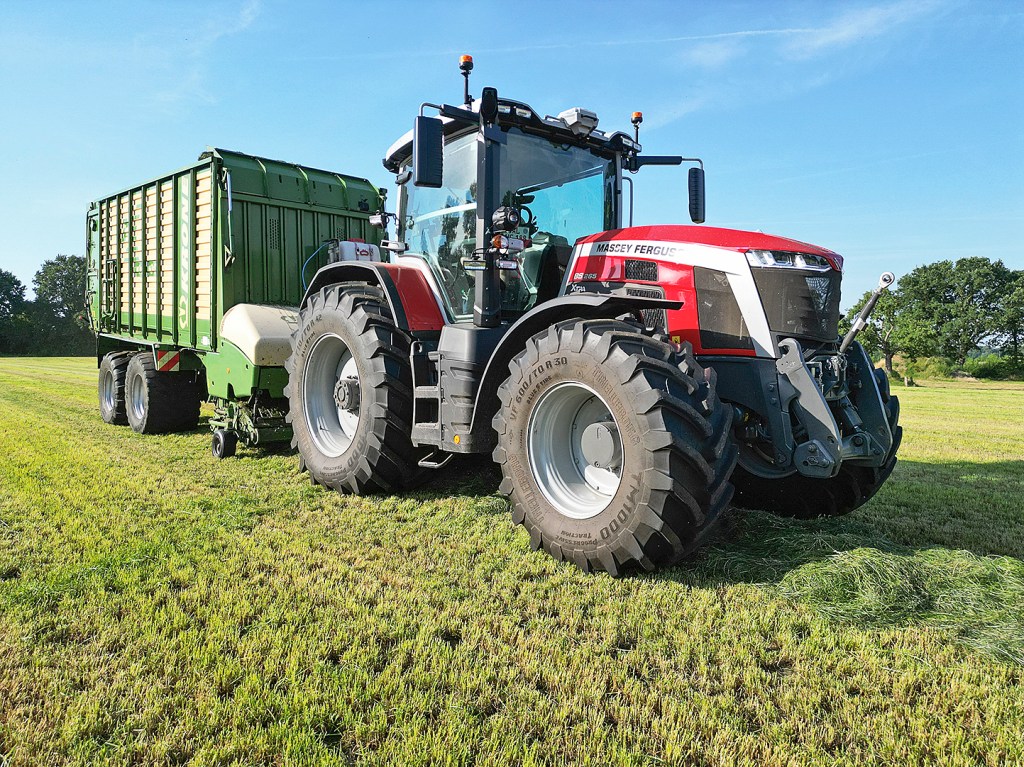
Starting out with what our two test tractors have in common, Massey Ferguson’s 8S impresses not just with its running gear and excellent straightahead travel. Thanks to its wasp-waist styling, the manoeuvrability is also very good with an 11.80m turning circle, and the operator gets a very good view of the optional front linkage.
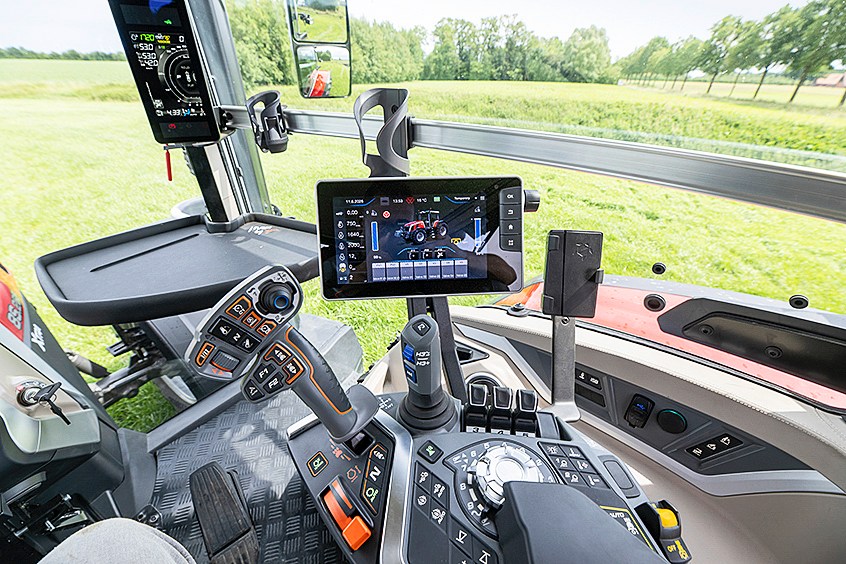
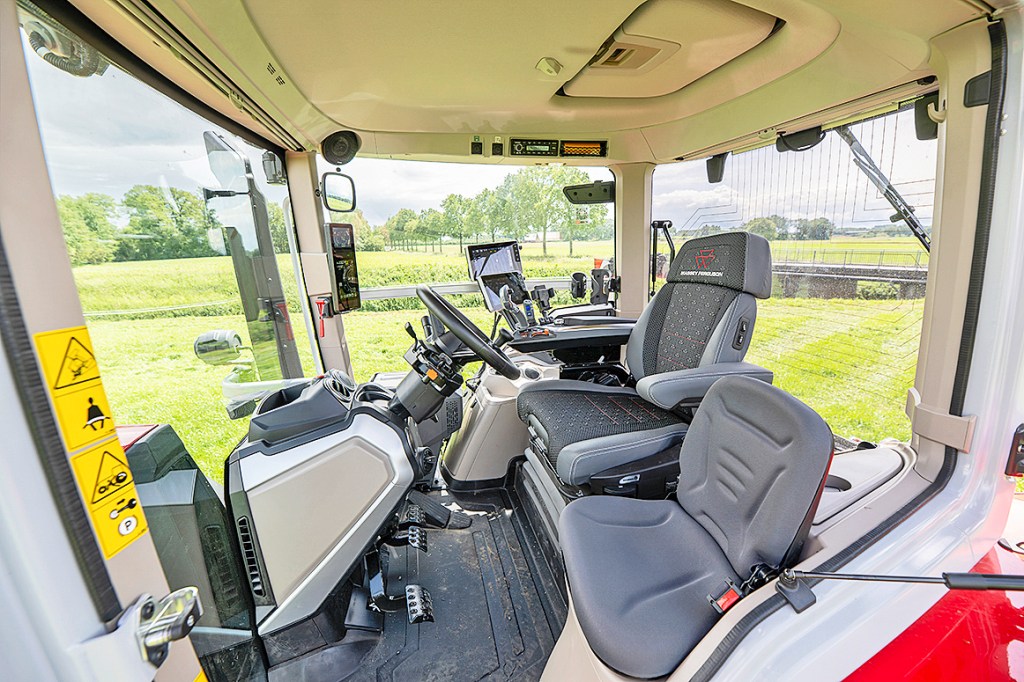
All-round visibility from the huge cab is also excellent. The gap between the engine bay and the cab plays its part in reducing heat and noise transfer. One downside of the four-post cab design is the big door; you have to work at it if you want the door to shut smoothly in one go, especially when the back window is fully closed.
Powerful engine
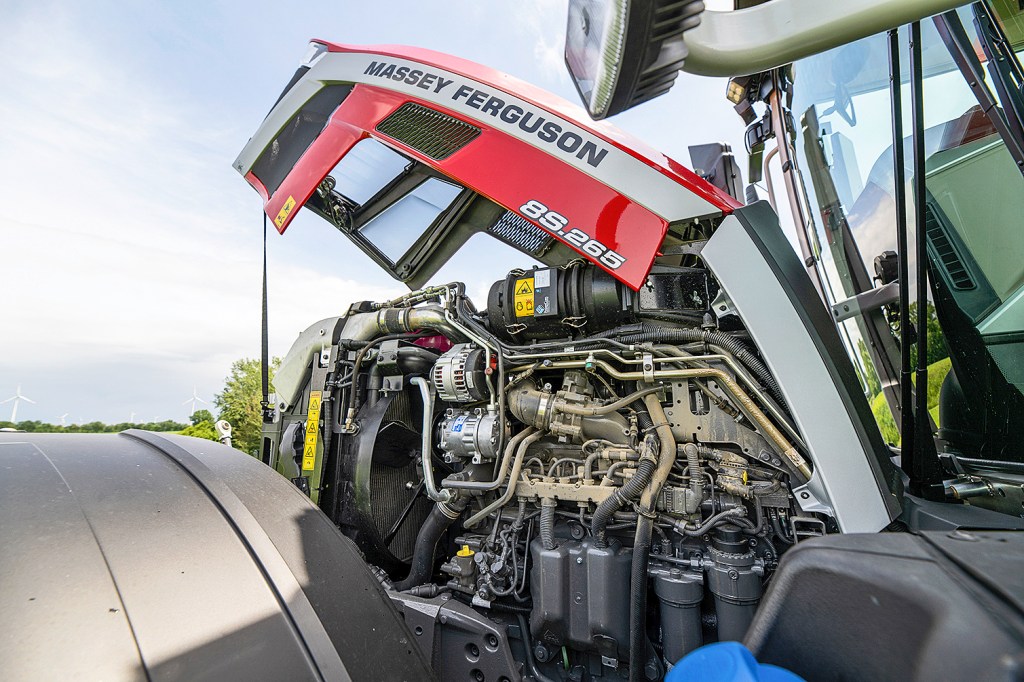
Also getting a thumbs-up from our users and the DLG tech team is the AgcoPower 7.4-litre, six-cylinder engine. In both models its smoothness, torque and overall diesel consumption convince across the average workload. You can see for yourself in the Powermix results on the next page and the rest of the results from the DLG’s rolling road dyno on pages 20 and 21.
Efficient drivetrain
When it comes to the back end you are presented with two completely different tractors: the 8S.265 with the Dyna E-Power transmission, and the 8S.265 with the continuously variable Dyna-VT.
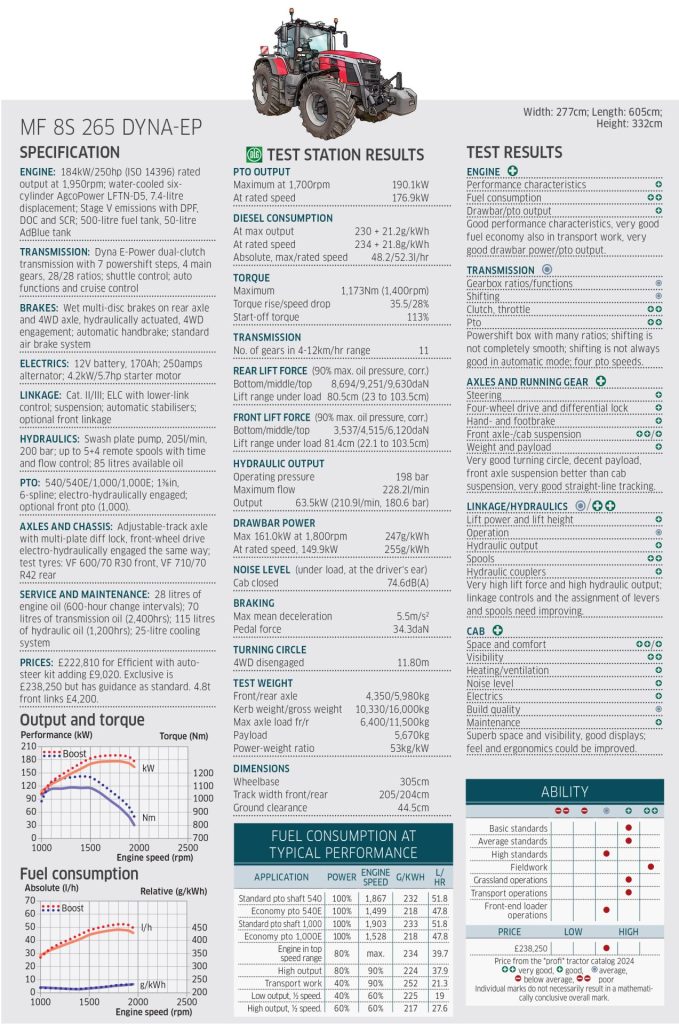
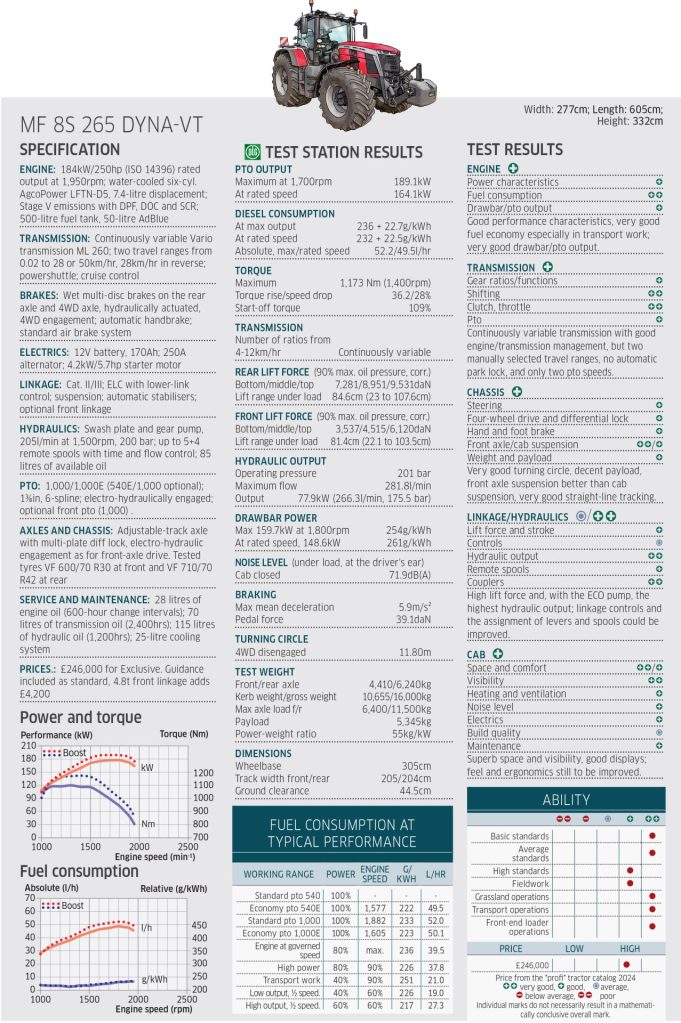
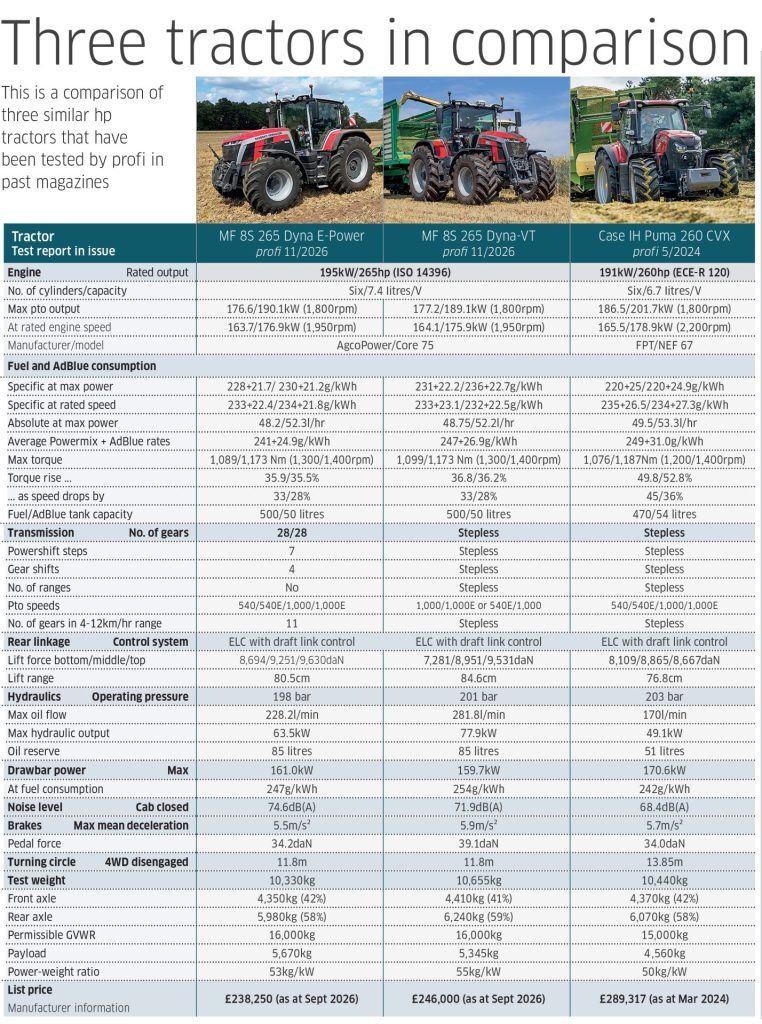
On the DLG pto test stand, there is initially hardly any difference to be found. While the Massey Fergsuon-developed dual-clutch transmission transmits 190.1kW/254.9hp out to the pto from the engine’s quoted maximum output of 209kW/280.3hp, the continuously variable Agco ML 260 within the Dyna-VT manages 189.1kW/253.6hp. The smallest of differences.
Fuel use
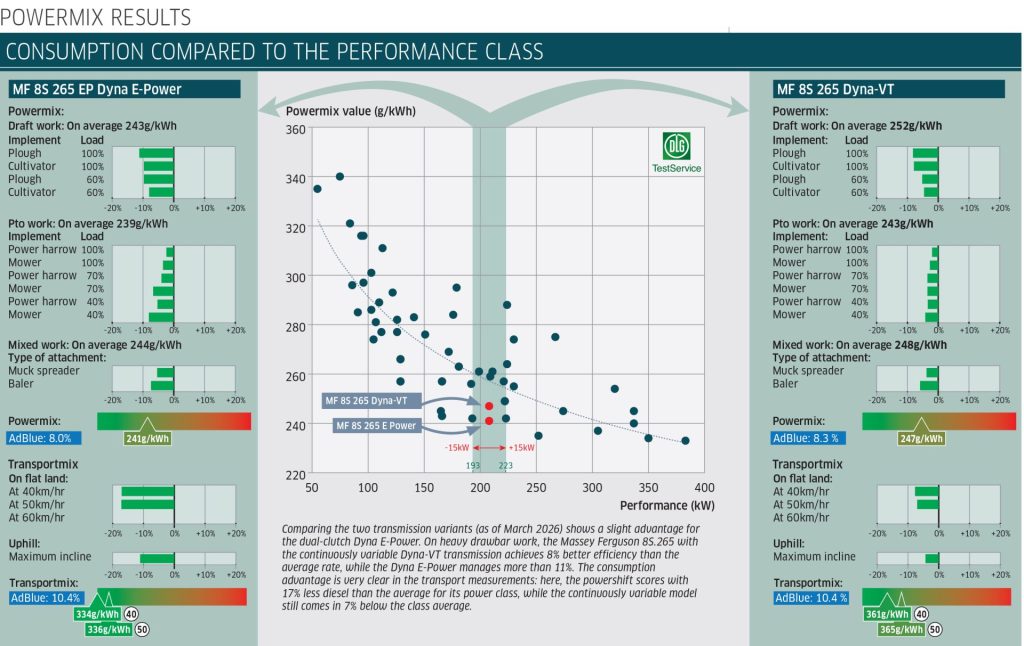
Diesel consumption tells much the same performance story: with the boost engaged, the powershift uses a modest 230g/kWh at maximum pto output, compared with 236g/kWh for the Dyna-VT. Both figures are at a very good level, as the graph above shows. On top of that comes 21.2g/kWh and 22.7g/kWh of AdBlue, respectively.
The differences become much clearer in the Powermix test measurements which give a more real world picture of day to day work. The powershift transmission is the one that puts its best foot forward with an average Powermix figure of just 241g/kWh (plus 24.9g/kWh AdBlue). No powershift tractor competitor tested up to now has managed to match this. As expected, the powershift scores its efficiency points mainly on heavy drawbar work, where its advantage over previously tested tractors runs well into double figures. But even on pto work, its consumption advantage over competitors we’ve already tested in this power bracket is comfortably in the green — especially as the E-Power transmission has the four pto speeds instead of two.
All of this said, the tried-and-tested ML 260 doesn’t need to hide. On average, the Dyna-VT tractor also achieves a Powermix figure of just 247g/kWh (plus 26.9g/kWh AdBlue).
Diesel consumption is low, but without EGR (exhaust gas recirculation), both candidates need more AdBlue to meet their Stage V emissions requirements.
Hence, both Massey models sit in a very good consumption bracket overall. During road transport measurements, the E-Power impressed by running at just 1,560rpm at 50km/hr and proves a very good efficiency at 336g/kWh. On the continuously variable Dyna-VT machine, the engine needs 365g/kWh to do the same job.
Continuously variable comfort
So, given the consumption figures and a £7,750 lower purchase price, is the E-Power transmission the obvious choice? No! When in doubt, our team of operators always selected the continuously variable model.
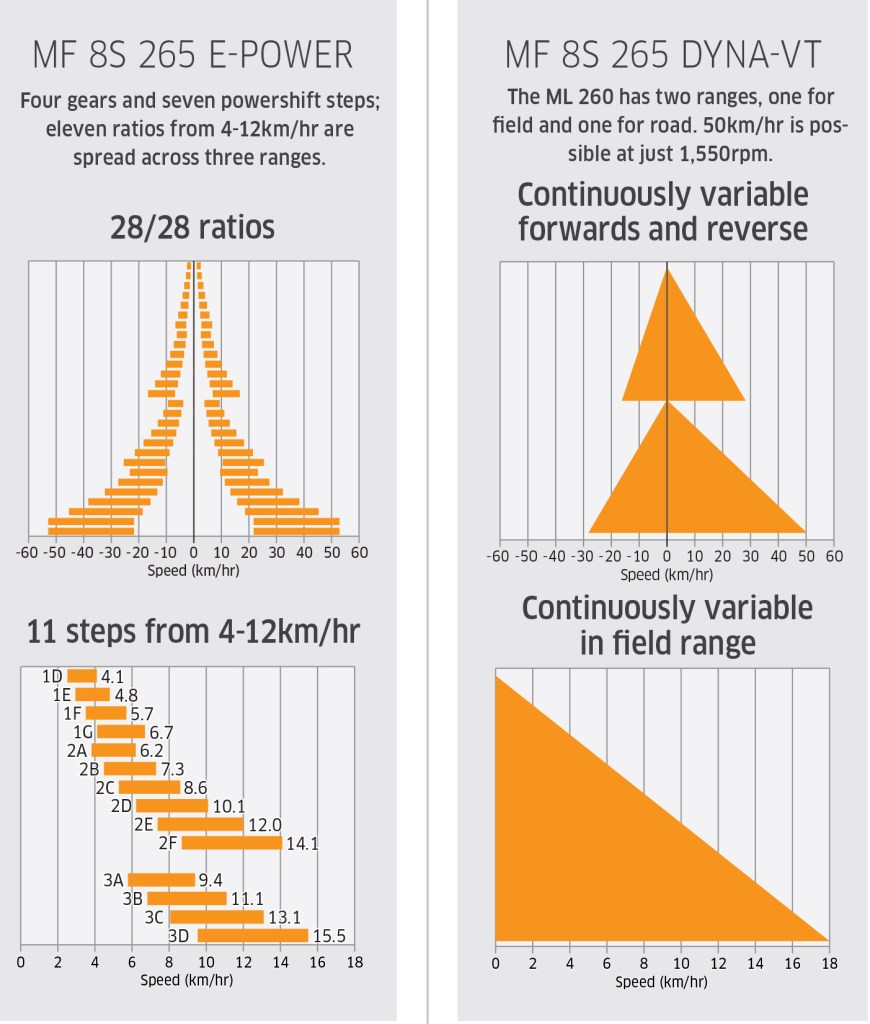
After all, the 8S is a genuine all-rounder in this popular power bracket. Where the tractor needs to switch jobs frequently, the continuously variable ML 260 — despite its two manually selected driving ranges — has the edge over the E-Power with its seven powershift steps and four ranges. E-Power operators will also need to get used to the transmission’s shifting quirks, which is not easy, since the transmission’s 24 solenoid valves don’t always do what the operator expects them to, especially in auto mode.
In manual mode, only 22 of the 28 gears are shown, because the overlap between the ratios is so large. The software lets the engine run at quite high revs; reducing engine speed considerably improves shift behaviour in light work.
All the above-mentioned fine-tuning of shift behaviour and pull-away gears is just unnecessary on the Dyna-VT. Here, the six-cyl powerhouse purrs along predictably at whatever speed you’re in and matches up road speed smoothly to the pre-selected pedal position or the very finely adjustable joystick — very good indeed!
More muscle power on the E-Power linkage
As in our previous 8S tractor tests (profi 10/2022 and 10/2023), hydraulic output depends on the oil pump: on the E-Power, the swash plate pump delivers a flow rate of 205l/min whereas the ECO pump on the Dyna-VT — supplemented by a gear pump — delivers 205l/min already at 1,500rpm. At the rated engine speed, this combination achieves an up to 281l/min flow rate at 77.9kW. That’s going to meet the needs of most machines likely to get hitched to an 8S. At 228l/min and up to 63.5kW, the E-
Power’s hydraulic output is certainly still ample for most jobs.
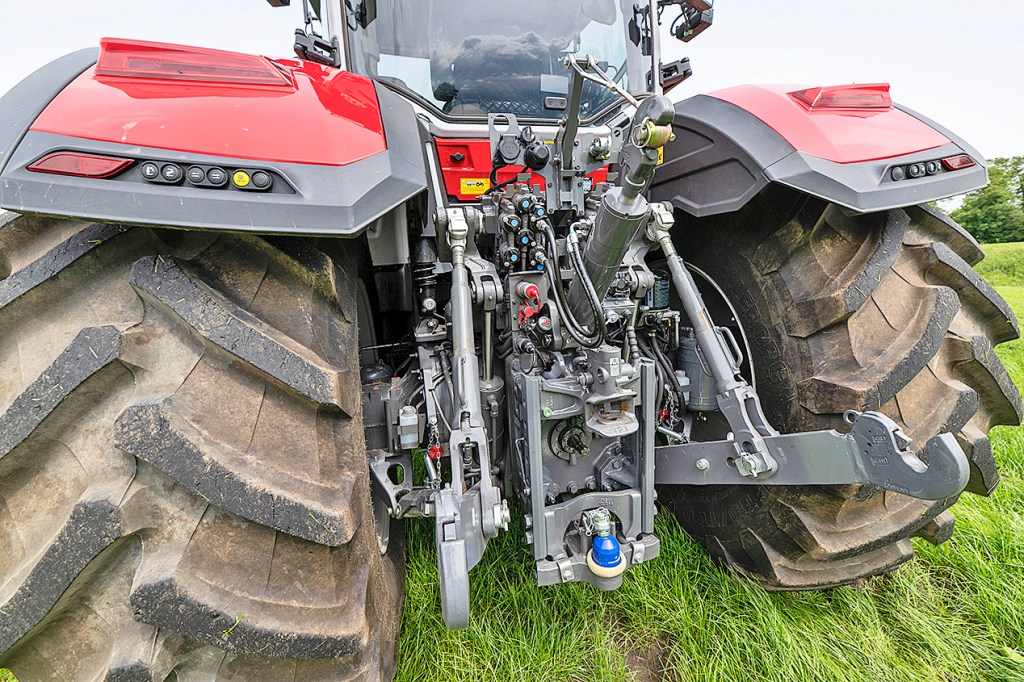
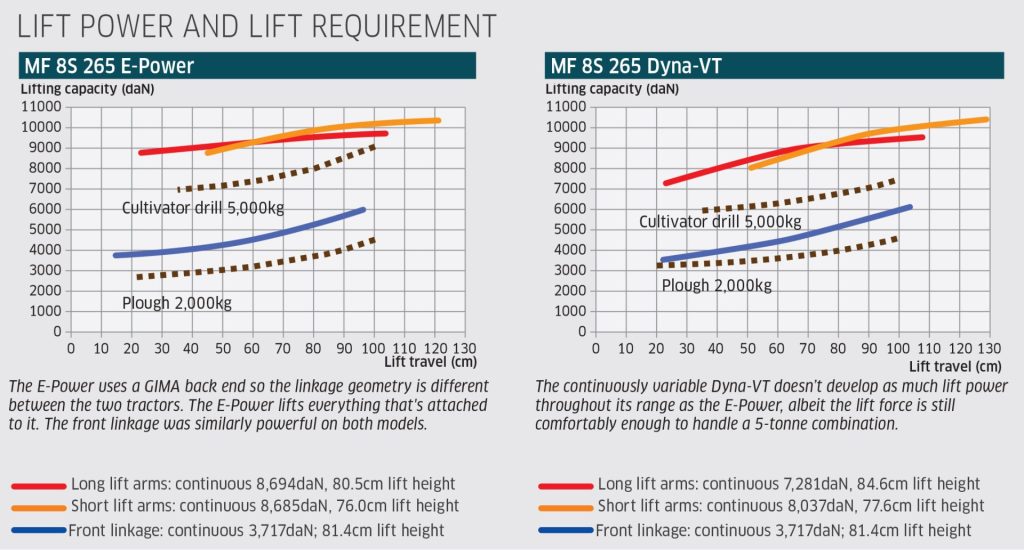
Due to different axle trumpet housings, the rear linkage geometries also differ; with 8,694daN, the Dyna E-Power shows more muscle especially in the lower lift range than the Dyna-VT with 7,281daN. Even so, neither of the tractors is troubled by a heavy combi drill or big plough. As for the front linkages, there is no difference between the two tractors. An optional pressure-relief front linkage is available, which can be finely adjusted via the terminal.
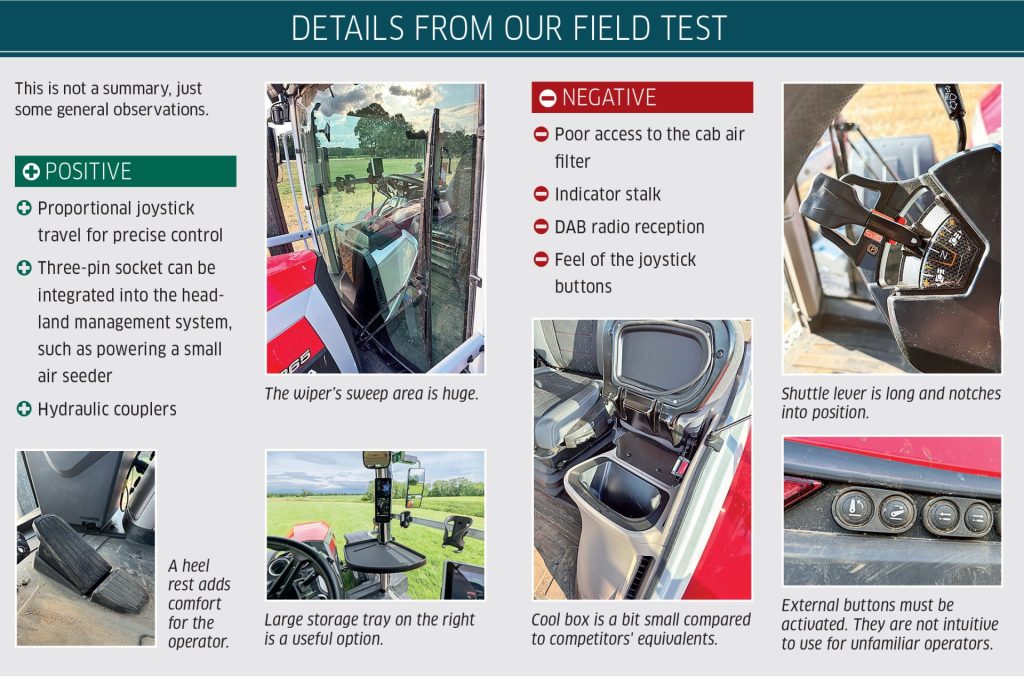
Prices and verdict
In our test tractor Exclusive trim specification, the 8S.265 Xtra Dyna E-Power costs just over £238,000. The CVT 8S model in the same trim costs £7,750 more. Is this reason enough to go for the mechanical tractor then? Yes, with the caveat that the tractor in question will be employed mainly on heavy-ish drawbar work without the need to change speeds all the time. Otherwise, we’d still vote for the Dyna-VT, with all its advantages and despite slightly higher diesel consumption.
After all, the MF promise of a continuously variable driving experience on the E-Power remains just that, a promise, for now.
Tobias Bensing
For more up-to-date farming news click here and subscribe now to profi and save.