
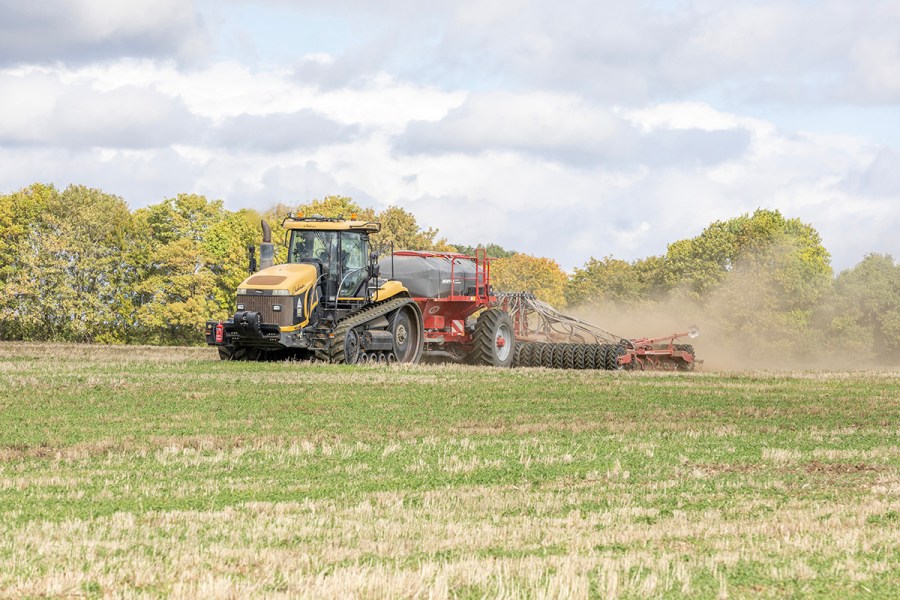
When we last visited Oxfordshire farming business Crowmarsh Battle Farms, the Chamberlain family was a year into ownership of a 580hp Agco Challenger MT875B. The now 18-year old frontline powerhouse has racked up over 10,700 hours and continues to earn its keep on the 1,400ha operation.
KEEPING IT BRIEF
- Tracks and mid-rollers costly
- Depreciation almost non-existent
- Needs Category H driving licence
Future-proofing is a frequently over-used term, but for the Chamberlain family of Crowmarsh Battle Farms having the foresight to buy big power almost 20 years ago has steered the farm into cost-effective horsepower for cultivations and drilling.
That purchase was a 580hp Agco Challenger MT875B, bought to replace a smaller MT765 that was the farm’s first foray into rubber tracks. The near 20-tonne MT875B packed much more power and weight to comfortably handle deep cultivations and drilling across the farm, as the business embarked on a journey of min-till, in a bid to reduce its cultivation and crop establishment costs.
Few frontline powerhouses remain steadfastly in place this long, but the big Challenger continues to deliver for its owner after 18 years and over 10,700 hours.
“My dad Philip bought the crawler in 2008 from our local dealer – formerly Lister Wilder and now Chandlers – and it’s still putting on the hours each year,” explains Tim Chamberlain who runs the 1,400ha farming business from Clacks Farm near Wallingford, Oxfordshire, with his brother Charlie. “Back then, the crawler was working with a 7.0m Väderstad TopDown, a Carrier, a 4.0m sub-soiler and an 8.0m Rapid drill.”
Tim adds that over the last 18 years, the farm’s cultivation and drilling requirements have evolved in response to healthier soils, and the big crawler is now working fewer hours and having a much easier time.
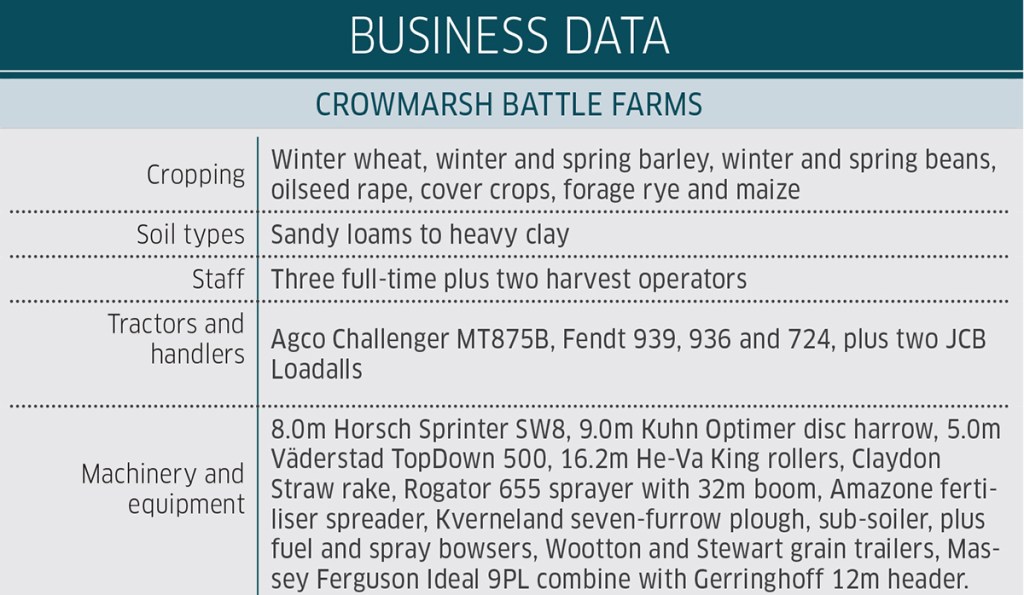
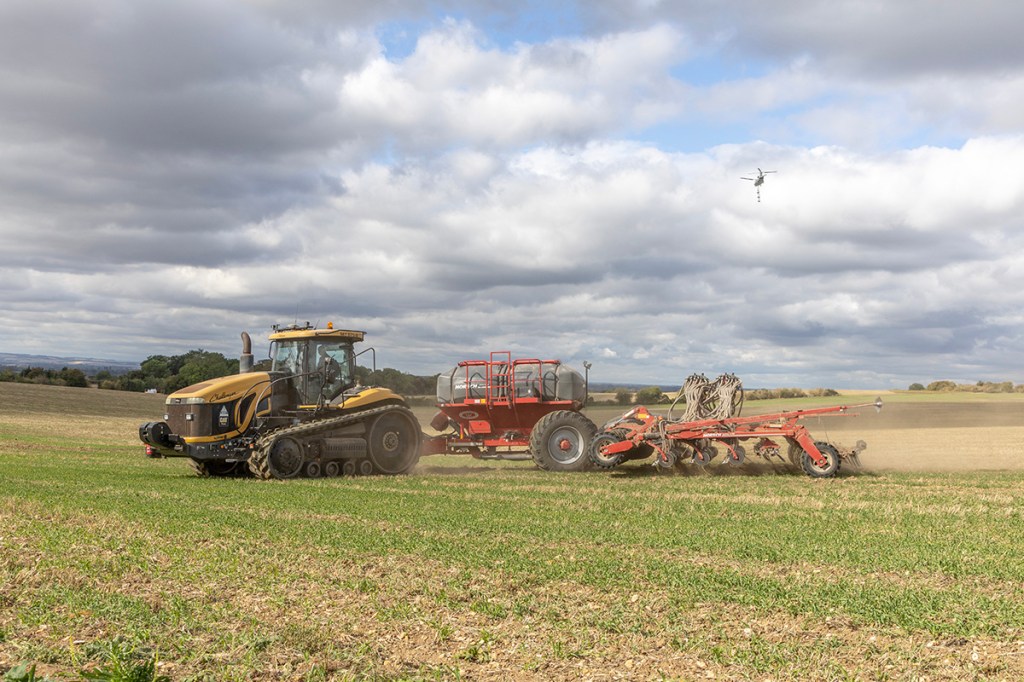
“These days, the MT875B pulls a 9.0m Kuhn Optimer disc harrow and an 8.0m Horsch Sprinter SW with four-tonne seed hopper,” he says. “We’re no longer working the ground as deep, though we do have a 5.0m TopDown that can be handled by our Fendt 939 tractor, should we need to carry out some restorative work in spring for example, if we’ve carried outdoor pigs or suffered a wet winter.”
No replacement for displacement
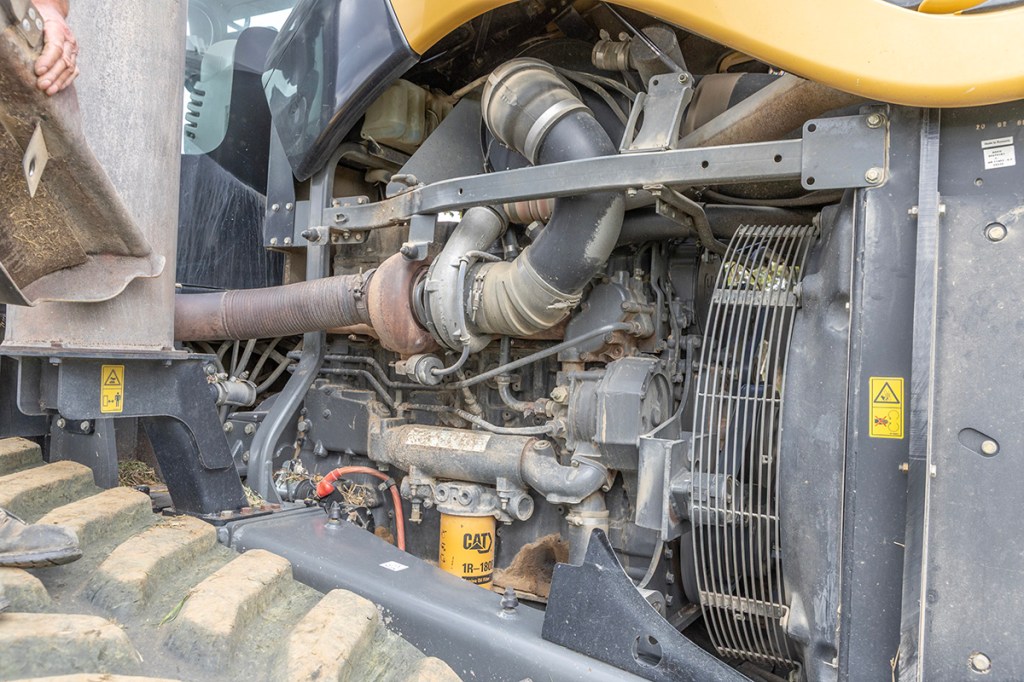
Under the bonnet of the big Challenger is a Cat C18 Acert engine, with its six cylinders adding up to an 18.1-litre capacity. There’s no boost modes or electronic trickery, just grunt. And the 580hp gross output is channelled to both rubber tracks through a 16 forward, four reverse, full powershift transmission. The upper reaches of the transmission will deliver a 40km/hr road speed for those not overly concerned with their own longevity.
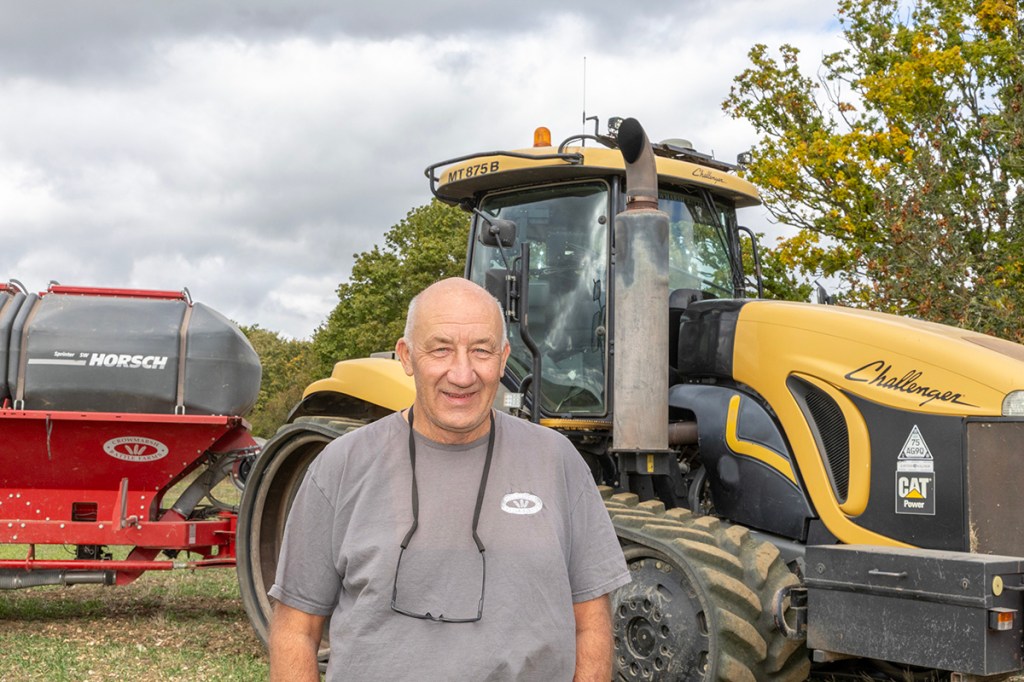
“There is zero suspension other than the air seat,” explains operator Simon Parker, who joined the family-run farming business in 2012, and has spent thousands of hours in the Challenger’s cab. “We do modest distances on the road with the crawler, and it’s one of those necessary evils to reach our fields. Though I can’t remember the last time I reached 40km/hr – it’s just not pleasant.”
With a decelerator pedal for engine speed control, Simon has learnt to left-foot brake and slip the transmission into neutral when bringing the MT to a stop at road junctions.
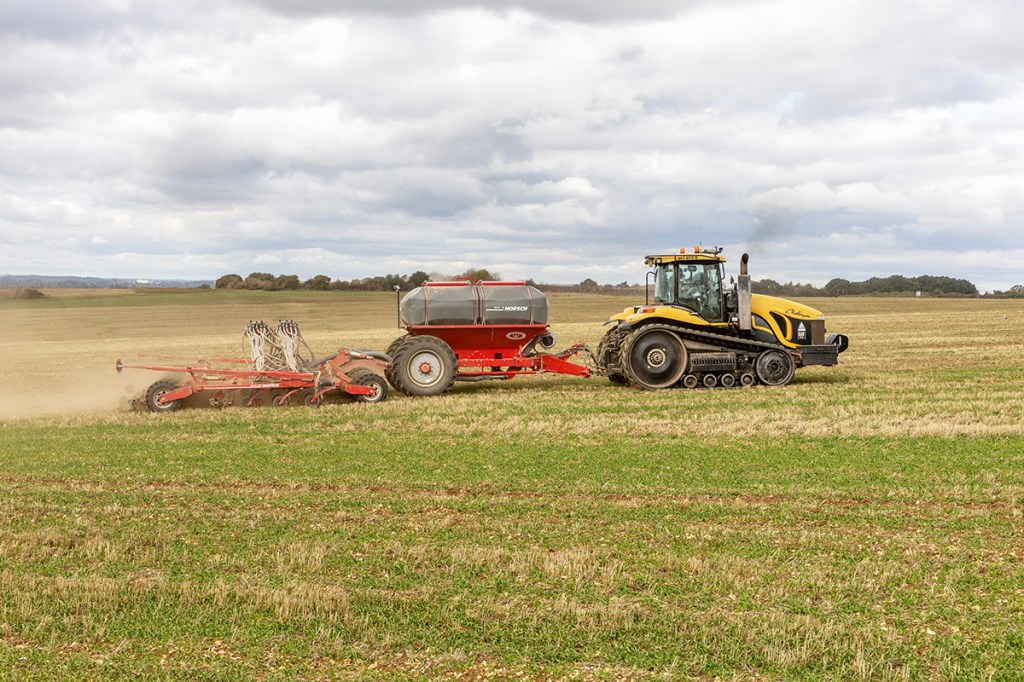
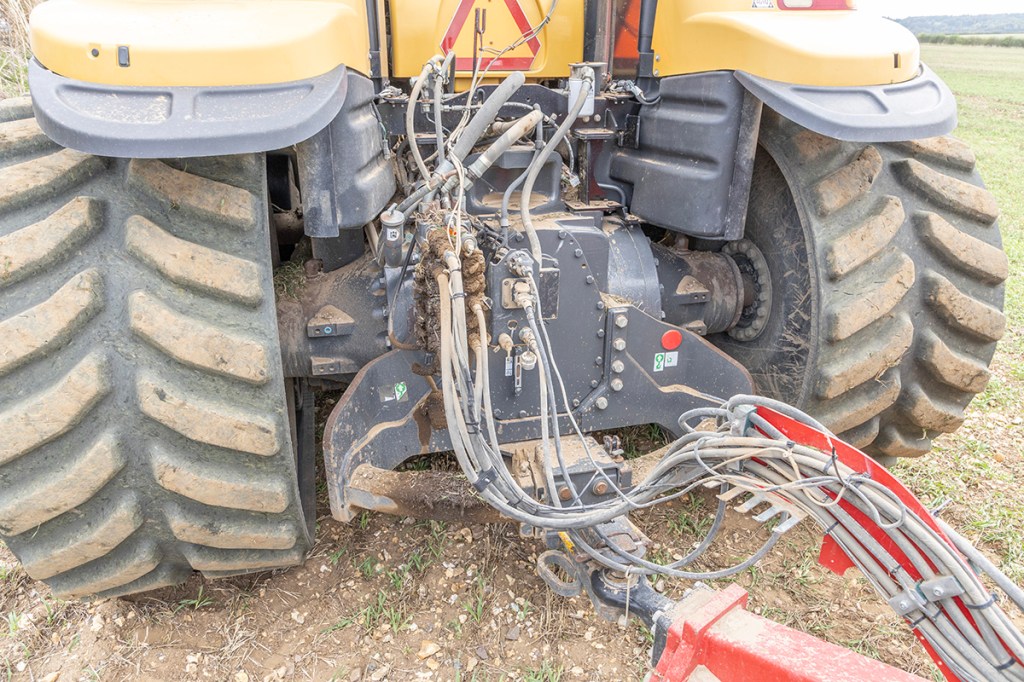
Bought without three-point linkage or pto, the MT875B is effectively a self-propelled drawbar. No linkage also shaved around £20,000 off the price. Helping to keep the tracks flat on the ground is a full set of track frame weights fitted to both sides, plus four 57kg front idler weights on each side and a rack of front frame weights too, all of which lifts the working weight of this frontline beast to around 20 tonnes.
Team mates
Crowmarsh Battle Farms’ tractor fleet also includes a 14-plate Fendt 939, plus a 24-reg 936 and a four year old 724. Vario-Grip on-the-move tyre pressure adjustment and premium tyres have made it easier to get more productivity and versatility from the farm’s wheeled machines, which is an obvious sign of progress over the twin-track beast.
The farm has added a 6.0m Weaving SabreTine drill to its inventory in the last few years, to ease the autumn workload, and also to further utilise the Fendt 936, while the 939 follows both drills with a set of 16.2m He-Va rolls.
Straw is baled and swapped for pig muck, and the farm takes digestate too, which is all incorporated using the Kuhn Optimer. Crowmarsh Battle Farms has yet to go all-in with direct drilling, instead choosing to fit Dutch openers to the Sprinter when establishing beans and oilseed rape crops in one pass.
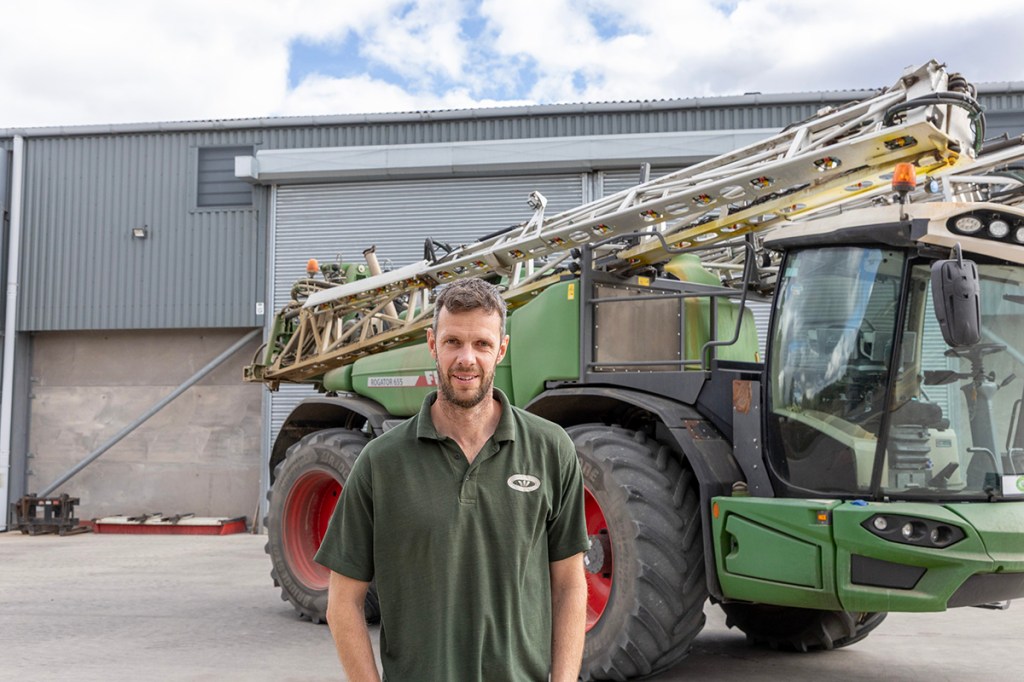
The farm operates with a diverse cropping plan that includes winter wheat, winter barley, oilseed rape and winter beans, plus a small area of maize and forage rye, plus spring barley and cover crops. Harvest still remains the domain of a Massey Ferguson, the business now relying on an Ideal 9 PL with a 12m Geringhoff header, with crop care products applied on 32m tramlines using a Rogator 655.
“We do tend to use Chandlers for most of our wheeled items, with implements chosen to suit from all our local machinery dealers,” adds Tim Chamberlain. “Those purchasing decisions are always made on a combination of price, back-up and also following a successful demonstration.”
When it comes to operator comfort, the farm’s wheeled tractors are favoured for their front axle and cab suspension, plus higher travel speeds when compared to the 2008 twin-track crawler, though none can deliver the performance and productivity to match the Challenger.
“The MT875B is very much a one-trick pony, and could probably be the last crawler we’ll have on the farm,” says Tim. “It’s been a great machine so far, for what we’ve wanted to do, but it lacks versatility. But when we bought the tractor in 2008, tyre technology and wheeled tractor power couldn’t get close to Agco’s Challenger 800 series, which meant that if you wanted big power for heavy work, you needed rubber tracks.
“That said, it remains the only machine we’ve got that can handle the Kuhn discs and the Sprinter drill – there is no plan B,” he says. “But with 580hp on tap, it certainly holds its speed on the climbs, which delivers effectiveness with cultivations. It is a very impressive tractor, and one that has also done all its depreciating.”
Changing workload
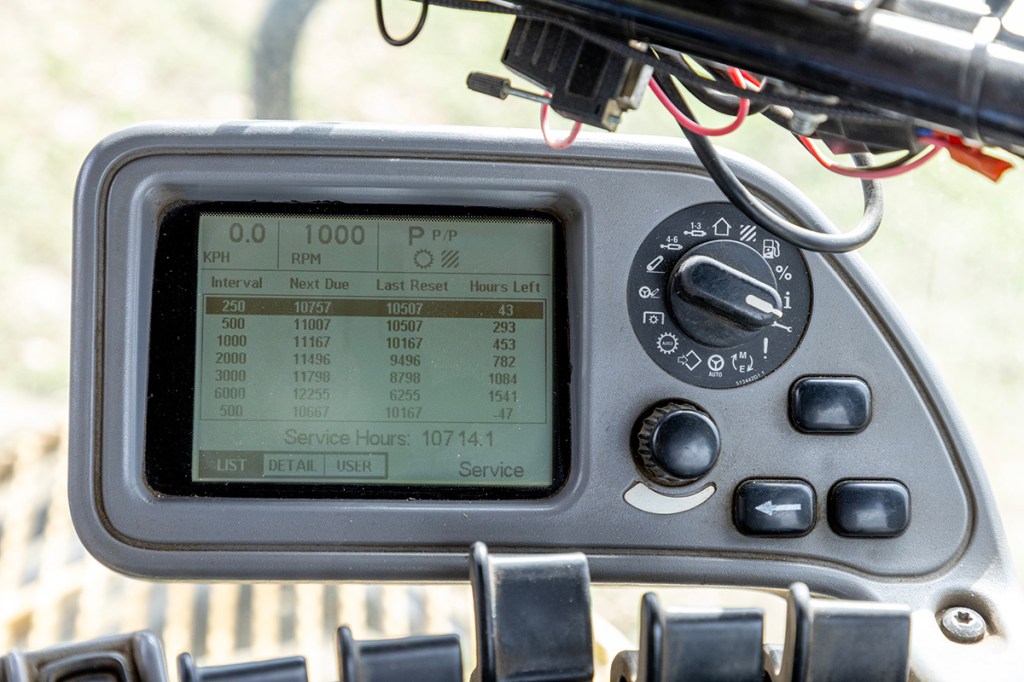
Until the farm steps up again in terms of cultivations and drilling strategies, the MT875B will continue to hold the reigns for the lion’s share of frontline duties. It requires servicing every 250 hours and sips its way through diesel at a modest 70-80 litres/hour when drilling, and is now much more economical than the 120 litres/hour slurped when pulling a tillage train combination of TopDown and rolls.
“Back then, I could empty the 1,200-litre diesel tank every day when it was working hard,” recalls operator Simon Parker. “These days, it has become much more economical.”
Equally as impressive as its performance is the soundtrack emanating from the crawler’s Cat C18 engine. No emissions strangulation taking place here, it’s one of the last of its generation and along with the exhaust note, this is a tractor that packs presence – both in terms of scale and footprint.
On its 800mm tracks, the MT875B spans a 3.4m width, measures 6.75m in length and 3.5m high. And its 3.0m wheelbase wrapped puts a lot of rubber in contact with the ground.
“It’s certainly a fair tool and I really would miss the engine, which is an absolute corker even if the cab is noisier inside than our Fendt tractors,” says Simon. “Modern tractors don’t sound quite as good as this, but they do ride better – and I wouldn’t miss the Challenger’s uncomfortable ride.”
Keeping the MT moving
As the only full-time employed operator working alongside the Chamberlain brothers, Simon reckons the Challenger has been a very reliable beast, needing only a few repairs over its lifetime. Main dealer servicing continues, with an independent engineer with Challenger knowledge brought in as required.
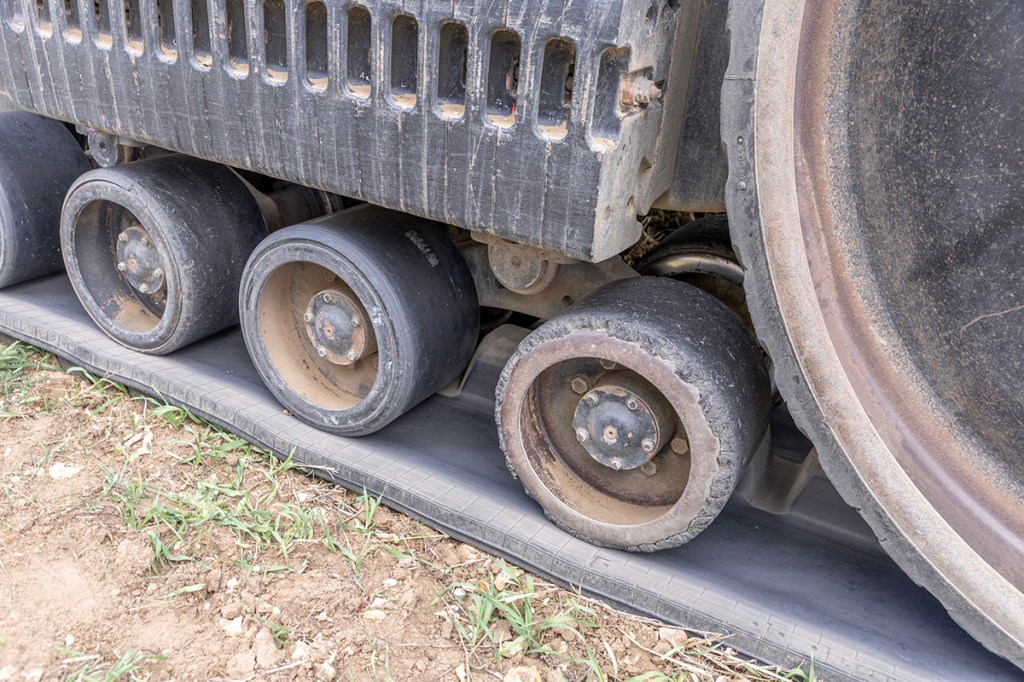
Running gear has required the greatest focus of attention, and alongside sitting on its third set of tracks, the MT875B has also needed a few mid-rollers too, which eventually lose chunks of rubber and fail. Unlike other tracked machines, there’s no clear caps on the rollers to monitor lubrication.
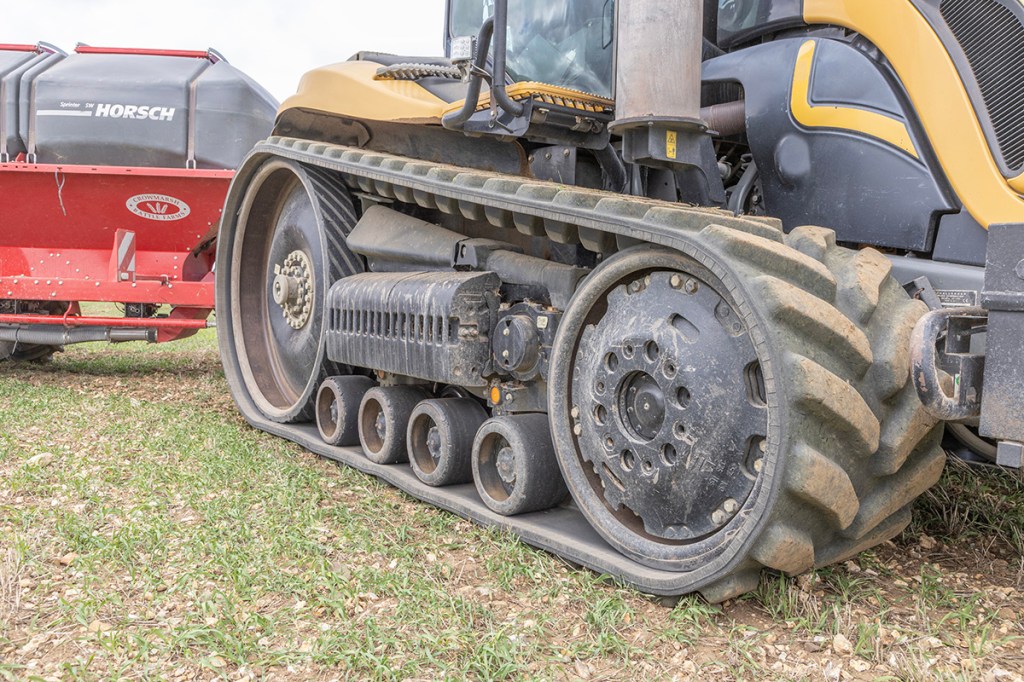
“When the tracks wear down, the vibration and shaking tends to amplify. We’ve had stuff crack from vibration and the internal rearview mirror was one of those casualties,” he says. “Wear and tear goes with the territory, but it’s a false economy to run the track bars very low. It also takes its toll on the operator, as well as the machine.”
A nod to finding additional comfort can be found on the air suspended seat, where an extra foam pad does its best to isolate Simon from the rigours of crawler life. But all that is wistfully over-looked as Simon reckons there’s nothing else on the farm that gets close for out-and-out pulling power.
“It just keeps going,” he says. “It’ll sit at 1,750rpm doing 14.5km/hr all day long when drilling. There’s a dip in rpm with every higher gear, followed by a puff of smoke as the exhaust note hardens and the tractor just piles on the forward speed. It’ll pull a house down.”
In-cab experience has taught Simon when the twin-track starts to reveal its limitations.
“It doesn’t take much moisture to stop the tractor from getting its power down effectively,” he says. “There’s no diff lock, and when we were putting oilseed rape in with the subsoiler, a light shower of rain meant it was better to pack up and go home until the ground dried off, rather than inflict untold damage on the running gear and make a mess trying to keep moving.”
When it comes to overall reliability, Simon and Tim both give the MT875B a big thumbs up.
“We’ve had a few leaking spools that needed resealing, and we’ve had a bunch of batteries and several starter motors – the 18-litre engine has one on each side of the block,” Simon explains.
Other notable expenses included a new ignition switch and key, replacement alternator and fan belt tensioner, a replacement driveshaft coupler and damper which led to an oil seal failure on the back of the engine, and rear drive wheel bearings.
A few sensors, fuel tank grommets and replacement injectors have been needed, and various hydraulic and fuel hoses have also been replaced, simply through age-related perishing.
Being vigilant is a key part of looking after what has become an increasingly modern classic. Simon recalls seeing smoke coming out under the front right-hand corner of the cab, which prompted him to reach for the fire extinguisher.
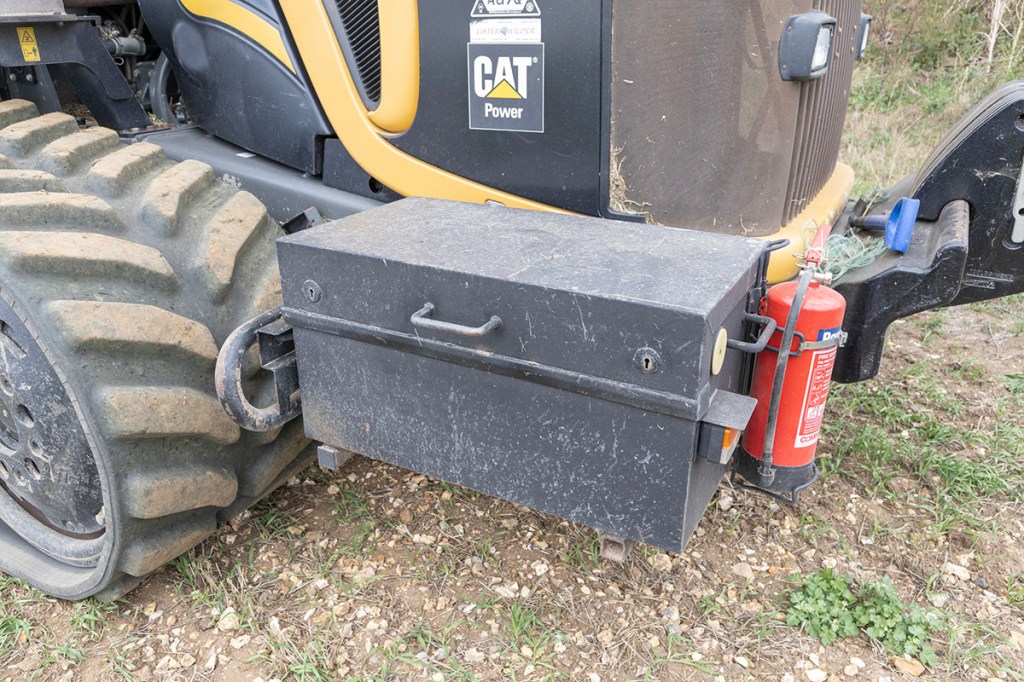
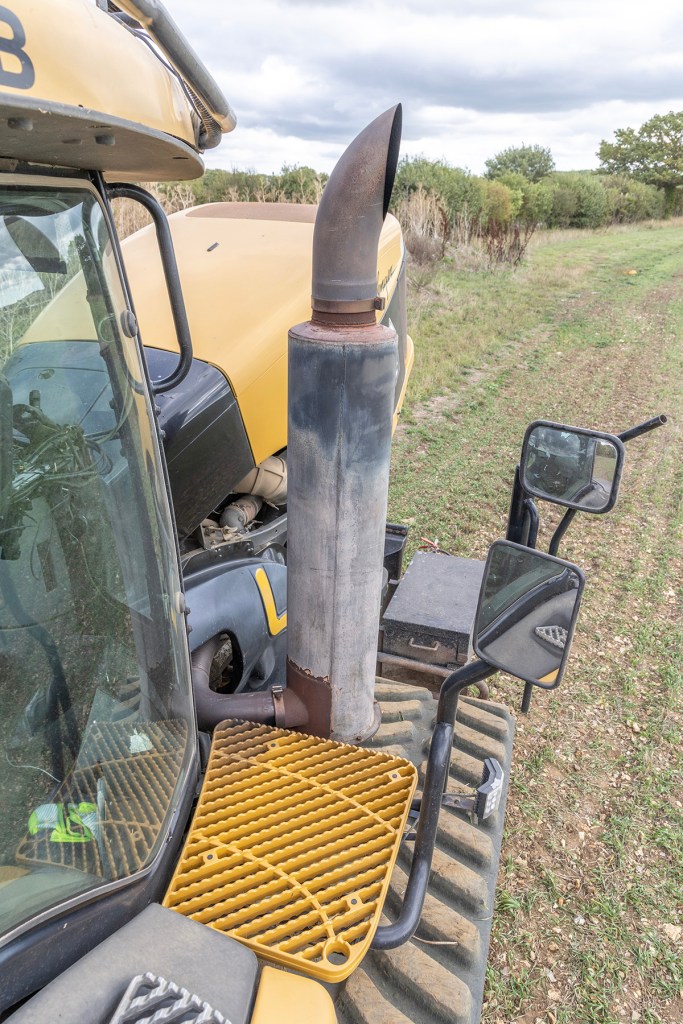
“The bottom of the exhaust silencer had started to burn through closest to the cab, and this led to smouldering debris in the chassis beneath the cab,” he recalls. “Fortunately, we caught it, and the silencer was removed and plated up, as the cost of a new one ran into thousands.”
In tech terms, the Challenger was auto-steer ready from new and until the farm suffered the theft of its GPS receiver and TopCon X30 screen, the machine would happily work off an RTK signal to deliver repeatable accuracy pass-to-pass, and also follow headland curves.
“The only good thing to come out of that theft was an upgrade to an X35 screen and a new receiver, bringing automatic headland turns to the operating experience,” says Simon. “It’s made life very easy, though it’s as tight a turn as we’d want to make when drilling. It’s much kinder on me and the tractor when discing, as I can miss one or maybe two passes and make wide, gentle turns to minimise any surface disturbance.”
Field sizes range from 3ha to 130ha, giving the Challenger plenty of opportunity to lay its tracks flat on the ground and make long straight runs.
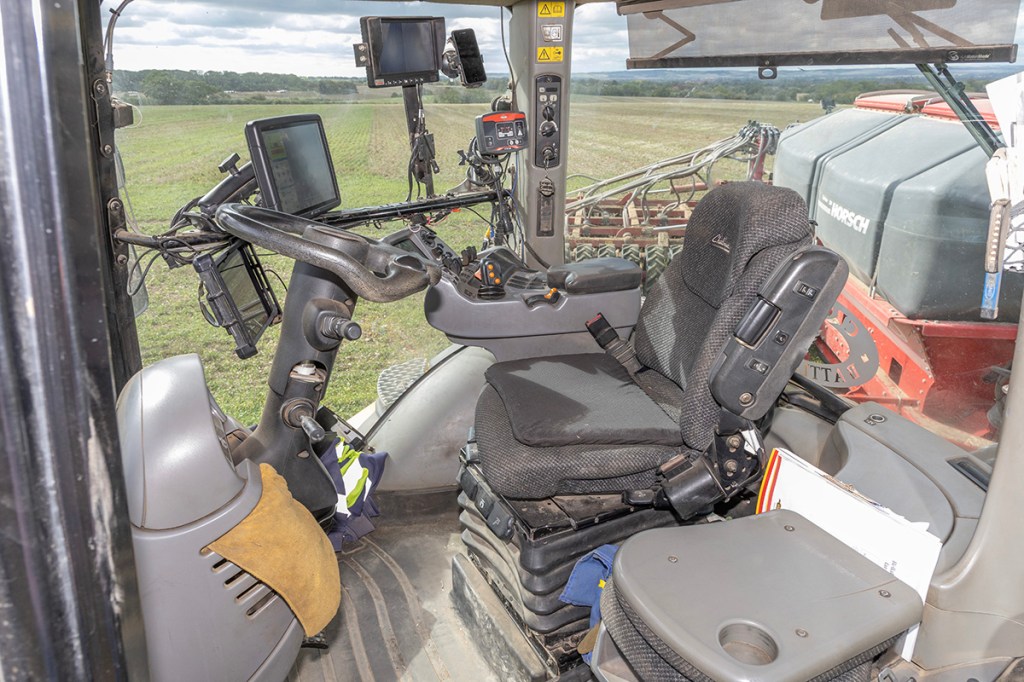
Simon notes that the Challenger’s cab, while roomy, is not the best at reflecting heat, despite the air-conditioning working at capacity in doing its best to manage temperatures.
“It can get warm in the cab,” he says. “There’s a lot of heat that comes up through the floor from the transmission and hydraulics, and heat-soak by the bottom of the front window, from the exhaust system, is really noticeable.”
Spool priority – one of the more favoured aspects of modern tractors – is none-existent on the MT875B’s six double-acting items. And Simon is aware that the drill’s fan speed can dip if too much is asked of the hydraulic system when pulling in and out of work.
“Spool valve float is your friend,” he says. “It’s one of those quirks of using older machinery where you have to find little work-arounds every now and then, rather than rely on a touchscreen terminal to solve the problem for you.”
Summary:
When Crowmarsh Battle Farms bought its MT875B, few would have put money on the tractor staying as frontline power for nearly 20 years. That the business has made the most of depreciation while managing its running costs with a combination of main dealer servicing and independent engineer repairs, has reinforced that decision to invest in the right kit for the job. It is proof that with the right approach, well-looked after equipment will also look after the business.
Geoff Ashcroft
For more up-to-date farming news click here and subscribe now to profi and save.