

We return to Brixworth Farming, a 2,000ha arable joint venture business based in Northamptonshire with six farms operating in collaboration to see how it has adapted to changes over the last six years.
KEEPING IT BRIEF
- Large joint venture farming company in Northamptonshire that has restructured cropping under SFI
- The machinery fleet has been fine tuned for a lower acreage of combinable crops and more flexibility
- Technology is important for management but there are still challenges with a mixed fleet
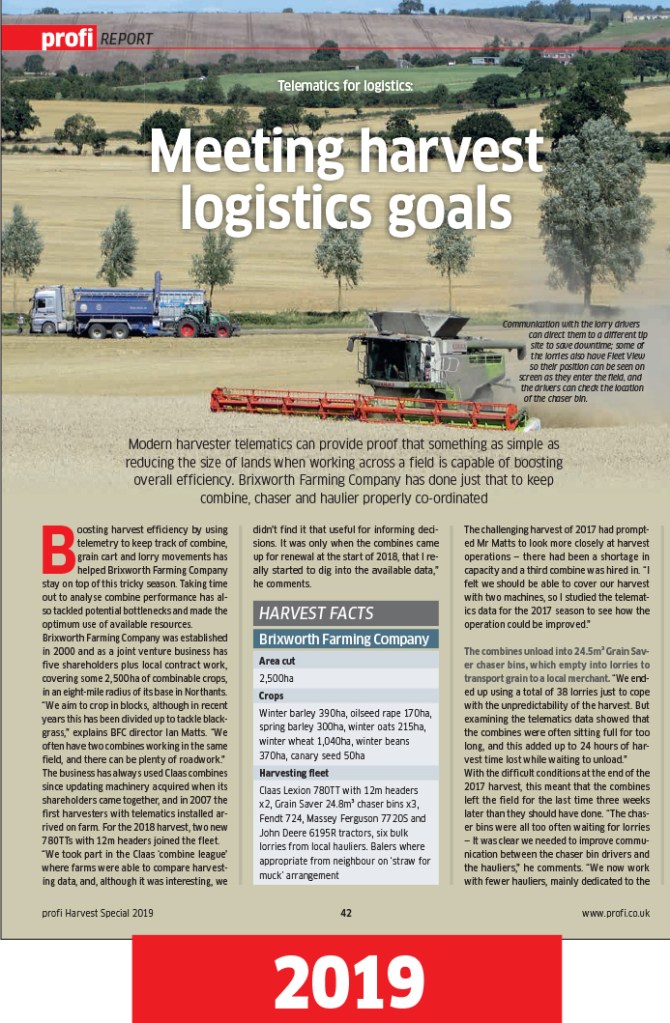
When profi last visited the farms in 2019, the focus was very much on growing cereals and in maximising efficiency by using emerging technology to assist in business management. Since then, there has been considerable change, with the economic climate and government policies making this transition an ongoing process across the business.
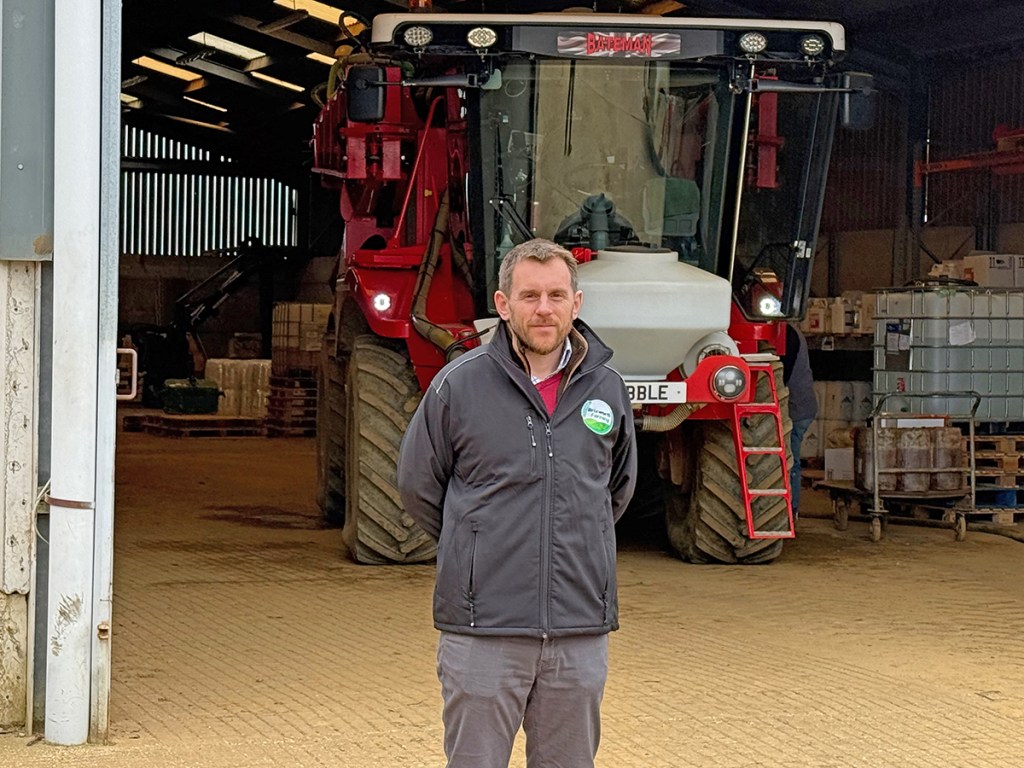
“We’re still farming a similar total area of land,” explains managing director, Ian Matts. “But we’re a lot more involved with SFI and mid- to higher level stewardship schemes. We’d consider ourselves more as a land management business than a combinable crop business now, and a significant proportion of the land is under stewardship of some form.
“Who knows where it will be going forward, but currently there’s around 350ha across the six farms in NUM3, plus another 650ha in stewardship of some form, be that wild bird seed, AB15, or nectar mixes.”
He adds that part of the 650ha of stewardship is outside of the rotation, so it is managed for the farms as they require.
“However, for NUM3, all six farms were able to enter the same scheme at the same time to be able to incorporate it as part of a rotational option within our crop pool. Which can be a bit of a challenge in itself!”
With cereal cropping reducing, some restructuring has been required, he explains. “For example, we’ve historically leased two combines, but we purchased one of them, so we have more flexibility over how long we keep it. It’s trying to get the balance of the machinery right for the size of the business.”
One uncertainty is what will happen to the 350ha of NUM3 as the SFI scheme is redeveloped in the next couple of years, plus potential changes to the management of the 650ha of stewardship land.
OSR gets chopped
The NUM3 regime replaced oilseed rape as a break crop, points out Ian. “As with many farms we’ve had any hit and miss years with OSR so we decided it was too high a risk. It’s given us the opportunity to look at utilising catch cropping and cover cropping to get more diversity into the rotation as we were cereal-heavy.
“The original NUM3 regime has allowed us to put a cover crop in in the winter, spray that off to control blackgrass and then put NUM3 in later. So effectively an annual fallow with two cover crops in it, giving an opportunity to control blackgrass, guarantee some income and begin to improve soil conditions.”
One objective of this was to allow earlier wheat drilling the following autumn, says Ian.
“We were heavily down the delayed drilling route, which in the last couple of years has been very challenging. So, we needed to bring some of that forward and the idea was to be able to drill straight into the cover crop without disturbing soil.”
Good blackgrass control in the previous year then enables half of the drilling to be brought forward, while the remaining proportion of wheat goes in after a catch crop following beans.
“This allows us to do some cultivation for weatherproofing, plus the catch crop sometimes – although not always – helps improve the ability to drill later,” says the manager who is looking forward to seeing the results of that this year.
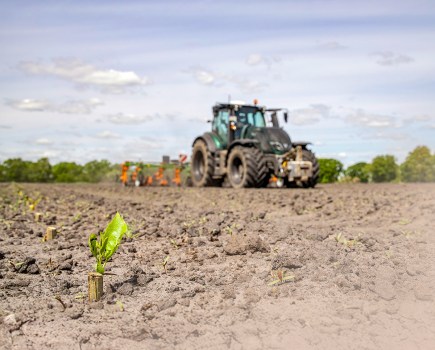
“Last autumn was the first year of drilling into the NUM 3, and the soil was left in fantastic condition. However, I think we were helped by the fact it was dry enough to be able to drill straight in.”
One challenge is high volunteer pressure, he comments. “I think we’ve been able to control it reasonably well, but the concern is if it lasts into the following crop of beans then we’ve got limited options for controlling volunteers in that crop.”
“I’m reasonably happy, but there’s a big caveat that last autumn was quite kind, so it’s not true test of the system. Plus, in terms of longevity, we don’t know whether we’re going be able to continue to do that beyond the three years of the agreement that we’ve got.”
Eggs in more baskets
Improving soil conditions and their ability to support machinery has been a long-term goal, he comments, but the sheer volume of rain and clay soils remain challenging. And the next consideration is that not all of the farms will get back into NUM3 or similar schemes.
“So, I’m looking at a break crop to go back into the rotation and forage rye for a new AD plant that has opened locally is a possibility.”
The ongoing uncertainty means that the business is holding back on making major changes to the machinery fleet.
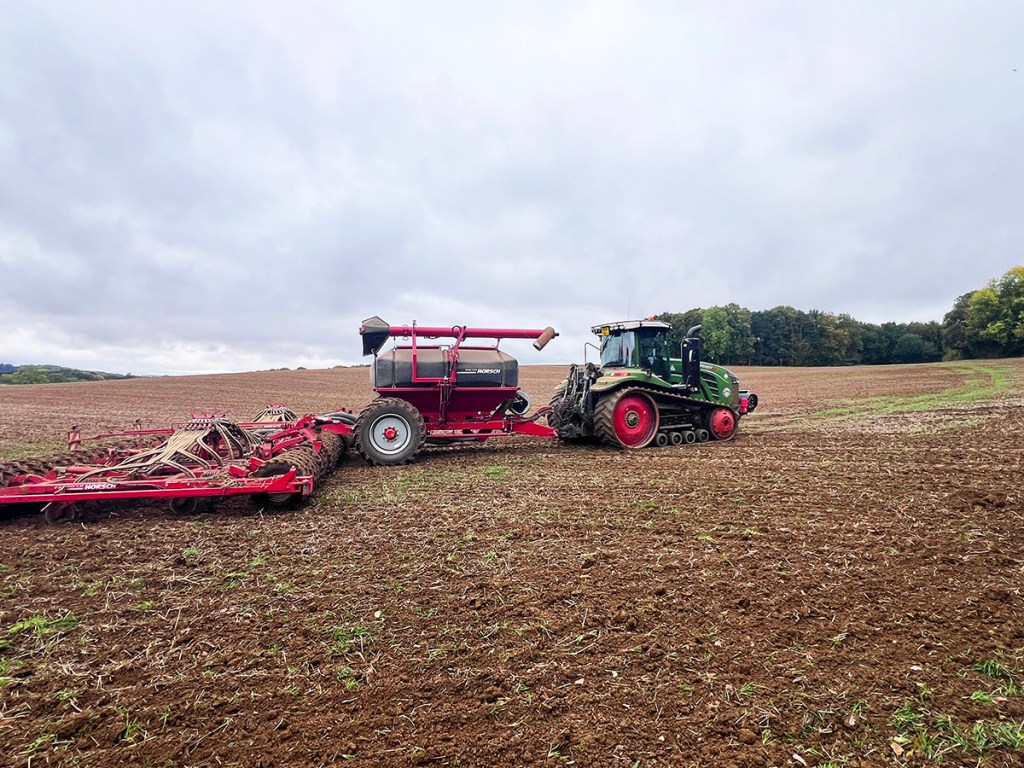
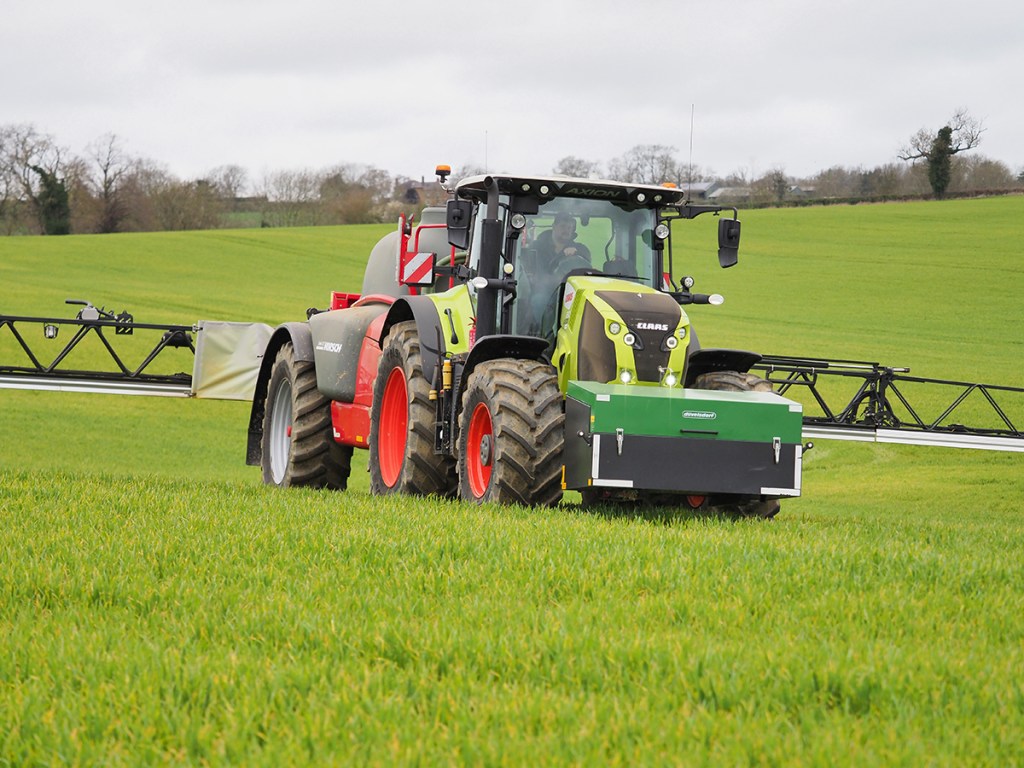
“We’ve tried to do small tweaks with what we’ve got,” says Ian. “There were two self-propelled sprayers and we were hiring in a tractor for harvest, so we’ve traded one sprayer in for a trailed Horsch Leeb 6LT and an additional tractor, which has given more flexibility. And we’re not having to maximise the use of a second self-propelled sprayer.”
Combine conundrum
Pressure on drilling remains as the land is drilled twice a season but has eased on combining to some extent he suggests.
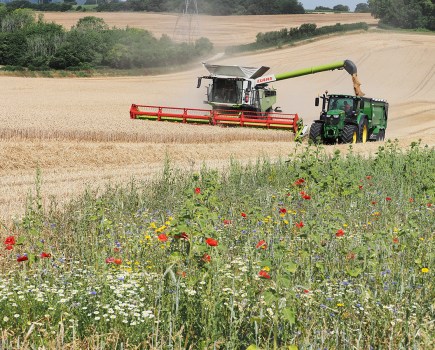
“Although we are combining less, it’s coming more all at once because we’re losing the early start to the harvest. The way that Septembers have been in the last few years, suggests it might not be too much of a problem,” he reckons. “However, there’s always a chance, that if the weather goes against us, there will be quite a lot to do in a short space of time at the wrong time of the season.”
Another dilemma, he adds, is there is too much work for one combine but not quite enough for two.
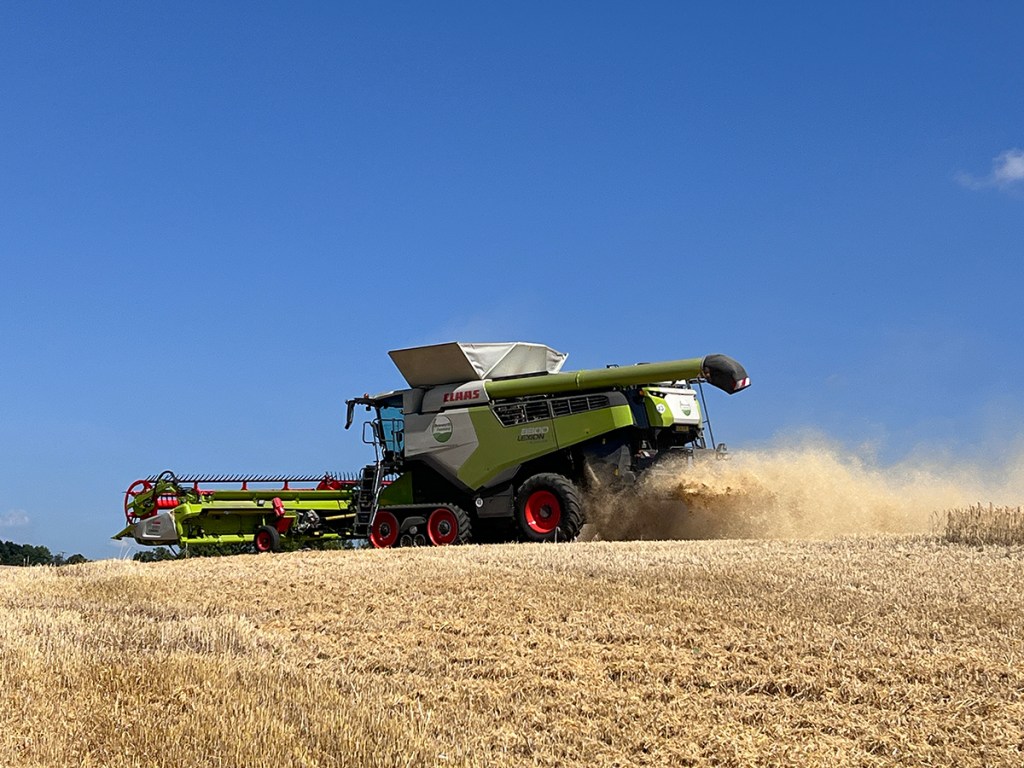
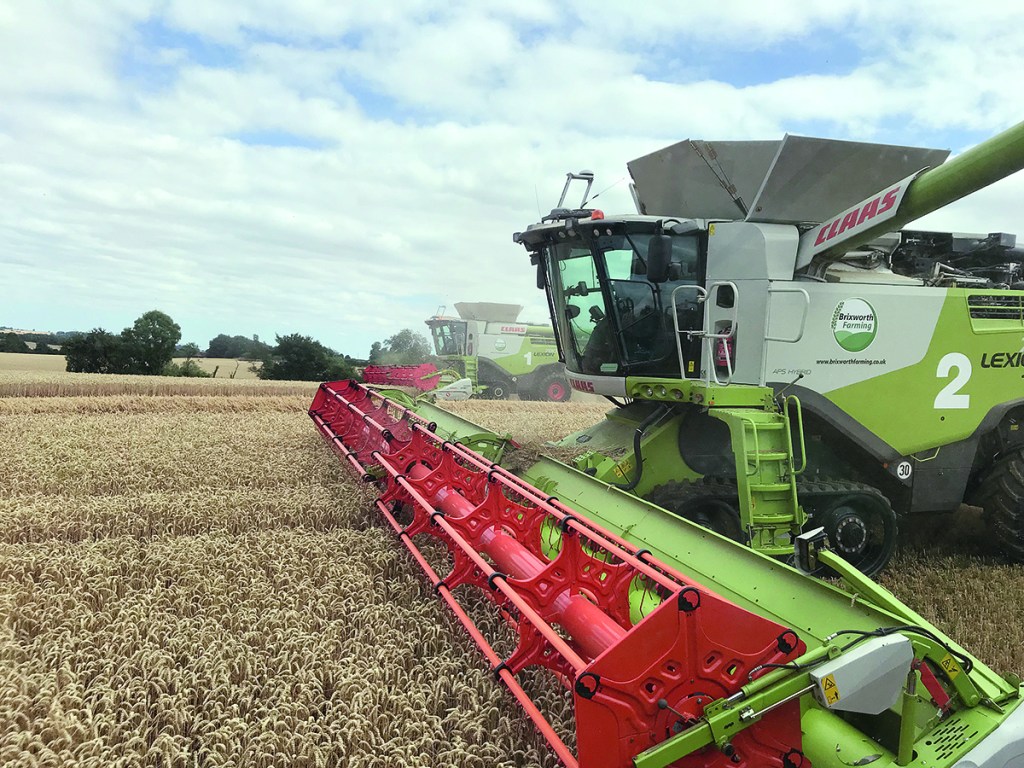
“We kept the Claas Lexion 780 that we’d had on lease for three years and changed the other one to a Lexion 8800 with Convio 1230 header in 2024. But going down to one is still an option, and I’ve used telematics data to study that. Daily reports allow me to look at the previous history for the different years and get an understanding of how long harvest is likely to take.
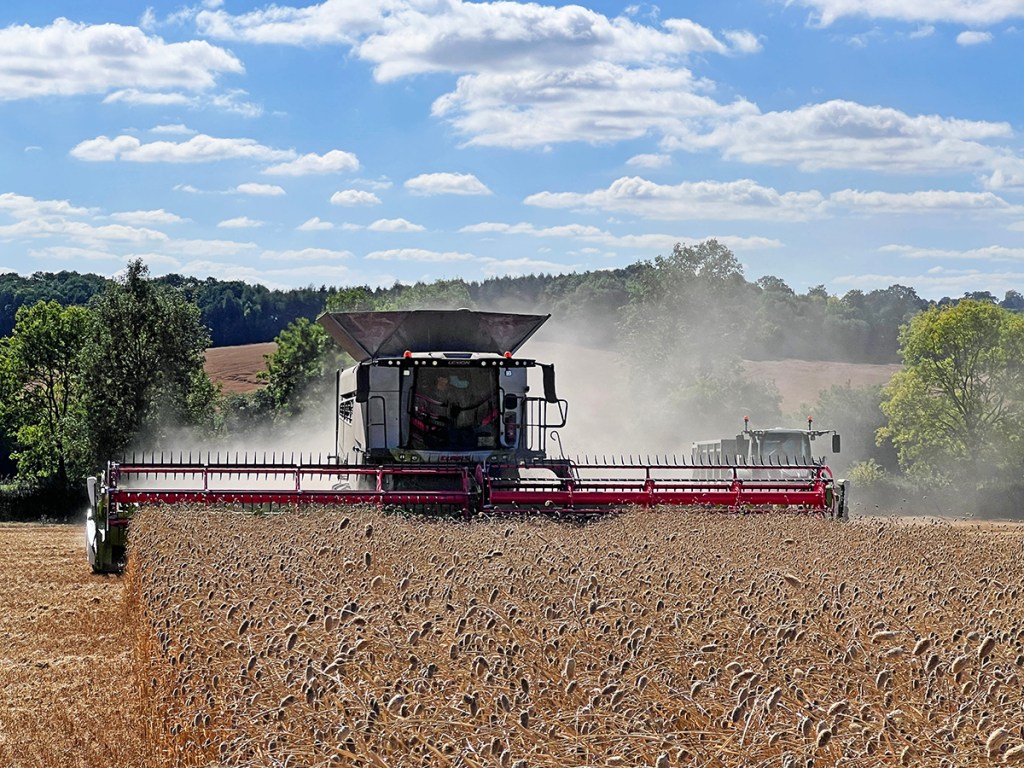
“It enables me to compare ownership versus contract costs, and consider getting rid of the 780, keeping the 8800 and using a contractor.”
However, he points out that the final decision is waiting on further clarity on the future of SFI and how the JV partners might react to it.
Drilling into details
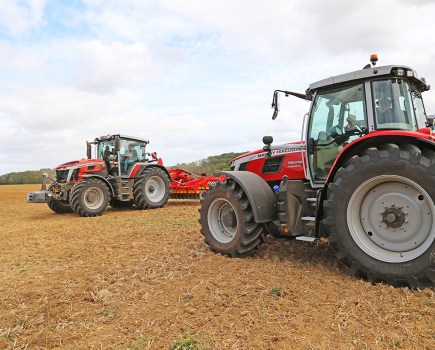
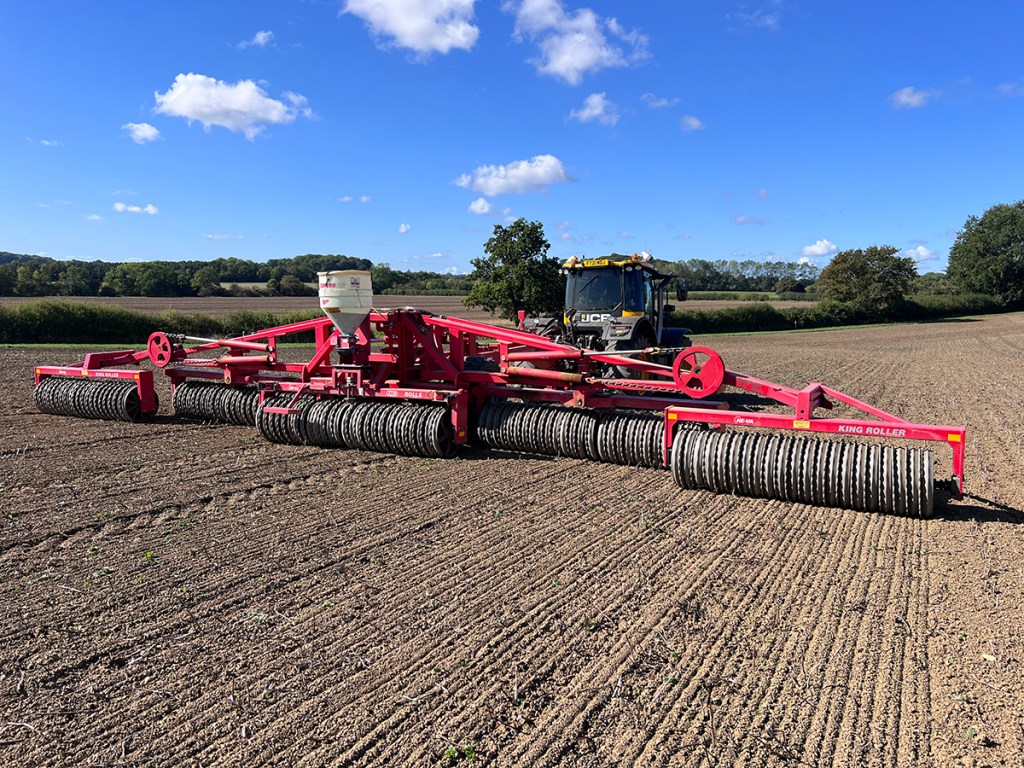
The existing drill set up, with an 8.0m Väderstad Rapid and 12m Horsch Sprinter, is well suited to environmental crops, with the Väderstad taking on the lion’s share in the spring.
A seeder unit on a Sumo Trio is used for catch crops, while a Horsch C08 comes in handy where a tine drill is needed for putting in cover crops in the summer and drilling winter beans.
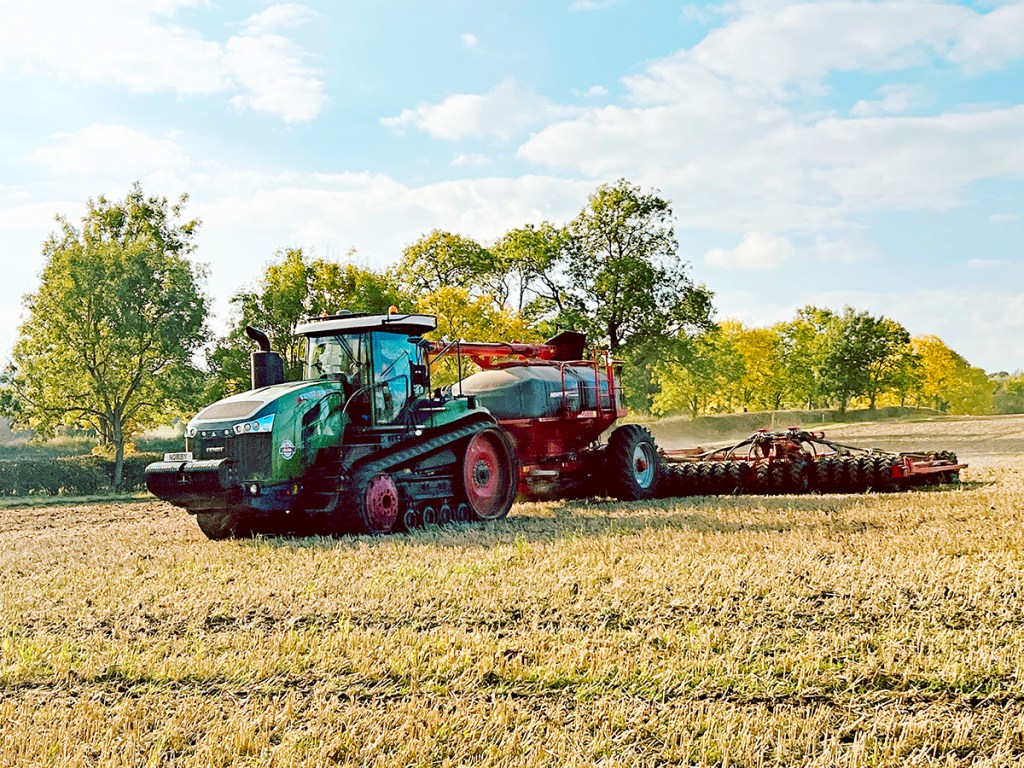
“We had some grant funding to put a seeder on a set of Carrier discs, but we found that as we were wanting to drill late, it wasn’t doing enough cultivation to be reliable in a wet season, so we moved back to the Sumo Trio.”
Fertiliser is now geared towards granular application, although liquids are still an option.
“The change to the sprayer set up and not wanting to compromise the spraying favours using spreaders, alongside the work rates that can be achieved on the day. And because the land is spread about, we don’t have tanks everywhere so there was never the ability to go fully liquid.”
Loading and applying bag fertiliser is also simpler in terms of staffing, he adds.
Farming tech
Technology was a big talking point in profi’s last feature on Brixworth Farming, and Ian comments that compatibility is an ongoing issue.
“We have three tractors of different colours – a Claas, a Fastrac and a John Deere, plus a Fendt and an AGCO Challenger, and the Claas combines.
“So it’s a mixture of manufacturers, the majority of whom offer their own solution. It takes a lot of time to get to grips with one solution, let alone three different solutions, so to be honest I’m not that familiar with JCB or John Deere offerings.”
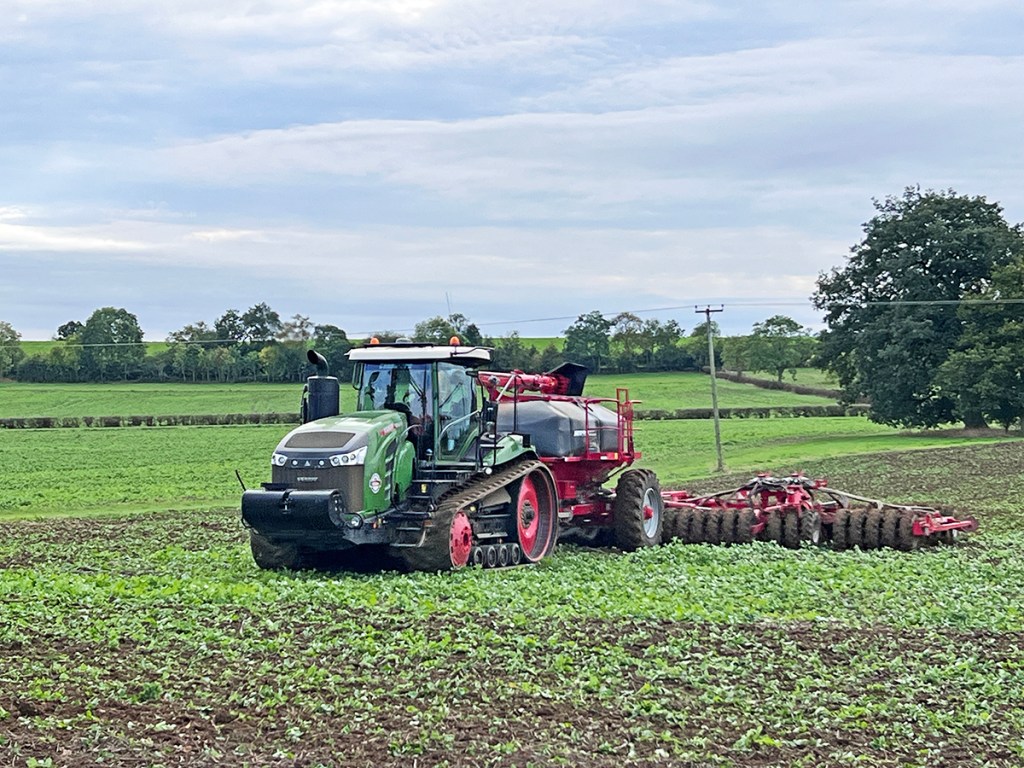
Topcon software is used for direct file transfer to machines, such as variable rate drilling plans to the Challenger.
“We also keep spreadsheets of basic data like fuel usage so I can get very crude information through that route, rather than specific in-field data. I don’t really feel that we are much further forward, and you also have to consider the cost of this type of technology.”
“Most of our data capture centres around harvest and therefore I focus on the Claas system on the combine.
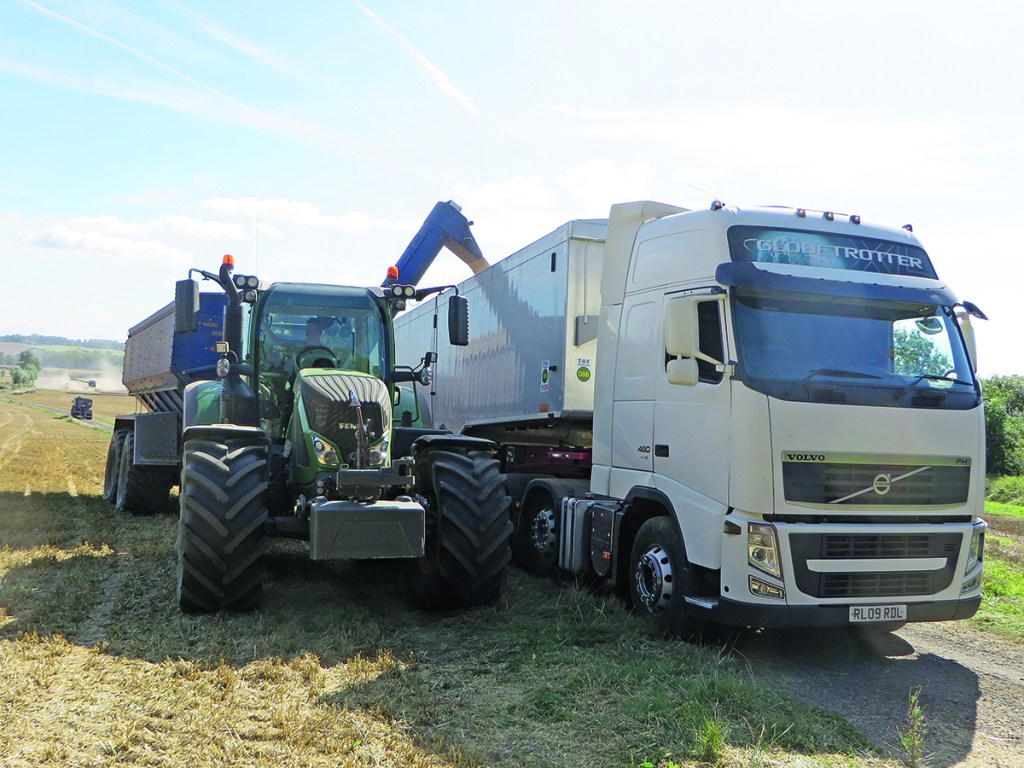
Brixworth Farming was an early adopter of Claas Field View telematics to increase the efficiency of grain haulage operations with multiple connected combines in the field and chaser bins loading lorries. But disruptions to haulier arrangements during COVID brought a halt to progress.
“However, I can still get a total overview of the efficiency of the operation and telematics gives me the ability to take the data out on a daily basis. I can then plot the harvest progression through the year and compare against other years to see how things are going and whether we’re going to need to look at additional help.
“In the current climate it also helps to assess harvesting capacity and the role that contractor support could play in the future.”
Staffing comprises three full-time employees plus seasonal help; placement students were employed when the combinable crops area was larger.
“The aim was to develop a flow of individuals that we could bring into the business in the future, and one of our current team joined us after completing his studies at Harper Adams.”
Looking to the future is an important part of Ian’s role, and he comments: “I was asked to speak at a conference earlier this year about collaboration with machinery and labour, and I feel we have a proven track record in that. As an industry we need to collaborate more.
“With the changes that are likely to take place in the next few years, we’d like to think we’re in a position to have discussions should people be interested in working with us. But it’s got to be right for both parties.
“I think that’s where true collaboration is different to some of the systems of share farming have been available in the past.
“We’ve also kept some flexibility in the system at the moment should more opportunities in contract farming arise.
“But the challenge is knowing where to go in the in the short term: do we maintain the ability to increase the area or do we go for a full restructure to account for what we are currently farming and the uncertainty of SFI? The inclination is to hold out with what we’ve got.”
Jane Carley
For more up-to-date farming news click here and subscribe now to profi and save.