
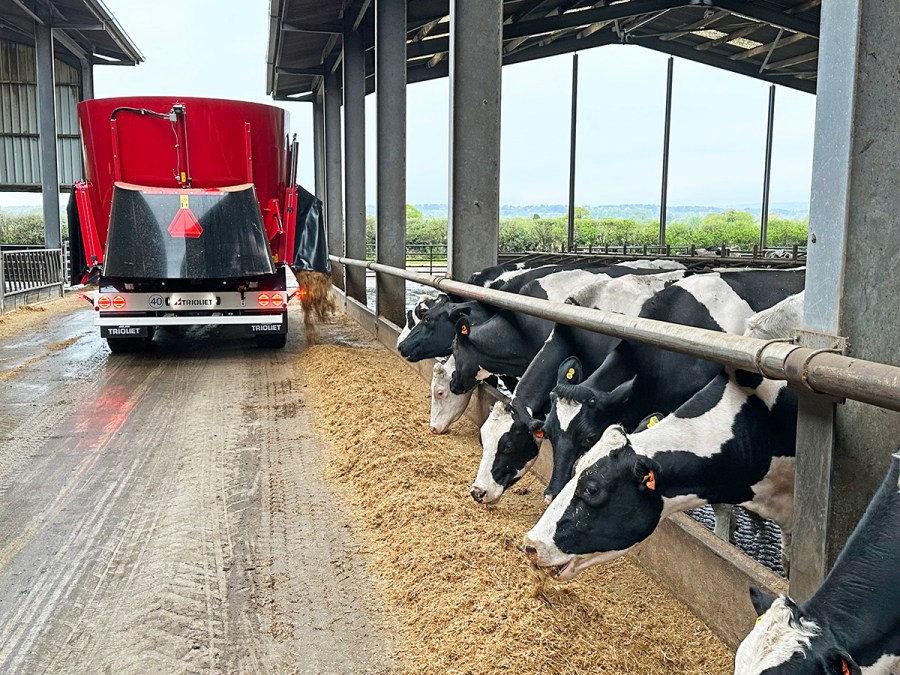
Eliminating the need to tie up a telehandler for loading and capable of manoeuvring around most modern yards efficiently while mixing on the go, there are a number of self-propelled diet feeder options on the market. We asked manufacturers for their views and the spec offered by their most popular model.
Still a comparatively rare sight on UK farms, self-propelled diet feeders can bring a range of benefits for those businesses which are able to meet their high initial purchase price. And it’s not necessarily just large herd businesses that are becoming converts.
Indeed, diet feeders are being purchased for a wide range of herd sizes, suggests BvL’s John Molton. “While 500-800 cows would be the norm, we’ve seen them chosen by farms with anything from 200-1000 animals.”
Equally he suggests it may not be the solution for every large scale farm. “If the farm is bringing silage in and tipping it in a pile it may be easier to load it into a large trailed wagon; it’s ideal if taking direct from the clamp. Some farmers are also concerned about the resale of a very big self-propelled machine.”
He comments that while 13-17m3 single auger machines still sell well, the market is moving towards 23-25m3.
“Customer perception is that this is not big enough for a large herd, but when they see a demo they realise its capacity, along with the increased accuracy of a self-propelled machine.”
However, every farm is different – one BvL customer in Cheshire now has two self-propelled machines for its two units, and to suit the multicut high protein silage being processed, the company has fitted special blades to the augers.
John suggests that recording and weighing systems are much better on a self-propelled feeder, giving an improved ration and saving costs.
NIR (near-infrared reflectance) systems which record the dry matter of the feed as it is being loaded and adjust the ration accordingly are a game changer, he reckons. “As farms choose precision to improve milk yields these will become more popular, although they are costly.”
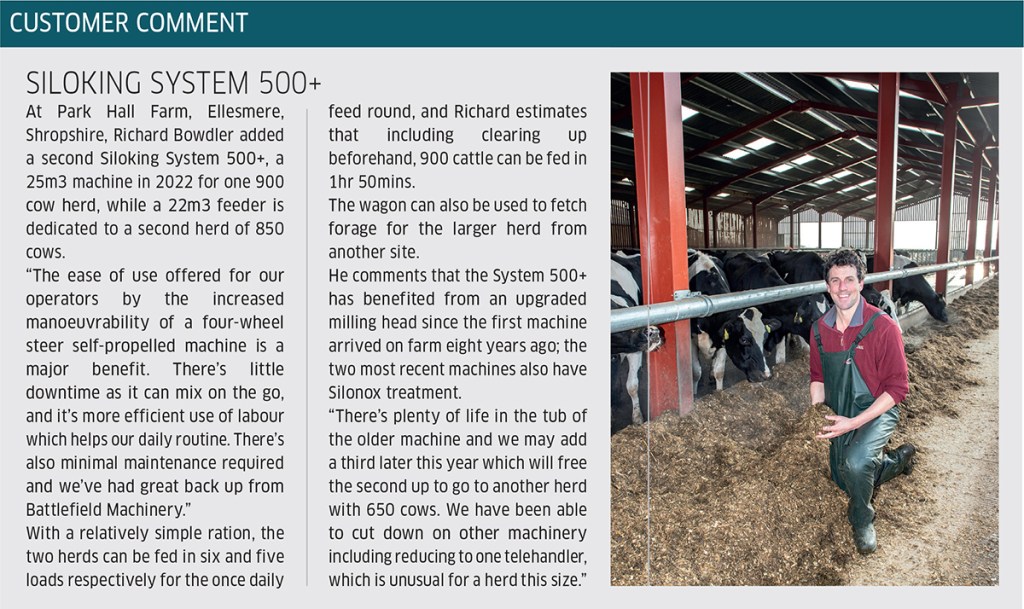
Kverneland’s Dave Perry explains that while the 19-25m3 Siloking 500+ remains the best seller in the UK, there is increasing demand for the 25-32m3 1000+ models.
“Most of our customers have 1,000 cows or more but smaller herds can benefit; our 19m3 trike is popular for 400-cow herds.”
Chris Chance, UK regional sales manager for Keenan says that demand for the company’s self-propelled systems is generally coming from larger units of 500 to 2,000 cattle.
“Typically, they have multiple feeding groups, high forage volumes, and more dispersed layouts. On these farms, feed costs and feeding time are substantial, heightening the need for high-quality TMR precision, speed and capacity,” he points out. “Overall, UK farmers are moving away from simply asking, ‘What size machine do I need?’ and towards a more strategic question: ‘How can I make my feeding system more accurate, efficient, and cost effective?’”
Trilolet’s Martyn Northover comments that drivers towards self-propelled machines include more focus on better silo management, striving for higher feed efficiency conversion, load accuracy and reduced foreign object contamination risk.
Chris Chance agrees: “More accurate loading improves diet consistency, helping maintain rumen stability. When the machine is fitted with NIR analysis, real-time adjustments can be made to the ration based on forage quality and dry matter.”
Cost savings
Telehandler costs and availability can be a factor in choosing a self-propelled machine, suggests Dave Perry. “The farm might have a suitable loader but it could be taken up with other tasks. If the ingredients are spread around different places on the farm, loading can take a long time with a telehandler.”
He adds: “We have seen customers save up to 46% on time compared to a trailed machine, partly because the driver is not having to get in and out of the tractor to load. Ingredients go in steadily, so the machine is not having to work through big blocks of silage, reducing mixing time. You can also drive around the yard as it is mixing as it is not pto driven, making more productive use of time.”
With less travelling back and forth from the feed source to the diet feeder, a self-propelled machine clocks up less hours and consumes less fuel, points out Chris Chance.
Martyn Northover adds: “We’re constantly trying to drive for more efficiency and greater marginal gains in UK dairy operations nowadays, therefore I feel the market is growing in the UK for self-propelled mixers due to reduced total feeding time though fast loading/unloading and less empty movements, and gains through labour and fuel savings.”
Dave Perry suggests that deprecation on a self -propelled machine can be £8-10/hr less than a trailed feeder/tractor/telehandler combination, while service costs are also less.
John Molton reckons that a BvL wagon could run for 10,000 hours if well maintained and operated but 5,000 hours is more common, with a buy back guarantee offered to those replacing with another BvL.
DavePerry points out that size and spec impacts on resale value. “We get good residuals for Siloking machines and many of our dealers will refurb, reline and repaint a machine. But there will be less demand for very large or bespoke machine.”
Other benefits
“You get a much cleaner face with the milling head of a self-propelled machine than a shear grab,” comments John Molton. “A block cutter will take 5ft of grass in one cut, while the milling head just shaves a small amount across the face.”
BvL’s design uses a profiled roller with asymmetrically arranged comb teeth for smooth removal of material.
Dave Perry adds that as the tines on a block cutter lift up, they can put air into the clamp, leading to secondary fermentation.
“Milk yield can improve from clamp face management alone.” He also points out that the practical challenges of loading a trailed machine can mean that it is mixing for too long, reducing quality.
He comments that customers will often target one reason for going self-propelled but find other benefits.
“One customer was looking for time savings, but the ease of mixing and feeding means that he is now feeding high yielding cows twice a day and increasing output.”
Jane Carley
For more up-to-date farming news click here and subscribe now to profi and save.
WHO IS SELLING WHAT
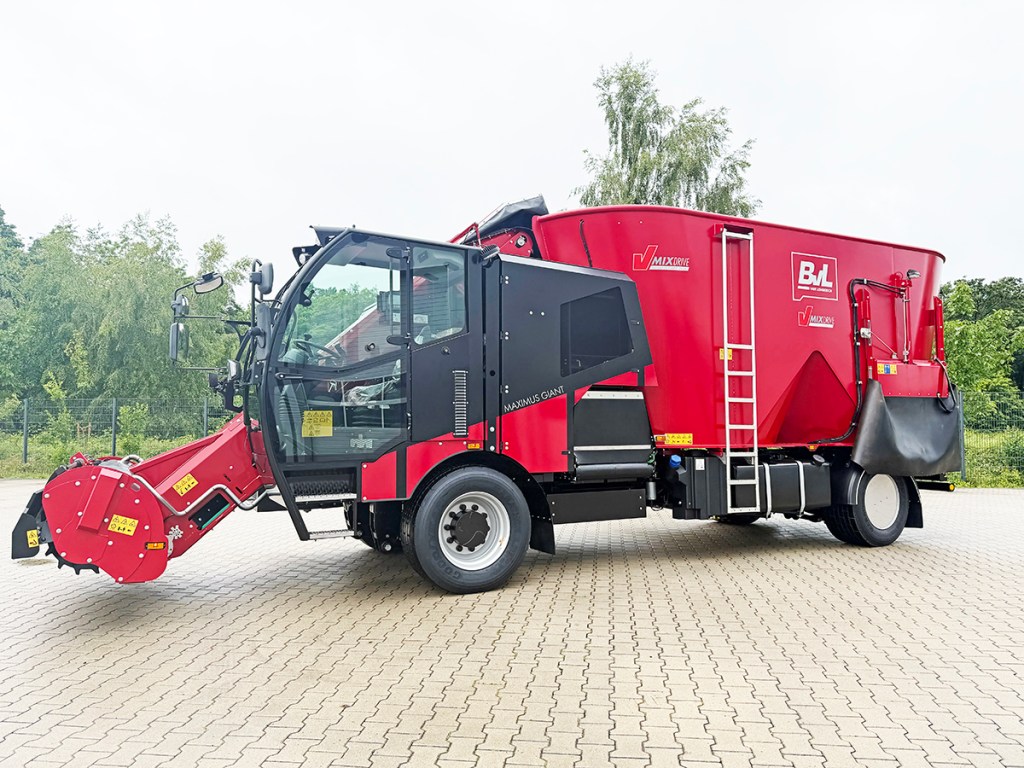
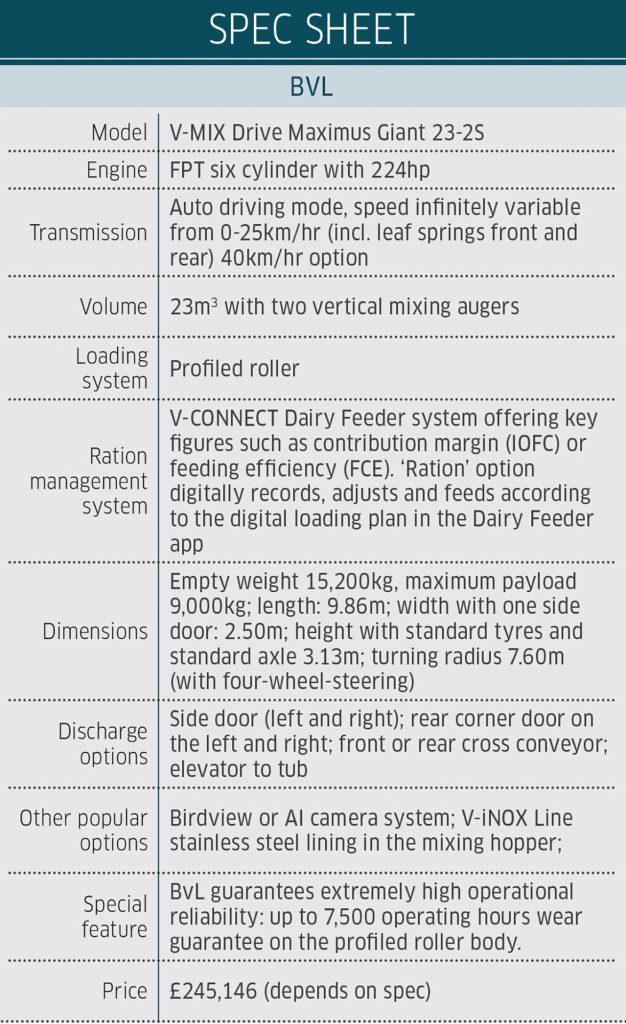
BVL
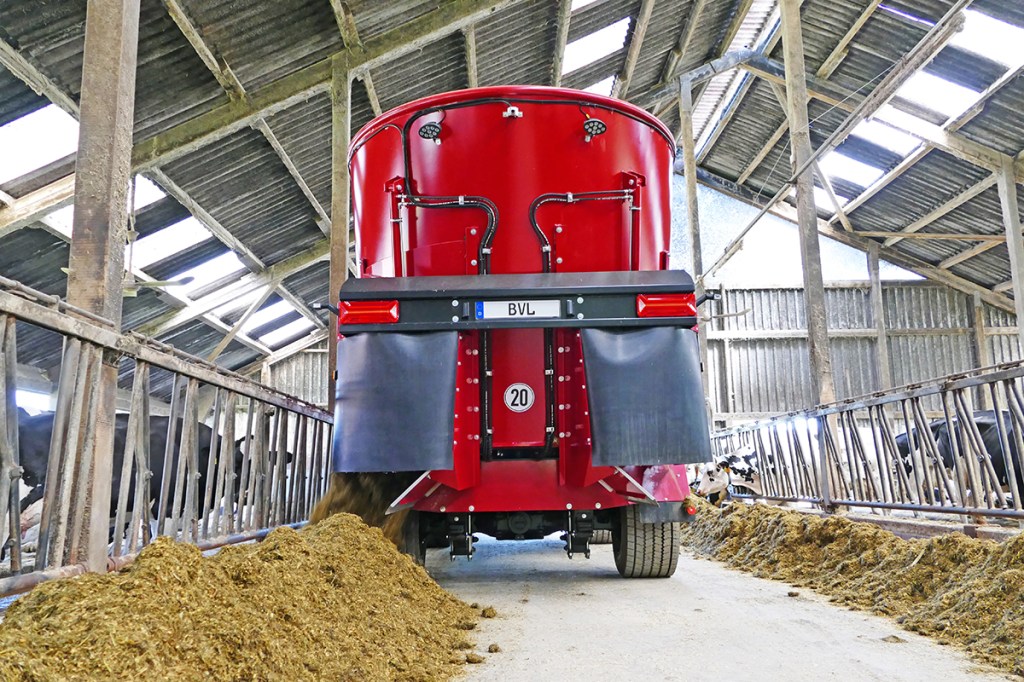
A number of standard and optional features are picked out by BvL as being especially popular. This includes a compact design and optional four-wheel steer for manoeuvrability; all-wheel drive can also be specified.
Self-propelled machines have recently received a facelift with black mechanical details while revised geometry for the milling head allows the machine to remove feed from deeper in the clamp and increases removal capacity by 10%.
KUHN ALTEA
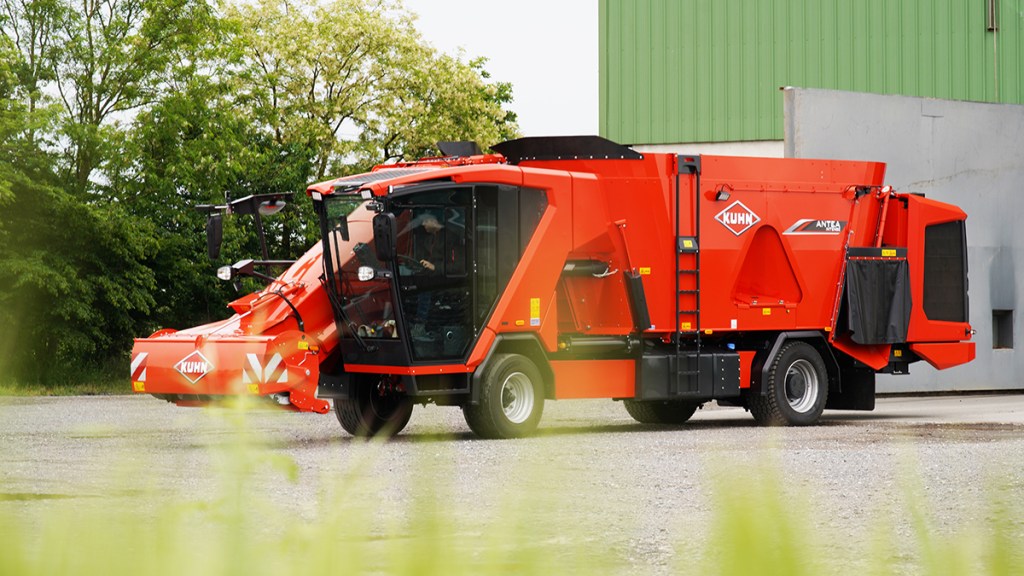
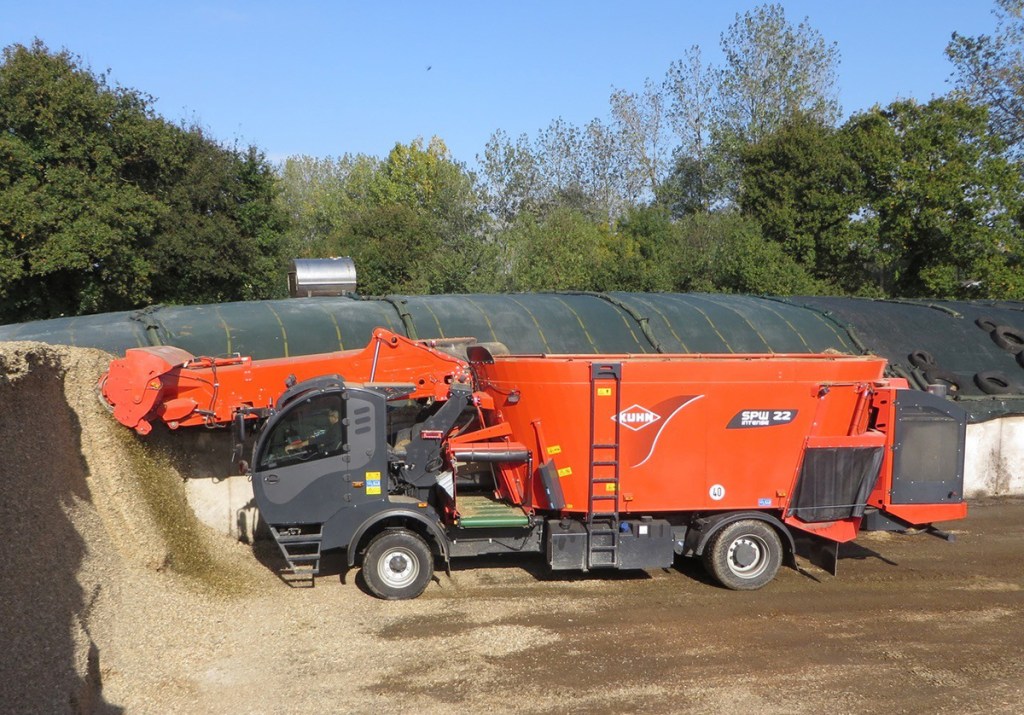
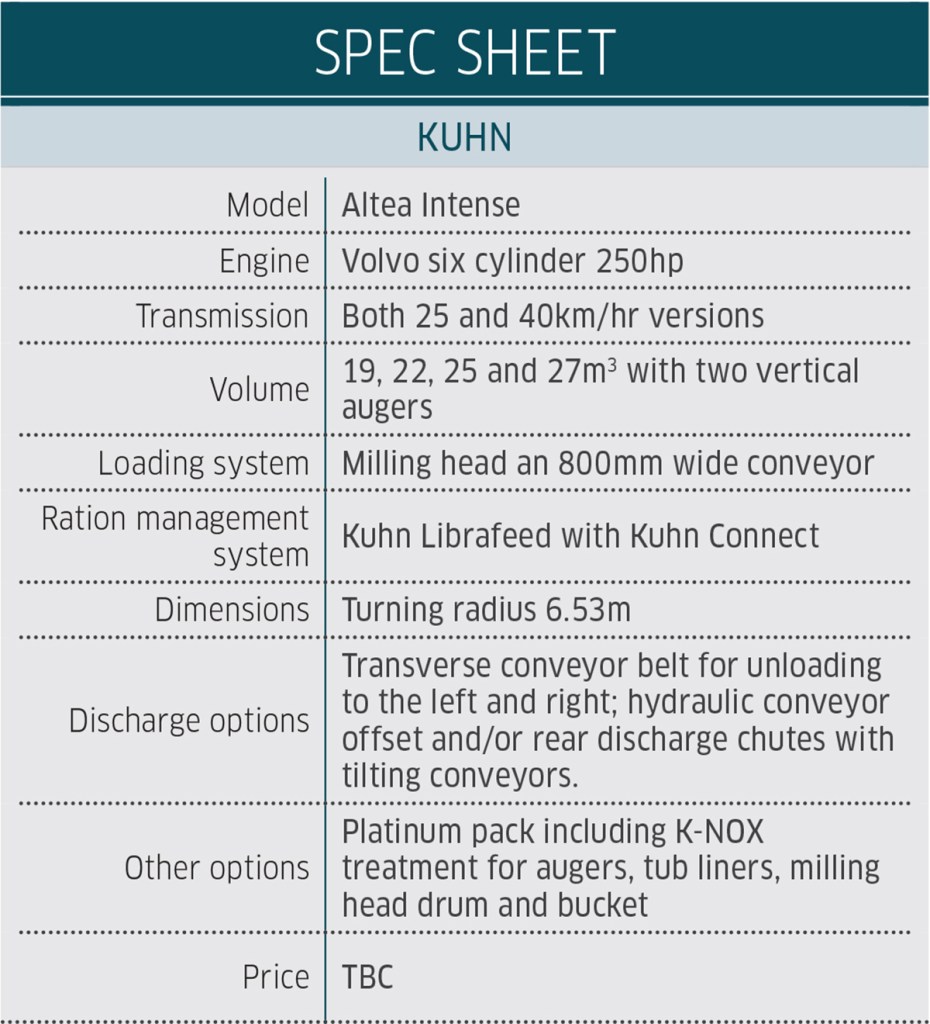
Kuhn introduces its new Altea Intense 2.CL self-propelled mixer wagon this autumn, replacing the SPW Intense. It is available with twin vertical augers and capacities of 19, 22, 25 and 27m3 and can be specified in 25 or 40km/hr versions.
Features include the new Librafeed integrated weighing device which allows weighing information and the machine’s hydraulic systems to be linked to assign different parameters to each ration or even to each ingredient (milling speed, mixing screw speed, counter-knife operation, mixing time, etc.). Feeding tasks can be controlled via a smartphone or computer and the system also offers reporting functions for feed management. The Librafeed Smart version is included in the package for five years.
Other new features include the E-Visiospace cabin with pedal control of forward movement, designed to free up the joystick for functions such as controlling the loading, mixing and distribution) cycle. It also offers a new generation control console with 14in colour touchscreen and large glazed surface for improved visibility.
The 200hp milling head feeds an 800mm wide conveyor, electronically controlled for automatic speed management based on forage density.
TRIOLIET
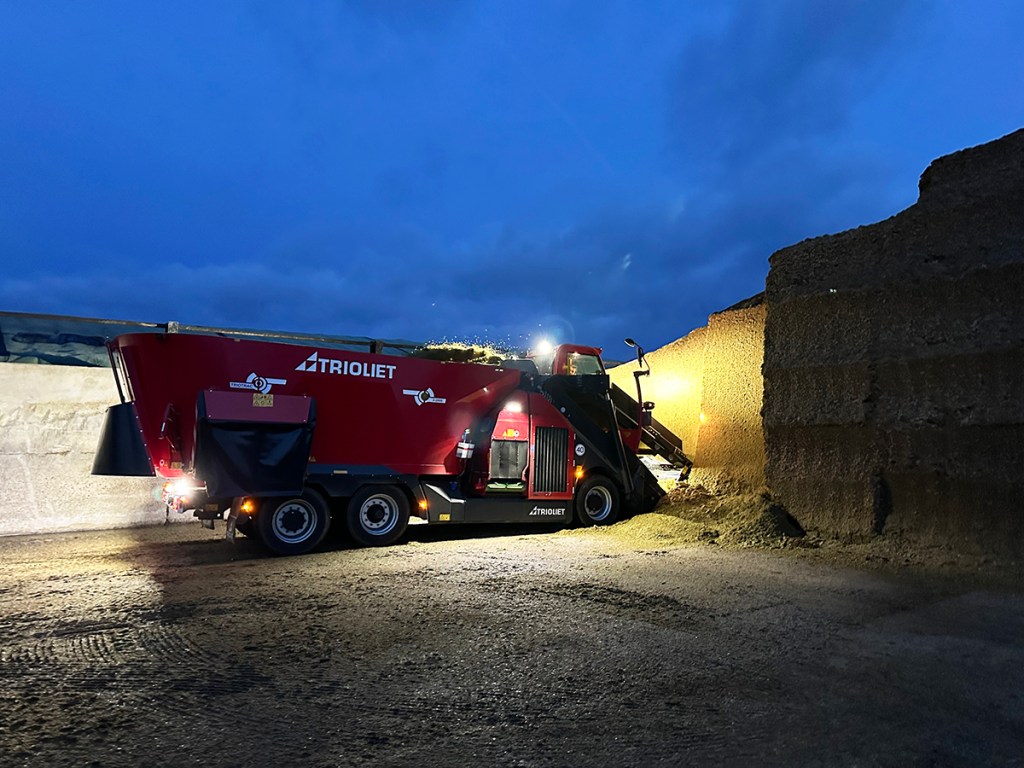
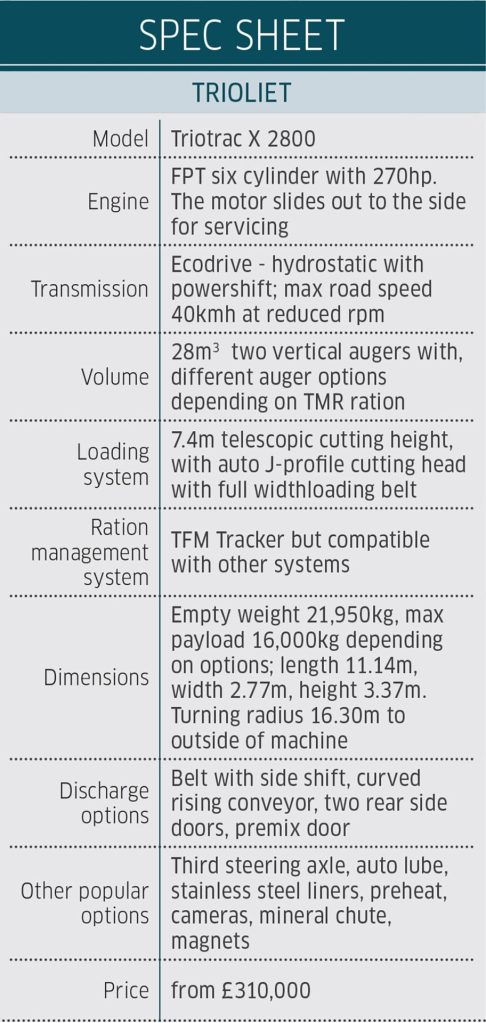
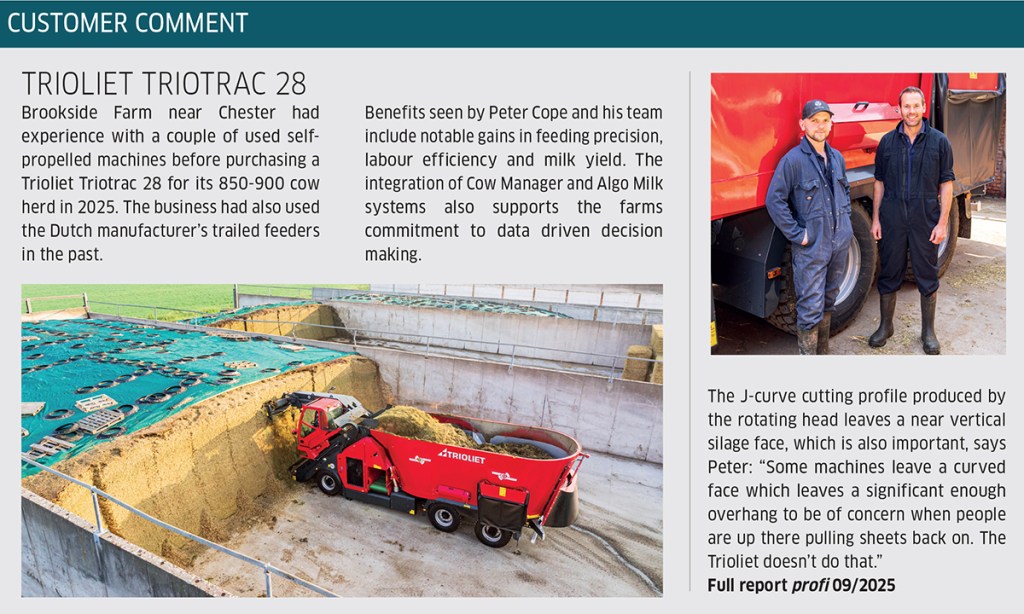
Key selling points of Trioliet’s Triotrac X 2800 include up to 8.00m cutting height with automatic J-profile cutting, for a very stable silo face and protection of the feed structure during loading. This allows a high loading capacity per cut, points out Martyn Northover.
“The low RPM cutting system allows loading at just 1,500rpm and unloading at 1,200rpm means a low fuel usage of 10/15 litres per hour. It also offers a tight turning circle due to three steering axles, with crab steer allowing the head to cut right next to the silo wall.”
The triaxle design also offers high load carrying capacity on the road for operators with multiple sites; the wide cab offering clear right hand side visibility, he adds. The cab also raises for better overall visibility when loading.
SILOKING
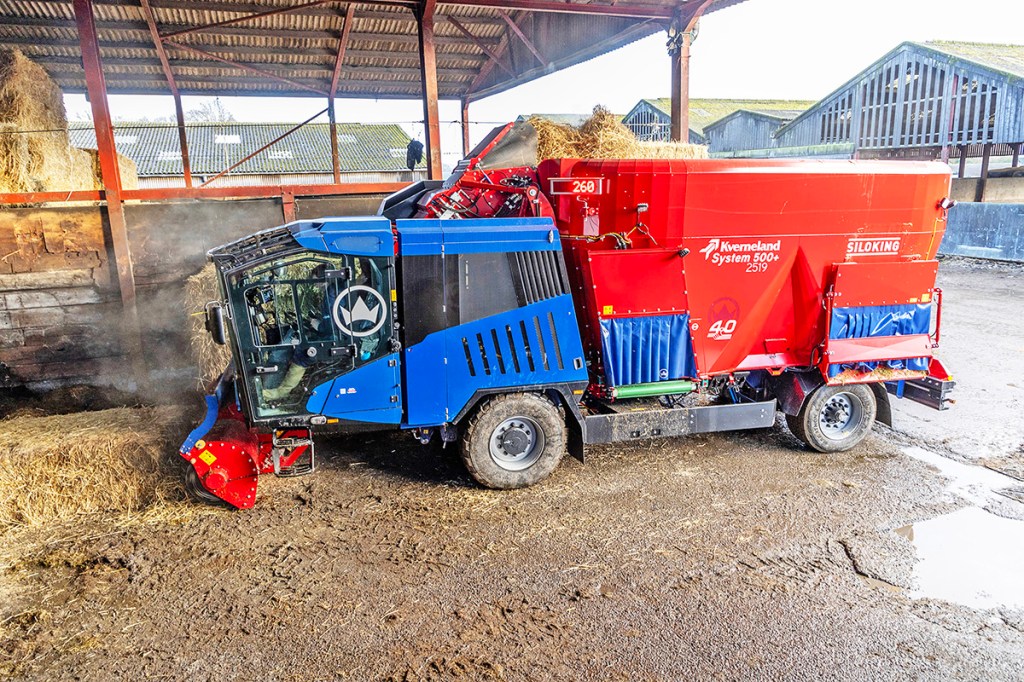
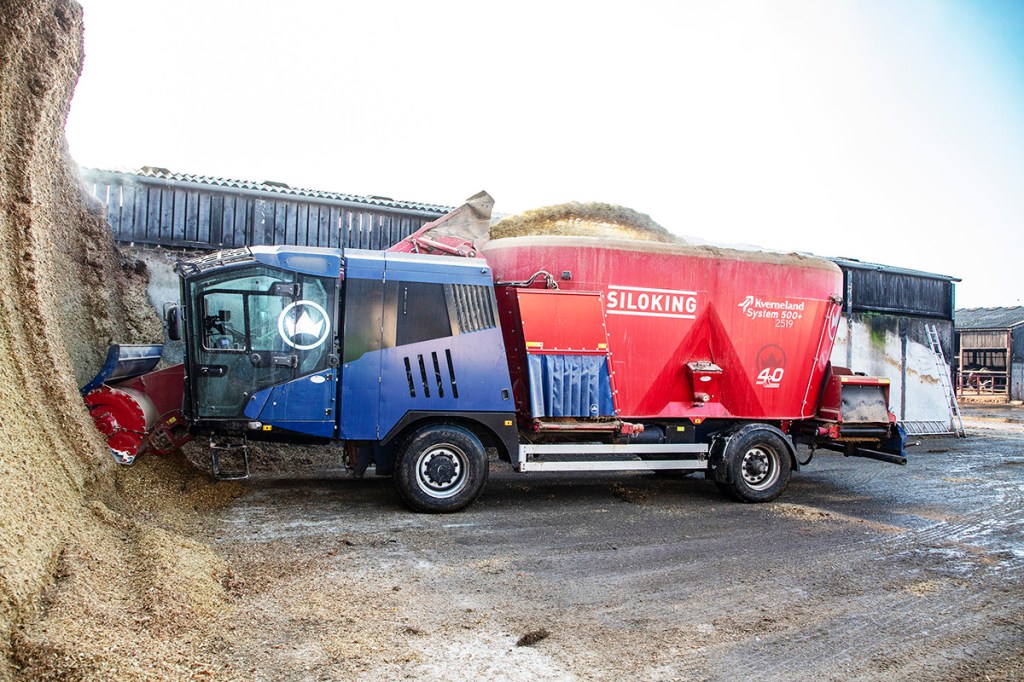
A move to NIR sensing from DryScan offers greater simplicity than the previous Dynamica Generale system and also works with the Siloking data system, says Dave Perry. “Silage in the ration from different clamps, different fields and different times of day will vary on dry matter. NIR sensing irons out these variations, making the forage more consistent and stabilising milk production. It can also add 1-2 litres/day extra milk.”
He points out that the greatest proportion of machines sold are now fitted with Silonox coating in the tub and on augers.
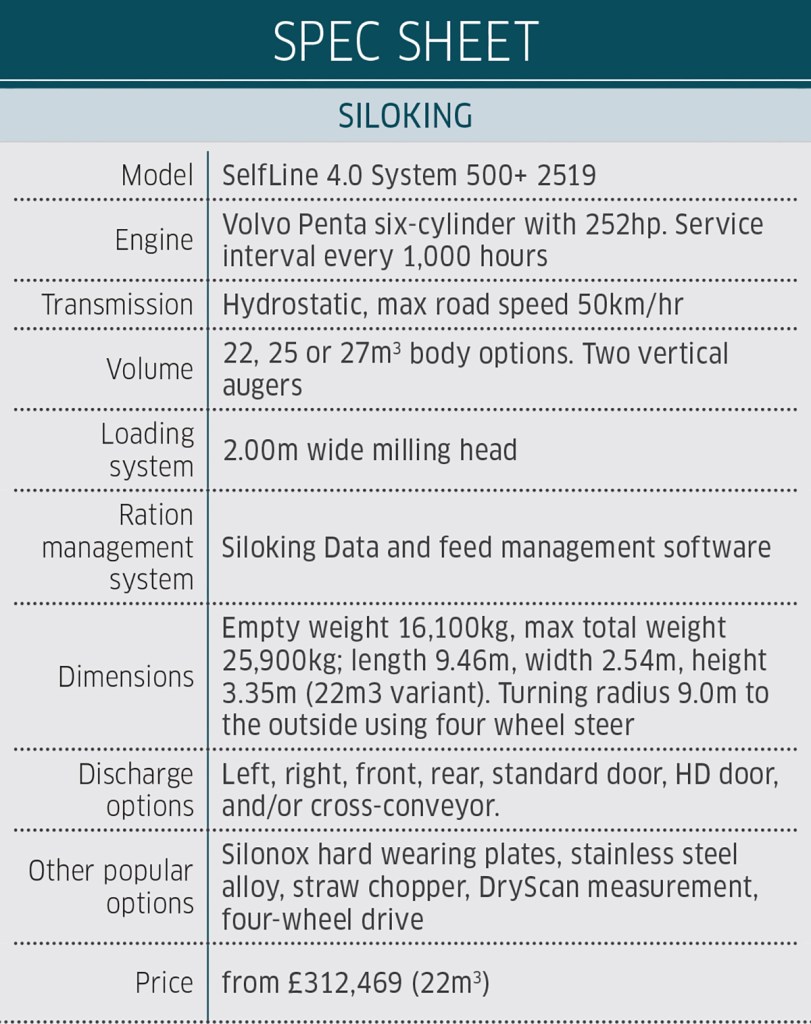
Siloking offers a wide range of models with the most popular in the UK being the SelfLine 4.0 System 500+
KEENAN
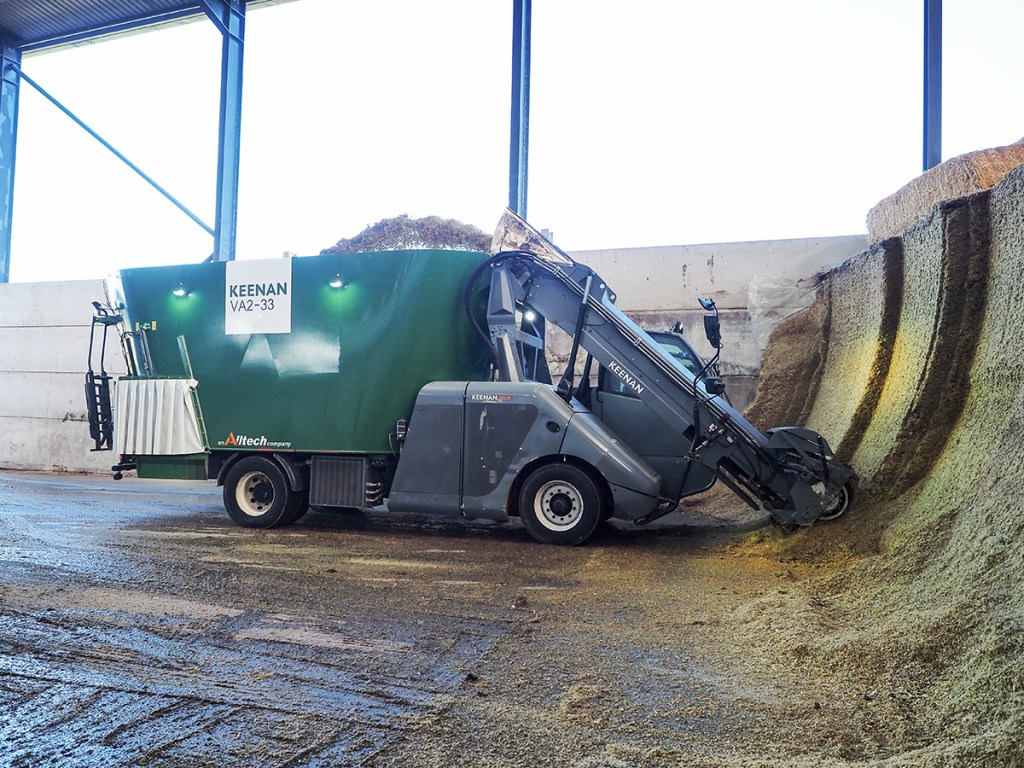
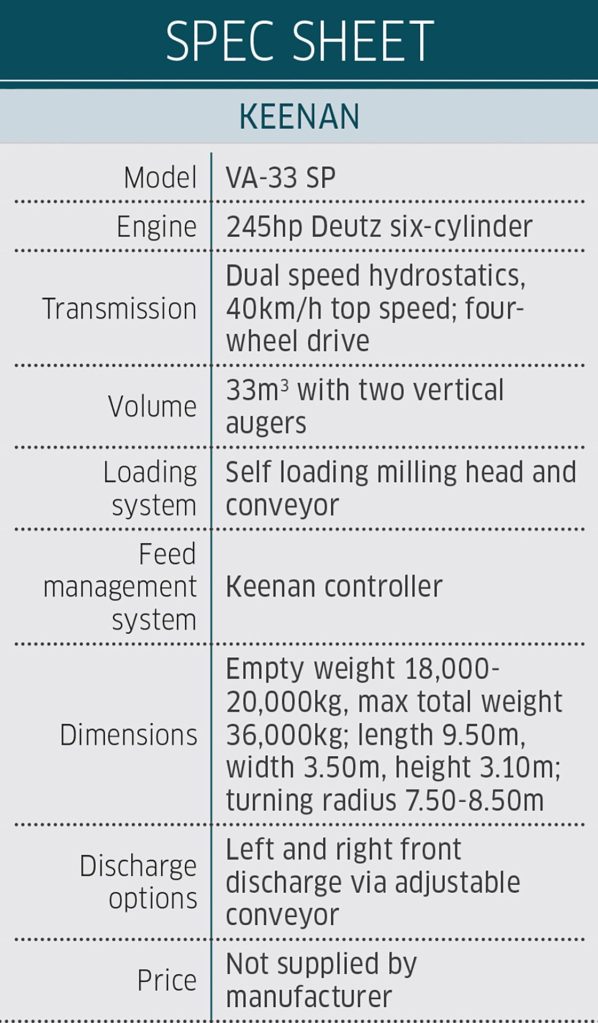
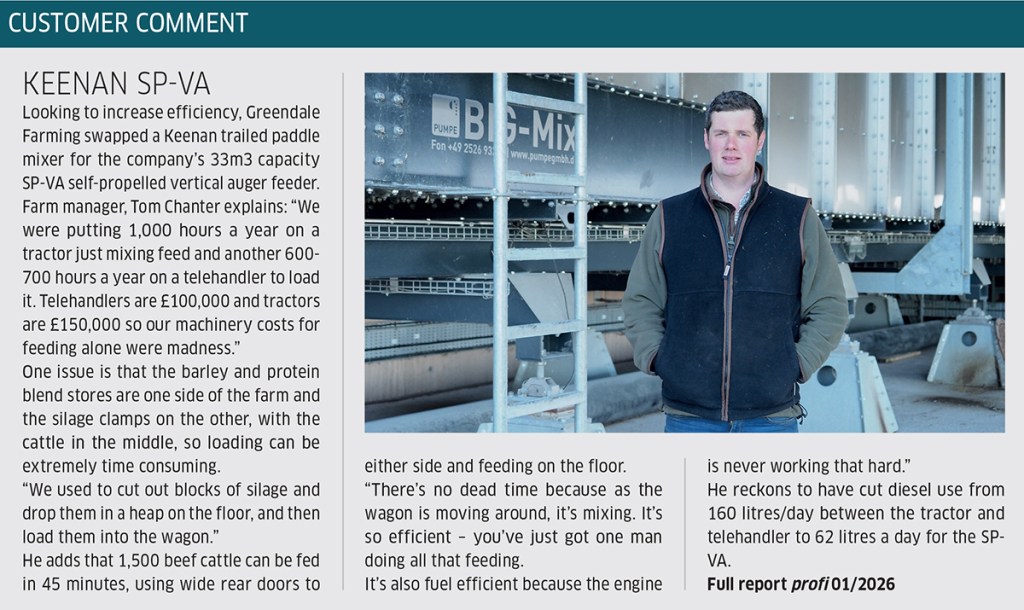
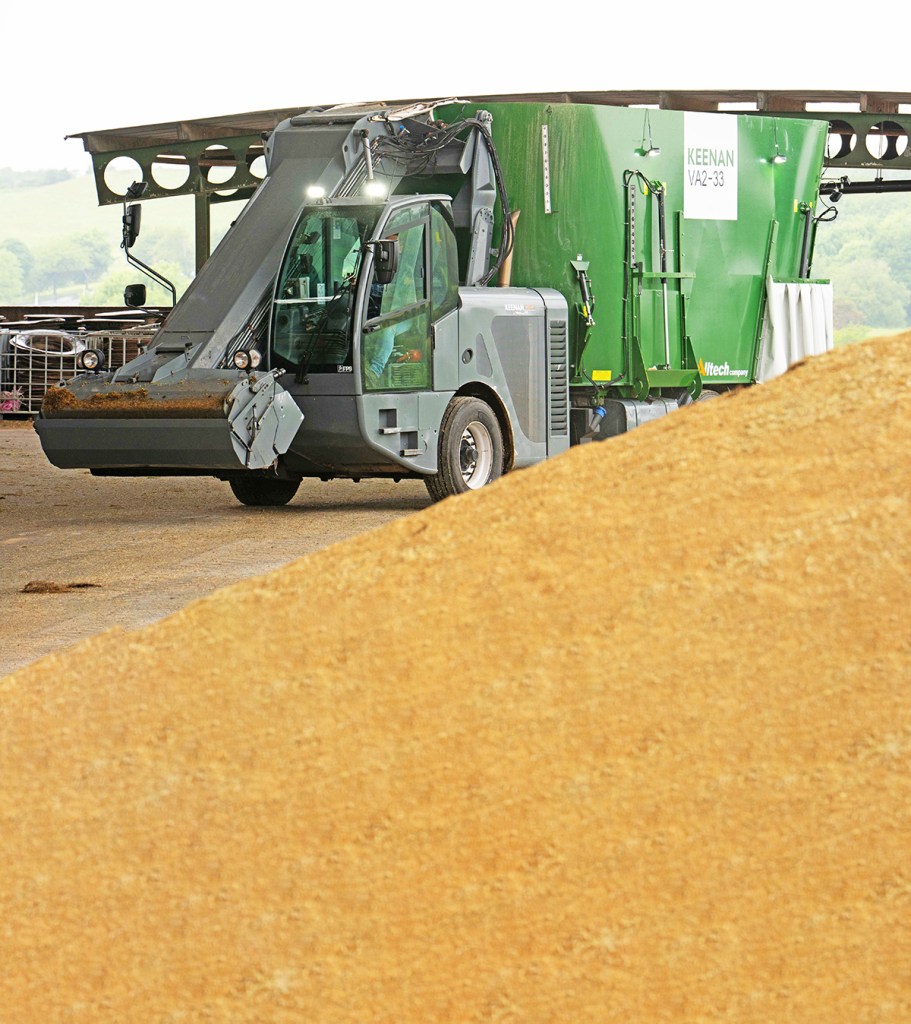
The company’s best-selling self-propelled model in the UK is the 33m3 vertical auger Keenan VA-33 SP, said to be popular because it delivers the scale modern farms need without compromising on the core Keenan principles of consistent mixing, reliable performance and practical day-to-day usability.