
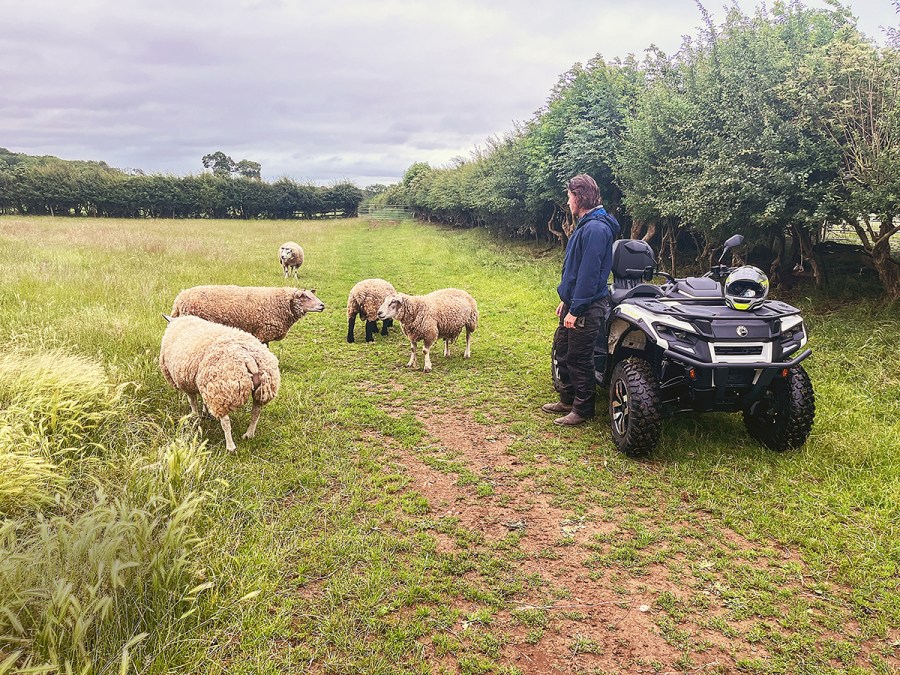
Within just minutes, everyone who had a ride on the Outlander electric commented upon one thing. Noise, or rather, the complete lack of it. No whines, clonks or rattles and near silent running. If this refined electric power is the future of ATVs, bring it on.
When Heron Suzuki GB introduced the 125cc petrol QuadRunner ATV into the UK back in the 1983, it was clear the company was not over sure who would buy it. Perhaps it would appeal as a leisure toy but surely never a serious working tool. It didn’t take long for the company to get an answer. Hill and livestock farms started to take to these little ATVs as motorised ‘legs’ thanks to their ability to reach remote areas with ease. Others in the ag sector soon saw the merits of a quad bike as these were a lot more stable than the soon to be outlawed Honda three-wheelers some had adopted to do the job previously.
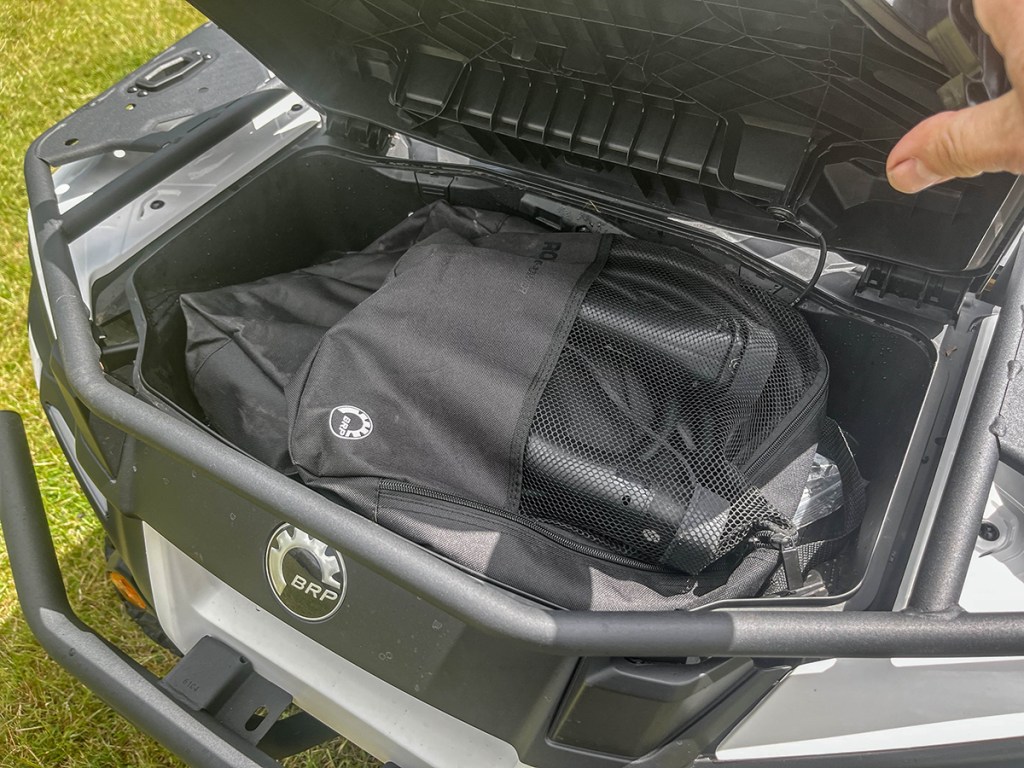
What has this to do with a Can-Am Outlander Max T electric? Simple. This ATV may initially appear as a bit too left field for farm use and be dismissed as an expensive leisure tool. After a just a few minutes on the Outlander Electric, we think this ATV needs to be taken seriously. Try one and you too may swallow the well baited electric power hook as we did barely 100 yards into our first ride. Why?
A combination of reasons but first is that the Outlander runs nearly silently at speeds of up to around 24km/hr. There is no transmission whine. All you can hear is the tyres on loose surfaces or longer grass brushing on the underbelly. With a crash helmet on, you do not hear the wind rustling past either. Just peaceful hush. Even when someone else is riding the Outlander around, you will not hear them approaching. This stealthy approach was something we found initially upset our ewes as this big white machine would give no warning of its arrival as it suddenly appeared amongst them.
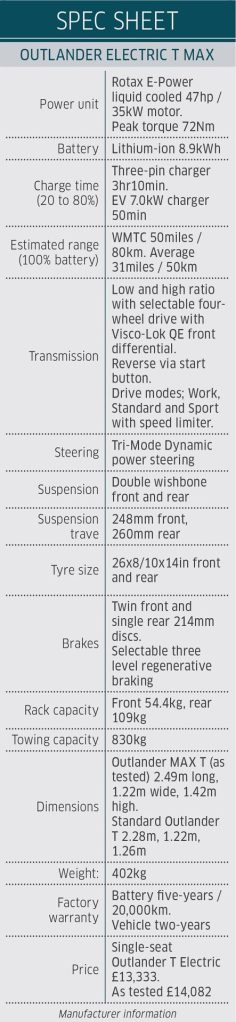
This silent running seems at odds with the almost ferocious power the Outlander has on offer. Even when run in more ‘sober’ Work mode, the power on tap proved more than enough to reach whatever top speed we dialled into the speed limiter. BRP points out that the Outlander electric’s top speed is 60km/hr to tie in with road homologation in high ratio and we found it would hit that, without breaking a sweat, in double quick time.
But silent running and impressive get up and go were not the only aspects of the Outlander that impressed. Overall refinement was good, the whole ATV feeling solid and confidence inspiring.
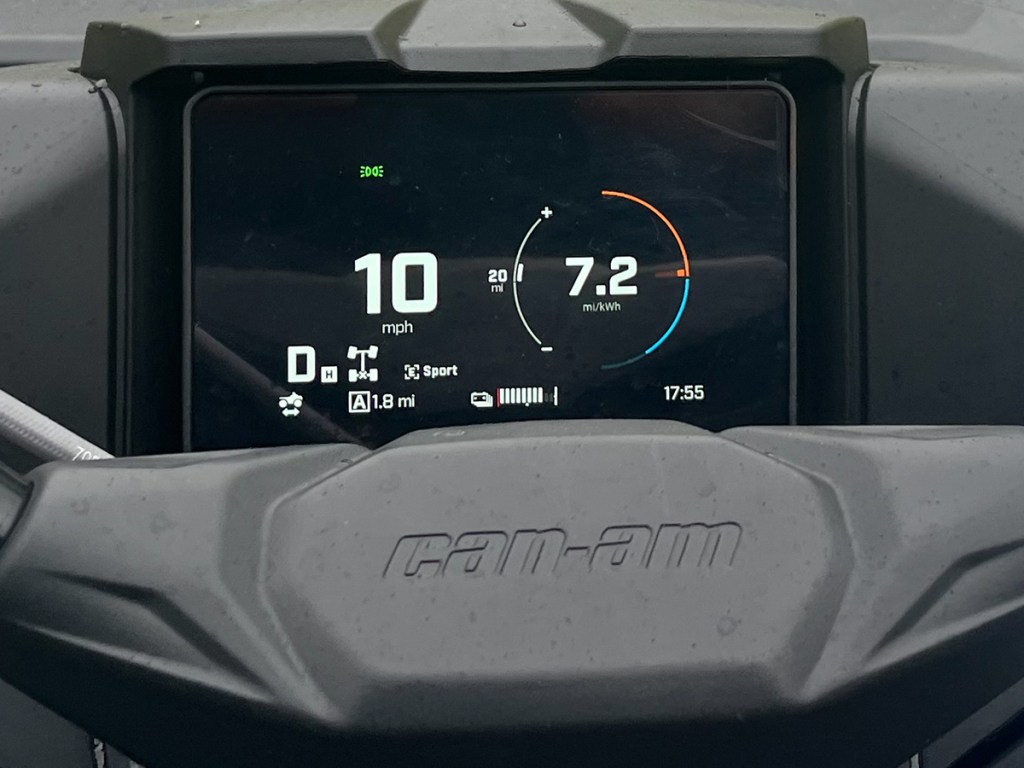
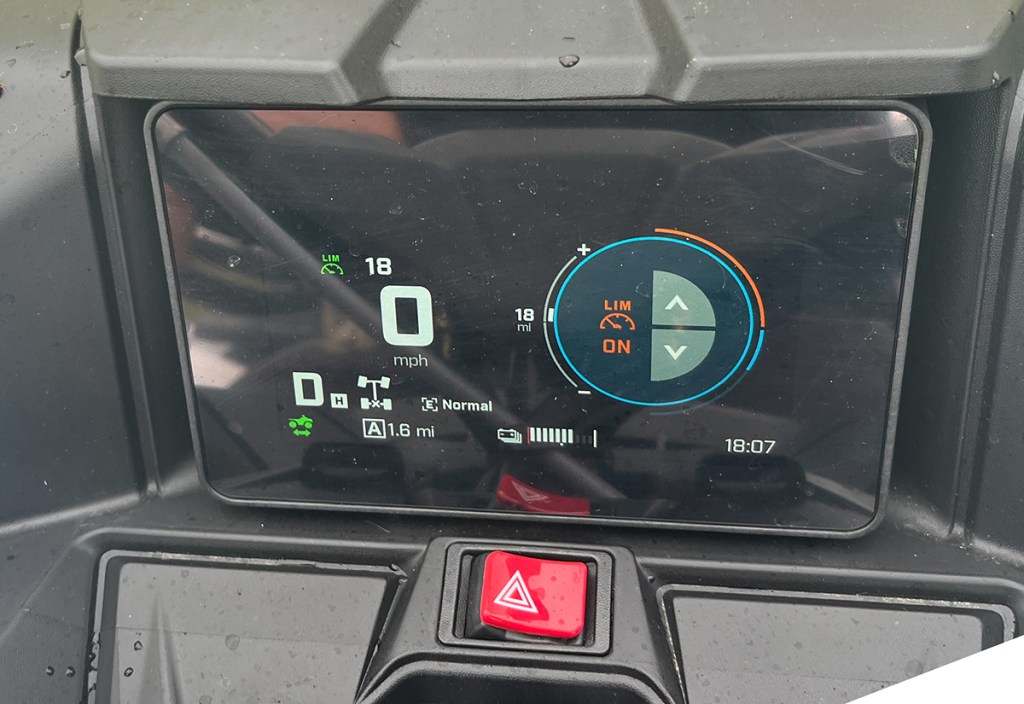
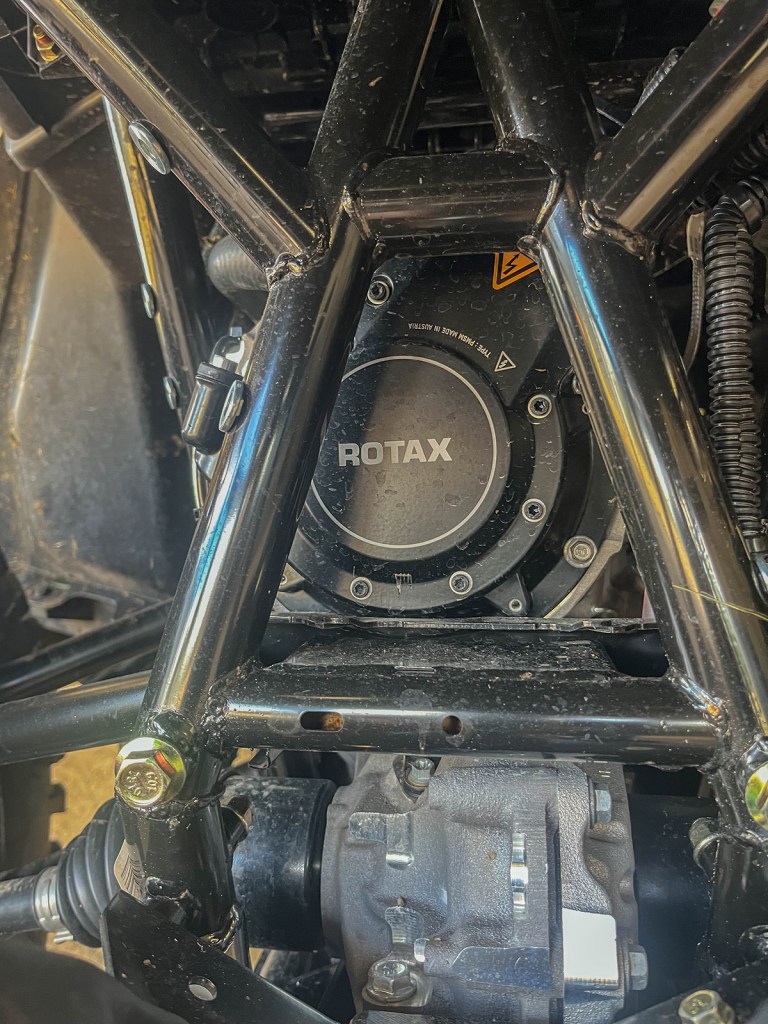
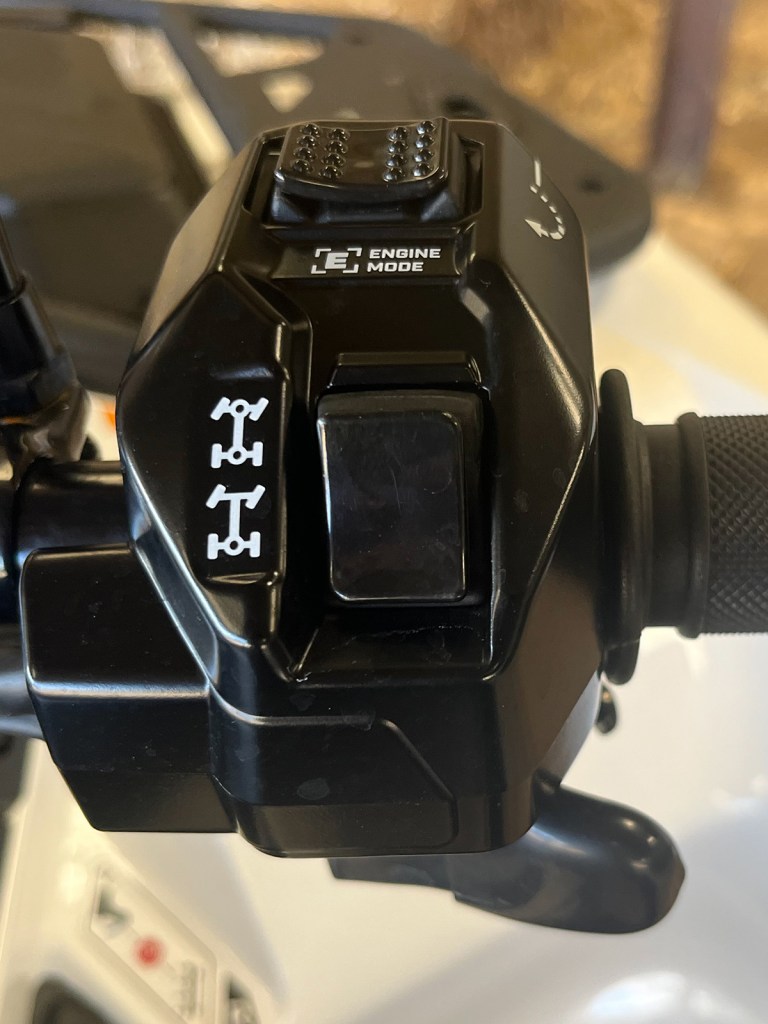
Initially it was felt there could be more ‘engine’ braking available when the strongest of the three regen modes was chosen; the level of braking is selected via a switch on the front of the right-hand control’s cluster. In broad outline, regen essentially turns the drive motor from an energy consumer into to a generator. This reversal sees the generated energy sent to the battery with the power this consumes acting as a braking force that slows the ATV.
At best, the regen braking was not as strong as the systems employed on some petrol ATVs, but the software controlling the system is possibly set to prevent briefly locking the rear wheels in slippery conditions. We think Can-Am has got the regen about right for most conditions as it proved easy to work out when to throttle back and run up to a closed gate without needing the brakes to slow, reserving the latter to come to a complete stop. There is no equivalent to the one pedal driving mode as offered on some EV vehicles.
When the battery is fully charged to 100%, regen braking will not work as there is nowhere for the generated energy to go. The ATV arrived with a full charge, initially making us think it offered no ‘engine’ braking.
Those used to a road-going EV will no doubt have got used to these vehicles also offering an auto hold function. This essentially stops the vehicle from rolling when braking to a stop and enabling it to set off again just by applying the throttle. No need for a parking brake. The Outlander needs the brake to be applied to hold it on a slope, which is hardly a chore, but this ATV does make you lazy thanks to its ease of use.
Slope? What slope?
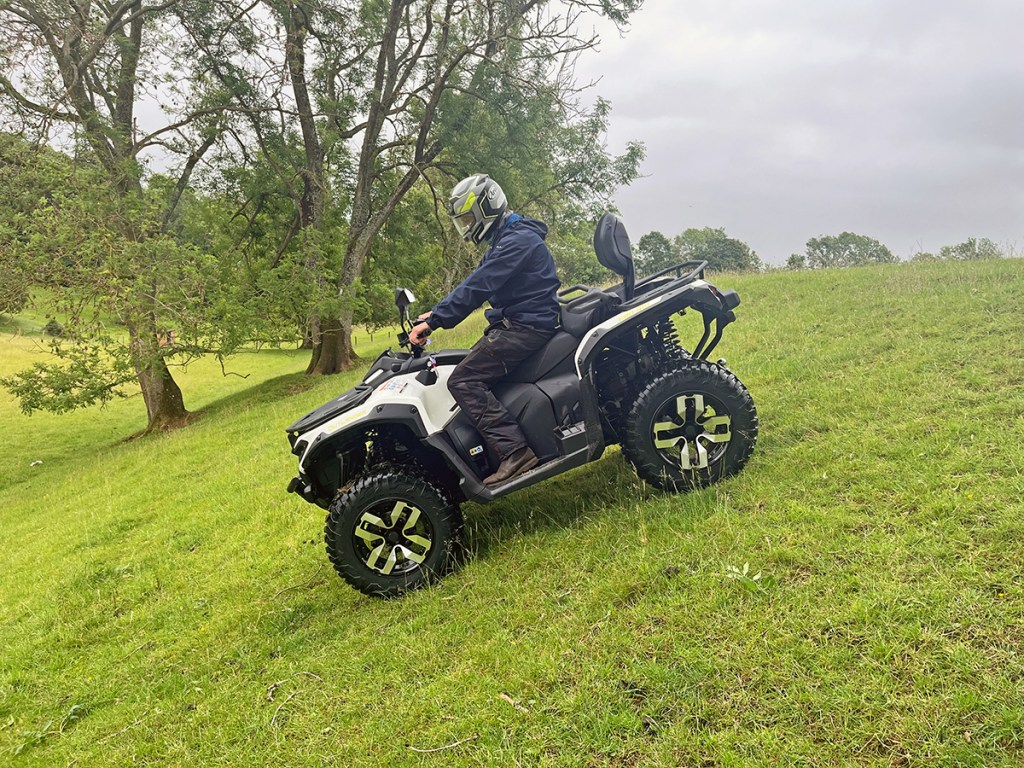
Down our test slopes we knew we could not rely upon the regen ‘engine’ braking to hold the Outlander back. This meant we had to use the ATV’s brakes via the well weighted single handlebar brake lever. This enabled the machine’s speed to be easily reigned in without locking the wheels on the slippery grass surface.
Going up the same slope in all-wheel drive was a revelation. In poor going we would normally take a bit of a run to get to the top of our key test incline to avoid risking running out of traction. With the Outlander we were able to creep up the rain-soaked grass slope without drama even in high ratio, the electric motor’s instant torque delivering enough power to all four wheels to make the whole climb feel safe and drama free.
Menus and controls
Taking a step back, getting the Outlander ready to go is simple but takes a moment to fathom. The vehicle’s ‘key’ links remotely to the vehicle, a socket on the key itself slotting onto a ball retainer on the ATV to secure it in place. Once the key is clipped home, the grey coloured ‘starter’ button on the left handlebar control block is pressed to ‘wake’ the ATV up, the dash menu switching on to reveal a request to press the OK button. This is located above the starter. It is then just a case of slotting the selector into drive, throttling up and away.
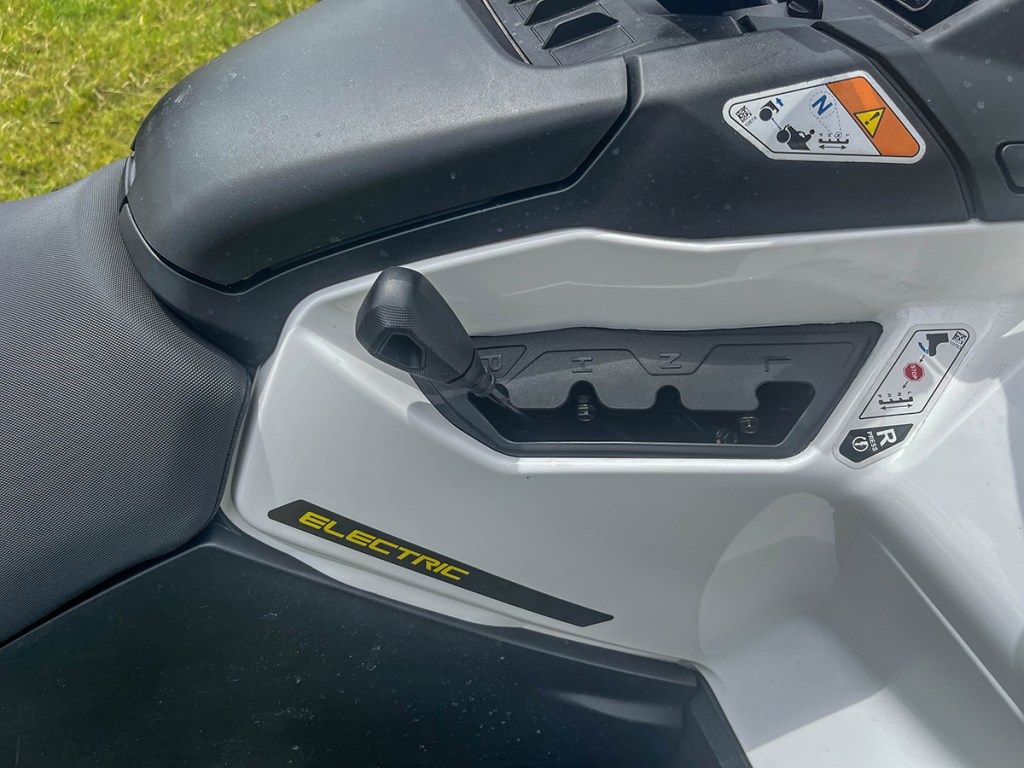
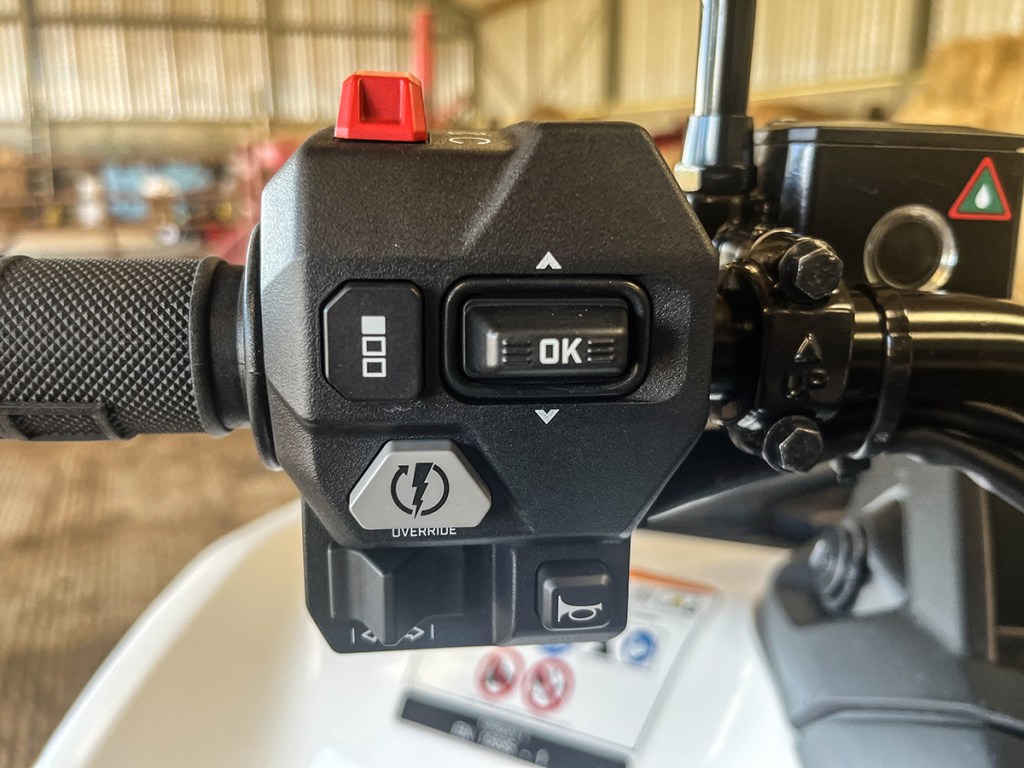
To select reverse, you follow the same procedure but press the ‘start’ button again with the range selector in H. There is no reverse position on the selector itself. This start button press does the job instead, with an ‘R’ showing on the dash. As you press the throttle lever, the ATV will now go backwards with a reversing beeper to mark your progress.
On paper some of this may sound a bit of a faff but it is something that soon becomes easy to do without having to think.
Fast, faster and hooligan mode
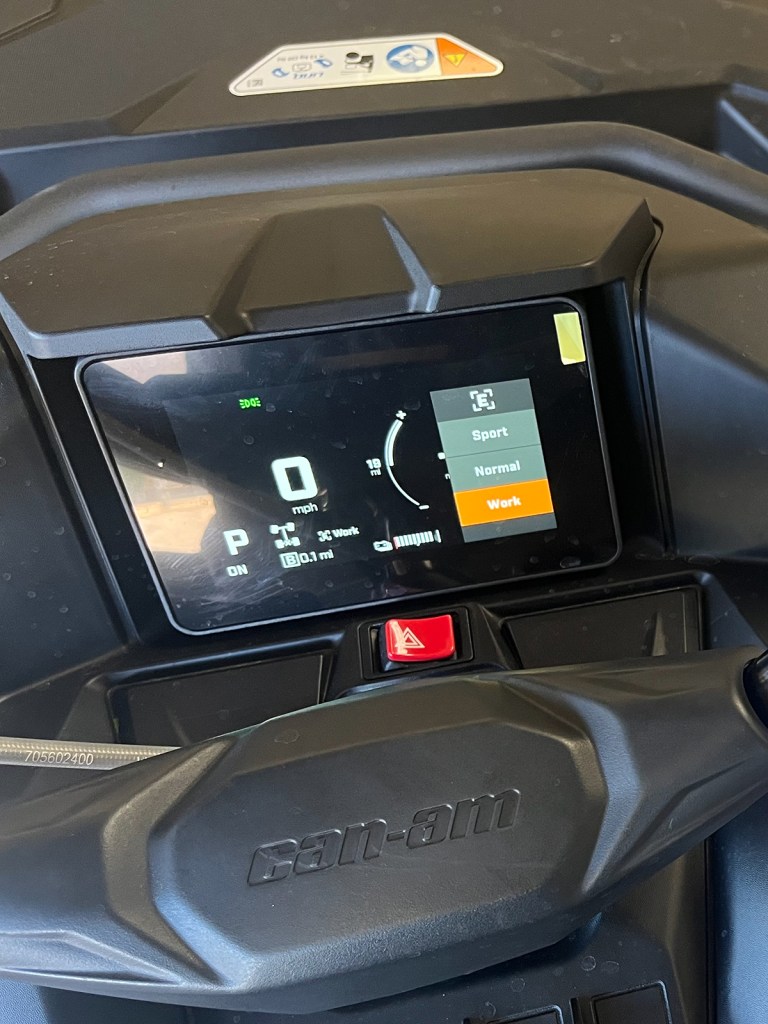
There are three engine or performance modes, Work, Normal and Sport. These are selected via an easily accessed rocker button on the top of the right handlebar control block. In brief, Sport sees the ATV fire off the line with the lightest of throttle thumb pressure. Normal provides less snappy throttle action, with Work delivering a more measured response.
This latter mode was our preferred choice for field work, the more so when it came to traction. Sport can, if you are ham fisted with the throttle, see the rear wheels initially struggle for grip on wet grass in two-wheel drive.
It would take a while to go through all the settings on offer to the Outlander electric operator, but the key takeaway is easy to outline. This ATV is the most refined machine of its type to ever grace our fields. We found excuses to extend our rides, even when the rain started!
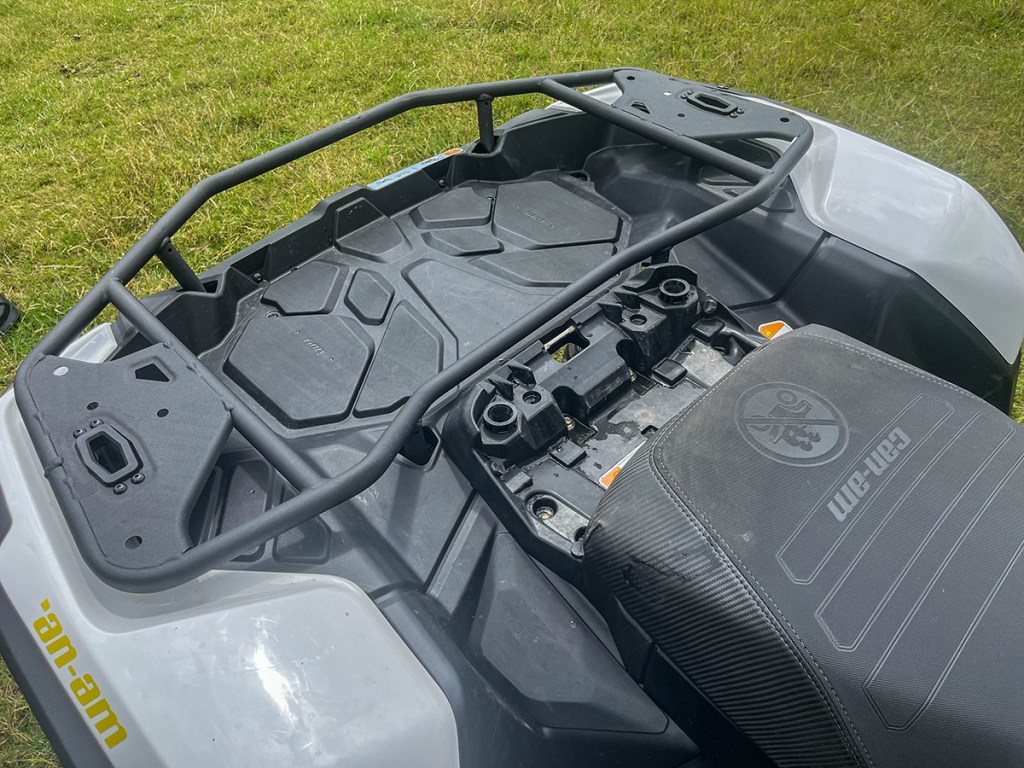
We did briefly try out the rear passenger seat (which is incidentally easy to remove) and found its near throne-like shape provide an extremely comfortable ride. Two up, the Outlander had much the same get up and go as it did solo, suggesting both the Max and a ‘standard’ solo Outlander, which is essentially the same, will prove great load luggers.
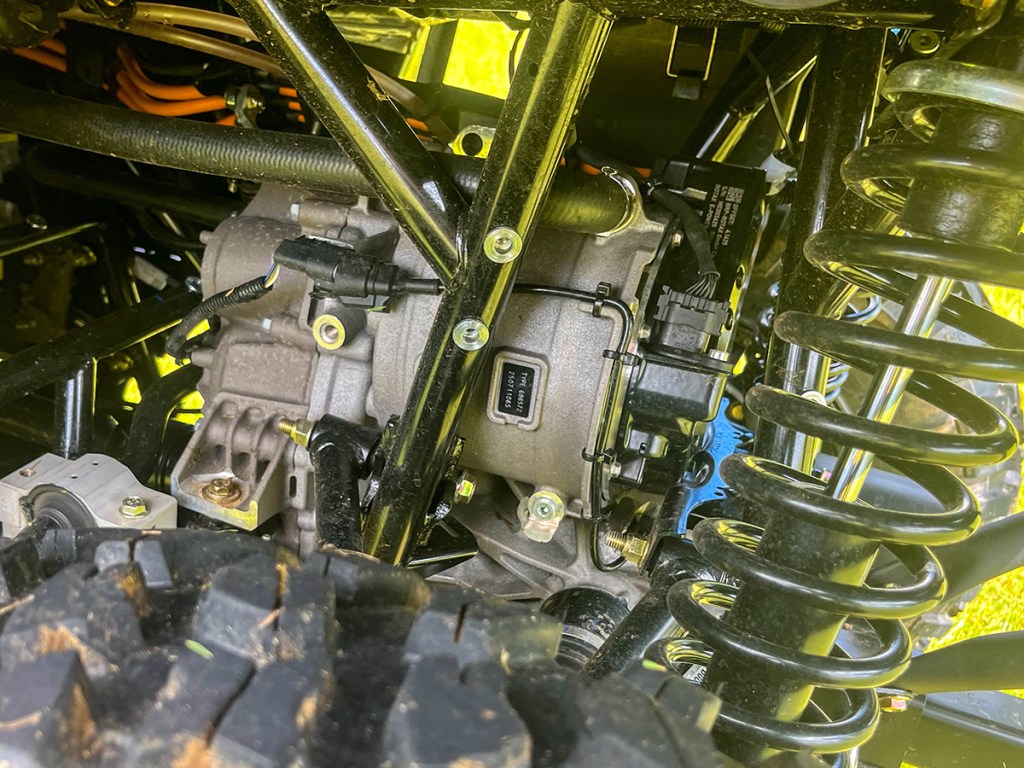
Summary
BRP dealers can offer you a choice of petrol powered Outlander ATV models, with retail prices ranging from an ex- VAT £7,583 through to a meaty £10,250 for a range topping two-seat road homologated Outlander Max Pro XU HD7 T. Single-seat Outlander Electric T models are priced from £13,333, the Max two seater we tried weighing in at £14,082. A lot of money for an ATV, but these electric ATVs should cost peanuts to run. The performance on offer will meet the demands of most users too. If BRP adopt this electric drivetrain to power a Can-Am Traxter UTV, the appeal of electric power will no doubt gain further ag appeal.
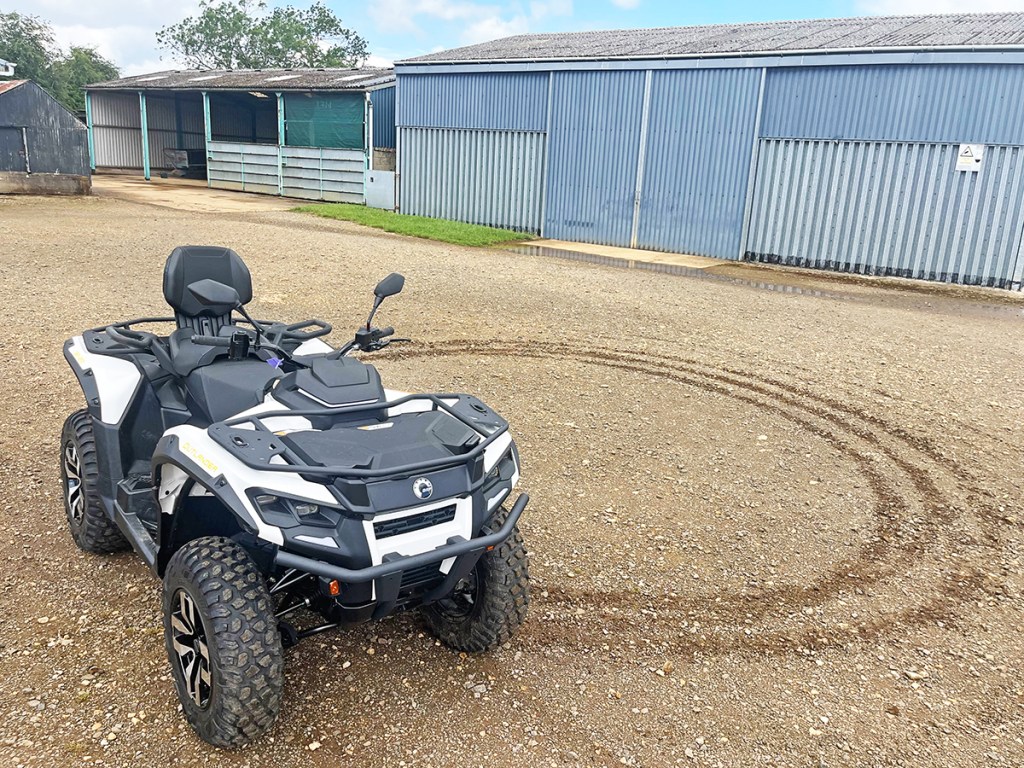
With thanks to Ace ATV, Bromsgrove, Worcestershire and Can-Am UK.
HOW FAR ON A CHARGE?
We cannot really give a definitive answer to the key question of ‘How far can an Outlander Electric travel on a full charge’. Can-Am suggest the Outlander EV has a potential to drive up to 50 miles on a full 100% charge but suggest 31 miles, in temperate weather over moderate terrain, is a more realistic guide. There are too many variables in offroad riding to be precise.
Our time with the ATV was too short to really see what this quad would deliver on farm over an extended period but, as with the 7.6kWh battery HiSun Stryker UTV we tried previously (profi 06/26), the 8.6kWh Outlander did not get anywhere near running out of juice during our daily routine. We typically would not exceed 5 miles on stock checking, so we were never likely to challenge the ATV’s range.
This is a point potential users need to establish before considering EV power. If you know how much ground you need to cover between charges, you will be better placed to establish if electric power will suit your needs.
Another consideration is battery care and longevity. The general recommendation is to charge the battery up to around 80% of full capacity, as this takes less time than trying to hit 100%, with the added plus that not topping up to full can help improve battery longevity. It is also best to try and avoid allowing the battery to dip repeatedly below 20% too. Stick to these basics, and the ATV battery should last for several years and still cover around 20 miles between charges. Cold weather will see range drop but even if this were to fall to 15 miles in winter it could well be enough for daily chores. The key is to think differently and keep the ATV hooked up to the mains when not in use so it is always ready to go.
James de Havilland
For more up-to-date farming news click here and subscribe now to profi and save.