

For one Essex grower, machinery buying decisions are based around capacity and
technology for both its sprayer and drill, as it seeks to boost timeliness with all aspects of fieldwork to make the most of progress with zero-till strategies.
KEEPING IT BRIEF
- Straw management essential
- Premium tyres suit low pressure use
- Mole plough used on one-in-four basis
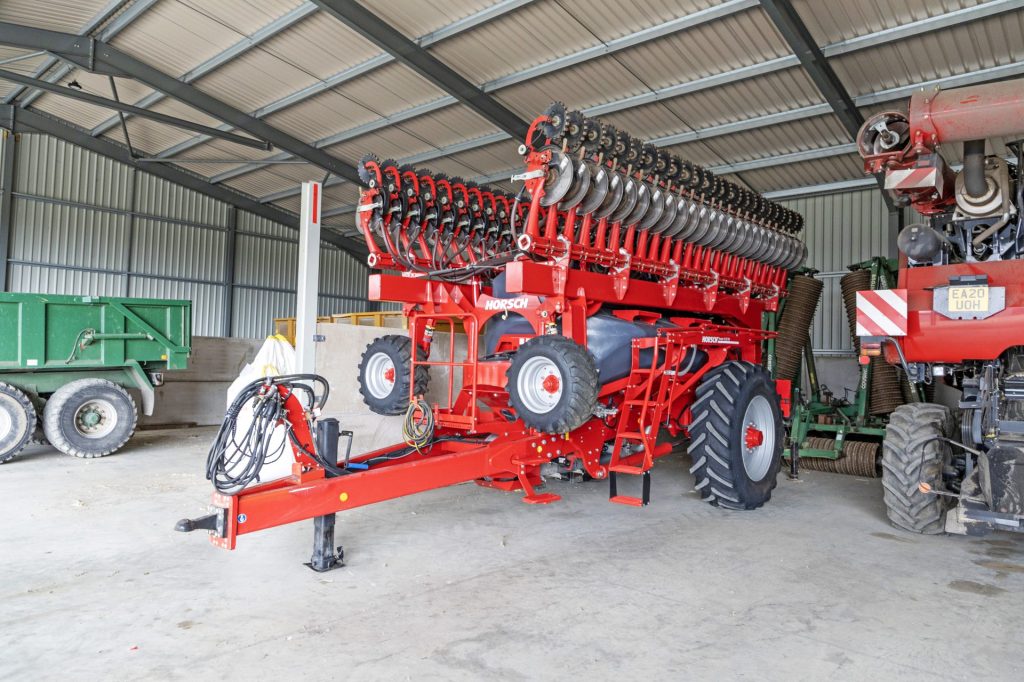
Wherever possible, Childerditch Farms prefers to invest in capacity for a few of its key machines. The focus here, it says, is to boost timeliness with everything it does, so it can make the most of weather windows and field conditions.
Those key machines boil down to a 12m Horsch Avatar drill, and a 6,000-litre Horsch Leeb 6LT trailed sprayer with 30m boom.
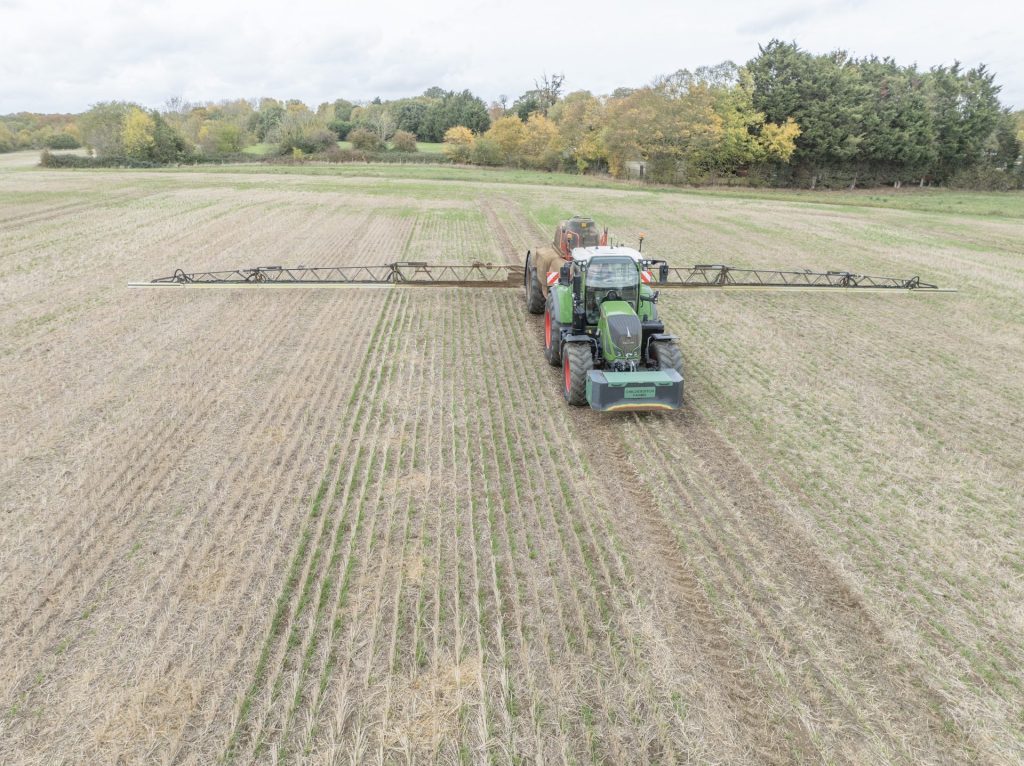
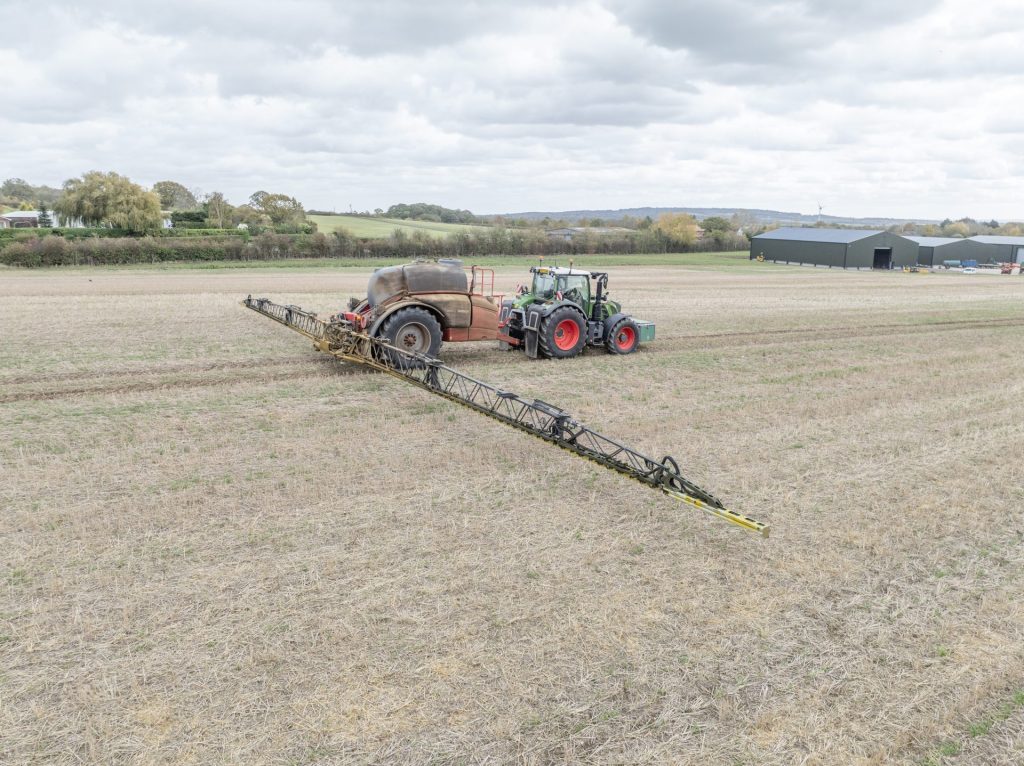
“In our experience, you have to be ready to get over the workload as quickly as possible, with the minimum of man hours and the lowest fuel consumption,” explains Ed Ford of the 650ha Heckapen Farm at Herongate, Essex. “Fortunately, we have spare capacity, which would also let us absorb another 200ha of work if it became available.”
The farm’s Leeb 6LT sprayer is now its third Horsch trailed unit, having pushed the boundaries for tank capacity and technology to boost application accuracy with sprays and liquid fertiliser. And the decision to go down the trailed route came down purely to cost.
“At one third of the cost of a self-propelled sprayer, we could buy into more technology with aspects like the positive and negative contour following boom, 25cm nozzle spacing, auto nozzle switching and hydraulic pump drive,” he says. “We sought plug-and-play ISObus compatibility to operate with any of our Fendt tractors, and that also gave us a far more comfortable and spacious cab than a self-propelled.”
The farm’s latest 6LT has brought a 4-2 nozzle body configuration replacing the previous model’s 4-1 set-up, and in doing so has enabled curve compensation across the full working width.
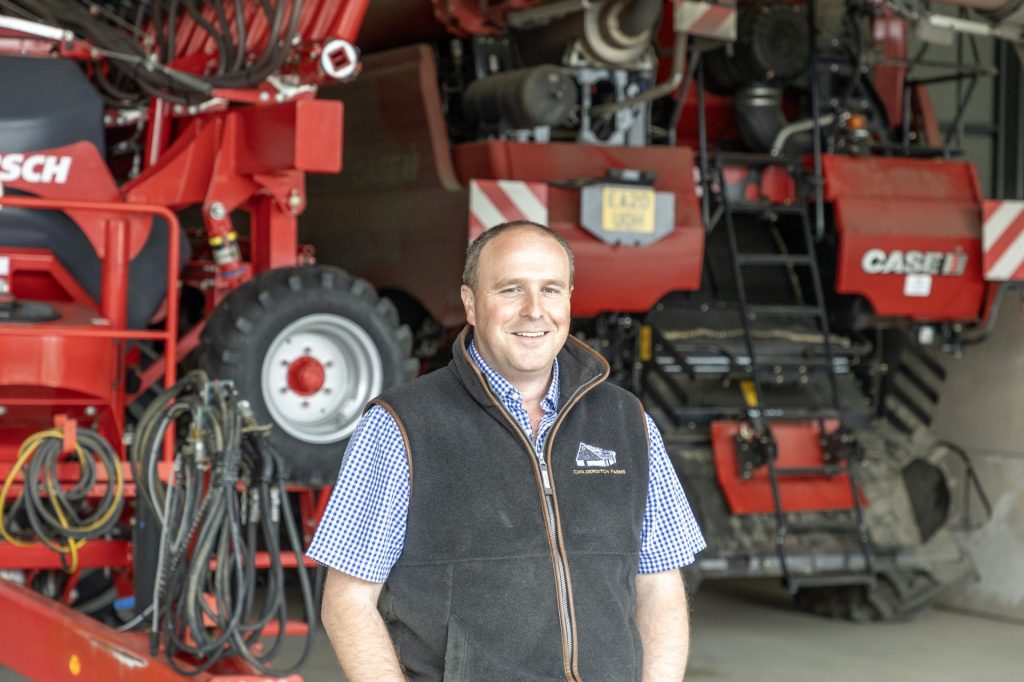
“Like many farms, we don’t have any square fields,” he says. “And this is an area where we’ve seen tremendous differences in the effectiveness of what we apply.”
Field sizes vary from 3.5ha up to 35ha and being all manner of shapes is where Horsch’s AutoSelect Pro curve compensation system comes into its own. As an alternative to PWM (Pulse Width Modulation), AutoSelect Pro delivers advanced nozzle switching to adjust the liquid quantities when cornering, and is the latest update to Horsch Leeb’s automatic nozzle selection system.
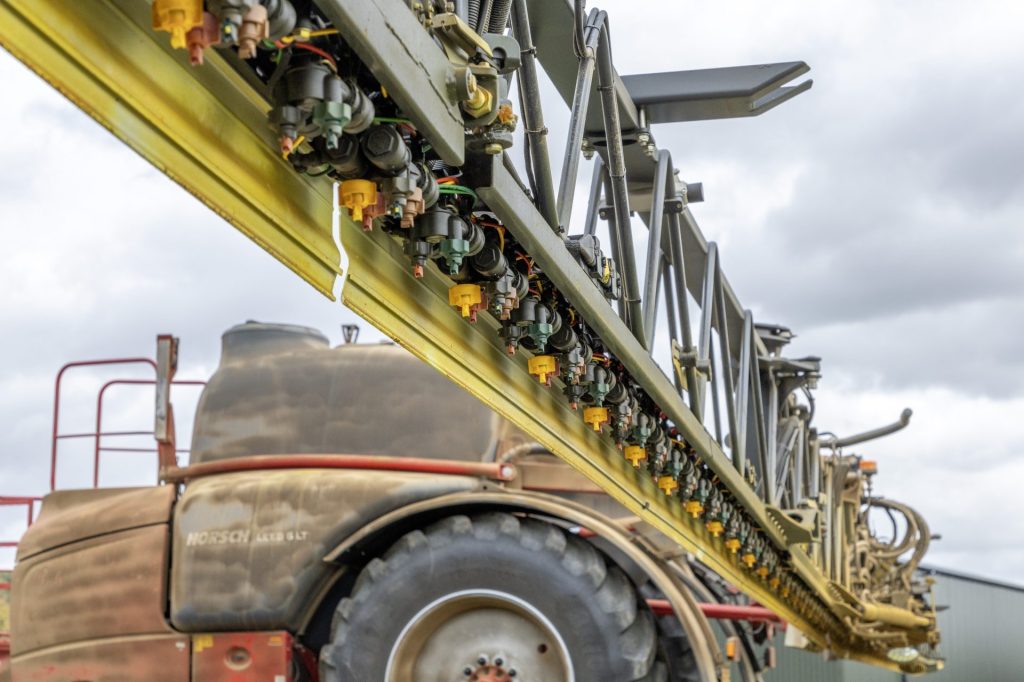
Using the 4-2 nozzle body format, curve compensation is achieved by using combinations of nozzles in response to changes in boom speed. This increases the application rate on the outside of a curve and reduces it on the inside.
Maintaining spray pattern
It’s a feature that becomes far more effective in its operation where there is a greater range of nozzles for the system to automatically choose from. Curve compensation also automatically adapts the working height of the boom in response to the nozzles being used, maintaining spray pattern over the target.
“The outside of the boom travels so fast, even when you try to turn slowly,” explains Ed. “So, the outside of headland curves were suffering from under-dosing. And if you sprayed around a telegraph pole for example, the inside of the boom would go really slowly. In some corners or around certain obstacles, it could go backwards, so you’d end up with far too much product going on.
“This became really noticeable with products like growth regulators, and you wouldn’t believe the results unless you saw it,” he says. “With application rates being correctly delivered across the full boom width during turns, that alone has improved the efficacy of our sprays, which also means a cleaner crop canopy.”
He says that making the most of the 6LT’s boom technology has created additional opportunities for more spray days.
“We have gained spray days with the Leeb, simply because we can get the boom lower to the ground using the 25cm nozzle spacing, so we can better manage drift on those days where we wouldn’t be spraying at a conventional height,” he says. “And that also helps to give us much better timeliness.”
It’s not the only bit of technology that gets a big thumbs-up. With ISObus connectivity and full integration with the Fendt One architecture, Ed says there’s no need for a sprayer joystick for boom folding and switching.
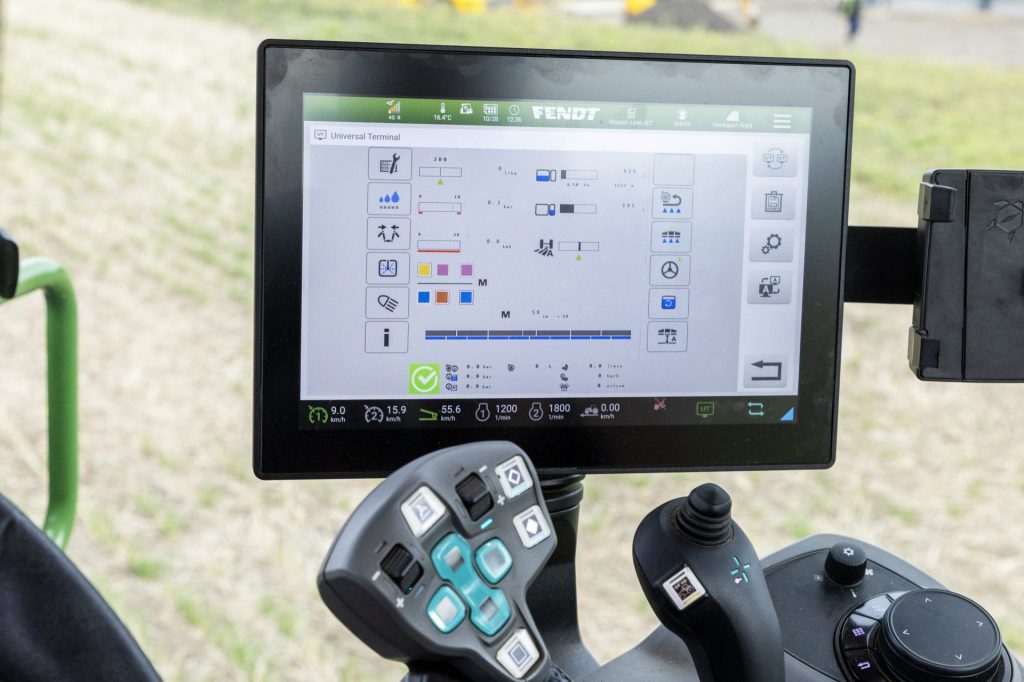
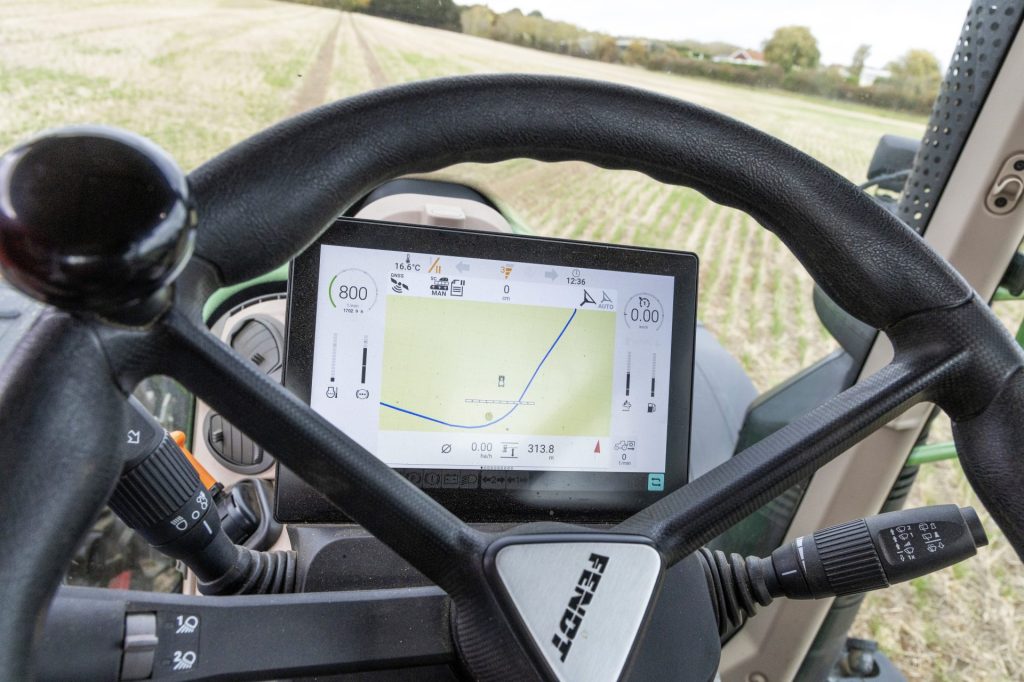
“Everything needed to control the 6LT runs through the Fendt One terminal and it means we can operate with sprayer controls displayed on the main terminal and put the GPS data on the screen that’s located behind the steering wheel,” explains the farmer. “It’s very clever, easy to use and is packed with operator convenience.”
The farm has no requirement for a bowser, with all but an outlying 110ha around 20 miles away, everything else is largely ring-fenced. As the original farmstead diversified with commercial lettings, Heckapen Farm was constructed over the last seven years on one of its fields. As a result, new infrastructure and future-proofing became the order of the day when it came to buildings.
“We’ve invested in grain storage and workshop facilities, and built ourselves a modern, bunded, insulated spray store that can also house the sprayer,” he says. “Rainwater harvesting across the main building gives us 50,000-litres of water storage and we can fill under-cover using 3in pipework.”
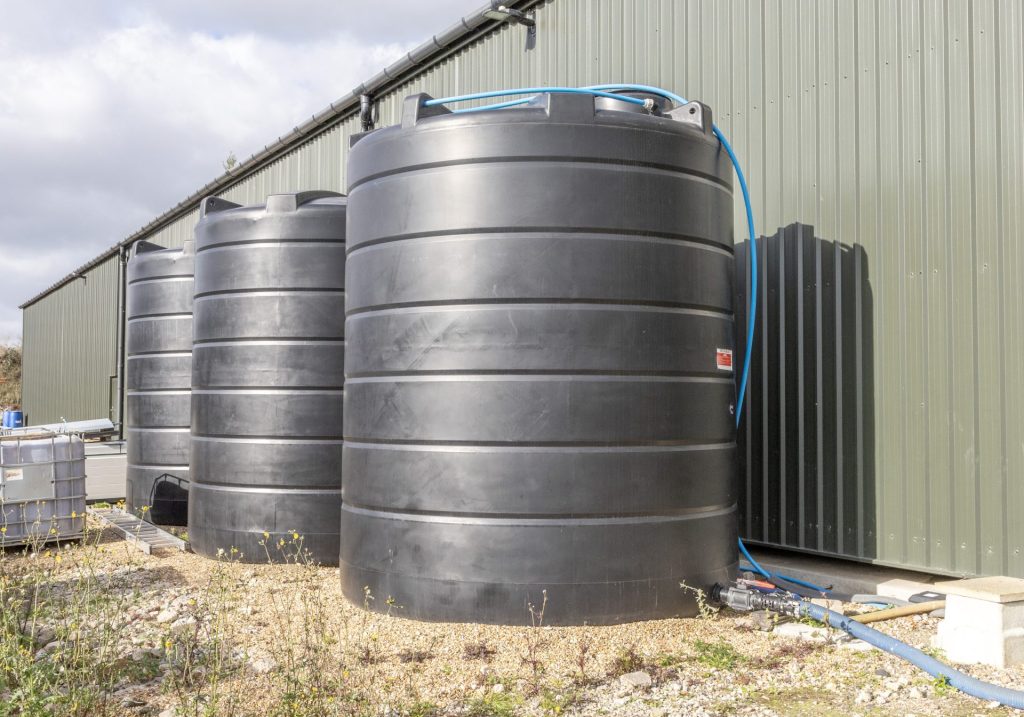
Ed points out that most applications are carried out at water rates of 150 litres, with the exception being pre-emergence sprays, that are applied at 200 litres/ha.
“We have the capacity and the output to apply product using decent water rates,” he says. “At 150 litres/ha, the 6LT can cover up to 40ha per load, so 100ha/day is easily achieved. It doesn’t take long to get across the ground, so we can be timely and efficient.”
Extra efficiency comes from slick boom folding and the farm has improved field gateways to simplify moving from field to field without having to fully fold the boom.
“With combine header-sized gaps, we can just raise the boom ends to full height, and move across field boundaries,” he says. “Any fields less than 2ha have been put into stewardship schemes.”
That drive for more efficiency while reducing cost, also steered the farm into direct drilling. With 10 years’ zero-till experience under its belt, the farm is still tweaking its processes to suit.
The brave pill
“We used to plough for all our spring crops, and at the time, our 15-year old Väderstad drill and Simba SL needed changing,” recalls Ed. “We demo’d a Horsch Terrano and a new Rapid as replacements, and both carried £100,000 price tags. Yet for £120,000 we could buy a Cross Slot drill. So, we had a farm sale and got rid of the lot. We kept our Fendt 828 to pull the Cross Slot drill.
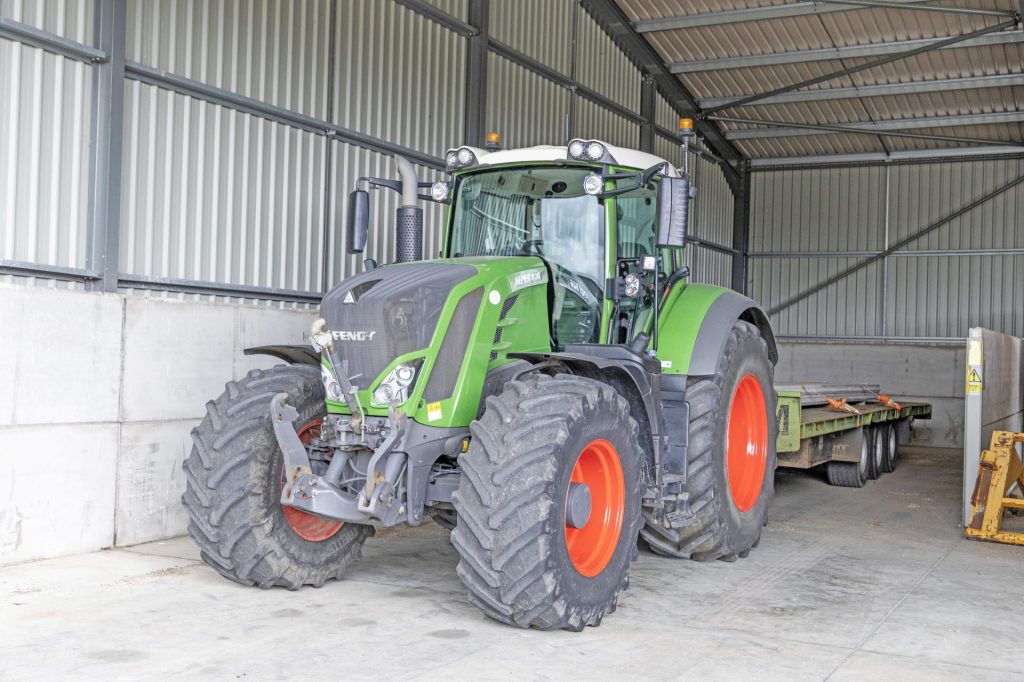
“It was a huge leap of faith, and while we saved on the cost of an operator and 20,000 litres of diesel, our drilling output fell massively. From running at 15km/hr with a 6.0m Väderstad drill, we found ourselves at 6km/hr with a 5.0m Cross Slot. We had a lot to learn – and are still learning.”
In the very wet autumn of 2019, Ed recalls only planting 25.25ha of a 300ha wheat crop.
“It was a disaster, and we had to do something different,” he says.
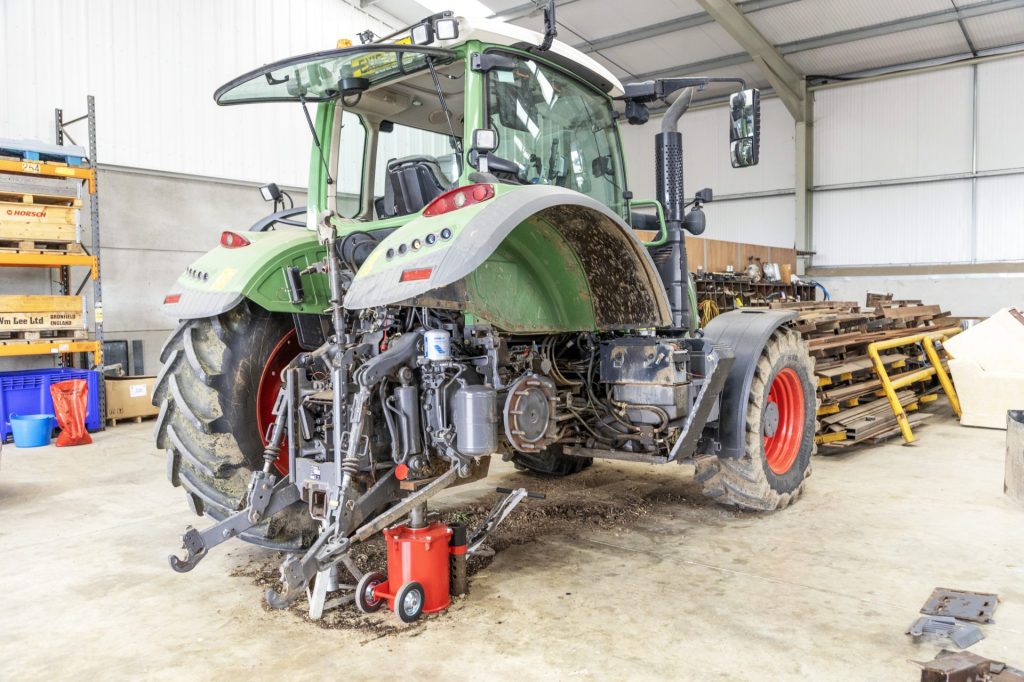
Plan B saw a secondhand Horsch CO4 arrive from machinery dealer Brocks complete with Dutch openers, and was a much needed get-out-of-jail card. The CO4 was eventually sent back to Brocks and transformed into a 4.0m mounted model by flipping everything front-to-back, to get the seed hopper closely mounted to the tractor.
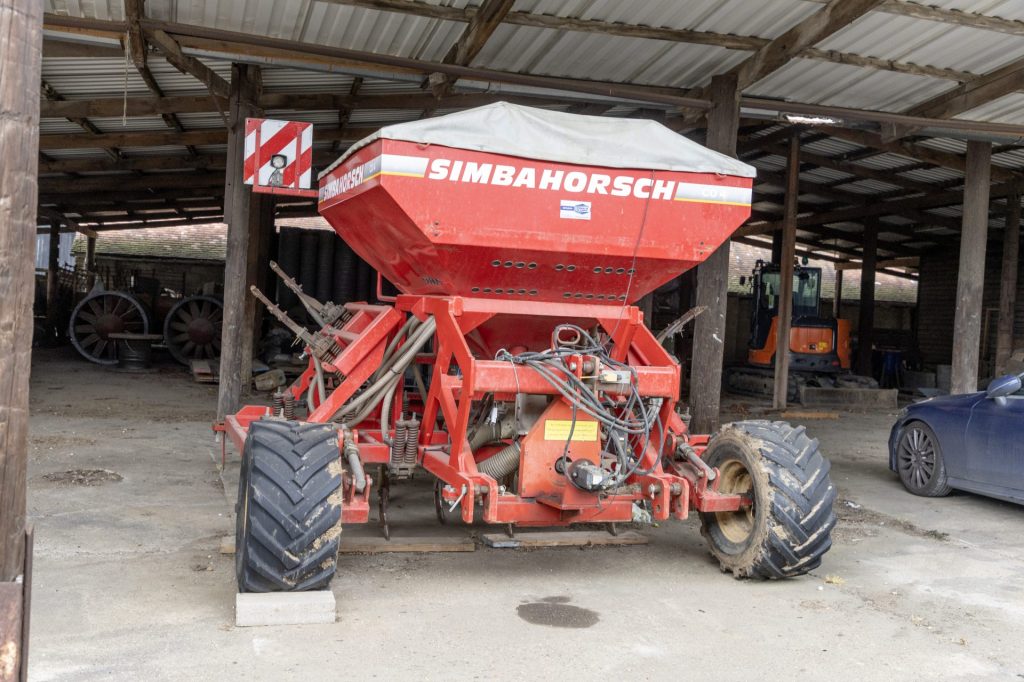
“Hindsight is wonderful and we shouldn’t have put all our eggs in one basket at that time, but you learn fast in those situations,” points out Ed. “Modifying the CO4 has increased coulter pressure and the drill is still used to direct drill all our pulses. We’ll put them in early, but at least 6in deep, so they can stay down through the autumn. This year’s bean crop is the best looking pulse crop we’ve ever grown.”
The CO4 is about to undergo a major refurbishment with all new wiring, new metering units, ISObus connectivity and blockage sensors, at a cost of less than £10,000.
“It’s a cost-effective approach to modernising something that works extremely well for us,” he adds.
That initial lack of output from the 5.0m Cross Slot was addressed in 2021 with the arrival of a 12m Avatar with half-width shut-off and 25cm row spacings.
“We tried a 6.0m Avatar on demo and decided to order a 12m unit as a long-term investment,” he says. “The Avatar has been a game-changer for us.”
Ed’s experience of zero-till on heavy Essex clays has confirmed there is no room for error.
“More so than ever, timing is everything, and that means we need output,” he says. “With the Avatar, we can put 300ha of wheat in the ground in just four days behind our Fendt 828 – although the smaller 724 could handle the drill if needed.”
He says that for the highest efficiency, a telehandler needs to sit with the drill, to shorten hopper fill times.
Alongside winter wheat, the farm grows winter beans, with cover crops ahead of low input spring cereals comprising wheat and oats, and the 10-year average on wheat is sat around nine tonnes/ha.
“There’s no doubt that our soils have continued to improve by not stirring up seedbeds and encouraging weed seeds to grow,” he adds. “We don’t see Take All anymore, and our blackgrass populations are easily managed by hand-rogueing. But the straw build-up is creating a problem with seed placement.”
Dealing with straw
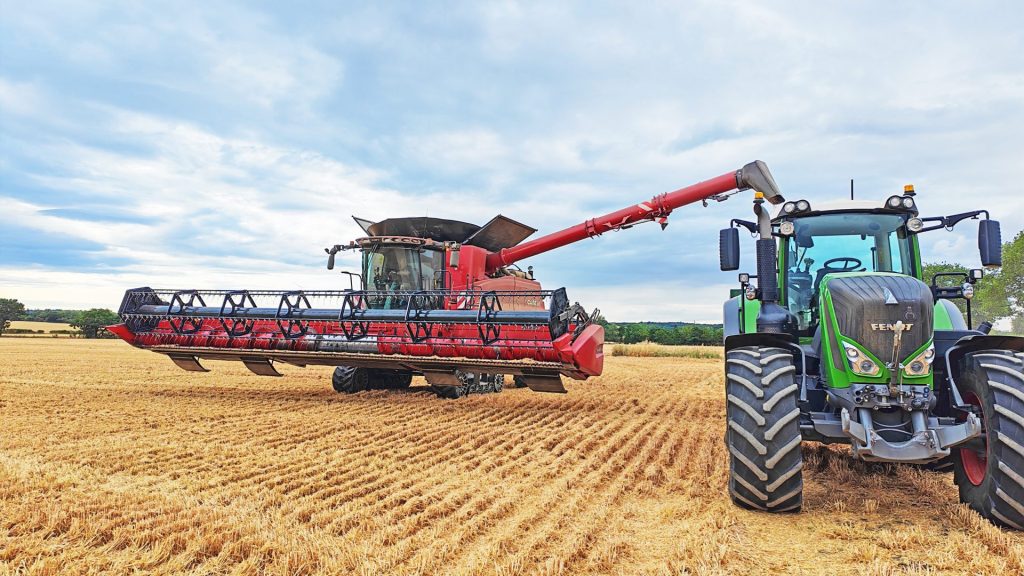
The farm’s six-year old Case IH 9250 and 10.6m header offers more than enough output for the area farmed, but importantly means there’s no need for a grain dryer. Though it’s ability to chop and spread straw well enough, is a challenge.
“On anything less than a still day, we can’t get a decent spread across the 35ft cut,” he says. “If we make a change here, it’ll be for a 30ft MacDon header – no compromise in output, but a bit less width means it should be easier to distribute chopped straw, giving improved results.”
The combine’s inability to spread effectively has left surface trash in concentrated amounts, which have impacted on the Avatar’s seed placement ability. While drilling at an angle to the previous crop does help, he says there is now a need to bale and remove straw.
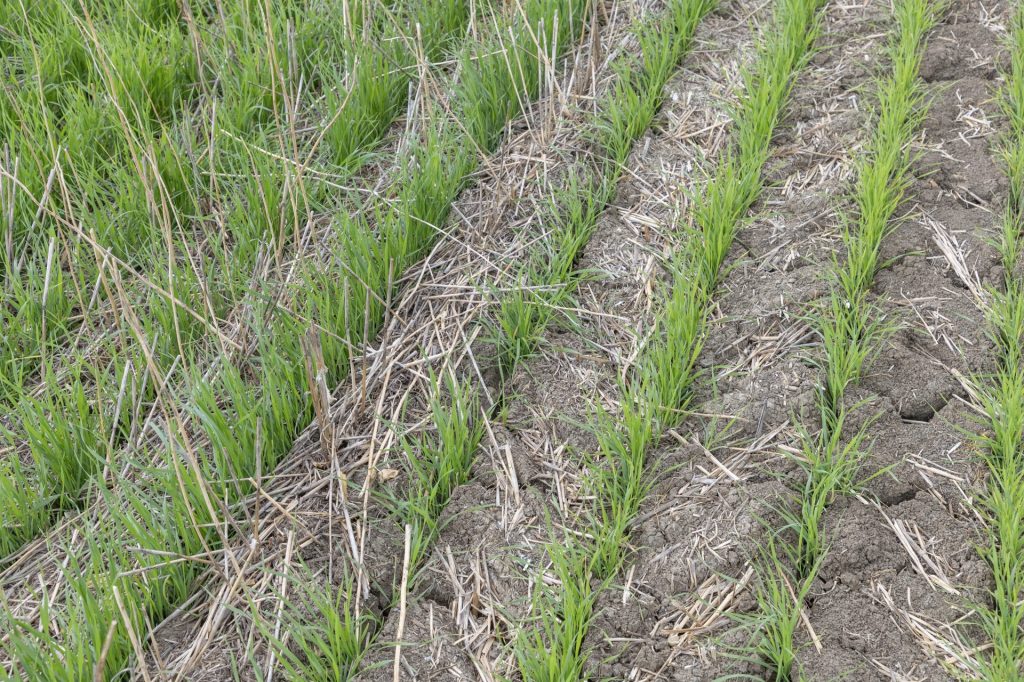
“Unlike cover crops, straw also doesn’t break down quickly enough, which puts the emphasis on spreading,” he adds. “Despite our use of a 12m Tillso Rake and Roll to disperse chopped straw and create a stale seedbed – which has solved around half of the problem – that surface trash is now a challenge we have to deal with.”
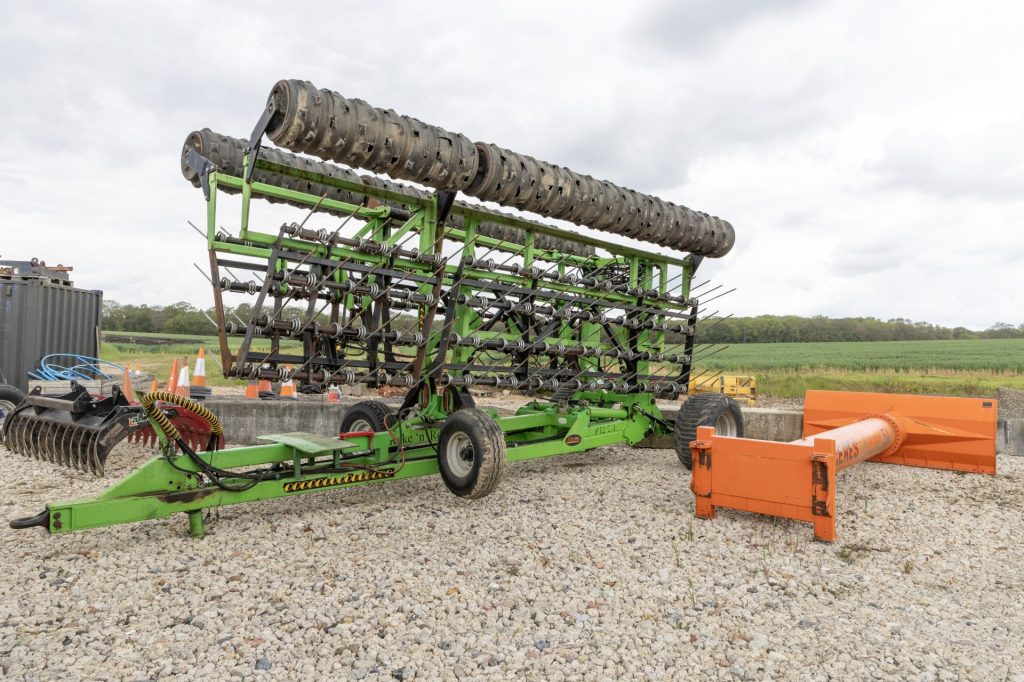
“So this year, we’re going to bale and remove all our straw, but with strict in-field traffic measures, to avoid putting wheelings all over our fields. Keeping to our permanent tramlines does make a big difference when managing compaction.”
The farm has a 20-year old set of 12m Cousins rolls in its streamlined machinery fleet, though they are rarely used.
“We’re not too worried about closing the slot left by the Avatar in the autumn,” he says. “It helps both drainage and aeration, and even in a dry season, the seed placement is deep enough to be in some moisture, but out of reach to the birds.”
Ed also makes a point that the increasingly high cost of kit means the farm has to be prepared to run tractors and machinery for much longer – but wider, more efficient kit also means fewer hours are put on the farm’s tractors.
“Our Fendt 828 is now nine years old and out of warranty, but it’s only done 4,500 hours,” he says. “We also have two Fendt 720’s – a 10-year old model with 6,500 hours and a newer Gen 7 model with 1,500 hours under its belt, that is used with the sprayer. And it means we rely on good support from our suppliers.”
“Crawfords backup is superb for our Fendt tractors, as is Horsch’s support with the sprayer and drill,” he says. “And we’ve made a point of keeping a good selection of spare parts close at hand. While the kit doesn’t work continuously for long hours, when we do go, we need to ensure reliability is maintained.”
A family-run partnership
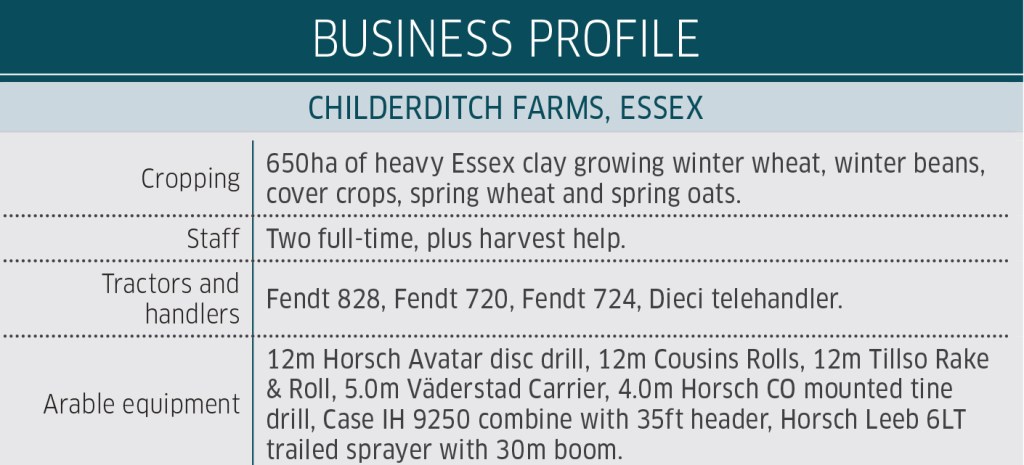
Childerditch Farms is a family-run partnership comprising brothers Ed and Charles Ford, totalling 1,130ha. Edward is based at the 650ha Heckapen Farm in Essex, while Charles is based at the 520ha Beckerings Park Estate in Bedfordshire.
While the brothers farm at different geographical locations that are separated by a distance of 70 miles – or three hours by tractor – the business is run collectively alongside both farms’ diversification projects. These include shooting and fishing, residential and commercial lettings, plus storage and office space. And each farm is largely self-sufficient with kit.
Summary
Paring the machinery fleet to the bone is not for everyone. But its decision to opt for few high-capacity machines appears to have been the making of efficiency and timeliness for the team at Childerditch Farms as it grabs zero till by the horns. That it has been done without a significant yield penalty makes this all the more rewarding, for this cost-conscious business.
For more up-to-date farming news click here and subscribe now to profi and save.