
IChase has developed a laser system equipped with artificial intelligence to deter birds. profi had the opportunity to exclusively test the new system.
KEEPING IT BRIEF
- The IChase can scare away certain bird species with a focused laser beam.
- The birds are not injured by the laser light attacks.
- In practical tests, the system worked well, with pest bird numbers reduced.
- Using Class 3B lasers in barns and farmyards involves a certain risk to eye health.
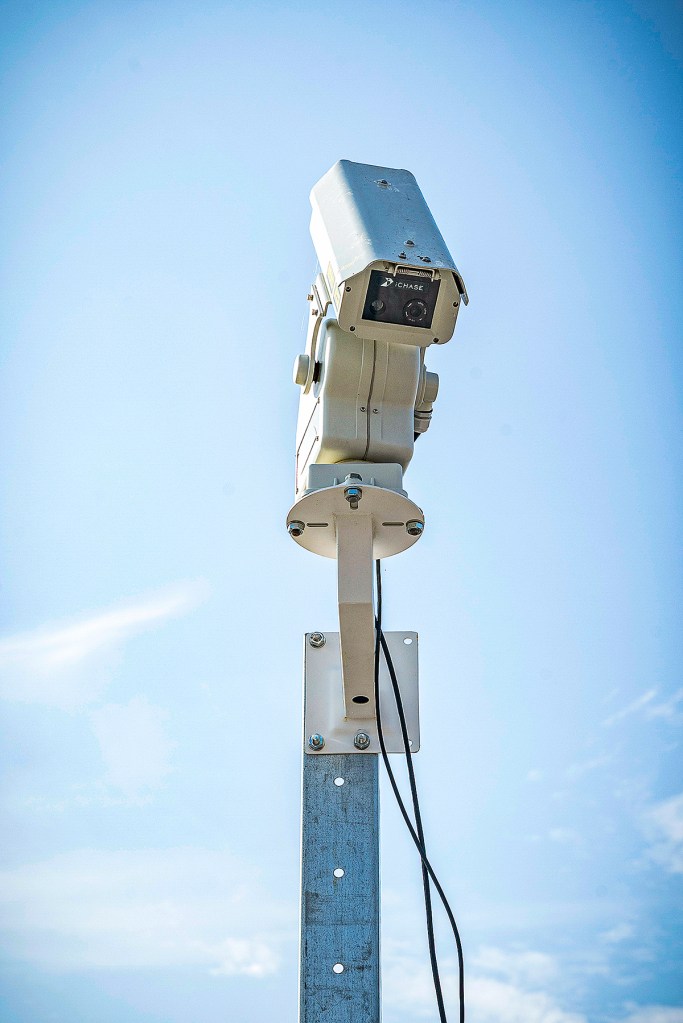
Birdsong touches the human soul, as the old saying goes. Unfortunately, it also poses a health risk; sparrows, for example, are so susceptible to salmonellosis that these birds are classed as asymptomatic carriers of the salmonella bacteria, and feed contaminated with their droppings may transmit the disease to both livestock and poultry.
As well as bacterial diseases, wild birds also pose the risk of transmitting avian influenza viruses (H5N1), and, as recently as 2024, the virus infected cattle for the first time.
Investigations showed that in all the cattle herds the transmission took place either through a direct contact with droppings, contaminated surfaces, feed or bedding.
In an ideal world the most effective way to prevent infection is to keep wild birds away from your livestock — easier said than done, especially in open barns.
EuroTier debut
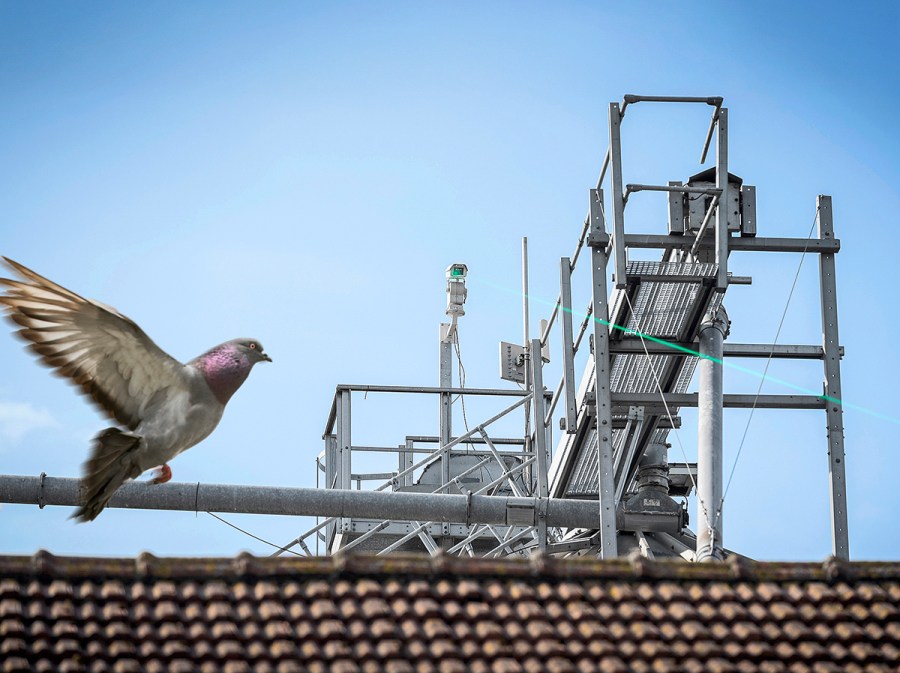
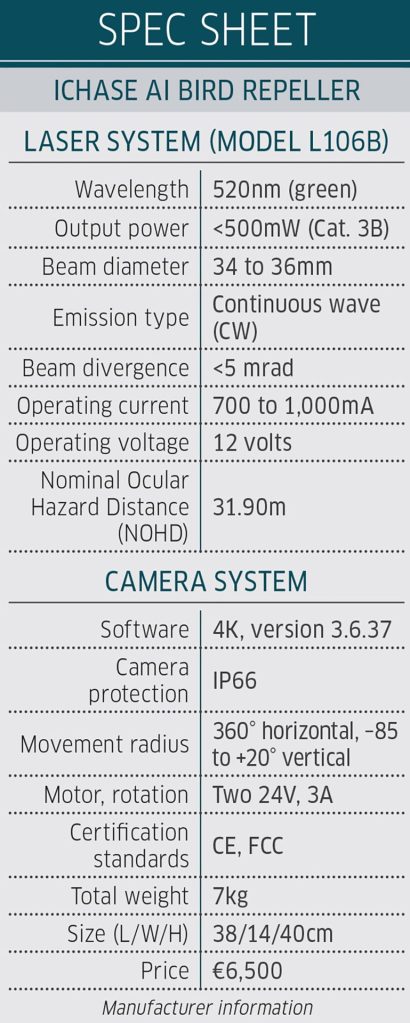
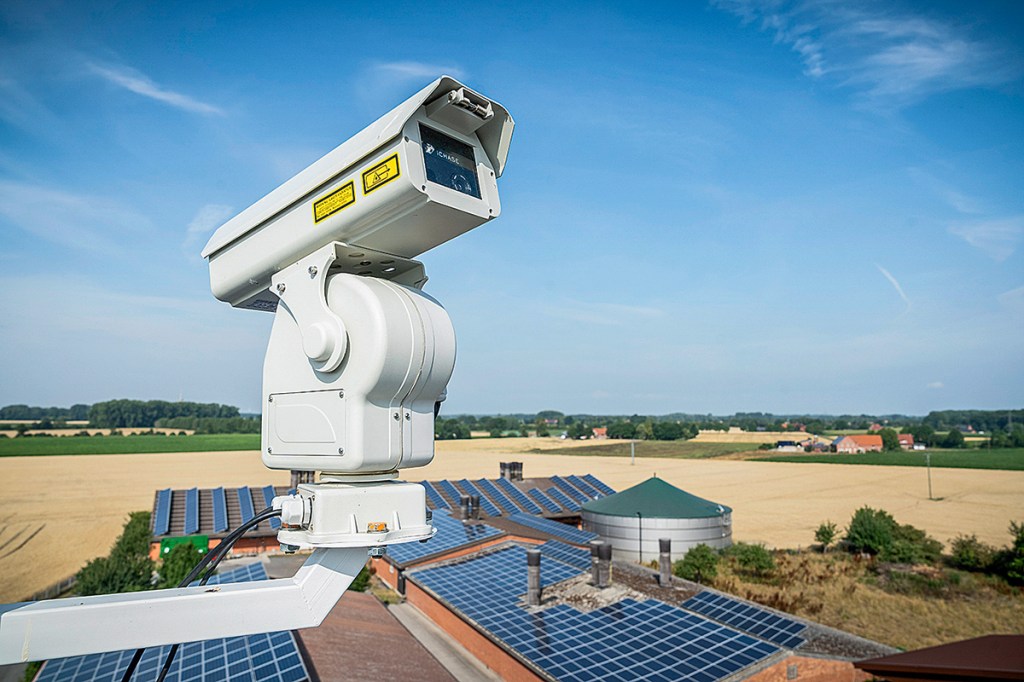
Having spotted IChase’s Bird Repeller at EuroTier 2024 we were keen to give it a go. The 7kg device uses a 520nm (Class 3B) laser system supported by a 4K camera connected to AI software. This intelligence allows it to precisely target its green light beam at selected types of birds such as pigeons, jackdaws or crows.
People and cattle are also recognised by the AI — and, unlike birds, are excluded from tracking, explains IChase. It can also do the same avoidance with songbirds and poultry such as laying hens. Likewise, free range chickens and domestic geese are recognised and not put in the IChase crosshairs.
Not wanting to give the game away, but we set up the system on a test farm at the end of the nesting season and the place was filled with bird calls, seemingly more than it had been in several years, But just a few days after our three-month trial had begun, a large number of the pigeons and jackdaws had got the message and were looking for a new postcode. The effect was noticeable, pretty much immediately.
Targeted actions
A second finding from our test: while the laser doesn’t harm the animals, the rapid moving beam of light does annoy them. The disgruntled livestock then disturbed the birds who fly away. We only observed this scenario twice during the three-month period. But with fewer pigeons and jackdaws around after just a few days, the number of laser beams sweeping across the roofs of the building also decreased.
The system does carefully log how many times it fires its laser. This can be checked online via smartphone or PC, with the dashboard also showing the time at which the system tried to drive birds away. It also stores before-and-after photos of the bird — ideally, the second image shows the spot where it was sitting as empty.
The technology
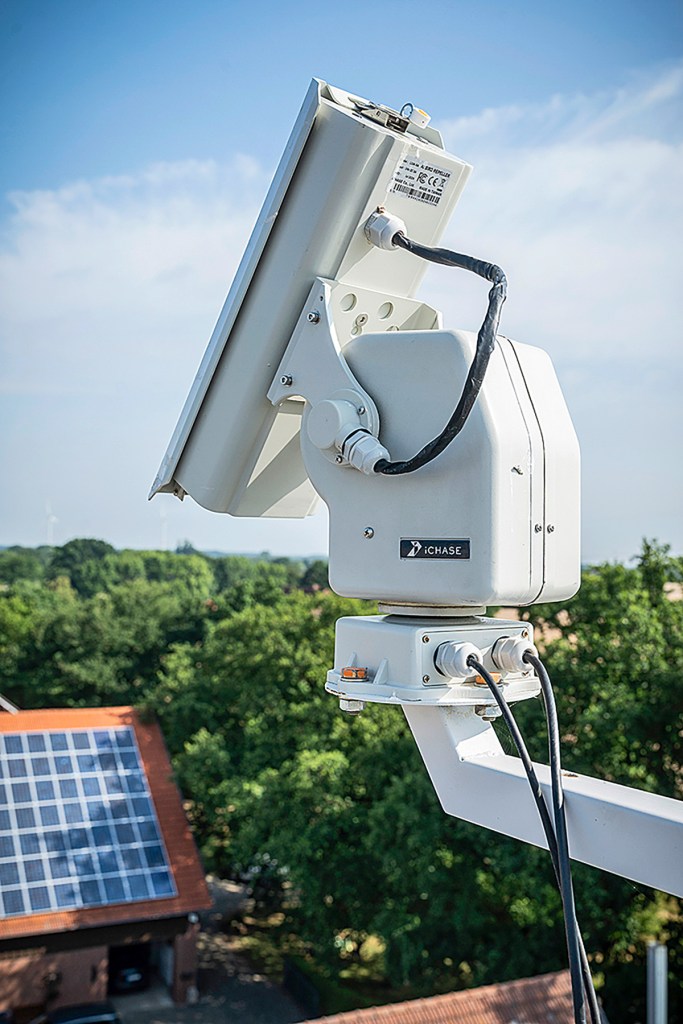
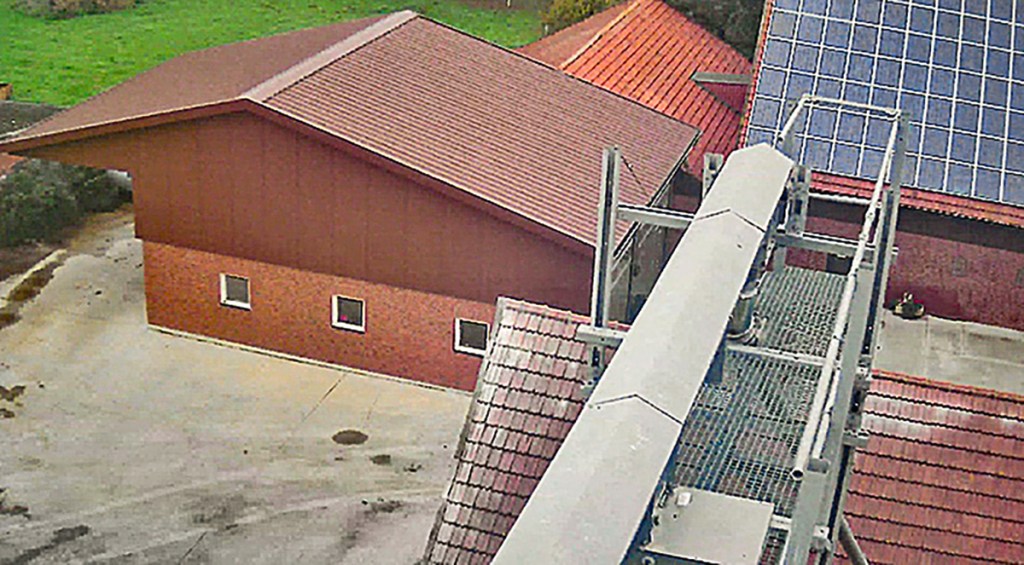
The centrepiece of the 40cm high unit is the laser and the AI camera which live together in a weatherproof housing. A 24-volt motor rotates the camera up to 360°. A second motor allows the camera to tilt 20° upwards and 85° downwards. This gives the camera a good all-round view, and tilting up into the sky allows birds to be detected as they approach.
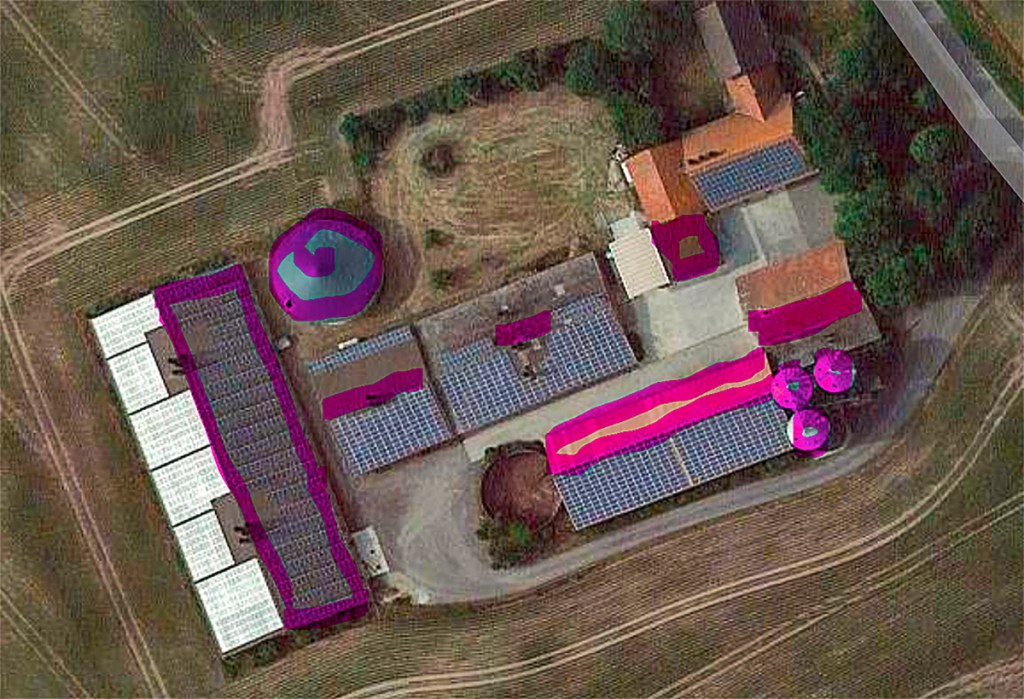
While the system does detect birds in flight, it doesn’t actually shoot them while they are still flying. The system only sets to work when a bird is within the defined area which you set up on an aerial image.
Tricky installation
The good news is that all correspondence is in English, and an electrician is only needed for installing the power supply (24 volts, 3A) and a kill switch.
Providing a fast internet connection was a bit more tricky. The test farm wasn’t keen on sharing its WiFi connection, just in case there was a major security breach, so we got ourselves a 4G router with a mobile data SIM. However, we rather underestimated the volume of data being handled. Contrary to the manufacturer’s prediction, we needed 120 GB per month not 40 GB. If, like us, you would prefer not to open up your home network, you’ll need not only good mobile reception but also a reasonably priced mobile data plan.
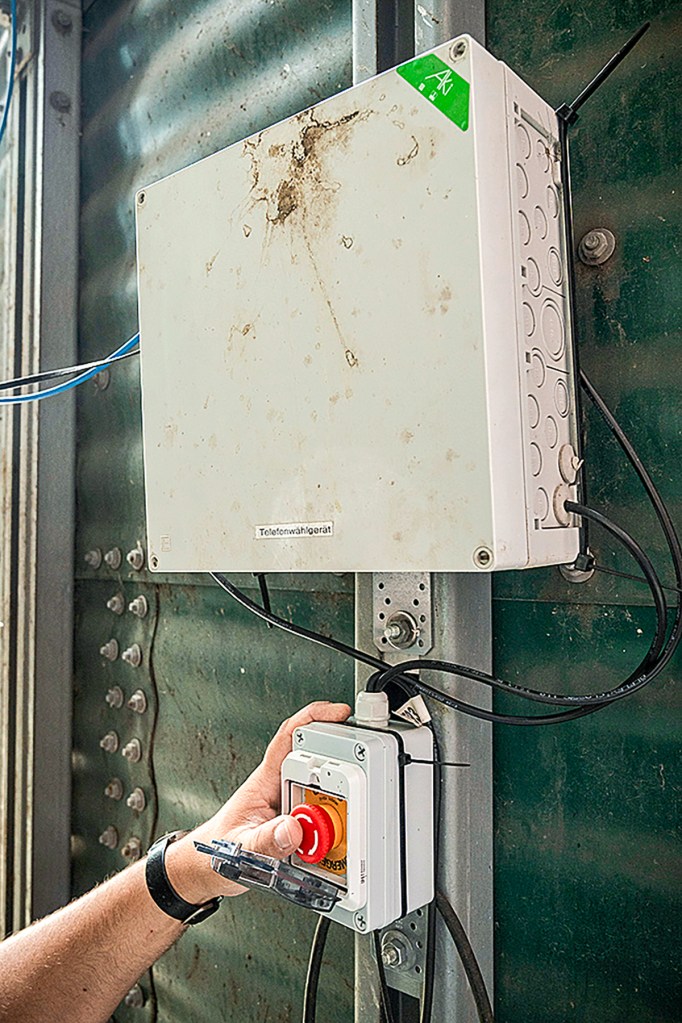
What we did like about the installation, however, was that despite the unavoidable time difference — Taiwan is six hours ahead of Germany in summer and seven hours in winter — communication worked well from Monday to Friday. In fact, there was a lively exchange by WhatsApp and email during the first few days. Before installation, the manufacturer gave us several tips on where in the yard to position the unit. And, to ensure that the AI camera does exactly what you want it to do, IChase asks important questions set out in writing beforehand. For example, which areas within the 200m action radius the system should protect, which bird species to target, and at what times the system should be active.
In our case, the system was active from 6am to 6pm. And only pigeons, jackdaws and one species of bird of prey were to be targeted once they had settled on the roofs of the livestock buildings. To prevent eye damage, we instructed the manufacturer to exclude all areas near ground level.
The system learns
After installation, the laser system begins a training phase. According to the maker, this allows it to adapt to local conditions — for example to identify local bird shapes more accurately. In our case, training took several weeks. In addition, the firm remotely updated the software every four weeks.
According to the supplier, these regular updates not only improve safety all the time, but also improve AI camera recognition — always with the aim of ensuring the birds being deterred do not get familiar with the system too quickly. The laser regularly alters the pattern it uses to drive birds away. To do this, it first identifies pigeons, swallows, finches, sparrows, starlings, crows and so on before these targets are individually chased off with the laser.
The so-called AI live detection feature, too, is constantly being trained. This switches the laser off as soon as people, cattle or vehicles enter the action zone. The aim is to ensure there is no danger to the eyes of people or animals. To reiterate the point, this applies to the whole operating radius, up to 200m around the installation position of the AI Bird Repeller.
Test results in detail
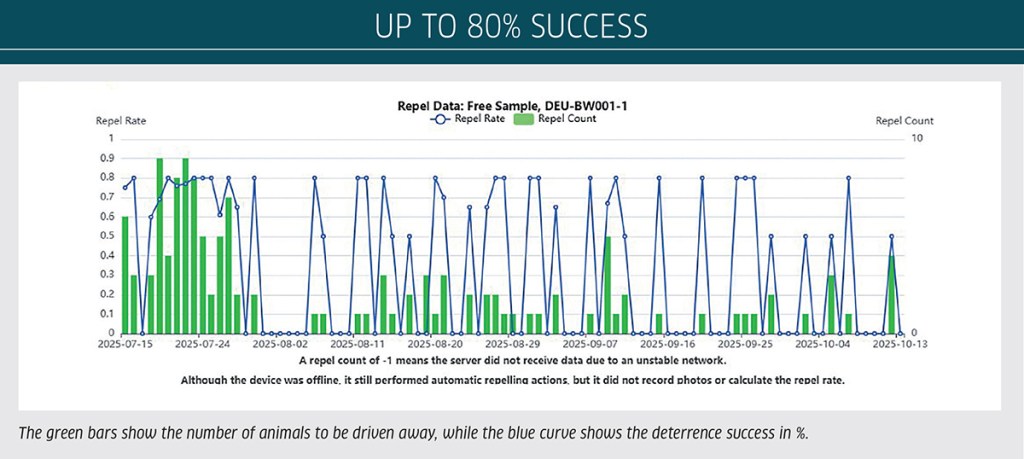
Our system was commissioned on 15 July 2025. With up to eight deterrent actions a day, the system had plenty to do in the first few days. With a deterrence rate of 75 to 80%, the number of birds needing to be driven away quickly decreased. Just two weeks after start-up, only two deterrent actions were recorded per day and from 31 July to 5 August, the system didn’t spot a single pigeon or jackdaw. In fact, according to the farmer, during this period the three grain silos on the farm were free of pigeons and jackdaws for the first time in years.
Three weeks after the trial began, the first of these two pest bird species reappeared. According to the system log, 60-80% were successfully scared off again. Interestingly, there were always two or three days during which none of the targeted species appeared on the farm. Overall, the number of pest birds steadily decreased.
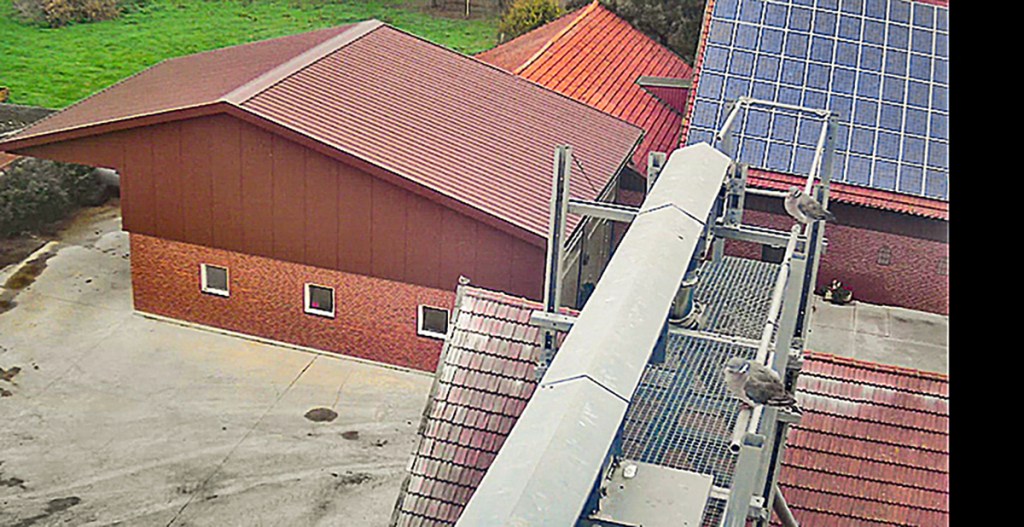
It was also noticeable, however, that there were recurring days when every second bird refused to be driven away by the system. As the before-and-after images showed, the birds in question always settled at specific points very close to the system.
At this point we remembered a warning from IChase before the test that this could happen when the birds were too close to the laser system. The birds had quite quickly worked this out — where they could rest undisturbed. While hardly a pigeon could be seen in the active zone of the system from then on, by the end of our test one pigeon was a repeat offender, stubbornly sitting in the no-shoot zone.
We concluded that the system does a good job of preventing habituation in the active zone. At the same time, the birds quickly work out where they can stay without being disturbed. This applied mainly to pigeons, whereas jackdaws avoided the area.
Strict safety rules
Wrapping up, we can say that the AI-guided laser system worked well at our test farm — habituation was almost non-existent.
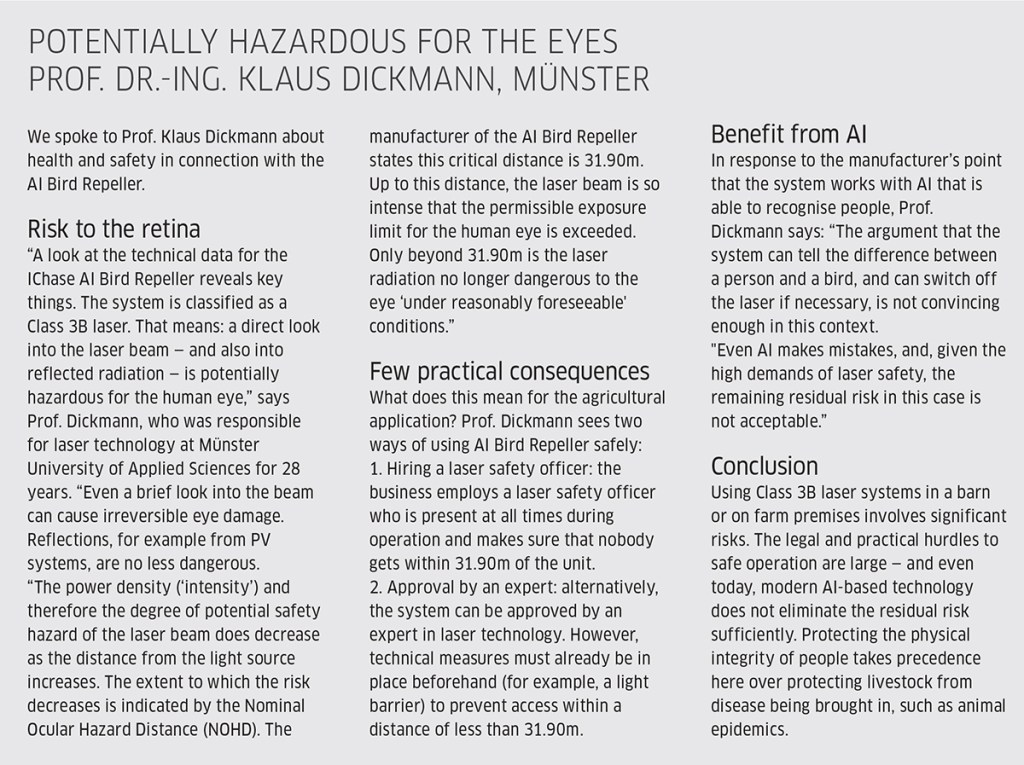
However, we still took the system down after the test for the simple reason that the laser used by IChase is potentially dangerous to the human eye within a radius of 31.90m. Although AI normally ensures that people do not come into the laser beam’s line of fire, there is still a minimal residual risk — and that risk requires a range of protective measures when using the system. Anyone interested in the laser system, which costs around €6,500, should bear this in mind. A version with a 10 to 15m NOHD, alongside the current 31.90m NOHD (Nominal Ocular Hazard Distance), would be sufficient for most livestock farms.
Martin Zäh
For more up-to-date farming news click here and subscribe now to profi and save.