
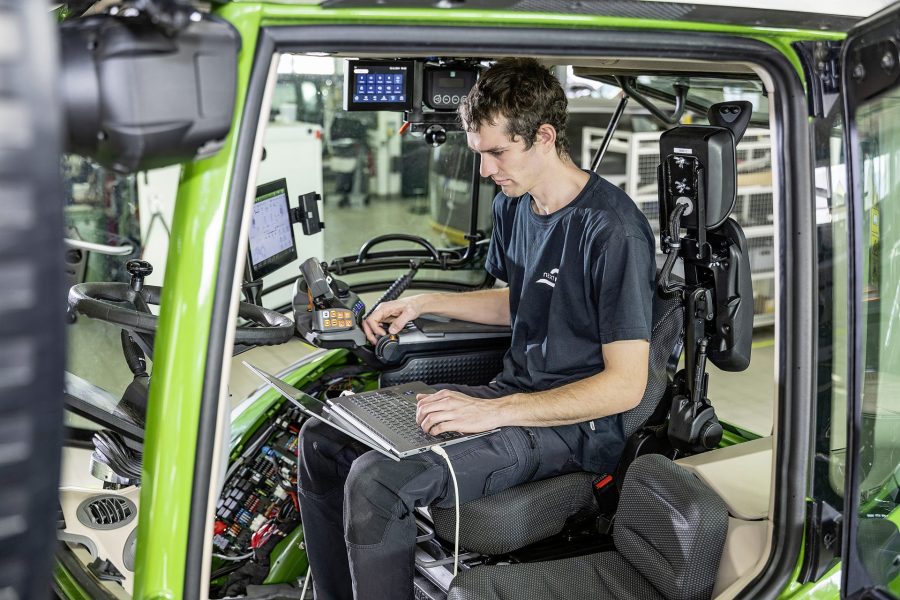
Arnold NextG initially developed a drive-by-wire system for cars and other automotive vehicles, but recently it has been crafting the technology into tractors. Could this technology also be the foundation for autonomous operation? We find out.
KEEPING IT BRIEF
- The technology opens up several possibilities for operation.
- Is a universal system that can be retrofitted to used machines.
- Was actually developed for private cars.
Kevin and Luca Arnold have been developing their own drive-by-wire solutions since 2005, building on the ideas from their father, Roland, who has been modifying vehicles for people with disabilities with his firm Paravan in Swabia, southern Germany since 1998.
They introduced the Space Drive system 20 years ago to allow people with even severe physical disabilities to achieve unrestricted mobility. The Arnold system is based on drive-by-wire technology that controls the car electrically, allowing people to drive a car without using a steering wheel or pedals.
“A person who is able to move a small lever a few centimetres in four directions, using any part of their body, is able to drive a car that is equipped with this system,” explains Roland Arnold.
At this point, you may be wondering … what has this got to do with autonomous tractors?
Drive-by-wire
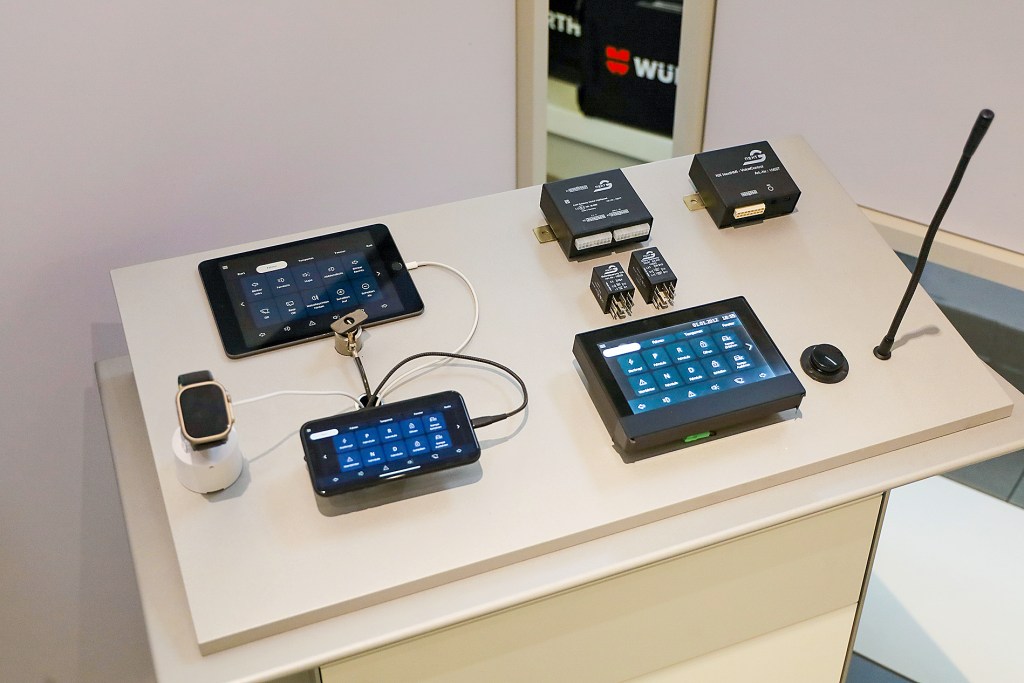
The NextG drive-by-wire system replaces the regular controls such as the steering wheel, pedals or switches with electronic components such as a joystick, tablet or a remote control. Inputs to these controls are transmitted electronically to a control unit, making it possible to precisely operate the entire vehicle from a joystick, tablet or remote control, including the lights, wipers and even machine functions, comments the company. For the system, it’s irrelevant which source sends the signals to the control unit. Instead of a remote control, the signal could come from environmental sensors and cameras.
Remote control
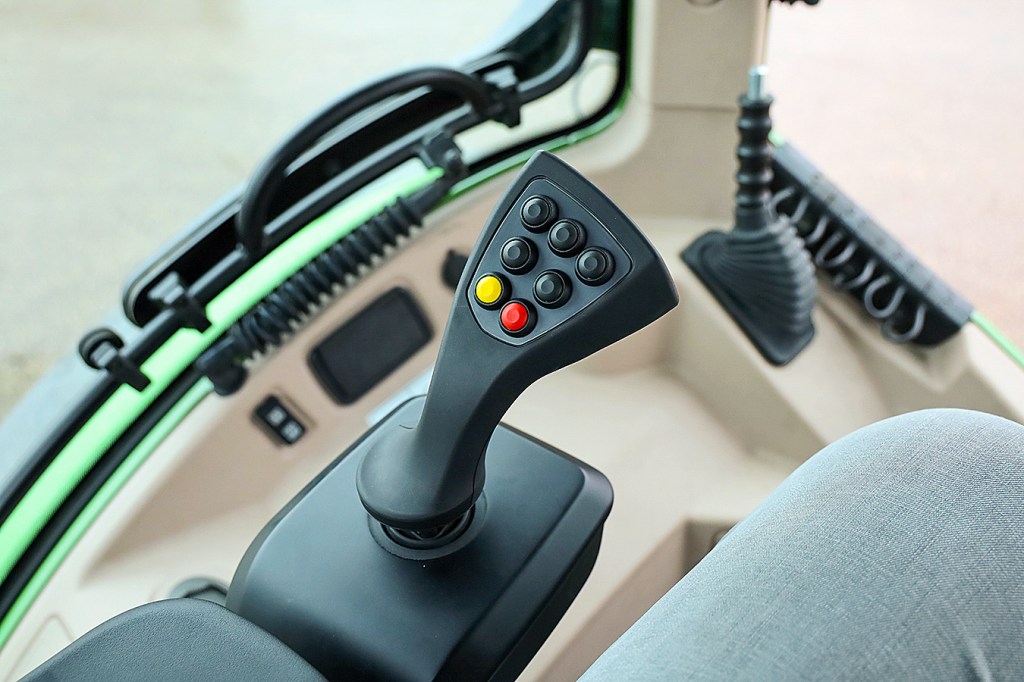
Likewise, any machines equipped with the technology can be precisely controlled and manoeuvred from a remote control outside of the cab. In theory, all machine functions can be operated remotely, so, for example, when standing next to a machine, the user could have a better view than from the cab. This can be very helpful, say, when parking a machine in a narrow building without a helper to give directions.
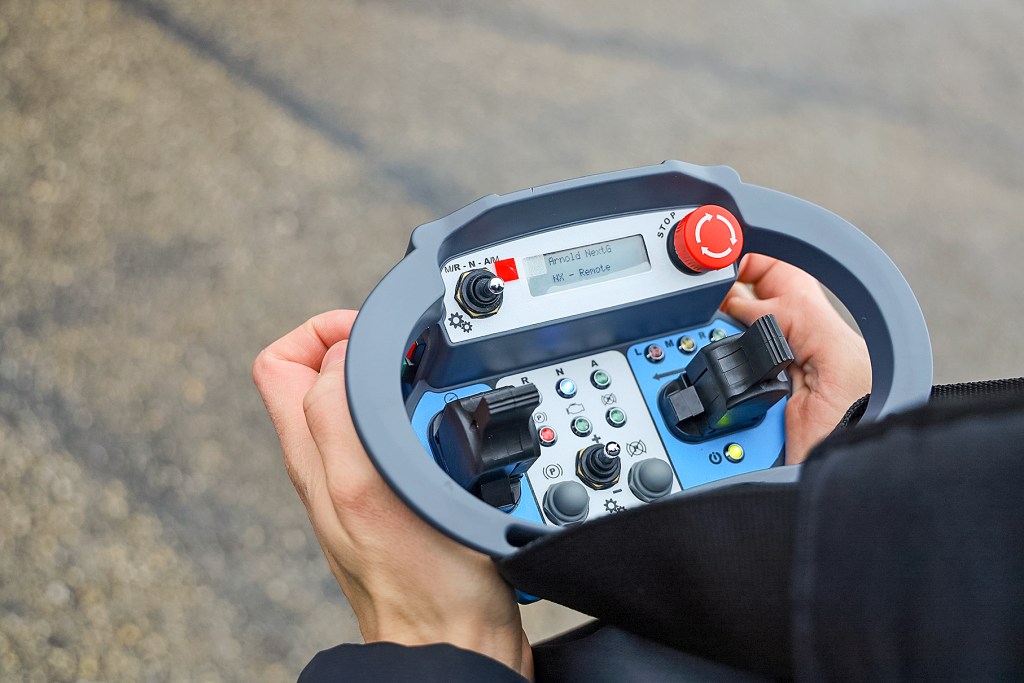
In our case, a joystick was attached to the left armrest for steering the tractor and also controlling various machine functions. This then makes it possible to add a reverse-drive system in a relatively small cab because you don’t need a steering wheel. This is just one possibility; there are loads more.
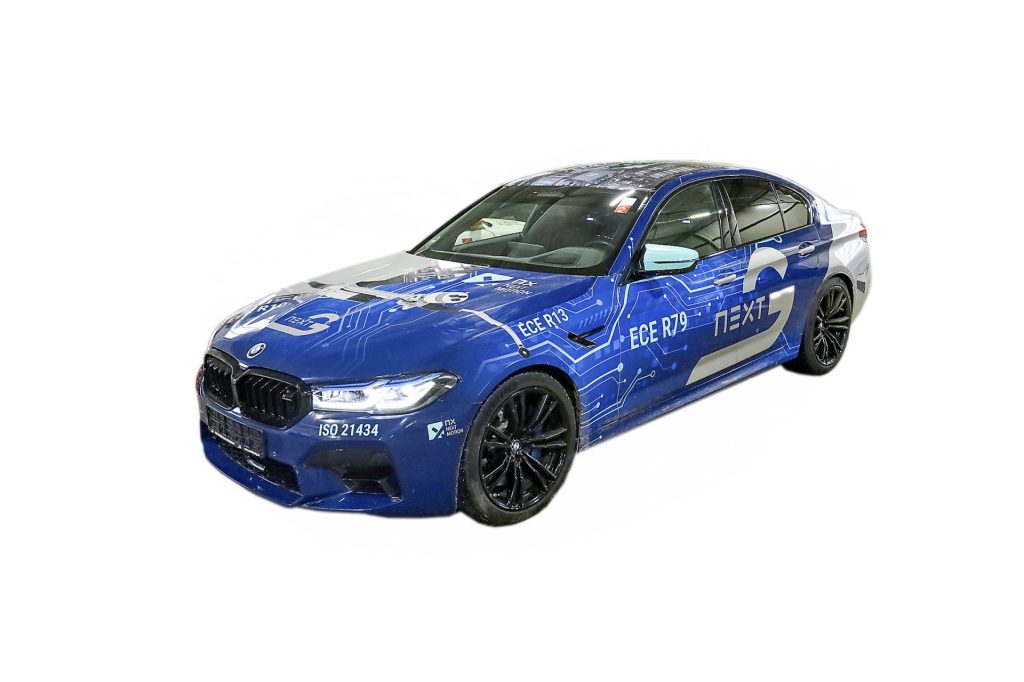
The drive-by-wire system was approved for road use in 2024 — a milestone for testing prototypes in real-life conditions on the road. This makes it much easier to use and test the system on commercial vehicles.
At the moment, Arnold NextG is waiting for road-approved sensor systems to come on the market. When such systems are installed on a tractor, then it is not just able to work autonomously in the field, but also travel on public roads without a driver — one for the longer term, perhaps.
Field work
During our visit last November, we were able to test drive a remote-controlled tractor on the company’s own test site. We will get to operate the tractor in the field for a driving impression this autumn.
Fit for the future
Arnold NextG has developed a technology that not only controls agricultural kit and construction machinery and other vehicles remotely, but also autonomously. All that’s missing are the approved sensors and the relevant traffic regulations. The plan is to keep the system universal and retrofittable and then set up a comprehensive service network by working with various dealers and vehicle manufacturers.
It’s exciting to see what is already technically possible today. The technology will be further optimised and expanded through practical tests and experience. NextG will also be at Agritechnica for the first time if you want to take a closer look.
INTERVIEW WITH COMPANY FOUNDER KEVIN ARNOLD

You transferred the technology from the automobile sector to agricultural machinery. What advantages do you see for the industry?
Kevin Arnold: Our system enables high-precision control, which ensures the optimum efficiency in the use of crop inputs, staff and fuel. It also offers maximum flexibility, as it is possible to switch between manual control, remote control and autonomous processes. Homologation will allow owners to use their tractors autonomously in the field and travel autonomously between farm and field — a major step towards full Level 5 autonomy.
Agricultural machinery is often associated with risks and accidents. These risks increase with autonomy. How is the risk minimised?
Kevin Arnold: The system is multi-redundant and fail-operational, which significantly reduces the risk of accidents thanks to a unique safety concept. It is certified to the highest standards such as ISO 26262 or ISO 25119 — the standard for the safety of tractors and ag machinery — and therefore fulfils the requirements for use both in the field and on the road.
Farmers ask for a competent local contact person. Are you looking to set up a service network in cooperation with existing dealers or manufacturers?
Kevin Arnold: We want to ensure our customers receive first-class support. We are therefore working with dealers on establishing a service network. Together with manufacturers, we are creating long-term solutions that guarantee high-level reliability and enable us to guarantee comprehensive service options such as updates, training and swift troubleshooting. This is to ensure innovative technology doesn’t fail due to a lack of support. Nevertheless, we want to remain independent — in terms of manufacturer and platform — ensuring our system can be retrofitted to any type of machine, including used vehicles.
Where do you see the future for your product?
Kevin Arnold: Our aim is to establish autonomous processes that not only optimise tillage practices and harvest operations, but also enable communication between machines (Smart Farming). In the long term, we aim to establish ourselves as the leading platform for agricultural control technologies. Our system also enables manufacturers to develop and realise completely new cab design concepts.
How long will it be before agricultural machines will be operating autonomously using the system?
Kevin Arnold: Technologically, our system is ready for fully autonomous use. Regulatory approvals and full integration into existing vehicle platforms are currently the biggest obstacles. We expect that, in the next few years, the first tractors will not only be able to work autonomously in the field, but also travel without driver between the farm and the field. The further development of this revolutionary innovation depends to a large extent on the support of the manufacturers, but above all on the legislator.
Sebastian Rüther
For more up-to-date farming news click here and subscribe now to profi and save.