

With the rate paid for electricity generated from PV panels starting to drop, farmers are looking at ways to maximise the utilisation of on-farm power. Could this be the catalyst to sales success for the Faresin battery-powered self-propelled mixer?
KEEPING IT BRIEF
- Faresin’s rule of thumb is 7kWh of electricity per tonne of feed delivered to the feed fence.
- With the 91kWh battery, you can manage around three to four mixes per battery charge.
Faresin already has several years of experience with electric drives in its industrial telehandlers. And for two years now, the engineering team has been transferring this know-how across to the company’s other product range — diet feeders.
Rather than start from a fresh sheet, the team used as much of the existing hardware from the diesel-power Leader self-propelled feeder as possible. The chassis, the loading arm and mixing tub as well as the Ital-Cap cab are all carried over to the Full Electric.
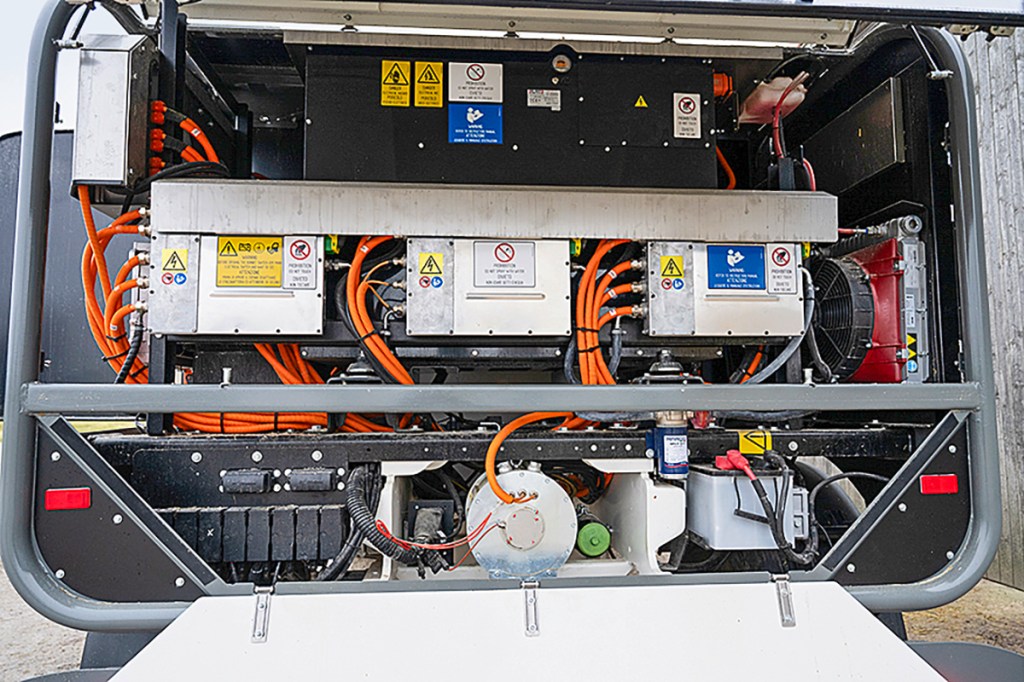
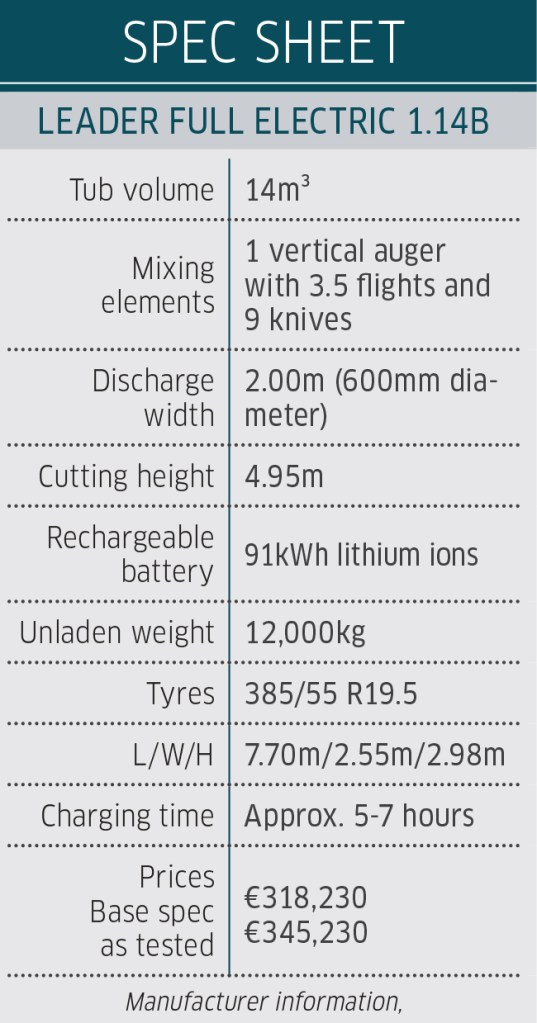
Replacing the conventional diesel burner is a 91kWh lithium-ion battery, which lives in the Faresin’s tail. There is also a 136kWh alternative. This is sufficient for a larger twin-auger, 24m³ mixer model, which was shown at Agritechnica last November.
Charging is done via a 32amp plug at up to 22kW/hr, with a full recharge taking around five to seven hours. Fast-charging is also possible with direct current at 50 to 100kW/hr, but only a few businesses currently use it.
Electric instead of hydraulic
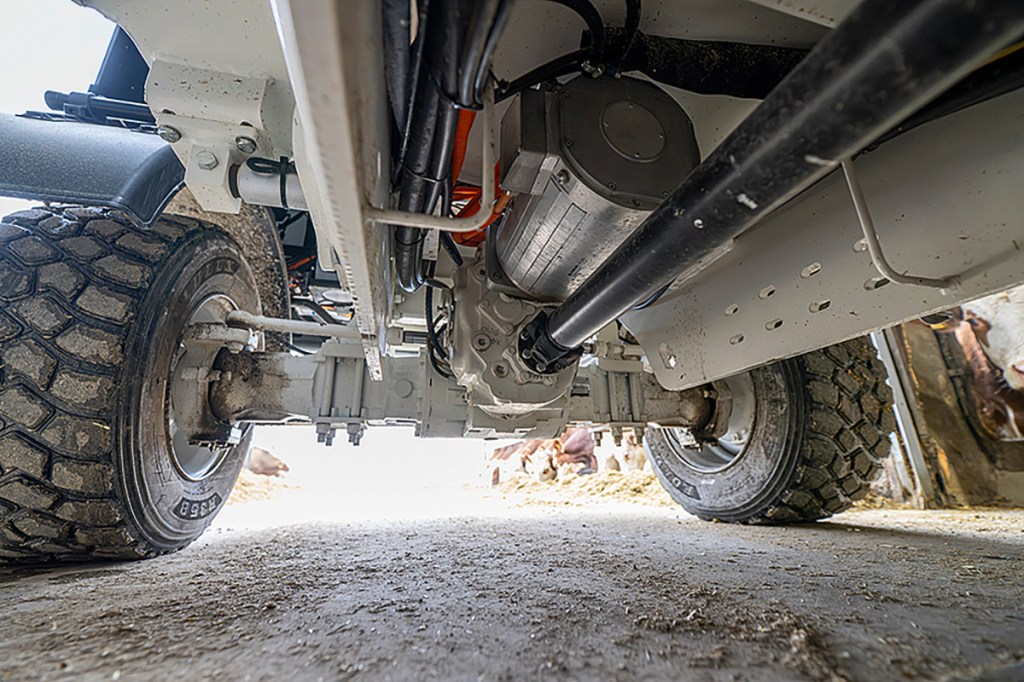
Instead of hydrostatic drive, there are electric motors: 51kW for the drive system, 40kW for the mixing auger and 34kW for the milling head. Benefits of electric motors for this kind of work are the fully integrated overload protection, constant torque … and you can choose whatever speed you want.
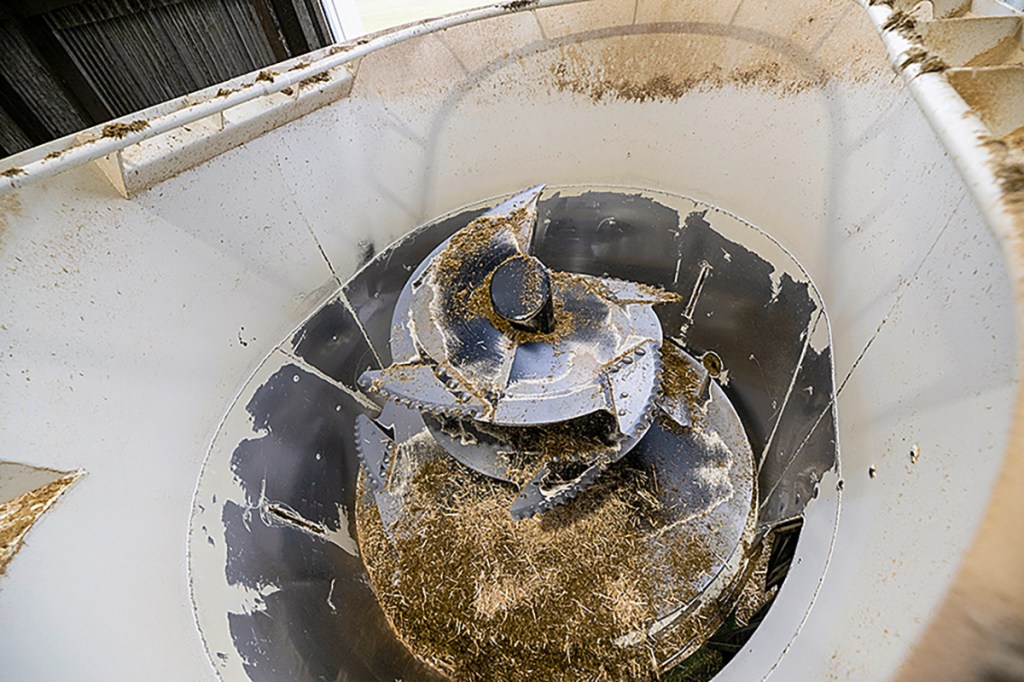
But Faresin has not been able to completely abandon hydraulics. Currently, there is a 23kW motor used for the 40l/min hydraulic pump that looks after the elevator drive, tub doors, counter-knives and steering.
With fewer hydraulic drives, there is also less demand for cooling, which can be an energy-hungry operation.
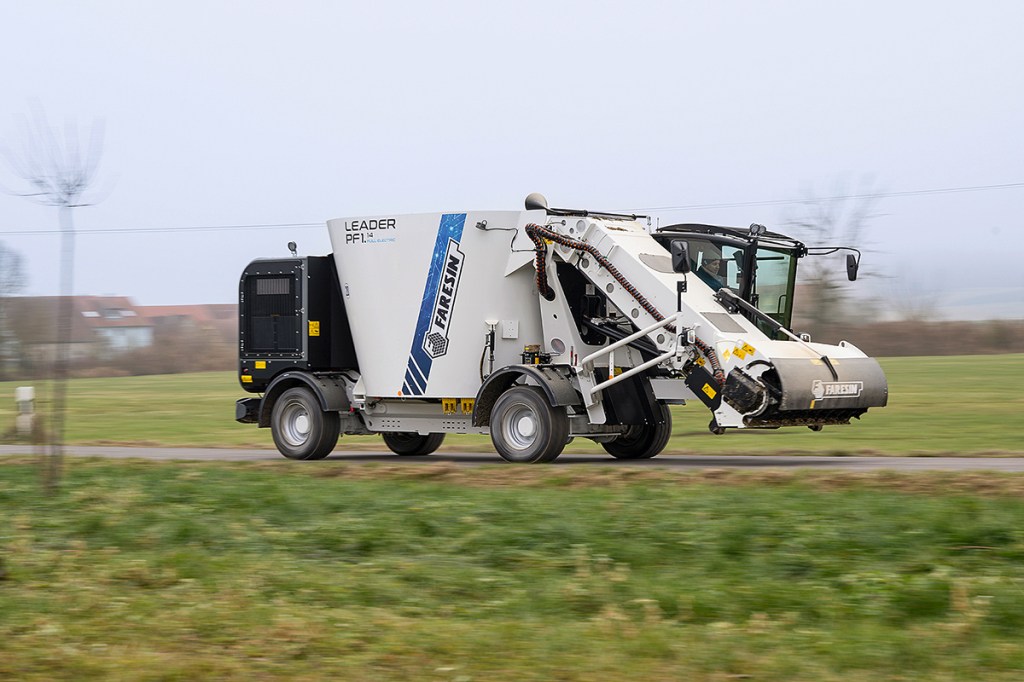
Like a fuel-powered machine — just silent
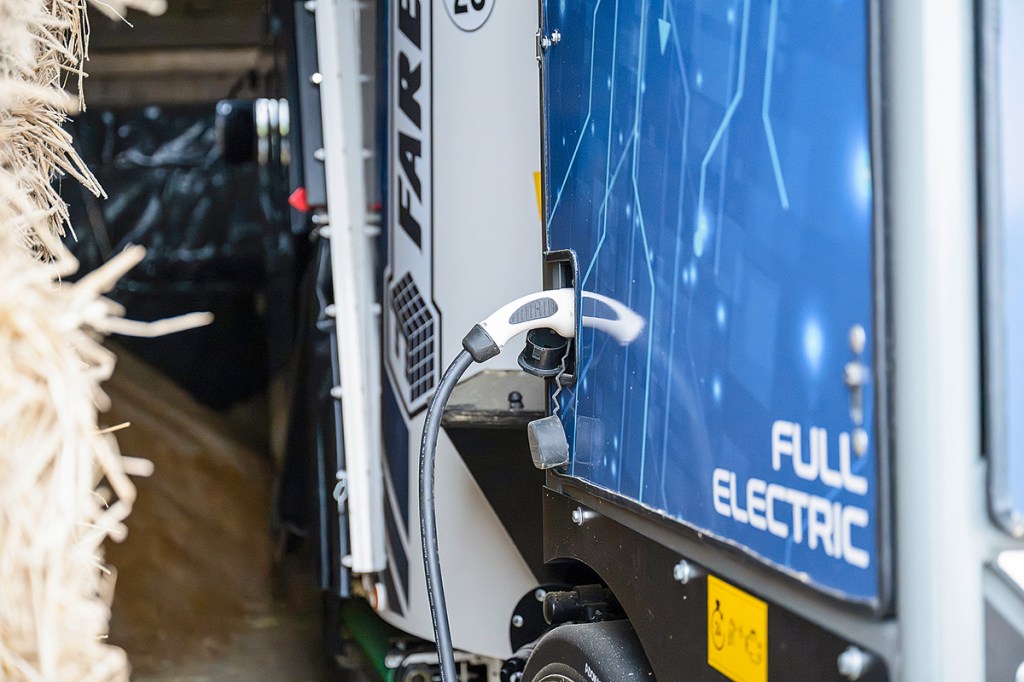
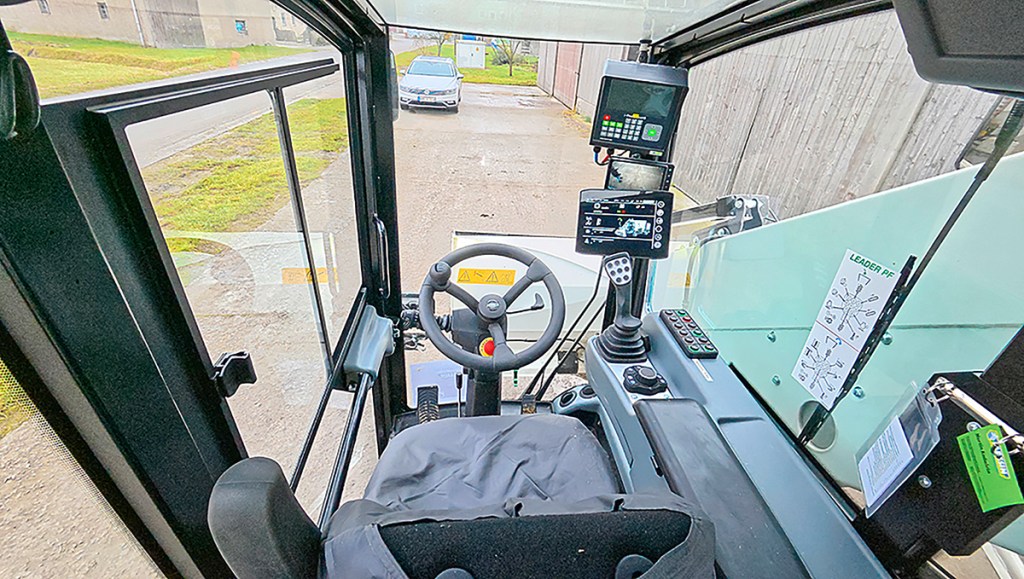
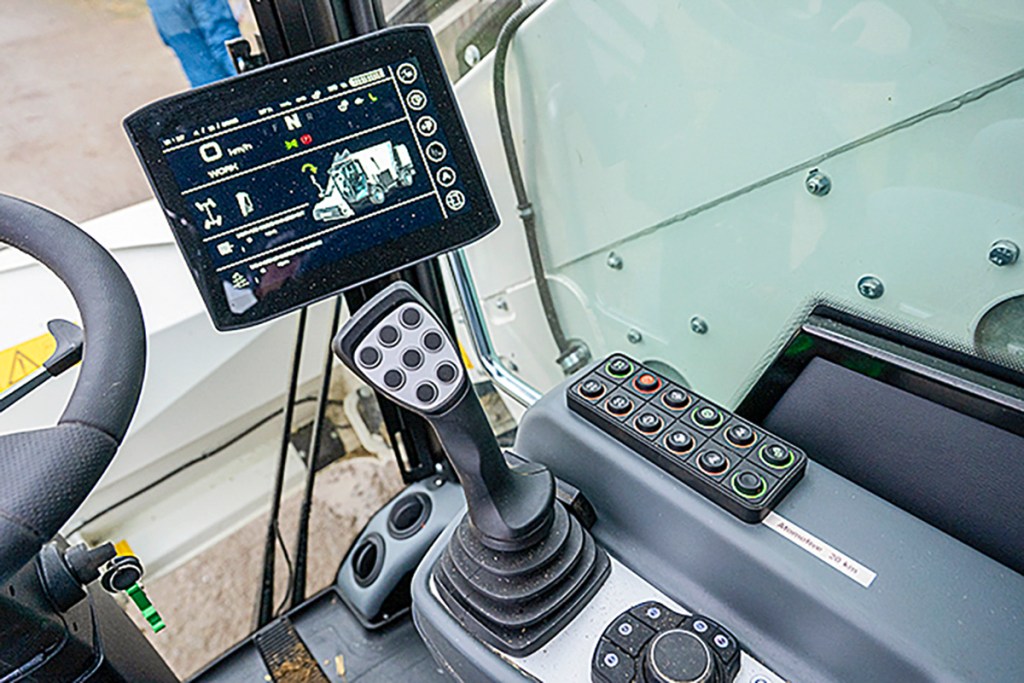
Once the standard charging plug has been removed from the rear of the machine, work can begin with the touch of a button in the cab thanks to the pre-warmed battery. And apart from the reversing beeper, you really don’t hear anything.
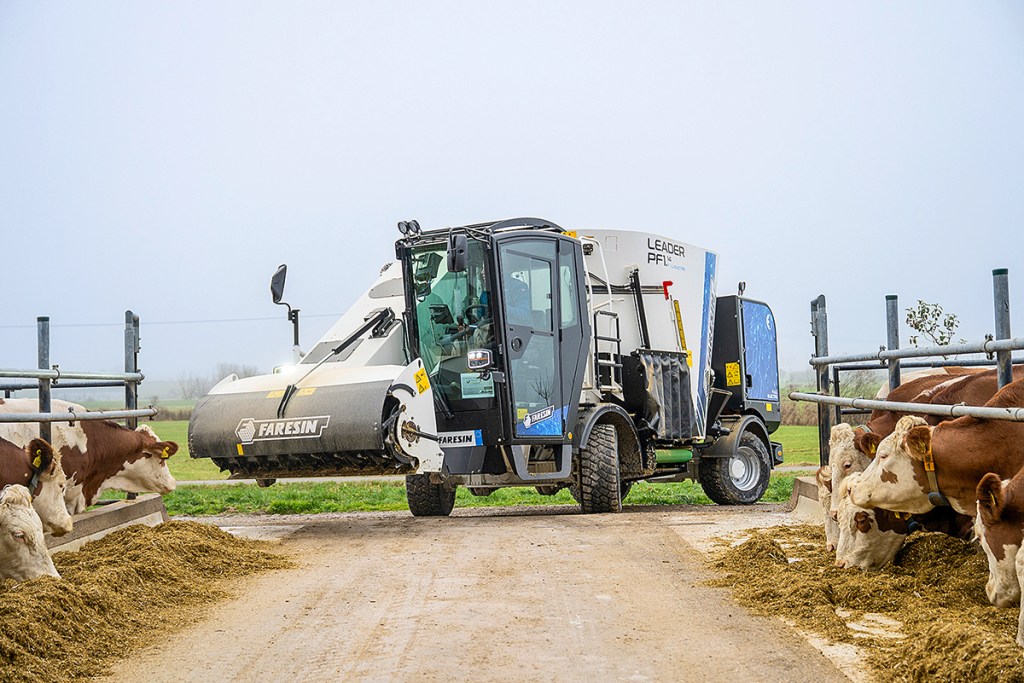
And that quiet running isn’t just good news for the operator and stock; the people living close to the Förster family farm where we went to look at the machine at work were also happy with the near silent running of the electric machine. In fact, once the engine noise is gone, you realise just how loud the elevator loading straw is. After loading the straw and coarse meal we were keen to see how it coped with grass and maize silage. In roughly six minutes the milling head had nibbled its way through about four tonnes of maize and grass silage from the clamp face. As with the ICE-powered model, the Faresin milling head removes a relatively thin layer from the face, so you have to make several passes from the top down.
The power and cutting performance of the 2.0m wide milling unit impressed us. Equally impressive was the fast speed at which the elevator transferred the cut material into the tub, which, depending on the set speed, can throw the forage in a high arc into the 14m³ mixer.
Limits under load
As with the diesel-powered machine, there are limitations: for example, mixing 5,000kg of feed while travelling at the top speed of 20km/hr — when we tried, the Full Electric simply ran out of grunt on this combined task. However, it has more than enough power for feeding out along the feed fence.
7kWh/t
We used the Faresin demo machine to mix two rations: one for dry cows and one for the high-yielders. Without taking any exact power readings, the battery charge for preparing the cow ration dropped from 81% to 55% from the time we started loading the straw into the tub to getting the silage and then feeding out the complete mix.
For that job, the mixer covered a distance of around 1.5km and mixed the heavy feed ration for about eight minutes. Total time was about 30min. According to Faresin, you are looking at roughly 7kWh per tonne of feed, loaded and mixed. However, after a maximum of four mixes, or three in our case, you’re done for the day and have to recharge. The Försters do a top-up charge during the day and then feed a second time in the evening.
With a 500kW solar panel system that is coming to the end of its guaranteed tariff period, daytime charging is a good way of using the on-farm generated electricity. An additional battery would be needed if you want to only charge the feeder overnight using electricity created by the PV system during the day.
Further details
- Faresin offers an NIR sensor option. A lens scans the feed in the mixer and determines its constituents.
- The battery is maintenance-free.
- The cab is electrically air conditioned.
- Depending on the mixing programme, the automatic counter-knives extend or retract as required.
- The self-propelled feeder’s front axle has hydraulic suspension.
- Maximum cutting height is 4.95m.
- Faresin offers single-auger mixers with volumes up to 20m³.
- There is a manufacturer-backed five-year warranty for the battery.
Summary
The electric diet feeder drives just like a diesel-powered machine, only quieter and more economically. Powerful milling head performance is also no problem with the electric drive.
But customer take-up is limited for now. On the one hand, farmers worry whether the battery capacity is sufficient — we found it certainly had enough juice for three back to back mixes — and this is also not a cheap machine. The featured Full Electric 1.14B lists at just under €346,000.
Tobias Bensing
For more up-to-date farming news click here and subscribe now to profi and save.