
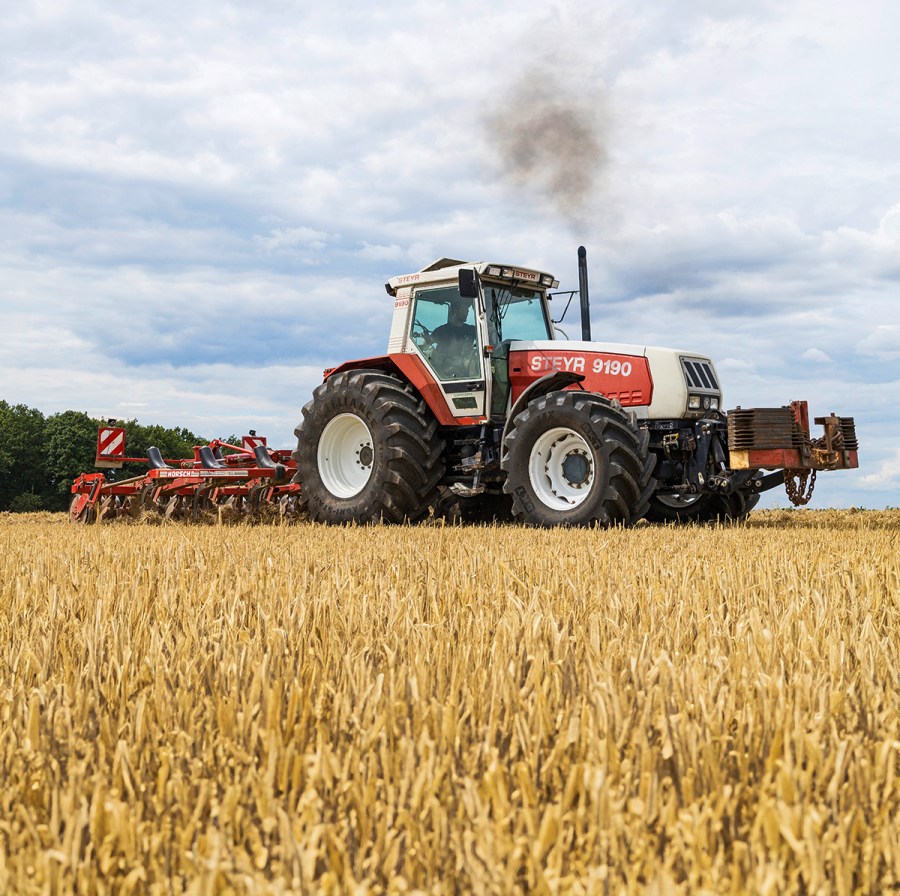
The 9190 is an interesting part of Steyr history. It was the fruit of a joint venture that pushed the Austrian brand into a new power bracket.
KEEPING IT BRIEF
- The 9190 was a joint venture between Steyr, Massey Ferguson and Valtra.
- Even the engine was developed jointly with Steyr.
- The range was not a sales success. Examples are a rare find.
“That’s not a real Steyr!” Jürgen Rimbach does not buy into this old prejudice about his 9190. “For me, this tractor is an important part of Steyr’s history, and it contains more Steyr spirit than many people realise.”
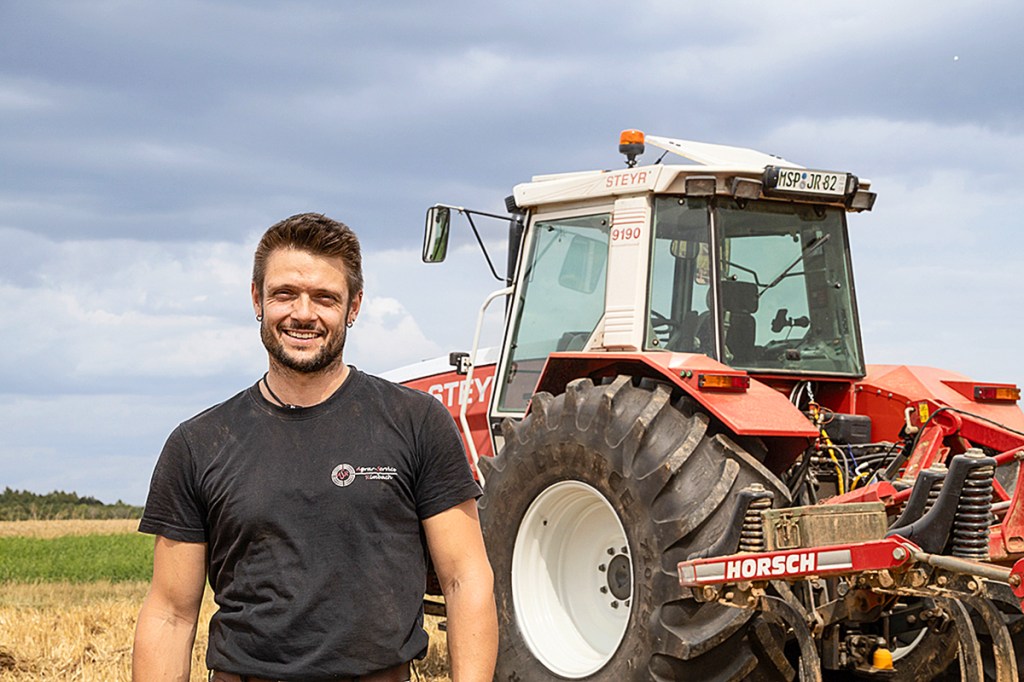
The 38-year-old is no stranger on the Steyr scene, having assembled an impressive collection of more than 20 of these red-and-white Austrians. And most of them are in the high-horsepower bracket.
The Steyr 9190 is currently the key machine within his part-time contracting business, Agrarservice Rimbach, which offers general transport work, mulching and a knife roller, among other jobs. “Ever since I attended a demonstration in 1994 — I was seven at the time — this tractor range has never left my mind,” he says.
Rare bit of kit
It is definitely a rarity, because well under 300 models were built in Beauvais, France, between 1993 and 1995. Beauvais — isn’t that a Massey Ferguson factory? Yup, that’s correct — Massey Ferguson was involved in the joint large tractor project with Steyr and Valmet. At the start of the 1990s, Valmet and Steyr needed a new range in the 150hp to 200hp bracket, and lengthy talks with MF eventually led to a deal.
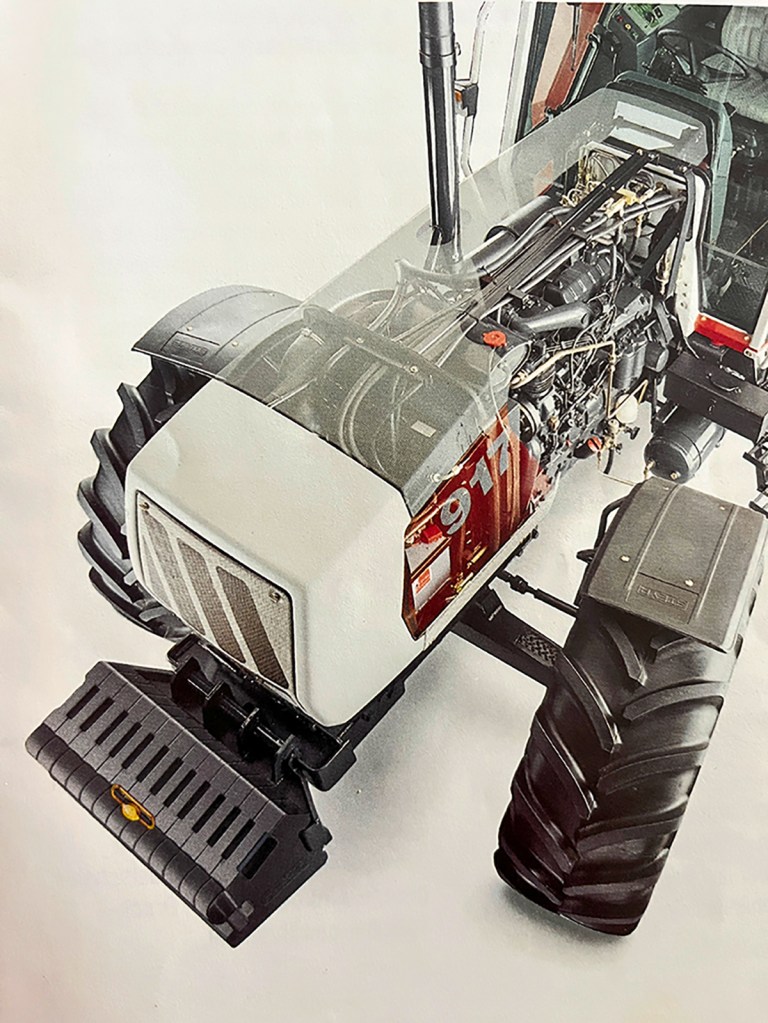
Steyr and Valmet had already been working together since the mid-1980s developing new three-, four- and six-cylinder engines. In an interview for the Steyr customer magazine traktor aktuell, the then head of Engine R&D in St Valentin, Helmut Wiesbauer, noted: “The six-cylinder engines for the Steyr high-horsepower tractors were more or less developed by Steyr.” This means that there is still a sizeable slice of Steyr inside them even though the engines in the new 9100 large tractors have a Valmet badge,.
HPCE system
To distinguish itself from the Massey Ferguson and Valmet variants, Steyr relied on its in-house developed HPCE process. This has a specially shaped swirl chamber reckoned to optimise the flow of the fuel-air mix inside the engine and improve combustion, while also reducing emissions.
What was still missing was a suitable transmission, and this is where MF came in as well as in its supplying of the cab — both of these were really modern components for the time.
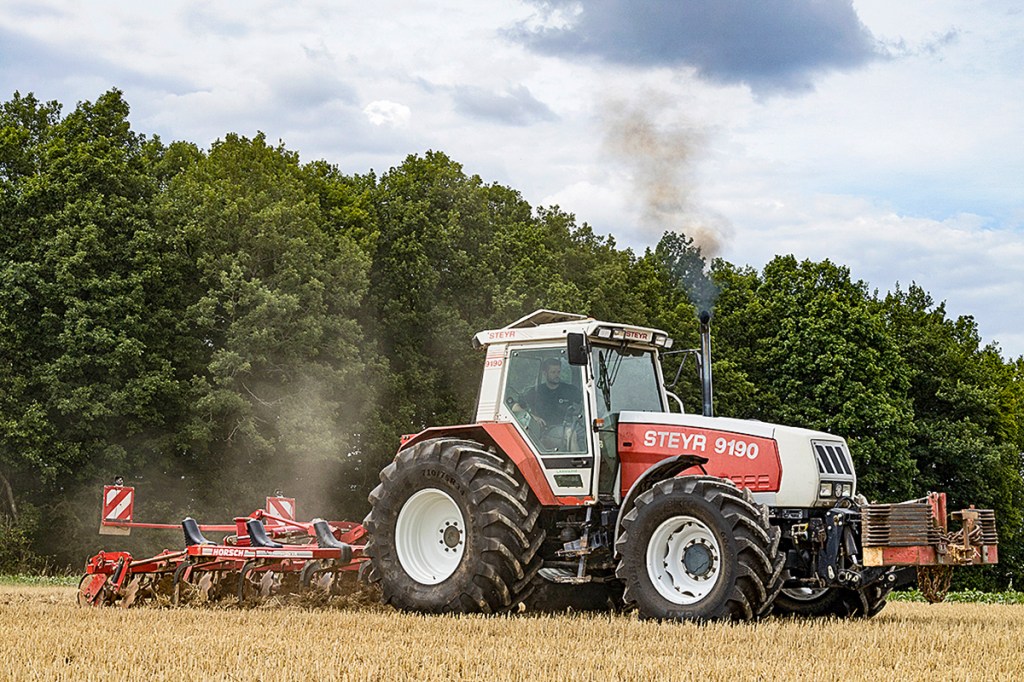
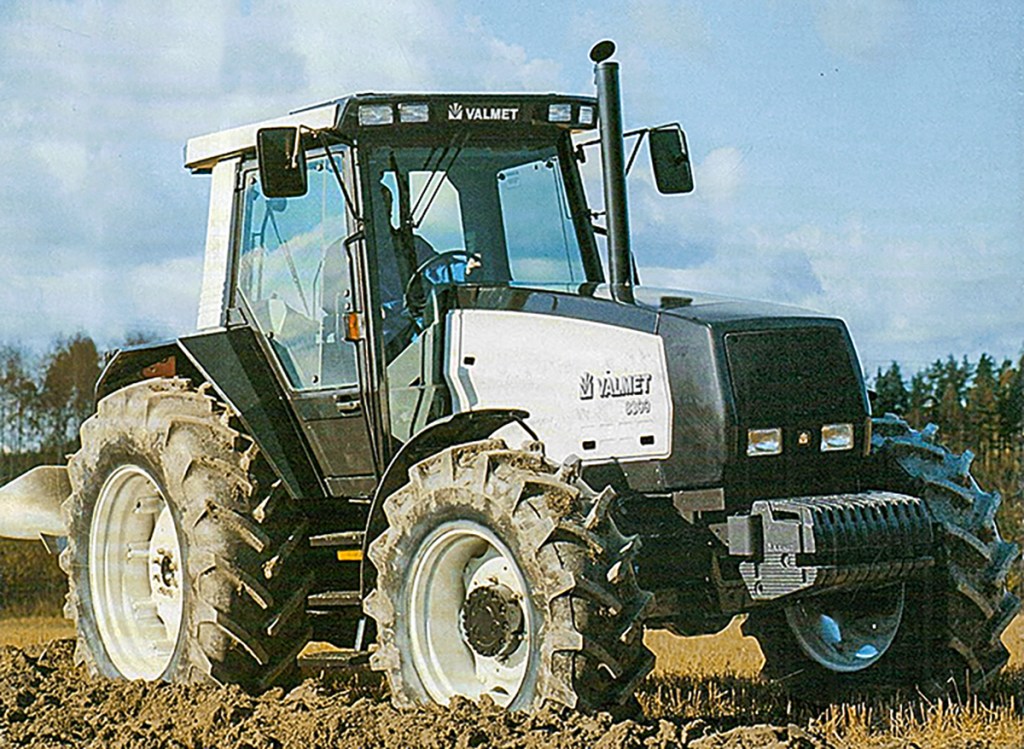
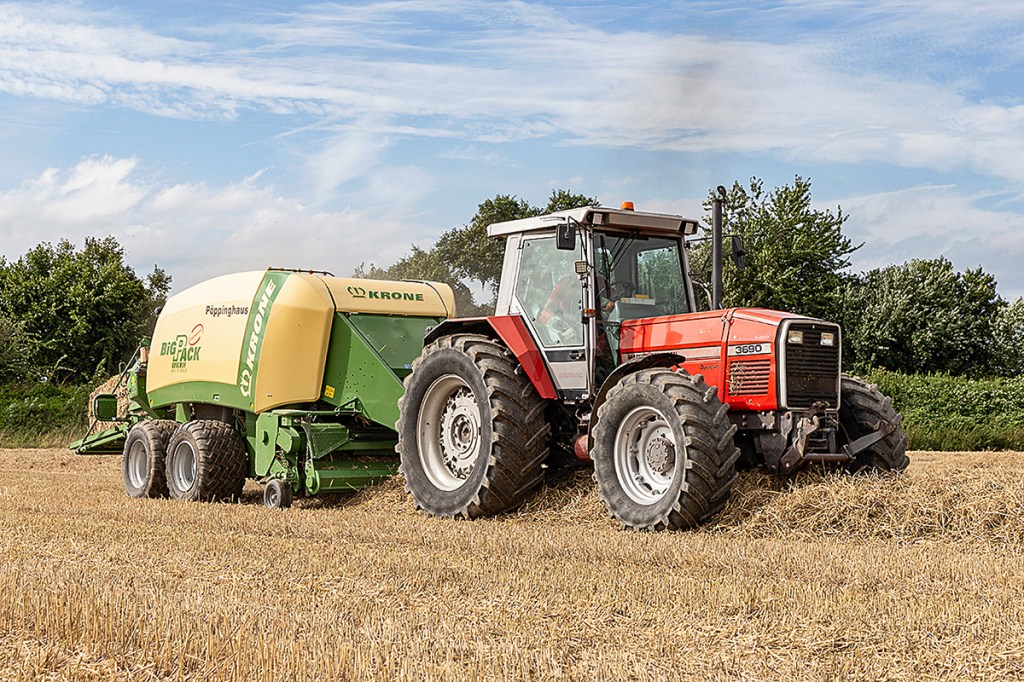
All three manufacturers used the same engines, transmissions and cabs. Massey stuck with similar styling to the smaller 3000 series tractors, while Valmet and Steyr shared the same stand-out styling with the typical Valmet bonnet.
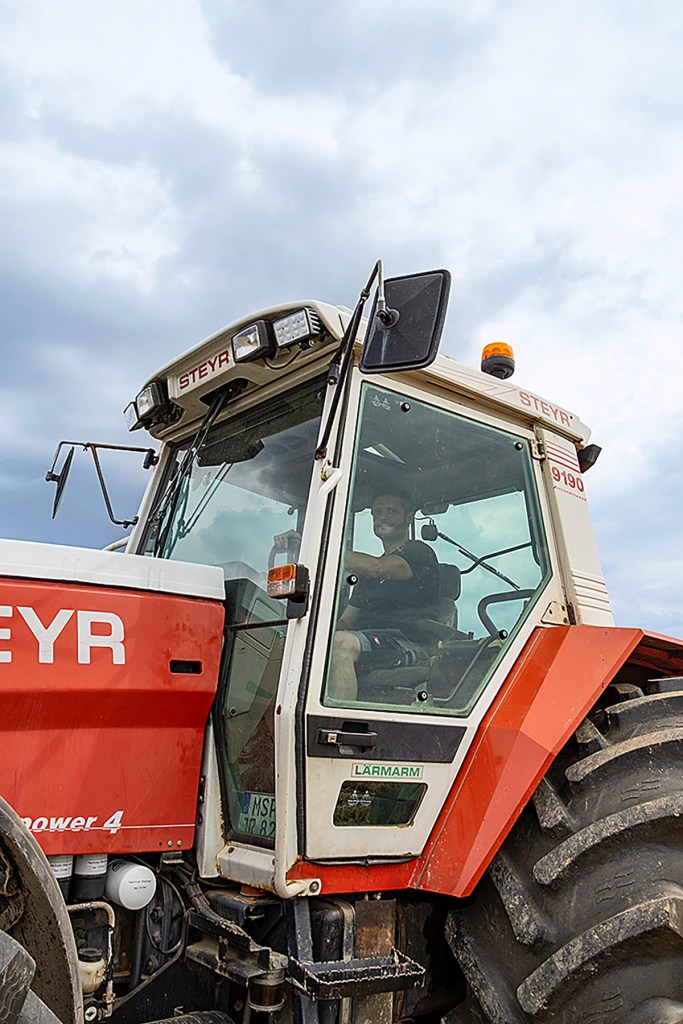
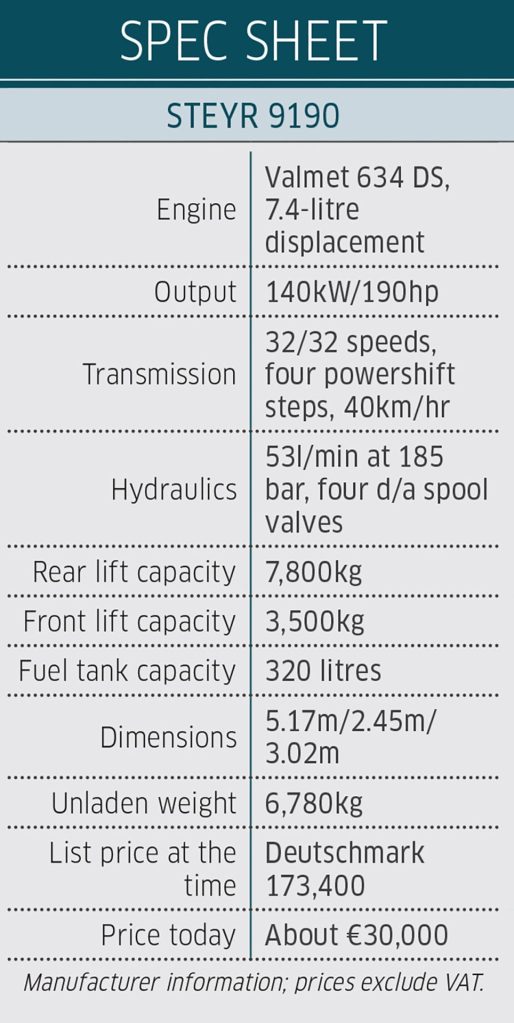
For Steyr, this cooperation resulted in the 9155, 9170 and 9190 models, with outputs ranging from 114kW/ 155hp to 140kW/190hp.
Only a few hours
Jürgen Rimbach’s Steyr 9190 hasn’t yet cracked the 3,000-hour mark — despite the tractor being nearly 30 years old:
“My Steyr used to work in eastern Germany with a snow blower and with a few other machines.”
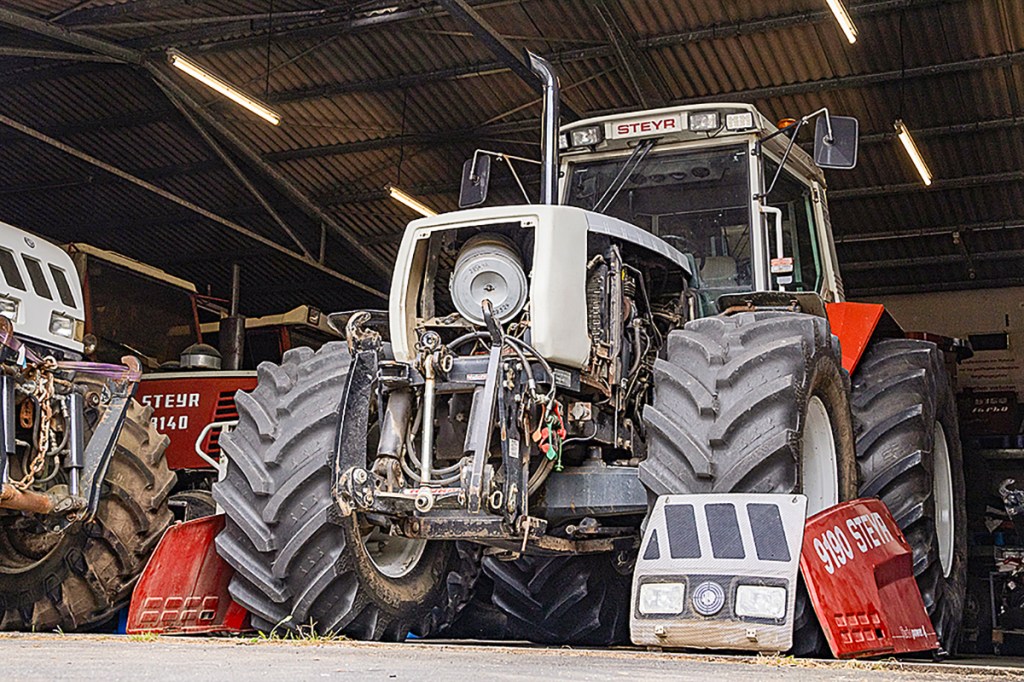
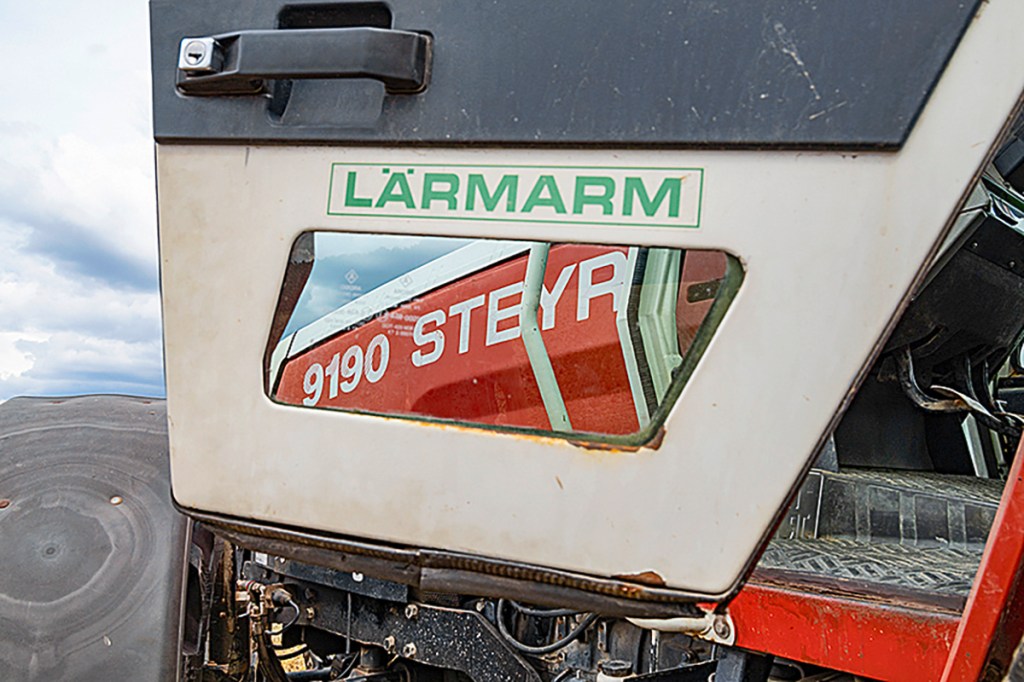
Ever milder winters meant the blower didn’t see much action. This workload has left its mark with rust around parts of the cab and the front linkage with its substantial sub-frame.
Few engine hours also translate into few transmission hours. The gearbox, marketed by Steyr as TurboPower4, with four gears, four powershift steps and a creeper range, came from Massey Ferguson (Dynashift) and was promoted as one of the most advanced gearboxes of its day.
Sadly, durability was not a strong point: many transmissions had to be opened up and repaired after only a few thousand hours. Pulling away in the high range under heavy load, when on haulage work, for example, proved particularly problematic. But with 32 forward and 32 reverse speeds, the box did have something on offer. The shifting pattern, with first gear in the back right, takes some getting used to, though. Yet the four powershift steps can be shifted from the gear lever.
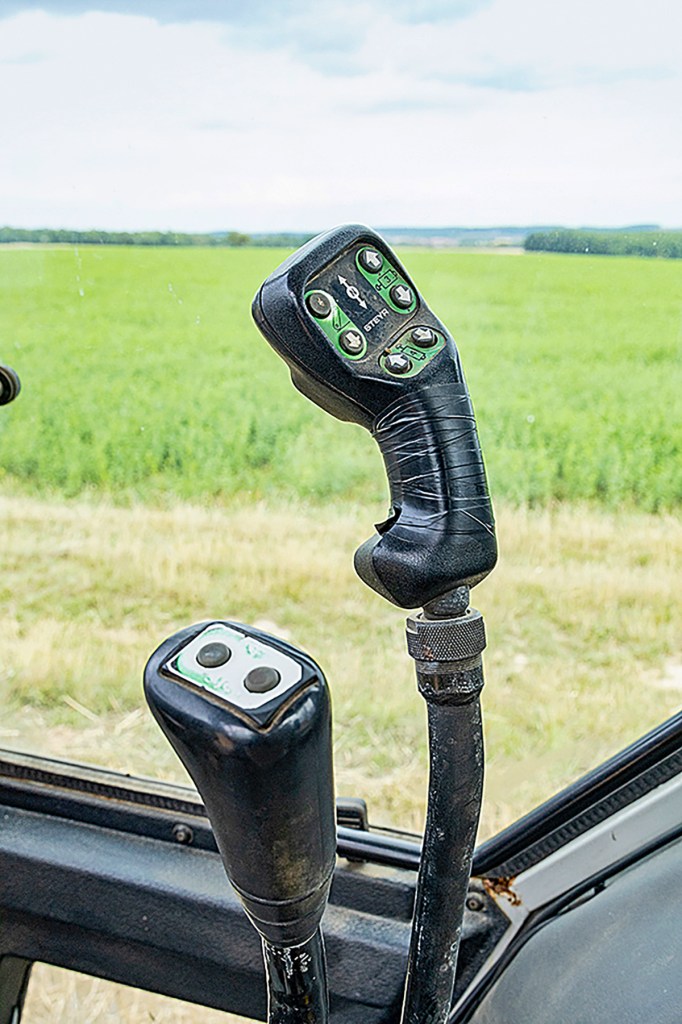
What is more, Steyr’s engineers created a unique selling point which set it apart from its MF and Valmet stablemates — the brand’s Multicontroller on the gearstick. Buttons on top of the lever could operate the rear linkage and the third and fourth spool valves. In that respect, the 9190 gave a taste of what was going to come in the years that followed.
Boxy cab
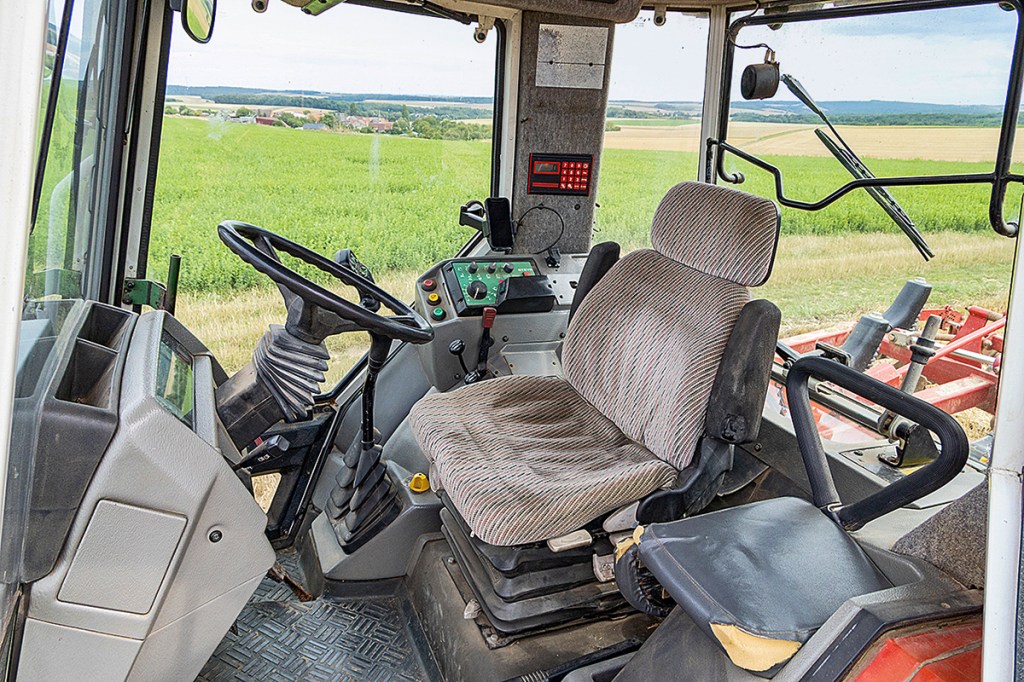
The boxy cab was introduced with Massey Ferguson’s 3000 series tractors in 1986 and has a reputation for rusting. Steyr adopted the cab but developed its own roof that offered space for eight work lights and a hinged sunroof.
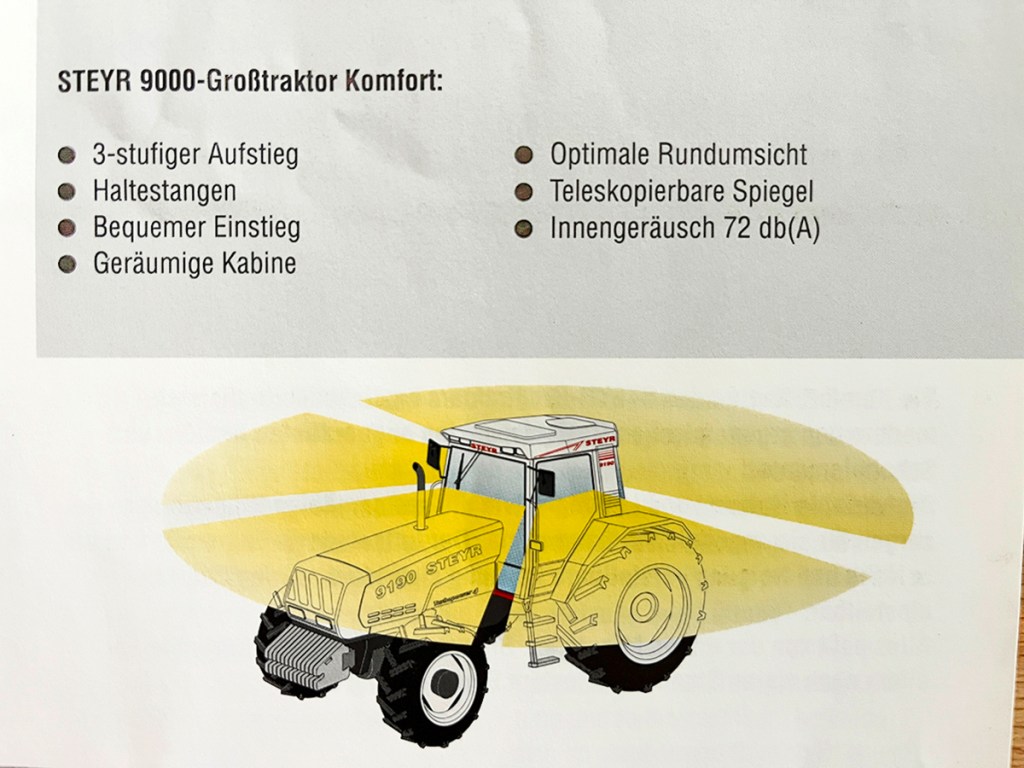
In the brochure, the maker claimed good all-round visibility thanks to the four-post design and 4.0m² of glass, along with a low in-cab noise level of about 72dB(A). On the Austrian machines, air conditioning was part of the standard package.
Otherwise, the cab holds few surprises. From the electronic dashboard and the Bosch ELC control box on the right-hand side through to a cooled soft drink compartment, the cab ticked all the boxes.
On the right-hand B-post sits the LH1000 on-board computer from LH Agro, a digital display screen that reads out the current ground and pto speeds, hours clocked, hectares worked and distance covered as well as the time. The more comprehensive Datatronic system was reserved for the big Massey Ferguson 3600-series models.
Summary
It is nice to meet enthusiasts like Jürgen Rimbach, taking a shine to rare machines like the 9190 and still putting them to regular work. For one thing, on our visit the 9190 proved that it does not lack pulling power — and comfort is not to be sniffed at either.
At the same time, a note of caution is clearly needed: specialist engineers who have solid knowledge of these tractors are few and far between. Incidentally, this model range even had a successor series — the Steyr 9200 succeeded the 9190 — but that’s a story for another day.
Lucas Colsman
For more up-to-date farming news click here and subscribe now to profi and save.