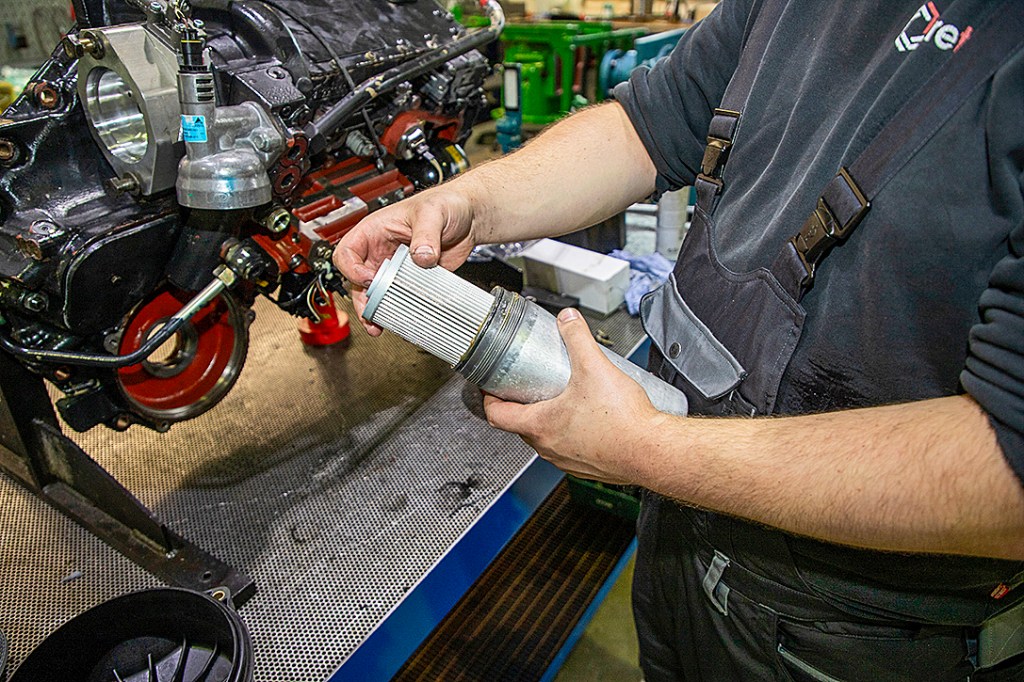

With a production run of over 20 years, the S-Matic finally finished in 2019 and appeared in several tractors. Specialist firms such as Kretec have the know-how to overhaul a worn or faulty transmission. We find out what is involved.
KEEPING IT BRIEF
- The S-Matic transmission was developed by Steyr, and later refined and produced by ZF.
- Power is transmitted up to 50% hydraulically and up to 100% mechanically across four auto-shifting ranges.
- The compact cartridge can be pulled out of the transmission housing without too much drama.
First introduced by Steyr in 1999, the S‑Matic gearbox was initially installed within the Steyr CVT and Case IH CVX models. From 2001, ZF continued developing the CVT and producing it through to 2019, which saw it fitted to other tractor brands including various Deutz‑Fahr and Claas models.
Its four auto-shifting travel ranges mean a high proportion of the engine power is transmitted mechanically. In addition, the design proved particularly robust in the 150–200hp bracket. This said, there are components that eventually need to be overhauled or replaced preventively.
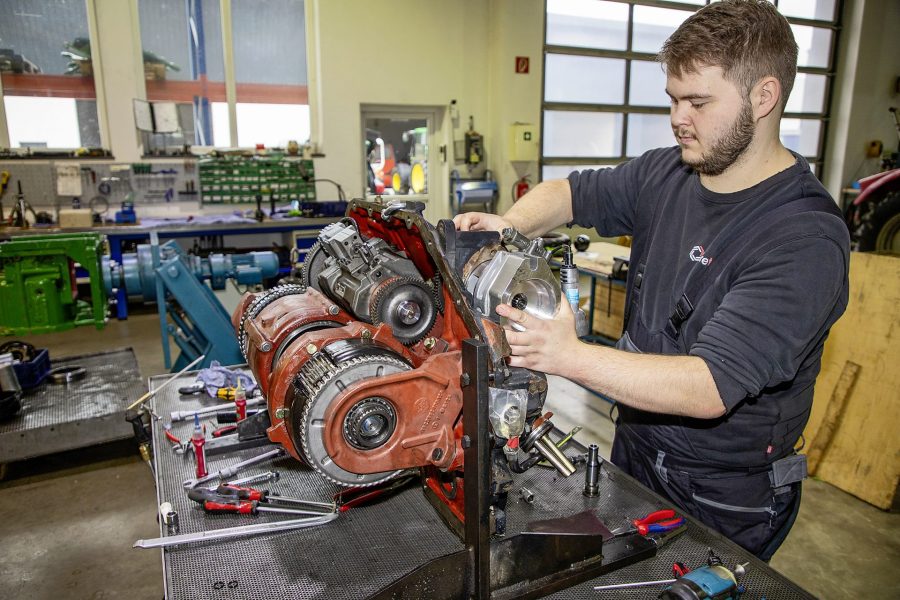
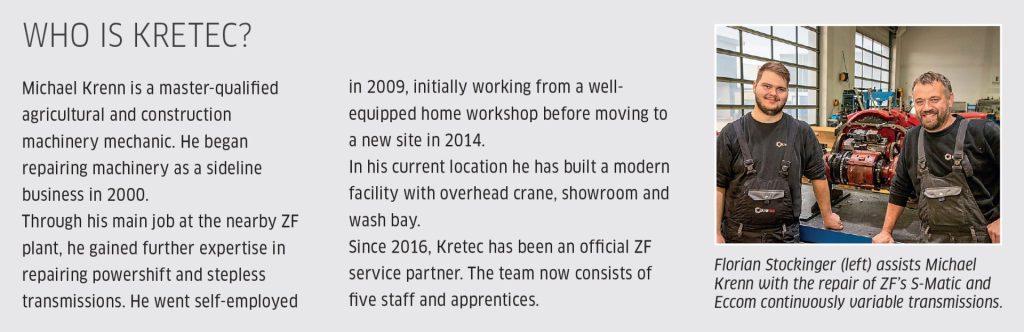
Michael Krenn from Salzweg near Passau in Bavaria knows these transmissions inside out. At his company, Kretec Antriebstechnik, he refurbishes the complete range of ZF transmissions, including S‑Matic and Eccom units from John Deere 6010 and 6020 series tractors.
Planetary gears
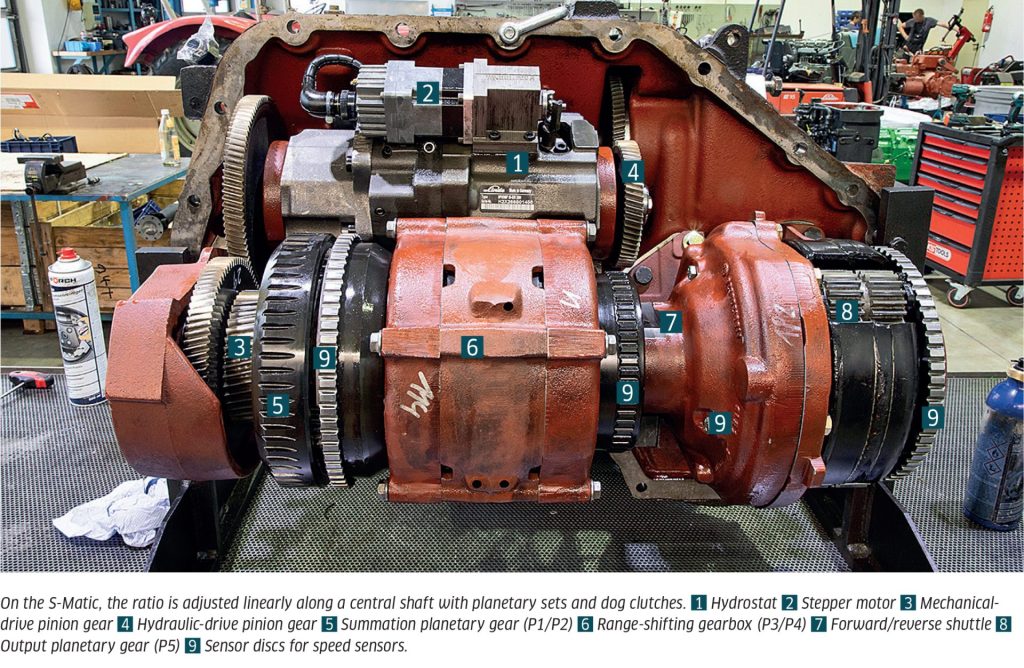
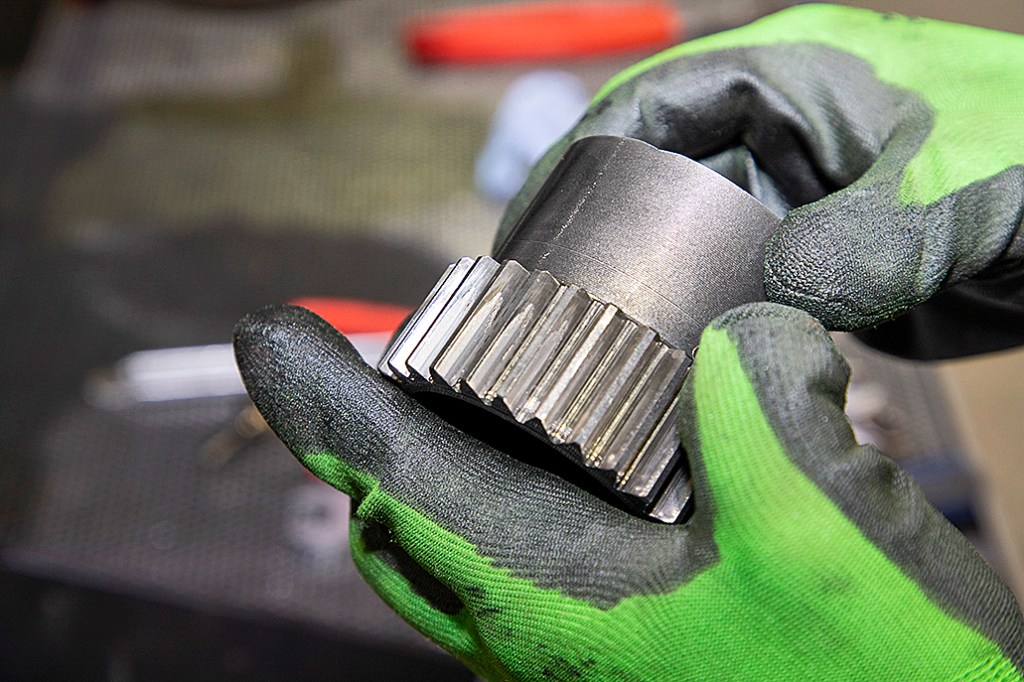
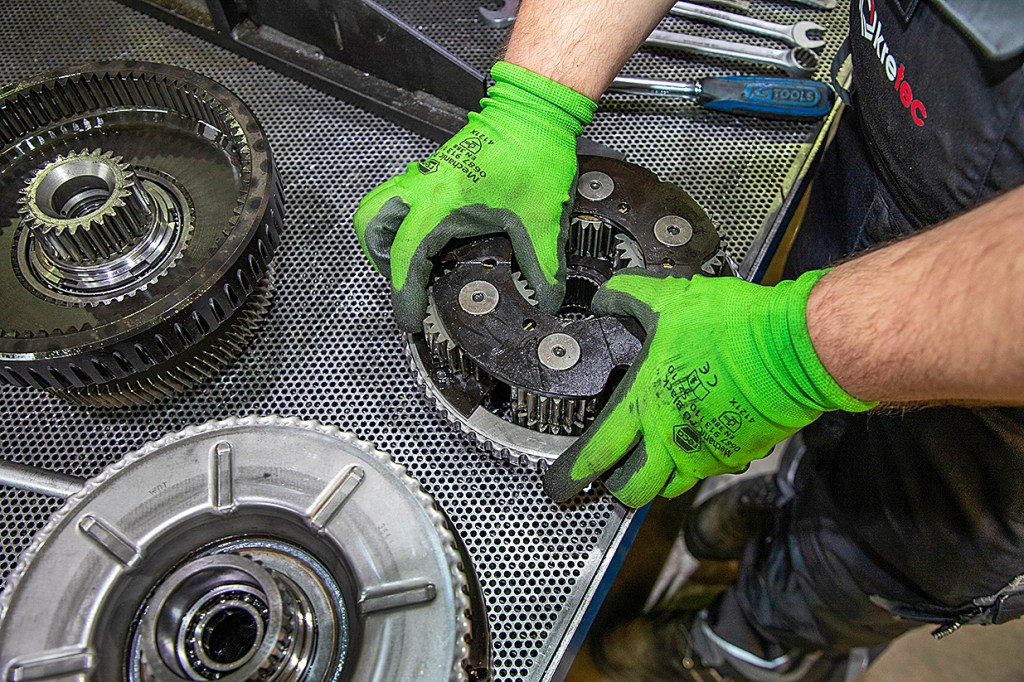
The engine drives what’s known as the dumbbell shaft. This is designed as a hollow shaft, with the drive-through to the pto inside. Mounted on the shaft is a pinion gear that drives the first planetary set, along with another pinion which drives the hydrostat. The hydrostatic and mechanical sides are integrated by a double set of planetary gears (P1 and P2).
The hydrostat drives the central sun gear on the input side, while the engine directly drives the outer ring gear also on the input side. At standstill, the hydrostat is fully swashed (–17°) and turns the sun gear synchronously against the ring gear, holding the planet gears in place.
As the tractor pulls away, the hydrostat moves towards the 0° position, slowing the sun gear. The planet gears begin to rotate and drive the output side of the planetary sets via the so-called planet carrier. As the swash angle decreases, the mechanical part of the power transmission increases until it reaches 100% at 0°. Accelerating further sees the angle move to +17°, reversing the sun gear direction and altering the ratio again.
Four ranges
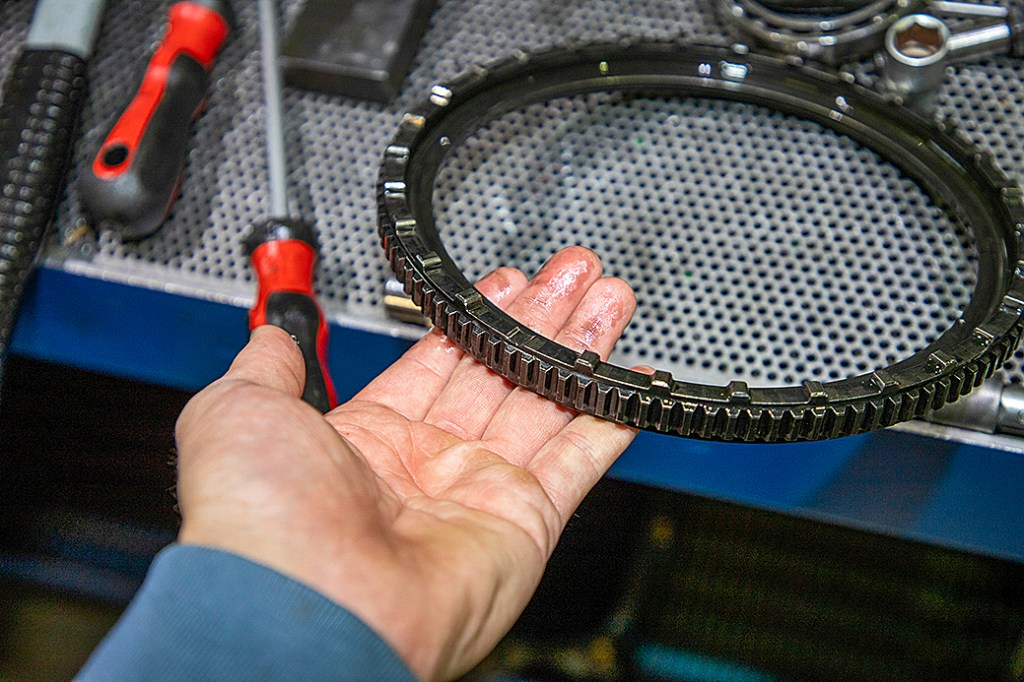
This is repeated in each of the four ranges which are shifted hydraulically via dog clutches:
Range 1: 0–8km/hr
Range 2: 8–14km/hr
Range 3: 14–30km/hr
Range 4: 30–50km/hr
Each subsequent dog clutch engages at no load when the input sun and ring gears spin in synch. This means the first range engages when the pump is in its –17° position, the second when the pump is in +17° and so on. These range shifts are controlled electro-hydraulically courtesy of five speed sensors, with the torque in each range transferred through planetary gearing to the output pinion.
In the top range, the hydrostat only swashed through a certain section of its potential range of the maximum speed of 40 or 50km/hr. This boosts the overall efficiency on the road, because it increases the percentage of power that is transmitted mechanically.
Removing the transmission
The S‑Matic is built as a compact unit that is designed to handle engine speeds as high as 5,000rpm, which expose components such as pinions to lower torque peaks so these can be designed smaller.
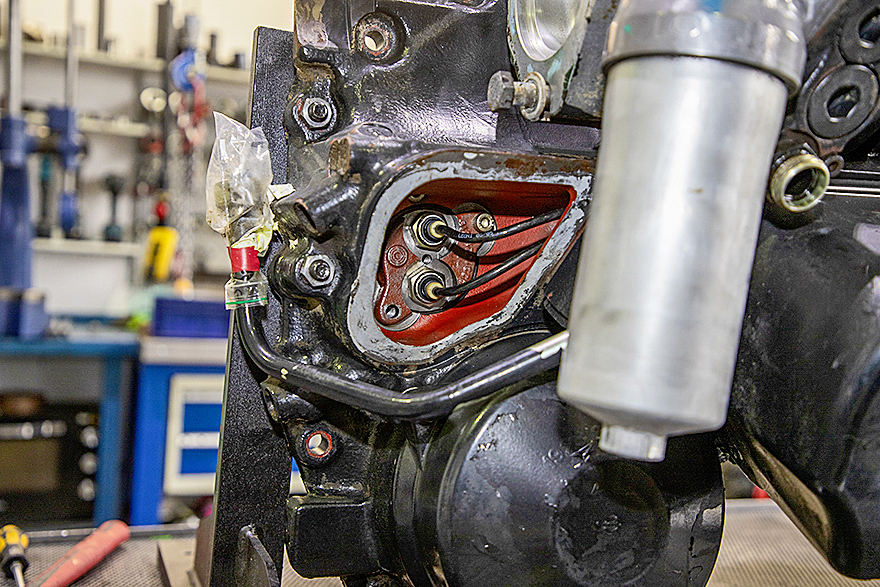
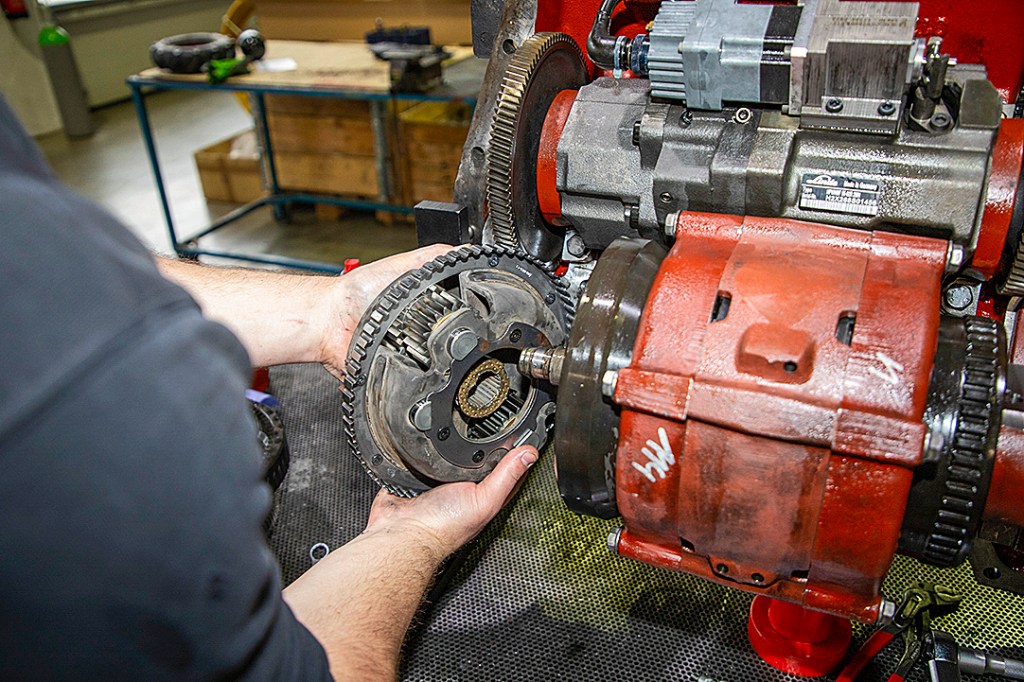
A notable advantage is that this compact gearbox can be removed as a cartridge from the side of the housing. Once out, it can be shipped as a complete assembly for repair.
To remove it, you should clear the way first by removing the right rear wheel, the battery box if required, and on Deutz‑Fahr models, the right-hand tank. Transmission oil must then be drained and the left speed sensor removed.
Through the opening, you can access the output-side sleeve. This slides off the output shaft after you punch in the internal roll pin. Next, all bolts are removed and the cartridge is pulled out from the housing. Specialist workshops use mobile racks for this job.
Repair and costs
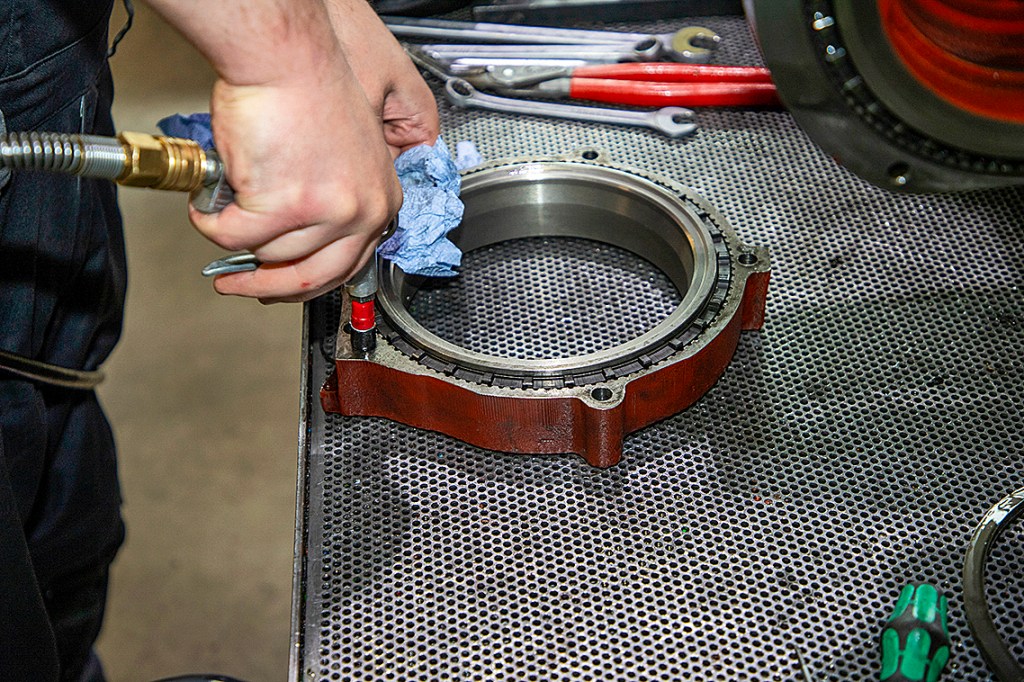
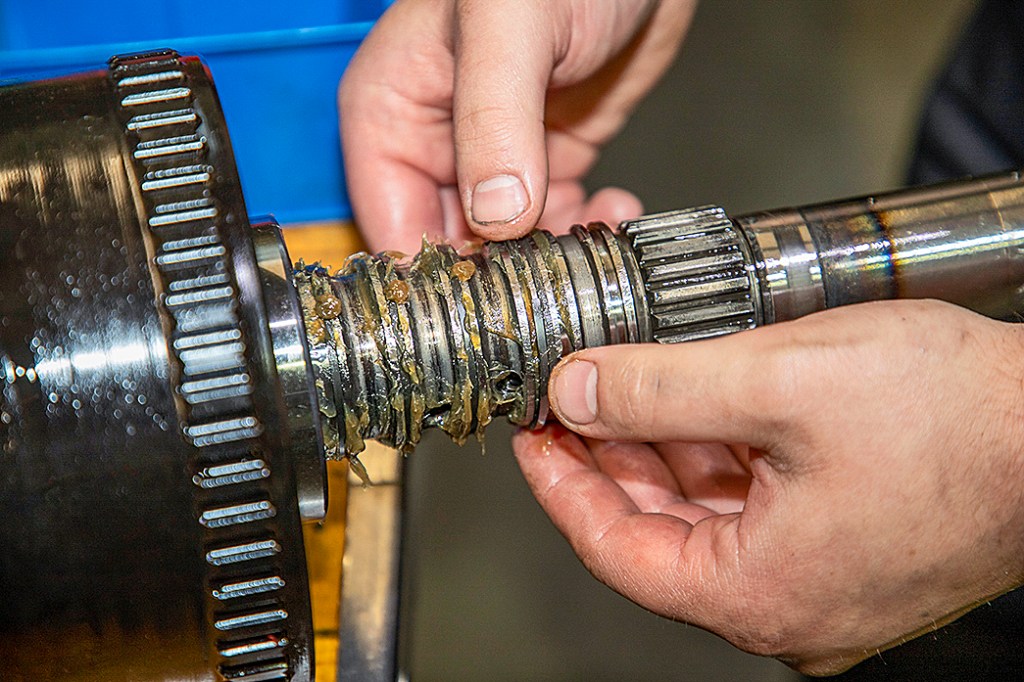
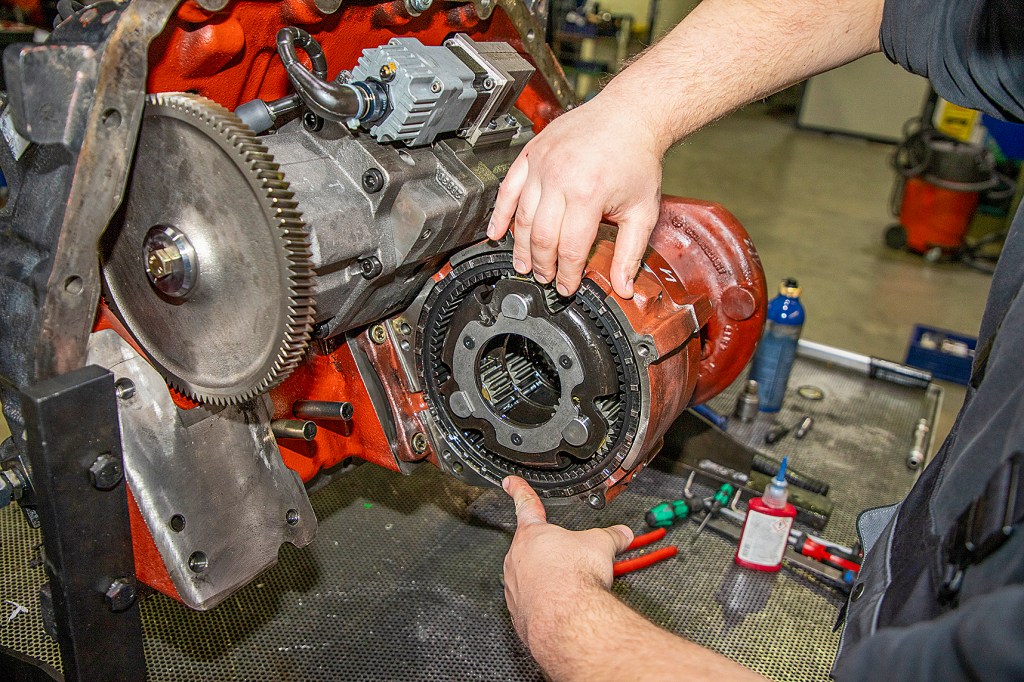
The cartridge is then sent to Kretec, where it undergoes initial inspection and complete strip-down. All of the issue points are checked systematically and repaired as required, ideally as shown on the following pages.
Depending on the damage, refurbishment takes about two days. Kretec benefits from its proximity to the ZF plant in Passau for fast parts supplies and the option of using their test bench — although such a test run will cost a four-figure sum. In this case, the issue was pressure fluctuations, the cause of which was traced down to a worn swash plate pump. So, costly bench testing wasn’t necessary.
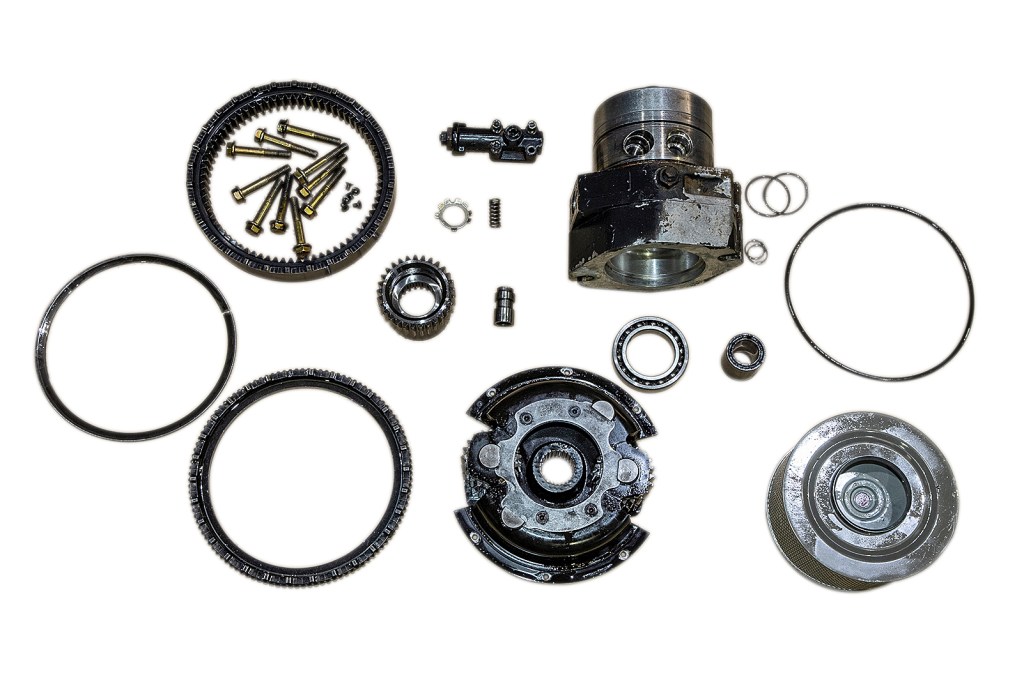
The repair costs came to €9,000, with more than €7,500 spent on parts alone. Prices are high largely because production ended in 2019, meaning there’s a limited availability of replacement parts.
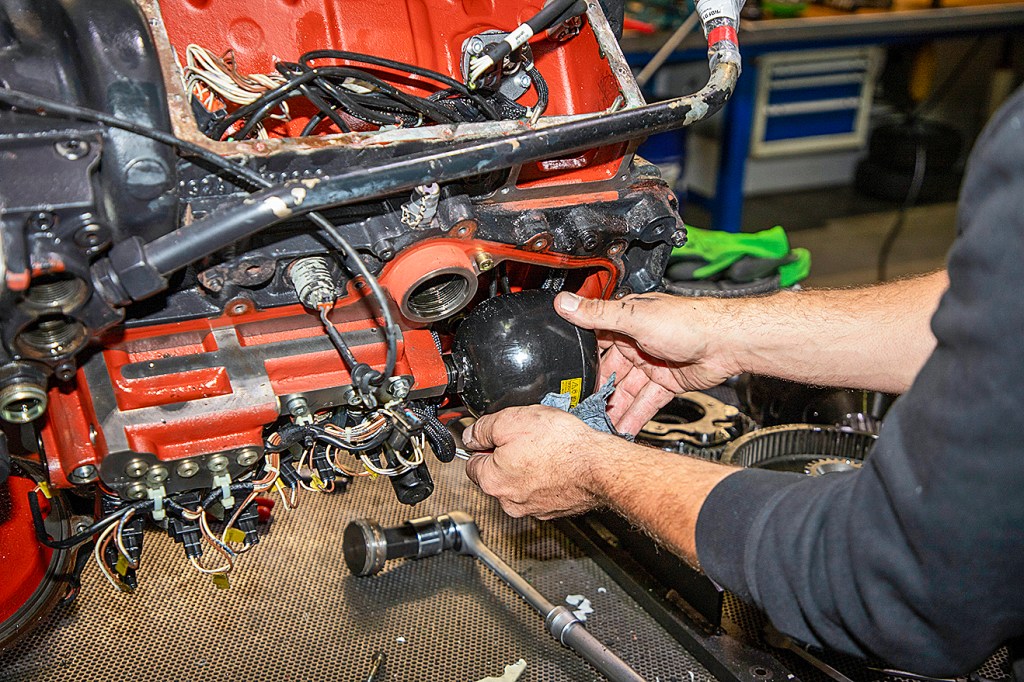
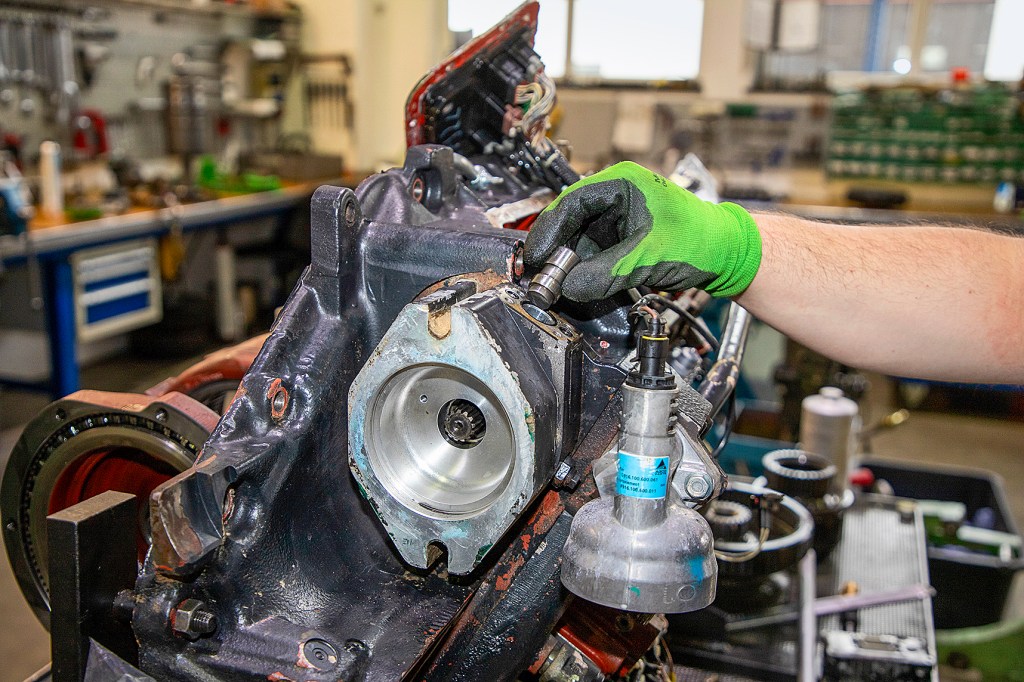
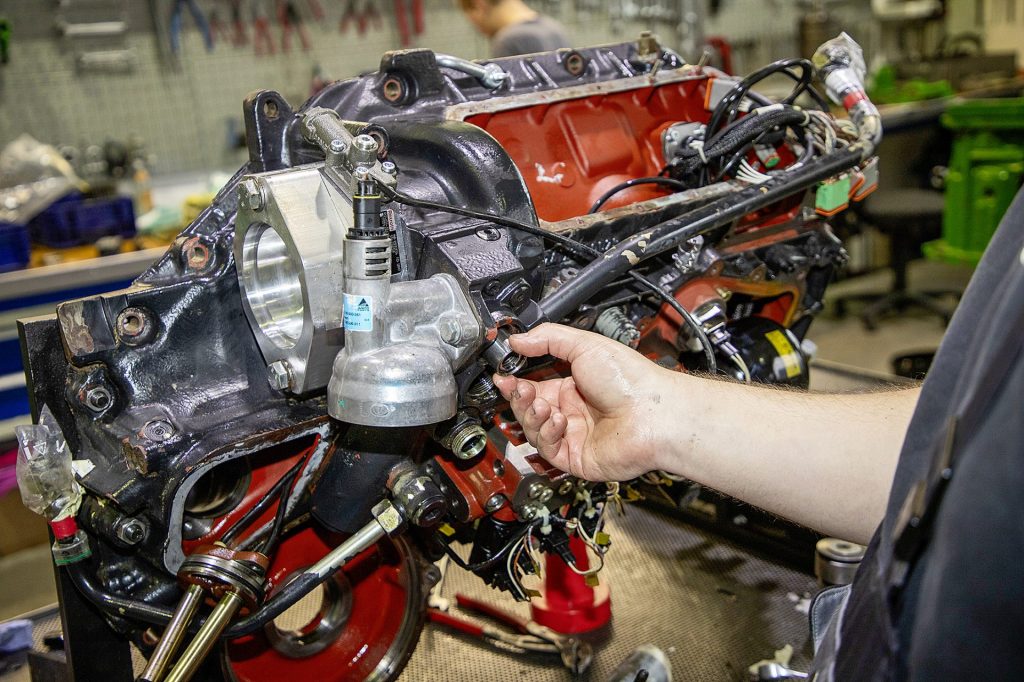
The nitrogen accumulator damps pressure fluctuations during clutch engagement. If problems arise which can be traced back to pressure fluctuations, checking the accumulator is a good first step. The accumulator is usually replaced during repairs.
Alexander Bertling
For more up-to-date farming news click here and subscribe now to profi and save.
FAULT DIAGNOSIS AND TYPICAL REPAIRS
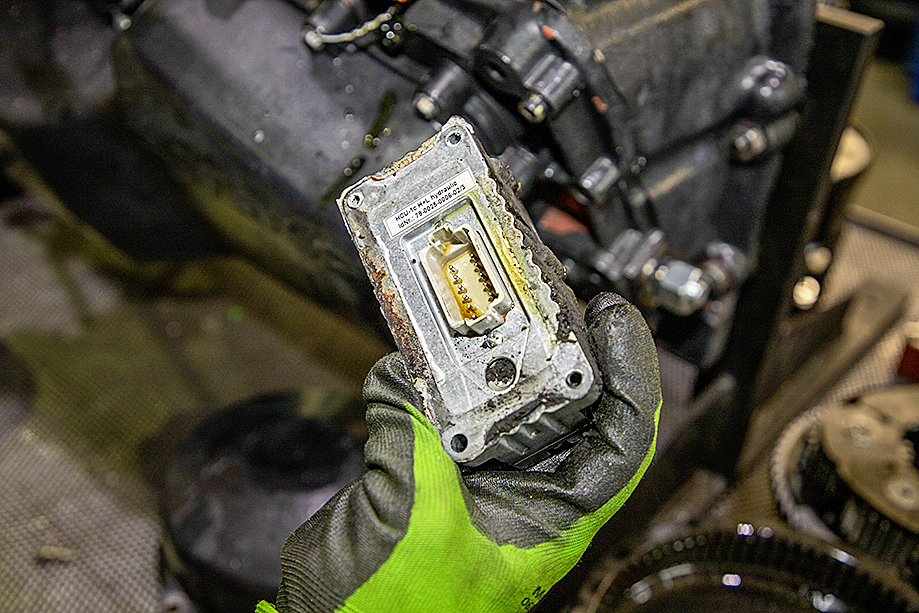
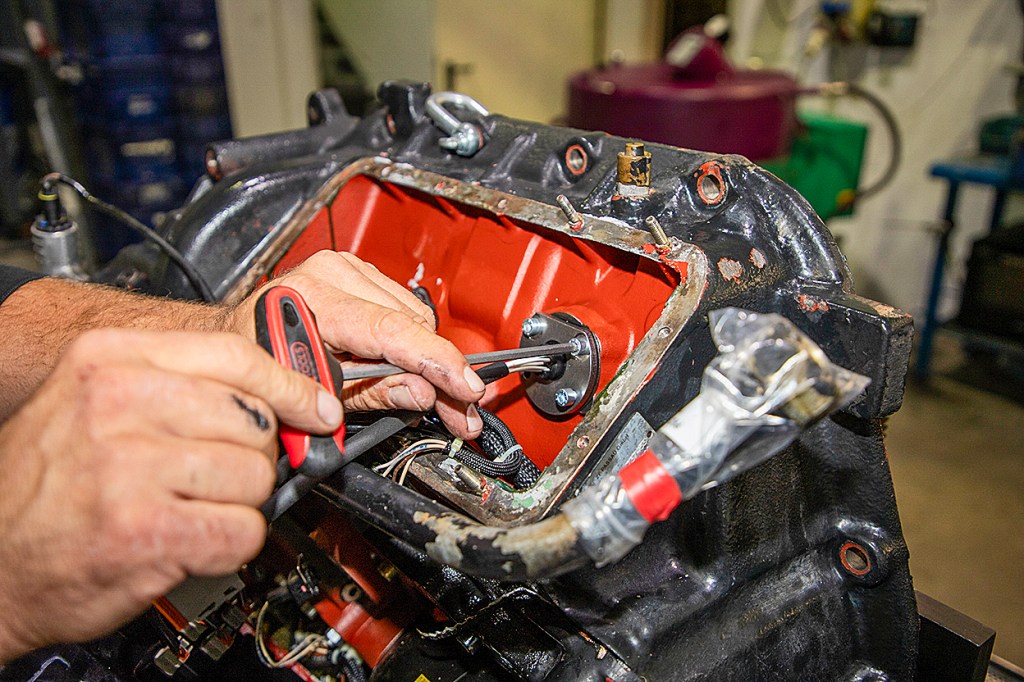
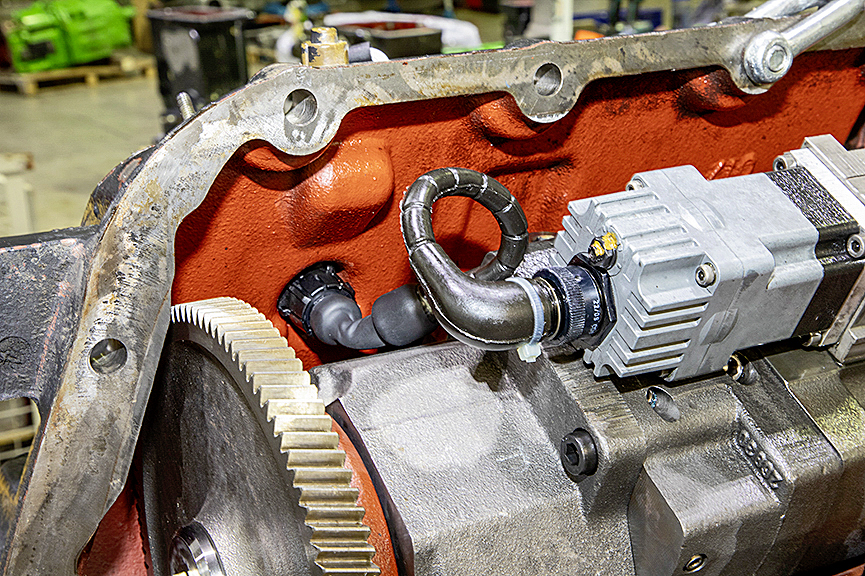
INSPECTING THE ACTUATOR MOTOR AND LOOM
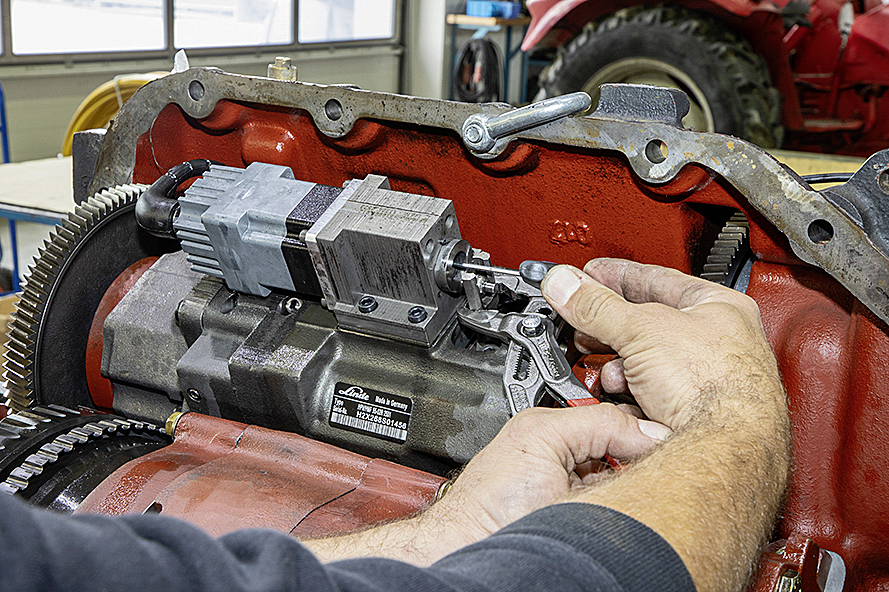
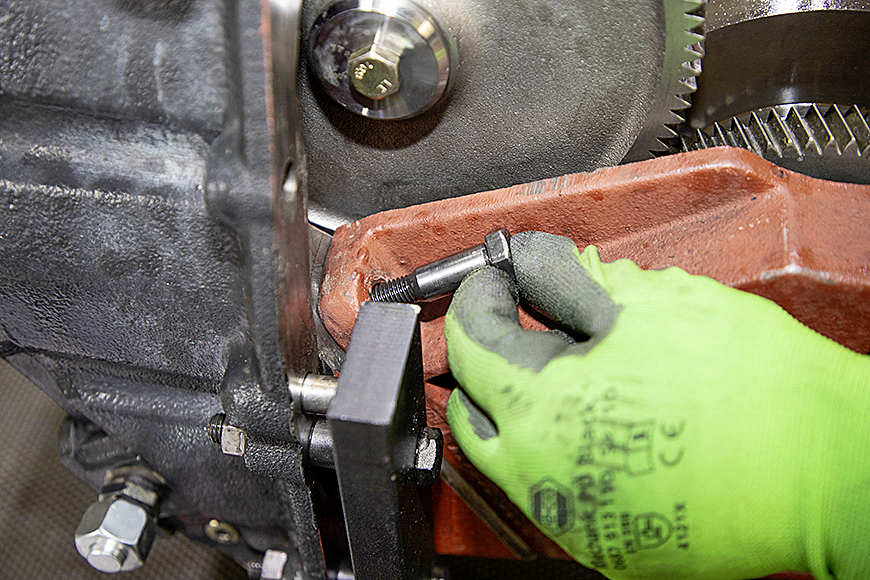
BROKEN BOLTS AND FAULTY BEARINGS
PLAY IN THE SUMMATION PLANETARY SET
SEALS AND CLUTCHES IN THE RANGE-SHIFTING AND SHUTTLE GEARBOX
FLUCTUATING OIL PRESSURE DUE TO DEFECTIVE HYDRAULIC PUMP
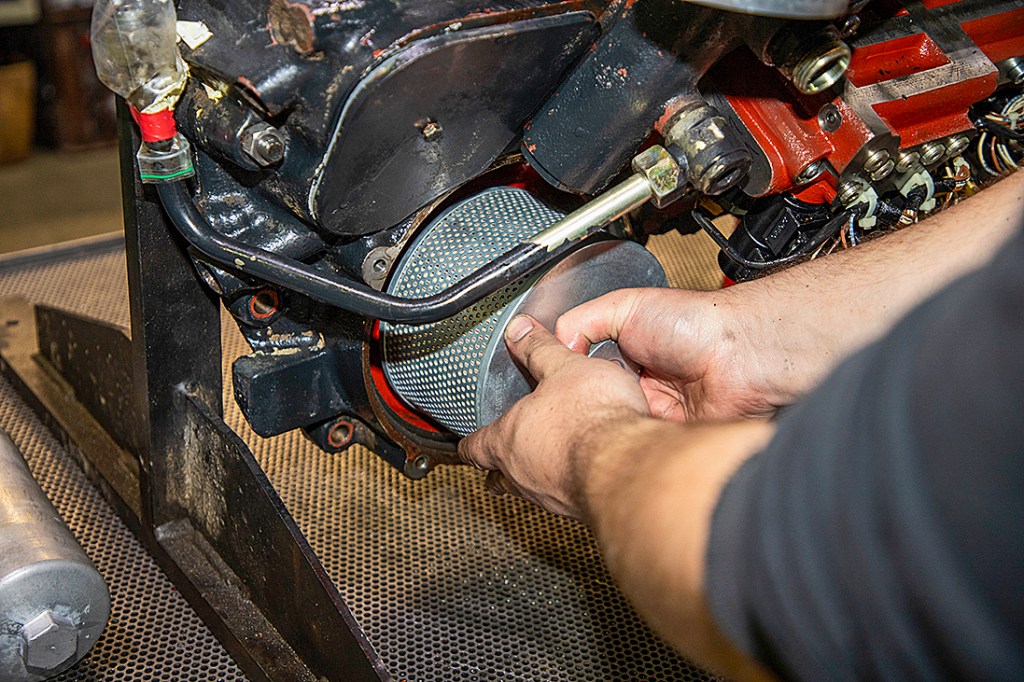
REPLACING FILTERS AND ACCUMULATOR