

The Master M is the latest addition to the Kuhn plough range, and it has one significant difference from the firm’s other fully mounted models — it behaves like a semi-mounted when heading out the field gate. Read on to reveal more.
KEEPING IT BRIEF
- The Master M slots in between the Master 123 and 153.
- Is available as a four-, five- or six-furrow.
- Rated for up to 240hp.
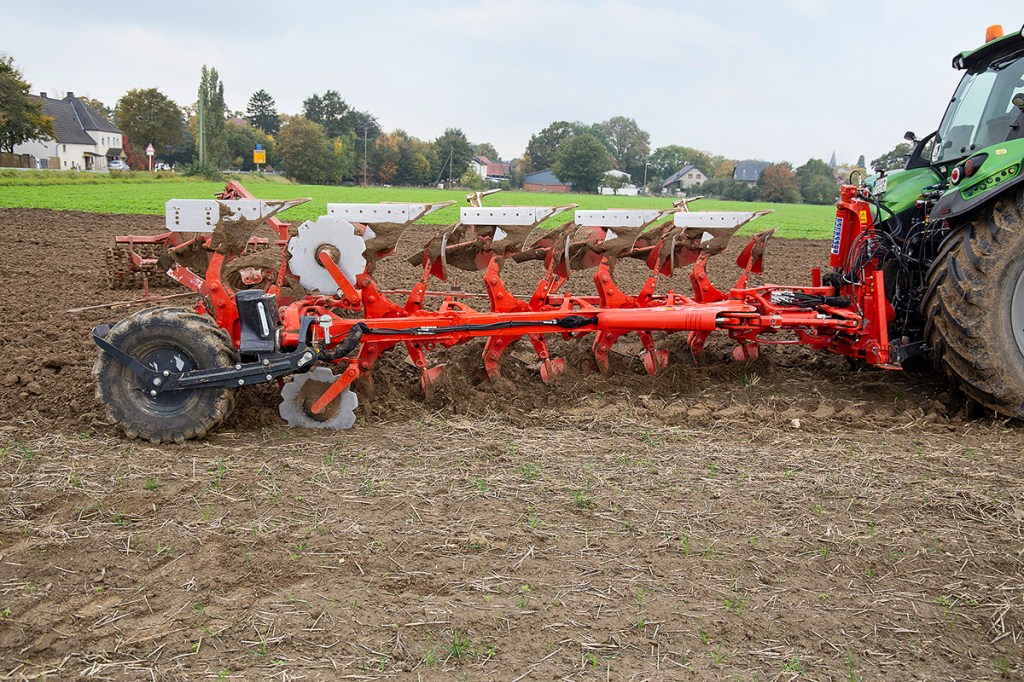
While using the Master L for our practical test (see profi 3/2026) we also had the chance to try out Kuhn’s newest plough, the Master M. Nestled in between the familiar 123 and 153 series, this new plough model is targeted at medium-sized farms that have up to 177kW/240hp to stick on the front.
Proven features retained
It comes in four to six furrows and in either Vari or Multi variants. The latter has manual working width adjustment by refitting a bolt on each pair of furrow bodies, to change from 30cm all the way up to 55cm, and the Vari is, of course, hydraulic vari-width.
There are also the usual stone protection options: either a shear bolt or, as on our featured plough, hydraulic auto reset. Front furrow position can be altered manually or hydraulically, too. Indeed, there’s the usual list of plough options, including a selection of mouldboards, skimmer and discs, plus Kuhn’s integrated Duoliner press.
New features
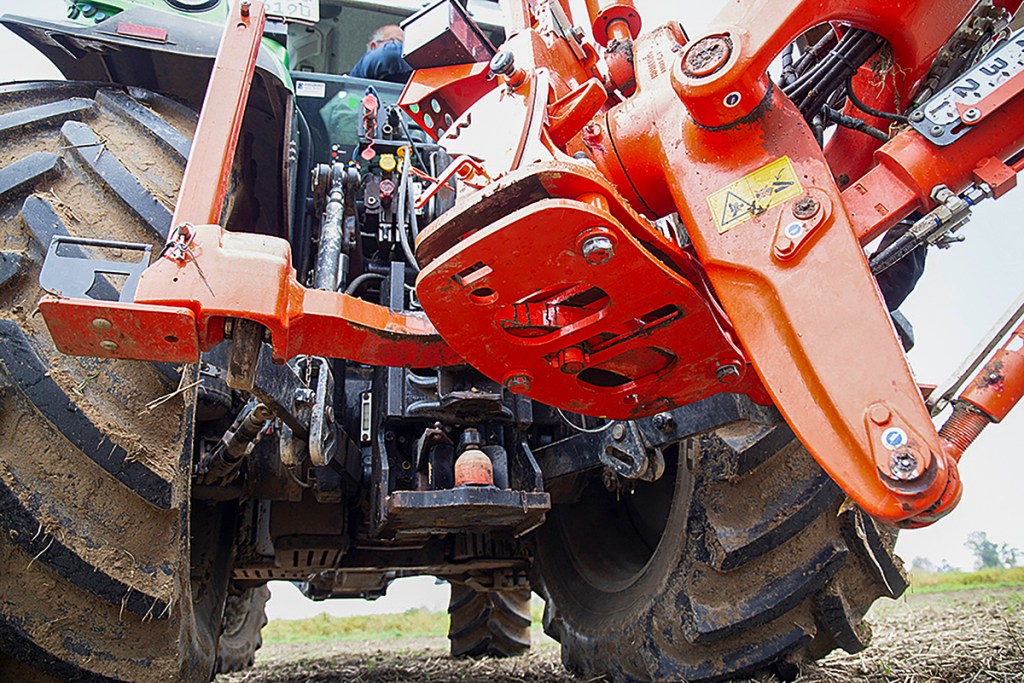
Alongside the familiar headstock options (Standard, OptiDrive, EasyDrive), Kuhn is introducing the new GoDrive headstock for the Master M. This was part of the spec of our featured unit, a Vari-Master M 4E5.
For transport mode, the plough swings into the butterfly position and the top link is uncoupled — either by pulling the pin on the headstock or using the optional EasyDrive function, which allows the top link to be unhooked without removing it.
The lower section of the headstock is new: the cross shaft is sandwiched between two plates with a central pin. In working position, the plough pushes forwards and is locked in place; in transport mode, it is pulled back allowing the plough to become trailed and steer by as much as 40⁰ to both the left and right. Not only does this improve stability on the road, reducing stress on man and machine, but it also reduces any nasty and potentially hazardous tail swing.
Three levers in action
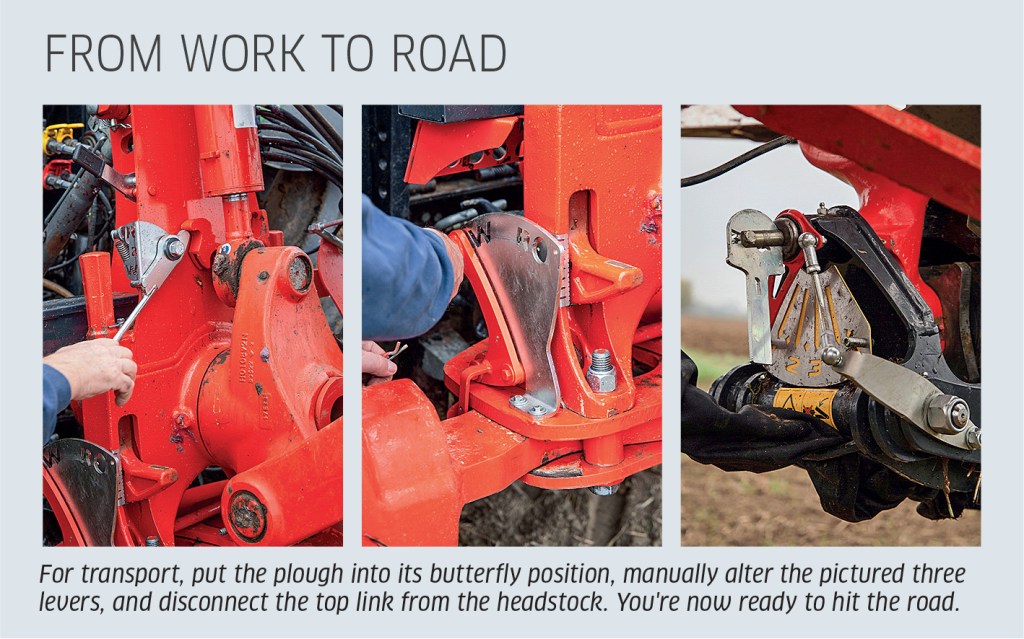
To switch from transport to working mode, or vice versa, three levers have to be moved on the plough: two on the headstock and one on the combi wheel.
Speaking of wheels, in addition to the latest headstock, Kuhn has come up with the new WNR wheel located at the rear of the Master M plough. A WNR wheel positioned more alongside the main beam is also available if that’s your preference.
WNR stands for Work and Roll — in other words, working and transporting. The W and R letters can be found on the headstock and on the wheel, giving plough users clear guidance when changing between modes. Pushing the lever into the W position means the working mode is engaged.
Field impressions and prices
During our working time with the Master M, we focused on the new transport wheel and new headstock.
Switching between transport and work modes initially seemed a bit of a faff, requiring four steps, or five if you include fitting the road lights. In reality, however, when we got out the stopwatch, converting from road to field is a sub-60 second smooth operation.
Heading out onto the tarmac was also a more enjoyable experience. The new WNR combi wheel doesn’t castor, and the large springs do an excellent job of absorbing any shock loads, so the plough remains stable. The 40⁰ steering angle was also sufficient when turning. According to the test plough’s owner, road transport with the Master’s new headstock and combi wheel is generally a more relaxed and safer experience.
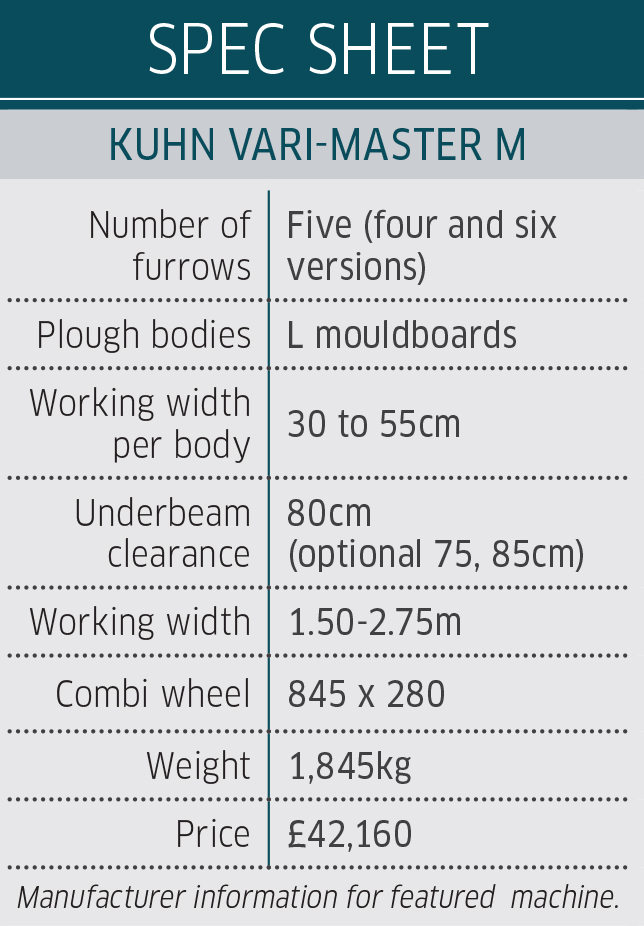
Finally, the price: the M plough used here, with the GoDrive headstock, WNR wheel at the rear, conventional press arm, hydraulic front-furrow adjustment, rear disc, subsoiler points, ZRL maize skimmers and landside extensions, costs just over £42,000.
Malte Sohst
For more up-to-date farming news click here and subscribe now to profi and save.