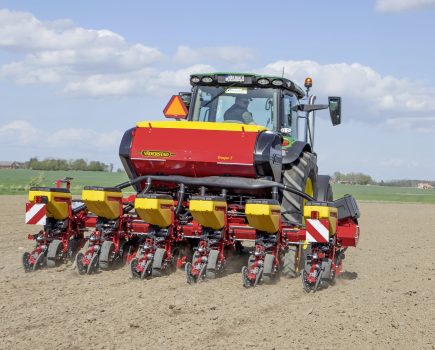

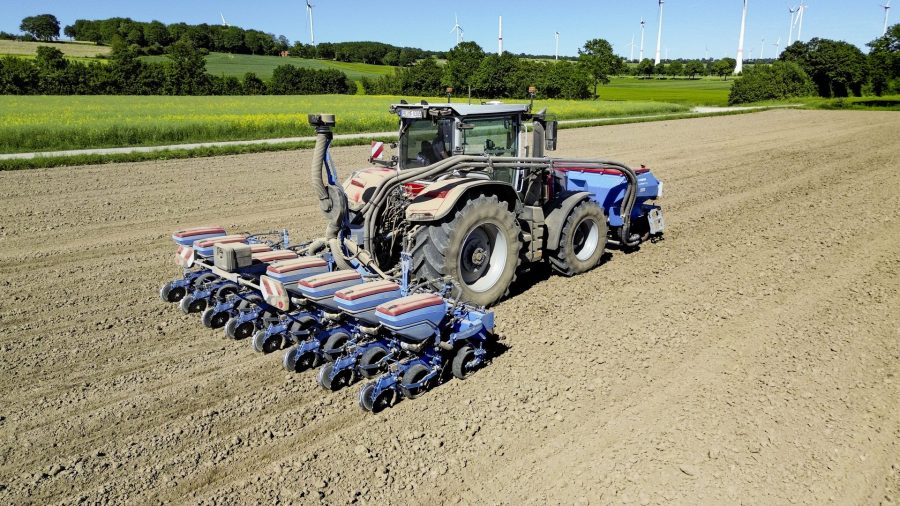
With the Faya M, Lemken is adding more versatility to its precision planter range, which can be used for sugar beet and oilseed rape as well as maize. We head to the field to learn more.
KEEPING IT BRIEF
- In addition to the twin-row Azurit, Lemken now has a single-seed drill.
- The disc coulters, press wheels etc come from Equalizer, the South African drill maker that Lemken bought in 2023.
- Pricing will be on a par with competitor precision planters
- The seeder units are still made at Equalizer, but the rest of the Faya is fabricated in Germany.
Twelve months ago, Lemken unveiled a range of new kit at Agritechnica, and back in the spring the first pre-production units were in action. We had the chance to use the Faya to plant some maize.
Twin-tube frame
This new range of planters uses a purpose-built frame consisting of two square tubes arranged one behind the other. This gives a standard interface for mounting the seeder units from Equalizer, the South African firm taken over by Lemken three years ago.
According to Lemken, another benefit of this design is that a single frame can be used for any row spacing between 45cm and 80cm. And this is one of the big pluses for Lemken with the Faya, because it is now possible to convert the machine from, say, 50cm out to 75cm by using a mounting trolley. In the future, altering the row spacing and adding units will be possible, with 45cm being the narrowest possible spacing.
On the 6.0m wide Faya we look at here, the frame is split the middle, so both halves fold up vertically — ideal for road transport. An optional row-shift for tramlines is available for the nine-row version.
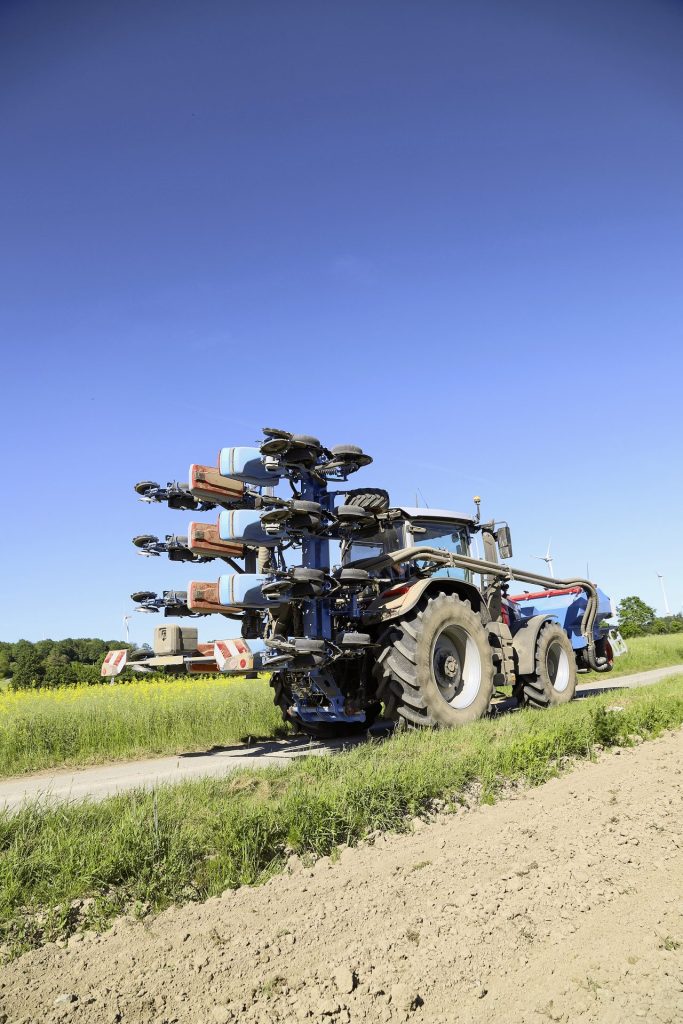
Granular fertiliser product is loaded in the familiar Solitair F front-mounted hopper, which holds 1,900 or 2,400 litres, with a tyre press underneath.
Specification also includes two (or four) separate metering units, which provide two (or four) sections.
Single-row seeders
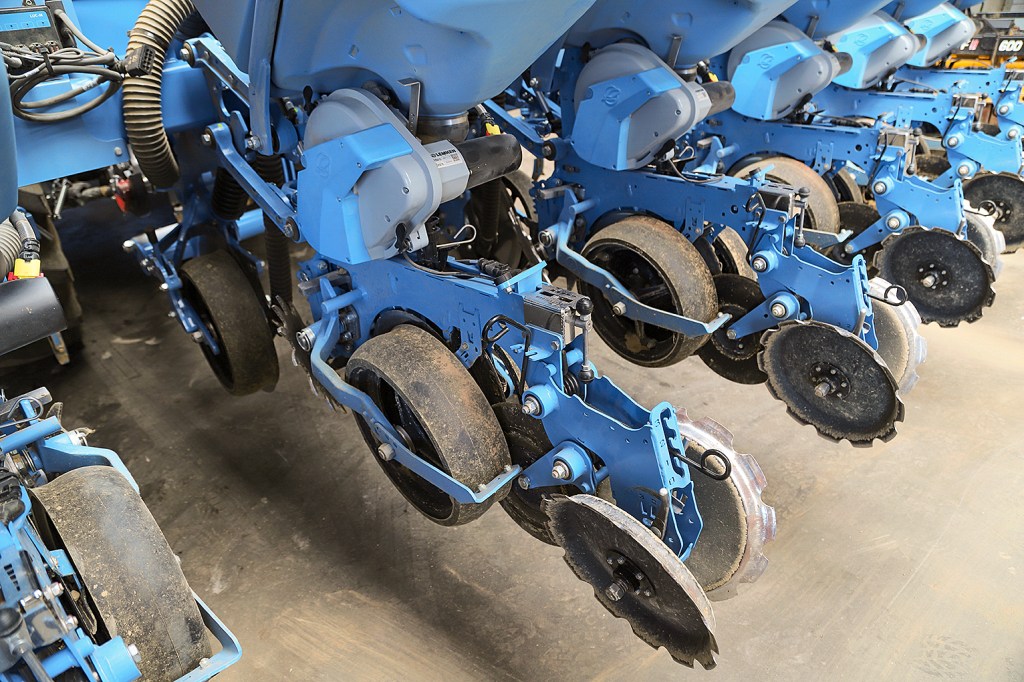
But the standout feature of the new Faya is the Equalizer seeder unit, which is shipped over to Europe from South Africa where it is manufactured. This includes the fertiliser coulter, which has a 50cm diameter disc with a depth control wheel. In future, smaller twin-disc coulters without their own depth wheels will be added to the Lemken options list. The same applies to various extension options for metering micro-granules.
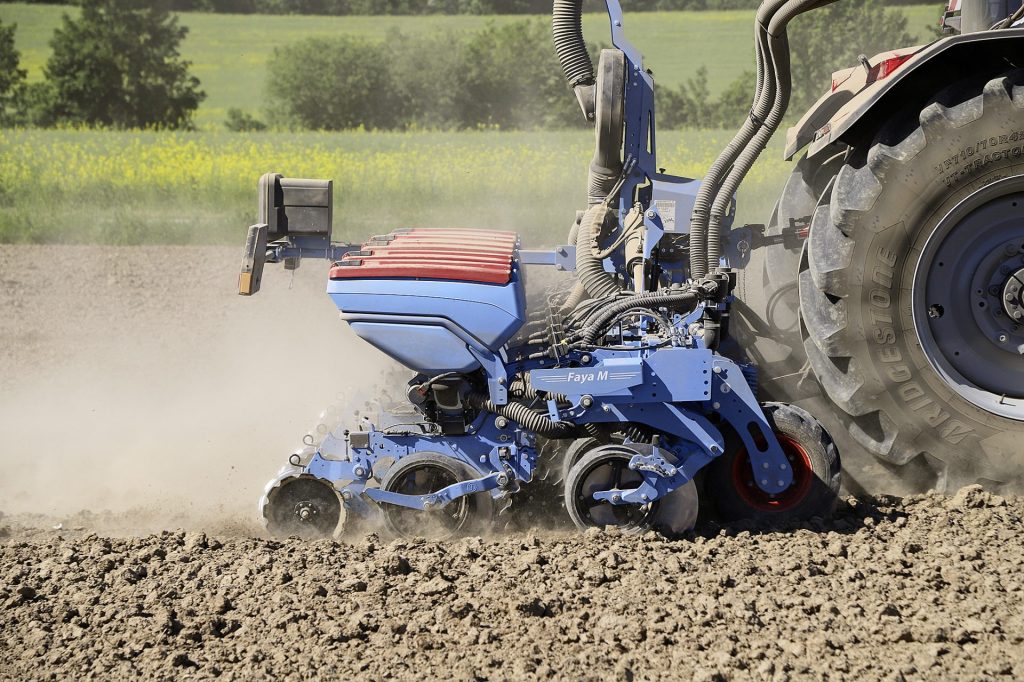
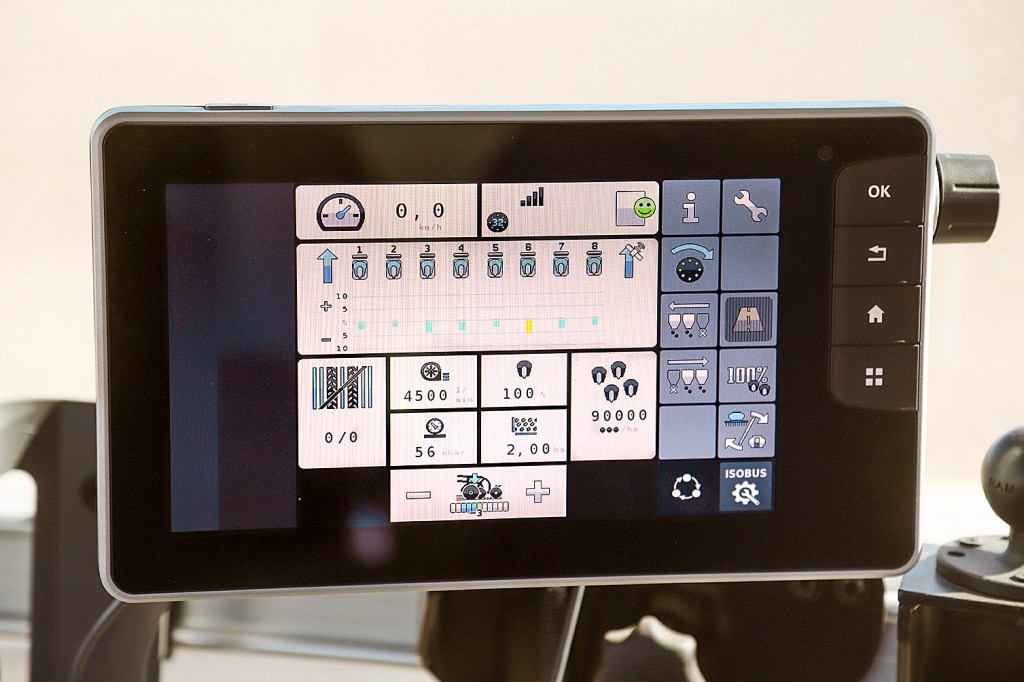
Returning to the seeder, we find the proven, maintenance-free parallelogram mechanism from the Azurit, with coulter pressure being controlled by one double-acting ram per row. This is controlled via solenoid valves from the terminal for a –5 to +5 travel range.
According to Lemken, the individual row units, which weigh in at about 200kg, can be loaded with up to 350kg of downforce to cope with very heavy soil. To prevent the precision drill from lifting off the ground, weight can be transferred from the tractor’s lower link arms. Likewise, depending on final specification, the load can be reduced to almost 0kg. An automatic coulter pressure control system with sensors on the press wheels is also in the pipeline.
A narrow V
The two 400mm diameter, V-shaped discs on each seeder unit have depth control wheels that are adjusted via a spindle with a laser-etched scale to make the job easier. The discs are slightly offset, one behind the other, with a relatively narrow disc angle of just 9° which is reckoned to ease penetration and reduce draft requirements but then also ensures that the narrow slot traps the seed immediately after placement and the slot is reliably closed in all conditions.
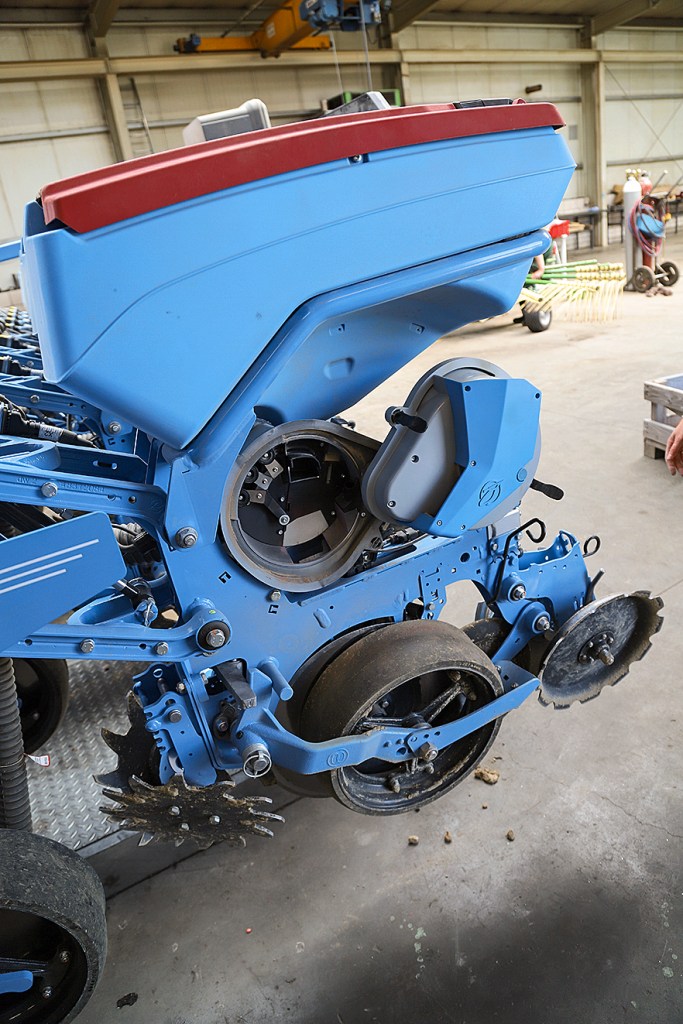
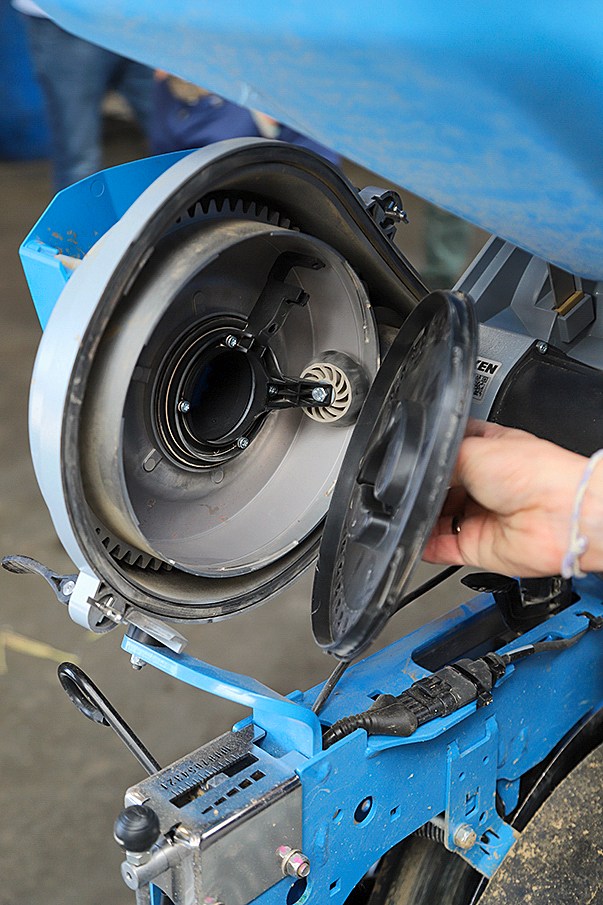
A key feature is the pneumatic singling unit that comprises the same sealing concept developed for the Azurit. This minimises air leaks in the pressurised system and is also easy to work on. The die-cast aluminium housing has a wide rim so only needs two quick-fit fasteners to hold it in place. Once opened, the housing can be pulled off the drive shaft and swung to the side. Then you are into the singling unit, and you have both of your hands free to do any adjustments and maintenance.
Easy disc change
A tool is provided for the metering disc’s bayonet fitting. On the other side sit the electrically adjusted scrapers, allowing the operator to fine-tune the setting while still keeping an eye on the monitor during work — either row by row or for all rows using the “SyncAll” button.
Lemken says the Faya’s placement accuracy has already been tested in sugar beet and maize. In these tests, standard deviations averaged 23mm and 25mm respectively — results that would earn it a ‘good’ or ‘very good’ mark when referring to the DLG rating system as we do in the profi tests.
We operated the drill at about 14km/hr, and the sowing depth placement made a good impression. But we will know more when we do a full practical test in a future issue and also use the Faya M for planting OSR and soybeans. According to Lemken, working at 15 to 18km/hr shouldn’t be a problem for the motors and singling units. And even then, the required electrical power shouldn’t exceed the ability of the ISObus wiring.
Some fine-tuning needed
As far as handling goes, both filling and emptying of the 70-litre seed hoppers isn’t a problem. The only issue with our pre-production machine was a handful of seed falling out of the singling units on the right-hand side when unfolding the machine. Lemken says that this issue has been fixed on production machines.
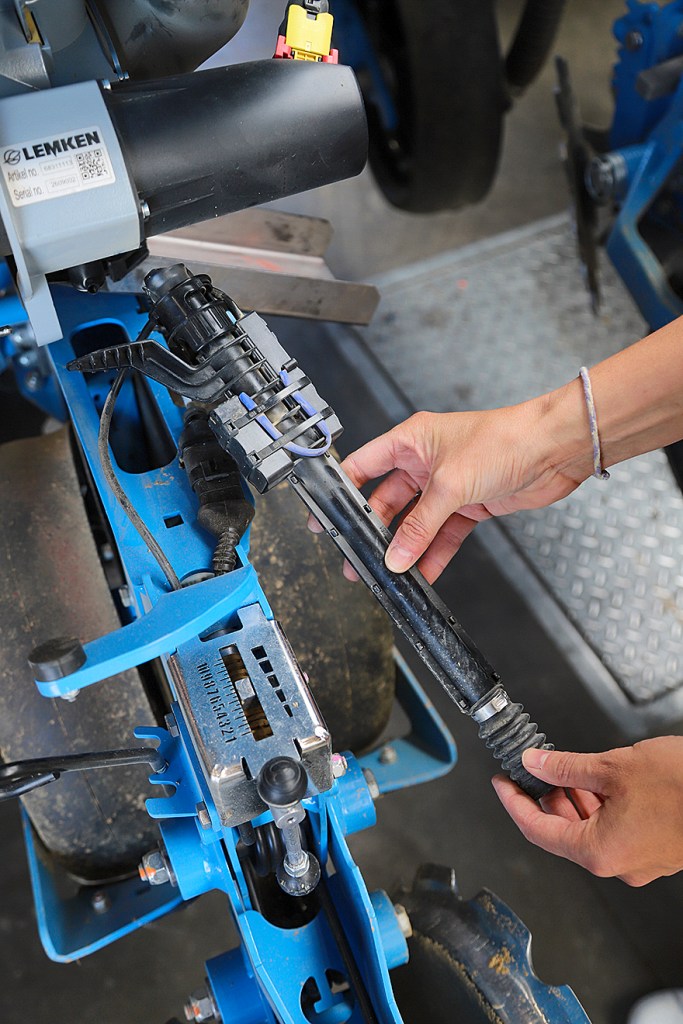
They are also wanting to simplify removing and refitting the short seed delivery tubes, although our initial experience showed they didn’t need to be swapped when changing over to a different maize variety. The same applies to the metering discs.
The only hiccup of note that we had was one blocked fertiliser coulter due to poor-quality fertiliser (which was quickly noticed, thanks to flow sensors on every row). This said, conditions on the ploughed then cultivated dry soil were not particularly challenging.
Summary
With the Faya, Lemken introduces its first single-row precision drill with pneumatic singling technology for higher travel speeds. We’re looking forward to an in-depth field test to establish the machine’s position in this part of the market.
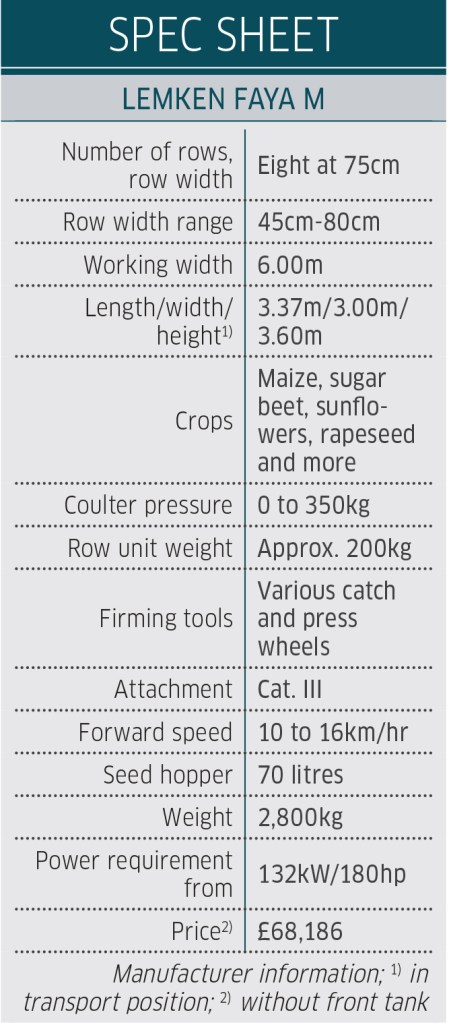
According to the price list, the Faya M with the 6.0m frame, eight rows and fertiliser coulters (but without the front tank) should cost about £68,000.
If this machine lives up to our first driving impression, then the engineers at Alpen will certainly have filled the company’s gap in the precision drill programme.
Hubert Wilmer
For more up-to-date farming news click here and subscribe now to profi and save.