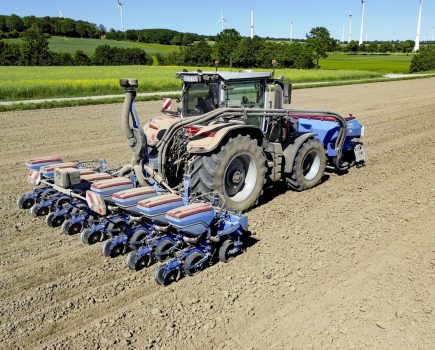

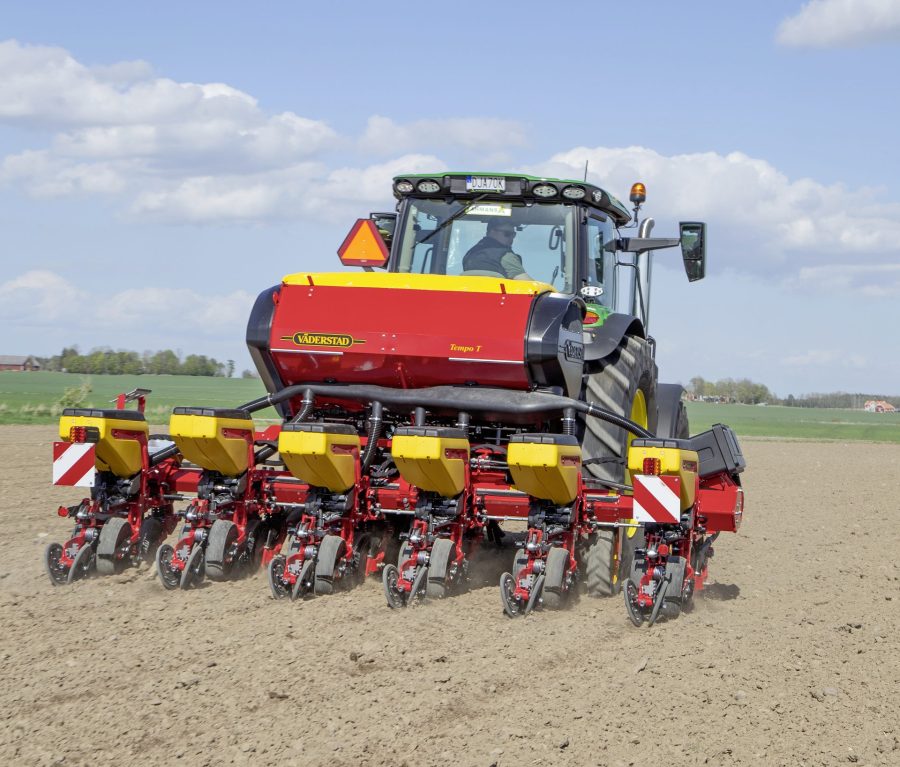
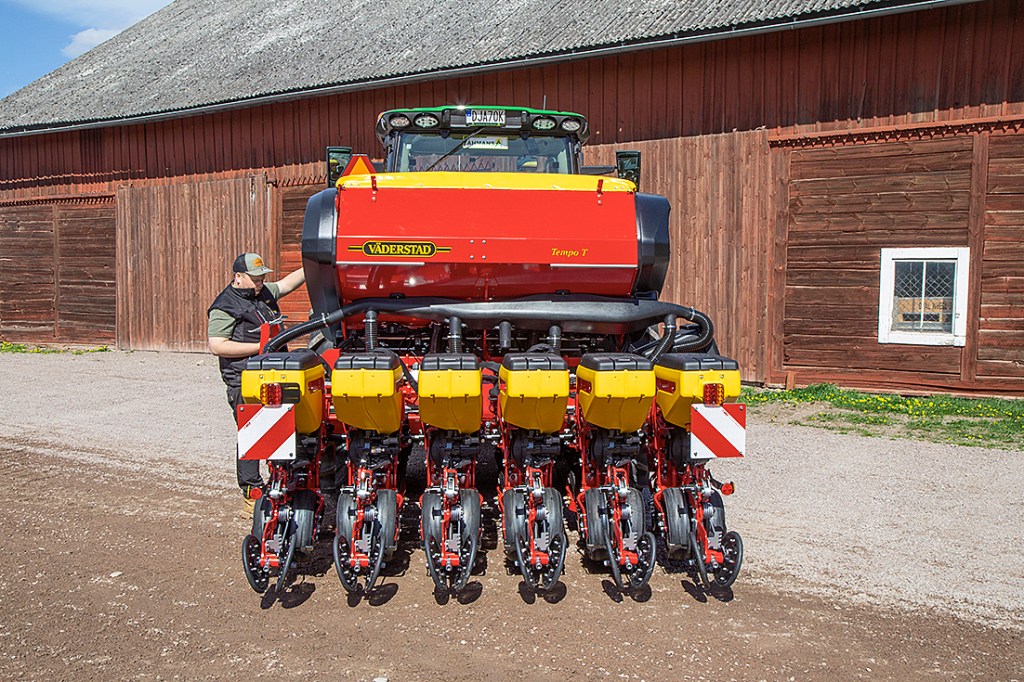
The precision planter market in Germany is the biggest in Europe, and a six-row machine with a telescopic frame is the bestseller. The new Tempo T allows operators to alter the row spacing in less than a minute.
KEEPING IT BRIEF
- This latest Tempo T has a sub-3.00m transport width.
- A unique selling point is the central row width adjustment.
- Can be fitted with most of the current Tempo options.
- Is now in the price list, which kicks off at £34,675.
If you want a precision planter to sow a multitude of crops, do you drill sugar beet, maize and oilseed rape on a 50cm row spacing or take the time out to make the changes so you can put sugar beet crops in on 45cm and maize at 75cm? Väderstad’s second generation Tempo T now offers the convenience of altering the row spacing in three steps in just a few seconds.
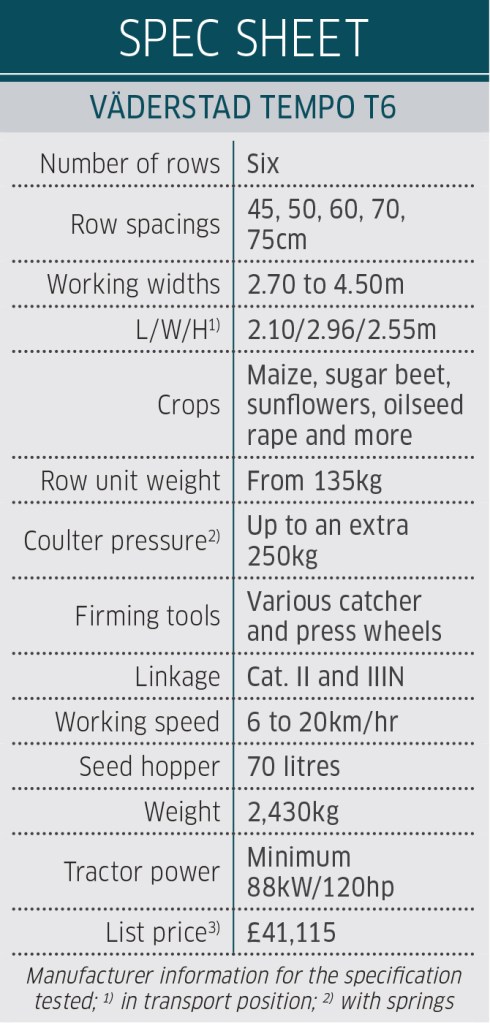
This latest Tempo T comes as a six- or seven-row planter. On the six-row version, spacings of 45, 50, 60, 70 and 75cm are possible. The Tempo T7 manages 50, 60, 75 and 80cm. The middle seeder can be raised out of work, if necessary.
Quick changeovers
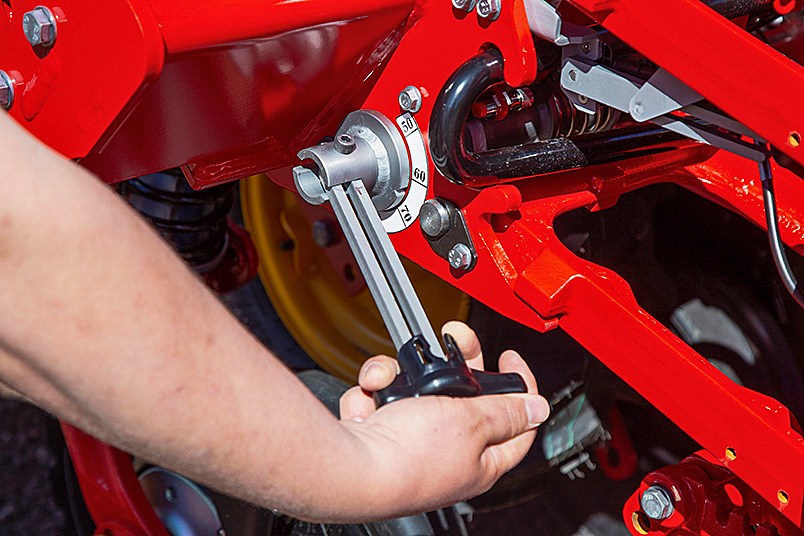
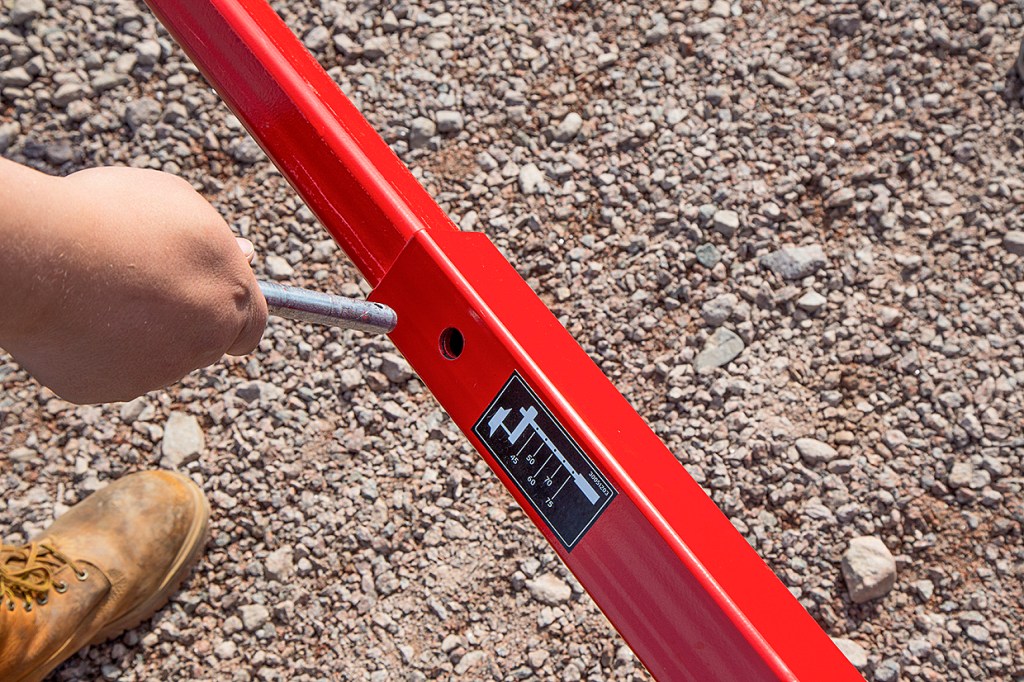
To change the row spacing, the drill is placed in its transport position so the operator can flip the easy-to-reach lever on the left-hand side, shifting the pull rod out of its parked position, twist it to the new setting and then push it back into the park position. Sensors detect the change to the row spacing; after that, it is just a matter of pressing a button on the ISObus or iPad terminal to confirm the machine’s new working arrangement.
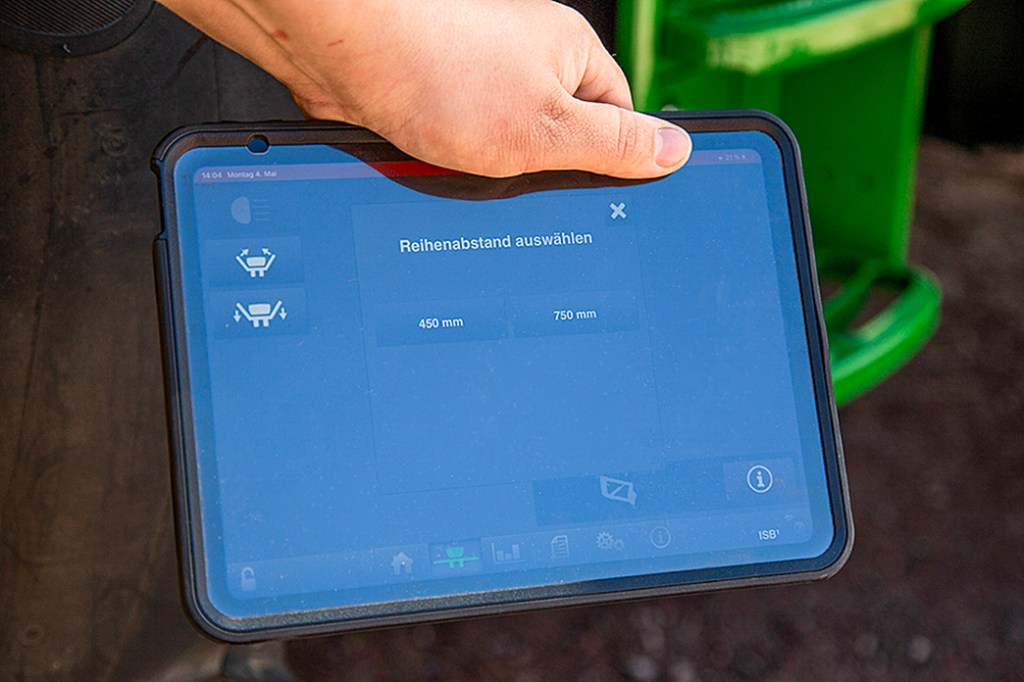
Unlike competitor machines, where the row spacing is altered on the individual seeder units, the Tempo T’s one, central adjustment offers a huge time saving and convenience advantage.
Mechanical links
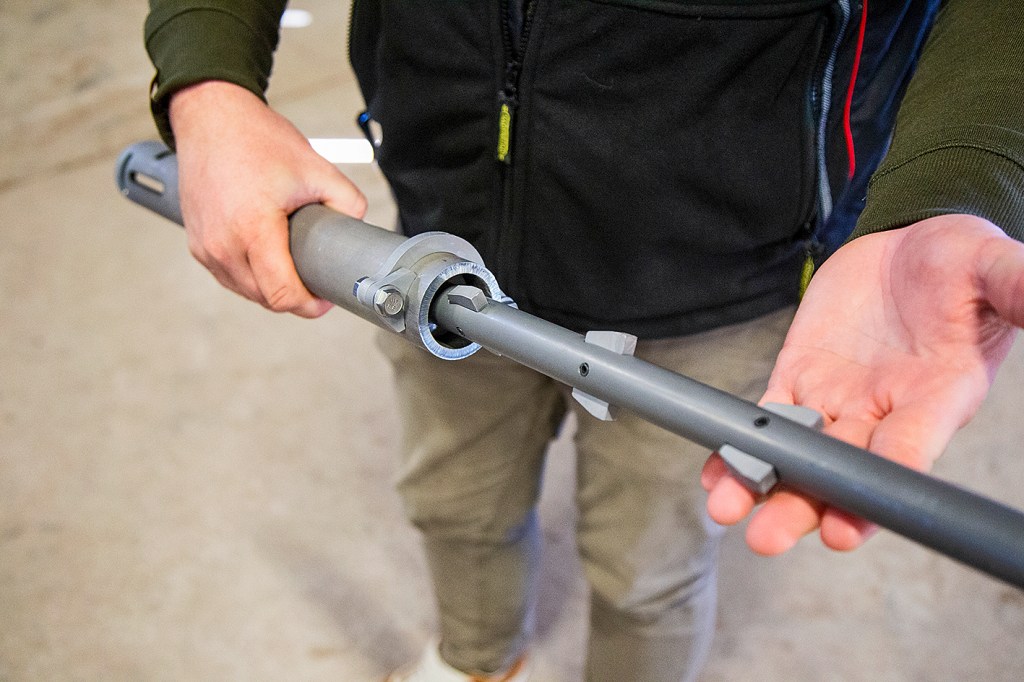
On the six-row machine, the three left-hand and the three right-hand seeders are linked by the pull rods. These have drive lugs that set the row spacing. The position of the lugs is very similar to a clock face: some are in the 12 o’clock position, others at nine or six o’clock. Depending on which clock position — or pull rod position — is preselected, the lugs hit the relevant stop plates at different positions, thereby determining the final row spacing.
The whole side-shifting process starts with the outer units first. The seeder units are mounted on the frame, sliding on replaceable plates. The design made a good impression in our dusty conditions.
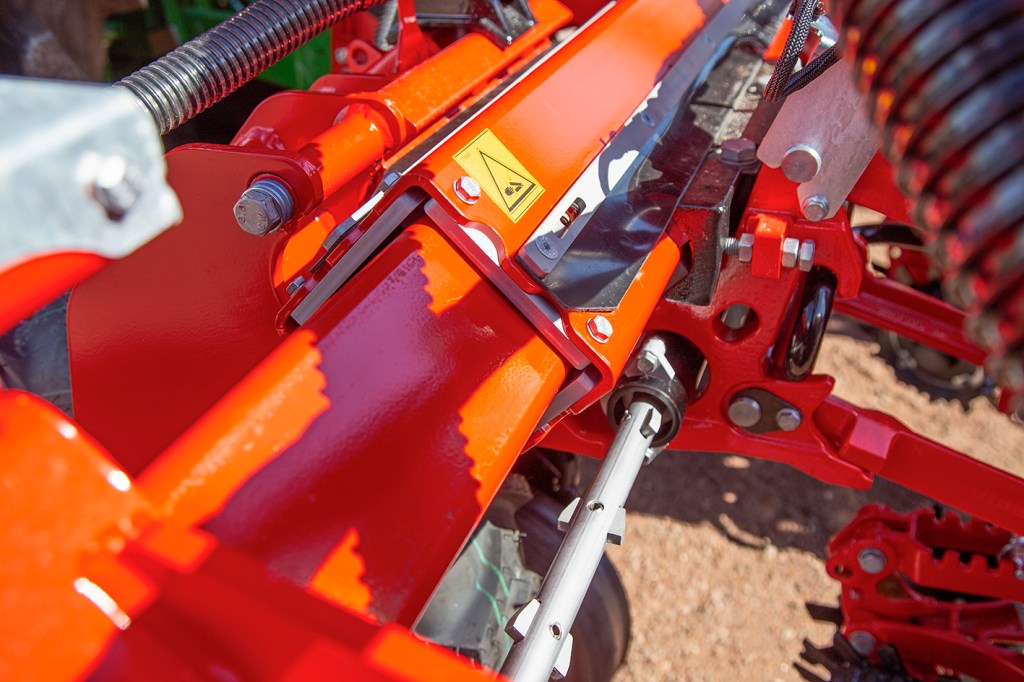
A nice bonus of this quick and easy row spacing control is that for servicing, such as swapping seed discs, you can fully extend the toolbar to its widest setting, so you have more room between the units. The two rams for hydraulically extending/retracting the toolbar are integrated into the frame so are well protected as long as they don’t leak…
Further updates
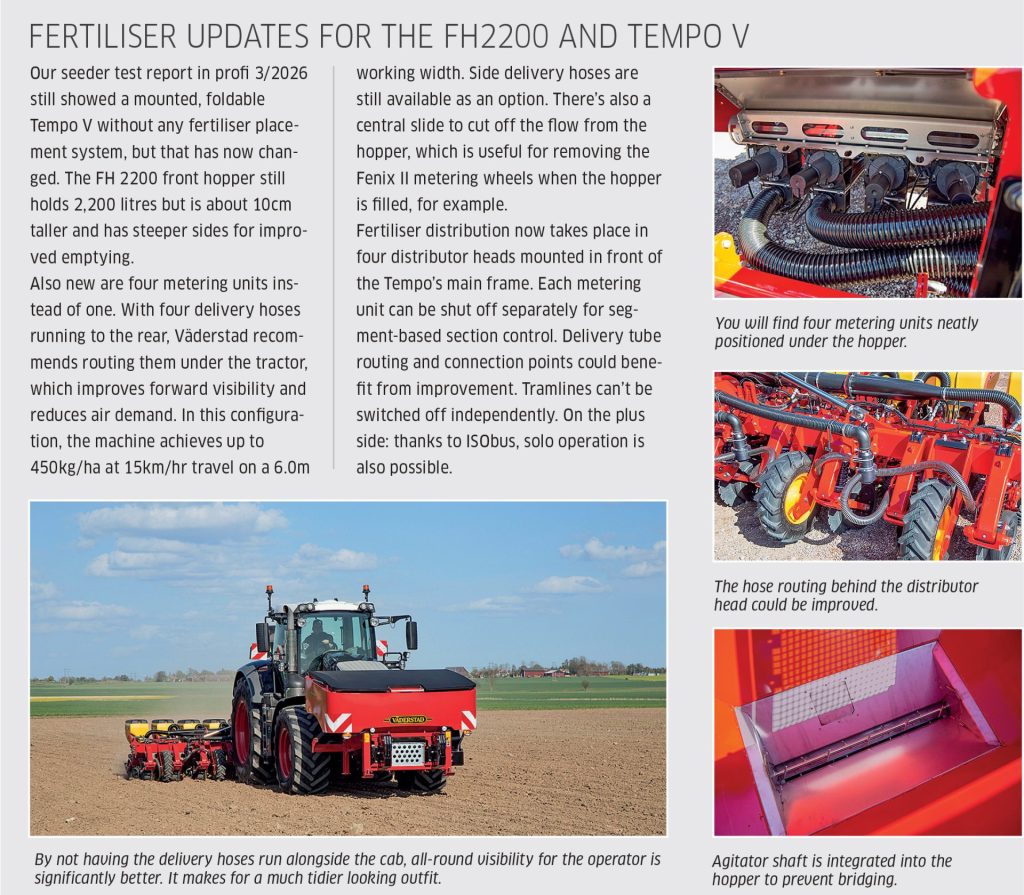
The 1,200-litre fertiliser hopper is identical to the first generation. What Väderstad has changed is the position of the fan and the air intake. Instead of the intake tower being behind the hopper, where it is always in the way, Väderstad moved the fan and intake to the right-hand side of the hopper and tucked them under a plastic cover along with the alternator for the 48V electrical system. The hydraulically driven fan needs about 30l/min.
The fan supplies air for getting the fertiliser to its destination and the pneumatic singling system. A splitter valve sets the ratio of the airflow. Fertiliser metering is electric and done row-by-row, so individual row shut-off is possible. Inside the hopper, you’ll find the hydraulically driven and switchable agitator shaft. The system is designed for application rates of up to 250kg/ha at up to 15km/hr.
Fertiliser placement is all familiar Väderstad hardware: single-disc coulters with guide wheels running on the sides, tool-free depth adjustment and selectable pressure settings.
New sowing
The easiest way to tell the old and new seeder units apart, is to look at the lid – the latest version has a door handle latch (see profi 3/2026). The price of the drill can vary hugely depending on the level of spec and the electronics (Workstation 10 or 11).
The entry-level version of the drill may well be sufficient, as it already has electric drive for the seed discs and, optionally, the micro-granule units. The pricier specification adds auto scraper control, curve line compensation and active coulter pressure control – right up to lifting individual rows out of work for tramlining. Metering is done Tempo-style, using overpressure; and there’s a broad choice of seed discs.
Operation is via an iPad or ISObus. Section control and variable-rate seeding are both possible. The basic version requires one double- and one single-acting spool valve plus free return. Hydraulic coulter pressure control requires load-sensing.
Other details
- The Tempo T weighs in at around 2,250kg-2,750kg, and it is also available without fertiliser placement.
- There’s a handy storage compartment for accessories on the right.
- New row cleaners are depth-adjusted without tools, and their upper and lower limits can be set, too.
- There is a wide selection of firming tools available.
- LED strips behind the fertiliser hopper are very useful at night.
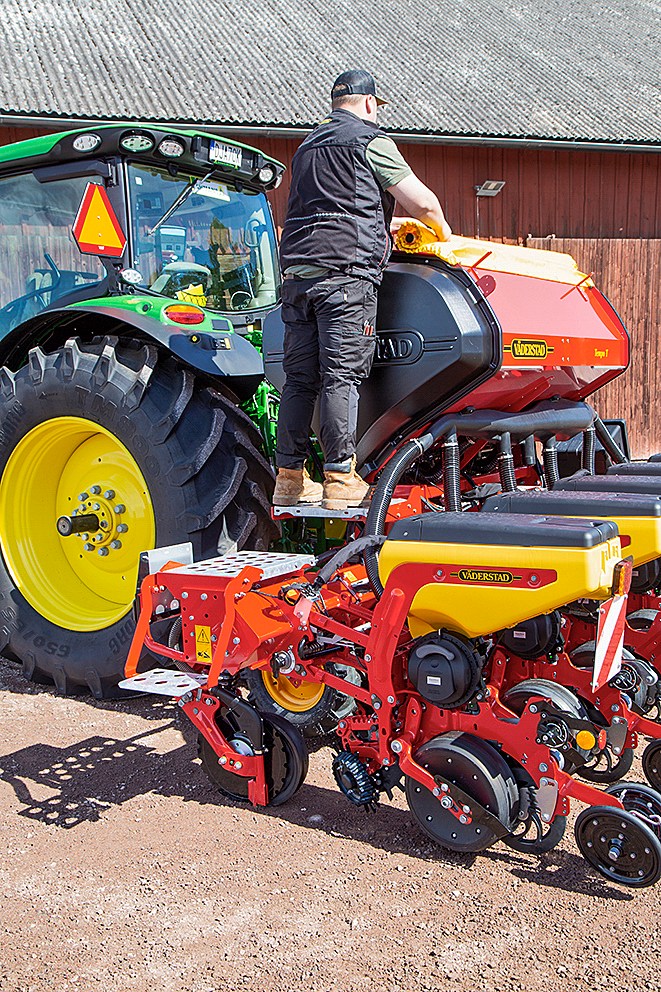
- The fold-out step to the fertiliser hopper works well but is quite high — a handrail would be nice.
- List prices for the Tempo T6 without a fertiliser placement kit start at £34,675; fertiliser technology adds £6,440 to the price tag.
Summary
Farmers who run their own fleets and contractors who sow both sugar beet and grain maize will be won over by the changes to the new Tempo T.
Thanks to central row spacing adjustment, they can change over to a different crop in just a few seconds.
Importantly, bearing in mind the different budgets, the new generation of seeders offers plenty of specification options — from straightforward drilling technology up to a machine with automatic scraper control and electronic seed depth adjustment.
Sönke Schulz
For more up-to-date farming news click here and subscribe now to profi and save.