
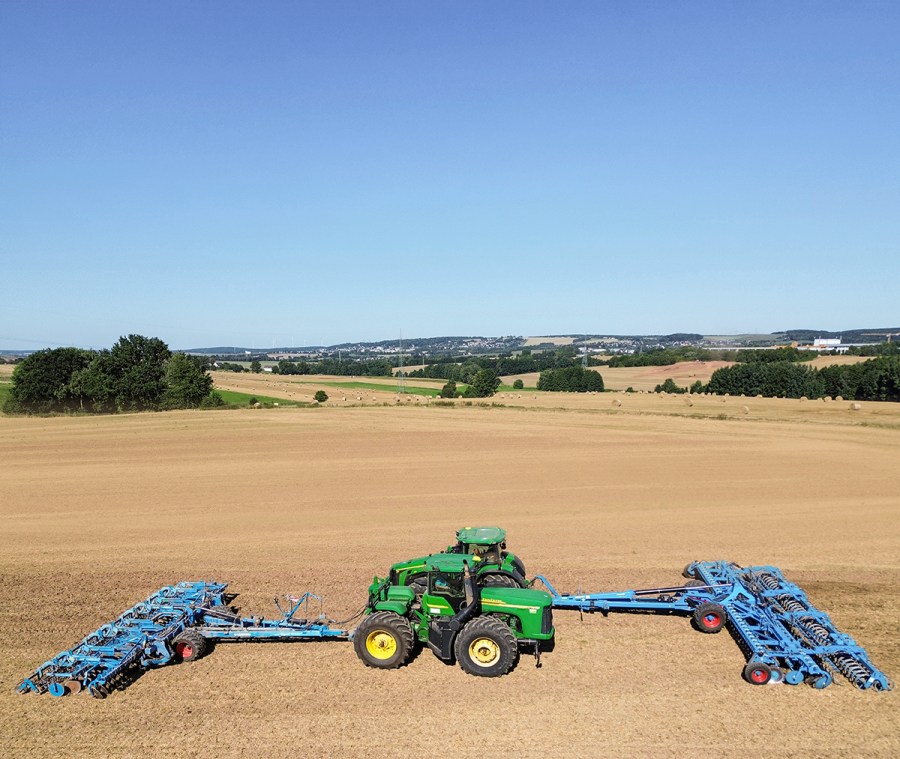
Even the humble compact disc cultivator can evolve, though there isn’t too much humble about the Gigant and equally big Rubin, with 64 and 72 discs, respectively. We compare the two generations of discs to highlight their evolution.
KEEPING IT BRIEF
- The Gigant was Lemken’s response to the increase in horsepower that started to appear in the 1990s.
- Lemken still uses the interchangeable cultivator modules on some of its machines.
- The Rubin’s new frame concept has significantly simplified how it changes from field to road.
When ‘The Wall’ came down, the 1990s were an exciting time for West German farm machinery makers who had to step up to the challenge of developing machines for large-scale farming as quickly as possible.
Arms race
While tractors with 400hp and more are fairly commonplace today, things were very different in the 1990s when manufacturers entered the race for the highest horsepower tractors. John Deere launched the 8000 series, Fendt the first-generation Vario 900 and Case IH shipped the Quadtrac across the Atlantic. Right at the top sat Caterpillar’s flat-track Challenger 95E with its 306kW/410hp engine.
But there is no point in having lots of power if there isn’t the suitable kit to accompany it. Lemken already had a handle on big ploughs, but its primary and secondary cultivator models only stretched out to widths of 6.0m.
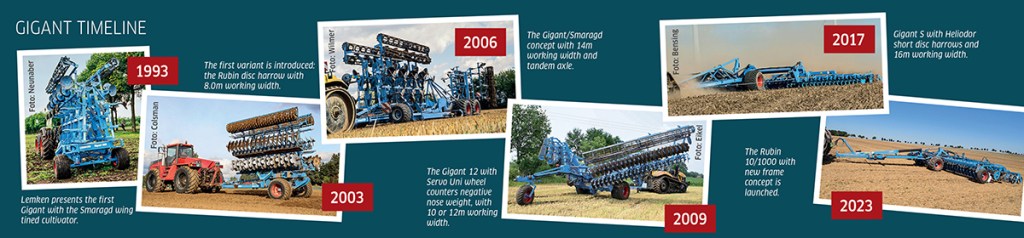
So, the engineering team had to get a wriggle on with something bigger and came up with the aptly named Gigant that could be equipped with wide working cultivator modules
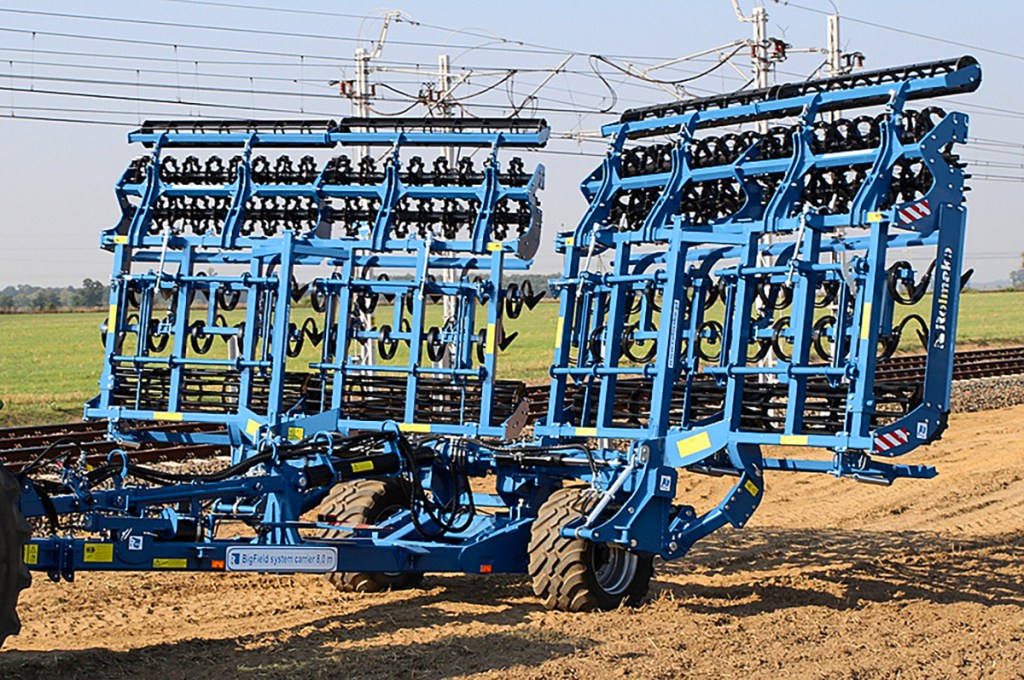
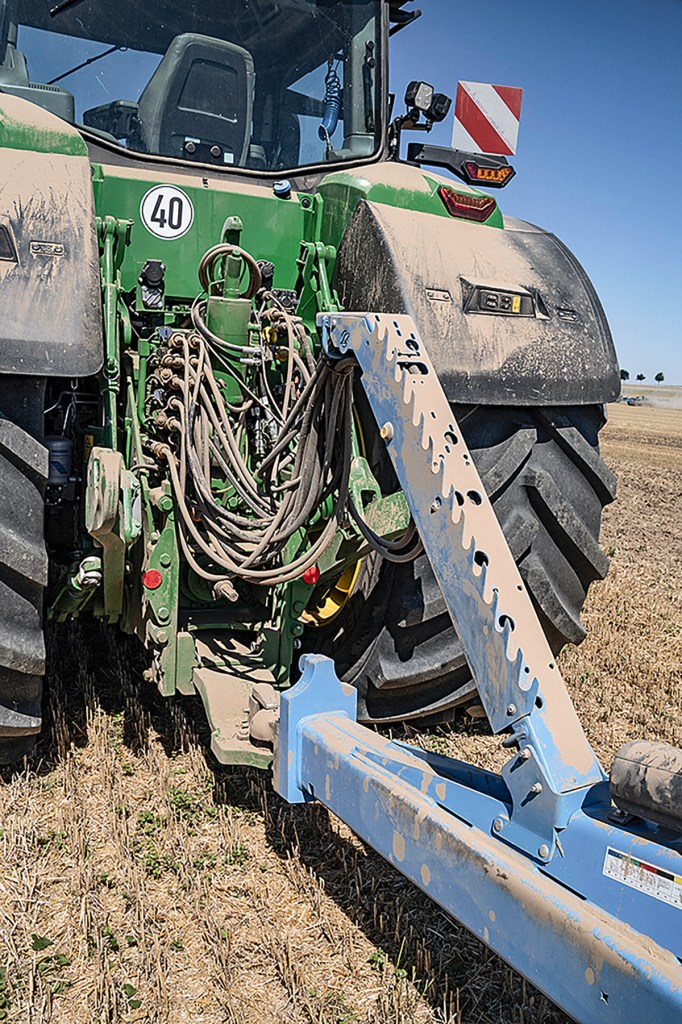
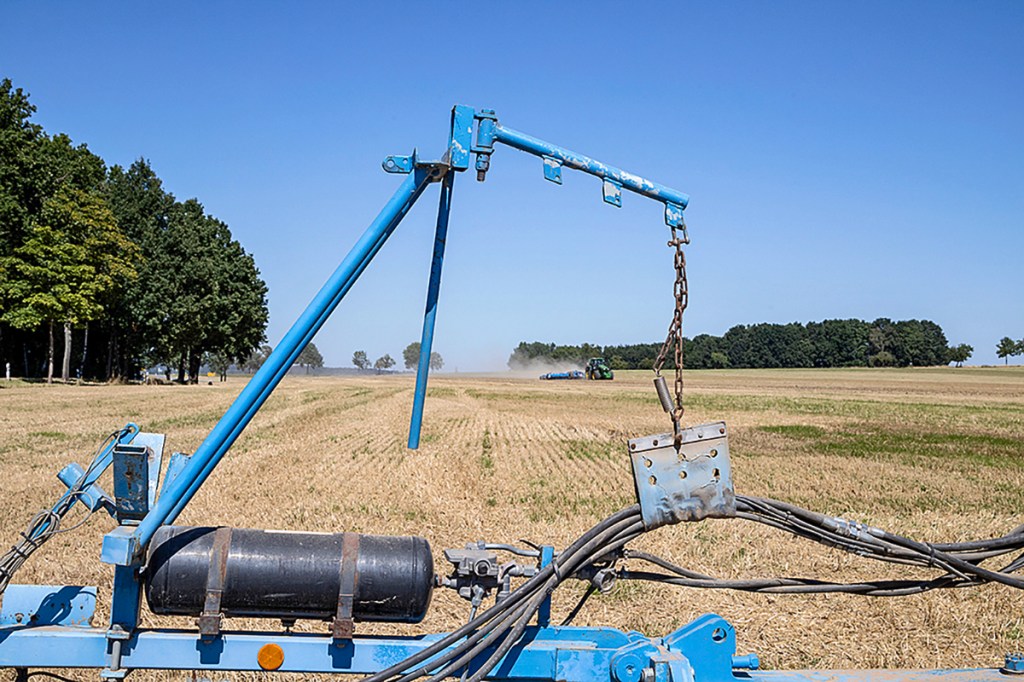
At first glance, this is a fairly pragmatic solution: effectively a drawbar and single- axle chassis equipped with a folding frame with two three-point linkages that could be used to attach the manufacturer’s existing implements such as the Smaragd cultivator and Kompaktor seedbed harrow. Sounds simple — but of course there was a bit more to it…
The road transport issue
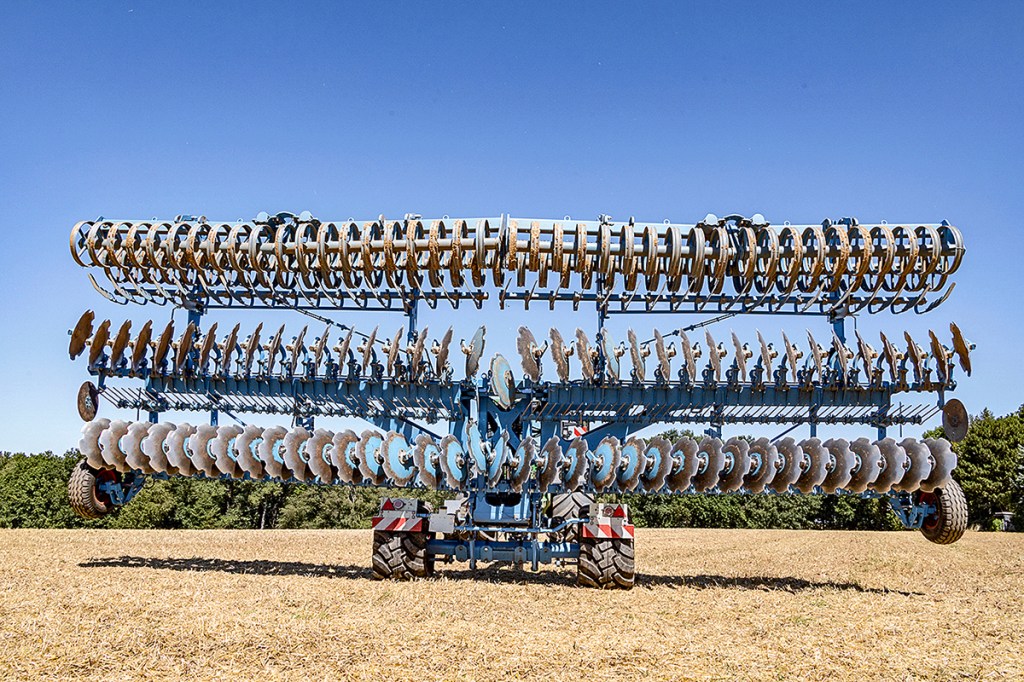
One of the biggest hurdles with the widest working machines is folding it into a suitable road-going package. Here the two wings of the Gigant first fold up vertically and then swing into a forward position so they are inline with the lengthy drawbar.
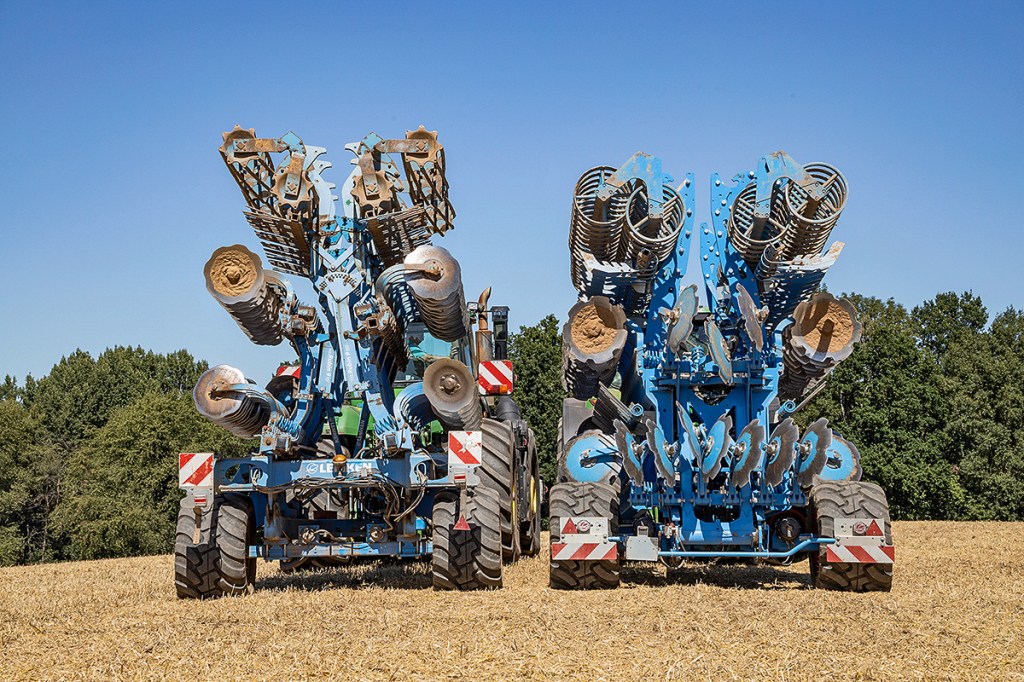
When in the vertical position, the transport height is determined by the length of the implements, the folding frame and the size of the tyres, so 4.0m is easily reached — especially with the Rubin short disc harrow Rubin 9, which is 3.30m long. That just gives you 70cm to play with if you want to remain under the critical 4.0m height in Europe.
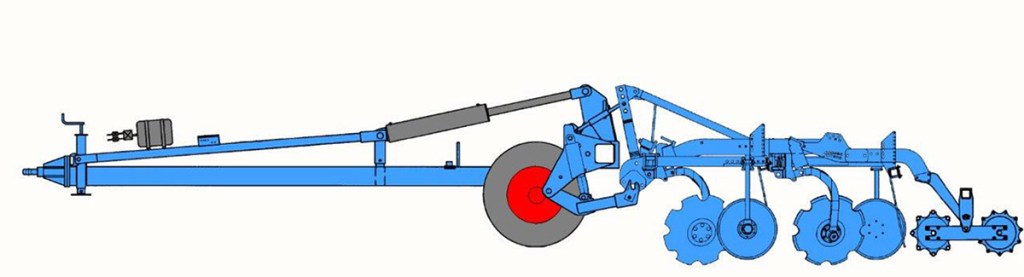
To make the firm’s standard, off-the-shelf implements compatible with the Gigant’s three-point linkages, Lemken altered the mounting of the rear rollers. In their upright position, the rollers swing downwards to keep transport height down. What sounds smart in theory was quite fiddly in practice, because operators had to refit at least eight pins for each changeover, each time climbing over the rollers.
Redeveloped from scratch
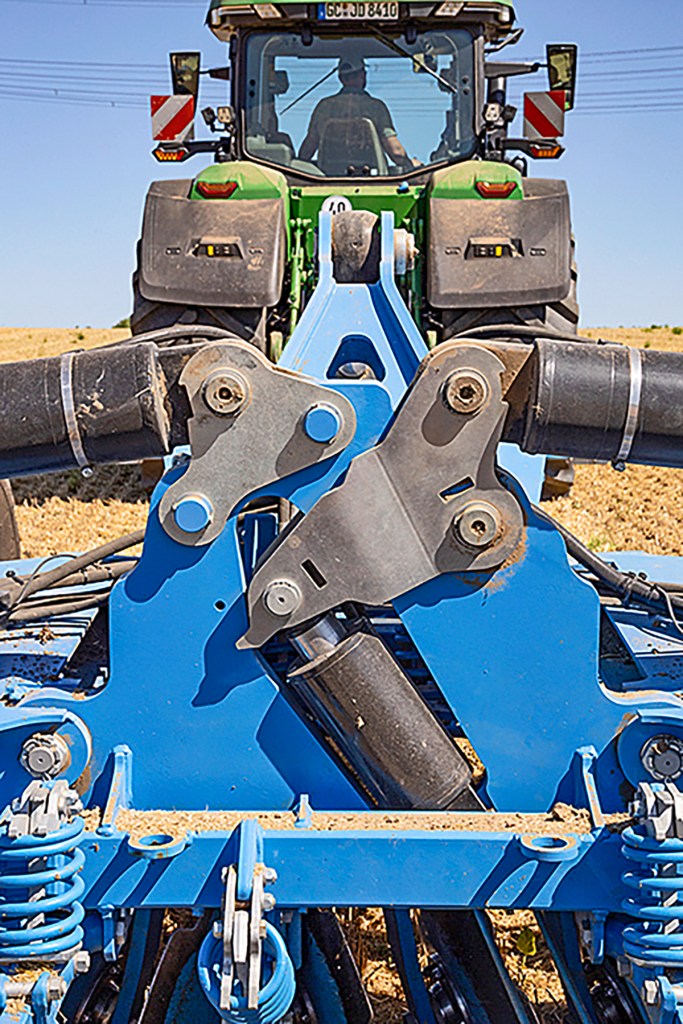
With the new Rubin 10 all of this was put in the past. It gained a new frame design that reduces the transport height.
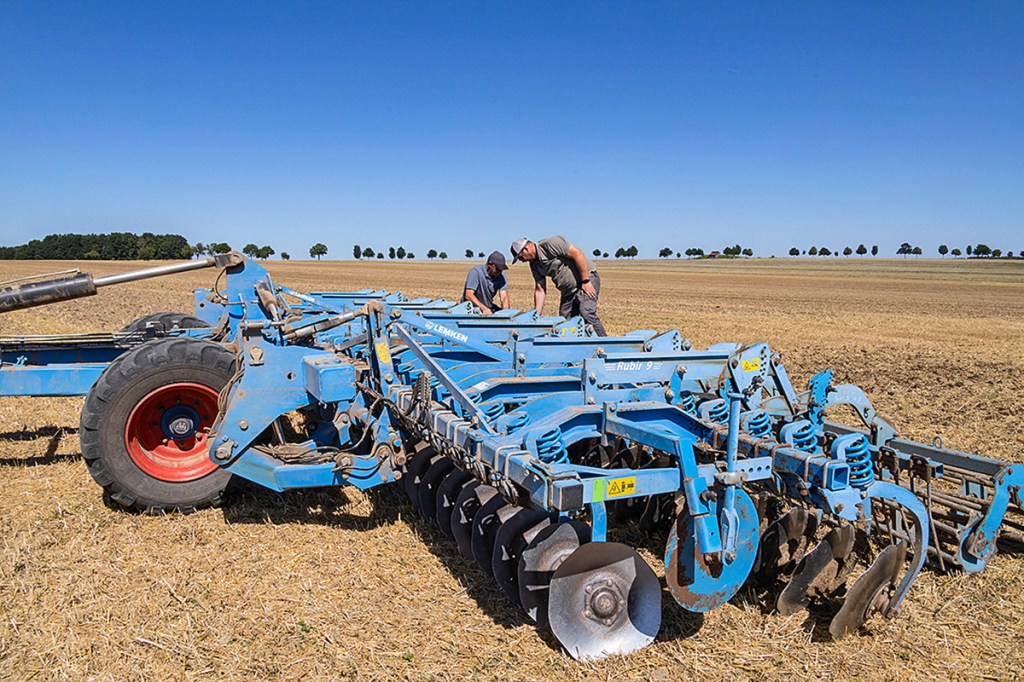
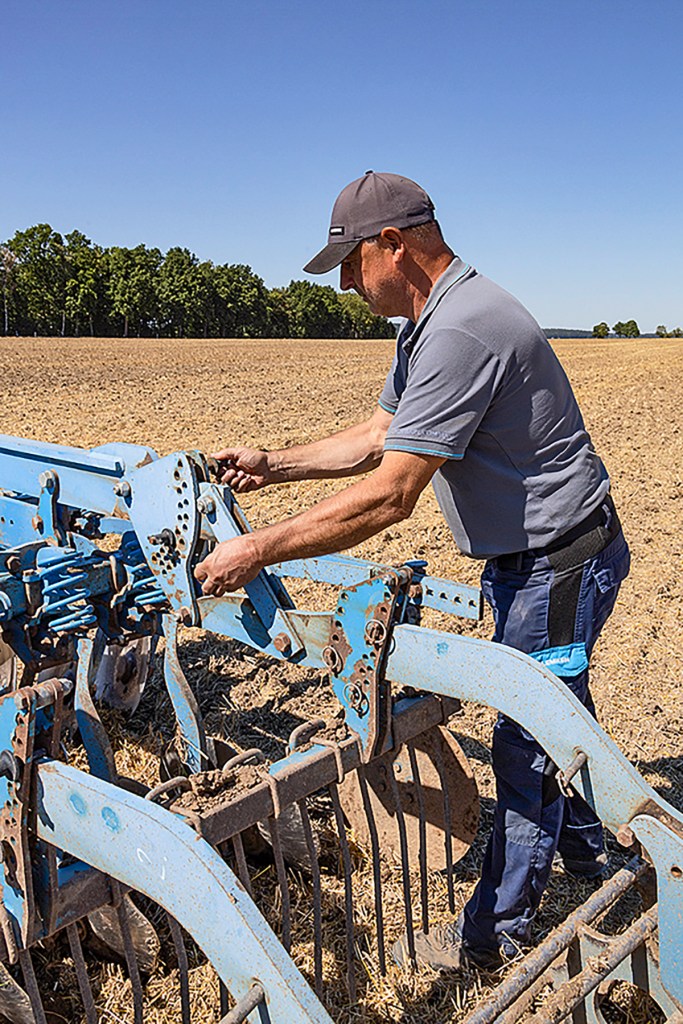
Not only that, but the rollers can now be adjusted hydraulically, eliminating the need for refitting pins for setting working depth, while the machine remains within the 3.0m transport width.
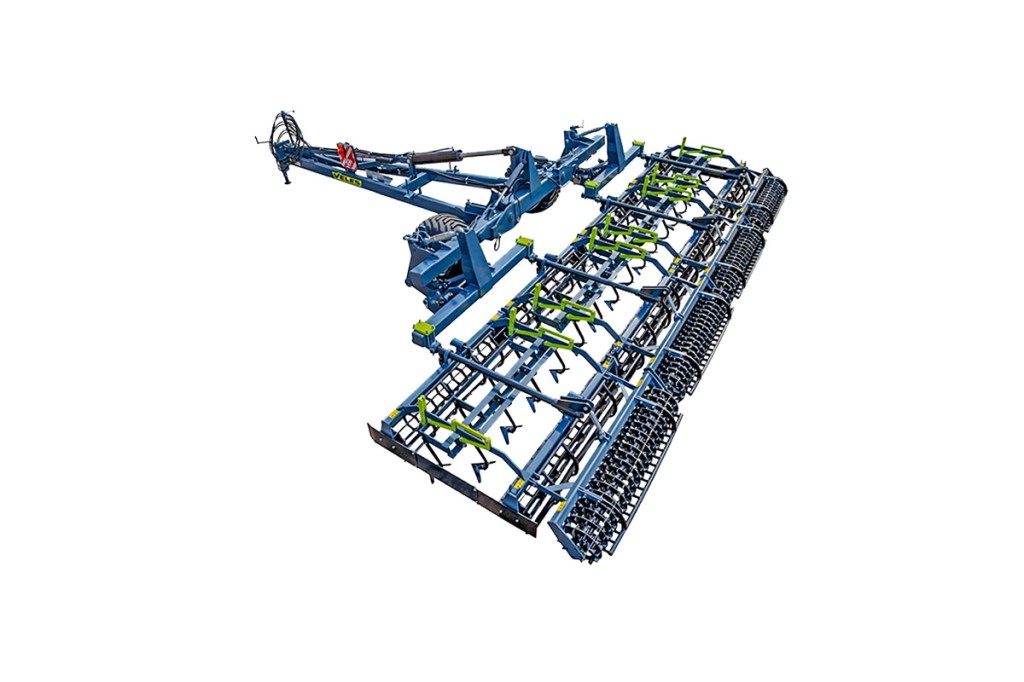
On the Gigant, setting the depth took two people, because the top link adjusters would only turn when not under load — even given the oversized spanner that came with the machine. Nonetheless, the Heliodor short disc harrow and the Kompaktor seedbed combination are still marketed today in work widths of up to 16m and the Kristall twin-beam cultivator in widths of up to 10m using the Gigant system.
As the new Rubin 10 frame moved away from the system carrier concept, Lemken could abandon the extra folding frame with the coupling points. Comparing the distance of the first disc row from the ground when in transport position, the difference between the two designs is clear: on the Gigant, the centre of the discs bar sits 1.90m above the ground, while on the new Rubin 10 it is only 1.25m. This also brings down the centre of gravity — another boon for on-road travel.
Swapping tools
To allow the attached implements to follow ground contours, the lower links on the two Gigant linkages were able to move freely upwards. Peter Baumgärtner, head of AgroTraining at Lemken, says: “In principle, this allowed the previous Gigant to behave as if it were two separate tractors, each with a three-point linkage.”
While the ability to swap tools on the Gigant seems like a good idea, the reality is that farmers didn’t utilise this feature enough.
Into practice
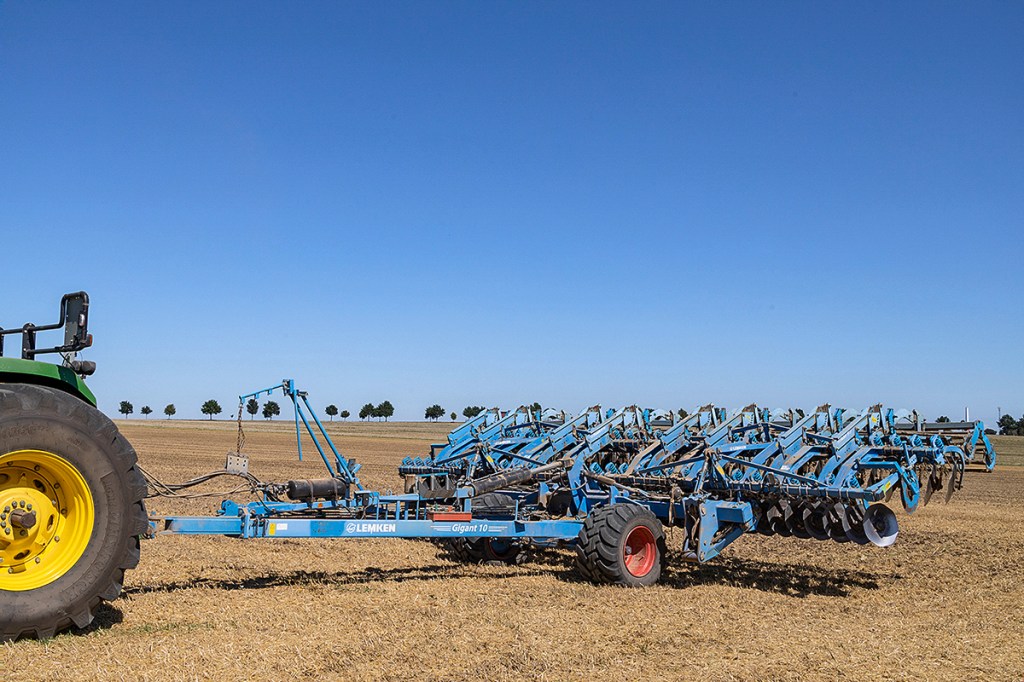
Apart from the transport height issue, the Gigant had a few further downsides. One of these was negative nose weight: when the sections were raised on the headland, the entire weight was shifted behind the Gigant axle. To counter this, the tractor’s back axle has to be 6t plus.
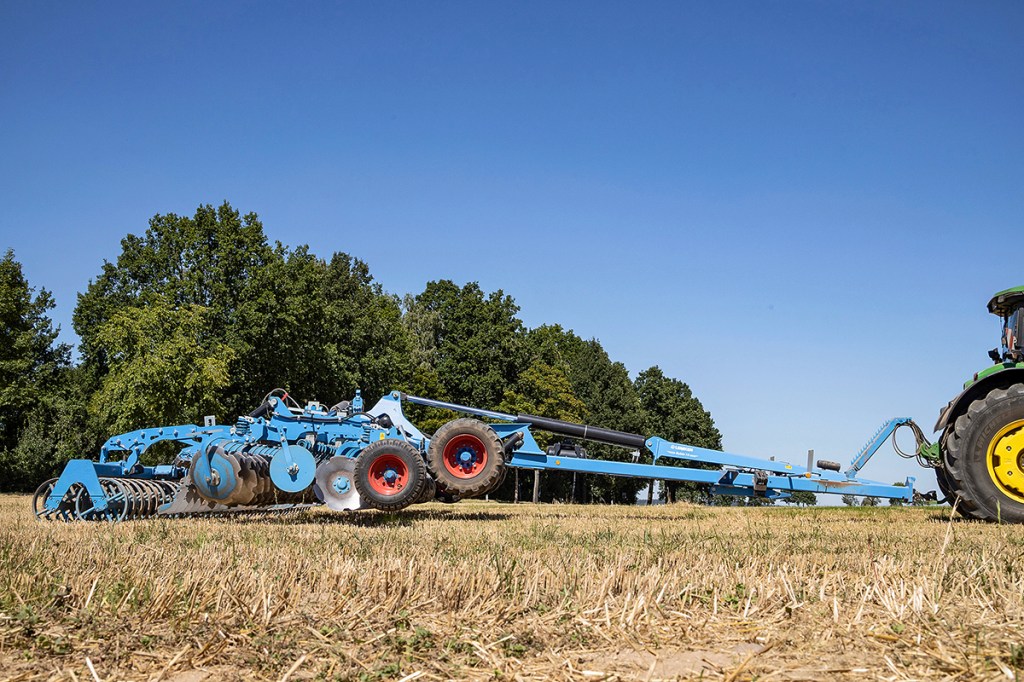
When it came to the new Rubin 10/1000, Lemken had a rethink. Instead of turning on its transport wheels on the headland, the new disc harrow runs on the roller. And as this change increases the load on the roller mountings and bearings, these elements are now much beefier.
A question of symmetry
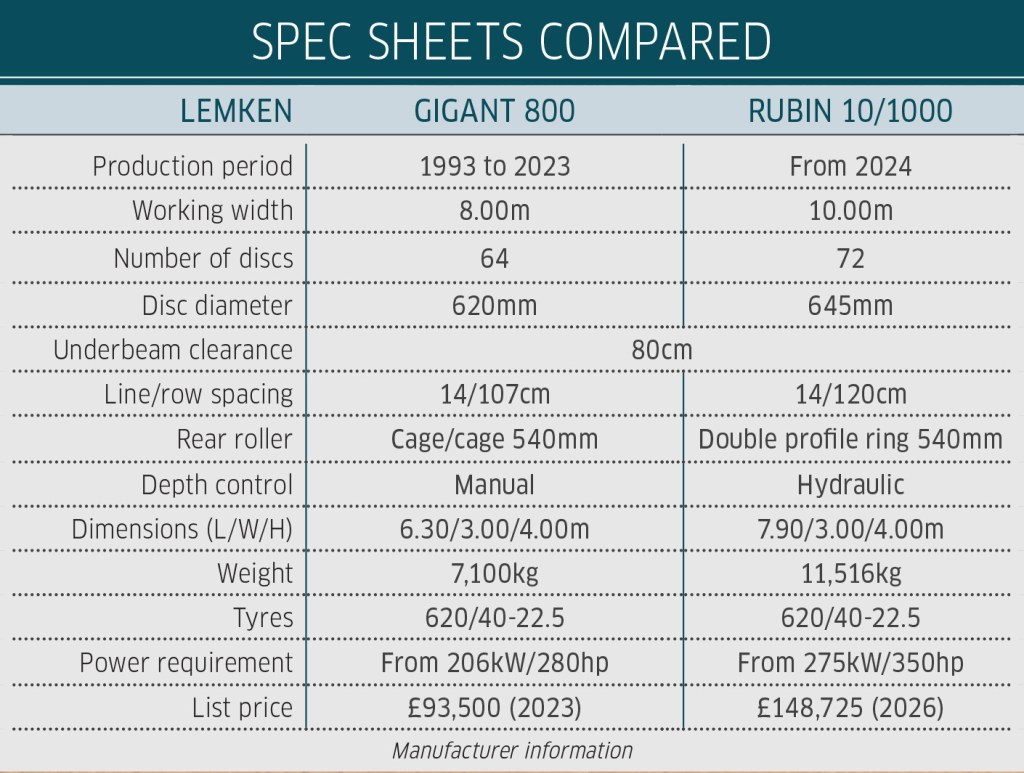
The new folding design on the Rubin 10 also allowed Lemken to increase the row spacing which benefits the trash flow. The spacing between the first and second disc rows is now 120cm on the Rubin 10, compared with just 107cm on the Gigant.
This spacing brings another benefit: to avoid leaving an uncultivated strip in the middle, Lemken was able to integrate a slightly offset disc in the middle. It also changed from a two wing set-up to three sections, with the middle unit aiding contour following even more.
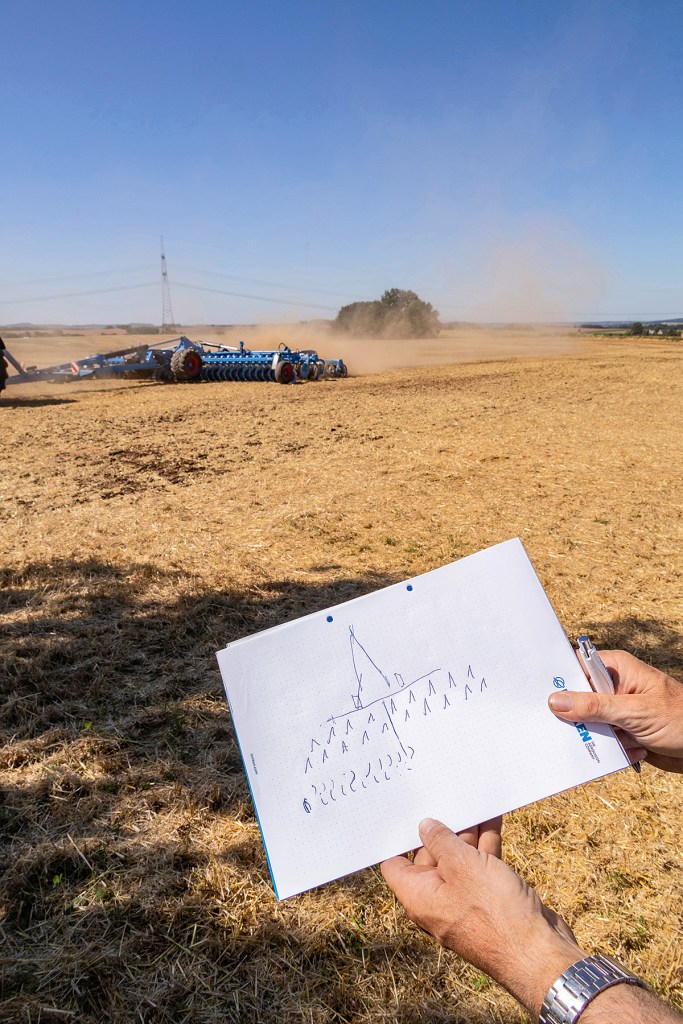
As a result of this, the two outer disc-harrow sections are no longer just controlled via the suspension on the narrow middle section. They also have a central cylinder that gives active ground following as an option. This set-up ensures the discs, though not mounted centrally, won’t lose ground contact. Instead, the wings have up to 4° downward and 6.5° upward travel. In this way, the machine is able to maintain the set depth across its full width, courtesy of the central cylinder and load-sensing.
Another word on the discs: at 645mm, these increased again on new Rubin. In addition, the shanks have been increased from 25mm to 30mm. Also, the new leg mounting no longer needs grease nipples … so 64 fewer grease points than on the previous system.
The price tag
When it was launched in 1993, the Gigant 800 cost around £25,800. However, that was a cultivator with two rows of winged tines with auto-reset overload protection. Lemken didn’t yet offer a compact disc in the early days of the Gigant.
By comparison, the current Gigant 10/800 with Kristall cultivator sections from the latest Lemken price list comes in at around £74,000. If we assume an inflation rate of 3.5%, the price increase is reasonable — mathematically, the price per year and per metre of working width has not changed. Just a shame that this rate cannot be applied to crop prices…
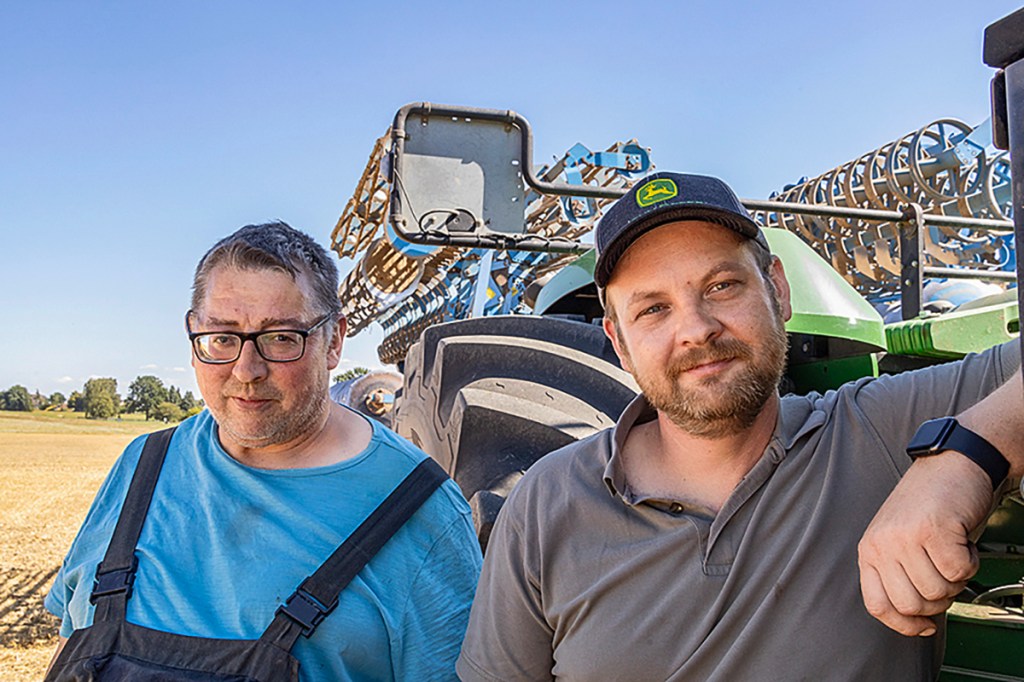
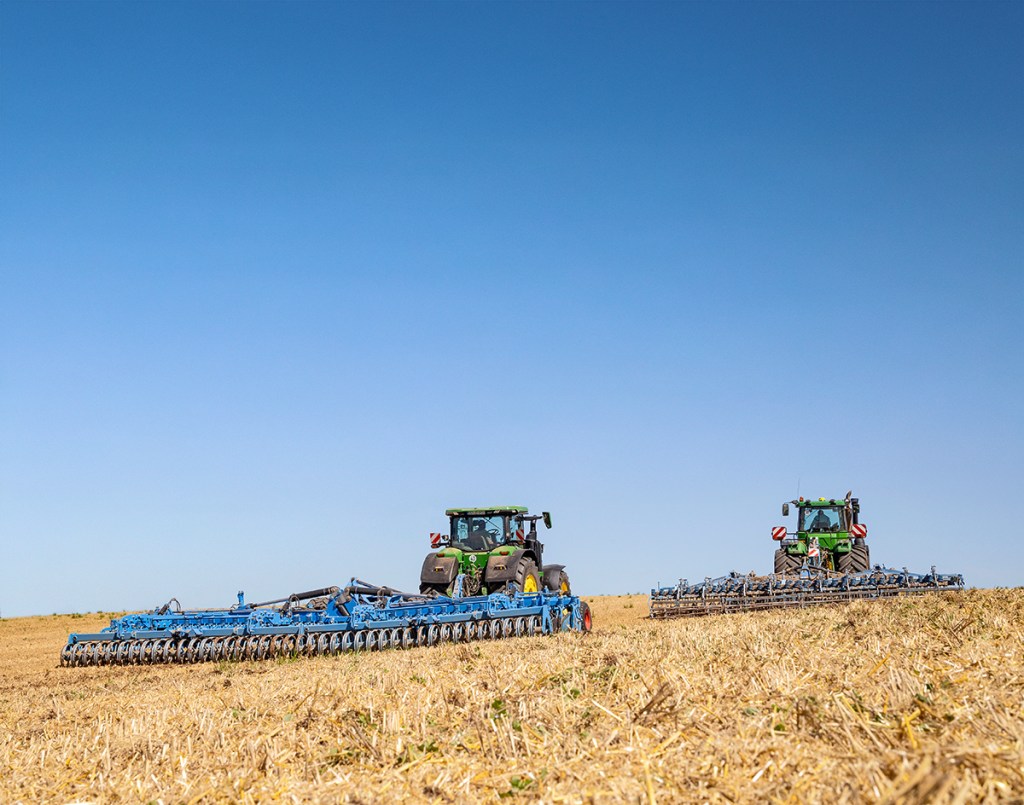
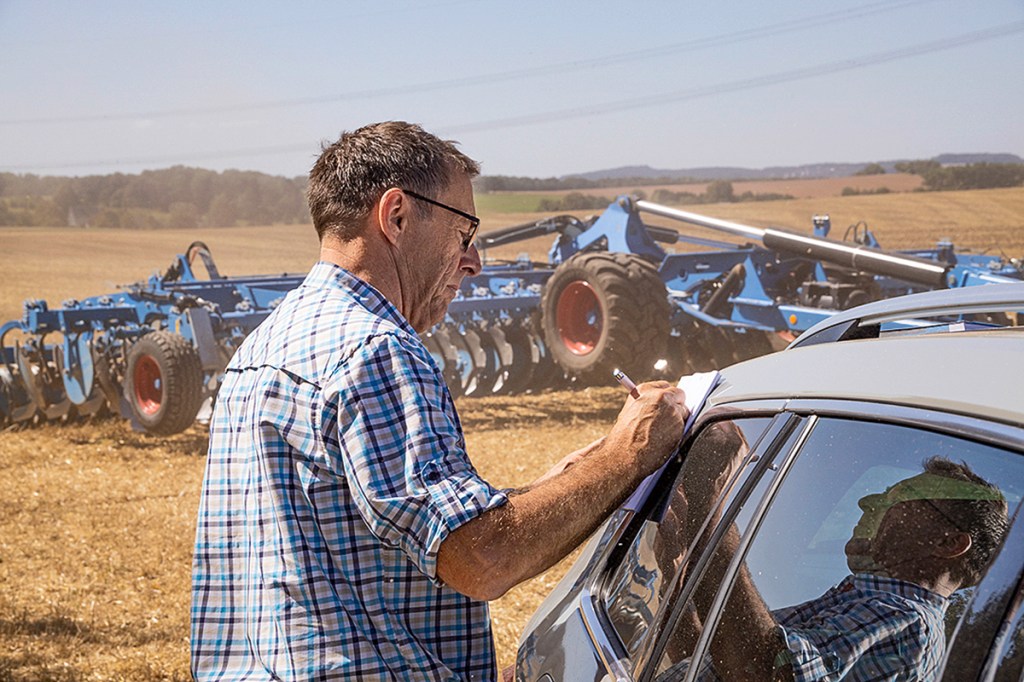
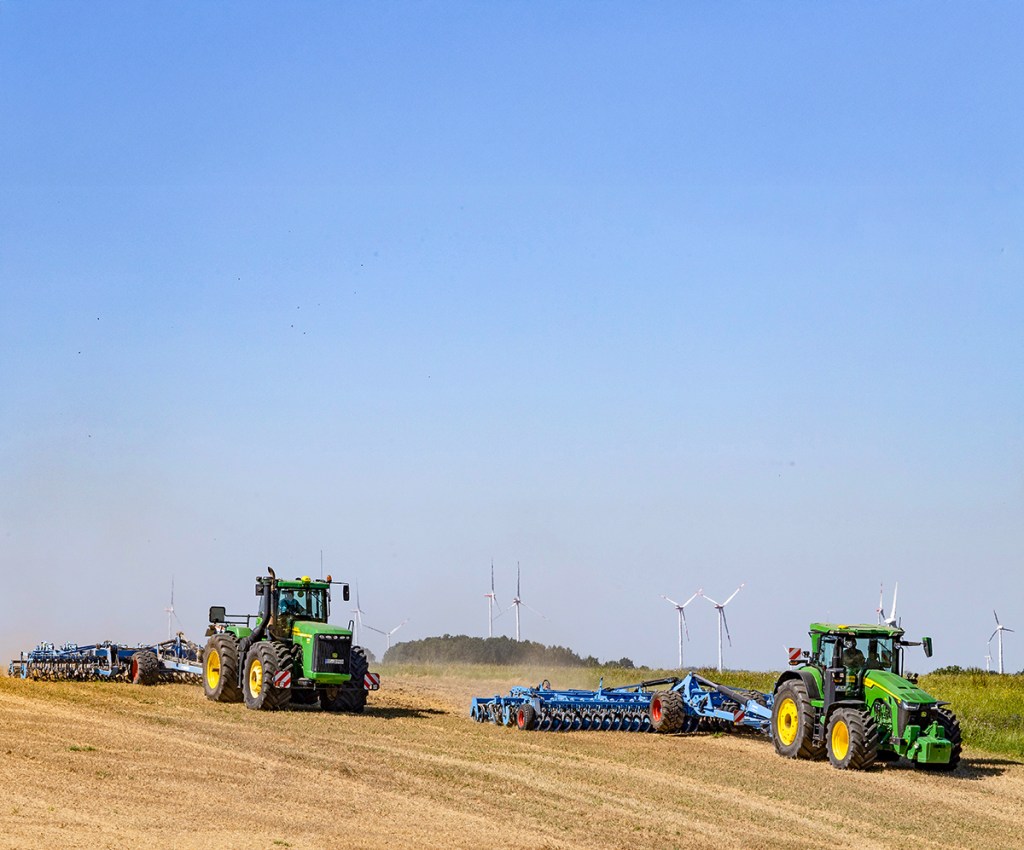
Incidentally, at Waldenburger Agrar., where they use the John Deere 9420 pictured here with the Gigant-Rubin combi, the purchase decision was also a question of price. The business bought the short disc harrow at an auction four years ago. “We needed a cheap high-output machine for stubble cultivation,” says managing director Georg Stiegler. “But we have no use for the quick-fit mechanism for swapping tool sections.”
Summary
The Gigant was truly gigantic when it was launched in 1993. Boasting removable tool sections, the system carrier was meant to deliver high utilisation. In practice, though, things turned out differently, and the soil-engaging tools were rarely swapped over. Even so, although the paint may have faded a bit by now, the concept still delivers serious output.
When developing the new Rubin 10/1000, Lemken therefore focused on removing any negative nose weight when at the headland, simpler operation and quick conversion for road transport.
The Gigant system can still be found in the Lemken price list. So, that early-day thinking has certainly proved its worth … over more than three decades..
Lucas Colsman
For more up-to-date farming news click here and subscribe now to profi and save.