
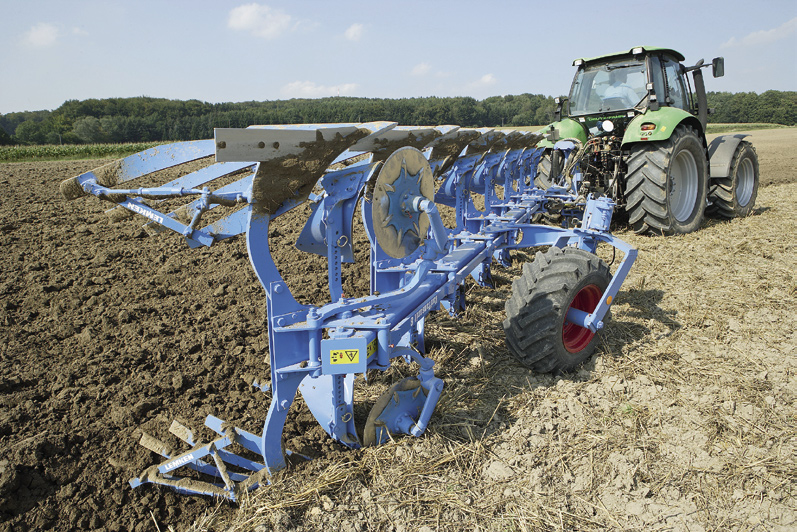
Practical test: Lemken VariTansanit 8 hybrid plough Like so many crossbred machines, the Lemken Tansanit plough is a hybrid packed with anomalies. It looks and weighs like a semi-mounted model, yet pulls like a fully mounted unit. We test a seven-furrow hydraulic vari-width VariTansanit, to check out the various design features on this intriguing reversible.
A plough that combines the best bits of a semi-mounted reversible with those of a fully mounted model’ is quite a claim. But that’s the VariTansanit reality,
according to the Continental cultivations machinery maker Lemken.
Launched at the Agritechnica 2005 event, we first featured this innovative product in a driving impression within profi 06/06. Back then we were looking at the hybrid’s design principles and also reported on DLG findings into whether Lemken’s base theory stacks up: More weight transferred onto the plough tractor’s rear axle equates to a lower wheel slip percentage and thus higher resulting work rate. After completing a series of trials, the DLG conclusion was that the base theory holds true, and particularly so as the ground conditions deteriorate underfoot.
Here, though, we concentrate less on the principles and more on how the plough performs in practice in terms of quality of work, power requirement and what it is like to live with. For this is no simple machine. Electronic bits feature aplenty and are used to control oil pressure in the hydraulic top link, adjust plough angle and automate headland turn functions. Such technology-packed sophistication in itself will be sufficient to put off some potential buyers.
For more up-to-date farming news click here and subscribe now to profi and save 47%.