
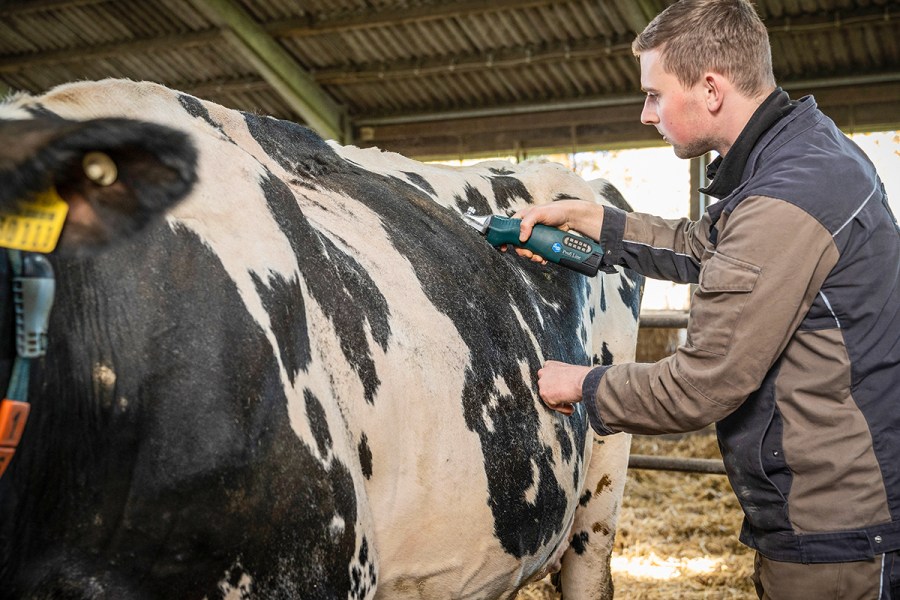
The Liscop battery-powered cattle clipper is offered with a choice of different heads. Here we outline what the clipper delivers, and why head choice may matter to users of alternative makes and models.
Battery-powered cattle clippers offer some significant advantages when compared to more traditional corded models for clipping cattle, not least being convenience and, to a degree, their ease of use.
That was not always the case. Our colleagues in Germany first carried out a group test of cordless clippers back in 2015, with models made by Aesculap, Heiniger and Kerbl all then being new on the market. This did not, however, apply to one model the Lister- branded Liscop Perfekt A1600-3. This ran a NiMH battery and, back then, it had already been on the market for a full ten years. In retrospect, this makes Liscop one of the pioneers of cordless cattle clippers.
Fast forward to early 2023 and Liscop was omitted from the five battery clipper test conducted by the team, as the company had nothing new to offer. Liscop is now back but with a twist. By offering two different Profi Line variants, Liscop caters for those using existing blade set-ups from the other clipper brands. More on this later.
One motor, three speeds
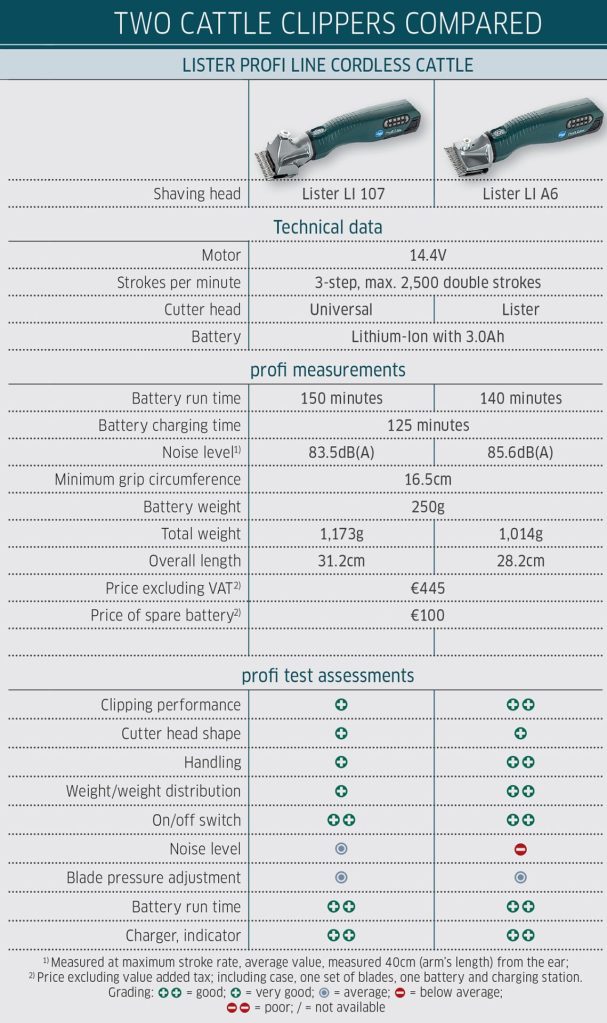
The Profi Line power unit features a 14.4volt motor with a three-speed electronic control. At the clipper’s highest setting, the blades run at a competitive 2,500 double strokes per minute, reducing to 2,000 and 1,800 at medium and low settings respectively. The motor proved powerful even when trimming heavy coats. Another plus is that the body only became warm in continuous use and not too hot to handle — an important factor for professional users.
Battery with 3.0Ah
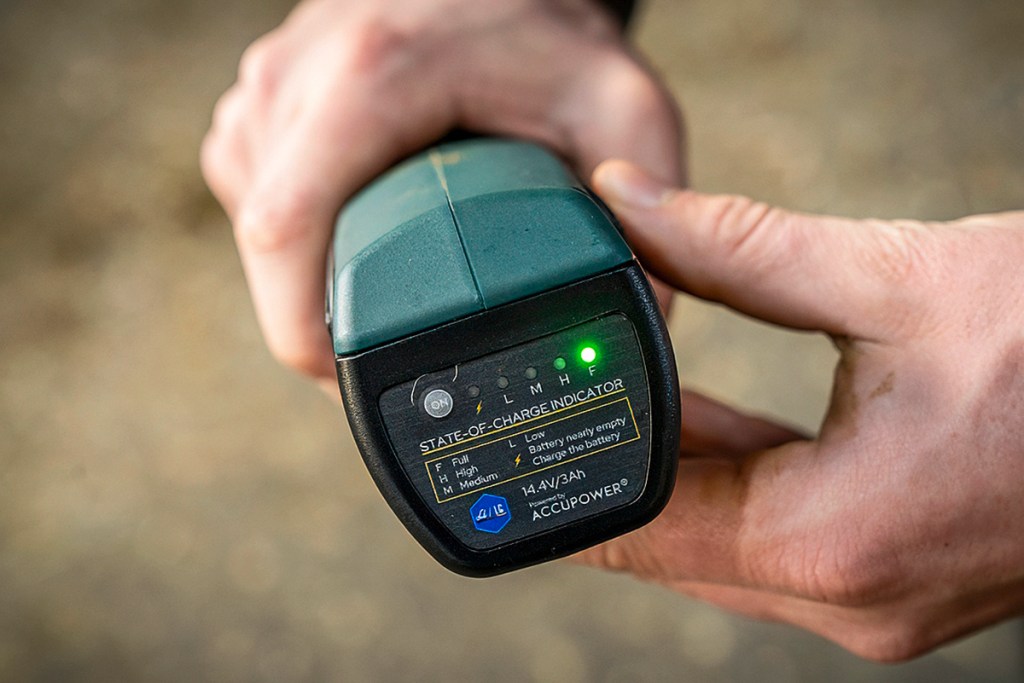
Battery chemistry has evolved considerably since tests carried out over a decade ago, the 3.0Ah, 250g lithium battery in the Profi Line having enough stored power to work continuously for between 90 to 100 minutes per charge. Run without clipping, a single charge lasted between 120 to 150 minutes.
From flat, it took around two hours to fully recharge the battery.
If you have a whole bunch of clipping to do, two batteries with one on charge whilst the other is in use, should allow for non-stop working.
The remaining charge is displayed on the battery by four indicator lights.
Weights and measures
In terms of battery and motor performance, the Profi Line performed well, but what sets it apart is that you can choose between the standard LI A6 Liscop head available with a choice of five blade sets, or the universal LI 107 design. The 107 is 3cm longer and 160g heavier than the LI A6. All up, the clippers therefore weigh in at 1,014g with the Liscop head, 1,173g with the universal LI 107.
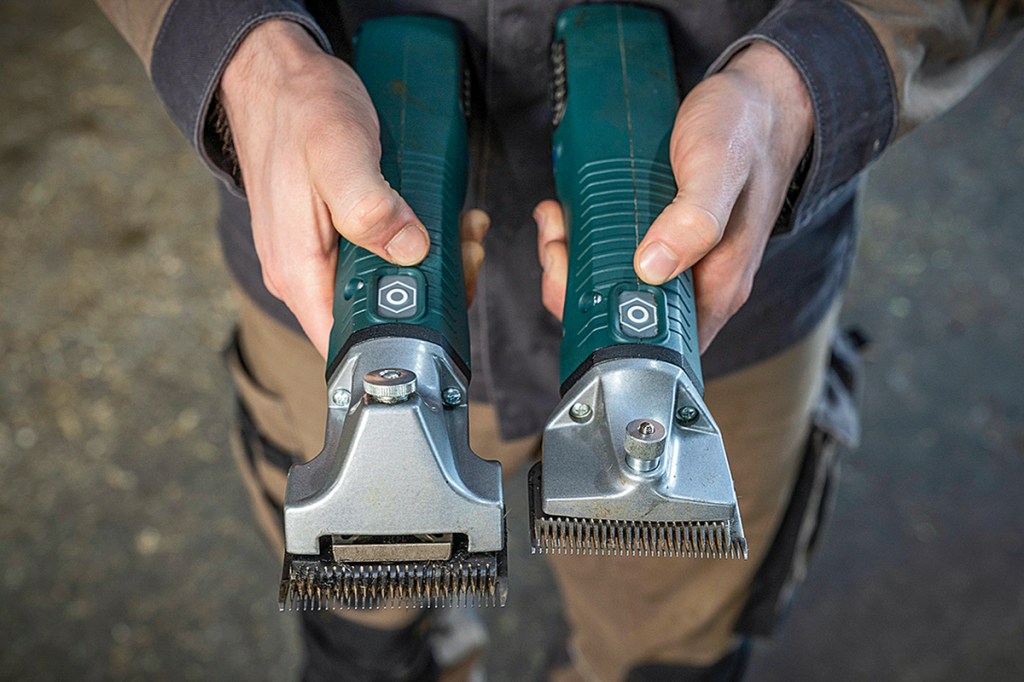
The clippers are 28.2cm and 31.2cm long respectively. By way of comparison, the clippers tested by our team back in 2023 were 29.5cm to 32.6cm long and weighed between 1,041g and 1,385g. This makes the Liscop head LI A6 Profi Line one of the more compact lighter models on the market. Even with the longer LI 107 universal head, the clipper is compact and not overly heavy.
Why the choice of head?
Liscop offers an alternative to its LI A6 head for one simple reason. The universal LI 107 is compatible with most clipping blades and plates on the market. This means if you are not an existing Liscop clipper user you could well be able to continue to use your existing blades and bottom plates. For this test we used both types of head fitted with sets of Liscop 34-tooth fine clip blades.
Different handling
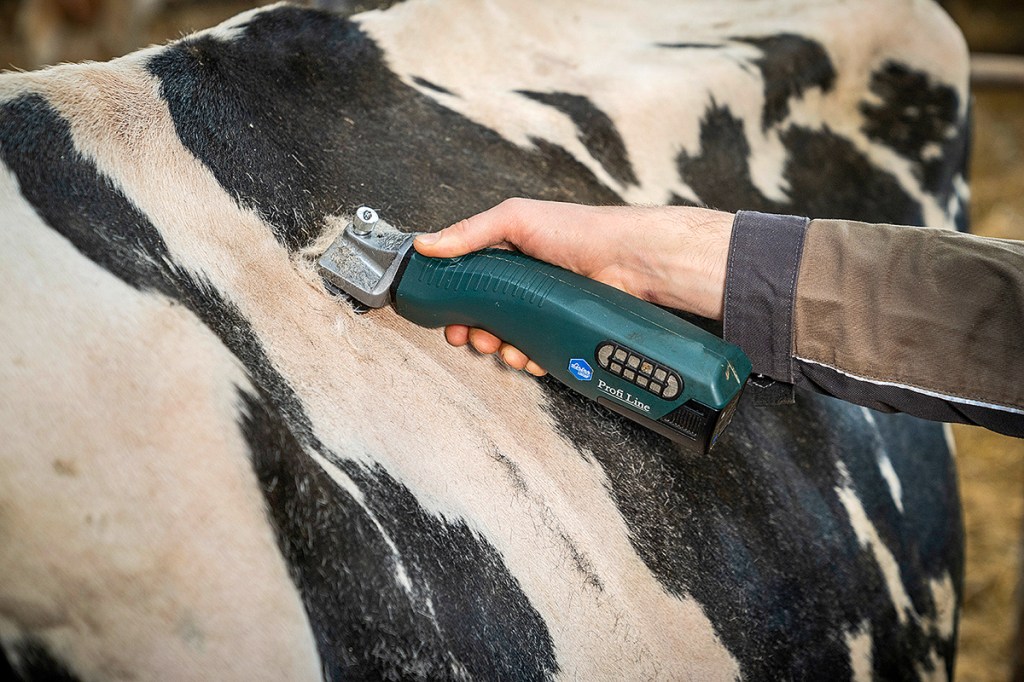
The compact design and low overall weight for the Liscop head LI A6 make the Profi Line clipper feel well balanced, with no need to put weight on or lift the head when clipping. We were particularly impressed with the way in which the blade head managed to glide effortlessly through the coat. Without concentration, the head worked precisely without catching on skin folds, which made it pleasant to use.
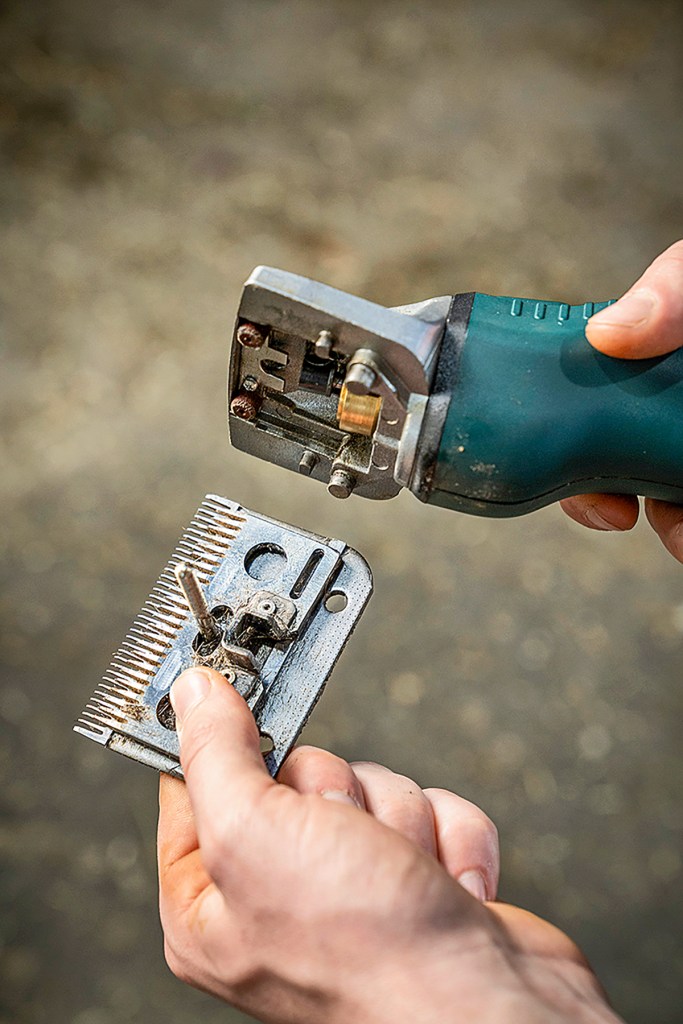
What also proved particularly praiseworthy is that changing the blade and bottom plate requires no tools. A point to note is that the rubber drive belt and the tightening spring can easily get lost during disassembly.
As to operating noise levels, we found the Liscop head to be quite loud. At 40cm from the operator’s ear we measured 85.6 dB(A). Fortunately, the cows we were clipping were not disturbed by the noise, but we would recommend wearing some form of ear protection if operating the clippers for an extended period.
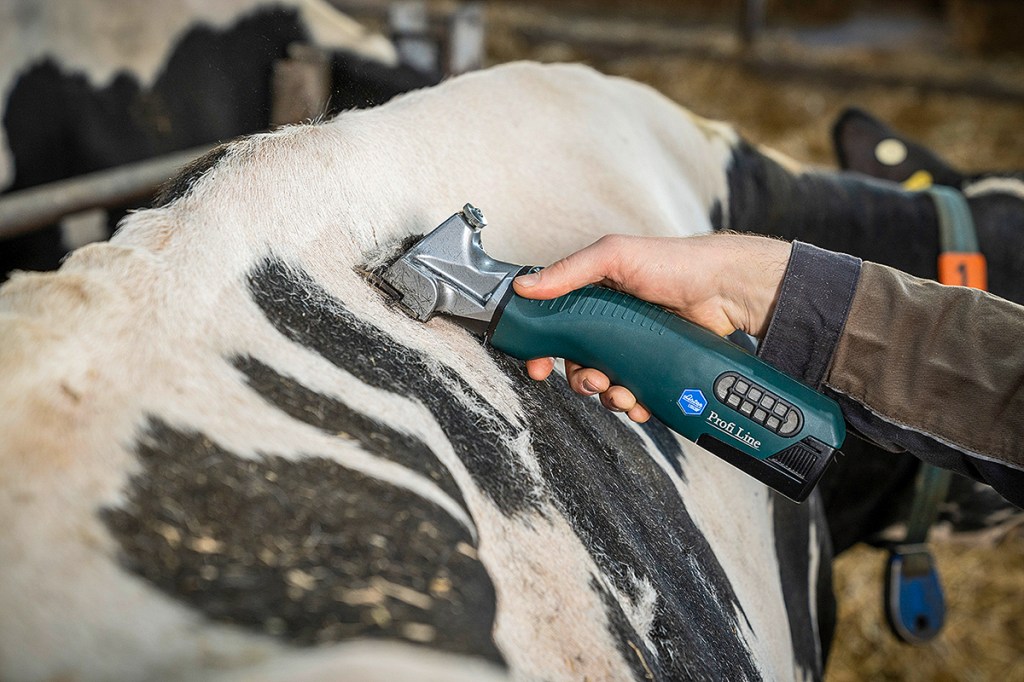
With the LI 107 universal head, the clipper felt slightly head heavy but not by enough to really affect how the tool felt in work. However, the combination of LI 107 and original Liscop bottom plates made the blade glide less smoothly through the coat. It was also noticeable this blade combo got caught more often. Overall, clipping required more concentration.
This clipping performance with the LI 107 head changed when we switched over to Oster blades where the clipper then glided effortlessly through the coat. We suspect that the difference was down to the Oster blades having a curved, smoother clipping plate.
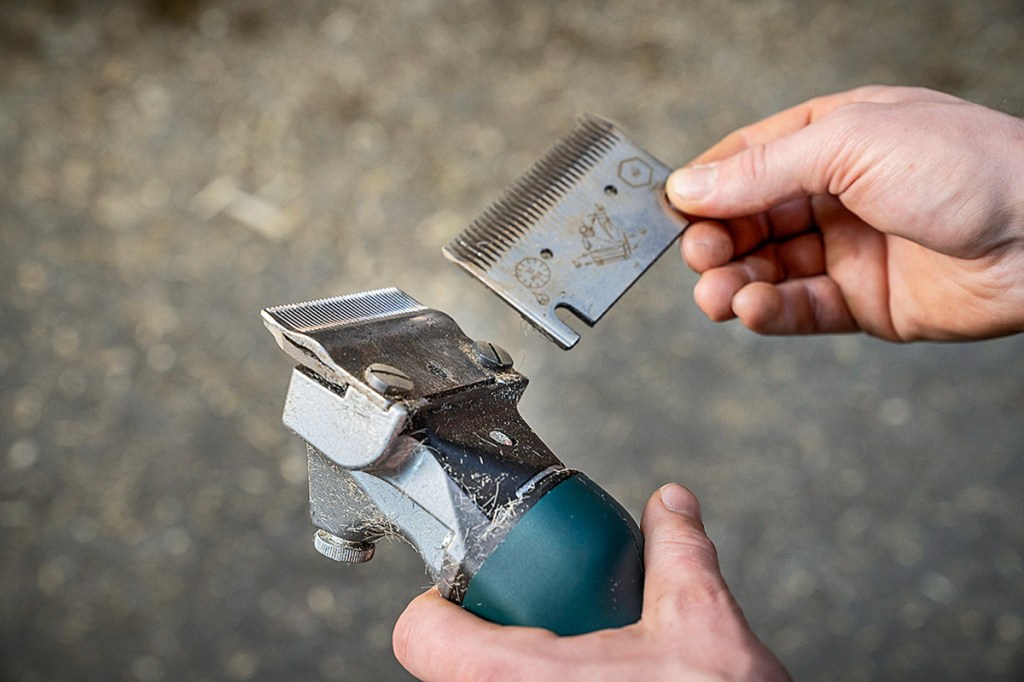
As to noise levels, the Profi Line with the universal LI 107 head ran at 83.4 dB(A) — still pretty noisy but a fair bit quieter than the Liscop head.
Prices
Liscop Profi Line cattle clipper prices in Europe are around €445 for either head design, the price including a case, a set of blades and a charger. A second battery is €100.
Summary
The Liscop Profi Line battery clipper has a powerful, reliable motor and well-matched battery system. Clipping performance with the manufacturer’s original head and Liscop blade set is good as the machine glides through the coat effortlessly. However, with the Liscop head, the clipper is a touch loud. The Profi Line with LI 107 universal head is slightly quieter, and clipping when using blade sets with curved bottom plates is effortless, too. It is good to have a choice.
Martin Zäh
For more up-to-date farming news click here and subscribe now to profi and save.