

The MLT 850 is one of the biggest telehandlers on the ag market, and when it came to our lift capacity tests it produced some strong results. But does the mighty Manitou have any weaknesses? Read on to find out.
KEEPING IT BRIEF
- Offers a very good level of operator comfort.
- Driveline made a good, powerful impression.
- Minor criticism goes to some finishing touches.
- Main competitors are JCB’s 560-80 Agri and the Merlo TF 50.8
For faming businesses wanting serious lifting and handling power, the big players in the telehandler game can offer five tonne plus lift machines. Manitou has the likes of its MLT 850-145 V+ which is part of the French firm’s NewAg XL series. And it comes in three spec levels — Premium, Elite and Platinum.
Our test machines were in Platinum trim, which brings with it the most comprehensive kit. But the rest of the model name also tells you quite a bit: a 7.6m lift height, 5.0t lift capacity, 145hp, and “V+” showing it has the continuously variable transmission. With buckets up to 4.5m³ , this telehandler is very much aimed at those wanting to shift a lot of material as quickly as possible
Strong boom
When it came to designing the MLT 850, Manitou took the boom from its 6t machine and effectively shortened it and kept the robust, cast gooseneck. Even so, the machine is more compact overall than the MLT 961.
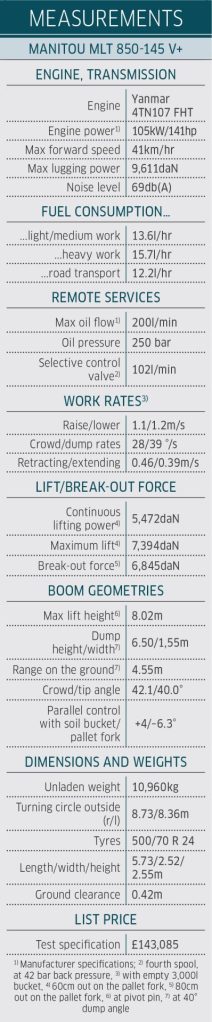
We measured it at a maximum lift force of 7,394daN, a very impressive result. With a 40:60 front:rear weight distribution, the back end begins to lift off the ground in the lower range, which is explained by the mighty 6,845daN breakout force. Under heavy load we did notice occasionally some “shuddering” in the hydraulic parallel linkage.
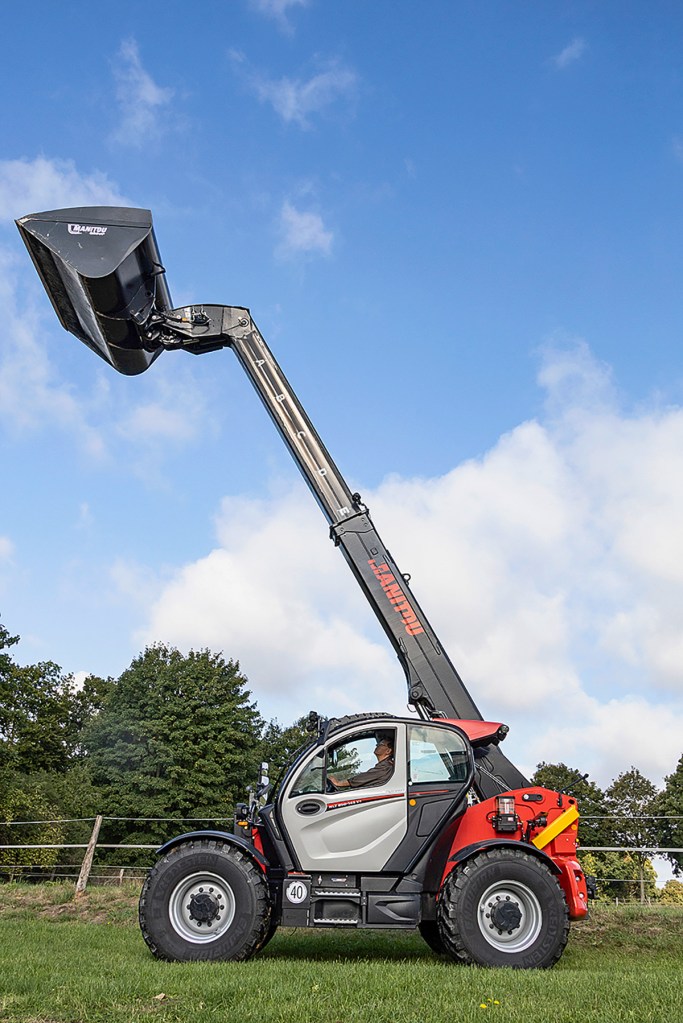
Fully extended, Manitou quotes a residual lift capacity of 1.75t. For maximum reach the telescopic boom extends the 30cm x 40cm section boom almost 3.0 metres, using Teflon slides for guidance. With a measured lift height of 8.02m at the attachment pivot pin, and a dump height of 6.50m when using the 3.0m³ multipurpose bucket, these stats should be enough for almost any farm situation.
Attachment coupling not ideal
Attachments hook in nicely on the Manitou headstock thanks to the long hooks. The locking pins are very easy to see from the cab through the low-slung front windscreen. Full hydraulic locking is standard on these machines. You can isolate it in two ways — either by turning a tap on the headstock when using the aux service for the likes of a grab, or there is an isolator switch to turn off the aux button on the joystick. Our point of criticism here is that the aux roller and boom in/out are next to each other, so if you haven’t isolated the headstock, you could accidentally unlock the attachment with the obvious consequences. We would prefer a separate button for isolating the locking pins circuit.
The boom suspension worked very well; it can be set so it engages automatically above 4km/hr.
There are three boom modes: bucket, fork and a mode for swinging loads (crane work). A small irritation is that the MLT 850 always defaults back to fork mode after a restart or automatically switches back to it after a period of no transmission/hydraulic action. We also have to criticise the hydraulic parallel lift: when working with the pallet forks it tracked nicely over threequarters of the lift range at about +1°, but in the top quarter it tips the attachment by more than 6°. Manitou reasoning is that the 850 is more optimised for bucket loading work, which brings with it a compromise for fork applications.
Smarter drive line
The MLT 850 model comes as standard with Manitou’s stepless hydrostatic drive system capable of up to 40km/hr travel. This is not a simple hydrostat with one pump and one motor. Instead, Manitou uses one pump and two motors with different capacities (115 and 85cm³). From 14km/hr upwards the larger motor is automatically disengaged. This reduces fuel consumption and noise. At the same time, despite the purely hydrostatic drive, the system still delivers high pushing power and traction even at low speeds.
One small downside: when towing a trailer on hilly ground the 850 may need to shuttle between ranges more often. During our test the drive system made a good impression and the machine felt lively on the road. The diesel consumption of 12.2l/hr when on the road is also a very respectable result. Under heavy loads, fuel use climbs to around 15l/hr, but in return the transmission provides about 9,611daN of tractive force.
Easy to use
We really liked how easy it was to set the maximum speed setting. Press the rotary pushknob in the armrest and you can infinitely vary the max speed and simultaneously the sensitivity of the drive pedal — very neat. You can also choose between Comfort and Dynamic modes.
Shuttling between forward and reverse is controlled by the left rocker switch on the joystick. It changed directions precisely and smoothly throughout our tests. The same goes for braking — hill starts from standstill are possible without any rollback. The auto parking brake is an excellent solution: it engages automatically when the machine stops and releases as soon as you press the drive pedal. The operator doesn’t have to think about it at all.
The machine offers four steering modes. With the “Manicrab” function, for example, this lets you work with a tree lopper parallel to a hedge while still correcting where you are going using front axle steering.
Our test machine was also fitted with the Comfort Steering option. This button halves the number of steering wheel turns at low ground speed. The system is proportionally controlled depending on how fast you are travelling and the boom angle to avoid any unsafe situations. It is a great feature, but the switch is tucked away to the left of the operator’s seat!
The Dana axles come with 45% limited-slip differentials, which means that the machine tends to scrub slightly when making tight turns on firm ground.
Power source
Manitou plumps for a four-cylinder Yanmar 4.56-litre turbocharged engine in the 850 with a reversible fan fitted as standard. Our 850’s engine was impressively smooth. Only downside of this engine is it is quite high, which doesn’t help visibility to the right of the handler.
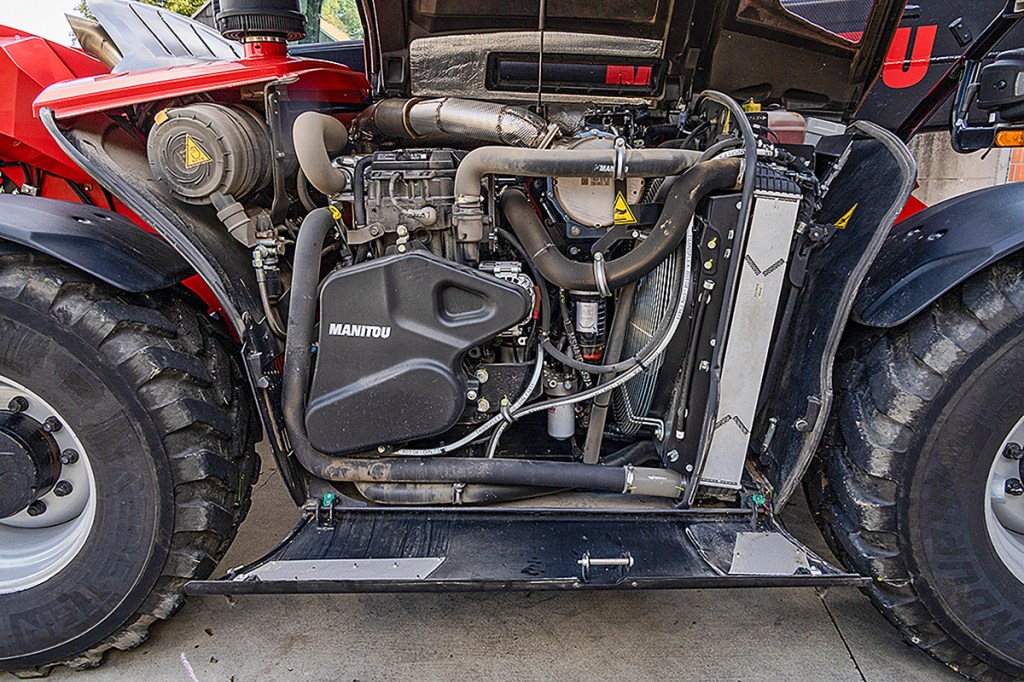
A stop/start system is standard. Thanks to the adjustable shut-off delay (between one and 60 minutes), this works very well in everyday use and cuts down on idling time. That reduces engine hours and therefore running costs, for example by stretching service intervals. Speaking of which, this is 1,000 hours for engine oil changes, but the axle oil still needs dropping at 500 hours.
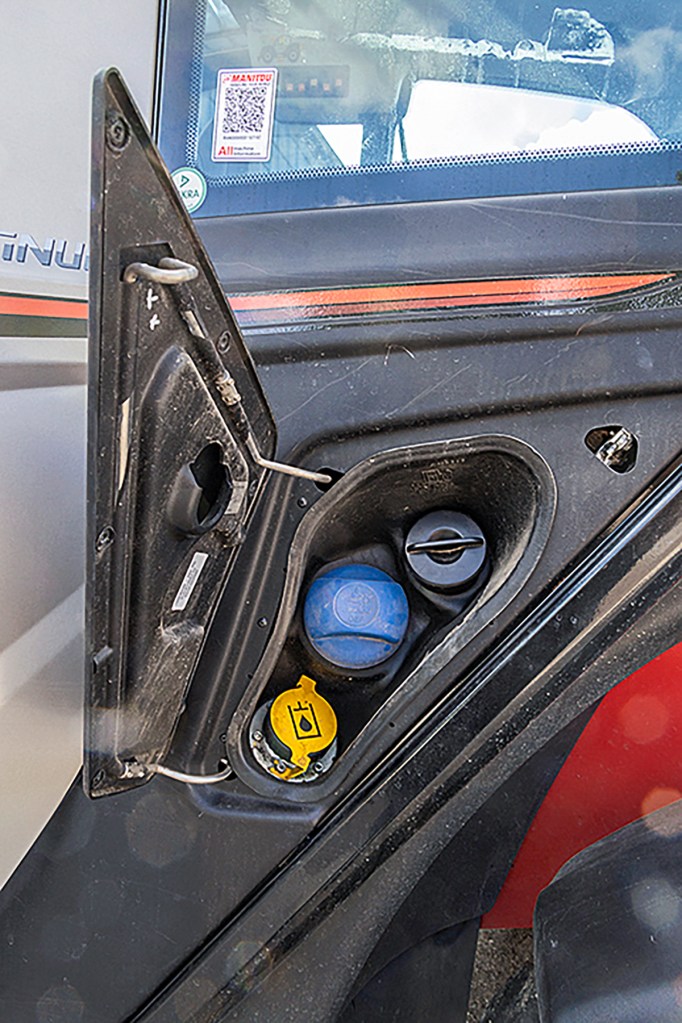
Staying with servicing and maintenance, the filler caps for the 142-litre diesel tank and 21.5-litre AdBlue tank sit behind a flap on the left-hand side of the cab. The flap has to be released by a pushbutton in the cab down to the left of the seat. We think this could do with better instruction, especially if you are not familiar with the Manitou way of thinking — otherwise refuelling can become quite a challenge.
A great user-friendly feature is Autopower JSM autothrottle: as soon as any hydraulic function is operated, the telehandler auto raises the engine speed — so the machine always reacts quickly.
The hydraulics are rated at 200l/min and provide three assistance functions. At the touch of a button, you can activate a bucket shake and parallel lift (the boom telescoping in or out automatically). You can also save a position for the boom, which it then auto returns to when lowering. The flow rate for the auxiliary service is also really easy to set on the screen. In summary, the machine gets to work quickly, which is reflected in the measured cycle times.
Comfortable workplace
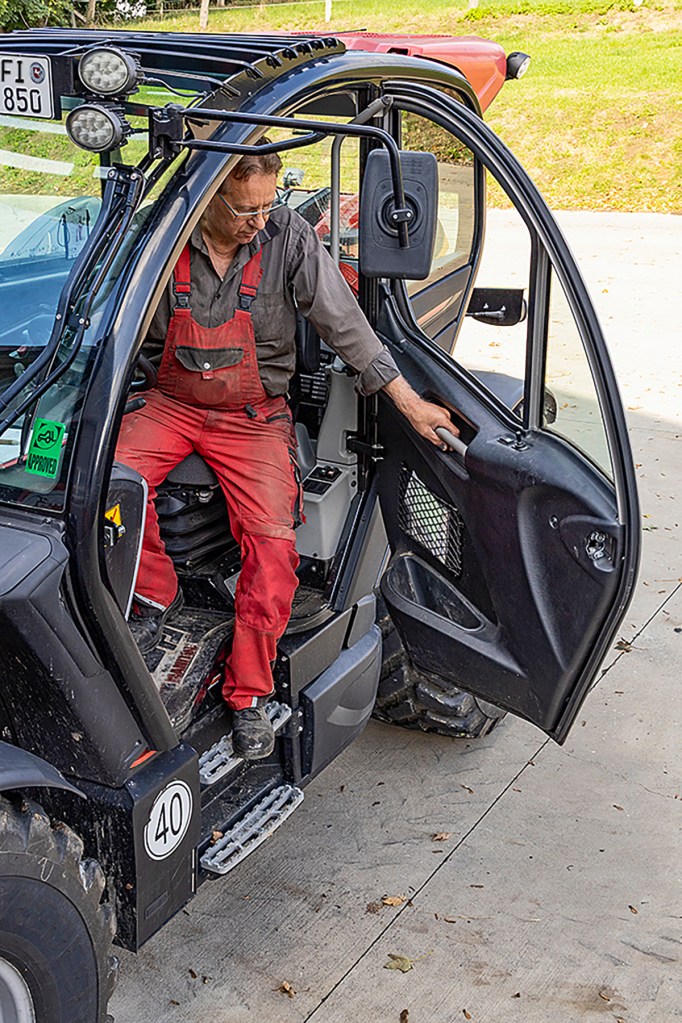
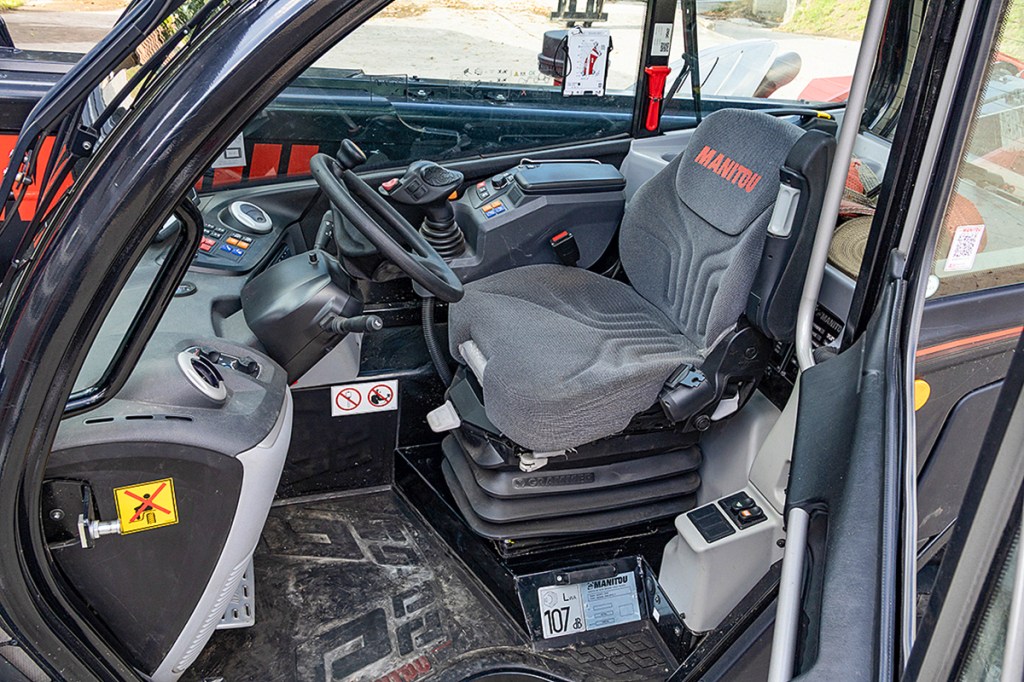
Overall, the cab offers a relatively roomy and comfortable workspace. And getting into the cab couldn’t be better thanks to the recessed steps. Platinum buyers also get to sit on an adaptive air-suspended seat with heater and electrically adjustable lumbar support. The Platinum seat measures 7cm wider than the standard chair.
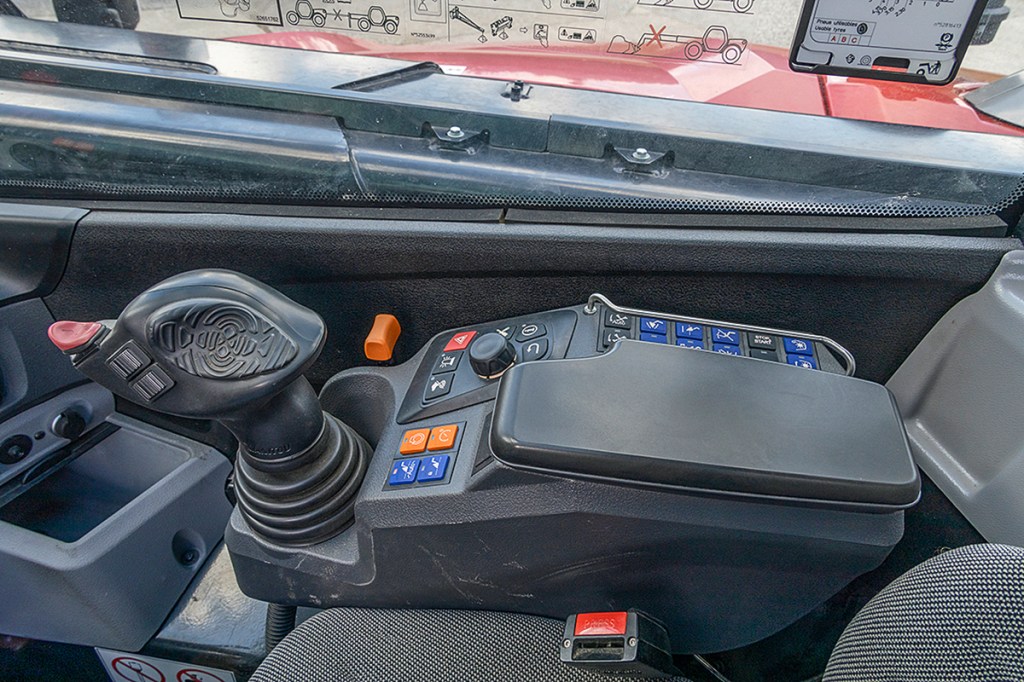
If you are new to Manitou, its trademark JSM joystick may look an unusual shape, but it is great to use, and all of the functions are very easy to control. Our only criticism is the position of the handrest sensor: if your hand is not in just the right place, nothing happens at all — although a warning message does appear on the display.
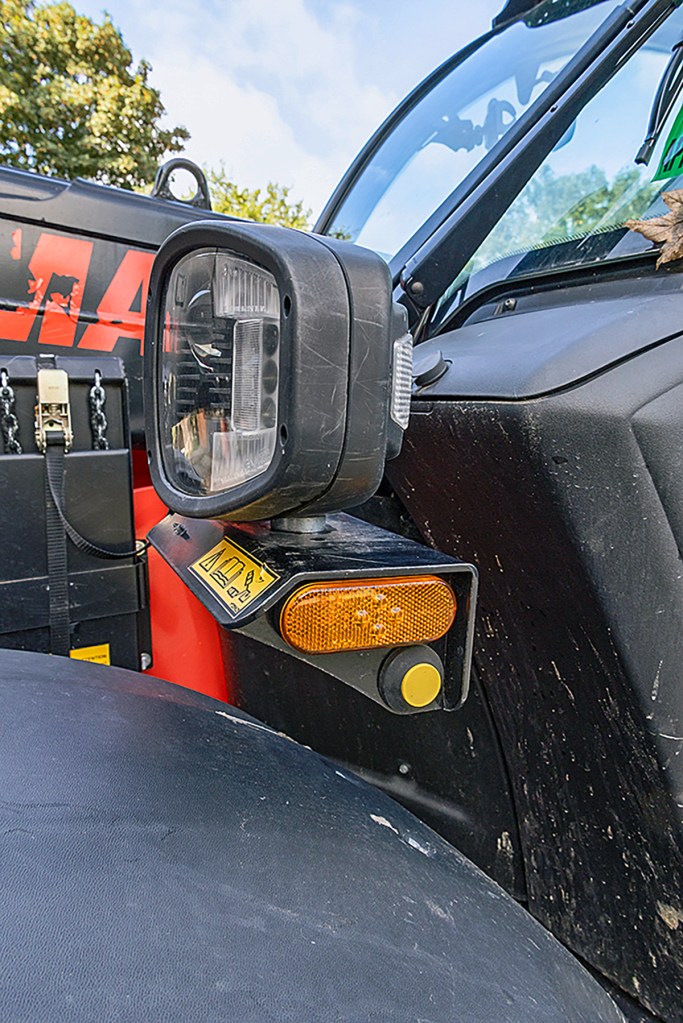
Regarding the display, the MLT now comes as standard with the Vision screen, which can be hard to read in bright sunshine. The 17in monitor shows all the key parameters and now also the image from the reversing camera, doing away with the need for a second screen as before. In our view that is both good and bad: because of its size, the MLT 850 is also fitted with a second camera on the front right-hand light bracket to monitor the right-hand side of the machine to the rear.
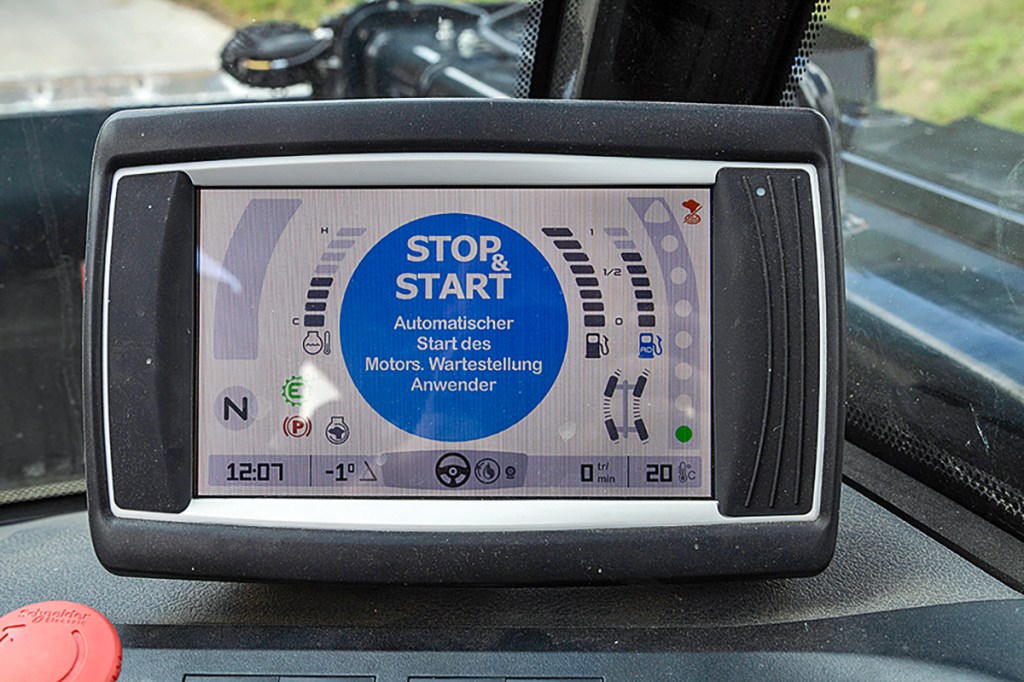
When reversing, though, only one camera image can be shown at a time, although you can set it so the revering camera image is automatically shown when going backwards. We would like to see at least an optional third camera watching the area to the front right — or even better again a 360° camera system.
The Plantinum package is also supposed to include the ‘HighView-Cam’ an additional camera on top of the boom that cuts in automatically once the arm goes above a customisable angle and is designed to make loading high-sided trailers easier. Sadly, for some odd reason our test machine didn’t have it fitted (a £1,170 option on Premium and Elite models).
Room for improvement in some of the detail
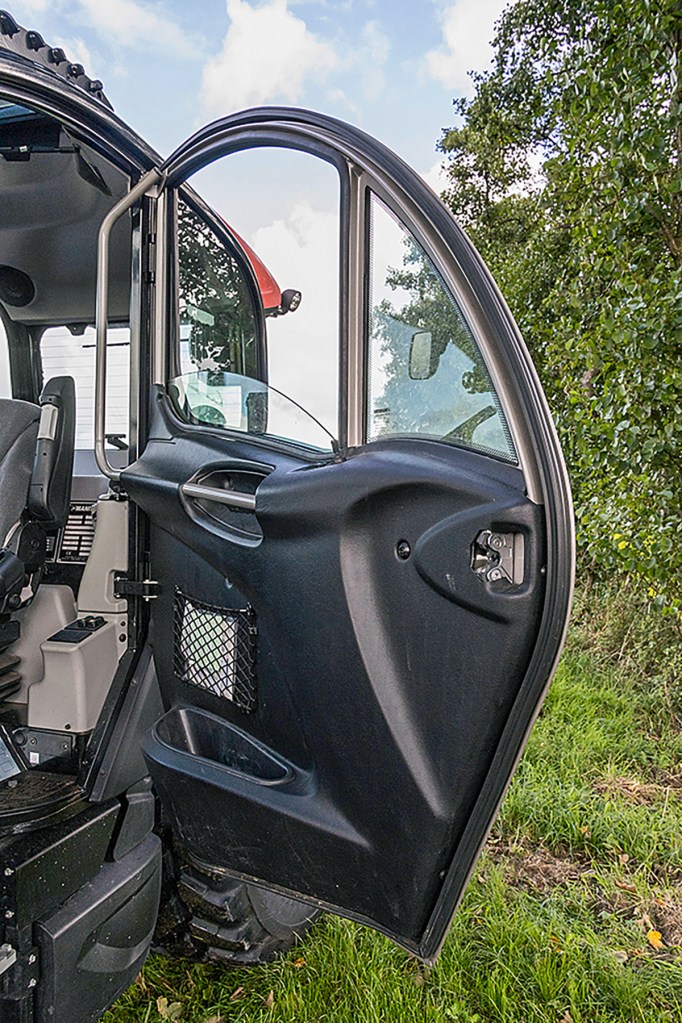
Even though the cab is a good place to work overall, some details fall short of a true “Platinum feel”. One example is the inner trim on the very large door, which left a rather mixed impression. The (heavy) door also lacks a gas strut; on a slope it will swing itself open or shut on its own.
We also have a couple of niggles with the indicators: there is no auto self-cancelling, and the warning buzzer is too quiet. This is despite the fact that the cab itself is very quiet: we measured it at just 69dB(A) at the operator’s ear. Subjectively, noise levels feel even lower, and that also applies to high- speed road work — very good.
The Platinum pack does, however, bring a generous standard spec. Details such as a Bluetooth radio with external microphone add to the comfort, and auto airconditioning is also included. The electric window in the door is another nice touch.
An interesting detail is that the switch layout in the armrest and the right-hand console can be moved relatively easily, allowing you to customise their positions. When a switch is pressed, a (switchable) popup appears in the display describing its function — very helpful. Most of the control symbols are also reasonably intuitive. Unfortunately, some switches are spread around the cab more than we would like, the Comfort Steering being the prime example.

Further details
- Pick-up hitch with both hydraulic and/or air trailer braking system are an option with a permissible towing capacity of up to a useful 13t.
- Right-hand mirror is electrically adjustable and heated.
- A hand throttle and a continuous flow for operating a bucket brush, for instance, are standard.
- The standard fit auto greaser looks after the entire machine except two grease nipples on the propshaft.
- There is a useful stowage box under the cab to the left of the steps.
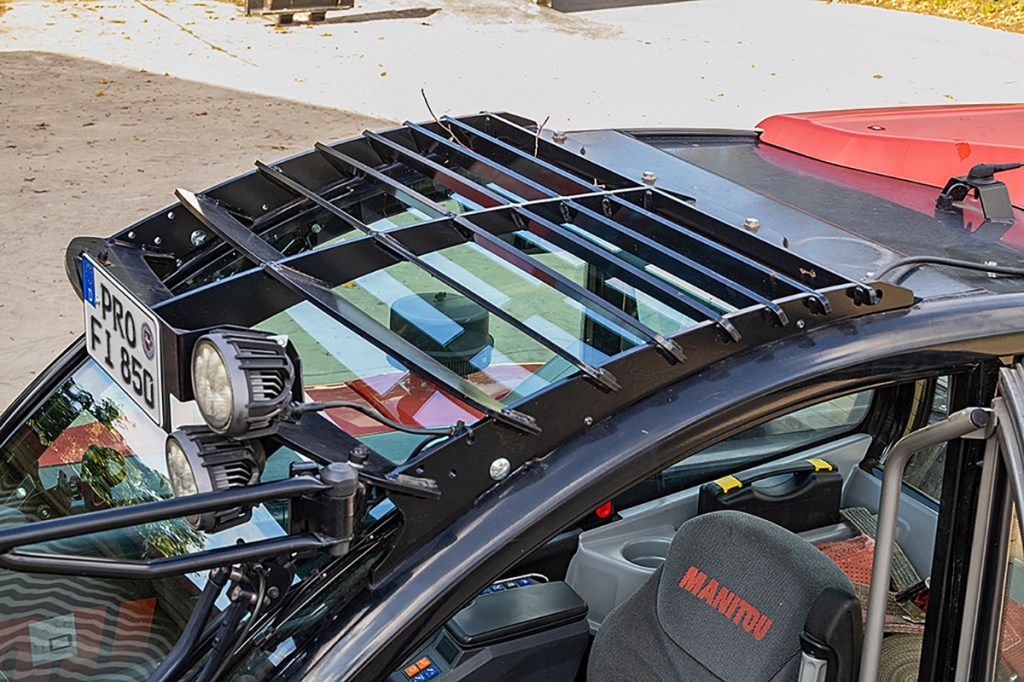
- LED cab work lights are fitted as standard to the Platinum machine — two front, two rear along with four extra work lights and two boom lights.
- The supplied attachments all performed well in our tests.
Summary
Unlike what its performance characteristics suggest, the Manitou MLT 850-145 V+ is a relatively compact machine. It shares key components such as the telescopic boom and the heavy-duty axles with its larger 6t stablemate.
Which is also reflected in the price. Built in Italy, the machine lists at £143,085 — that’s £15,632 more than the cheaper Premium spec. The actual retail price will probably be around 30% below list prices. This money buys a lively, easy-to-operate telehandler that could just do with a touch more polish in a few small areas.
Lucas Colsman
For more up-to-date farming news click here and subscribe now to profi and save.