

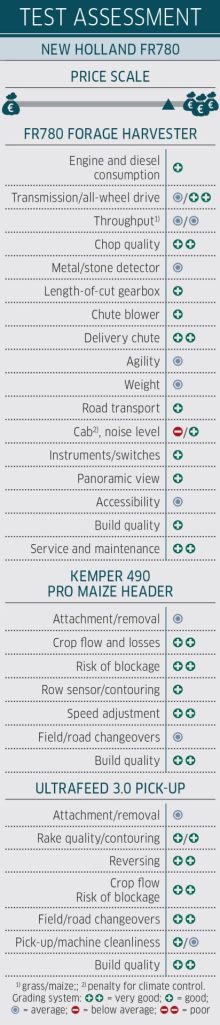
The latest generation of New Holland FR foragers were in action for the first time last season, and we had the bread winner, the FR780 Forage Cruiser, on test. Find out how the Belgian-built veteran stacks up against the competition.
KEEPING IT BRIEF
- The 780 is the second biggest of the five FR models (476hp to 925hp)
- Very good chopping quality with decent throughput.
- The auto functions and new UltraFeed pick-up impressed us.
- New Holland launched the FR nearly 20 years ago, with the first FR9000s arriving in the UK in 2008.
About 2,500 forage harvesters are sold worldwide each year, with New Holland building 250 to 300 machines annually. While the FR fundamentals have been around for almost 20 years, last season the foraging veteran was given fresh styling and a number of performance enhancing updates. Reason enough in our book to take an even closer look.
While the FR920 may get all the plaudits for being the big gun, the FR780 model, with a maximum output of 775hp, is currently the better seller and the subject of this test.
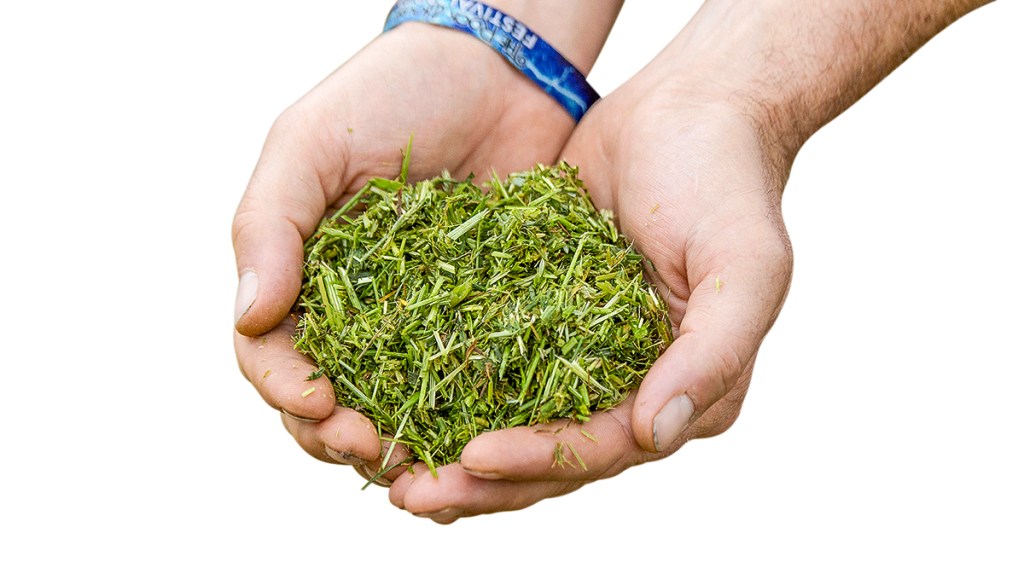
With an 860mm wide intake, and a drum that is 884mm wide and 710mm in diameter, the FR family still boasts one of the biggest chopping units on the market. We were keen to see whether the completely redesigned UltraFeed pick-up would give this a boost in output.
Our test FR780 had the following spec:
- 32-knife drum (£4,898)
- High-capacity in-feed roller module (standard UK fit)
- Dual Drive double-sided hydrostatic header drive (standard UK fit)
- Heavy-duty wear parts in the crop flow area (£9,082)
- NIR sensor from Dynamica Generale (a five-year package £28,470)
- IntelliFill automatic filling (£7,192)
- ForageCam for detecting the kernel processor performance (price not yet available)
- DuraCracker HD crop processor, 250mm diameter, 100/130 teeth and 30% speed differential (£22,080)
- VariBlade reversible fan (£2,643)
- 900 BFI Pro large diameter disc, 12-row maize header (identical to the Kemper 490 Pro), including Comfort running gear (£229,600)
- UltraFeed 3.0 pick-up from New Holland (£49,683)
16 litres and AdBlue
Under the large yellow hood sits the 16-litre FPT Cursor 16 engine. Mounted lengthwise, the inline six-cylinder motor with common rail injection develops a maximum power of 570kW/775hp. New Holland quotes the FR peak torque as 3,323Nm at 1,500rpm. By comparison, other makes in this horsepower class go for a smaller block to achieve a bit higher torque. However, the FR780 certainly didn’t lack the necessary punch in our test.
New Holland uses SCR to meet Stage V regs – there is no EGR or any particulate filter. Alongside 1,200l of diesel, there is 200l of DEF on board.
The FR’s engine offers two modes: Eco and Power Cruise II. With Eco mode, the engine speed can be reduced down from 2,100 to 1,650rpm; at a constant forward speed this mode then ensures full engine load. In our opinion, the engine speed could even be throttled back a little further in light grass crops.
In Power Cruise II mode, the software adjusts engine speed and travel speed to the conditions, with very sensitive changes and always keeping a little power in reserve. In this mode, you can really let the harvester cruise down the field. If you want to drive the FR at its limit, you will have to use the joystick.
The FR’s cooling pack does a great job, automatically adjusting blade angle and fan speed to the engine’s cooling demand. And the reverse function saves a lot of manual blowing-out, especially when chopping grass.
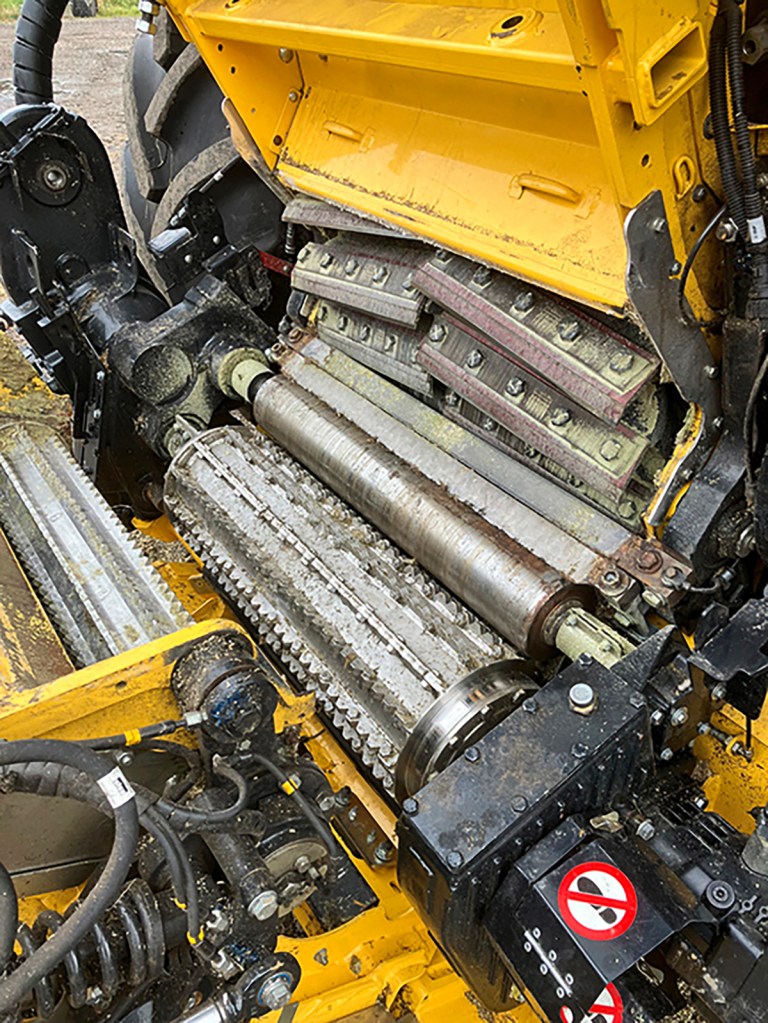
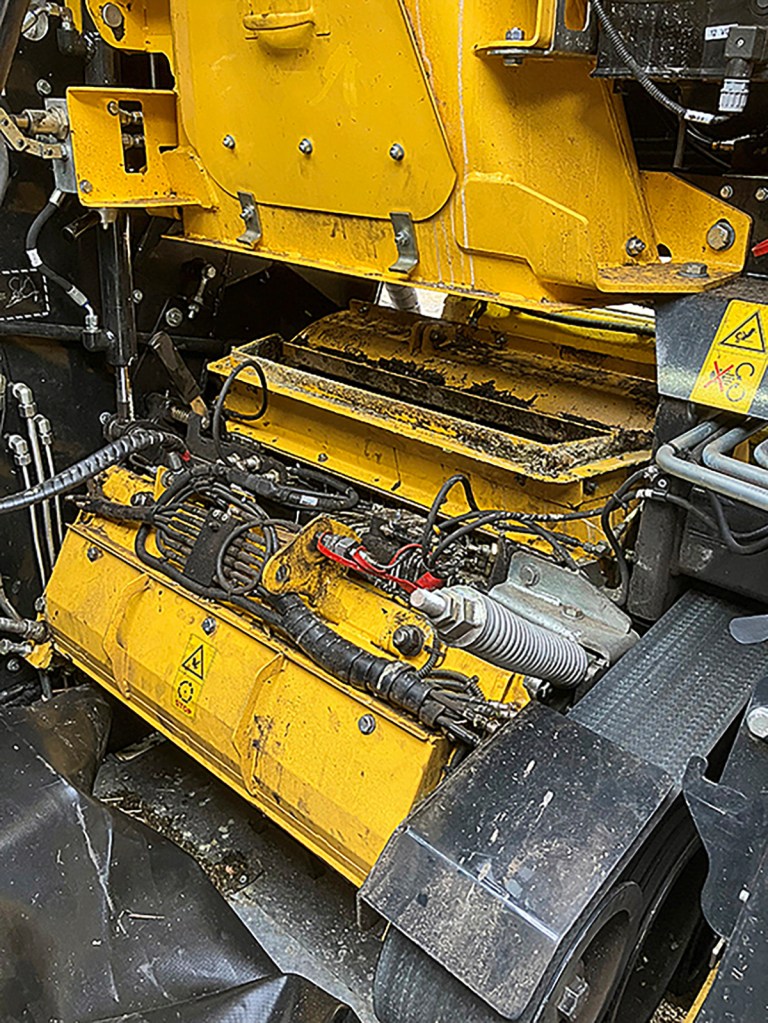
32 knives in grass
Our 780 arrived in June, just in time to catch some late first cut and then second cut on our test farm. All 32 knives were fitted to the drum for chopping grass. For maximum throughput, we set the speed at 1,850rpm allowing the engine to run at just under 1,700rpm.
The fresh matter yield in our even crop of grass was a very good 19.8t/ha. Using a 12m, four-rotor rake to row up, we had nearly 24kg of fresh matter in every metre of swath. The dry matter content was just under 34%, equating to a DM yield of 6.7t/ha.
For the dairy cow silage, we set the chop length at 12mm. For the AD plant customer, we chopped the grass as short as possible — 4.2mm with 32 knives.
For this really short chop stuff, it would be better to use a drum with more knives to help push a bit more forage through the hungry FR.
At 12mm, the FR780 was putting 290 to 300t/hr of fresh matter through the chute — an excellent result and, at less than 0.5l/t of fresh matter, a pleasingly low diesel consumption.
With the shorter setting — 4.2mm chopping — throughput fell to 190 to 200t/hr, and fuel use increased to 0.62l/t fresh matter. With 40 knives and a 4mm chop length, a few more tonnes of fresh material would certainly have been possible.
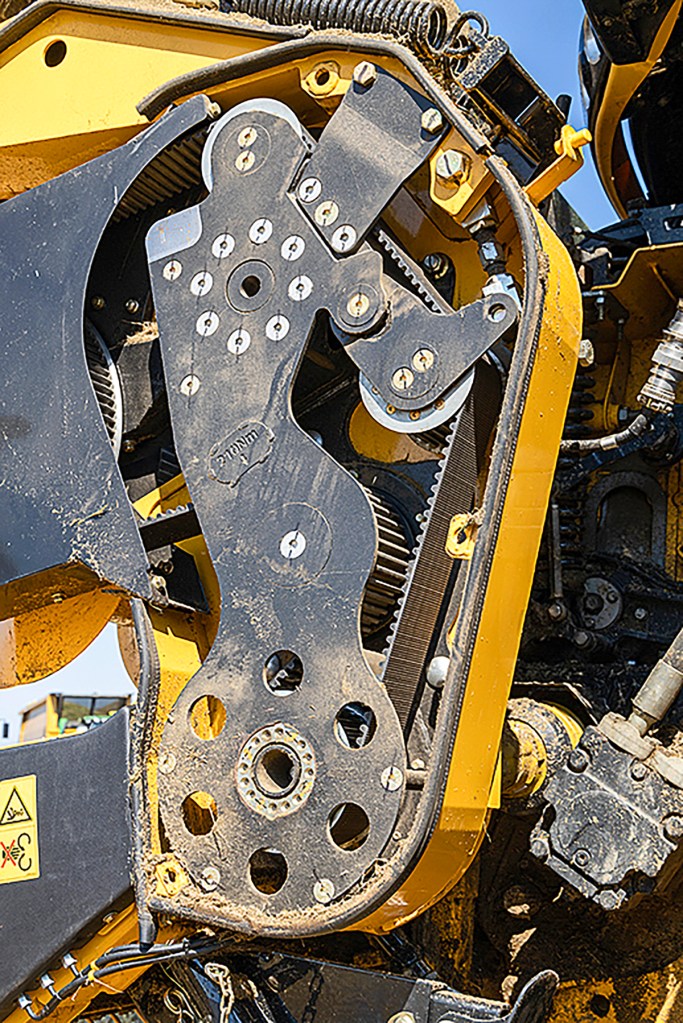
A big reason for the FR780’s high grass throughput is the completely redesigned UltraFeed pick-up. From the crop press roller to the twin tines and the 65cm wide feed auger with double flights, everything is significantly bigger and beefier than on the previous pick-up. Driven by a belt without slip clutches, the new header easily handles and breaks up large, uneven swaths without any fuss. It just gets on with its job and presents a nice even mat of grass for the forager to take in.
32 knives and a comb
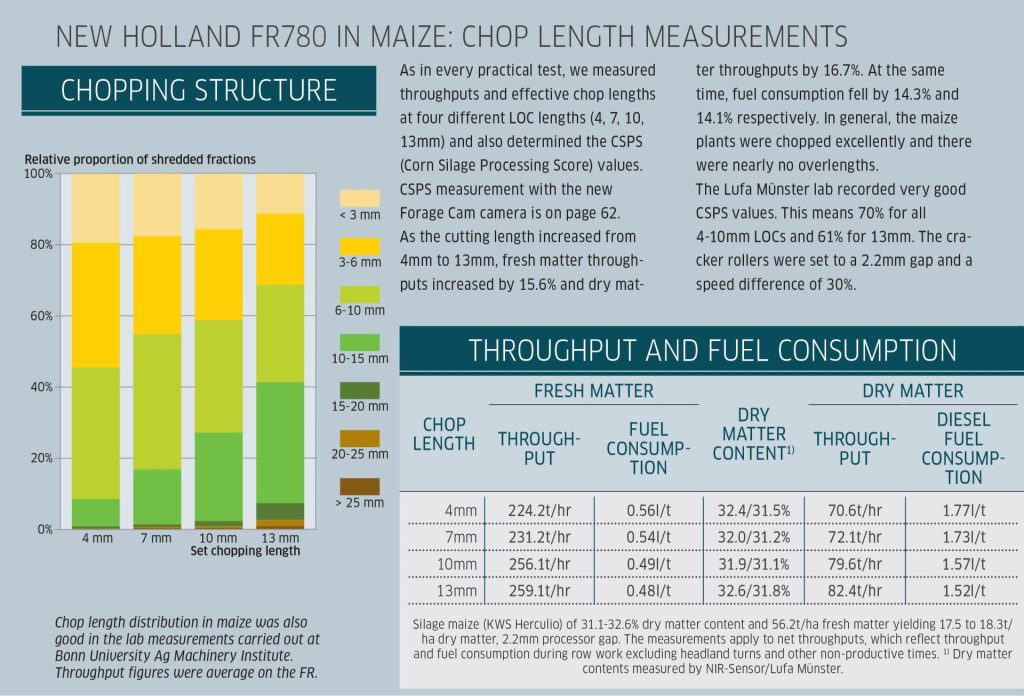
For maize, we fitted all of the maize knives to the drum (2 x 16 knives, 3-16mm chop length, cutting rate 20,800 cuts/min).
The special feature on our machine was a drum floor with a husk comb instead of a smooth floor plate. This consists of two rows of small, upright knives that New Holland says chop overly long kernels and husks more effectively. This has become a popular fitment with German contractors since it was introduced. We set the kernel processor gap to 2.2mm. The uniform maize crop yielded just over 56t/ha of fresh matter at just under 32% DM (see table ‘Throughput and fuel consumption’).
With a 12-row header on the front of the machine, the FR managed a fresh-matter throughput of just over 224t/hr with a 4mm chop length. At 10mm, throughput rose to 256t/hr, but only marginally more (259.1t/hr) when we moved to 13mm. In dry matter terms, the maximum possible throughput of the FR780 came out at just over 82t/hr DM, or 4.5ha/hr.
Not record-breaking figures, and relative to New Holland’s specified maximum power of 775hp, the FR780 comes out at a rather average 0.09 to 0.11t/hr DM per hp. Diesel consumption was good at 0.48-0.56l/t FM. To put those throughputs into context, both chopping quality and CSPS values came out very well on our harvester with the husk comb. With a 4mm-10mm gap, more than 70% of the kernels were cracked, which is very good. It is only at 13mm that the CSPS dropped to a still respectable 61%.
The fraction analysis was carried out by the Institute of Agricultural Machinery of Bonn University (see the graph ‘Chop lengths’). The overall low proportion of over-length material is very small. With the 4mm setting, over 90% of the sample was within the sub- 10mm bracket — very good. Adjusting the chop length had a very even effect across all size fractions. With the 13mm chop length, just over 92% of the material had a maximum length of 15mm.
More throughput without comb
As the husk comb has to absorb some ofthe engine power, we agreed with New Holland to repeat the throughput trials with the regular drum floor instead of the husk comb in place. As anticipated, the fresh-matter crop throughput increased (although the DM values in these tests were below 30%, so dry matter throughputs were only very slightly higher).
At 4mm, the FR780 managed just over 250t/hr and, at best, broke the 300t/hr record at 10mm. However, the performance curve dipped at the 13mm length. Even without the husk comb, the FR780 couldn’t increase its throughput any further when jumping from 10mm to 13mm chop. And the result also showed that both chop structure quality and CSPS values deteriorated — because of the missing husk comb and a larger cracker gap of 3mm — so New Holland was trying to do too much here. Chopping quality comes before throughput, even in our tests.
High-tech chute
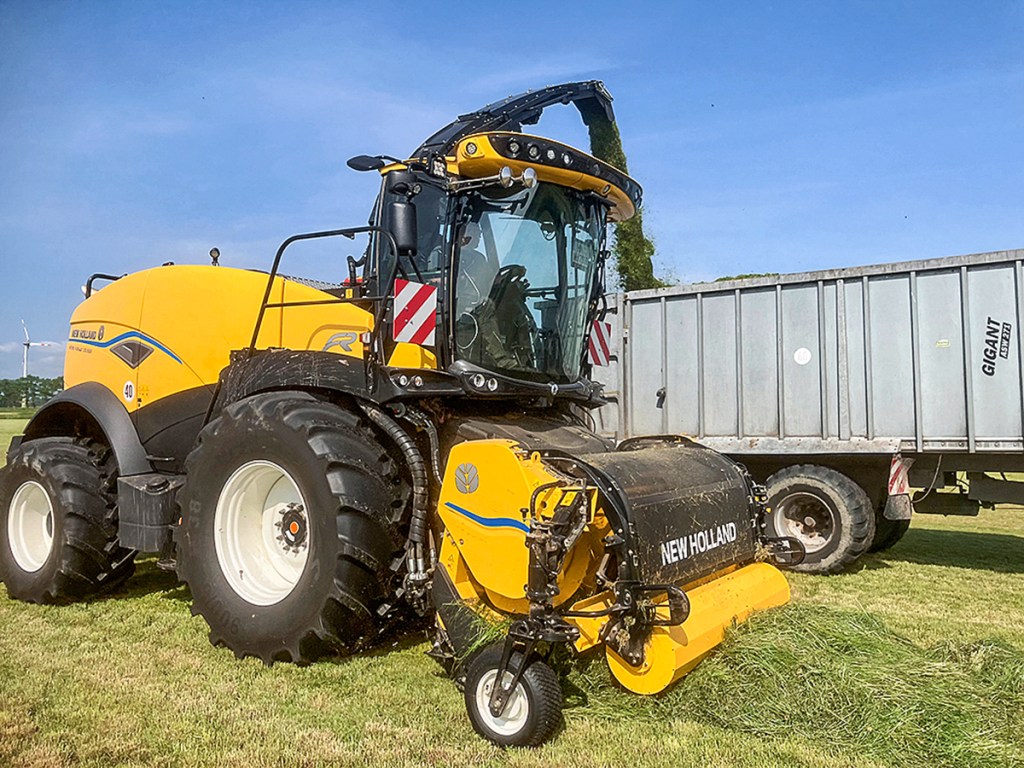
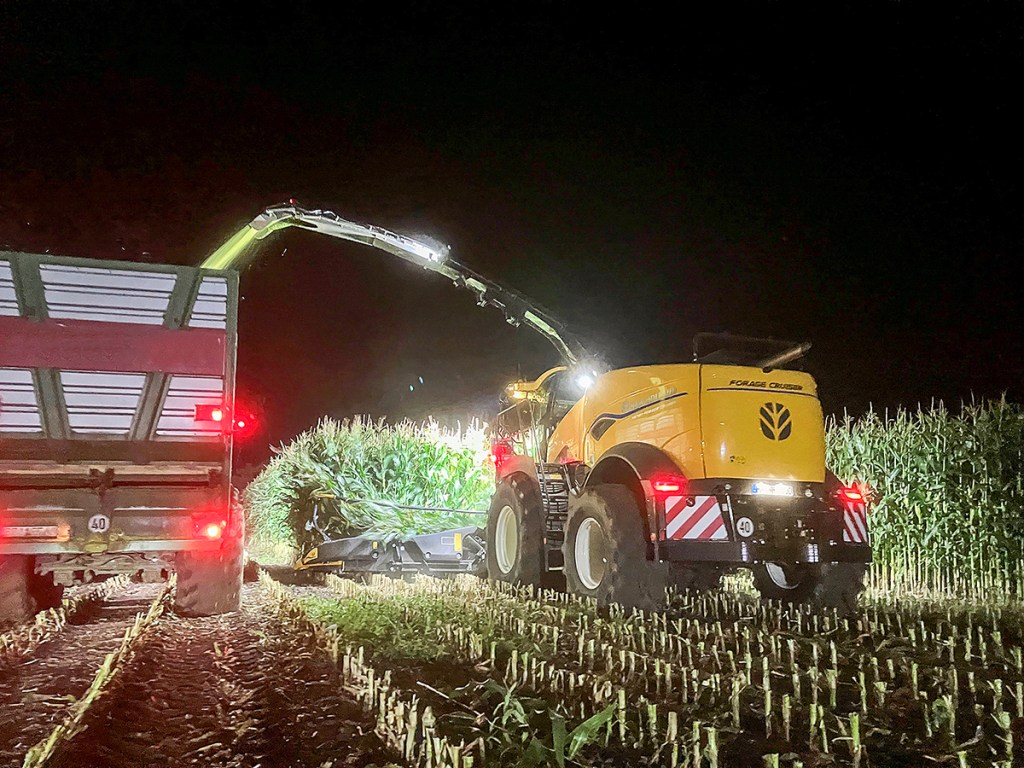
The chute hardware is easy to sum up. The cross-section is nice and big with plenty of swivel range and a generous loading height. Control is excellent. The large maintenance/access flaps are practical. We never had to deal with a blockage, but the flaps were great for cleaning.
The chute is no longer a simple piece of channel for conveying crop. Our test forager had four electronic features installed that not only make it smarter but also more expensive. New Holland sources the NIR sensor for measuring moisture and nutrients from Italian specialist Dynamica Generale, and we found it delivered reliable results. The on-board moisture readings were only slightly higher than our laboratory results. Documentation via the IntelliView terminal ticks all the boxes.
We can also give very good marks to the IntelliFill automatic filling system. Even though we usually only activated the flap control when loading silage trailers running alongside, it reliably loaded even different sizes of trailer. The visualisation on the display is good; however, New Holland could do with adding an audible confirmation for activation and deactivation.
We look at the new ForageCam system for continuous CSPS measurement in a bit more detail on pages 62-63. Comparing the results with those from our lab results, we noticed at least that ForageCam showed a trend in the right direction, albeit the harvester data were still too optimistic. The system will not be available as a production option for the 2027 season.
Last but not least, we should also mention New Holland’s helpful camera system that reduces forager operator stress: CropSpeed monitors the velocity of the crop flow and intervenes when this falls below a preset threshold. We would definitely like to see greater inertia when driving into the crop, because our system would trigger the alarm every time we tucked into a new bout.
A chute with this level of electronic spec certainly adds a hefty chunk to the bill, so New Holland should really come up with a better way of protecting the overhang when in its transport position. What’s nice, though, is that the chute automatically moves to its park position if you press the shift and home buttons simultaneously.
A light-footed heavyweight
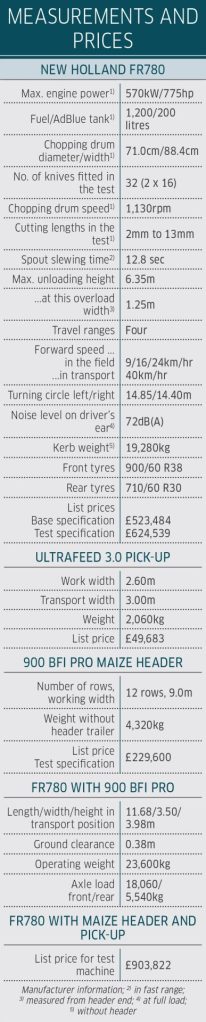
Kitted out with the 12-row maize header (4.32t), the New Holland FR780 model tips the scales at a hefty operating weight of 23.6t, of which 18.06 tonnes rests on the front axle and 5.54t on the rear end. Good news is the 900/60 R38 tyres on the front were fitted with a PTG tyre-pressure control system. However, this was a dealer-fitted solution and is not directly available from the factory. Despite this, the PTG system is integrated into the FR via ISObus. With the tyre pressure reduced in the 38-inch tyres (maximum) to their field setting, we noticed that the header lift height isn’t particularly high.
New Holland still uses a four-speed gearbox, which is a bit outdated compared to the competition. You select the gear using a knob, but the actual change can sometimes feel a bit slow. Also, it would be nice if the parking brake, which is applied when you leave the seat, would automatically release when you pull away. On the plus side, there is a fully mechanical four-wheel drive and a diff lock on both axles.
The road mode automatically unlocks the travel speed, 40km/hr, which is reached at just 1,200rpm. The harvester is comfortable when on the road. In the field, the turning circle of just over 14 metres feels small and fits in well with the 12-row header when turning back into work.
Speaking of the maize header, instead of the 490 Plus that we used in our two previous harvester tests, we tested the new 900 BFi Pro for the first time (identical to Kemper’s 490 Pro). In terms of ground following, crop intake and cob losses, this header really ticks all the boxes, keeping the harvester well fed. So far, top marks — unfortunately our particular test candidate still had the old header trailer and not the new hydraulically foldable transport wheel.
Inviting cab
With the 2025 Forage Cruiser updates, New Holland focused mainly on the cab. There is much more floor space, better insulation and noise-optimised windows, which make the new FR accommodation a better workplace. We really appreciated the grippy steering wheel, ventilated leather seat and footrests. We still see room for improvement in the climate control department, which too often caused the windows to fog up on the inside when the weather was a bit damp.
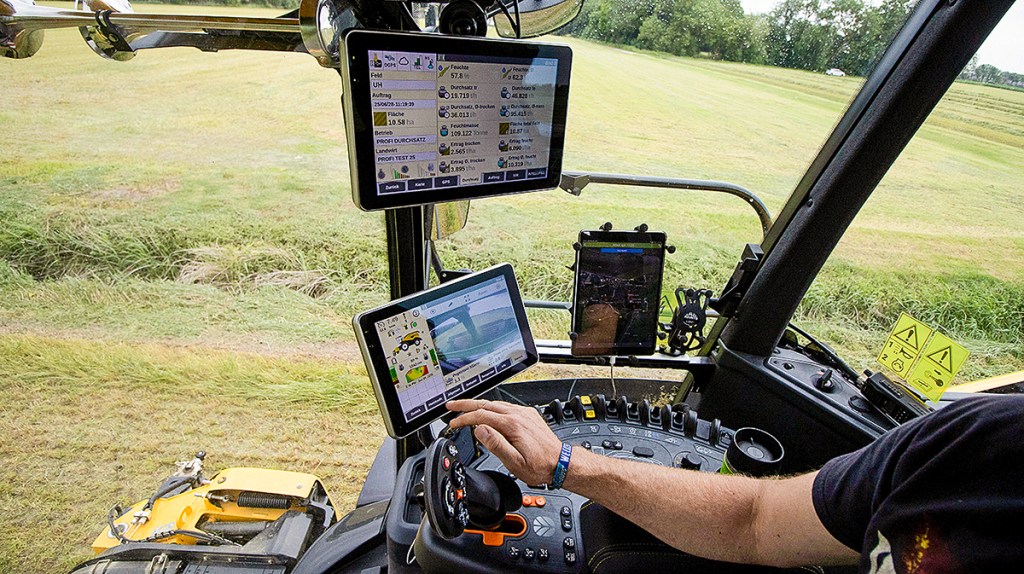
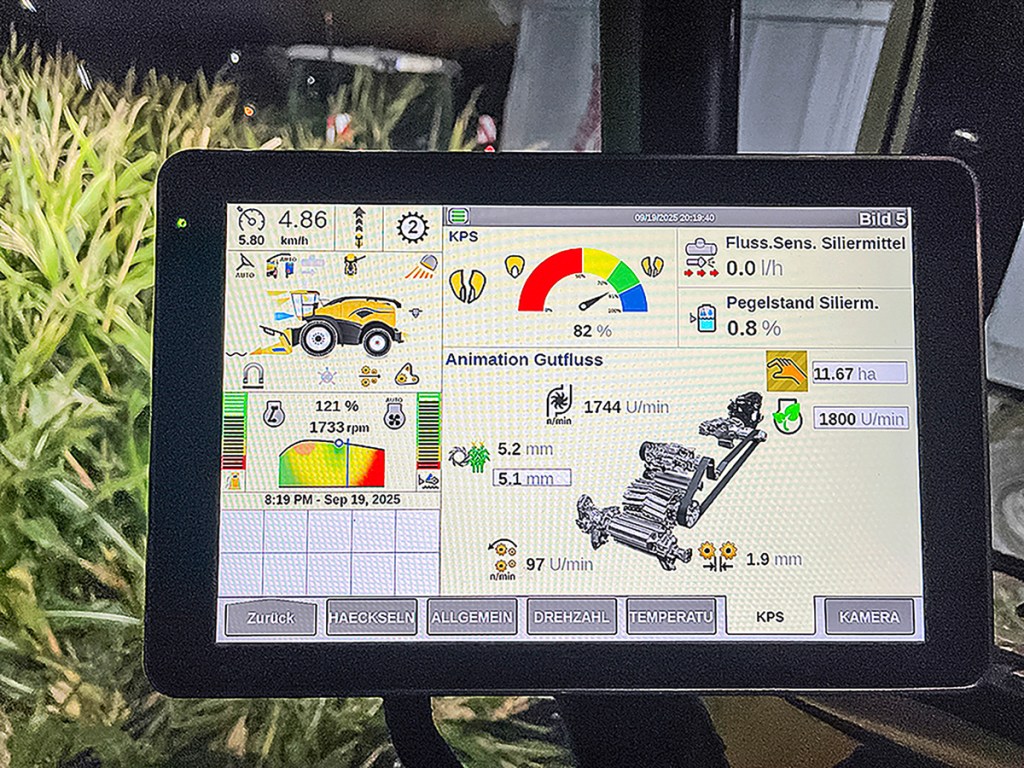
The FR780 harvester is operated from the armrest and the IntelliView IV touch screen display. Conveniently, the main machine settings can be easily adjusted by flicking the rocker switches on the armrest. Fine-tuning then happens on the terminal, such as the speed at which the spout swivels. Documentation (job, NIR etc.) is displayed on a second IntelliView screen on the A-post.
The revised tilting joystick — as on Krone and Fendt — also receives good marks. From here, the FR operator can easily modulate forward speed and precisely control the header and spout from the well-designed buttons. It takes a bit of getting used to the shift button on the back when pulling off, whereas the press-and-hold function is very practical, allowing the user, for example, to easily adjust and save the header height during work.
Further details
- The new hydraulic damping on the pre-compression rollers did a good job.
- The LED light package is brilliant.
- There is only one large 390-litre additive tank; dosing and monitoring work reliably.
- Metal and stone detectors worked well, and reversing is quick.
- The row unit sensor worked well in maize. There is no swath detection.
- For knife sharpening, the drum can rotate forwards or backwards. The counter blade adjusts itself quickly.
Summary
Appearance of the latest FR models doesn’t match the image of a veteran. It has plenty of new tech with automatic functions such as CropSpeed, and the recently developed UltraFeed pick-up makes a big difference to the FR when in grass. The machine is mature, robust and solid — perhaps a bit wiser with age. We actually had very few criticisms.
Jan-Martin Küper
For more up-to-date farming news click here and subscribe now to profi and save.