
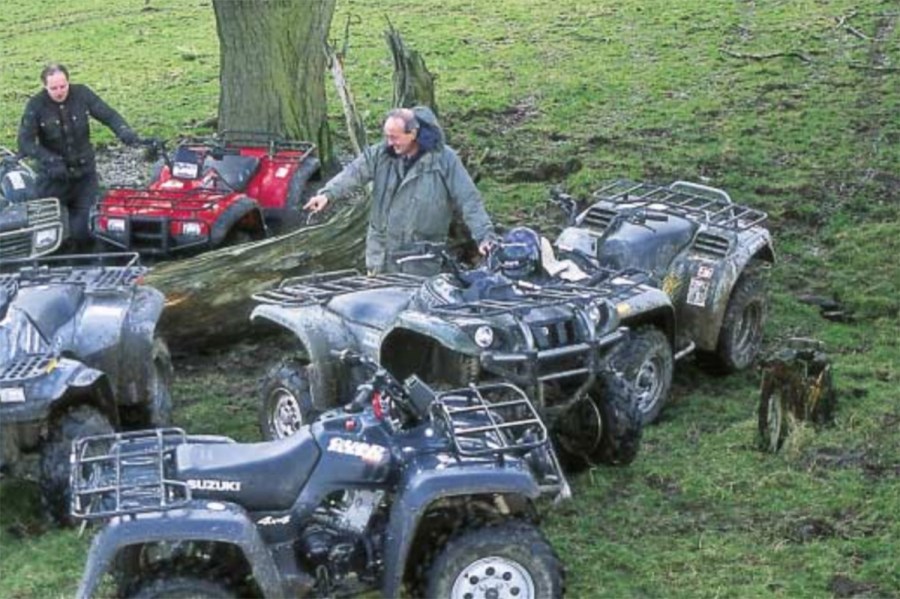
A motor of around 300cc powers the bulk of ATVs sold in the UK. And, for many users, 2WD is also sufficient, with ‘top’ performance not even figuring. So given these mass-market criteria, why did we spend two event-filled days getting very cold and wet trying out the biggest and meanest ‘farm’ models the ATV industry has to offer? Read on.
Good question. Why did we test 400cc+ flagship ATVs when the majority of users stick with the 300cc mainstream?
Two main reasons. First, with the exception of the Suzuki, all the ‘big’ ATVs under scrutiny here offer a new feature or two that we wanted to put to the test in demanding conditions. Second, we wanted to measure just how heavily these monster machines can drink. Our route comprised a demanding and long steep slate shale track that climbed some 250m from top to bottom, had a tight bend a third of the way up and included a serious and arduous incline. It proved an ideal way of trying out a machine’s towing stamina and capability.
As for fuel consumption, this is clearly important on the grounds of cost and convenience. In the mid-1960s, there were around 40,000 petrol filling stations in the UK. By the early 1980s, the number had dropped to 25,000, falling by a further 5,000 or so by the 1990s. Currently, there are 13,000 outlets – or one for every seven square miles.
For more up-to-date farming news click here and subscribe now to profi and save