

There has been a change in management at Taylors Group since we met them in the 1/2017 issue. Now the next generation is taking over the reins.
KEEPING IT BRIEF
- Fourth generation farming business facing up to modern challenges by working as a family team
- Contract farming includes specialist digestate application service
- Diversification follows a family tradition and now includes drainage work.
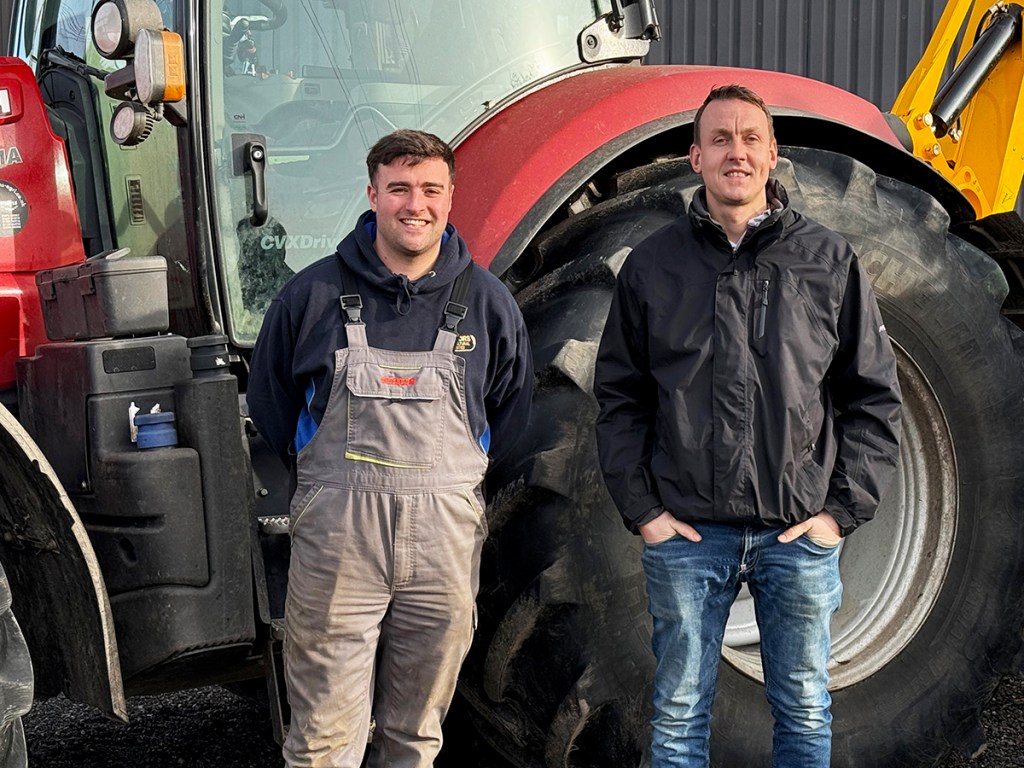
Cousins Ollie and Ben Taylor are the fourth generation in the Taylors Group family-run business based at Shepshed, Leicestershire, offering contract farming and specialist services, plus a recent diversification into agricultural and sportsfield drainage. But Ben Taylor explains that while diversification has helped to grow and strengthening the enterprise, it’s nothing new for them.
“Our grandfather Patrick would go and work at the local quarry alongside running the farm to earn extra money to build the business, so it’s always been in our family.”
When profi first caught up with Taylors Group in autumn 2016, third generation brothers Shaun and Adam were at the helm, but Ben explains that he and Ollie have gradually taken over the day-to-day management from their fathers, who nevertheless remain very much involved with the business.
“We don’t have specific roles – we bounce ideas off each other. It means that we can go off in different directions to manage those operations,” points out Ben. “We still drive a combine each, mainly because we enjoy it, but do recognise that we will have to focus on more of a management role.”
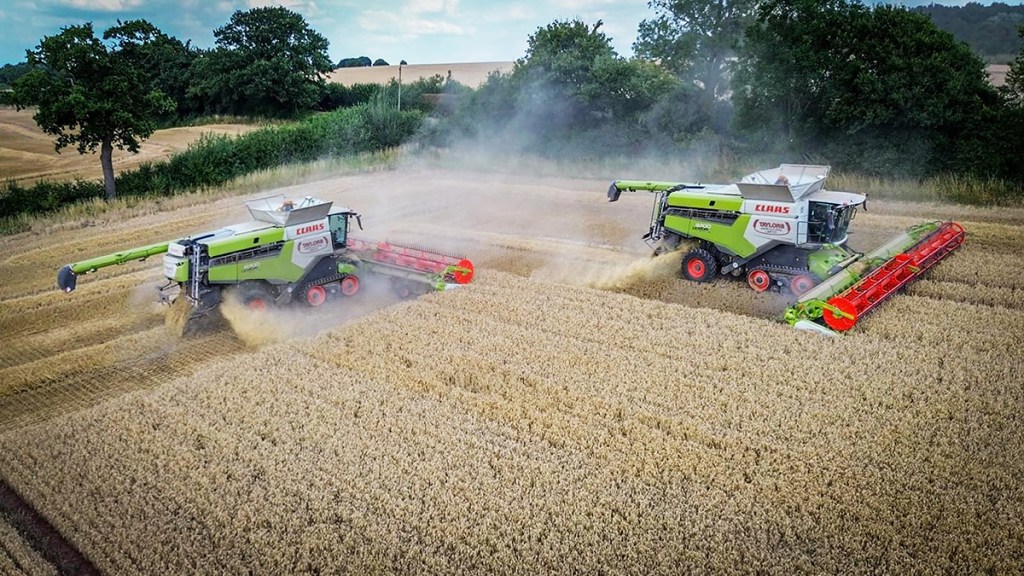
Despite the broadening business base, arable contract farming is still the mainstay with 2,100ha put through the two combines last year. This comprises two large estates, one in South Nottinghamshire and one in Leicestershire.
Industry trends and the climate are driving change, Ollie explains: “We have traditionally cut a lot of grain maize, but in 2025 it all went for forage. Drilling the following crop often carried on into new year, and with the wet winters it became more difficult to establish wheat.”
The maize acreage is down a little this year so the pair reckon that foraging will be more manageable. Ollie adds: “We crimp and clamp some for a local beef farmer, and on outlying land, continuous maize works well for us.”
Traffic management
Controlled Traffic Farming (CTF) is being adopted across the arable work, with most cultivators fitting the 12m system and extended augers on the Claas Lexion 8700 combines. The bale chaser has also been adapted with a side pick-up arm.
“But we don’t want to be too rigid with it, if we need to plough we will, especially on the heavier land.”
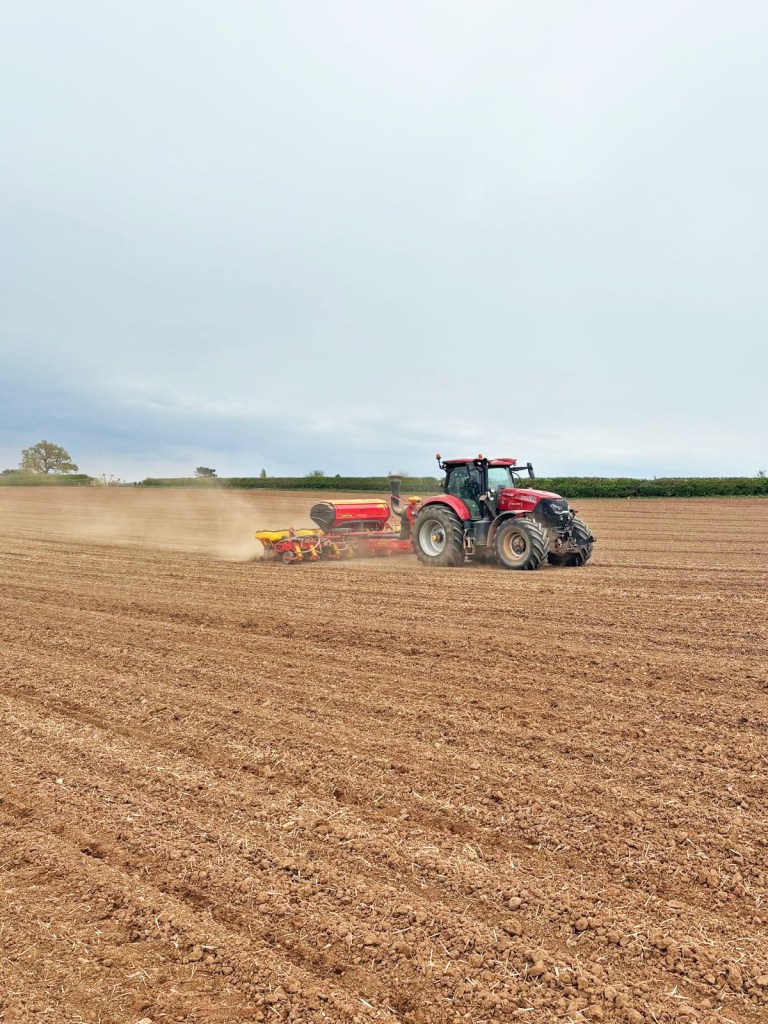
Ben comments that a Claydon drill was purchased for use in a wet year, but the bulk of the direct drilling is down to a Horsch Avatar.
“We direct drill within the rotation,” Ollie comments, “and we do have problems with weedier land. But we also need to establish game cover crops and prepare land for SFI; we’ll often min till so that we can direct drill them the following year.”
“There’s no right or wrong answer,” considers Ben, “Ploughs have come back out on many farms; customers want results and we’ve got a real mixture of soils to work.”
Oilseed rape is still the favoured break on some land; elsewhere, with potatoes in the rotation, getting on and levelling up the ground afterwards is part of the workload.
“We’re finding that rotational SFI works well after potatoes,” he says.
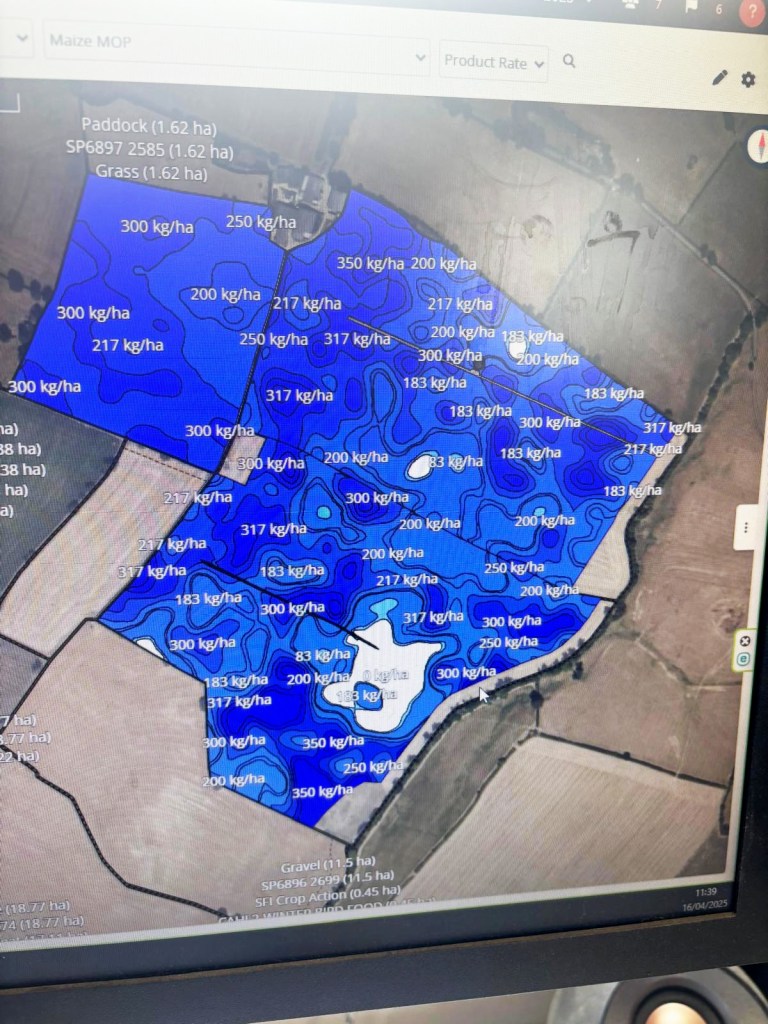
Tracey Taylor – Ollie’s mother – has also introduced Omnia’s farm management software to the business, as he explains: “It’s been a great asset to us, saving a lot of time inputting data. Operators can use a phone or tablet app to access all of their field operations with instant record keeping.
“We’ve also overlaid 10 years of yield data field-by-field which is really starting to help with decision making, whether it be variable rate maps for sowing or a problem area that wants some investment such as land drainage.”
Tractor trading
In common with many farms, there has been a gradual change of tractor hue over the years, as Ollie explains.
“We were Ford, and then John Deere. Challenger 775 and 875s were the prime movers, but now we are mainly Case IH.”
At one point a third combine, a Case Axial Flow, joined the two Claas Lexions, but modern capacity means that the pair, with their 12m Vario headers, offer sufficient output.
“We’ve gone full circle from investing in deep cultivations with the Challengers and implements like the Discordon to min-till and direct drilling,” he reflects.
JCB Fastracs joined the fleet to help with logistics for digestate work, and then dealership changes caused a rethink on the main brand.
“Sharmans lost John Deere and went to Case IH, and we have both Sharmans and Startin Tractors within easy reach. We were offered a competitive deal and for us back-up is more important than brand loyalty. Startins have always helped us out with breakdowns on our Quadtrac and generally have a tractor to fill in.”
The Quadtrac, to which they remain staunchly loyal despite engine and gearbox troubles, is the latest in a long line of powerful prime movers.
“We’ve looked at the alternatives but there’s nothing really to compete,” says Ollie.
Tractors and drivers are brought in for jobs such as the maize harvest, where the extra horsepower is only needed for two or three weeks.
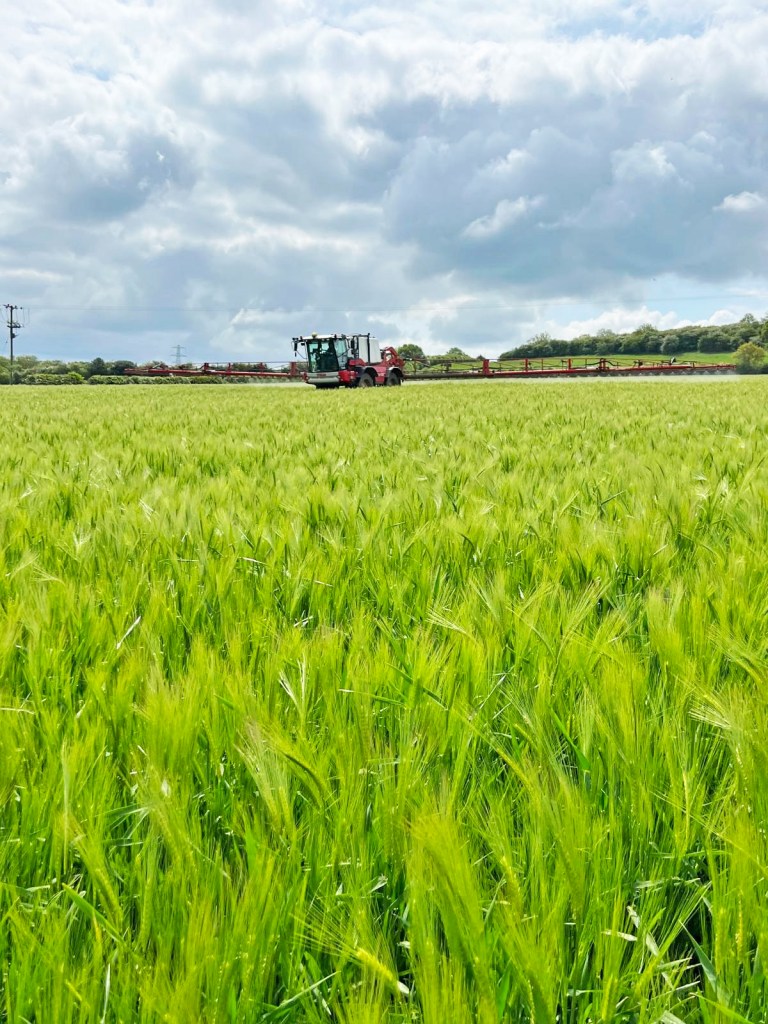
A move towards using more bagged fertiliser has also seen two self-propelled sprayers swapped for one Agrifac Condor and one trailed machine.
“We can control the timing better with bagged fertiliser and it’s easy just to drop the sprayer off, giving a tractor for other jobs.”
Digestate changes
Some 60,000m3 of digestate from an AD plant on one of the contract farms plays an important role, so the Taylors have invested in storage and application equipment to maintain control of the product and its spreading. This includes using a self-propelled with a dribble bar applicator, filled in the field via road tankers.
“Because the kit was all chosen with our farming needs in mind – wide tyres, no pumps on the tankers, lightweight equipment and to ensure that we can comply with regulations – it’s perhaps not ideal for contracting, so we’ve not really developed it as a stand-alone service,” comments Ben. “Plus there are bottlenecks with the drainage work and we would be up against some big local outfits.”
“Timing and attention to detail is key for us, and we use a local contractor with three tractors and drivers to ensure that we can staff it at busy times.”
A tri-axle Vredo with 36m boom has replaced a Holmer in recent years, as Ollie explains: “The Holmer was 18m so the wider boom boosts output. It was purchased from a sale, and fortunately there’s a service agent locally who can maintain it as well as looking after the Zunhammer road tankers.”
In the early season, a contractor takes up any slack with an umbilical outfit.
The challenge of working at two main bases either side of the home farm is only exacerbated by the busy Midlands roads.
“We keep a loader at each base, which also has its own Mecmar dryer, but a lot of kit still has to be moved around,” admits Ollie. “We used to split the combines but we find keeping them together means one less tractor and trailer is needed, freeing up that driver to go baling or turning straw. The aim is to clear blocks of ground and get them cultivated ready to drill.”
In wet conditions, a load can be put into the dryer allowing the harvest team to move on to other jobs.
“Drying capacity was one more limiting factor with the grain maize,” points out Ben.
With a full-time team of eight plus an office manager, the Taylors stress that you can’t put a value on staff.
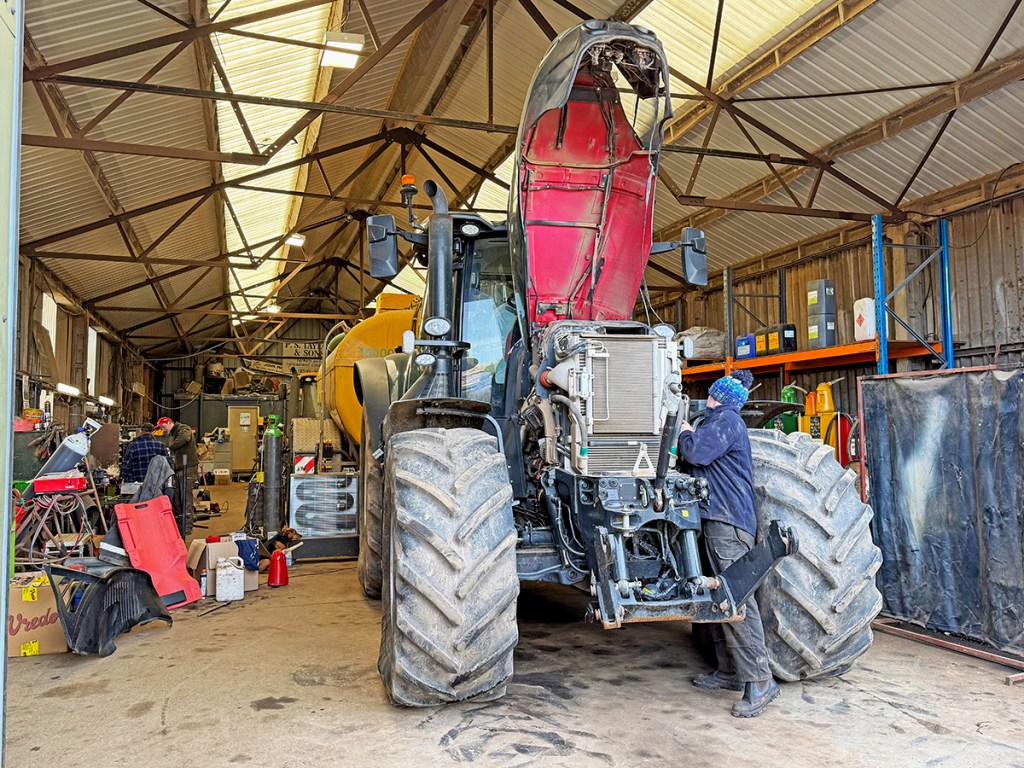
“The operators also do a lot in the workshop; we aim to keep as much servicing as possible in-house,” says Ben.
The main yard at Ingleberry Farm now butts up to a new housing development emerging on some of the family’s former farmland, so a few changes to the extensive workshop facilities are on the horizon.
The phrase ‘urban fringe’ perfectly conjures up its situation, with farmland to one side and the M1 junction to the other. But Ollie and Ben see this as an opportunity, rather than a disadvantage.
“Some five years ago, we were looking at kit for drainage on our headlands and field corners and got in touch with Shelton Trenchers to purchase a G150 trailed trencher,” explains Ollie. “They asked us to do some sub-contract work for them, and then we got the opportunity to take on the business of another drainage contractor.”
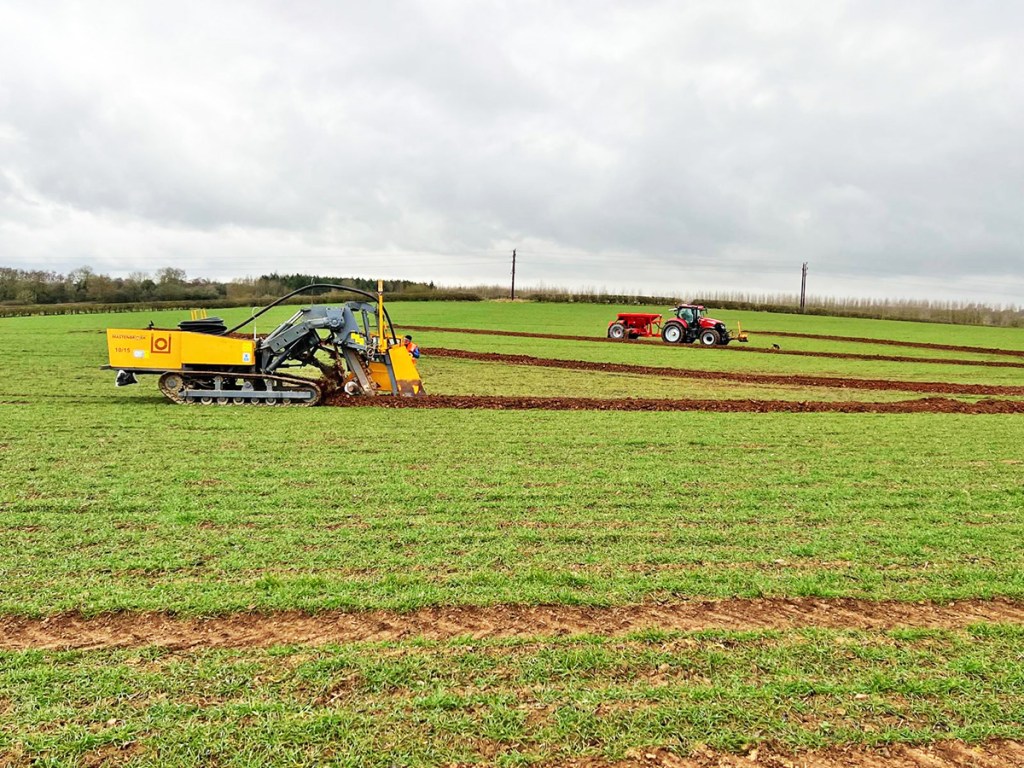
A smaller sportsfield trencher joined the fleet, along with – at the other end of the scale – a Mastenbroek self-propelled drainage machine, offering substantial outputs for agricultural work.
“Sportsfield drainage is very a different sector,” comments Ollie. “We’ve invested in smaller tractors including an 80hp Deutz with creep gearbox and everything is on turf tyres. But we can also easily hire in machinery such as dumpers to take the spoil away, and it was a conscious decision not to invest in specialist equipment that is only used for a few weeks a year.”
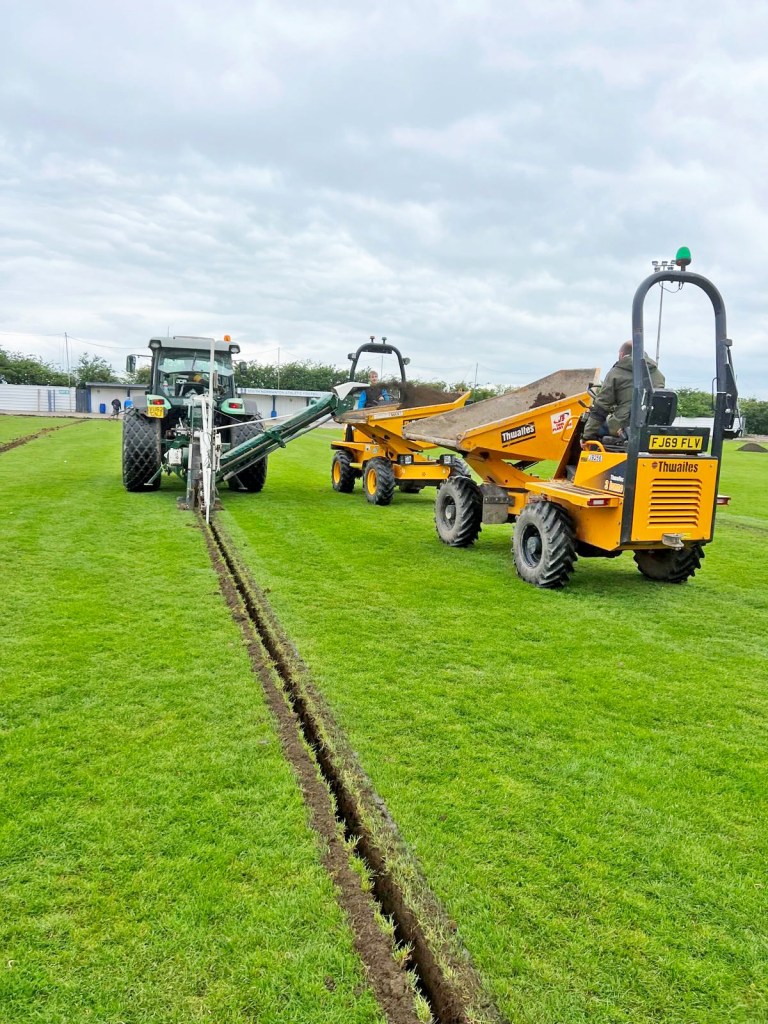
As well as golf clubs and sportsfields, the central location has lent itself to picking up other useful jobs such as pipeline work, and ‘snagging’ for construction projects on water mains and sewers. The diversification also complements digger work with a five-tonne Hitachi, again a business arm started by Patrick Taylor.
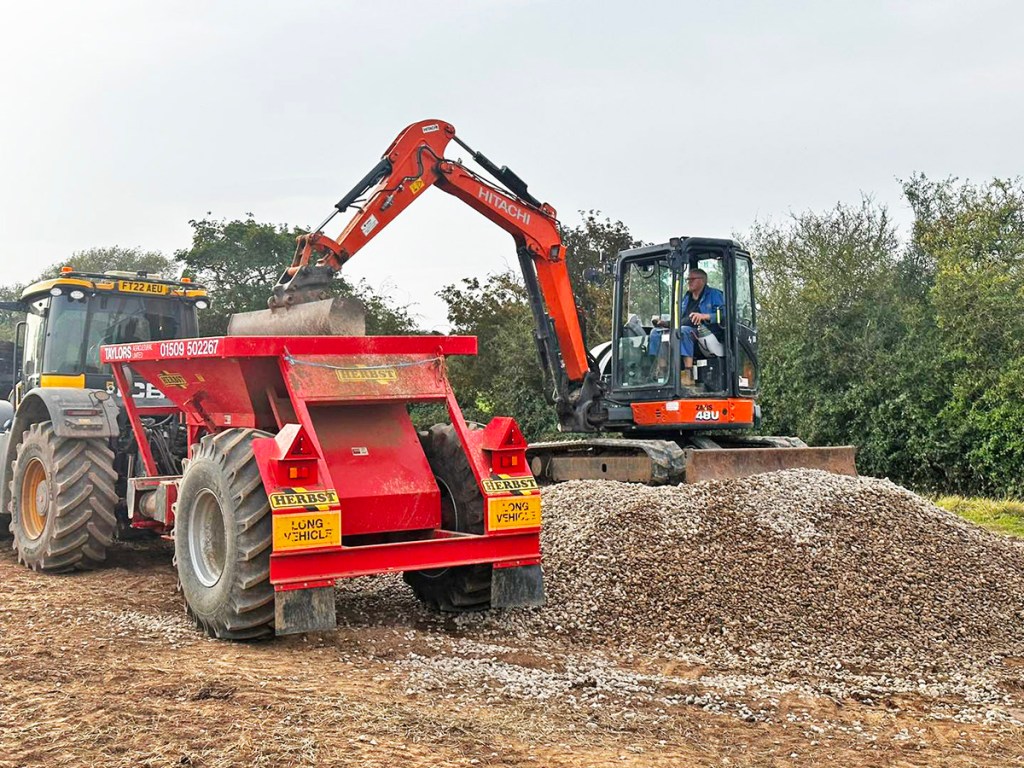
“We’ve also added land management services to this such as ditching and tree work with a new tree shear. It’s an area we’d like to grow as the diversity helps with peaks and troughs in the workload.”
Ben points out that this has also needed a slight shift in image for this particular arm of the business.
“‘Agricultural’ is used as a negative term in the utilities sector, so we promote ourselves as Taylors Group and Taylors Drainage and Estate Management.”
A diversified workload also has benefits in terms of staffing, says Ollie.
“It keeps staff busy year-round and offers them job security rather than us having to look for casual labour in busy periods.”
There are still a few bottlenecks however – football renovations are mainly May-June but golf clubs look to improve drainage ahead of the winter in July- August, when harvest takes priority.
“It’s very different to agricultural contracting with lots of manual work involved,” reflects Ollie. “It’s also very competitive.”
The family were early adopters of another diversification, green energy, purchasing two wind turbines when better tariffs were available and feeding straight into the grid – again showing canny foresight as their surroundings have become more urbanised.
This happy team, facing and embracing change, are a credit to the business’s founder Sam Taylor, who came into farming after being blinded during WW1. He set the wheels in motion for a successful and innovative farming enterprise, and would no doubt be very proud of what the fourth generation is achieving.
Jane Carley
For more up-to-date farming news click here and subscribe now to profi and save.