
When we last visited Yorkshire contractor Tom Dirom, his tractor choices leant towards the Finnish Valtra brand, topped by a 400hp reverse-drive S-series. As the business and its workload has evolved, so too has the firm’s machinery choices, with Case IH models now accounting for five of the firm’s eight model fleet.
KEEPING IT BRIEF
- Forestry kit adds to the niche
- Sewage cake applied using weigh cell spreader
- Iseki TAC100 crawler boosts LGP work
Cost. It’s a key driver in any business, and keeping a lid on the purchase price of new machinery and equipment remains a focus for west Yorkshire contractor Tom Dirom.
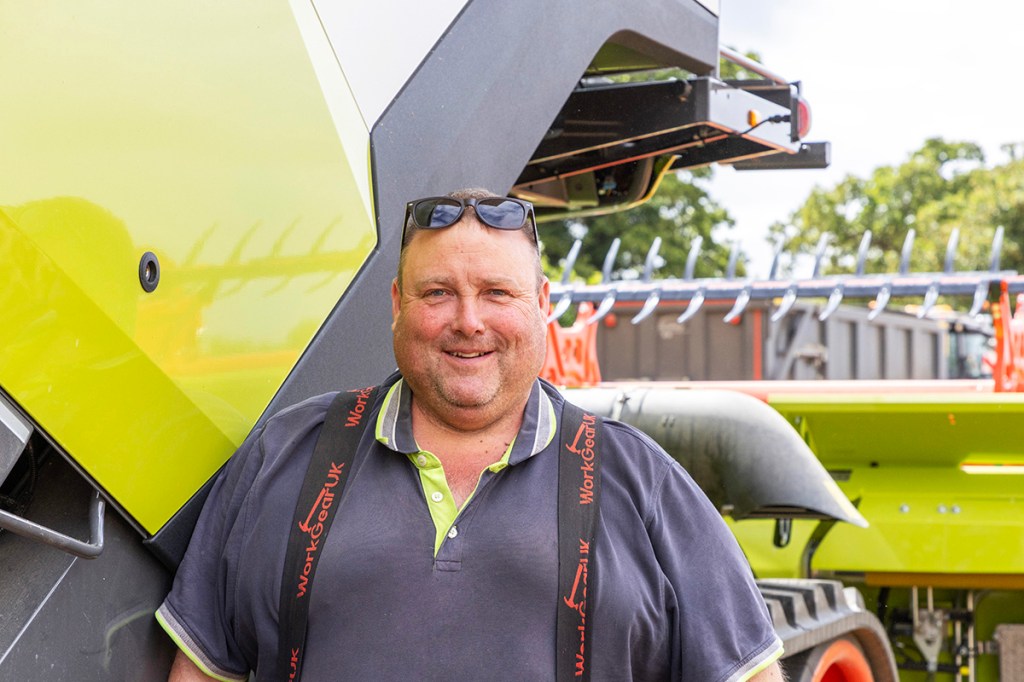
“Like many businesses, we’ve a lot of money tied up in decent kit, but that’s a choice I make in return for a generous warranty and fixed costs,” says Tom Dirom based at The Mill, Harewood. “That said, buying new is getting increasingly harder to justify because of the constant price rises. Yes, we could look at secondhand, but I still prefer the security of a manufacturer’s warranty along with value for money – it’s the only way to keep a lid on operating costs.”
Knowing when to trade-in, to make the most of a strong residual value that can lower the cost to change, is where good relationships with dealers comes in.
“Ideally, we’ll aim to change tractors every three years, as the remainder of a transferrable warranty helps with resale value,” he says.
Tom’s old-school approach centres on trust, honesty and mutual respect, and knowing agriculture is such a people-business, he acknowledges that good business relationships are something to be valued.
“We’ve developed a loyal customer base, helped by good communication and trust, so it’s essential that we choose the most suitable machinery suppliers to help keep our business moving in the right direction,” he says. “It’s no good falling out with people we want to work with, we all have to make a living, but those relationships do get tested when the chips are down.”
However, the busy contractor appreciates that support needs to be reciprocal, and it is one of the reasons why he has all his tractors serviced by their dealers, on the button.
“Machinery is so technically advanced, that servicing a tractor these days is much more than just an oil change,” he says. “A full dealer service history is something that is becoming increasingly more important to strengthen residual values. We also want the latest software upgrades as they arrive, so we can continue to get the best out of features such as ISObus, plus variable rates and automatic section control.”
More strings
The latter has evolved from being tractor-focussed to yet another self-propelled machine – that of a 2017-model Amazone Panterra with 4,500-litre tank and 30m boom, replacing a tractor-mounted front/rear Amazone combination. It is perhaps, the only prime mover on the fleet without warranty.
“This again came down to output, so we could respond to tighter weather windows and available spray days” he says. “In addition to sprays, we now apply liquid fertiliser through the Panterra too, choosing to use a KRM Bogballe twin disc spreader for any P and K top-ups.”
“We’ve continued to invest in technology that brings multiple benefits to the business,” he says. “Both the spreader and sprayer are equipped with auto section control and auto start/stop, so we can pass on savings to our customers, while improving precision.”
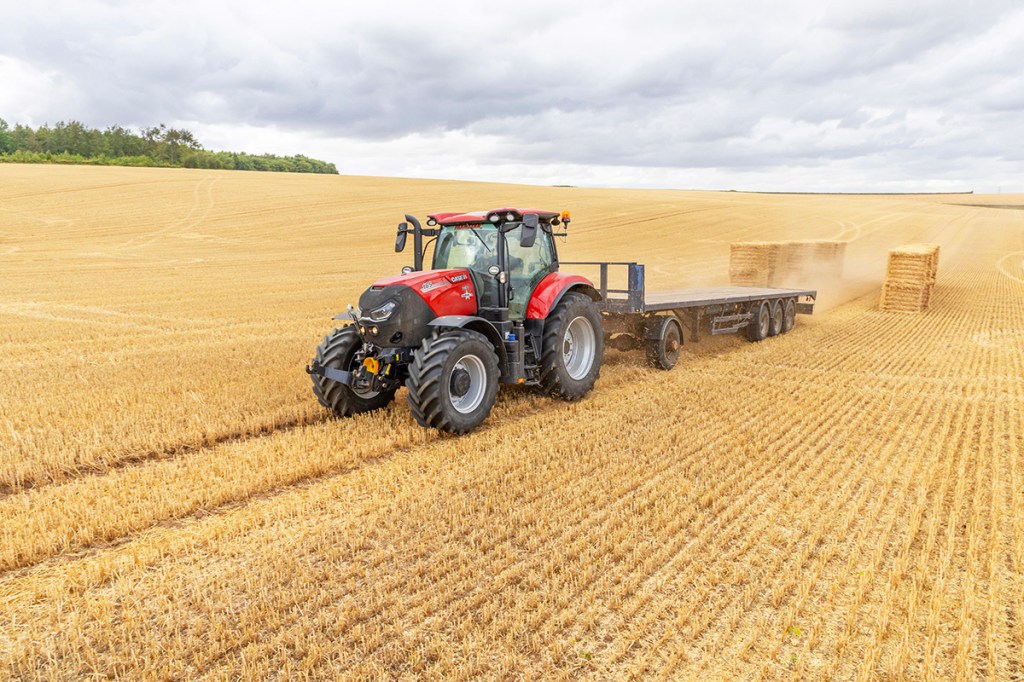
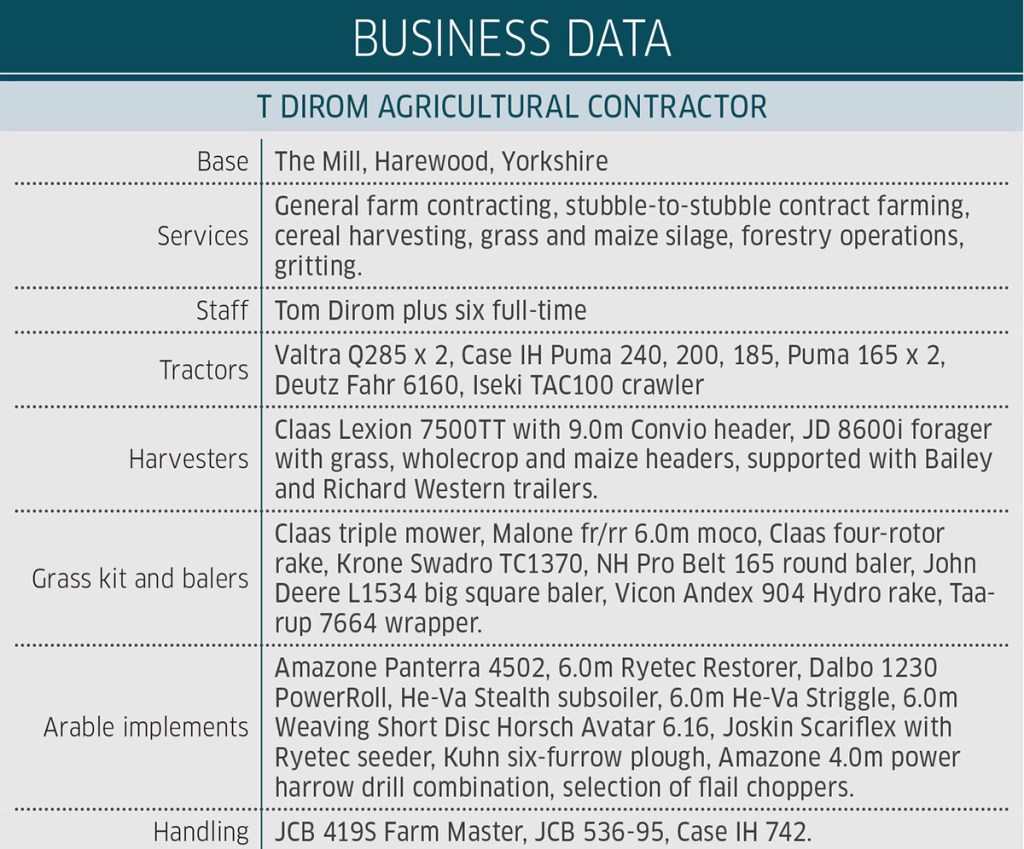
His approach to machinery buying has seen the firm’s tractor fleet migrate away from being predominantly Valtra, to predominantly Case IH. Where the fleet once carried four Valtras and three Deeres, it now carries two Valtra Q-series from Brian Robinson Machinery, five Case IH Puma’s from Farmstar and one Deutz-Fahr Agrotron from RMV Services. Tom calls on up to six owner operators and will hire-in extra tractors at peak times, to help manage the workload.
Extra help
This summer, the fleet has also been boosted with four hired-in tractors and four sub-contractors with their own kit.
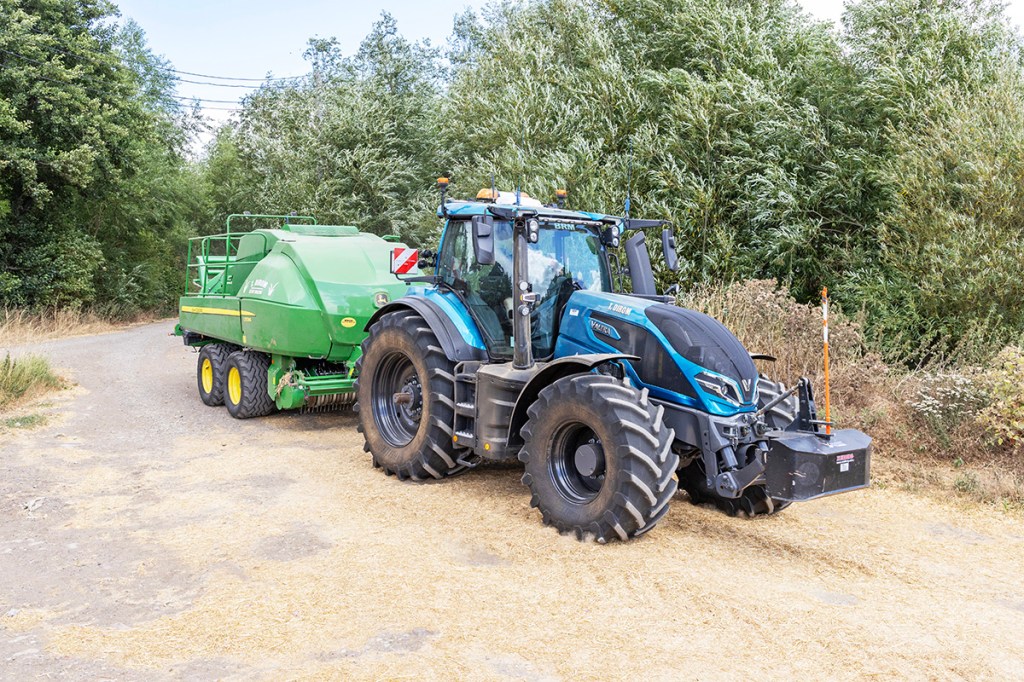
“I do like the Valtras, and our two Q285’s are fantastic performers, but we’re increasingly more focussed on seeking out better value for money, with dealers who can provide the right level of backup and support,” he adds. “Brand loyalty isn’t always rewarded with the best deals.”
It is why the Dirom fleet has recently added its first Deutz-Fahr Agrotron model, and has more Case IH tractors than Valtras.
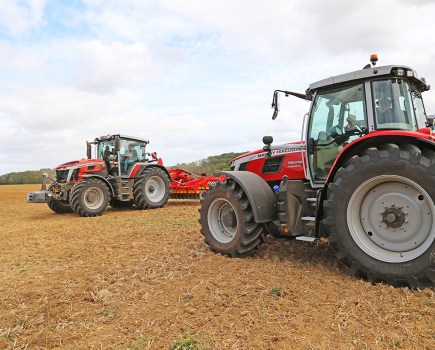
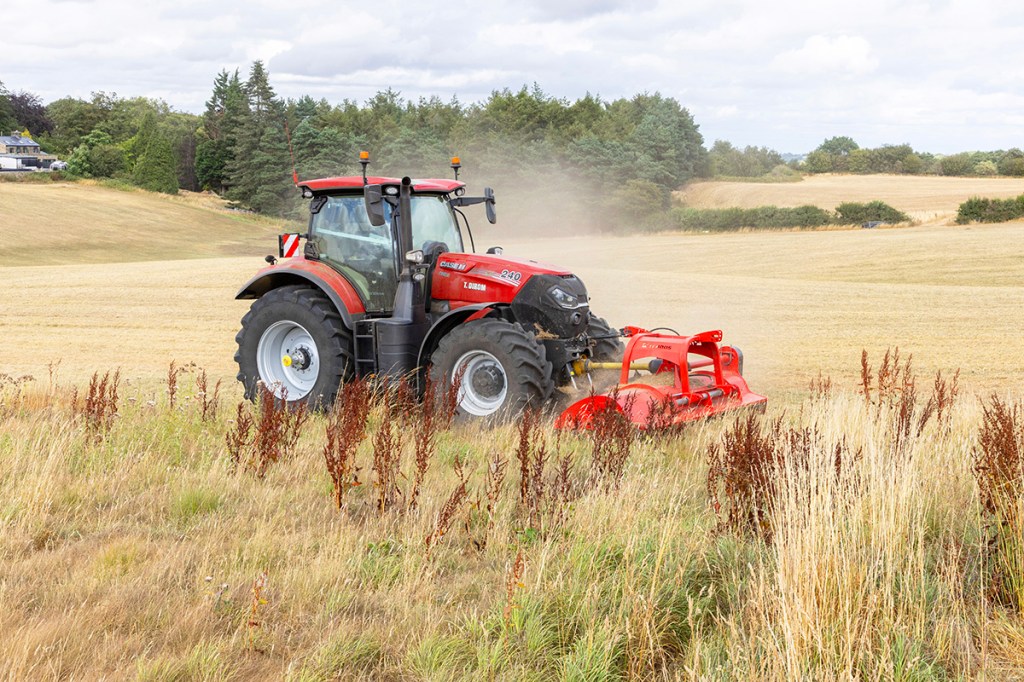
“The Case Puma is proving a good allrounder, with a comfortable cab and a good engine/transmission package, and it’s not a wallet-busting tractor,” he adds. “We now operate five of them, ranging from a pair of 165’s up to a 240.”
“I did look at the cost of a Deere 6M, and the cost of a Deutz Agrotron but actually had no intention of buying one,” he says. “But with a price differential of over £30,000, a 6,000 hour/five-year warranty and 1,000-hour service intervals, I couldn’t walk away from the Deutz.”
So far, the 2023 model Agrotron 6160RC Shift has clocked up 3,200 hours, and is unlikely to be the firm’s last lime-green machine.
“The new cabs on the latest 8-series look pretty impressive, and it’s certainly put the brand on our radar,” he adds. “Reliability, warranty and backup is what will determine those models that get to stay on the fleet, and those that go.”
The Dirom workload revolves around two all-arable 404ha contract farming agreements that compliment his specialist contracting business. The latter handles a 2,800ha forage workload comprising three AD plants and a collection of local livestock producers, plus 200ha of willow harvesting for biomass.
Time for chopping
Where he once ran a pair of self-propelled foragers, the fire-power has been increased to enable a single forager – a Deere 8600i from Ripon Farm Services – to munch its way through grass, rye and maize, clocking up around 1,000 hours/year.
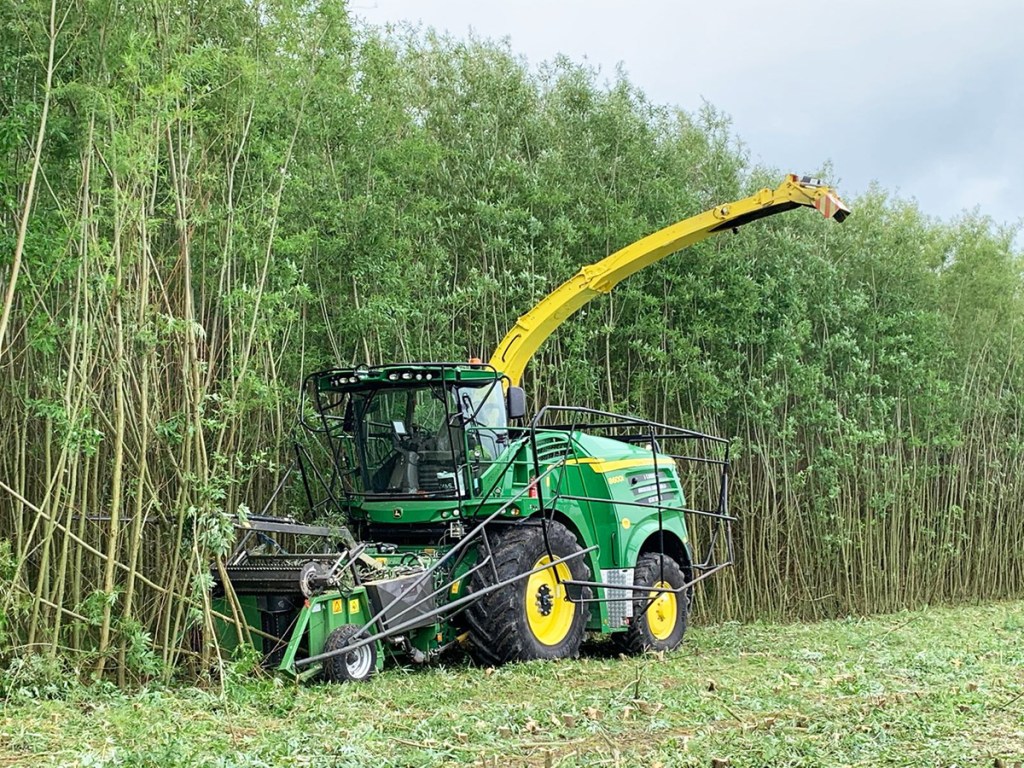
“Claas wouldn’t warrant our previous Jaguar 970 in willow, which is why we moved over to Deere, but our next machine could easily be a New Holland FR920,” he says. “A recent demonstration has revealed it’s a formidable piece of kit.”
The future of the two-year old, 2,000-hour Deere forager hangs in the balance over unreliability encountered this year, which has cost the west Yorkshire operator considerable downtime.
“Until this year, the 8600i has been a good machine, with great output, but it’s also been a frustrating season with what seems like constant interruptions, and that’s not the way forward for me or my customers,” he adds.
“Fortunately, I’ve had superb back-up from good friend Gerry Brown who has come in with his own forager and staff, to help out,” he adds. “I’ve enough work for two foragers, but getting a second team together is not likely to happen, and it’s easier to share the work with someone I can trust.”
In Tom’s experience, staff reliability can be as much of a challenge as machine reliability.
“It’s why I’ve streamlined pairs of machines to single models with more capacity – it requires fewer staff to run the kit. We’ve some good lads on the team, but we’ve a few that don’t want to put the hours in when the pressure is on, so having more capable machinery goes some way to finding a bit of balance.”
Combine change
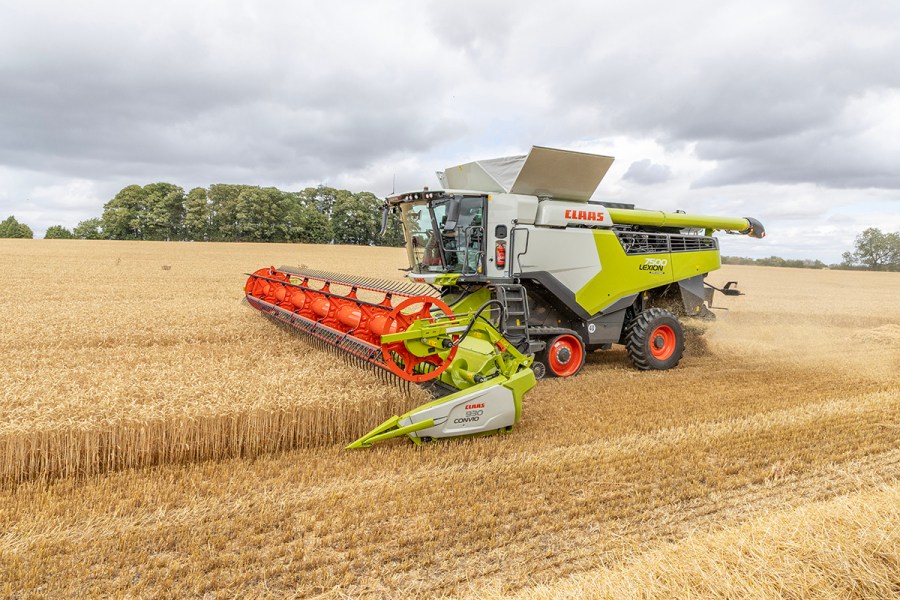
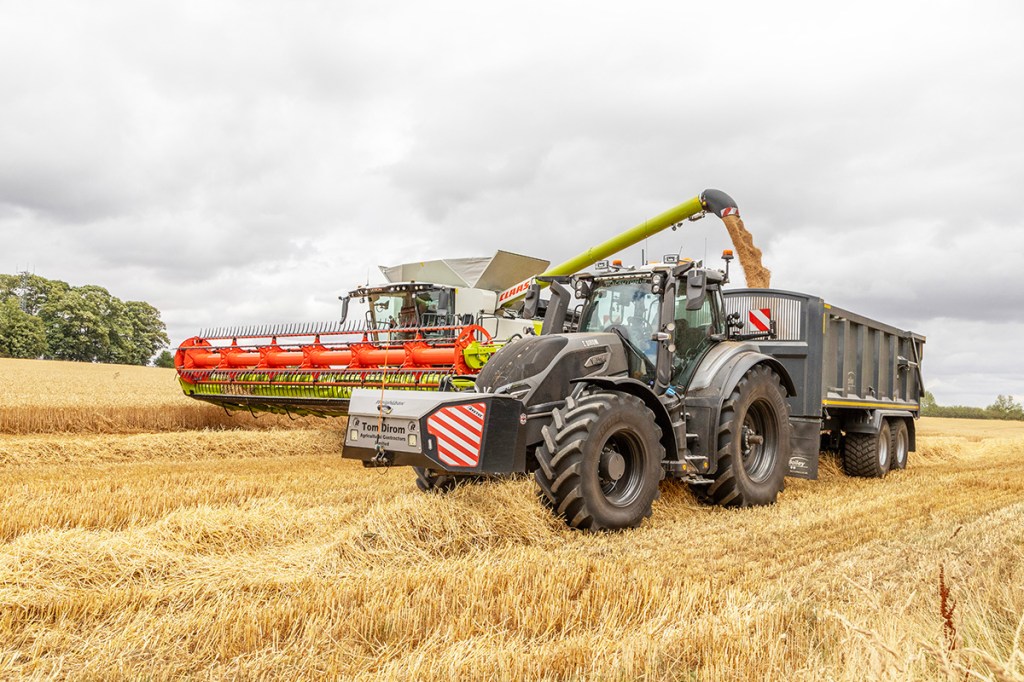
Tom says it’s the same decision-making process with combine choices. Where Deere T670i and 560i combines with 7.60m headers ruled the roost during our last visit, a single Claas Lexion with 9.14m header now holds court. And the latest to arrive is a 7500TT which joined mid-way through the 2026 harvest to replace a 6800TT that had delivered a faultless performance over the previous five-and-a-half harvests.
“The combine’s five-year warranty was up, so we’ve upgraded and moved on again in terms of output, but being conscious of costs, we’ve chosen to add a service package this time around,” he says. “Servicing costs are starting to become eye-watering, as the cost of oil has gone up along with dealership labour rates. And I do like having a dealer-stamped service history.”
“That said, we’ve also had good service from Claas Eastern, and that’s why we’ve chose to remain with the brand.”
Finns still in
Tom Dirom’s two Q-series Valtras are the frontline workhorses for a wide variety of tasks. A power boost to 305hp suits the workload, without needing to invest in a heavier 400hp tractor.
“The S-series had plenty of power, but the tractor was out-dated and numb,” he says. “It just lacked that delicate touch with lighter duties. We needed a bit more versatility and the Q’s deliver that for us.”
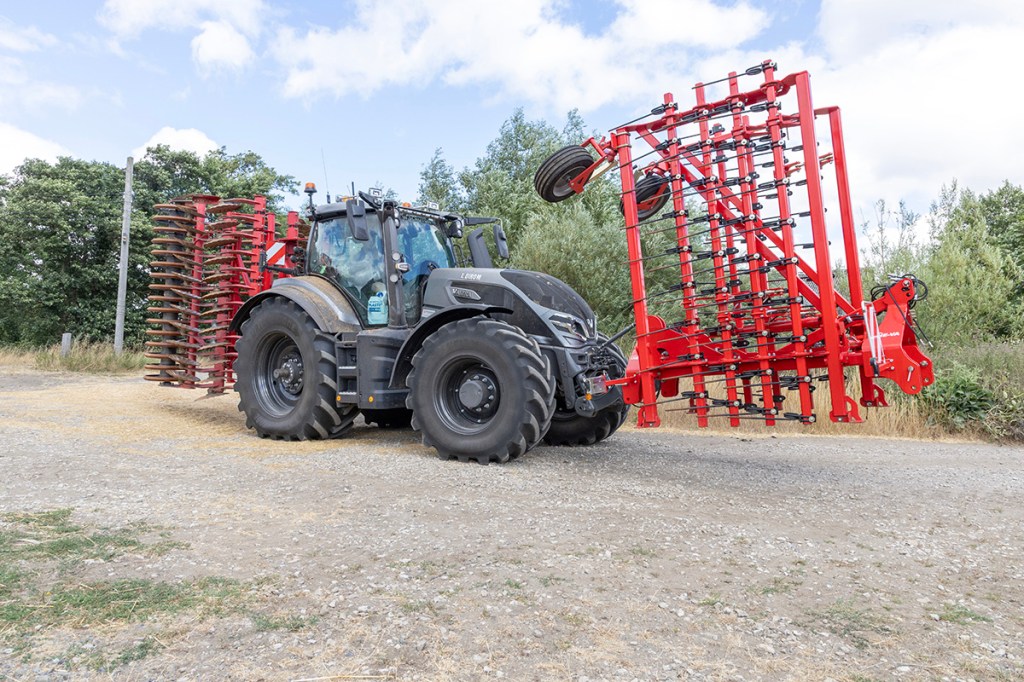
Equally at home on a sub-soiler, 6.0m cultivator or drill, the Q’s adaptability through rear wheel weights and front weight blocks lets this operator tweak and adjust to make the most of fuel use and productivity.
“We do still plough and power harrow-drill occasionally – mostly for grassland – but the majority of our arable work is now min-till focussed, and includes low disturbance sub-soiling, disc-type cultivations and drilling with a Horsch Avatar,” he says. “Processes and power requirement have both evolved, and we’ve adapted out fleet to reflect this.”
Selling his N174 Valtra with loader is considered his biggest mistake, despite the business having several materials handing solutions at its disposal.
“It was a great tractor, but the addition of a loader really made it – and we don’t currently have a tractor with a loader on,” he says. “It’s the sort of add-on that’s really useful when moving straw bales, as it doesn’t require two people and two different machines.”
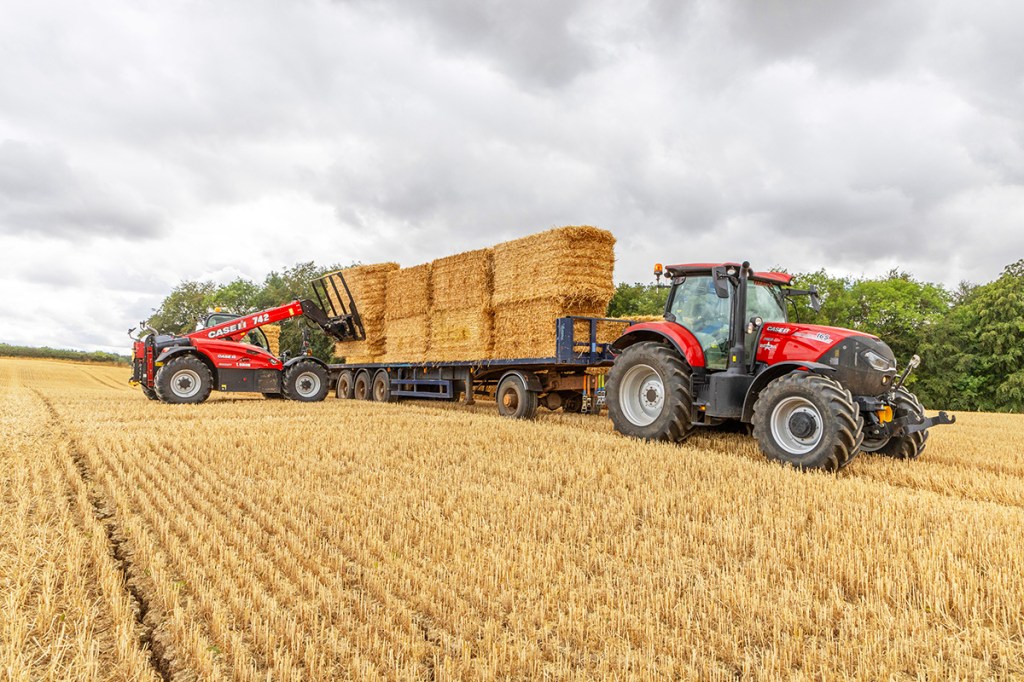
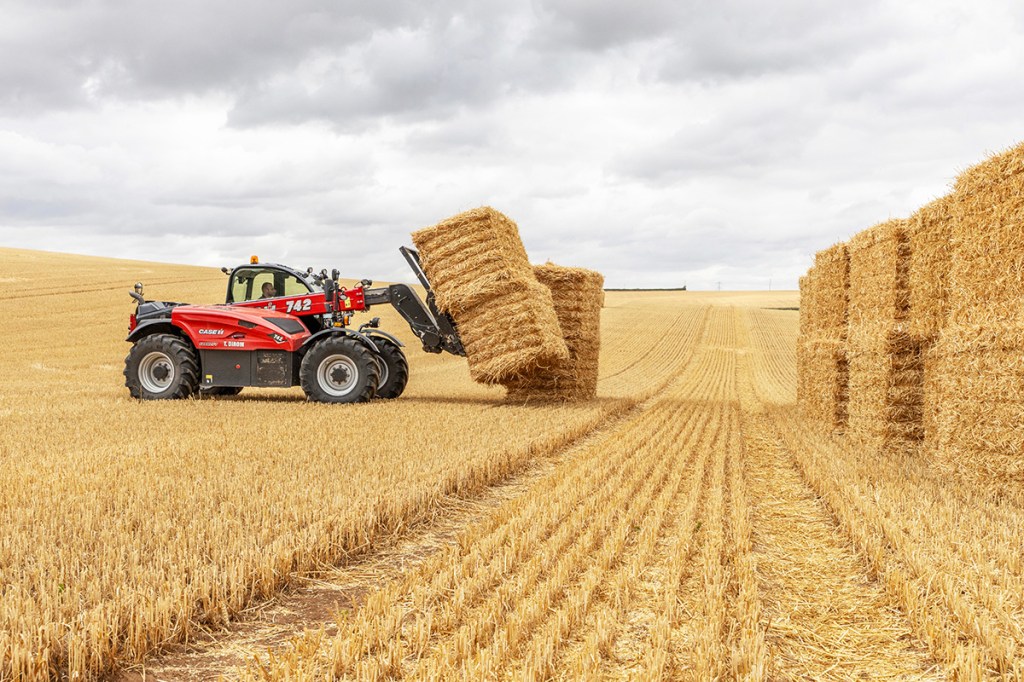
Lifting, stacking and loading is the domain of two telehandlers – a JCB 536-95 shod on block-tread, semi-industrial tyres for working on harder surfaces and loading grain lorries, plus a Case IH 742.
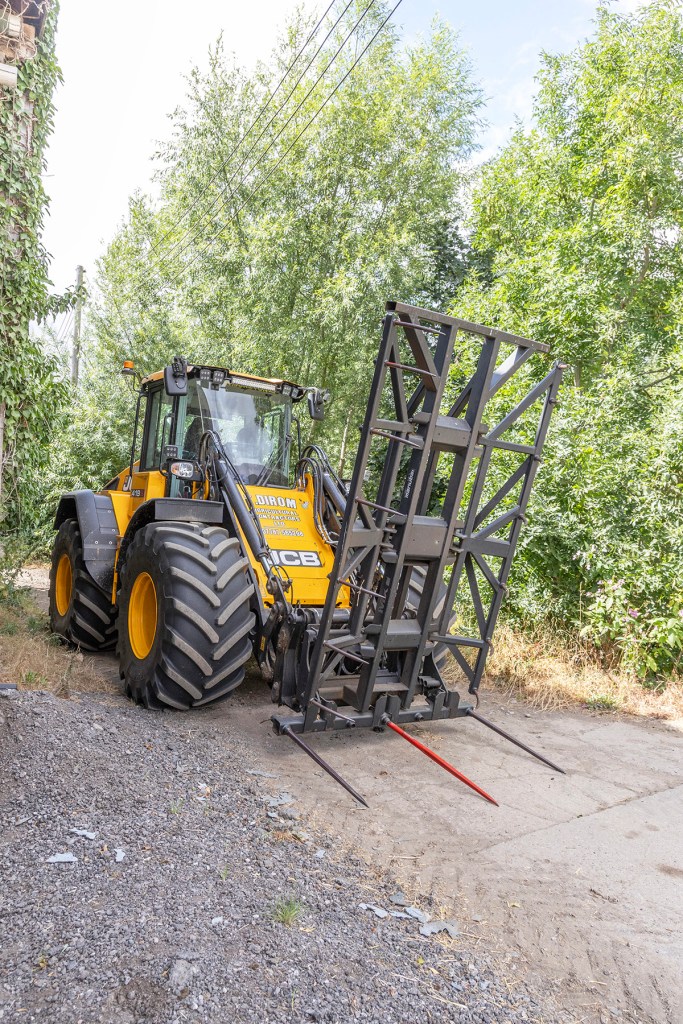
“Having that extra reach from the JCB is ideal with taller bale stacks, but when it comes to clamp work, a JCB 419S holds the muscle and speed needed to run with the 8600i forager.
“There’s little that can run with the 419S,” he says. “Hydraulic speed and power is fantastic, and as a machine, it’s not a physically huge package, which suits all the clamps we find ourselves working in.”
Hard graft pays off
Since relocating from his Cumbrian roots to west Yorkshire over 21 years ago to service a reseeding contract using a New Holland TM155, the energetic contractor has gone from strength to strength. And his list of dreams and aspirations continues to be crossed off. The latest being the purchase of his own 40ha farm.
“It’s very much a dream come true for me, and one that should safeguard the future for me and my family,” he says.
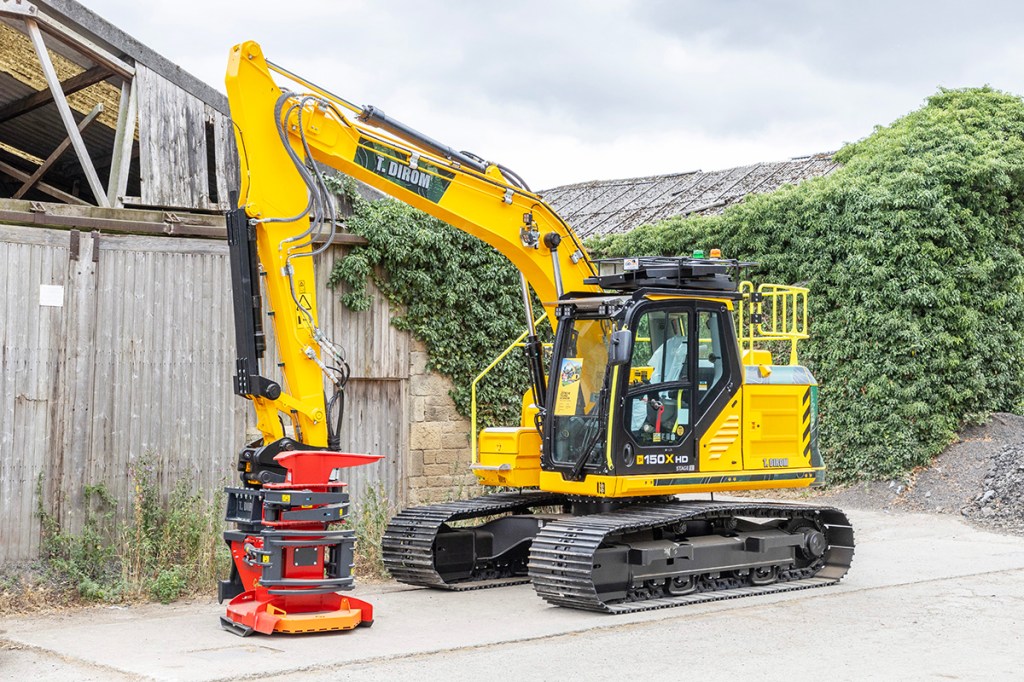
Not one to rest on his laurels, Tom Dirom has recently added a JCB 150X tracked excavator to the fleet, sat on 800mm wide tracks and equipped with a Greentec ForestCutter attachment. It dovetails with the willow contract, for dealing with growth that becomes too much for the forager, but gives the firm an opportunity to move into on-farm groundworks with lagoons and ditching, for example.
“We’ve always had a hand in tree work, having had a tree-mounder to assist with preparing ground ready for tree planting,” he says. “And the excavator will take our forestry services a step further. My business is all about being versatile, and adapting to customer requirements.”
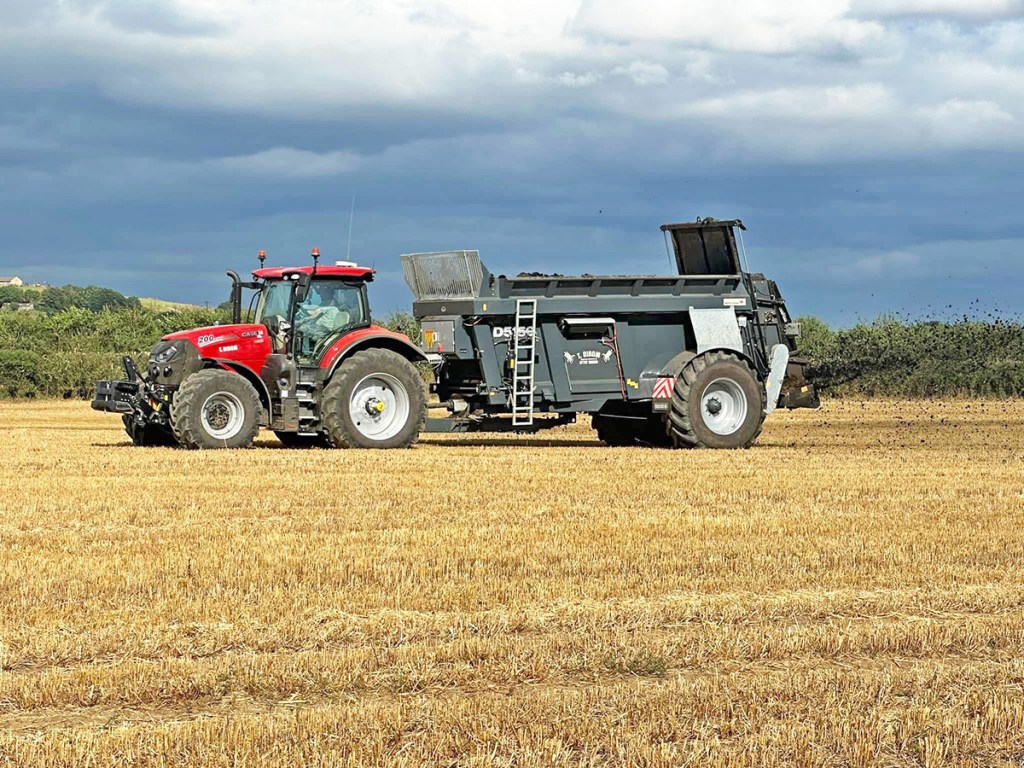
The business has resisted stepping into slurry applications, but instead, carries out 12-15,000 tonnes of sewage cake applications using a Richard Western D5150. Equipped with a spinning disc deck and weigh cells, he says application accuracy along with nutrient analysis is helping to improve crop growth and boost soil condition.
“We’re not the cheapest for anything we do, but we believe in doing the job right, and to the best of our ability, which also means not letting customers down,” he adds. “Part of that process is managing realistic expectations and providing a level of communication that leaves nobody trying to second-guess when you’re going to turn up.”
Summary
Tom Dirom continues to put customer service at the top of his agenda. Combined with reliability – from staff and machinery – it’s an area that has most likely led to the continuous growth of his contracting business. This simple formula brings with it the greatest reward, enabling planning and continuous investment in the latest tractors and equipment to maintain reliability, efficiency and professionalism.
Geoff Ashcroft
For more up-to-date farming news click here and subscribe now to profi and save.