
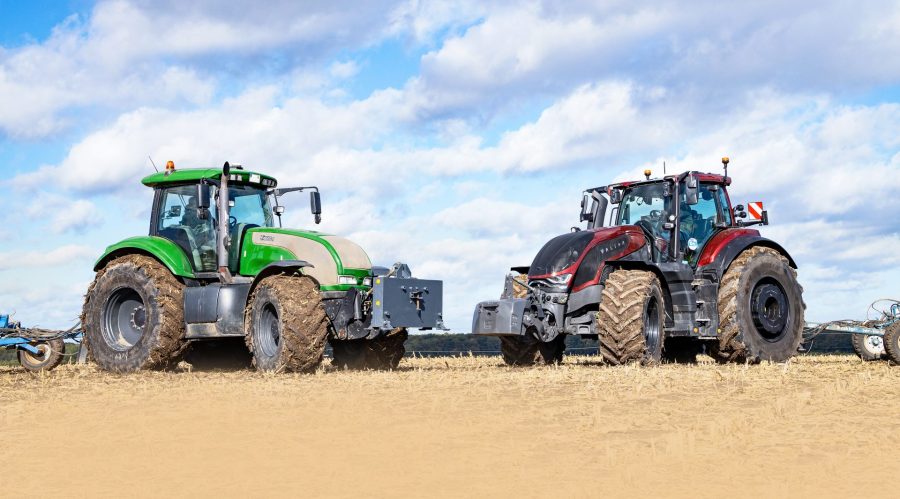
The first-generation S-Series had lots of special features, even when compared with the now current sixth generation Valtra flagship.
KEEPING IT BRIEF
- When launched in 2002, the S-Series offered a lot of high-tech features.
- Both the original and current S-Series have the option of the TwinTrac reverse-drive system.
- The current S-Series has a lot more driving and operator comfort with its stepless transmission and SmartTouch display.
Let’s get straight to the point, because a lot is happening in here: the office accommodation we are talking about is the cab of the Valtra S280.
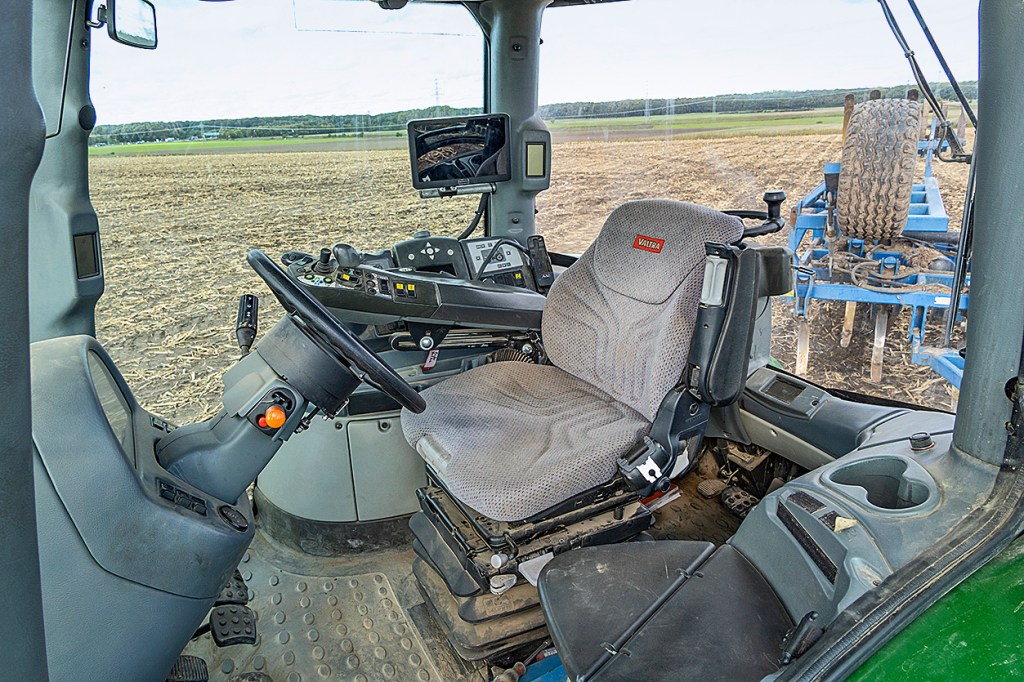
Indeed, the huge cab was a key talking point when the S-Series was launched in 2002 — things like the back window, which wrapped around the corners for a less interrupted view, or side console with its colour screen that was also ultra-modern at the time.
To see how it has aged, we’ll also take a look inside the cab of the current Valtra Boss. But let’s take one detail at a time.
Admission to the upper class
For tractor maker Valtra, which was still part of the Partek Group in 2002, the S-Series was a real landmark. This was the first time the Finns had entered the 260hp power bracket with a conventional tractor. The S-Series also marked a design shift for Valtra away from the sharp angular line towards a more sleek, rounded look.
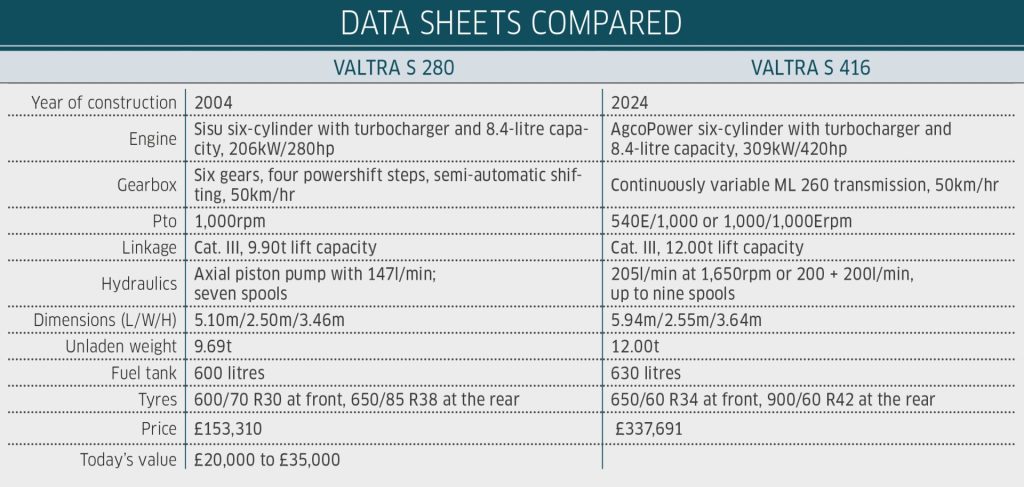
Providing the grunt was an in-house Finnish Sisu six-cylinder engine generating 169kW/
230hp and 191kW/260hp in the first S230 and S260 models. Just one year later, the engine output increased by 10hp and 20hp respectively and the model number changed to the S240 and S280. 280hp was a thing in 2003.
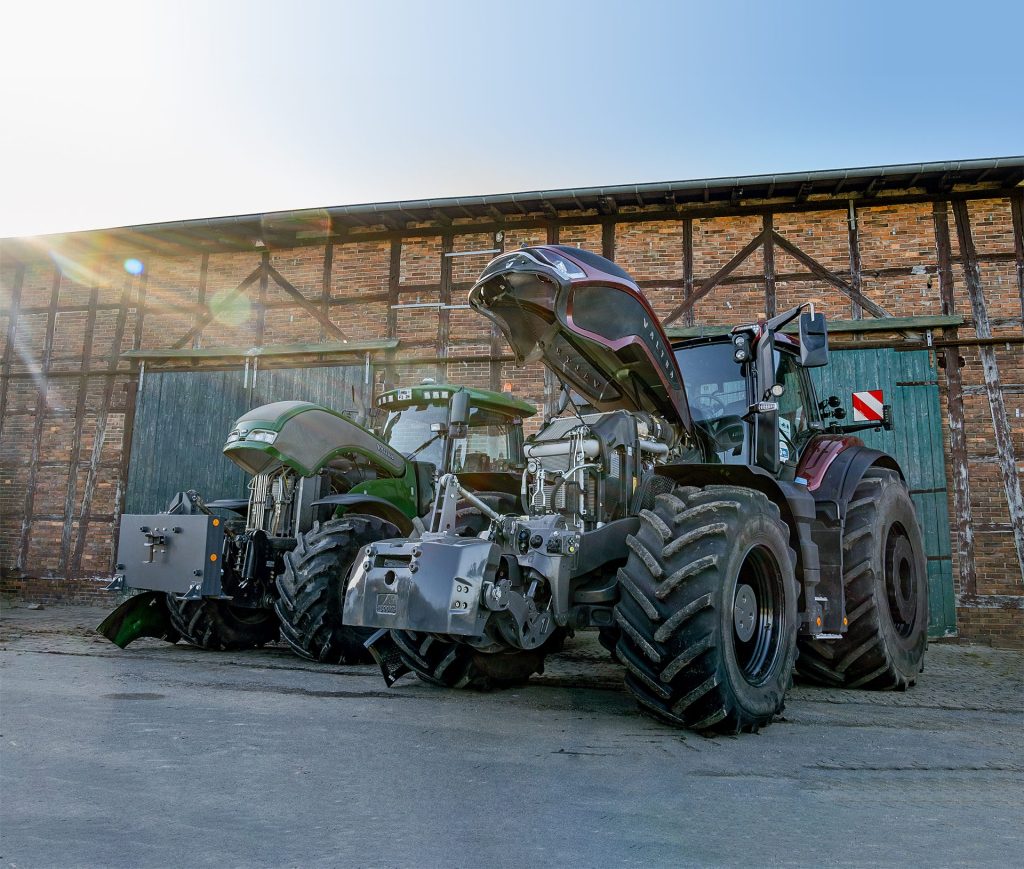
Today, the S-Series has just edged over the 400hp line with its top dog, the S416. Engine displacement and the number of cylinders remain the same, but as well as the extra oomph, exhaust gas aftertreatment gubbins have been added on, which has altered the sound despite the absence of exhaust gas recirculation.
The engines themselves have since been further refined under the AgcoPower name, Valtra and Sisu becoming part of AGCO in 2004. This buy-out did have an impact on the S-series; since 2009 it has been built at MF’s Beauvais factory in France, and it shares components with MF’s 8000 series and now the 9S. The engine, gearbox, axles, rear linkage and hydraulics are largely identical.
With the launch of the sixth S generation, production of the “Boss” returned to the Finnish Valtra plant in Suolahti. However, the tractor still shares its underpinnings with the Massey Ferguson 9S. Its unique selling point, as with the first S-Series, is its cab.
Shop window
The cab comes from the current Q- Series, the smaller brothers of the larger S- Series tractors. At first glance, it is noticeable that Valtra no longer has a dashboard under the steering wheel. Instead the colourful display has moved to the right-hand A-pillar. The large “SmartTouch” on the armrest allows you to change a myriad of settings by simply tapping the screen.
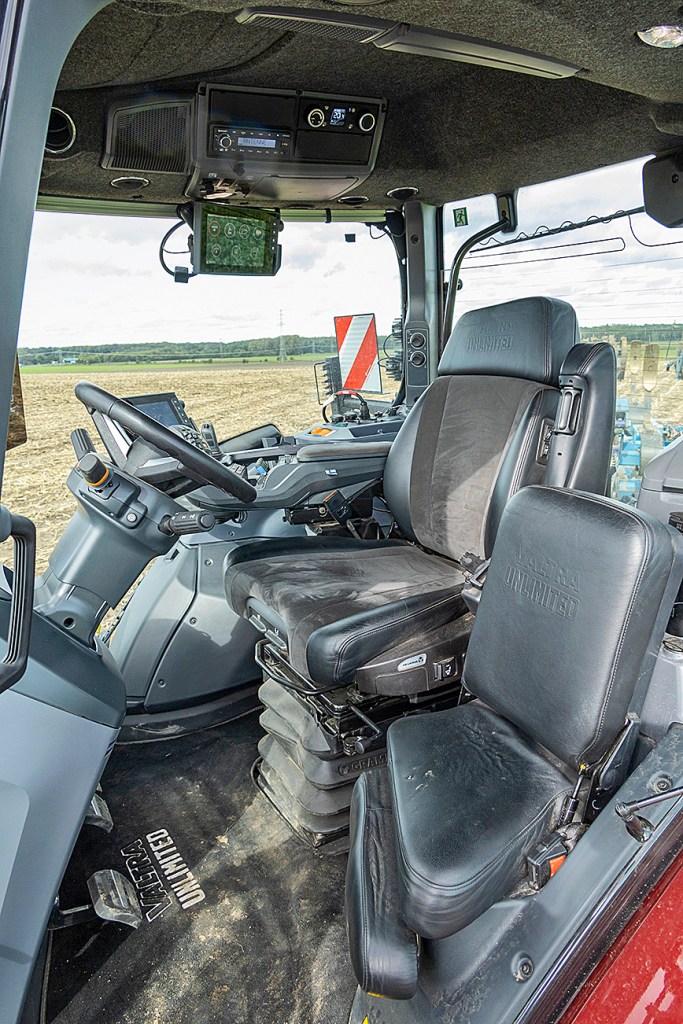
Yet, the current cab appears smaller and darker than the S280 with its four pillars and the huge, curved rear window providing excellent visibility.
And thanks to the pneumatic cab suspension, even today after 20 years, the ride comfort is nothing to sneeze at! Other spec details such as an automatic air-con system and electric and heated mirrors add to the ‘ahead of its time’ feel.
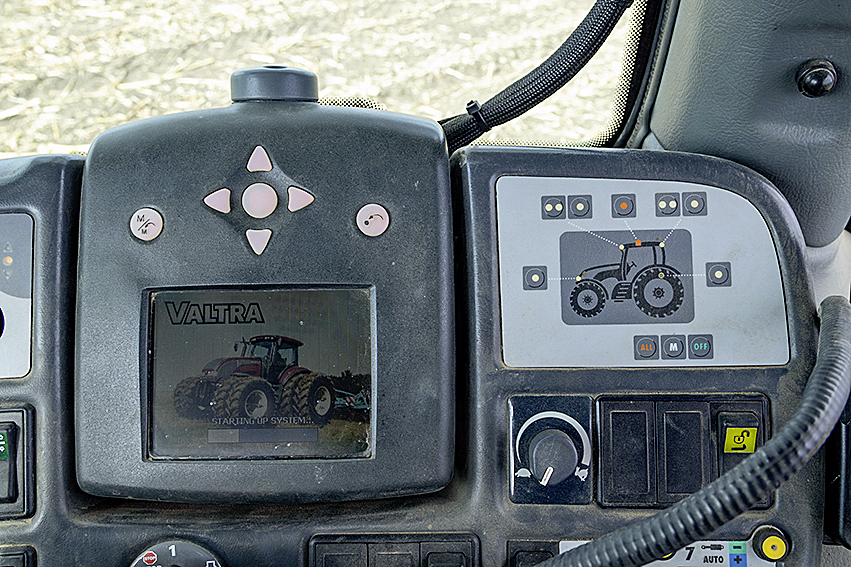
However, the original S didn’t have headland management. And that’s despite having a screen on the side console, and an on-board computer for programming, monitoring and data transfer (via chip card). Instead, this was used for assigning the three double-acting spools and the likes.
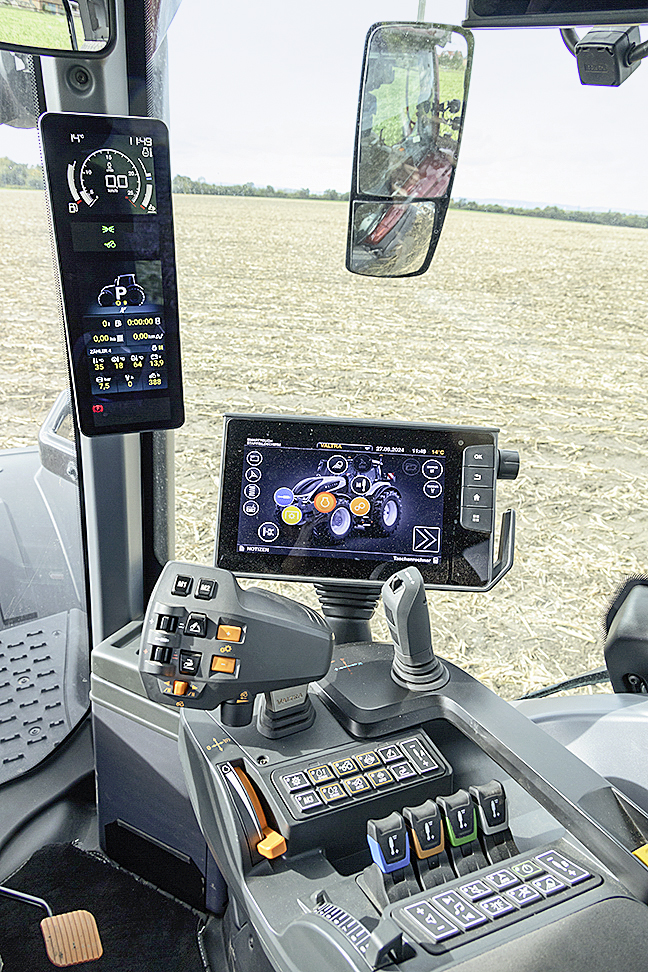
The electronically governed engine and cruise control function allowed the operator to programme any engine and pto speed as well as forward travel speed. Once set, the electronic system automatically moves its way around the four powershifts so it can try to remain within the desired speed range.
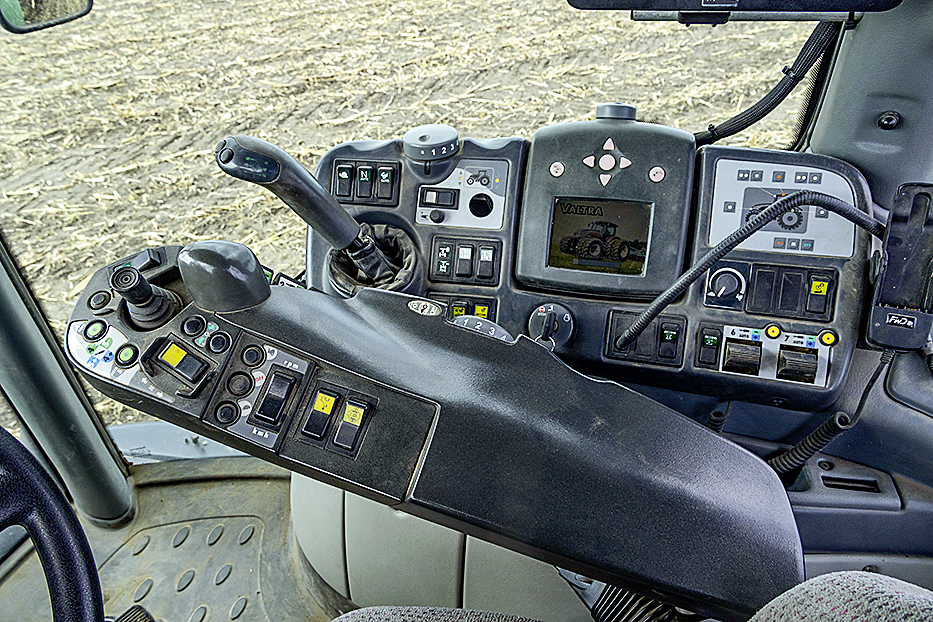
ZF’s T7300 transmission with the creeper box in the S280 offers a total of 40 forward and reverse gears from 480m/hr to a maximum of 50km/hr. Smooth pulling away is not an issue with the S416 courtesy of the stepless transmission, the AGCO ML260 box that has proven itself in various Fendt Vario 900 models.
Thrust
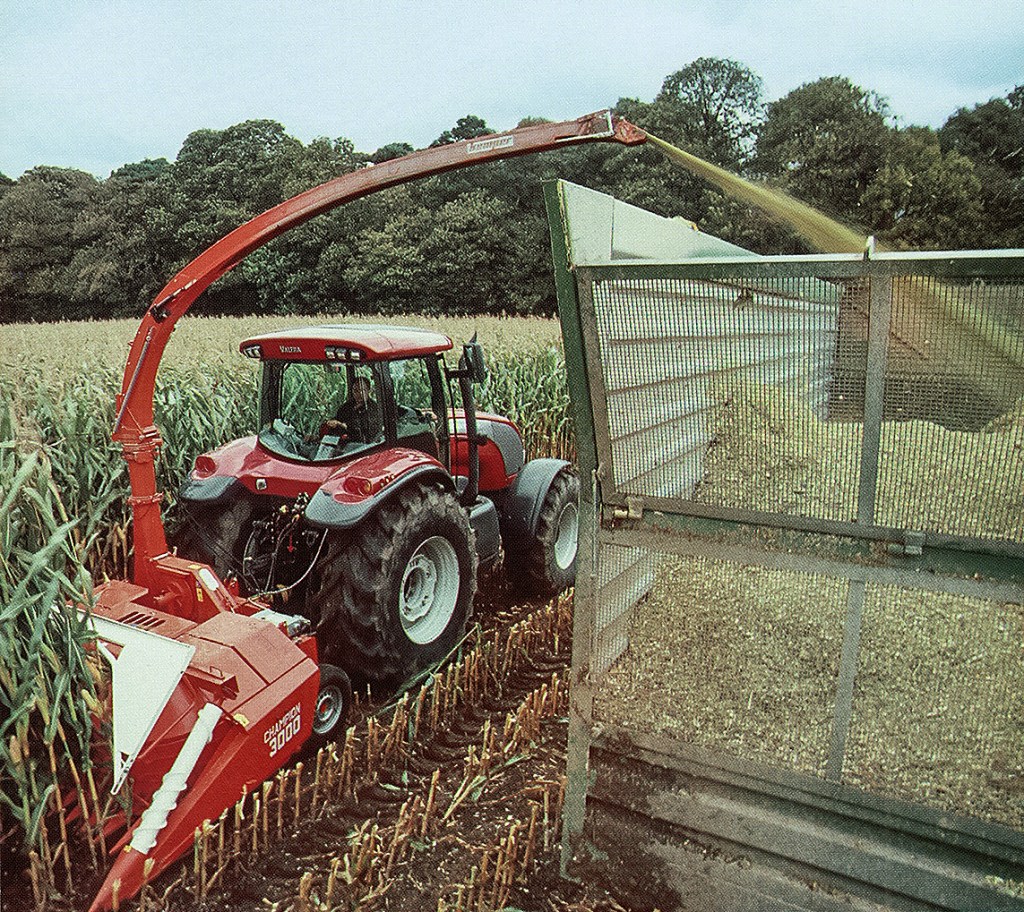
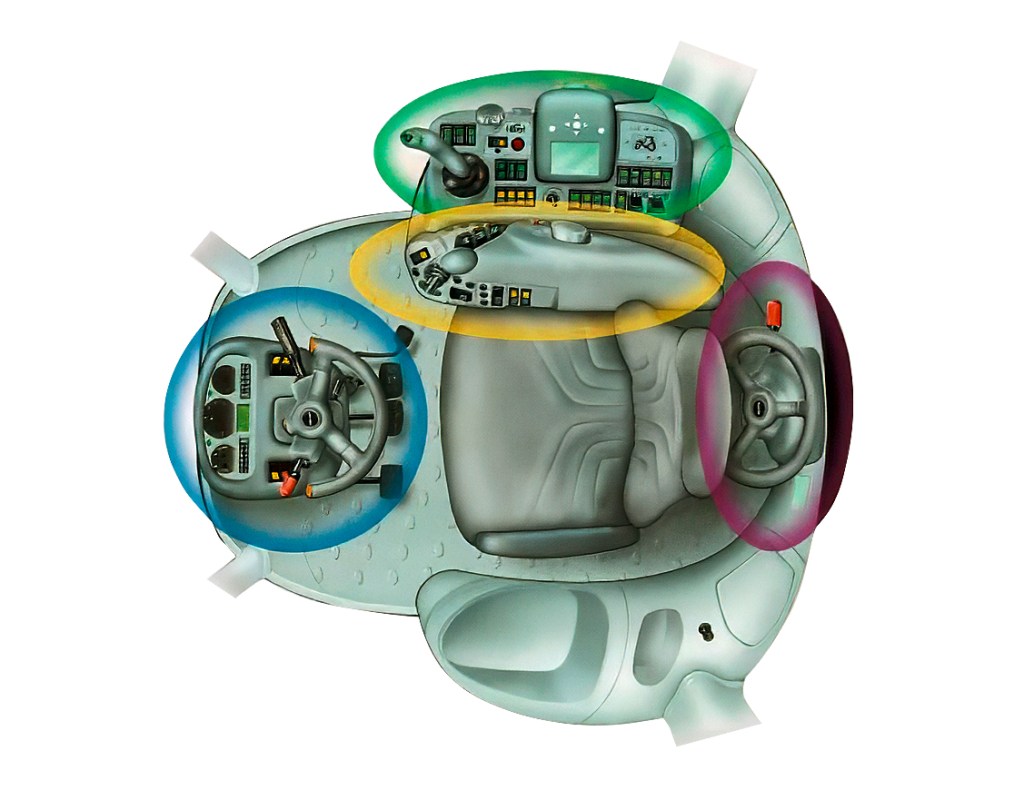
Valtra gave the S280 cab that big, curved rear window for a reason. These had the option of being fitted with the TwinTrac reverse-drive system. “This quickly turns a standard tractor into a carrier vehicle with the qualities of a self-propelled vehicle,” the Finns advertised at the time.
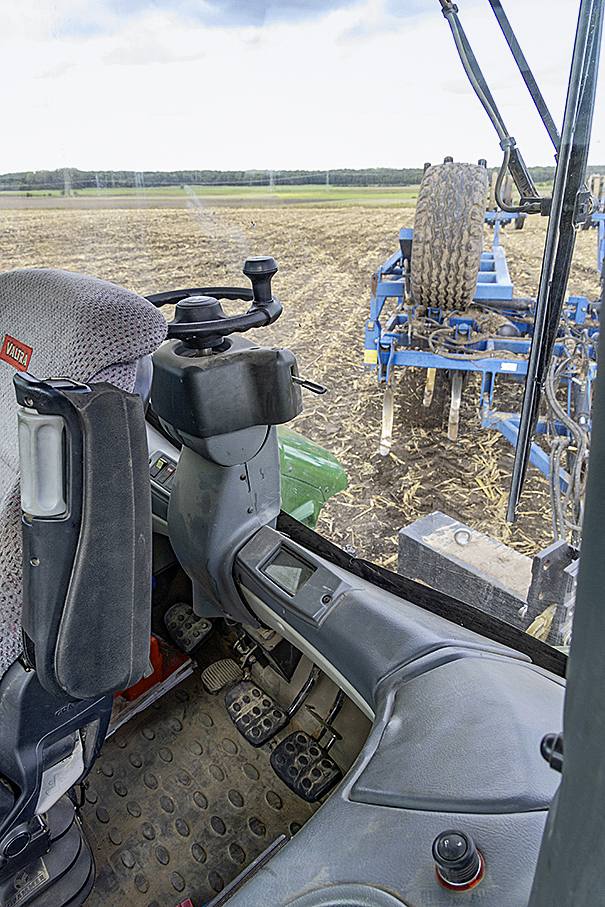
With TwinTrac, only the seat and armrest are rotated through 180⁰. The pedals, a steering wheel and two small displays were permanently integrated at the back of the cab.
After changing travel direction, a task that can be done in just a few seconds, drivers enjoy an unobstructed view of the forager, triple mowers or wood chopper through the panoramic window.
The system has proven itself — especially when operating a heavy-duty forestry mulcher or a crane. The S416, too, is still available with the optional reverse-drive system, which we tested during our driving impression (profi 2/2024), although new S owners don’t have the luxury of the large, curved window from the S280.
Powerful hydraulics
Moving to the rear, the S280 had up to seven spool valves! So, operating even demanding machines has never been an issue. It has a variable displacement pump with 147l/min and separate hydraulic oil reservoir.
The current Valtra S416 also scores highly in terms of its hydraulics. Two axial piston pumps are available as an option, delivering 200l/min + 200l/min of oil and supplying up to nine spools.
S to be intriguing used tractors
When the S-Series was launched, Valtra was still a niche name in many parts of Europe; as a result, big Finn models are still few and far between. Today that means, these first-generation S-Series are a rare find on the used market.
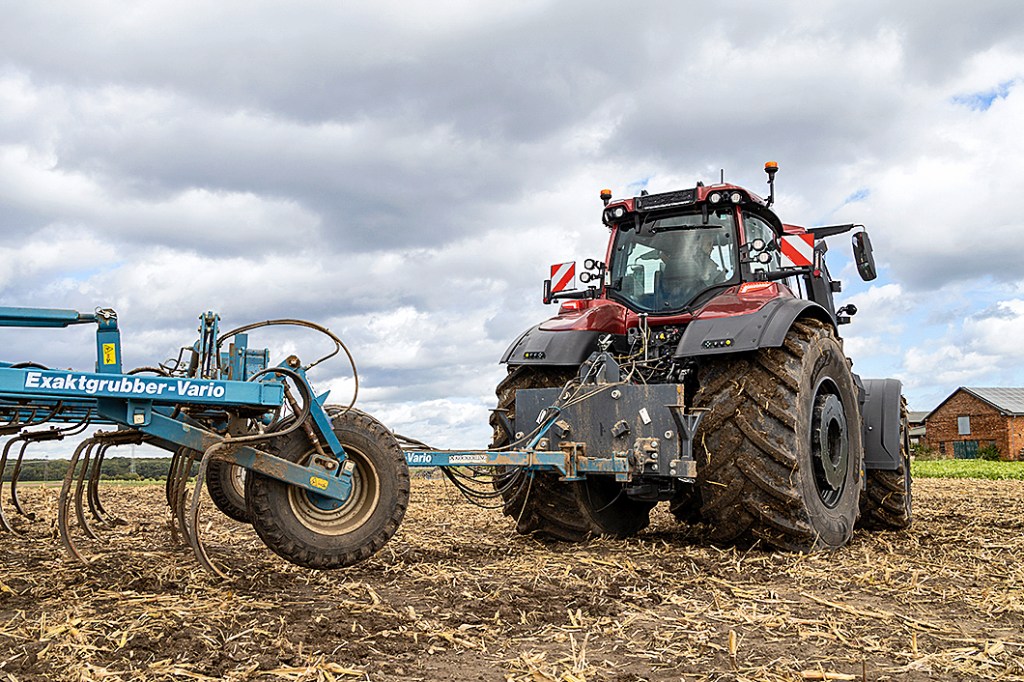
If you do come across one, they are often attractively priced. If you’re not afraid of electronics, you can get a lot of power for not a lot of investment. This is how the featured Valtra S280 came to its current owner near Hanover. The tractor has been tackling arable jobs for two years doing about 300 hours each season — certainly not enough of a workload to justify a new tractor of this size.
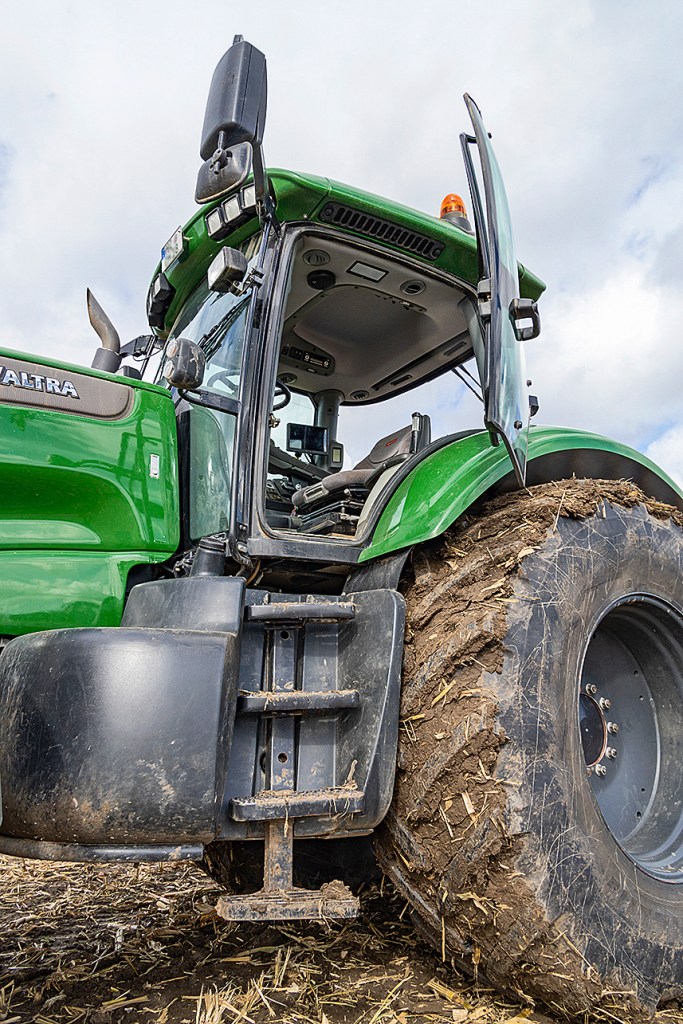
After initial issues with a seat contact switch, the rare Valtra, which had just 3,000 hours on the clock when it was bought, now handles the farm’s semi-mounted cultivators without any issues. The comfort of the still modern cab is a pleasure, helped by the hydraulically suspended front axle which was standard on the S280.
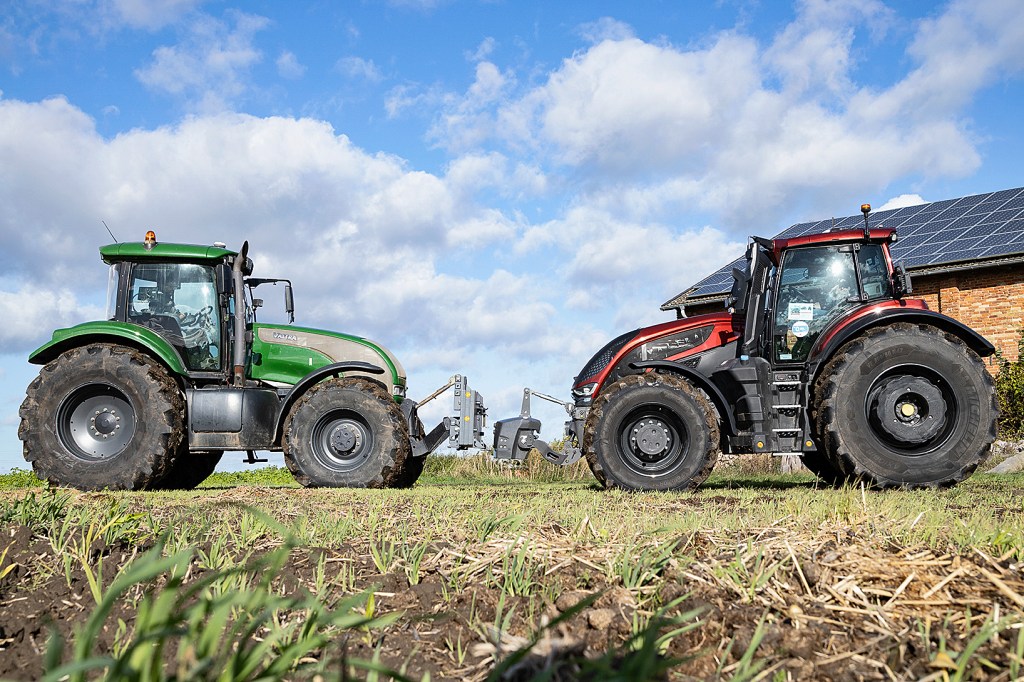
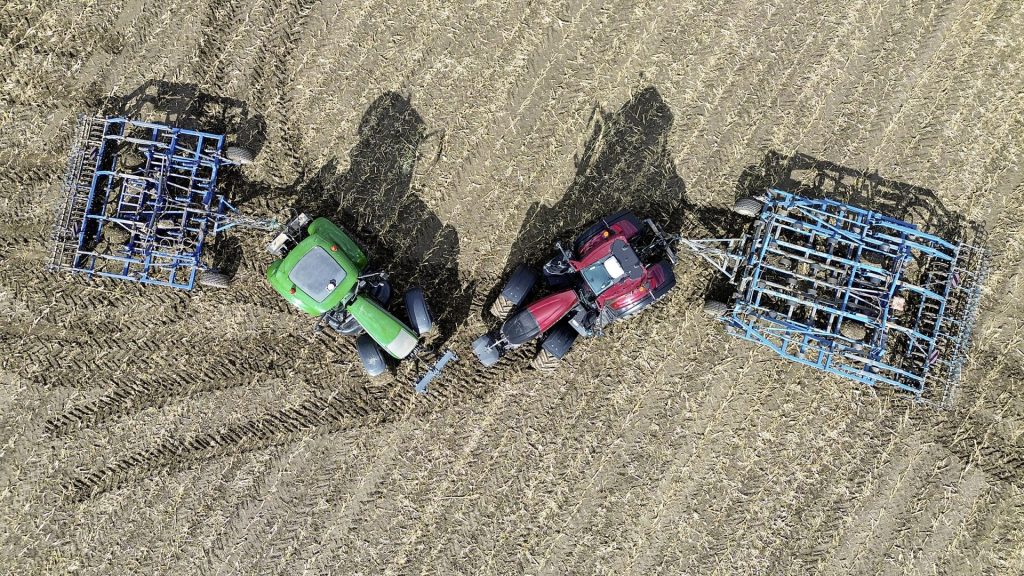
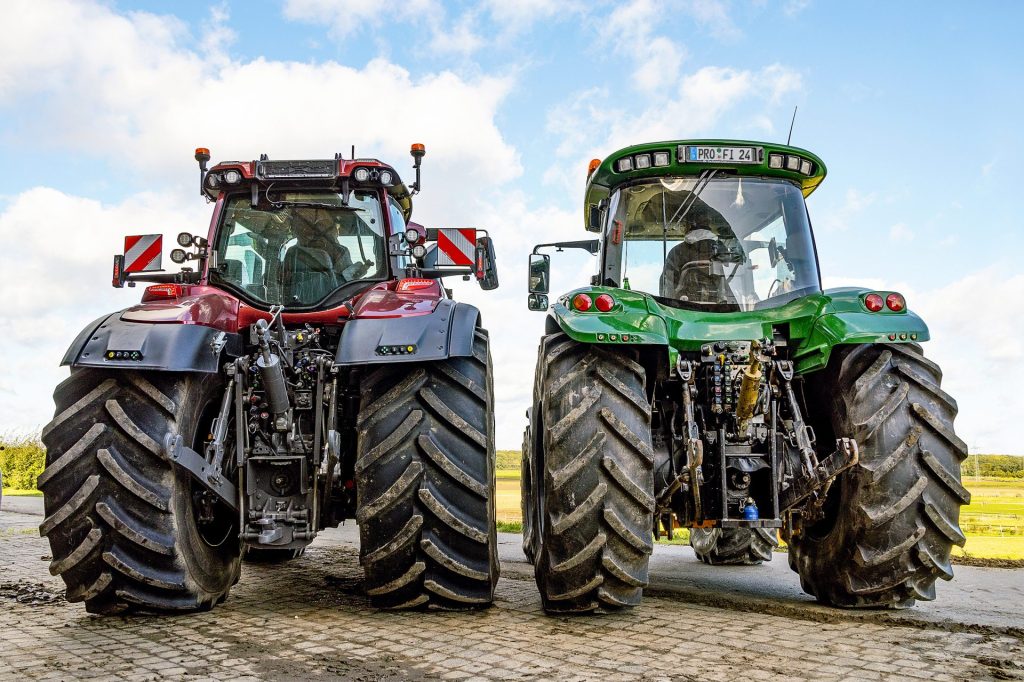
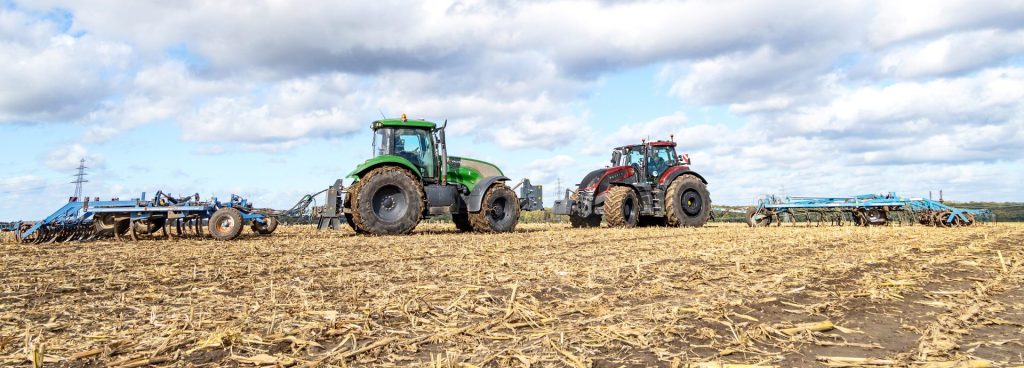
The different bright colours of our comparison candidates: at the launch of the S-Series in 2002, the customer could choose between different liveries, a unique policy in the tractor industry that Valtra still offers today. With the “Valtra Unlimited” package, there is now an even wider array of colours and factory-supplied options.
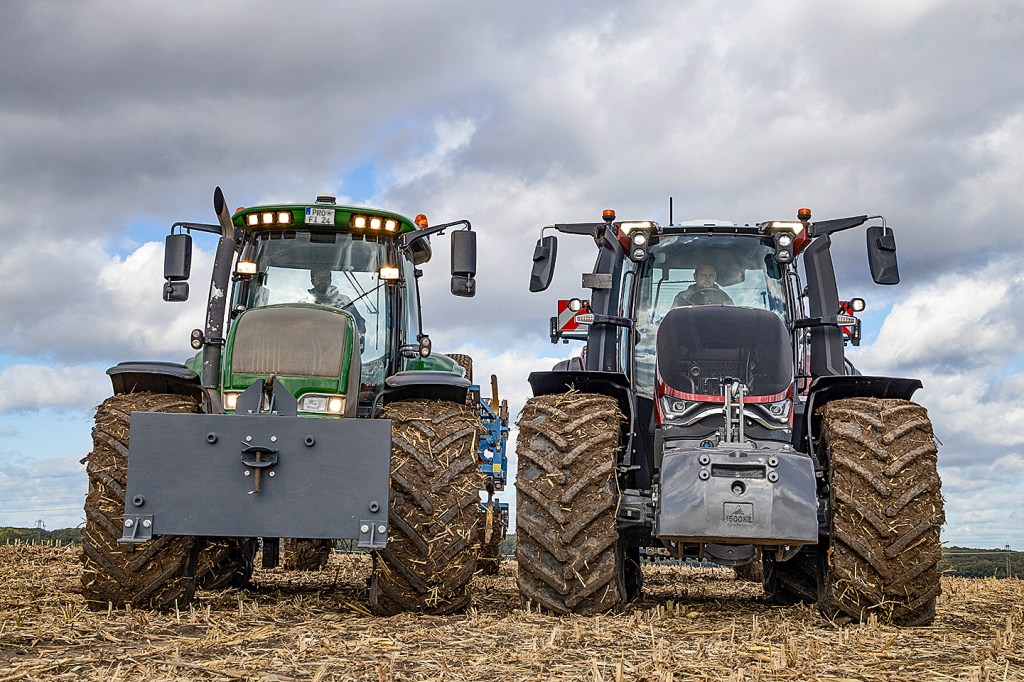
Further details
- The handbrake on the S280 is integrated into the powershuttle.
- The S416 has an air outlet and battery terminals by the left steps.
- An extendable ladder on the right-hand side of the S280 provides access to the right-hand mirror at an overall height of 3.20 metres.
Summary
In particular, the cab with the integrated TwinTrac reverse-drive system was a special feature of the first S-Series in 2002. Today, Valtra is part of AGCO, so current S-Series shares many of its components with Massey Ferguson’s large tractors.
Now the sixth generation is produced in Finland again: the S-Series, which the firm calls the “Boss”, is thus returning to its roots. The S416 is a serious contender thanks to its continuously variable transmission, extensive hydraulic kit and attractive spec details. In a direct comparison with its old predecessor, it wins above all in terms of comfort — even though the S280 set the bar high around 20 years ago.
Lucas Colsman
For more up-to-date farming news click here and subscribe now to profi and save.