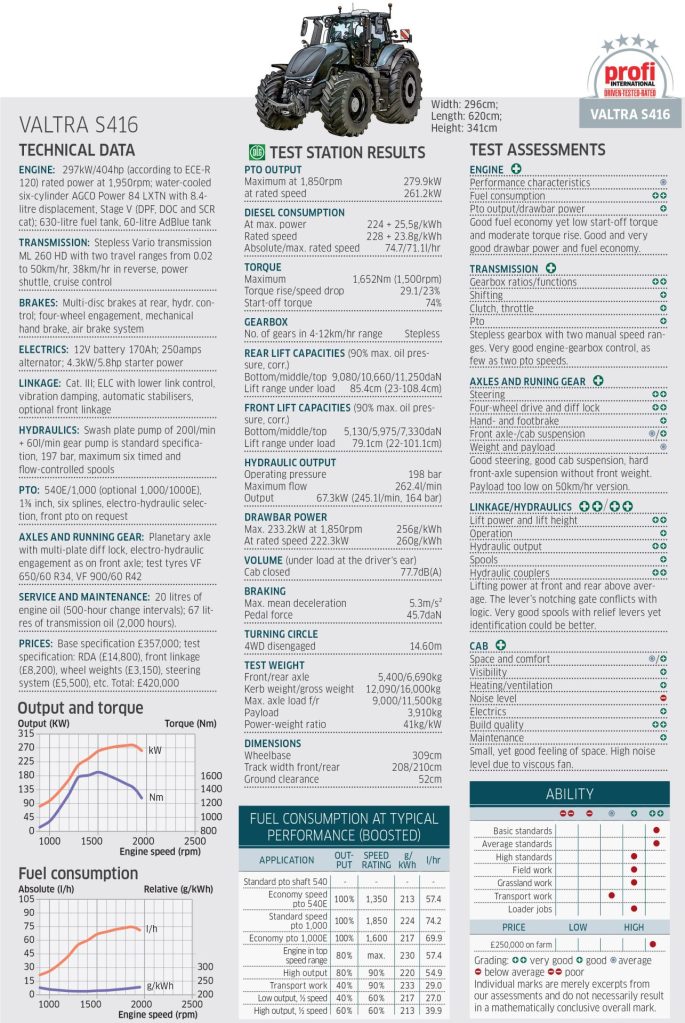


Maxing out at 425hp, our Valtra S416 certainly proved it had the muscle to handle heavy kit, but it was also a bit on the shouty side.
KEEPING IT BRIEF
- The six-model, 280hp to 420hp range is built at Valtra’s Suolahti plant in Finland.
- The viscous fan is loud, both inside and outside the cab.
- Engine-transmission management proved to be very slick.
It is now three years since production of Valtra’s flagship S-series returned home to Finland. About €38 million was invested in a new transmission production area at Suolahti so it could produce the stepless gearbox for the sixth generation S models in-house rather than shipping the Fendt developed ML260 HD box over 2,500km from Germany.
AGCO platform
The S-series tractor continues with its AGCO underpinnings, with engine, transmission, axles, linkage and hydraulics all shared with Massey Ferguson’s 9S. This common platform collaboration is also evident on the Valtra A and MF 5M as well as the Valtra Q and MF 8S. Time will tell if this strategy is rolled out further.
With its own cab and styling plus the choice of the ‘Unlimited’ options, Valtra certainly retains its own DNA.
A mean face
Back to our test steed, the S416. The front-end styling sparked a debate within our tractor test crew — some were getting Star Wars ‘Stormtrooper’ vibes, while others were far less complimentary. Admittedly, Valtra may have picked up a few design awards over the years, but then tastes differ…
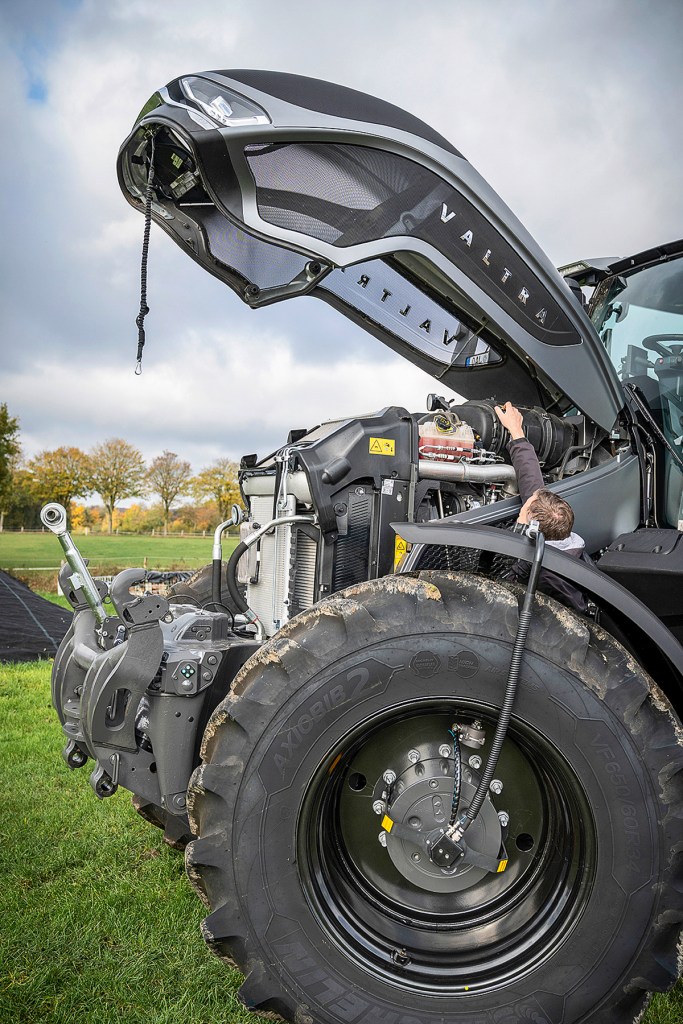
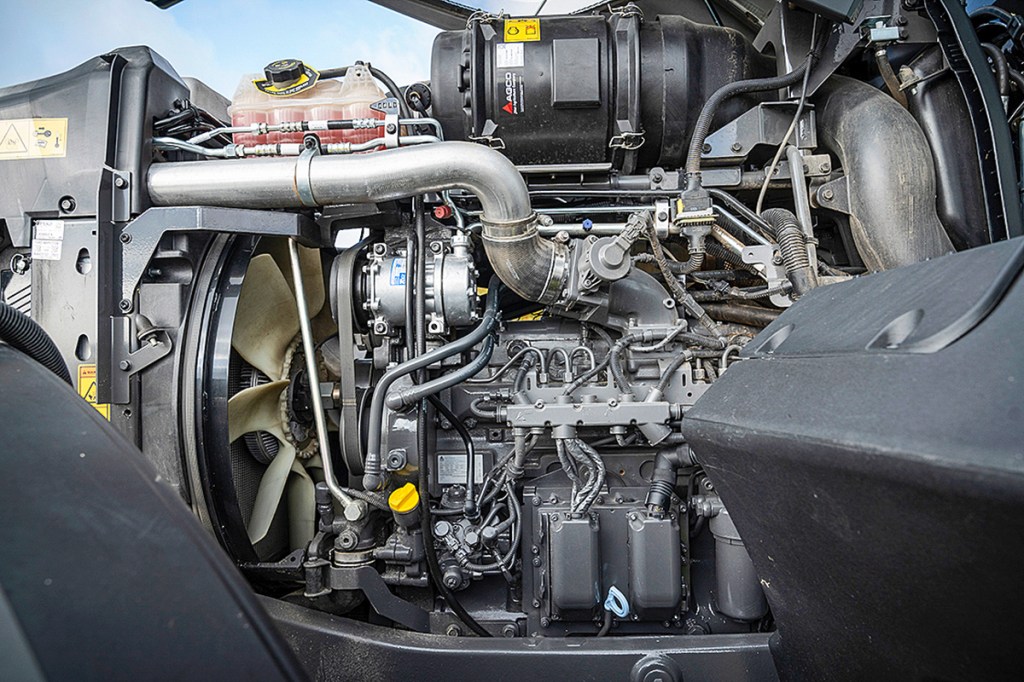
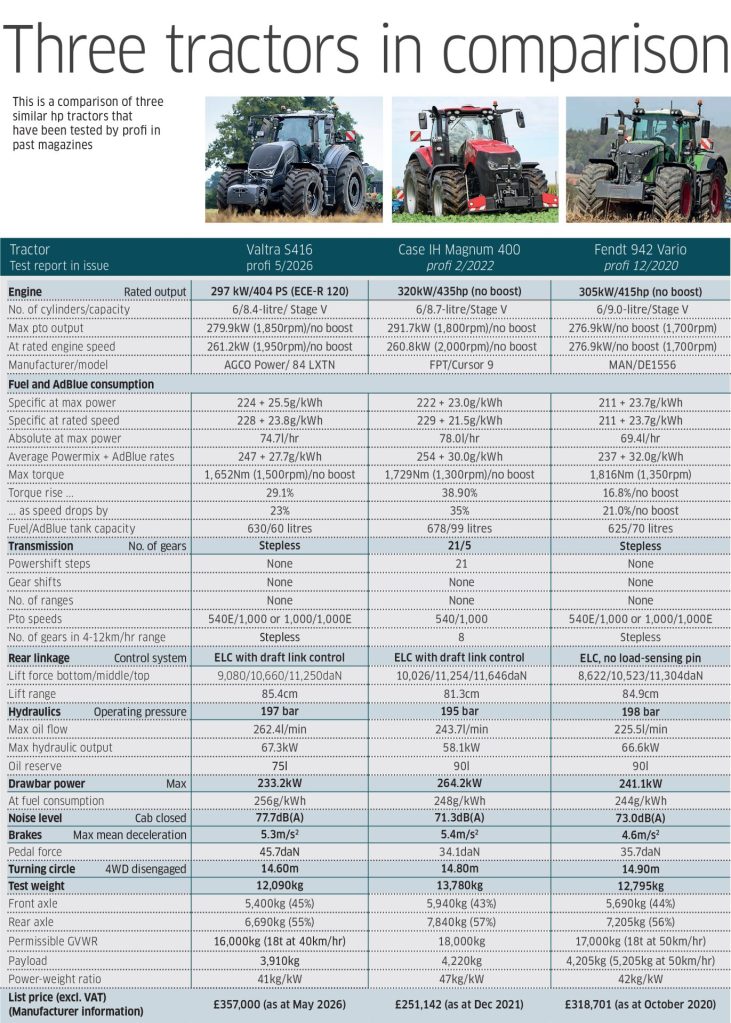
Much more important is what’s underneath that big bonnet, which opens nice and wide to reveal the 8.4-litre AGCO Power engine that delivers up to 425hp. And since the top model doesn’t have boost, this power is always available — excellent. The S286, S316, S346, S376 and S396 have a 20-30hp boost. At rated speed (1,950rpm), the DLG measured 261kW/355hp at the pto with a maximum of 280kW/381hp at 1,850rpm — that’s spot on.
The S416 delivers its peak torque of 1,652 Nm at 1,500rpm. Torque rise is only 29% and start-off torque is also fairly modest at just 74%. In practice, though, the good engine-transmission control means that this is rarely a problem.
Frugal in the field
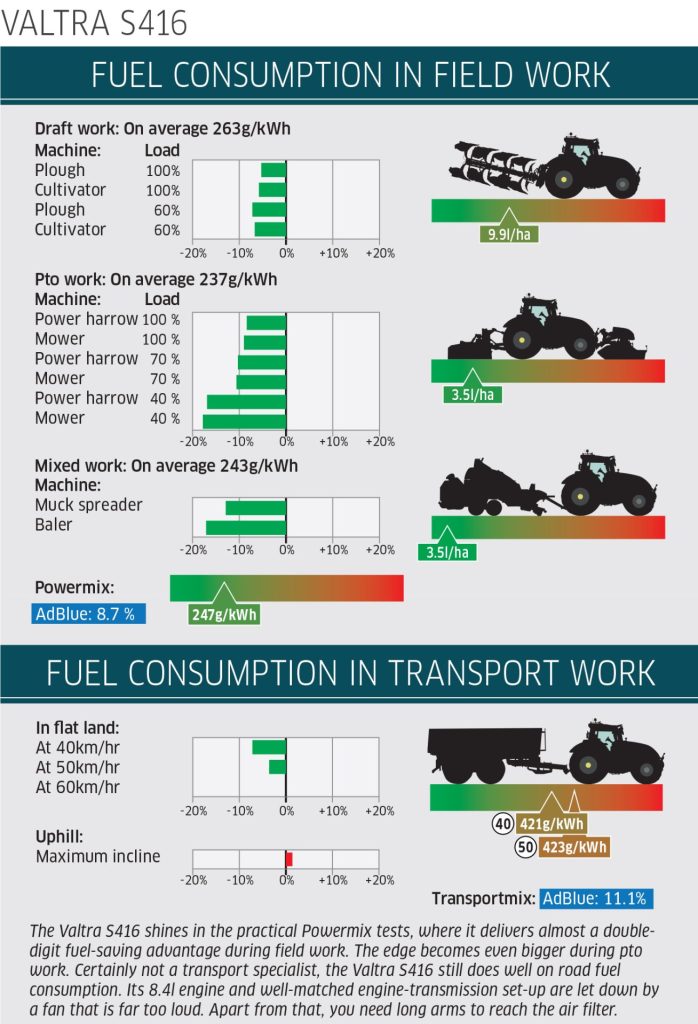
The S-Series manages without exhaust gas recirculation, which is very good news for combustion. At maximum pto power, 74.7l/hr is pumped into the six cylinders, which works out at a frugal 224g/kWh. To meet Stage V it needs 25.5g/kWh of AdBlue at full load (6.49l/hr).
The S-Series also slots in among the more economical contenders on the DLG rolling road test. During heavy drawbar work, the Valtra S416 averaged 263g/kWh, making it almost 7% more fuel use efficient than our current tractor tested average. The fuel advantage is even greater for pto work, at 12.9%!
The figures were not so good for the road transport tests, where the big Valtra used just under 1.0% more fuel than the test average at 40km/hr, and 4.5% more diesel at 50km/hr.
For the law-abiding road goer (and where the law allows), you need to be aware that the 50km/hr version of the S-series has a rated gross weight of 16t. It already weighs 12t before adding a typical 1,500kg front weight block and then 1,500kg of wheels weights. That leaves you with a payload of just 1,000kg, which is clearly far too little. At 40km/hr, the allowable gross weight increases to 18t. Looking at these stats, the big S416 belongs in the field rather than tackling road work.
Speaking of arable fieldwork, the DLG test centre measured a max drawbar power of 233kW/317hp. That is by no means a power record, but the fuel consumption of just 256g/kWh is excellent. The same goes for our overall Powermix result of 247g/kWh, although you need to add 27g/kWh of AdBlue. This also means the 60-litre DEF tank only lasts about as long as a good fill of the 630-litre fuel tank.
Still too loud
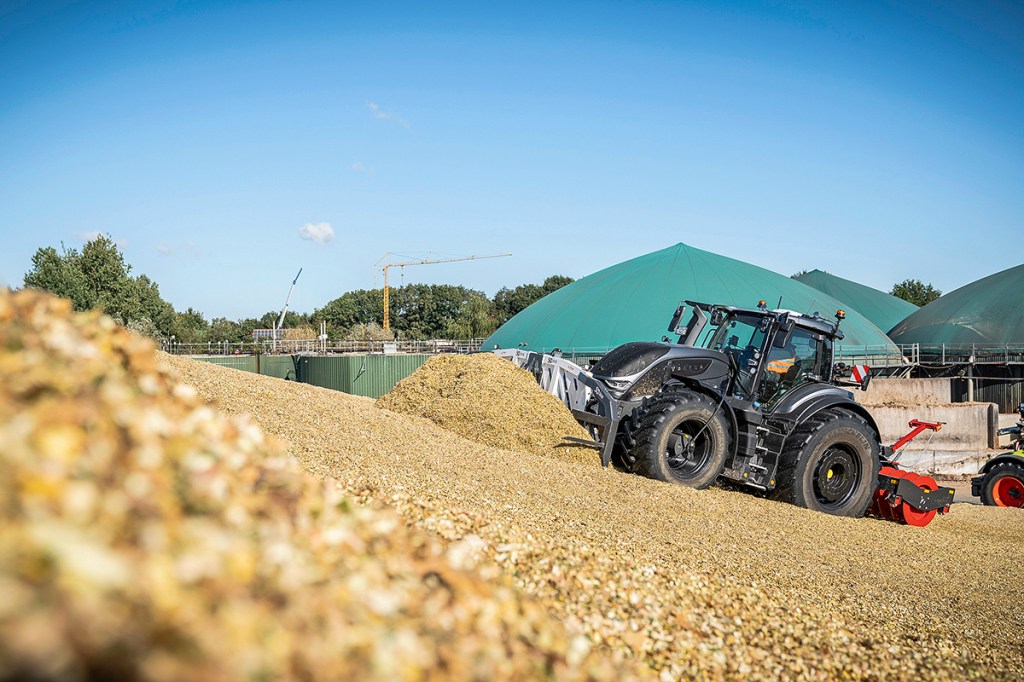
The electronically controlled viscous fan reliably cools the engine, but because it also acts as an engine brake on the road, you can hear the Valtra from a long way off. When we were chopping forage maize, the neighbours didn’t complain about the noise from the self-propelled, but the fan noise coming from the Valtra which was working on the clamp.
In fact, we measured over 100dB(A) outside the cab while working! And, no matter how well Valtra says the cab is insulated, nearly 78dB(A) reaches the driver’s ear. To put that into perspective, most of the competitors we have tested are at around 71dB(A).
Valtra is aware that this is an issue and is looking to update the fan control software. We will do a follow-up measurement to see what difference this makes. By contrast, the air horns on the roof are too quiet: not enough pressure.
Good software
Valtra has got engine-transmission tuning spot on. The electronics, too, impressed — both in heavy field work and pushing up maize on the clamp, responsively controlling the engine and transmission. According to Valtra, the ML260 HD is perfectly capable of handling the extra horsepower without any issues.
Our only criticism is with having to manually shift between the low and high ranges. The buttons for this are prominently positioned on the main joystick, which could be better occupied by two assignable buttons. For the pto, you have to choose between 540E/ 1,000 or 1,000/1,000E.
Hydraulic box ticked
When it comes to the hydraulics, the new S ticks all the boxes. Standard spec includes a 200l/min swashplate pump with an extra 60l/min supplied by a gear pump. But if that is not enough, a second piston pump can be fitted to up the oil flow to 400l/min. Our test tractor had the standard set-up but still achieved a maximum flow rate of 262l/min, giving 67.3kW of hydraulic power.
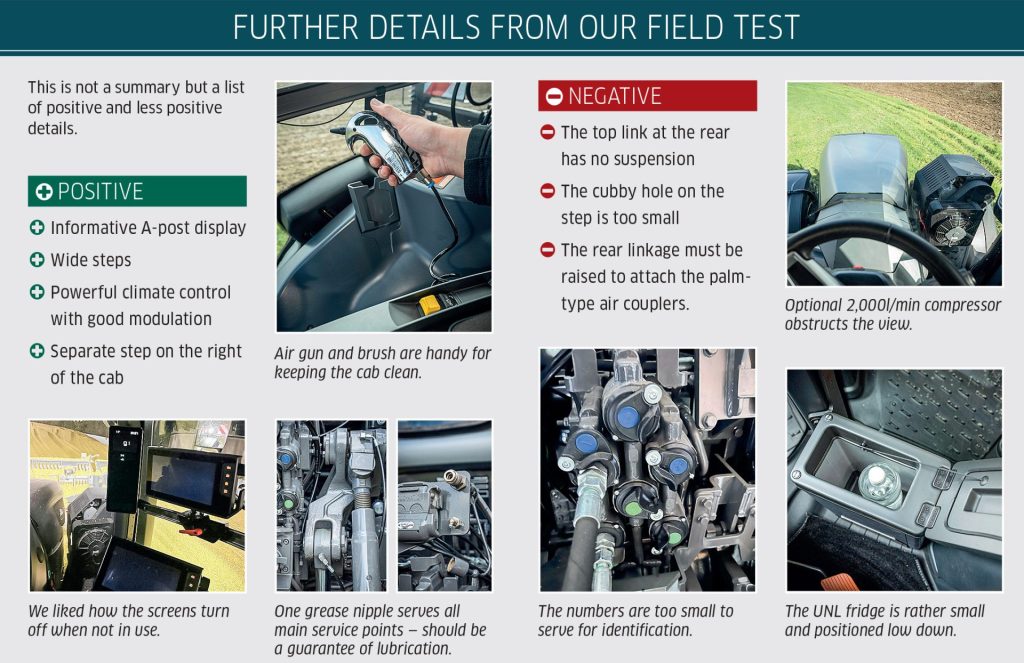
All six spools are fitted with relief levers and are easy to plug into. We do think that the coupler labelling could be better: the colours for flow direction are fine, but the numbering for each individual spool is still not obvious enough. In the cab, you do not immediately know which spool should be assigned to which control lever or rocker switch. Aside from that small grumble, we were very impressed by the programming in SmartTouch.
Plenty of lift
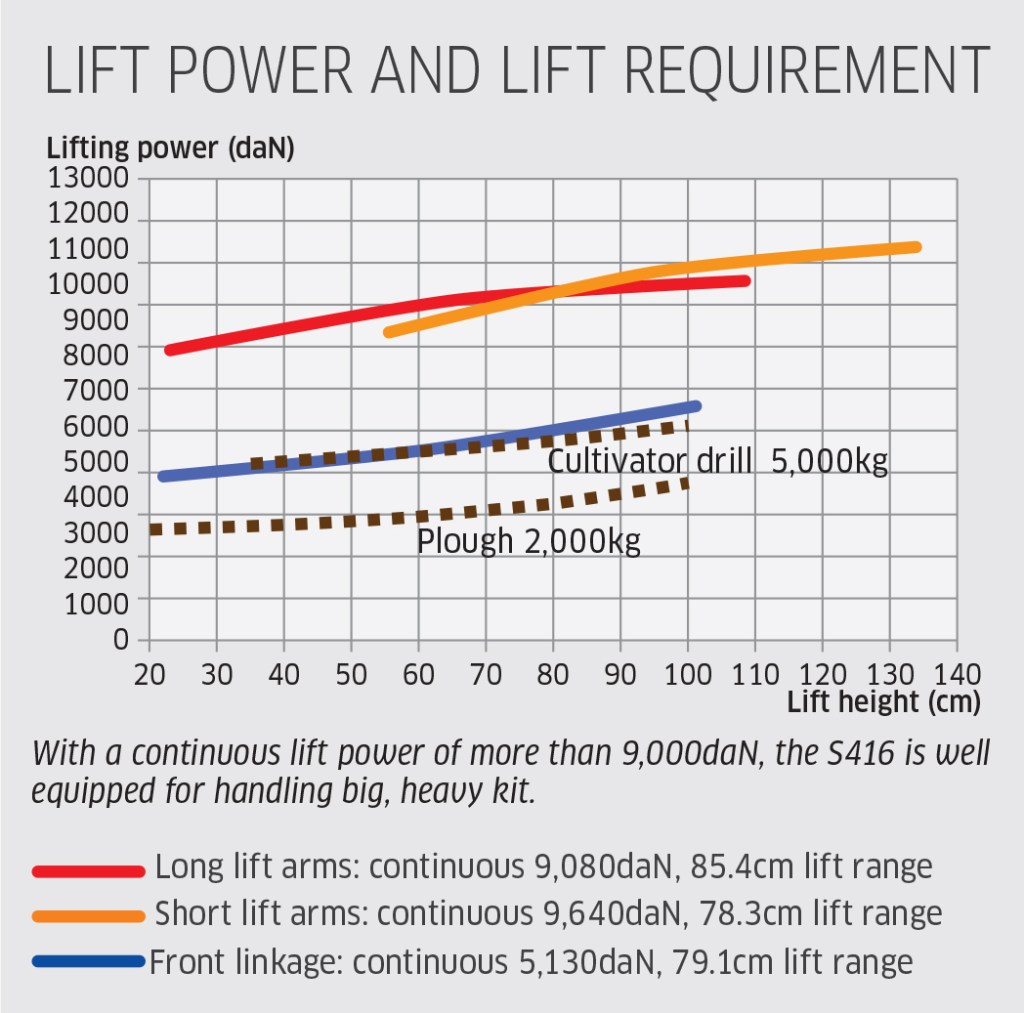
There is no problem with the capacity of either the rear or front linkage. More than 11,000daN with the standard lift rams and a massive lift range of almost 85cm is excellent. With linkage damping engaged, the tractor tends to bounce with heavy mounted implements; the ride was actually a lot better when it was turned off.
The front linkage set-up is a solid lump of engineering capable of working with wide maize dozer blades. However, the crossbar between the two lift arms reduces the amount of available space, so not all front weights can be attached.
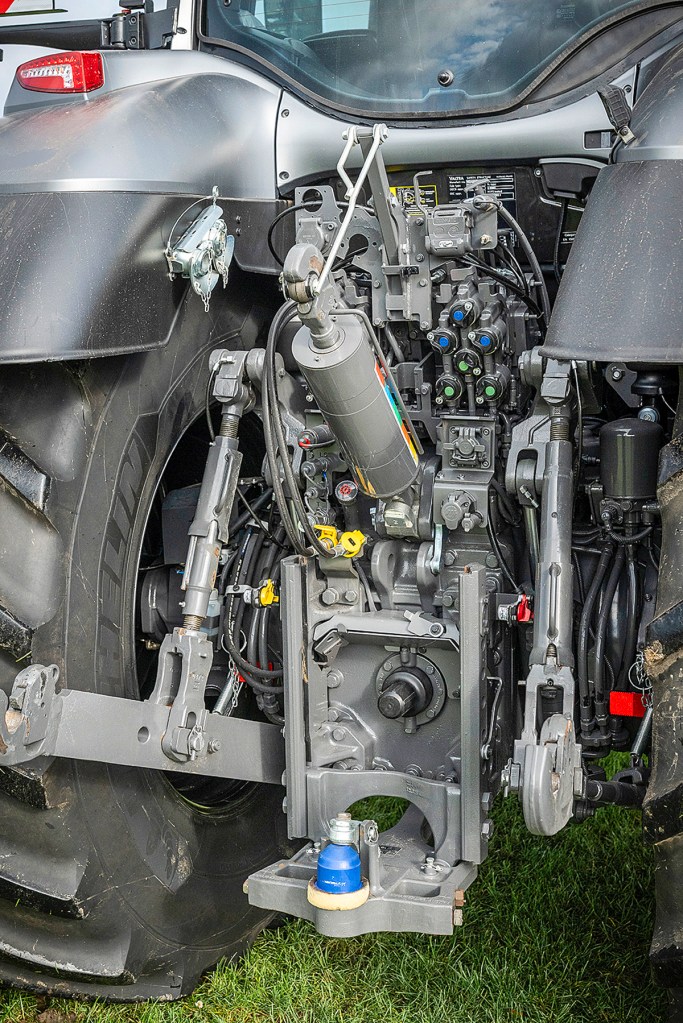
The transport folding design for the lower links is also unusual. An additional small hydraulic cylinder allows the lift arms to be folded into their vertical position without having to refit any pins. It is also a lot easier on operators’ backs, but the proportional control should be improved. Be warned: you need to keep your fingers clear before the lower links snap up!
Smart touch
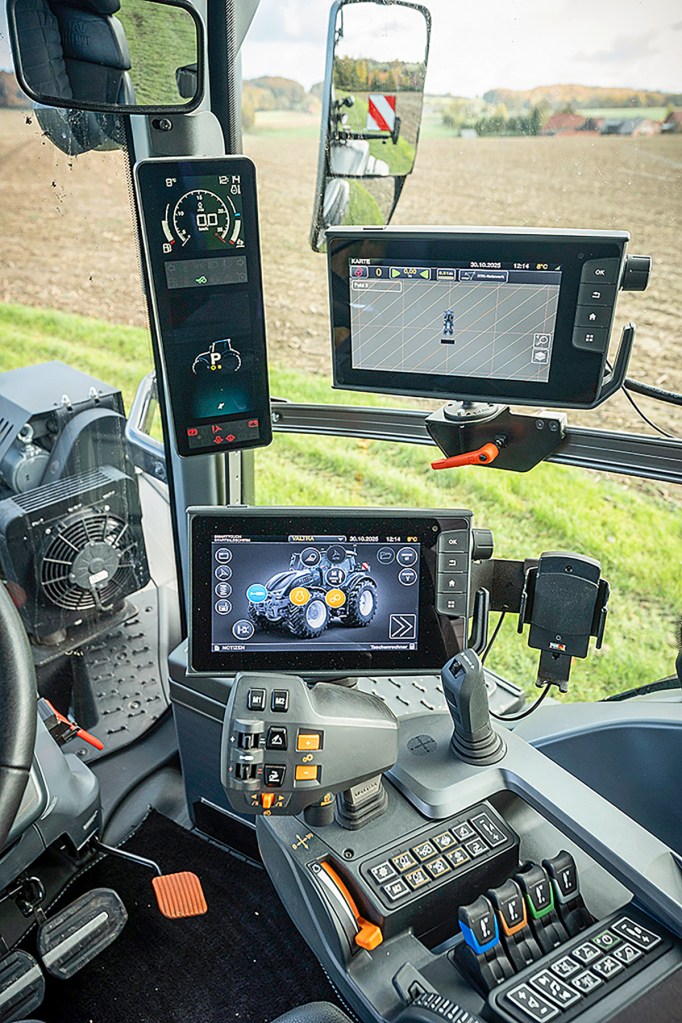
The ‘SmartTouch’ system is intuitive to use, although unlocking the functions after the engine is started could be a little easier. The functions on the armrest display are self-explanatory, and this screen, along with the one on the A-post, show the information brilliantly. The option to switch the terminal lights off in the dark, for example, is useful. It would be better, though, if the brightness could be dimmed even further.
Setting up the M-buttons on the drive lever is pretty straightforward. The lever earns both test praise and criticism. For example, deactivating cruise control with a right kick requires the latest software update. The detent function for the linkage rocker is pointless if the linkage is programmed via the headland management system.
Compact but classy cab
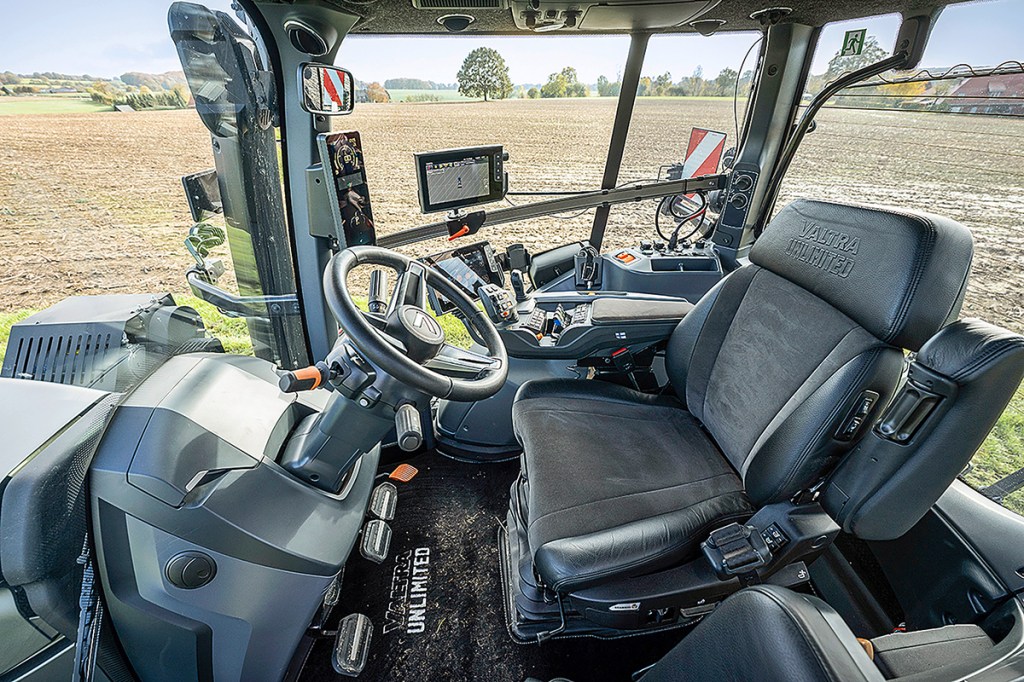
The cab on our big Valtra came in a snazzy dark trim. The air conditioning, with plenty of vents in the cab, and the simple separate controls was well received by our users. They were less impressed, however, with the springless folding steering column — the small grippy wheel literally drops into your lap once you press the foot release. The wide steps offer plenty of grip; our only grumble here is the low inside door handle. Speaking of access, the compressed-air connection, cab step lights and the power terminals for the likes of a diesel bowser pump (not for jump-starting) are practical. On the right-hand side is the handy cubby, which will take a standard toolbox.
However, the pull-out section shouldn’t be used as a step for cleaning the window — the plastic moulding is not beefy enough for this job.
How much?
All this power and performance doesn’t come cheap. In basic trim, the S416 already costs £357,000. On top of that are bigger-ticket items such as tyres (£35,700 extra), the tyre pressure control system including 2,000l/min auxiliary compressor (£18,150) as well as auto-steer and additional ballast weights. List price for our test tractor was north of £420,000.
Summary
With the S-series, Valtra once again offers a genuine Finn. The S416 impresses with good performance stats and low fuel use. As a 50k tractor, however, the 16t gross weight is a turn-off. In the field, the Valtra S416 scores with its engine-transmission management and fuel economy — especially when on pto work. The fan noise, and the cab noise that comes with it, are something Valtra really needs (and plans) to address.
Tobias Bensing
For more up-to-date farming news click here and subscribe now to profi and save.