
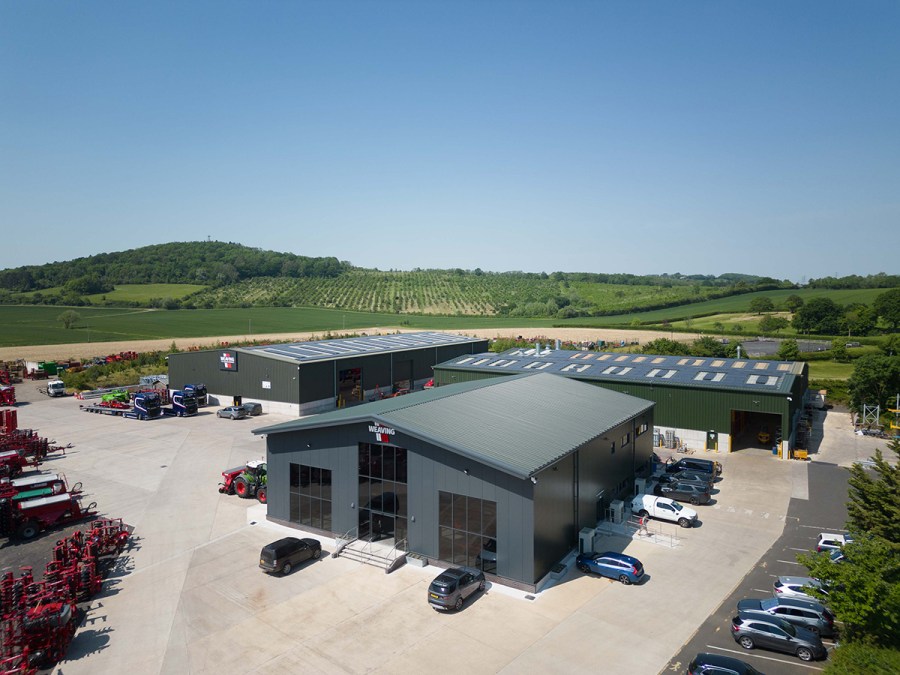
The expanding business of this leading British manufacturer of drills and machinery is now accommodated in new production and office facilities at the family’s farm in Worcestershire.
Originally established in 1983 as Edward Weaving Ltd by Edward and Julia Weaving, the business is now run by the second generation, brother and sister Simon and Sarie Weaving who joined the company after pursuing careers elsewhere.
Simon is Sales Director, focusing on developing and selling the ever-expanding range of machines while Sarie oversees the finance, administrative and marketing functions.
But the business journey began with Edward Weaving buying and selling used machinery, before becoming an importer and eventually a manufacturer, Simon explains.
“Having begun as importers of the Orsi range of flail mowing and hedge cutting equipment, the distributorship then expanded into arable machinery with the Sigma power harrow, which was paired with the Eastern European Mistral drill to make a combi drill.
“A trip to Dallas in 1996 sparked Dad’s interest in direct drilling, and the Krause no-till was added to the import portfolio for a decade before Krause was acquired by Kuhn.
“We then developed our own disc drill, the first of which was the Big Disc. An early customer was Tony Gent, who suggested an improved coulter prototype that eventually became the GD coulter, leading to the launch of the GD Disc Drill a few years later.”
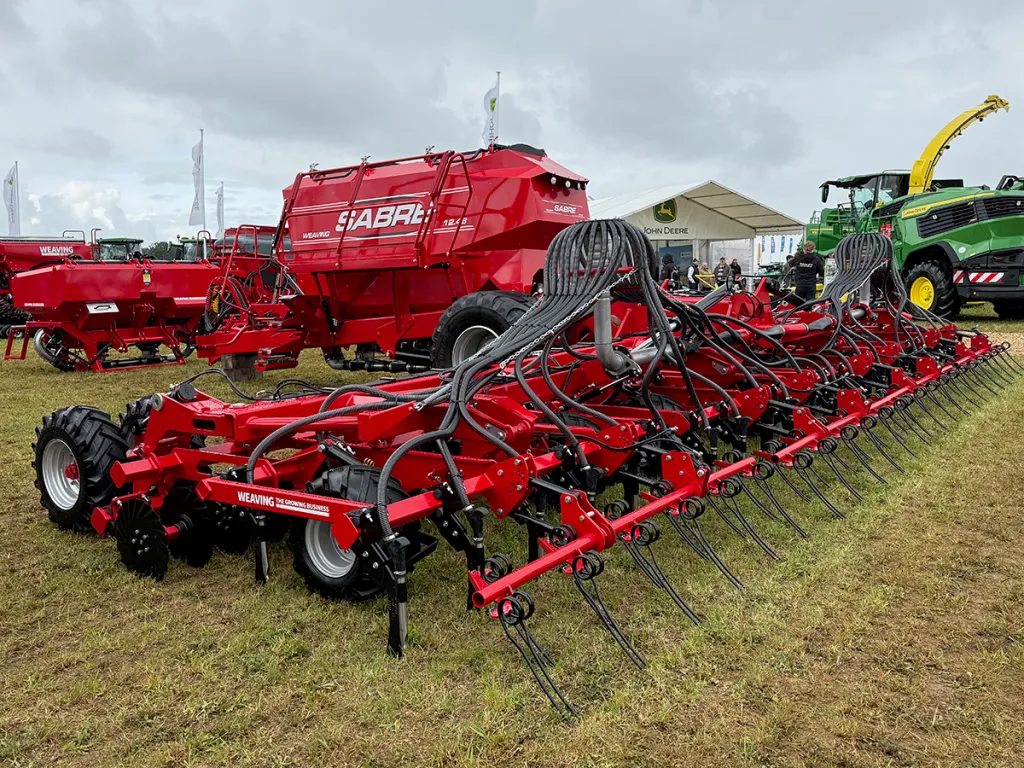
Similarly, the Weaving Tine Drill paved the way for the first iteration of the Sabre Tine Drill, revamped in 2020 as the Sabre drill, with a 12m model – the company’s first of this size – launched at Cereals 2026.
Weaving Machinery’s production facility is based on the family farm at Chadbury, near Evesham, alongside the sales, administration and parts operation. The 3ha site has undergone a dramatic transformation in recent years.
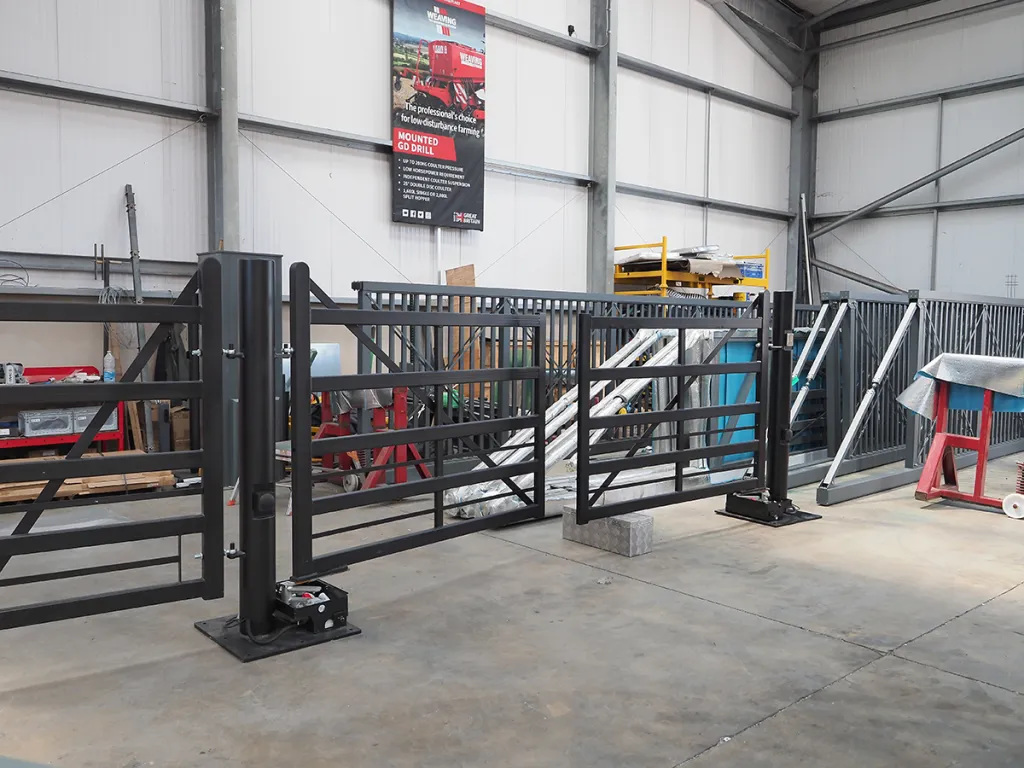
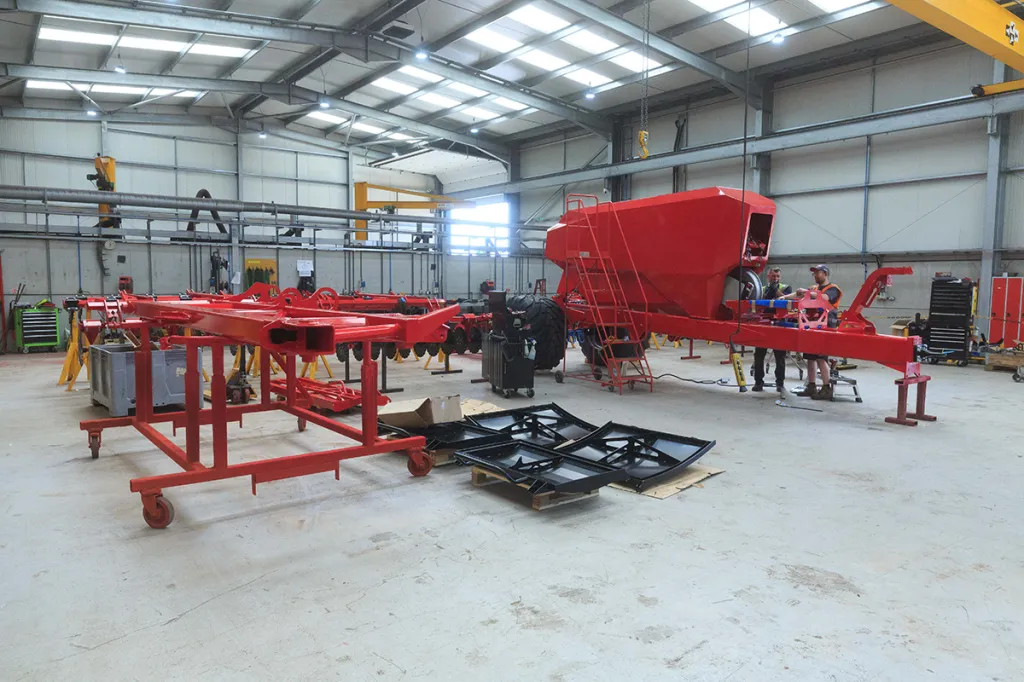
First the 1900sqm production hall was upgraded in 2022, with a new building constructed over the top of the original factory with additional roof height to allow overhead cranes to be installed. A second ‘shed’ is used for PDI and refurbishment work, and houses the stores and the company’s electric gates business – this also got a facelift.
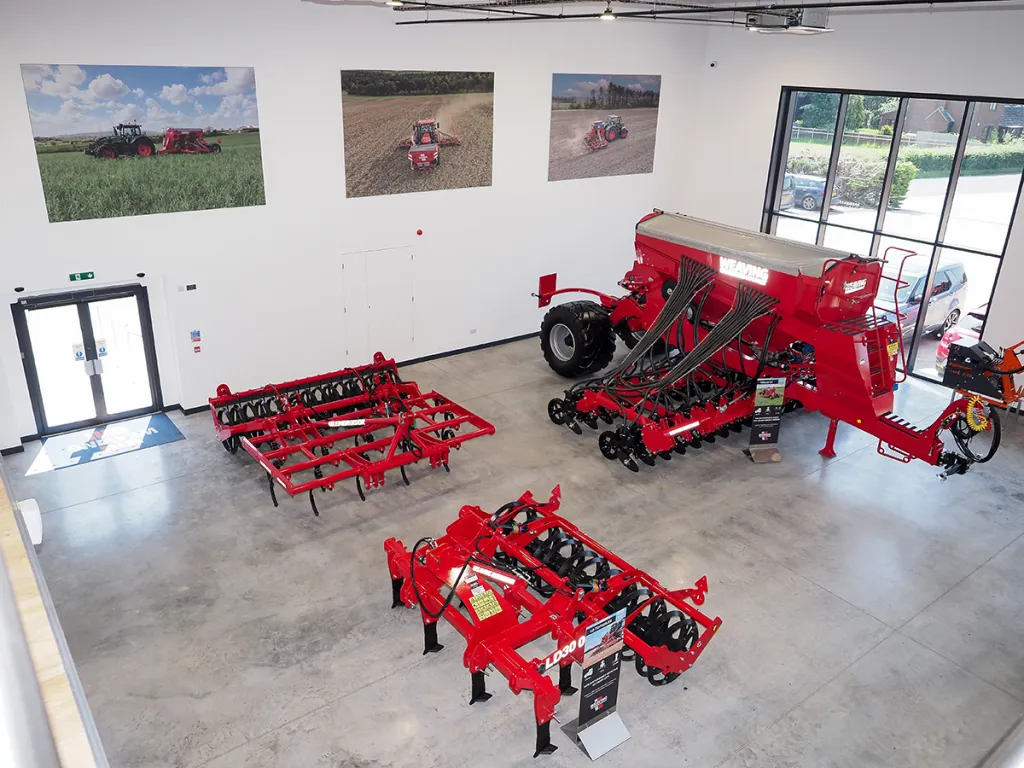
Then a new office and showroom facility was built, allowing the team to move out of a former potato shed – via a spell in portakabins – which had also housed the parts store and retail desk. It was formally opened by Andrew Ward MBE in May 2026.
On the production line
Superflap steel is bought forward, mainly from Sweden, and is cut and folded by a range of local laser cut specialists.
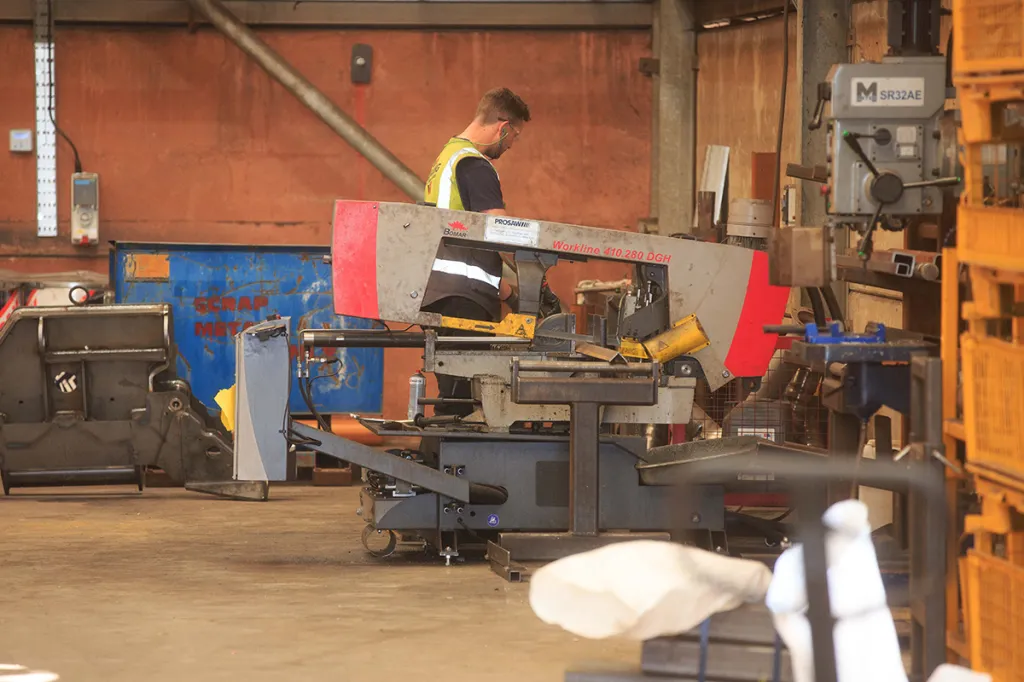
“We’re lucky that there is still a strong tradition of industry locally, which gives us a choice of fabricators. We still keep an old saw, mainly to help customers out if their machines have had an accident!” comments Simon Weaving. “Similarly, we buy all pins and bushes from a company in nearby Pershore.”
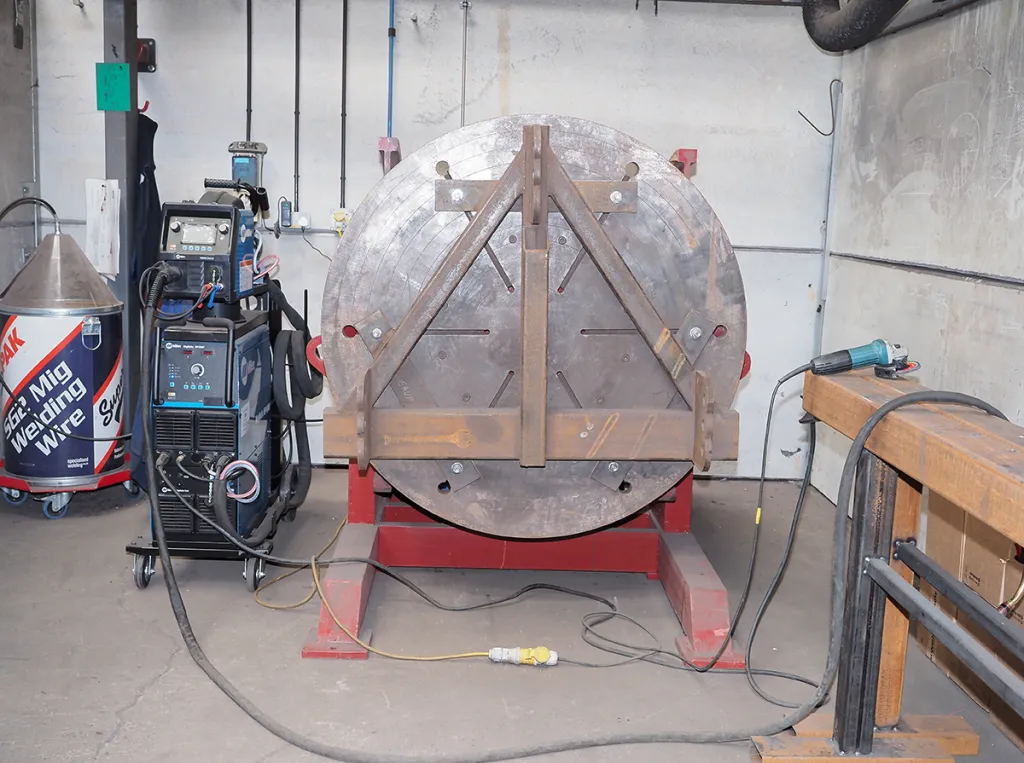
Steel components are welded in three bays, one of which has a rotator for the item being welded to make it easier to handle; each has an overhead gas supply and extraction.
Welding equipment was upgraded in 2022 to synergic pulse welders which use 50% less gas, 50% less power and are anti-spatter so cleaning time is reduced.
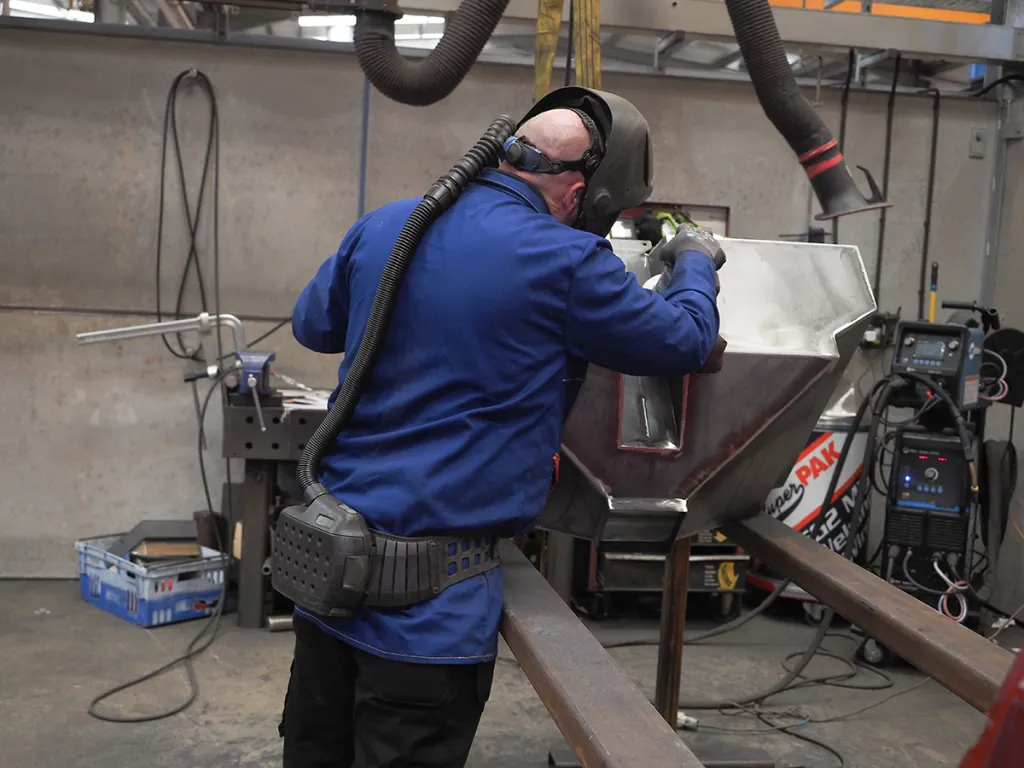
Swapping from 15kg packs of welding wire to marathon packs with 450kg of wire which are refilled, avoiding the need to dispose of cardboard boxes and reels, reduces waste and downtime. Each pack lasts for 55km of welds.
Robotic welding maybe on the agenda in future, Simon suggests; he embraces investment in technology – for example a 3D printer has proved a useful addition for prototyping and brainstorming product developments.
Welds are finished with a grinder if necessary, ready for shot blasting.
Shot blasting
“We used to have three people on grinders to get components ready for paint, so we took a massive gamble in purchasing a Kube automatic shot blaster which now prepares a complete Sabre drill in about 12 minutes,” Simon explains.
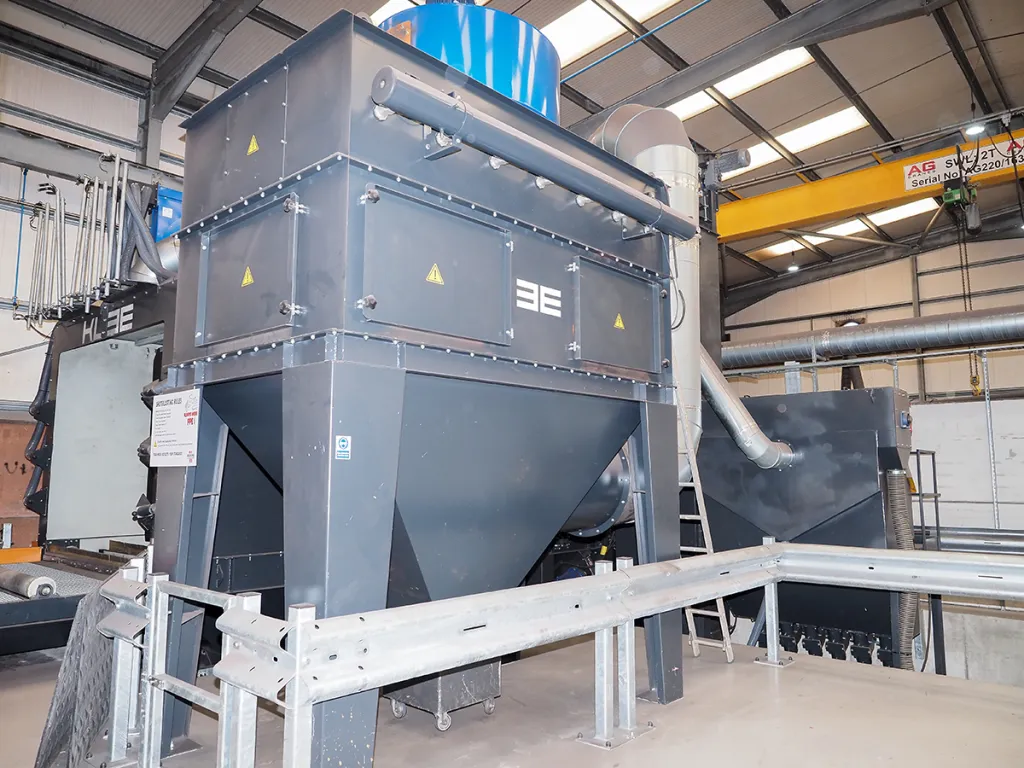
The cabinet is made from 45mm thick armour plate to withstand the turbine firing shot at 4000rpm; 2-3 tonnes of shot is used each year. Components are carried on a purpose-built trolley fabricated by the Weaving team, and dust from the process is extracted via 80 filters in to into a large hopper which is emptied from the bottom.
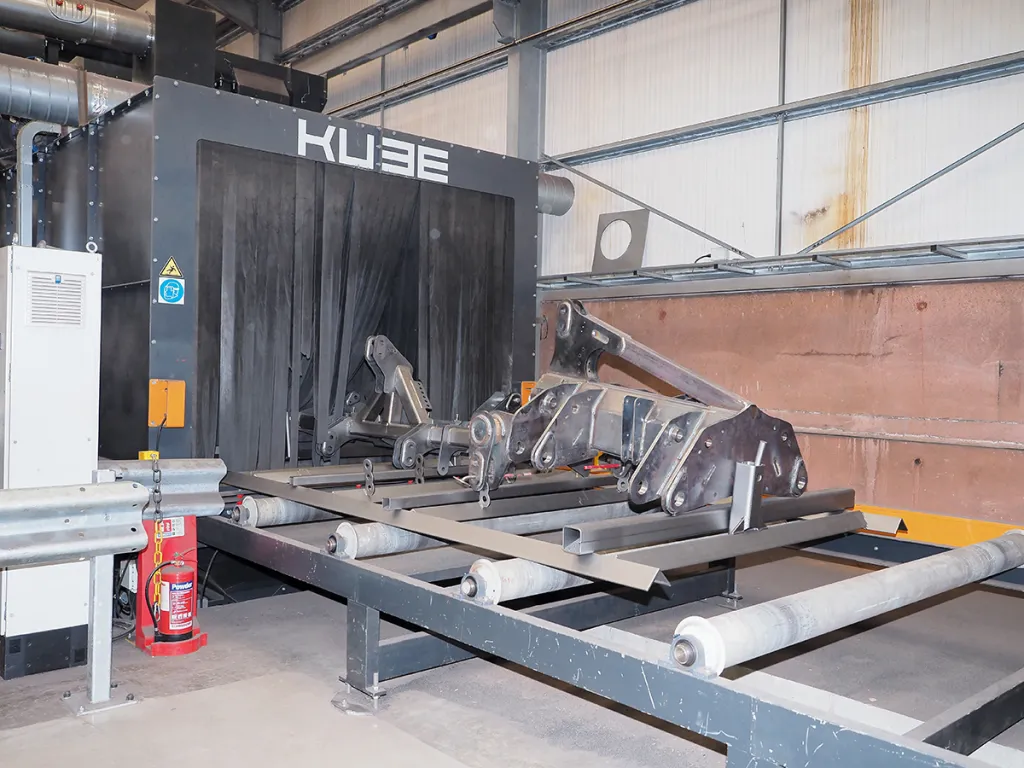
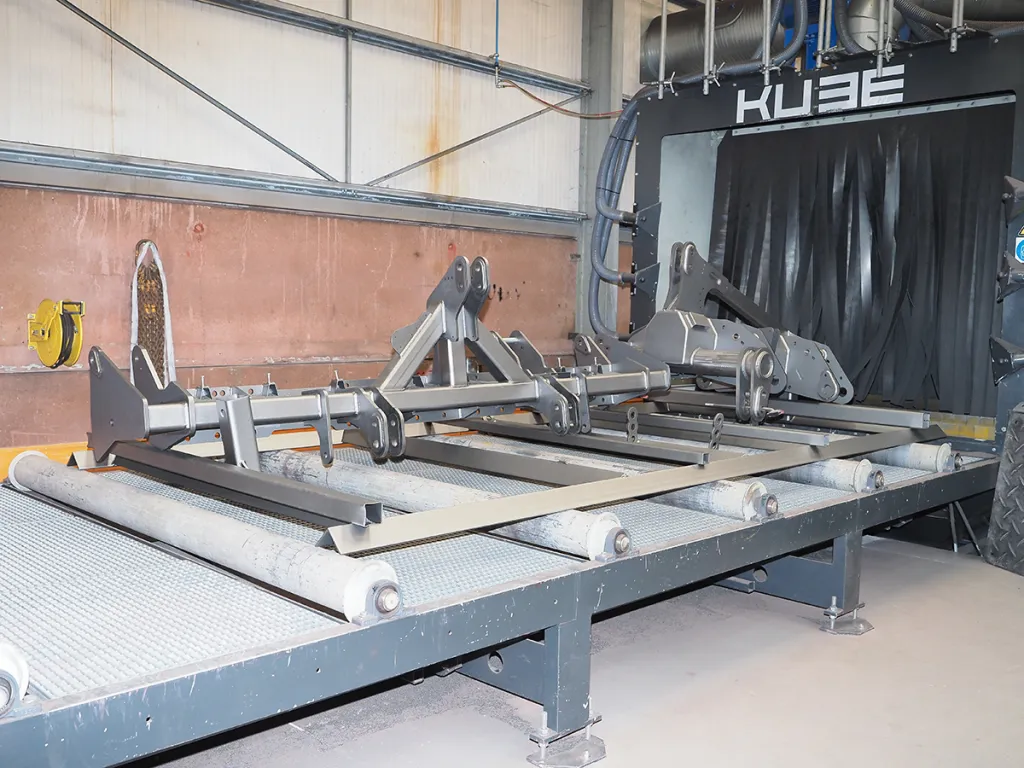
“The shot blaster can also be used to refurbish used machines,” he says. “This process removes laser cutting ‘scale’ and creates a rough finish for paint to adhere to. Paint finish is absolutely key not just to the appearance of a product but also to its longevity.”
“Our product quality has improved immensely but the energy cost for shot blasting is eyewatering, so we made a £400,000 investment into solar panels which now cover the roofs of both factory buildings”.
The paint shop
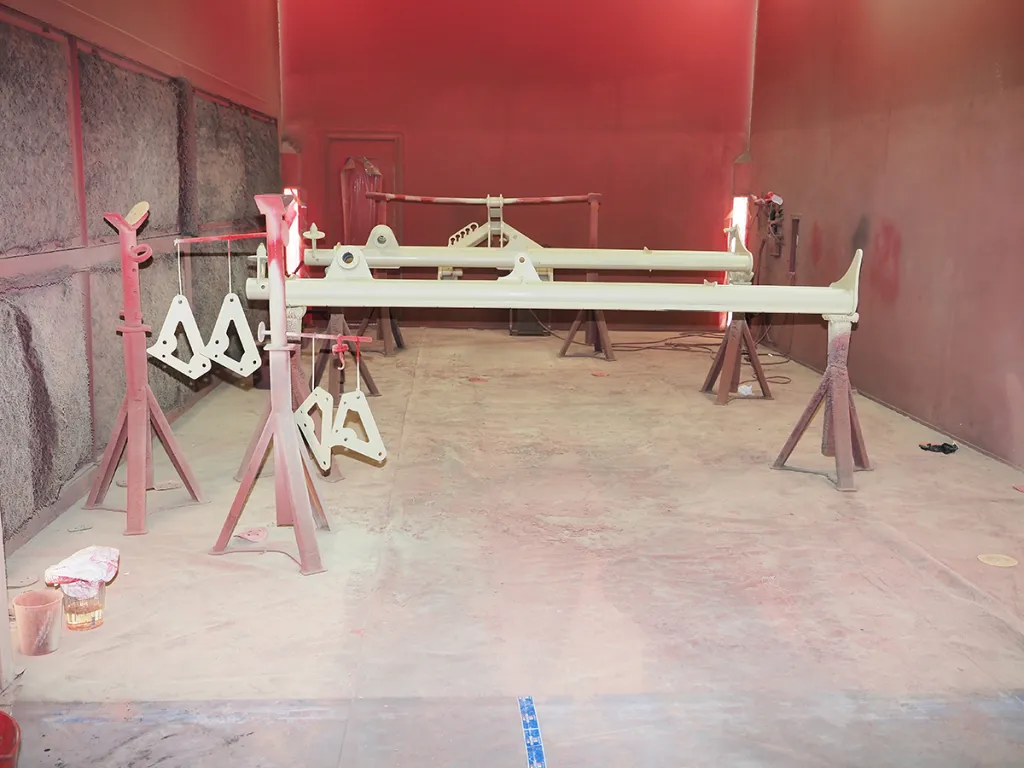
Next, the parts go within 24 hours for painting. Another recent introduction is a pair of Haltec electrostatic contact paint booths, one for high epoxy primer, the other for high gloss topcoat.
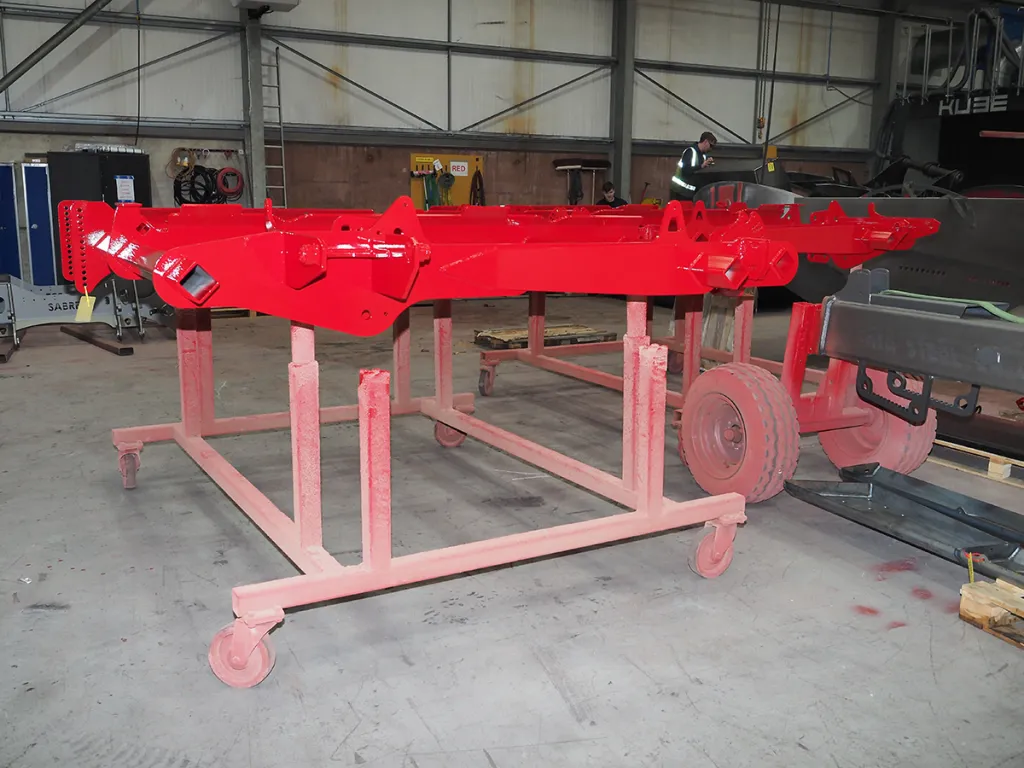
The booths can take parts up to 8x5m in batches, and the automix paint system maintains paint colour consistency regardless of conditions, adjusting itself in very hot or cold weather.
The decision to move to electrostatic painting was two-fold: “We’re trying to improve our paint quality,” explains Sarie. “As we buy back our own drills we want the paint quality to be good enough 10-20 years on, but we’re also trying to reduce paint wastage by going the electrostatic route.”
Drills are bought back in at farm sales, rebuilt to include shot blasting and painting, fully checked over and sold with a year’s warranty.
Assembly
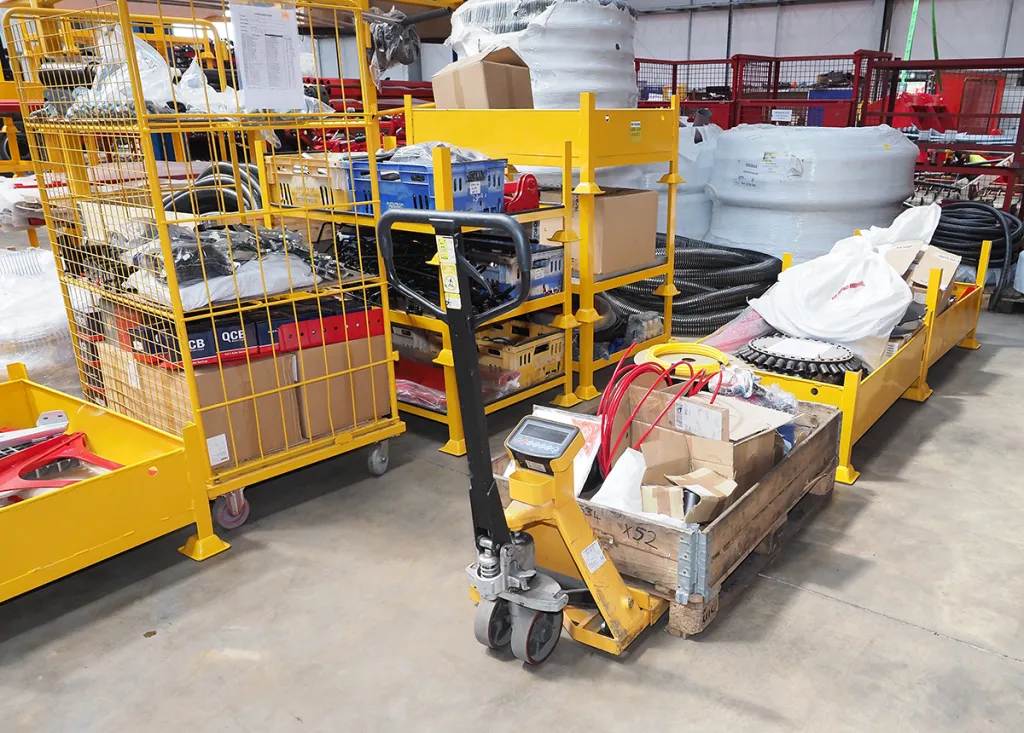
Assembly begins in what is known as the ‘top shed’ with a build-up list created once the steel has been shot blasted and painted. The production team must enter the components required on the Modula stores system by logging in via a tablet and items are then grouped in a series of bins for the product being made.
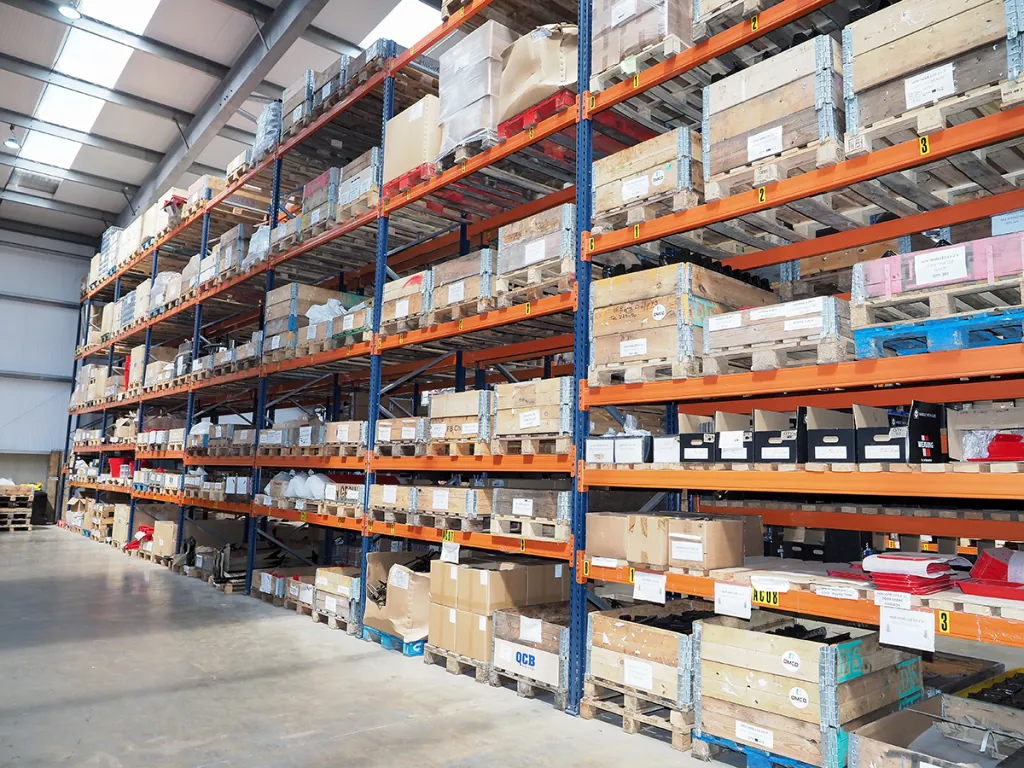
An extensive range of parts is kept in stock at all times, many of which have been made specially for the company, such as 4in Crary fans and seed stacks made with a specific number of ripples.
Wearing metal is sourced from a new supplier who can supply cast parts, offering significant cost savings and increased strength.
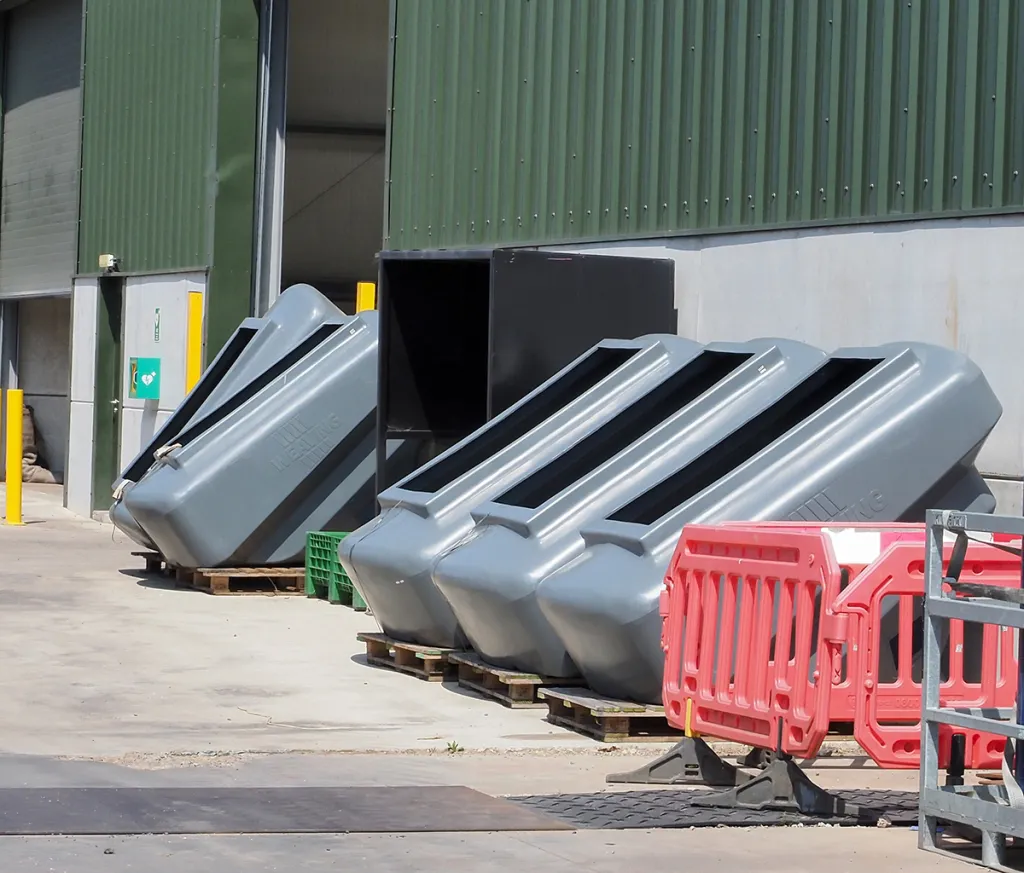
A common polyethylene hopper is used on GD, Sabre and Lynx drills manufactured by Rotatec in Newark, Nottinghamshire.
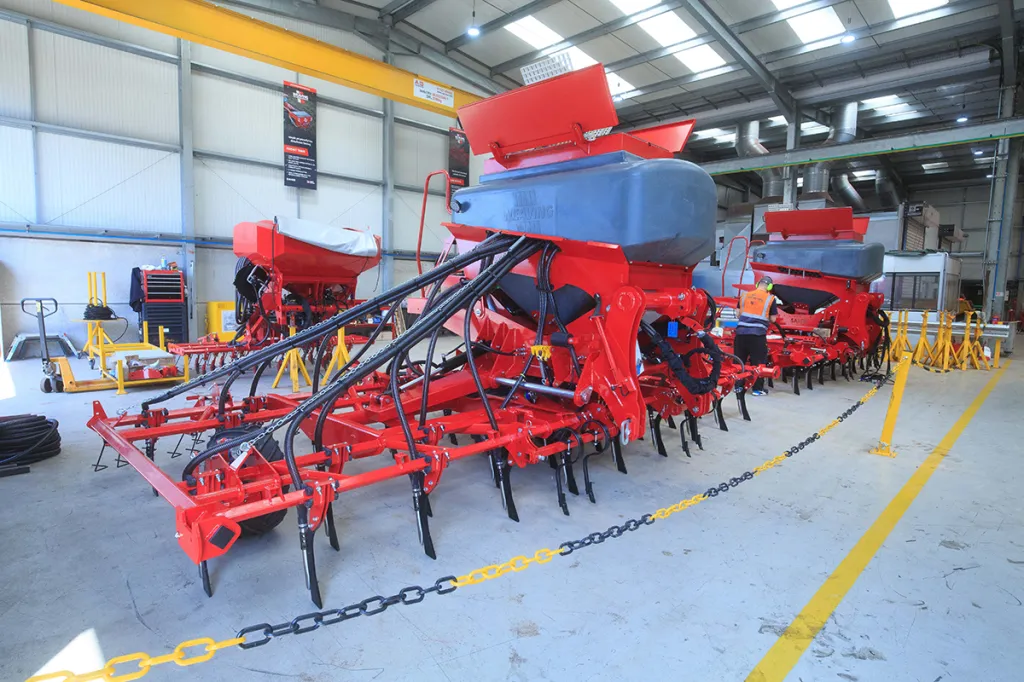
There is plenty of space to build several drills at once, although the 12m Sabre takes up quite a bit of room!
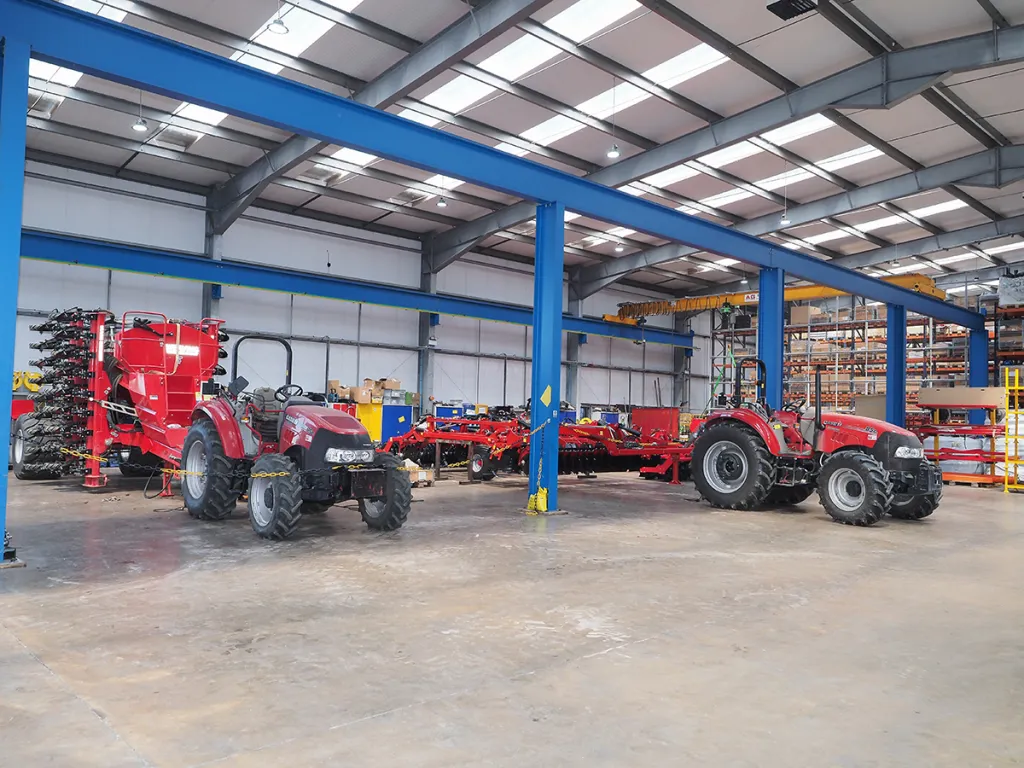
The office building
Offices are now housed in a purpose designed building, also offering staff welfare, meeting, training and showroom facilities.
“We’ve already hosted farmers’ and young farmers’ groups plus local students and we intend to build on this,” explains Simon. “We’re very keen to get closer to our customers and show them what we do.”
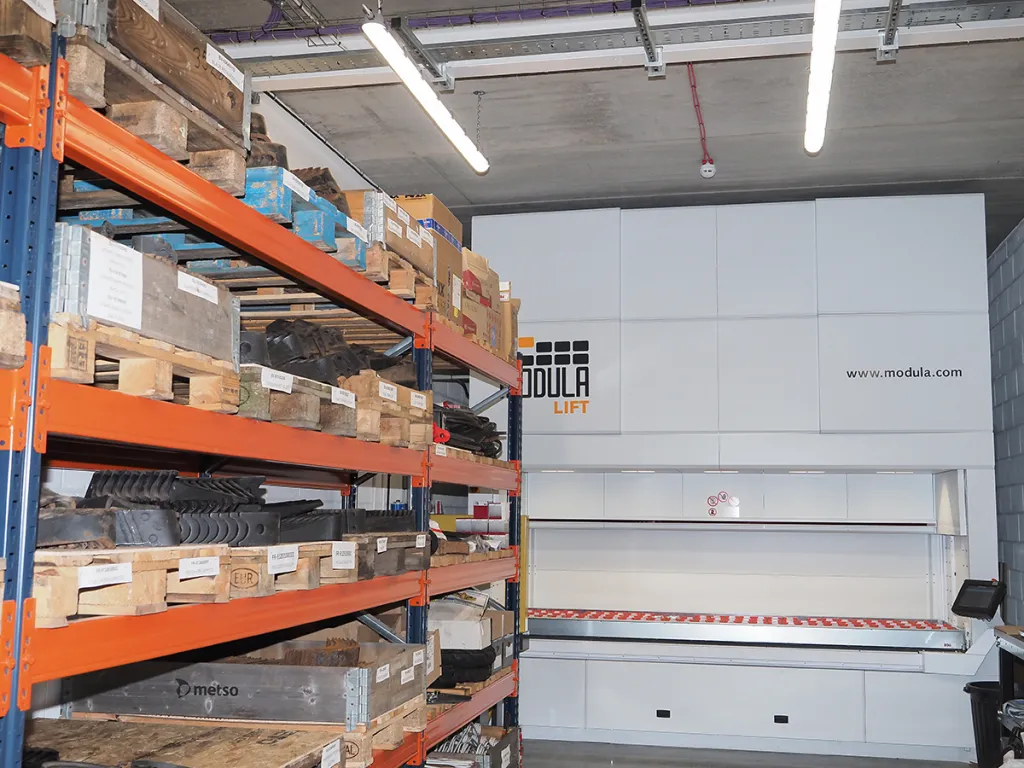
The building also accommodates the parts desk, with frequently requested parts easily to hand and another Modula system keeping small items in order.
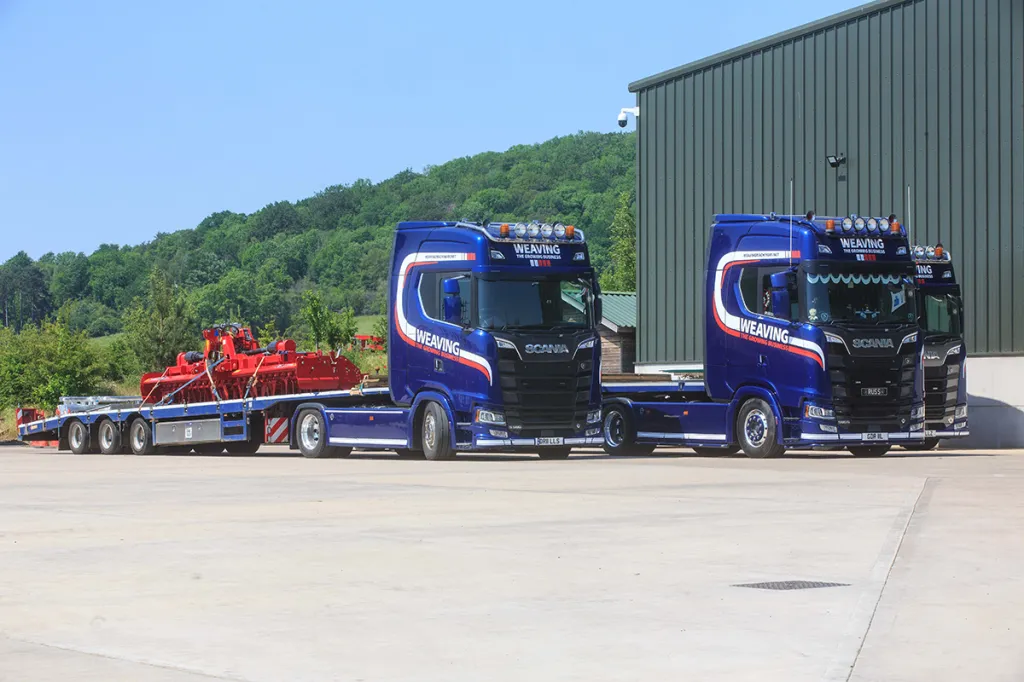
Outside, the yard has space for new and older machines which are kept for resale or spares; the company has its own transport fleet.
It is surrounded by the family’s own farm which has now been brought back in hand, offering ideal test facilities, ranging from Grade 1 vegetable land to heavy clays. Simon has established a two-cover crop regime using low disturbance drilling.
Jane Carley
For more up-to-date farming news click here and subscribe now to profi and save.